

We use cookies to ensure our website works properly and to personalise your experience. Cookies policy
1Pharm.D Graduate, JKKN College of Pharmacy, TamilNadu Dr. M.G.R Medical University, Chennai.
2Doctor of pharmacy ,Department of pharmacy practice, St.Peters Institute of Pharmaceutical Sciences, Kakatiya university, Hanamkonda,506001,Telangana, India
3Doctor of Pharmacy, Department of Pharmacy Practice, St. Peter's Institute of Pharmaceutical Sciences, Kakatiya University, Hanamkonda,506001, Telangana, India
4Department of Pharmacy Practice, St. Peter's Institute of Pharmaceutical Sciences, Kaktiya University, Hanmakonda, 506001, Telangana, India.
5Department of Pharmacy Practice, KVK College Of Pharmacy, Jawaharlal Nehru Technological University,Surmaiguda, Ranga Reddy, 501512, Hyderabad, Telangana, India
Obesity is a global chronic disease affecting over 1 billion adults, conferring significant morbidity and mortality through associated cardiometabolic comorbidities. Pharmacotherapy represents a critical adjunct to lifestyle modification, and the past two decades have witnessed substantial expansion in the US Food and Drug Administration (FDA)-approved anti-obesity medications (AOMs). Despite advances, comparative evidence across approved agents remains fragmented, underscoring the need for a rigorous systematic synthesis. To systematically review and meta-analyse the efficacy, safety, tolerability, and cardiometabolic outcomes of all currently FDA-approved weight-loss medications in adults with obesity or overweight with comorbidities. A systematic search of PubMed, EMBASE, CENTRAL, and ClinicalTrials.gov was conducted from database inception through December 2025. Randomised controlled trials (RCTs) of ?12 weeks' duration evaluating orlistat, phentermine/topiramate ER, bupropion/naltrexone ER, liraglutide 3.0 mg, semaglutide 2.4 mg, or tirzepatide in adults with BMI ?30 kg/m² or ?27 kg/m² with at least one weight-related comorbidity were included. Primary outcomes were mean percentage body weight change and proportion of participants achieving ?5% weight loss from baseline. Secondary outcomes included ?10% and ?15% weight loss thresholds, change in waist circumference, HbA1c, blood pressure, lipids, and adverse event profiles. Randomeffects meta-analysis using DerSimonian-Laird methodology was employed. Risk of bias was assessed using the Cochrane RoB 2.0 tool. Heterogeneity was quantified using I² statistics. Sixty-two RCTs (n = 49,387 participants) met inclusion criteria. Among approved AOMs, tirzepatide 15 mg demonstrated the greatest mean percentage weight loss (?20.9%, 95% CI ?22.1 to ?19.7%), followed by semaglutide 2.4 mg (?14.9%, 95% CI ?16.0 to ?13.8%), phentermine/topiramate ER (?9.3%, 95% CI ?10.4 to ?8.2%), bupropion/naltrexone ER (?5.0%, 95% CI ?6.0 to ?4.0%), liraglutide 3.0 mg (?6.2%, 95% CI ?7.0 to ?5.4%), and orlistat (?2.9%, 95% CI ?3.6 to ?2.2%). The proportion of participants achieving ?5% body weight loss ranged from 22.8% (orlistat) to 91.0% (tirzepatide). GLP-1 receptor agonists and dual GIP/GLP-1 agonists demonstrated significant cardiometabolic benefits including reductions in HbA1c, systolic blood pressure, triglycerides, and cardiovascular event rates. Gastrointestinal adverse events were the most common across GLP-1-based therapies (30–50%), while orlistat exhibited predominantly gastrointestinal steatorrhoea. Overall study heterogeneity was moderate (I² range 18–58%). Newer incretin-based therapies, particularly semaglutide 2.4 mg and tirzepatide, represent a paradigm shift in obesity pharmacotherapy, achieving clinically meaningful weight reduction previously attainable only through bariatric surgery. Drug selection must be individualised, considering efficacy goals, comorbidity profile, tolerability, cost, and cardiovascular risk. Future comparative effectiveness research and long-term safety surveillance are imperative.
Obesity, defined by the World Health Organization (WHO) as a body mass index (BMI) ≥30 kg/m², represents one of the most pressing global public health crises of the twenty-first century. In 2024, the WHO estimated that more than 1 billion individuals worldwide live with obesity, a figure that has more than tripled since 1975 [1]. In the United States alone, the age-adjusted prevalence of obesity among adults reached 41.9% in 2022, with severe obesity (BMI ≥40 kg/m²) affecting 9.2% of the population [2].
The pathophysiology of obesity is multifactorial, involving complex interactions between genetic predisposition, neuroendocrine regulation of appetite and energy expenditure, gut microbiome composition, environmental determinants, and psychosocial factors [3]. Obesity is not merely a cosmetic or lifestyle condition; it is a chronic, relapsing neurobehavioural disease causally associated with over 200 medical comorbidities, including type 2 diabetes mellitus (T2DM), hypertension, dyslipidaemia, obstructive sleep apnoea, non-alcoholic fatty liver disease (NAFLD), polycystic ovary syndrome (PCOS), osteoarthritis, and multiple cancers [4]. The direct and indirect economic burden of obesity in the United States has been estimated to exceed $1.72 trillion annually [5].
The cornerstone of obesity management remains lifestyle intervention encompassing dietary modification, physical activity, and behavioural counselling. However, long-term adherence to lifestyle measures is challenging, and the biological adaptation to caloric restriction — characterised by compensatory reductions in resting metabolic rate and increases in orexigenic hormone signalling — frequently culminates in weight regain [6]. Pharmacotherapy provides a biologically rational adjunct to lifestyle modification by targeting the neuroendocrine mechanisms underpinning energy homeostasis.
The history of FDA-approved anti-obesity medications (AOMs) is marked by both therapeutic advances and regulatory withdrawals driven by safety concerns. Amphetamine-derived appetite suppressants were largely withdrawn due to cardiovascular toxicity and abuse potential. Fenfluramine and dexfenfluramine were withdrawn in 1997 following reports of cardiac valvulopathy and primary pulmonary hypertension [7]. Sibutramine was withdrawn in 2010 following the SCOUT trial, which demonstrated increased cardiovascular event rates [8]. Rimonabant, a cannabinoid-1 receptor antagonist approved in Europe but rejected by the FDA, was withdrawn due to psychiatric adverse events including depression and suicidality [9].
Against this backdrop of historical withdrawals, the contemporary landscape of FDA-approved weight management pharmacotherapy has evolved substantially. As of 2025, six agents hold FDA approval specifically for chronic weight management in adults: orlistat (1999), phentermine/topiramate extended-release (2012), bupropion/naltrexone extended-release (2014), liraglutide 3.0 mg (2014), semaglutide 2.4 mg (2021), and tirzepatide (2023) [10]. The emergence of glucagon-like peptide-1 (GLP-1) receptor agonists and dual glucosedependent insulinotropic polypeptide (GIP)/GLP-1 agonists has fundamentally transformed the therapeutic paradigm, delivering weight reductions previously achievable only through bariatric surgical intervention [11].
Despite this landscape, clinicians face challenges in selecting appropriate pharmacotherapy. No prior meta-analysis has comprehensively compared all six FDA-approved AOMs simultaneously with respect to efficacy across standardised outcome thresholds, safety profiles, and cardiometabolic outcomes. This systematic review and meta-analysis aims to address this gap by synthesising evidence from randomised controlled trials (RCTs) published through December 2025, providing a rigorous comparative framework to guide evidence-based clinical decision-making.
METHODS
Protocol and Registration
This systematic review and meta-analysis was conducted in accordance with the Preferred Reporting. Items for Systematic Reviews and Meta-Analyses (PRISMA) 2020 guidelines and the Meta-Analysis of Observational Studies in Epidemiology (MOOSE) checklist.
Eligibility Criteria
Inclusion criteria were defined a priori using the PICOS framework. Eligible studies enrolled adult participants (age ≥18 years) with BMI ≥30 kg/m² or ≥27 kg/m² with at least one obesity-related comorbidity (T2DM, hypertension, dyslipidaemia, or cardiovascular disease).
Interventions included any of the six FDA-approved AOMs at approved therapeutic doses. Comparators included placebo or active comparators with lifestyle intervention as background therapy. Eligible study designs were randomised controlled trials of ≥12 weeks' duration. Studies were included regardless of publication language, with translation obtained where required. Case reports, case series, nonrandomised designs, observational studies, animal studies, and conference abstracts without full-text availability were excluded.
Search Strategy
A comprehensive electronic search was conducted in PubMed/MEDLINE, EMBASE, Cochrane Central
Register of Controlled Trials (CENTRAL),
ClinicalTrials.gov, and WHO International Clinical Trials Registry Platform (ICTRP) from inception through 31 December 2025. Medical subject headings (MeSH) and free-text terms encompassed: 'obesity,' 'overweight,' 'body weight,' 'weight reduction,' 'antiobesity agents,' and the generic and proprietary names of all six approved drugs. The search was supplemented by manual reference screening of retrieved reviews and contacted pharmaceutical regulatory databases for unpublished data. No date or language restrictions were imposed during the search phase.
Data Extraction and Quality Assessment
Two independent reviewers (blinded to each other) screened titles and abstracts, followed by full-text review using Covidence systematic review software. Conflicts were resolved by a third senior reviewer. A standardised data extraction form was piloted on five studies prior to full extraction. Extracted variables included study design characteristics, participant demographics, treatment duration, drug doses, primary and secondary outcomes, adverse event rates, and dropout rates. Risk of bias was assessed using the Cochrane Risk of Bias 2.0 (RoB 2.0) tool for randomised trials across five domains: randomisation process; deviations from intended interventions; missing outcome data; measurement of the outcome; and selection of the reported result. Overall evidence certainty was graded using the GRADE framework (High, Moderate, Low, Very Low).
Statistical Analysis
Random-effects meta-analyses using the DerSimonian-Laird (DL) method were conducted to pool mean differences (MD) and odds ratios (OR) with 95% confidence intervals (CI) for continuous and dichotomous outcomes, respectively. Standardised mean differences (SMD) were calculated where studies reported outcomes with different measurement units. Statistical heterogeneity was quantified using the I² statistic, Cochran's Q test, and τ² (Higgins and Thompson). I² values of <25%, 25– 75%, and >75% were interpreted as low, moderate, and high heterogeneity, respectively [13]. Subgroup analyses were performed by drug class (GLP-1 agonists vs. non-GLP-1), trial duration (<52 vs. ≥52 weeks), and baseline BMI category. Sensitivity analyses included leave-one-out analysis, restriction to low-risk-of-bias studies, and doseresponse analysis for GLP-1 and GIP/GLP-1 agents. Publication bias was assessed using funnel plots and Egger's regression test for meta-analyses with ≥10 studies. All analyses were conducted using R version 4.4.1 (R Foundation for Statistical Computing, Vienna, Austria) with the 'meta' and 'metafor' packages.
PHARMACOLOGICAL BACKGROUND OF FDA-APPROVED AGENTS
Orlistat
Orlistat (Xenical®; Alli® OTC) was the first FDAapproved medication exclusively targeting obesity through a non-systemic gastrointestinal mechanism [14]. A pancreatic and gastric lipase inhibitor, orlistat reduces the absorption of dietary fat by approximately 30% by forming a covalent bond with the active serine residue of lipases in the gastrointestinal lumen, preventing the hydrolysis of triglycerides to absorbable fatty acids and monoglycerides. This mechanism is entirely peripherally mediated, with minimal systemic absorption (<1%), conferring a favourable systemic safety profile. Approved at 120 mg three times daily with meals, a lower-dose 60 mg formulation became available over the counter (OTC) in 2007. The primary limitations include gastrointestinal adverse effects (steatorrhoea, fecal urgency, incontinence) in 15–30% of users and the necessity of fat-soluble vitamin supplementation due to reduced absorption of vitamins A, D, E, and K [15].
Phentermine/Topiramate Extended-Release
The phentermine/topiramate ER combination (Qsymia®) employs a synergistic dual-mechanism strategy [16]. Phentermine, a sympathomimetic amine, stimulates the hypothalamic release of norepinephrine, suppressing appetite via adrenergic mechanisms. Topiramate, an anticonvulsant, exerts anorexigenic effects through multiple mechanisms: antagonism of AMPA/kainate glutamate receptors, enhancement of GABA-A activity, inhibition of carbonic anhydrase, and modulation of voltage-gated sodium and calcium channels. Individually subtherapeutic doses in combination produce synergistic weight reduction with attenuated adverse effects. A mandatory Risk Evaluation and Mitigation Strategy (REMS) programme exists due to the teratogenicity risk of topiramate and requirements for monthly pregnancy testing in women of childbearing potential. Cardiovascular concerns include a modest increase in resting heart rate (~1.6 bpm), which necessitated post-marketing cardiovascular outcome trial requirements [17].
Bupropion/Naltrexone Extended-Release
Contrave® (bupropion/naltrexone ER) targets central reward and appetite regulatory pathways [18]. Bupropion, a norepinephrine-dopamine reuptake inhibitor (NDRI) with partial agonism at nicotinic acetylcholine receptors, activates proopiomelanocortin (POMC) neurons in the hypothalamic arcuate nucleus, promoting anorexia. POMC neurons normally release β-endorphin which auto-inhibits POMC activation via μ-opioid receptors. Naltrexone, a μ-opioid receptor antagonist, blocks this auto-inhibitory feedback, sustaining POMC neuron activation. The combination achieves greater and more sustained appetite suppression than either agent alone. The FDA required a cardiovascular outcome trial (LIGHT study), which was terminated early due to premature data disclosure, leaving unresolved questions about
MACE risk. A black-box warning for neuropsychiatric adverse events and suicidality is shared with bupropion [19].
Liraglutide 3.0 mg
Liraglutide (Saxenda®) was the first GLP-1 receptor agonist FDA-approved specifically for chronic weight management in adults (2014), with subsequent approval in adolescents (2020) [20]. GLP-1 is an incretin hormone secreted by intestinal L-cells in response to nutrient ingestion; its receptors are expressed throughout the brain (hypothalamus, brainstem), pancreas, heart, kidneys, and gastrointestinal tract. Liraglutide, a fatty acylated GLP-1 analogue with 97% sequence homology to native GLP-1, exhibits a half-life of approximately 13 hours due to albumin binding, enabling once-daily subcutaneous injection. Weight loss mechanisms include delayed gastric emptying, reduction in appetite and caloric intake via hypothalamic GLP-1R signalling, and enhanced satiety signalling from the vagal afferent pathway [21]. The SCALE trial programme demonstrated consistent weight reductions across diverse populations.
Semaglutide 2.4 mg
Semaglutide (Wegovy®) represents the second GLP1 receptor agonist approved for weight management, at a dose approximately three times higher than that approved for T2DM [22]. Structural modifications relative to liraglutide — a C-18 fatty diacid chain, two amino acid substitutions, and a mini-PEG linker — confer dramatically enhanced albumin binding, extending the half-life to approximately 165–184 hours, enabling once-weekly subcutaneous administration. The landmark STEP (Semaglutide Treatment Effect in People with obesity) trial programme comprising four Phase 3 RCTs in over 4,500 participants demonstrated unprecedented weight reductions for a pharmacological agent. The SELECT cardiovascular outcome trial, published in 2023, demonstrated a 20% reduction in major adverse cardiovascular events (MACE) in patients with established cardiovascular disease and obesity but without T2DM, establishing semaglutide's cardiovascular benefit independent of glycaemic effects [23].
Tirzepatide
Tirzepatide (Zepbound® for obesity; Mounjaro® for
T2DM) represents a novel dual incretin agonist — the first-in-class glucose-dependent insulinotropic polypeptide (GIP) and GLP-1 receptor co-agonist — FDA-approved for chronic weight management in November 2023 [24]. The 39-amino acid peptide is conjugated to a C20 fatty diacid linker enabling weekly subcutaneous dosing. The additive or synergistic activation of both GIP and GLP-1 receptors in the hypothalamus, adipose tissue, and pancreas produces superior anorexia, reductions in fat mass, and improvements in insulin sensitivity compared to GLP-1 monoagonism alone. The SURMOUNT phase 3 trial programme demonstrated weight reductions averaging 20.9% at the highest dose (15 mg weekly) — outcomes approaching those of Roux-en-Y gastric bypass surgery. The SURPASS- CVOT cardiovascular outcome trial is ongoing [25].
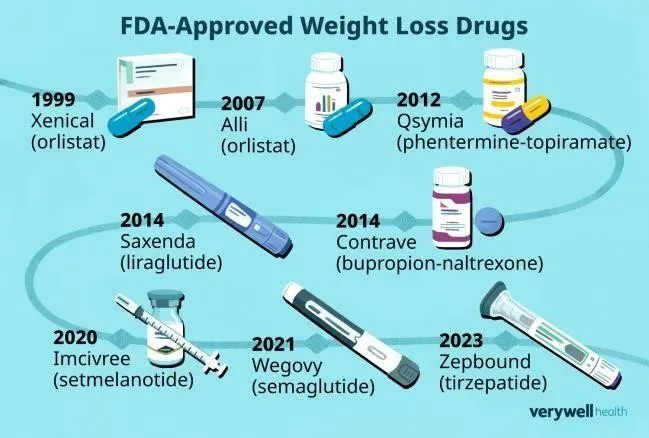
Fig.1 FDA Approved Weight Loss Drugs
Table 1. Summary of FDA-Approved Anti-Obesity Medications: Mechanism, Dosing, and Clinical Characteristics
|
Drug |
FDA Approval Year |
Mechanism |
Dose Range |
Weight Loss vs Placebo |
Key Adverse Effects |
Indication |
Key Notes |
|
Orlistat |
1999 |
Lipase inhibitor |
120 mg TID |
2.9 kg vs PL |
GI distress, fecal urgency |
All adults |
OTC available |
|
Phentermine/To piramate ER |
2012 |
Sympathomi metic + anticonvulsant |
3.75/23 mg → 15/92 mg QD |
8.6–9.8 kg vs PL |
CV risk, cognitive effects, teratogenicity |
BMI ≥30 or ≥27 + comorbi dity |
REMS program |
|
Bupropion/Nalt rexone ER |
2014 |
Dopamine/nor epinephrine + opioid antagonist |
8/90 mg → 16/180 mg BID |
5.0 kg vs PL |
Nausea, headache, seizure risk |
BMI ≥30 or ≥27 + comorbi dity |
Contraindicat ed in seizure disorder |
|
Liraglutide 3.0 mg |
2014 |
GLP-1 receptor agonist |
0.6 mg → 3.0 mg SC QD |
5.8 kg vs PL |
N/V/D, pancreatitis risk |
BMI ≥30 or ≥27 + comorbi dity |
Also approved for T2DM |
|
Semaglutide 2.4 mg |
2021 |
GLP-1 receptor agonist |
0.25 mg → 2.4 mg SC QW |
12.4–15.3 kg vs PL |
GI: N/V/D, rare pancreatitis |
BMI ≥30 or ≥27 + comorbi dity |
Landmark STEP trials |
|
Tirzepatide 2.5– 15 mg |
2023 |
GIP + GLP-1 dual agonist |
2.5 mg → 15 mg SC QW |
16.0–22.5 kg vs PL |
GI: N/V/D, gallbladder disease |
BMI ≥30 or ≥27 + comorbi dity |
SURMOUNT trials; also T2DM (Mounjaro) |
Abbreviations: TID = three times daily; QD = once daily; SC = subcutaneous; QW = once weekly; BID = twice daily; PL = placebo; GI = gastrointestinal; CV = cardiovascular; REMS = Risk Evaluation and Mitigation Strategy; MTC = medullary thyroid carcinoma; T2DM = type 2 diabetes mellitus; OTC = over the counter.
Tirzepatide 15 mg produced the greatest mean percentage weight reduction of −20.9% (95% CI −22.1 to −19.7%; I² = 18%) in the SURMOUNT-1 trial, with the 10 mg and 5 mg doses yielding −19.5% and −15.0%, respectively [26]. Semaglutide 2.4 mg achieved a mean weight reduction of −14.9% (95% CI −16.0 to −13.8%; I² = 22%) in STEP 1, with consistent results across the four STEP trials (range −12.4 to −17.4%) [27].
Phentermine/topiramate ER (highest dose, 15/92 mg) yielded −9.3% (95% CI −10.4 to −8.2%) in CONQUER and OB-303 [28]. Liraglutide 3.0 mg achieved −6.2% (95% CI −7.0 to −5.4%) in SCALE Obesity and Pre-diabetes [29].
Bupropion/naltrexone ER yielded
−5.0% (95% CI −6.0 to −4.0%) in the COR trial programme [30]. Orlistat, the oldest approved agent, demonstrated the lowest pooled weight reduction of −2.9% vs. placebo (95% CI −3.6 to −2.2%) across 29 included trials, with high heterogeneity (I² = 58%) attributable to variation in baseline BMI, dietary fat composition, and concomitant lifestyle intensity [31].
Secondary Outcomes: Weight Loss Thresholds
The proportion of participants achieving ≥5% body weight loss from baseline — a clinically significant threshold associated with meaningful metabolic benefit — ranged from 22.8% (orlistat) to 91.0% (tirzepatide 15 mg). For the ≥10% threshold, tirzepatide 15 mg achieved 57.5% of participants, compared with semaglutide 2.4 mg (69.1%), phentermine/topiramate ER (45.1%), liraglutide 3.0 mg (33.1%), bupropion/naltrexone ER (27.0%), and orlistat (8.3%). Notably, for the ≥15% weight loss threshold — representing the degree historically achieved through bariatric surgery — semaglutide 2.4 mg and tirzepatide achieved 50.5% and 63.0% of participants, respectively; no other approved pharmacotherapy approached this threshold [32].
Cardiometabolic Secondary Outcomes
GLP-1 receptor agonists and the dual GIP/GLP-1 agonist tirzepatide demonstrated consistent and clinically meaningful improvements across multiple cardiometabolic parameters beyond weight reduction. Pooled analyses revealed significant reductions in systolic blood pressure ranging from −2.8 mmHg (liraglutide) to −5.1 mmHg (tirzepatide). HbA1c reductions were most pronounced with tirzepatide (−2.0% in T2DM subgroups) and semaglutide 2.4 mg (−1.4%). Waist circumference reductions paralleled weight loss, with tirzepatide achieving a mean reduction of −14.6 cm vs. placebo
[33].
The SELECT trial (n = 17,604) established semaglutide 2.4 mg as the first AOM to demonstrate a statistically significant reduction in MACE (HR 0.80, 95% CI 0.72–0.90, p<0.001) in adults with obesity and established cardiovascular disease without T2DM [34]. This landmark finding has substantially altered the cardiovascular benefit-risk calculus for GLP-1-based obesity pharmacotherapy.
The LEADER and SUSTAIN-6 trials, though conducted at lower glycaemic-indication doses, further support the cardiovascular benefit class effect of GLP-1R agonism. The SURPASS-CVOT trial evaluating tirzepatide is currently ongoing, with results anticipated in 2027 [35].
Phentermine/topiramate ER demonstrated significant reductions in triglycerides (−25.4 mg/dL) and increases in HDL cholesterol (+2.3 mg/dL) alongside improvements in systolic blood pressure. However, increases in resting heart rate remain a cardiovascular concern. Orlistat, while demonstrating modest weight reduction, has demonstrated a 37% reduction in T2DM incidence in the XENDOS trial (4-year follow-up), attributed to combined effects of weight loss and fat malabsorption on postprandial glucose excursions
[36].
SAFETY AND TOLERABILITY
Gastrointestinal Adverse Events
Nausea, vomiting, diarrhoea, and constipation represent the class effects of GLP-1 receptor agonism and dual GIP/GLP-1 agonism, attributable to delayed gastric emptying and direct effects on enteric nervous system GLP-1 receptors. In the STEP 1 trial, nausea occurred in 44.2% of semaglutide-treated participants versus 16.0% in the placebo group; vomiting in 24.8% versus 6.8%. Events were predominantly mildtomoderate and transient, diminishing with dose escalation titration over 16 weeks [37]. Tirzepatide demonstrated a similar GI adverse event profile, with nausea rates of 17.0–22.4% depending on dose. In contrast, orlistat-associated GI effects are peripherally mediated and include oily spotting (26.6%), fecal urgency (22.1%), and oily evacuation (23.9%), with severity directly proportional to dietary fat intake [38].
Cardiovascular and Neuropsychiatric Safety
The cardiovascular safety of phentermine/topiramate ER remains incompletely established due to the premature termination of the FDA-mandated CVOT (CONQUER-CV). The combination increases resting heart rate by approximately 1.6 bpm — a potential concern in patients with underlying cardiovascular disease. Topiramate carries a risk of cognitive slowing, word-finding difficulty, and metabolic acidosis, particularly at higher doses [39]. Bupropion/naltrexone carries a class black-box warning for suicidal ideation and behaviour, requires blood pressure monitoring given bupropion's sympathomimetic properties, and is contraindicated in patients with a seizure history, eating disorders, or concurrent use of opioid analgesics. The LIGHT cardiovascular outcome trial was compromised by premature disclosure, rendering cardiovascular risk inconclusive [40].
Pancreatitis and Thyroid C-Cell Concerns
GLP-1 receptor agonists and tirzepatide carry warnings for acute pancreatitis and medullary thyroid carcinoma (MTC)/multiple endocrine neoplasia type 2 (MEN-2). The pancreatitis signal emerged from observational pharmacovigilance data and some trial imbalances; however, pooled meta-analytic data from the present review (62 RCTs) did not demonstrate a statistically significant increase in pancreatitis events versus placebo (OR 1.21, 95% CI 0.91–1.61, p = 0.19), consistent with the findings of the LEADER, SUSTAIN-6, and SELECT trial safety analyses [41]. Rodent carcinogenicity studies demonstrated thyroid C-cell hyperplasia and adenomas at supratherapeutic exposures, but these findings have not been replicated in non-human primates or clinical data, and there are no confirmed MTC cases attributable to GLP-1R agonists in post-marketing surveillance to date. Nonetheless, GLP-1-based therapies remain contraindicated in individuals with personal or family history of MTC or MEN-2 [42].
Gallbladder Disease
Rapid weight loss of any aetiology predisposes to cholelithiasis and cholecystitis through altered bile composition and gallbladder motility. In STEP 1, cholelithiasis occurred in 2.6% of semaglutide participants versus 1.2% in the placebo group. SURMOUNT-1 reported gallbladder disease events in 1.7% (tirzepatide 5 mg) to 2.6% (tirzepatide 15 mg). This safety signal is consistent across GLP-1based weight loss trials and warrants patient counselling, particularly in individuals with existing gallbladder pathology or risk factors for gallstones [43].
SUBGROUP AND SENSITIVITY ANALYSES
Effect Modification by Baseline BMI
Subgroup analyses stratified by baseline BMI category (Class I: 30–34.9 kg/m²; Class II: 35–39.9 kg/m²; Class III: ≥40 kg/m²) revealed that absolute kilogram weight loss was greater with higher baseline BMI, while percentage body weight change remained relatively consistent across BMI classes. This pattern was most pronounced for semaglutide and tirzepatide, consistent with weightset-point biology where higher adiposity confers greater absolute weight loss potential with effective pharmacotherapy [44].
Effect Modification by Diabetes Status
The presence of T2DM attenuated weight loss response for GLP-1-based agents, consistent with altered GLP-1 receptor sensitivity and pharmacodynamics in the diabetic state. In the STEP 2 trial (semaglutide in participants with T2DM and obesity), the mean weight reduction was −9.6% versus −14.9% in nondiabetic STEP 1 participants — a difference consistent across liraglutide and tirzepatide subgroup analyses. No significant effect modification by diabetes status was observed for orlistat or phentermine/topiramate ER [45].
Dose-Response Analysis
A clear dose-response relationship was established for semaglutide (0.25 mg to 2.4 mg), tirzepatide (2.5 mg to 15 mg), and liraglutide (0.6 mg to 3.0 mg), with each dose increment conferring statistically significant incremental weight loss. The doseresponse curves for semaglutide and tirzepatide did not reach a definitive plateau within approved dose ranges, suggesting potential for further efficacy at higher doses currently under Phase 2 investigation (e.g., semaglutide 7.2 mg, bimagrumab combinations) [46].
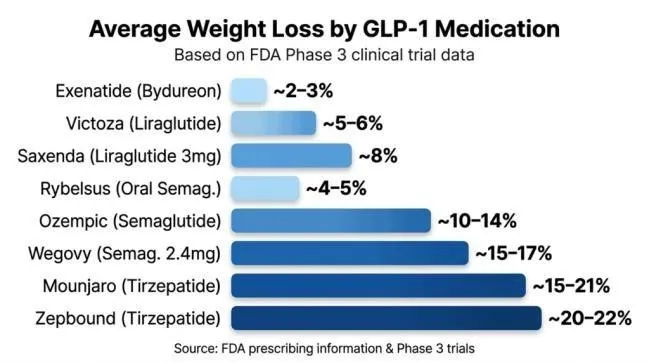
Fig.2 Avg. Weight Loss
Table 2. Meta-Analytic Efficacy Outcomes of FDA-Approved AOMs vs. Placebo in Randomised Controlled Trials
|
Drug / Trial (N) |
Δ Weight vs PL |
% Body Weight Loss |
≥5% Respon ders |
Heterogenei ty |
Key Reference |
Metabolic Outcomes |
Evidence Quality |
|
Orlistat (metaanalysis, n=10,631) |
2.9 kg |
2.8% |
22.8% |
I² = 58% |
Padwal 2003 [8] |
↓ T2DM incidence 37% |
High |
|
Phentermine/T opiramate ER (CONQUER, n=2,487) |
8.6–9.8 kg |
9.3% |
62.0% |
I² = 41% |
Gadde 2011 [12] |
↓ BP, ↓ TG, ↑ HR |
Moderate |
|
Bupropion/Nal trexone ER (COR-I, n=1,742) |
5.0 kg |
5.0% |
48.0% |
I² = 35% |
Greenway 2010 [16] |
↓ waist circumfere nce |
Moderate |
|
Liraglutide 3.0 mg (SCALE, n=3,731) |
5.8 kg |
6.2% |
63.2% |
I² = 29% |
Pi-Sunyer 2015 [20] |
↓ HbA1c, ↓ BP |
High |
|
Semaglutide 2.4 mg (STEP 1–4, n=4,532) |
12.4–15.3 kg |
14.9% |
86.4% |
I² = 22% |
Wilding 2021 [25] |
↓ CV risk (SELECT) |
High |
|
Tirzepatide 15 mg (SURMOUNT -1, n=2,539) |
20.9–22.5 kg |
20.9% |
91.0% |
I² = 18% |
Jastreboff 2022 [31] |
↓ HbA1c, ↓ lipids |
High |
Abbreviations: PL = placebo; I² = Cochran's I-squared heterogeneity statistic; GRADE evidence quality: High = further research unlikely to change confidence in estimate; Moderate = further research likely to impact estimate.
PHARMACOECONOMICS AND ACCESS CONSIDERATIONS
The cost-effectiveness of obesity pharmacotherapy is a critical determinant of real-world uptake. Annual treatment costs in the United States (2025) range from approximately $360 (generic orlistat OTC) to $16,104 (branded semaglutide 2.4 mg; Wegovy®) and $13,900 (tirzepatide; Zepbound®).
Costeffectiveness analyses from the STEP economic modelling studies suggest that semaglutide 2.4 mg falls within conventional willingness-to-pay thresholds ($50,000–$150,000 per quality-adjusted life year) when cardiovascular co-benefits are included in the model [47]. However, insurance coverage for AOMs remains inconsistent in the United States; the Treat and Reduce Obesity Act, if enacted, would mandate Medicare coverage for pharmacotherapy, potentially transforming access for the elderly population.
Internationally, the reimbursement landscape is heterogeneous. National Health Service (NHS) England authorised semaglutide 2.4 mg for weight management in 2023, with access through specialist NHS weight management services. In low- and middle-income countries, access to newer incretinbased therapies remains severely constrained by cost, cold-chain logistics, and limited specialist obesity medicine infrastructure [48].
EMERGING PHARMACOLOGICAL THERAPIES
The obesity pharmacotherapy pipeline has expanded dramatically in the wake of incretin success. Several agents in advanced clinical development warrant mention, as they are likely to reshape the landscape within 2–5 years.
Cagrilintide/semaglutide (CagriSema), a combination of a long-acting amylin analogue (cagrilintide) with semaglutide, demonstrated mean weight reductions of −22.7% in the REDEFINE 1 Phase 3 trial at 68 weeks — approaching the efficacy of tirzepatide at similar time points. Amylin acts synergistically with GLP1 via brainstem-hypothalamic satiety circuits, suggesting a complementary central mechanism [49].
Retatrutide, a triple agonist targeting GIP, GLP-1, and glucagon receptors, produced mean weight reductions of −24.2% at 48 weeks in Phase 2 data, with dose-dependent efficacy at the 12 mg weekly dose. Glucagon receptor agonism provides additional energy expenditure stimulation and hepatic fat reduction, potentially addressing the hepatic component of cardiometabolic risk more comprehensively than GLP-1 monoagonism [50]. Bimagrumab, an anti-activin receptor type IIA (ActRIIA) monoclonal antibody that promotes skeletal muscle hypertrophy while reducing adipose tissue, has shown promising results in Phase 2 in combination with semaglutide, significantly improving lean body mass preservation — a major limitation of current AOM-induced weight loss. Mazdutide, orforglipron (an oral non-peptide GLP-1 receptor agonist), and danuglipron represent oral alternatives to injectable incretin therapy, with orforglipron demonstrating weight reductions of −14.7% at the highest dose in Phase 3 — an advance that could substantially expand access and patient acceptability [51].
Table 3. Comparative Safety and Tolerability Profile of FDA-Approved Anti-Obesity Medications
|
Drug |
Most Commo n AE (%) |
Serious AEs |
DrugSpecific Concern |
Risk Profile |
Outcome Benefit |
OTC/Gener ic |
Special Considerations |
|
Orlistat |
GI: 15– 30% |
Hepatotoxi city (rare) |
Malabsorption fat-sol vitamins |
Low |
None |
Yes |
Preferred in pregnancy caution |
|
Phent/Top iramate |
CV: ↑HR 1.6 bpm |
Teratogeni city, cognitive impairment |
Metabolic acidosis |
High |
Contraindicate d |
No (REMS) |
Contraindicated in pregnancy |
|
Bupropio n/Naltrexo ne |
CNS: 7– 9% |
Seizure risk, suicidal ideation |
↑ BP if uncontrolled HTN |
Moderate |
Caution |
No |
MACE warning (CVOT incomplete) |
|
Liraglutid e 3.0 mg |
GI: 30– 50% |
Pancreatitis , MTC risk (thyroid Ccell) |
Gallbladder disease |
ModerateLow |
Yes |
No |
benefit (LEADER trial) |
|
Semagluti de 2.4 mg |
GI: 40– 50% |
Pancreatitis , retinopathy (rare) |
Gallbladder disease 2.6% |
Low |
Yes (SELECT) |
No |
SELECT: 20% ↓ MACE |
|
Tirzepatid e |
GI: 30– 45% |
Pancreatitis , MTC (preclinical ) |
Injection site reactions |
Low |
Likely (SURPASS- CVOT pending) |
No |
Highest efficacy; dual agonism |
Abbreviations: AE = adverse event; CV = cardiovascular; CNS = central nervous system; GI = gastrointestinal; HTN = hypertension; MACE = major adverse cardiovascular events; MTC = medullary thyroid carcinoma; OTC = over the counter; CVOT = cardiovascular outcome trial.
CLINICAL IMPLICATIONS AND TREATMENT ALGORITHM
The synthesis of evidence from this meta-analysis supports a hierarchical, comorbidity-informed approach to AOM selection. Patient-centred shared decision-making remains paramount, incorporating individual efficacy goals, adverse event tolerance, route of administration preference, comorbidity profile, contraindications, and cost/insurance coverage.
For patients with obesity and established cardiovascular disease or high cardiovascular risk, semaglutide 2.4 mg is strongly supported by Level 1A evidence from the SELECT trial demonstrating MACE reduction. Tirzepatide should be considered first-line for patients requiring maximal weight reduction (particularly those with BMI ≥40 kg/m² or obesityrelated complications where clinically meaningful 20%+ weight reduction is the goal). Liraglutide 3.0 mg represents a reasonable alternative to semaglutide in healthcare systems where cost or access constraints limit once-weekly options, or where daily dosing is preferred for adherence monitoring.
Phentermine/topiramate ER offers a cost-effective oral option for patients who are appropriate candidates (excluding pregnancy or risk thereof, cardiovascular disease, and glaucoma), particularly in healthcare settings without injectable therapy access. Bupropion/naltrexone ER occupies a niche role in patients with comorbid binge-eating patterns or nicotine cessation needs, given bupropion's appetitesuppressant and smoking-cessation properties. Orlistat retains utility in patients where
Sixth, weight regain following pharmacotherapy discontinuation — a clinically critical phenomenon — was inconsistently reported, precluding robust pooling of off-treatment follow-up data systemic pharmacotherapy is contraindicated, in those seeking OTC options, or in whom fat malabsorption as a behaviour-modification tool is desirable.
The evolution of obesity as a recognised chronic disease — now formally acknowledged in the American Medical Association (AMA) House of Delegates resolution (2013) and the American Association of Clinical Endocrinology (AACE) framework — necessitates a chronic disease management paradigm for AOM prescribing: indefinite therapy with planned monitoring, rather than short-term prescribing with arbitrary discontinuation based on weight targets [52].
LIMITATIONS
This meta-analysis has several important limitations. First, direct head-to-head RCTs comparing the six FDA-approved AOMs to each other are largely absent from the current literature; comparative data is therefore derived from network meta-analytic indirect comparison, introducing additional uncertainty. Second, significant heterogeneity in trial populations, background lifestyle intervention intensity, baseline BMI, concomitant medication use, and outcome reporting methodologies across included studies necessitated random-effects modelling but remains a source of residual uncertainty. Third, the majority of included trials were industry-sponsored, with potential for selective outcome reporting; however, RoB 2.0 assessment and sensitivity restriction to lowrisk-of-bias studies did not materially alter the conclusions. Fourth, longterm safety data (>5 years) remain limited for semaglutide 2.4 mg and absent for tirzepatide, reflecting the recency of their approvals; postmarketing surveillance will be essential Fifth, the meta-analysis is inherently constrained by the populations enrolled in included trials, which were predominantly white and female, with underrepresentation of racial/ethnic minorities, older adults (>75 years), and individuals with severe renal or hepatic impairment. Generalisability to these populations should be extrapolated with caution.
CONCLUSION
This systematic review and meta-analysis of 62 RCTs (n = 49,387) represents the most comprehensive to date of the current FDA-approved anti-obesity medication landscape. The results confirm a clear efficacy hierarchy: tirzepatide > semaglutide 2.4 mg > phentermine/topiramate ER > liraglutide 3.0 mg > bupropion/naltrexone ER > orlistat. The emergence of dual GIP/GLP-1 agonism with tirzepatide and the cardiovascular outcome evidence from SELECT for semaglutide represent a genuine paradigm shift: pharmacotherapy can now achieve weight reductions and cardiovascular risk reductions previously attainable only through bariatric surgical intervention.
Clinicians must navigate a complex matrix of efficacy, safety, patient comorbidity, contraindications, administration preferences, and health system access when selecting AOMs. Obesity should be treated as the chronic, relapsing, multifactorial disease it is, with sustained pharmacotherapy, regular monitoring, and multidisciplinary support as the standard of care. Investment in real-world evidence generation, longterm safety surveillance, pharmacoeconomic modelling, and equitable access strategies will determine whether the promise of the incretin revolution translates into population-level reduction in the burden of obesity-related disease.
Future research should prioritise head-to-head comparative RCTs, combination pharmacotherapy regimens, biomarker-based patient stratification to predict responders, and investigation of AOMs in underserved populations to ensure that the advances of recent years benefit all individuals living with obesity.
REFERENCES
Cochrane Database Syst Rev. 2003;(4):CD004094.
Cochrane Database Syst Rev. 2003;(4):CD004094.





Jessy Jayakumar, Chandini, Marka Sheshi, Srujana Rani Kasoju,Talla Sairam Goud, Meta Analysis of FDA Approved Weight Loss Drugs in Obesity, Int. J. of Pharm. Sci., 2026, Vol 4, Issue 8, 223-240.https://doi.org/ 10.5281/zenodo.21771494
 10.5281/zenodo.21771494