

We use cookies to ensure our website works properly and to personalise your experience. Cookies policy
Yashoda Technical Campus, Faculty of Pharmacy, Satara, Maharashtra, India.
Non-steroidal anti-inflammatory drugs (NSAIDs) are widely used for the treatment of pain, inflammation, and fever due to their effectiveness and accessibility. These drugs exert their therapeutic action primarily by inhibiting cyclooxygenase (COX) enzymes, thereby reducing the synthesis of prostaglandins, which are key mediators of inflammation and pain.In order to assess the binding affinity and interaction patterns of a few NSAIDs—ibuprofen, aspirin, sulindac, and indomethacin against the Cyclooxygenase-1 (COX-1) enzyme (PDB ID: 6Y3C), the current study focuses on molecular docking studies. According to the docking data, all of the chosen drugs have good binding interactions; ibuprofen has the highest binding affinity, followed by aspirin, sulindac, and indomethacin. ADMET (Absorption, Distribution, Metabolism, Excretion, and Toxicity) study was carried out in addition to docking studies to evaluate the pharmacokinetic and safety profiles of these medications. The findings imply that the chosen NSAIDs have adequate metabolic stability and excretion profiles along with good absorption and distribution characteristics. However, some restrictions were noted, including the possibility of hepatotoxicity and gastrointestinal distress. Overall, this work highlights the need for safer substitutes with fewer side effects while supporting the continued use of NSAIDs and highlighting the need of combining molecular docking with ADMET analysis in understanding drug behavior.
Non-steroidal anti-inflammatory medications (NSAIDs) are a significant class of pharmaceuticals that are widely used to treat fever, pain, and inflammation. NSAIDs are now a crucial part of contemporary treatments because of their efficacy, affordability, and accessibility as both prescription and over-the-counter drugs. These medications are frequently prescribed for a variety of ailments, such as minor injuries, musculoskeletal diseases, arthritis, and postoperative pain.
The main way that NSAIDs function is by blocking the cyclooxygenase (COX) enzymes, especially COX-1 and COX-2, which are crucial for the conversion of arachidonic acid into prostaglandins. Prostaglandins are bioactive lipid molecules that control inflammation, heat, and pain perception. By reducing prostaglandin production, NSAIDs effectively lessen inflammatory symptoms and associated discomfort. has preventive physiological functions, such as preserving renal function and the integrity of the stomach mucosa, but it can also have negative consequences.
Computational methods like molecular docking have been increasingly important in drug research and discovery in recent years. The prediction of interactions between tiny molecules (ligands) and target proteins is made possible by molecular docking, which offers information on binding affinity and stability. This approach lessens the need for comprehensive laboratory testing while effectively identifying possible medication candidates.
The current study used molecular docking techniques to assess how a few NSAIDs—ibuprofen, aspirin, sulindac, and indomethacin—interacted with the Cyclooxygenase-1 (COX-1) enzyme (PDB ID: 6Y3C). Additionally, the pharmacokinetic characteristics and safety profiles of these medications were evaluated by ADMET (Absorption, Distribution, Metabolism, Excretion, and Toxicity) study. This study attempts to provide a thorough understanding of the therapeutic potential and limitations of widely used NSAIDs by combining molecular docking and ADMET prediction.
Objective of Study:
The objective of this study was to evaluate the molecular docking interactions and ADMET properties of selected NSAIDs against the COX-1 enzyme (PDB ID: 6Y3C) using computational methods.
Mechanism of action of NSAIDs:
Non-steroidal anti-inflammatory drugs (NSAIDs) primarily work by inhibiting the activity of the cyclooxygenase (COX) enzyme, namely the COX-1 type. This enzyme is responsible for converting arachidonic acid into prostaglandins. NSAIDs inhibit both COX-1 and COX-2 enzymes, depending on the drug. which are chemical mediators associated with pain, inflammation, and heat. Ibuprofen, aspirin, sulindac, and indomethacin are examples of NSAIDs that bind to the COX-1 enzyme and stop it from doing this conversion. Consequently, prostaglandin production declines. Reduced prostaglandin levels result in pain and swelling reduction since prostaglandins are important in inducing inflammation and sensitizing pain receptors. For this reason, NSAIDs are frequently used as analgesics and anti-inflammatory drugs. This is why NSAIDs are commonly used as anti-inflammatory and analgesic agents.
Types Of NSAIDs
Non-steroidal anti-inflammatory drugs (NSAIDs) are commonly classified based on their chemical structure and pharmacological properties, with each group containing drugs that share similar actions. One important class is the propionic acid derivatives, which include widely used drugs such as Ibuprofen and Naproxen, known for their effectiveness in reducing pain, inflammation, and fever. Another group is the salicylic acid derivatives, represented mainly by Aspirin, which not only provides analgesic and anti-inflammatory effects but also has antiplatelet activity. The acetic acid and indole derivatives include drugs like Diclofenac and Indomethacin, which are often used in the management of more severe inflammatory conditions. In addition, sulfoxide derivatives such as Sulindac are used for chronic inflammatory disorders. Finally, selective COX-2 inhibitors, including Celecoxib and Etoricoxib, specifically target the COX-2 enzyme, providing anti-inflammatory effects with comparatively fewer gastrointestinal side effects than non-selective NSAIDs.
Clinical Uses:
NSAIDs are widely used in medical practice to treat a variety of conditions. They help relieve everyday pains such as headaches, toothaches, and muscle aches, as well as more serious conditions like arthritis. They are also effective in reducing fever and managing pain after surgery or injury. Additionally, low doses of aspirin are used to prevent blood clot formation, thereby reducing the risk of heart attacks and strokes. Their versatility makes them essential in both short-term and long-term treatments.
Side Effects and Limitations:
Although non-steroidal anti-inflammatory drugs (NSAIDs) are very effective in managing pain and inflammation, they can also cause side effects, especially when taken in high doses or used for a long period of time. The most common problems are related to the stomach, such as irritation of the stomach lining, which can sometimes lead to ulcers, along with symptoms like nausea and occasional vomiting. In more serious cases, they may increase the risk of gastrointestinal bleeding. Long-term use can also affect the kidneys and may lead to kidney-related issues. Additionally, some people may face an increased risk of cardiovascular problems. These side effects mainly occur because NSAIDs block the COX-1 enzyme, which, besides playing a role in inflammation, also helps protect the stomach lining and supports normal kidney function.
Pharmaceutical Scope-
Because of their potent ability to reduce pain and inflammation, NSAIDs are frequently used medications. They function by inhibiting the cyclooxygenase enzyme, which reduces the synthesis of prostaglandins. However, cautious use is crucial because they can interfere with the body's regular protective processes. To reduce side effects, the right dosage and duration should be maintained. The goal of ongoing research is to create safer substitutes with fewer adverse consequences.
1. Ibuprofen
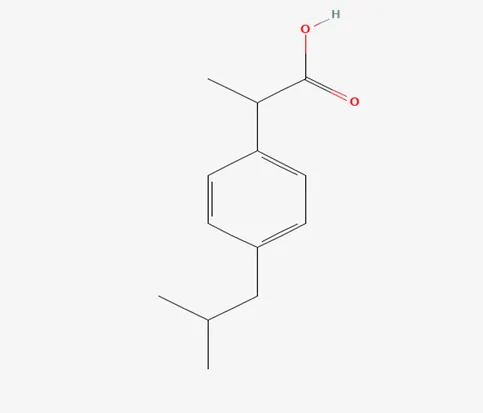
Fig. 1: Structure of Ibuprofen
Mechanism of Action:
By blocking COX enzymes, which are required for the synthesis of prostaglandins, ibuprofen lessens pain and inflammation. Reducing prostaglandin levels aids in symptom relief because prostaglandins cause pain and edema. Once the medication is removed, the enzyme activity resumes since this inhibition is transient and reversible. It blocks both COX-1 and COX-2 to a comparable degree because it lacks good selectivity. As a result, it offers effective pain relief but may also interfere with the stomach's natural defensive mechanisms.
Physical Properties (PP):
Ibuprofen is a white crystalline powder with the chemical formula C₁₃H₁₈O₂ and a molecular weight of about 206.28 g/mol. It melts at around 75–78°C. It is slightly soluble in water but dissolves well in organic solvents like ethanol, which helps in its absorption. It also has moderate lipophilicity, meaning it can easily cross cell membranes and distribute within the body.
Side Effects:
Ibuprofen is generally safe when used properly, but it can cause side effects such as stomach discomfort, nausea, and heartburn. In some cases, especially at higher doses or prolonged use, it may lead to dizziness or irritation of the stomach lining.
2. Aspirin
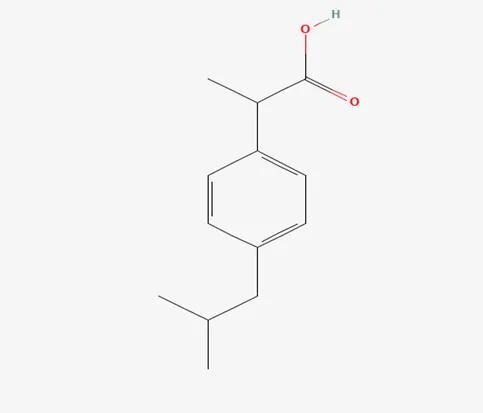
Fig 2: Structure of Aspirin
Mechanism of Action:
By permanently altering COX enzymes through acetylation, aspirin prevents the production of prostaglandins. The enzyme cannot regain its activity due to this irreversible effect, particularly in platelets. Consequently, platelet aggregation is decreased over the platelet's whole life. Because of this, aspirin can have long-lasting effects on blood coagulation even at low doses. Because of this, it acts differently than the majority of other NSAIDs, which operate reversibly.
IUPAC Name: 2-acetoxybenzoic acid
Physical Properties (PP):
Aspirin is a white crystalline solid with the chemical formula C₉H₈O₄ and a molecular weight of 180.16 g/mol. It has a melting point of about 135–136°C. It is slightly soluble in water but more soluble in alcohol. A notable feature is that it is sensitive to moisture and can hydrolyse into salicylic acid over time.
Side Effects:
Aspirin commonly causes gastric irritation, which may result in nausea and vomiting. With long-term use, it can increase the risk of stomach ulcers and bleeding due to its effect on platelet function.
3. Sulindac
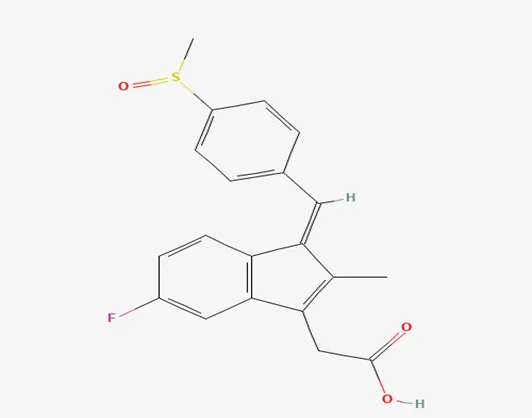
Fig 3: Structure of Sulindac
Mechanism of Action
Sulindac is a prodrug, which means that the body must metabolise it before it becomes active. Its active sulfide form reduces prostaglandin levels and inflammation by inhibiting COX enzymes. The liver is where this conversion mostly takes place, and the active form then circulates throughout the body. The initial discomfort of the stomach lining may be lessened because the parent medication is inactive. But once triggered, it functions similarly to a standard NSAID.
IUPAC Name: (Z)-5-fluoro-2-methyl-1-[(4-methylsulfinyl)benzylidene]indene-3-acetic acid
Physical Properties (PP):
Sulindac appears as a yellow crystalline powder with the chemical formula C₂₀H₁₇FO₃S and a molecular weight of about 356.41 g/mol. It has a melting point of 182–185°C. It is practically insoluble in water but dissolves in organic solvents. Its lipophilic nature allows it to distribute effectively in body tissues, and it remains stable under normal conditions.
Side Effects:
Sulindac may cause abdominal pain and nausea during use. In rare cases, it can lead to skin rashes. Although it may initially be less irritating to the stomach, side effects can still appear after it becomes active in the body.
4. Indomethacin
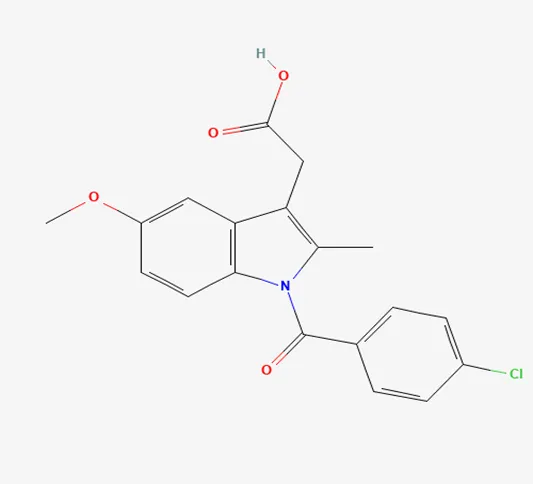
Fig 4: Structure of Indomethacin
Mechanism of Action
Indomethacin is an NSAID that helps reduce pain, swelling, and fever by blocking the activity of cyclooxygenase enzymes, mainly COX-1 and COX-2. These enzymes normally produce prostaglandins, which are chemicals responsible for inflammation and pain in the body. By decreasing prostaglandin formation, indomethacin provides anti-inflammatory and pain-relieving effects. It has a strong interaction with the COX-1 enzyme, which makes it effective in reducing inflammation.
IUPAC Name: 1-(4-chlorobenzoyl)-5-methoxy-2-methylindole-3-acetic acid
Physical Properties (PP):
Indomethacin is a white to yellow crystalline powder with the chemical formula C₁₉H₁₆ClNO₄ and a molecular weight of 357.79 g/mol. It has a melting point of 155–162°C. It is slightly soluble in water but dissolves well in solvents like ethanol and methanol. It is highly lipophilic and sensitive to light, requiring careful storage.
Side Effects:
Indomethacin is a potent drug and can cause side effects such as headaches, dizziness, and gastrointestinal irritation. Due to its strong action, these effects may be more noticeable compared to other NSAIDs.
Introduction to ADMET:
The five main components of ADMET—absorption, distribution, metabolism, excretion, and toxicity—represent a drug's pharmacokinetic behaviour. When determining whether a molecule can be turned into a safe and effective medication, these aspects are crucial. Even if a chemical exhibits strong binding in docking experiments, its practical application may be hindered by inappropriate ADMET characteristics. In this study, the ADMET properties of a few NSAIDs—ibuprofen, aspirin, sulindac, and indomethacin—were predicted using computational techniques.
Absorption:
Absorption refers to how well a drug enters the bloodstream after administration. The studied NSAIDs generally show good intestinal absorption, meaning they are effectively taken up by the body. Drugs like ibuprofen and indomethacin have high membrane permeability, allowing them to pass through biological barriers easily. Aspirin, however, shows moderate solubility, which can slightly affect its absorption compared to others.
Distribution:
Distribution describes how the drug spreads throughout the body after absorption. These NSAIDs show moderate distribution, meaning they reach different tissues effectively. Indomethacin, being more lipophilic, can penetrate tissues more easily than others. Most of these drugs have limited ability to cross the blood-brain barrier, which helps reduce unwanted effects on the central nervous system.
Metabolism:
Metabolism mainly occurs in the liver, where enzymes break down drugs into simpler forms. The NSAIDs studied are metabolised by cytochrome P450 enzymes. They generally show low inhibition of these enzymes, which means they are less likely to interfere with the metabolism of other drugs. This reduces the chances of harmful drug interactions.
Excretion:
Excretion is the process by which drugs are removed from the body, mainly through the kidneys. The NSAIDs in this study are primarily eliminated through urine. Their moderate clearance rates indicate that they remain in the body long enough to provide sustained therapeutic effects without accumulating excessively.
Toxicity:
Toxicity studies help identify the potential harmful effects of drugs. Some NSAIDs are associated with gastrointestinal issues and liver toxicity. Aspirin is known for causing stomach irritation, especially with prolonged use, while indomethacin may show higher toxicity due to its strong action. However, most of these drugs show a low risk of heart-related toxicity, making them relatively safe when used properly.
Conclusion of ADMET Study:
The chosen NSAIDs exhibit excellent ADMET profiles overall, with acceptable safety features, moderate dispersion, and effective absorption. Their continued use as therapeutic agents is supported by these characteristics. However, some disadvantages should be considered when using them, such as gastrointestinal distress and potential liver damage.
Table Of ADMET:
|
Property |
Drug1 (Ibuprofen) |
Drug2 (Aspirin) |
Drug3 (Sulindac) |
Drug4 (Indomethacin) |
|
Absorption: water-solubility |
-3.696 |
-1.868 |
-4.755 |
-3.824 |
|
Absorption: Caco-2 permeability |
1.729 |
0.09 |
0.613 |
1.08 |
|
Absorption: intestinal absorption(human) |
94.064 |
76.938 |
98.01 |
98.649 |
|
Absorption: skin permeability |
-2.685 |
-2.715 |
-2.724 |
-2.732 |
|
Absorption: p-glycoprotein substrate |
No |
No |
Yes |
No |
|
Absorption: p-glycoprotein 1 inhibitor |
No |
No |
No |
No |
|
Absorption: p-glycoprotein2 inhibitor |
No |
No |
No |
No |
|
Distribution: VDss (human) |
-0.803 |
-1.716 |
-1.184 |
-1.633 |
|
Distribution: fraction unbound(human) |
0.239 |
0.481 |
0 |
0.077 |
|
Distribution: BBB permeability |
0.31 |
-0.332 |
-0.283 |
-0.563 |
|
Distribution: CNS permeability |
-1.695 |
-2.489 |
-2.142 |
-2.026 |
|
Metabolism: CYP2D6 substrate |
No |
No |
No |
No |
|
Metabolism: CYP3A4 Substrate |
No |
No |
Yes |
No |
|
Metabolism: CYP1A2 Inhibitor |
No |
No |
No |
No |
|
Metabolism: CYP2C19 inhibitor |
No |
No |
No |
No |
|
Metabolism: CYP2C9 inhibitor |
No |
No |
No |
No |
|
Metabolism: CYP2D6 inhibitor |
No |
No |
No |
No |
|
Metabolism: CYP3A4 inhibitor |
No |
No |
No |
No |
|
Excretion: total clearance |
0.263 |
0.72 |
0.515 |
0.088 |
|
Excretion: renal OCT2 substrate |
No |
No |
No |
No |
|
Toxicity: AMES Toxicity |
No |
No |
No |
No |
|
Toxicity: Max tolerated Dose (Human) |
1.015 |
1.016 |
-0.171 |
1.109 |
|
Toxicity: HERG1 Inhibitor |
No |
No |
No |
No |
|
Toxicity: HERG2 Inhibitor |
No |
No |
No |
No |
|
Toxicity: Oral Rat Acute Toxicity (LD50) |
2.303 |
2.286 |
3.323 |
2.39 |
|
Toxicity: Oral Rat Chronic Toxicity (LOAEL) |
2.438 |
1.956 |
1.425 |
1.892 |
|
Toxicity: Hepatotoxicity |
Yes |
No |
Yes |
Yes |
|
Toxicity: Skin Sensation |
Yes |
No |
No |
No |
|
Toxicity: Pyriformis Toxicity |
0.528 |
0.251 |
0.295 |
0.29 |
|
Toxicity: Minnow toxicity |
0.619 |
1.974 |
-0.465 |
0.075 |
Molecular Docking:
Introduction to Molecular Docking:
Molecular docking is a computational technique that is frequently used in drug design and structural biology to comprehend the interactions between two molecules. Most of the time, it examines how a ligand—a small molecule—fits into a receptor—a larger molecule, such as an enzyme or protein. Predicting how the ligand will attach to the receptor and the strength of that connection is the fundamental principle underpinning docking. Because it enables researchers to test numerous compounds on a computer before doing actual laboratory tests, this approach has become crucial in the drug development process. By doing this, scientists can more effectively find viable medication candidates while saving money and time.
Basic Concepts:
Molecular docking consists of two primary components:
Ligand: This is typically a little molecule that has the potential to be a medication. It interacts with the target and has the ability to either activate or prevent its function.
Receptor: Usually a protein, the receptor can also be DNA or RNA. It has a particular area where the ligand binds, known as the active site.
How Docking Works:
Finding the optimal configuration for the ligand to fit into the active site of the receptor is the aim of molecular docking. The "pose" refers to this configuration. Scoring functions are used to determine the intensity of binding between the ligand and receptor after the posture has been predicted. Numerous interactions, including hydrogen bonds, hydrophobic forces, van der Waals contacts, and electrostatic forces, are taken into consideration by these scoring algorithms. The software predicts the stability of the ligand-receptor combination based on these interactions.
Molecular Docking Procedure Using AutoDock (PyRx):
To store all of your project files, first open PyRx and choose a folder.
Next, import your ligand (drug molecule). It is possible to load files in formats such as mol, sdf, or pdb. Select "Make Ligand" to transform the ligand into the required format (pdbqt) once it has appeared in the molecular library. The software will take care of the conversion automatically.
The next step is to import the protein (receptor), usually in the. pdb format. Go to the AutoDock area and choose it as a macromolecule. The software will transform it into pdbqt format. Before docking, make sure water molecules are removed and hydrogens and charges are added (PyRx frequently does this automatically).
Then, define the area where docking will occur by determining the size of the box and centre coordinates (x, y, and z). Verify that the binding point is completely covered.
Once everything is set up, begin the docking process. The binding energies of different binding postures, or poses, will be calculated by the software.
After docking is complete, review the results. The binding affinities of different places (measured in kcal/mol) will be displayed by PyRx. Lower energy leads to better binding. You may also observe the interaction between the protein and ligand. Finally, select the optimal binding point and save it in the.pdb or. pdbqt format for further study.
|
Compound No |
Compound Name |
Binding Affinity |
|
|
Ibuprofen |
-7.6 |
|
|
Aspirin |
-6.6 |
|
|
Sulindac |
-7.2 |
|
|
Indomethacin |
-6.7 |
RESULT DISCUSSION
Among the selected NSAIDs, Ibuprofen showed the strongest binding affinity (-7.6 kcal/mol), indicating better interaction with the COX-1 enzyme compared to the other compounds. Sulindac also demonstrated good binding affinity, while Aspirin and Indomethacin showed comparatively lower docking scores.
CONCLUSION
Using molecular docking techniques, the current work successfully assessed how a few NSAIDs—ibuprofen, aspirin, sulindac, and indomethacin—interact with the cyclooxygenase-1 (COX-1) enzyme. All of the compounds showed good binding affinities with the target protein, according to the docking studies, suggesting that they could be useful as COX-1 inhibitors. Ibuprofen had the highest binding affinity (-7.6 kcal/mol) among the medications under investigation, followed by aspirin (-6.6 kcal/mol), indomethacin (-6.7 kcal/mol), and sulindac (-7.2 kcal/mol), indicating comparatively higher interaction and stability within the active site. The ADMET study, which showed good absorption, moderate distribution, acceptable metabolism, and effective excretion profiles, further confirmed these compounds' drug-likeness. However, several drawbacks were noted, including the possibility of hepatotoxicity and gastrointestinal discomfort, especially after extended usage, which is consistent with the recognized clinical adverse effects of NSAIDs. All things considered, the combination of molecular docking and ADMET prediction offers insightful information on the pharmacokinetic behaviour and binding effectiveness of NSAIDs. The results support the therapeutic value of these medications while emphasising the necessity of using them carefully and creating safer substitutes with fewer side effects. Additionally, this work highlights the value of computational methods in medication design and evaluation. However, the docking results are based on computational predictions and require further experimental validation.
Images Of Molecular Docking:
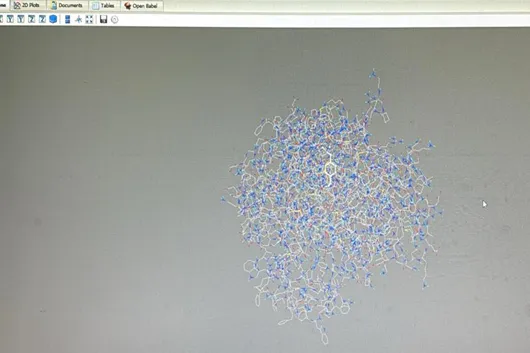
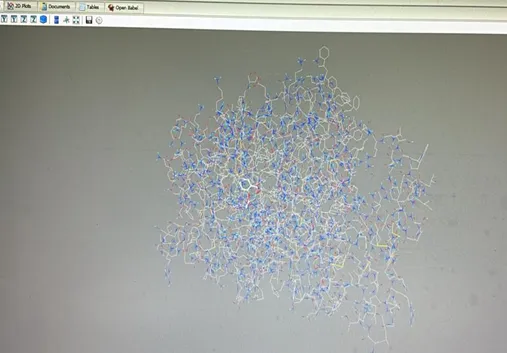
(Fig.1 of Ibuprofen binds with PDB-6Y3C) (Fig.2 of Aspirin binds with PDB-6Y3C
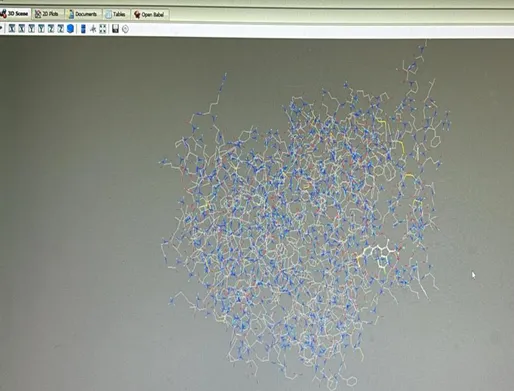
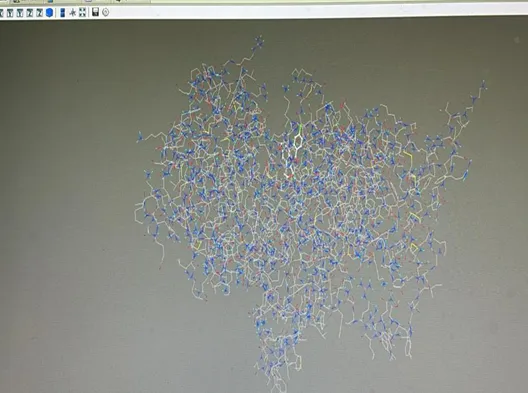
(Fig.3 of Sulindac binds with PDB-6Y3C) (Fig.4 of Indomethacin binds with PDB-6Y3C)
REFERENCES



Omkar Beldar, Dr. Rasika Devale, Sumit Dole, Molecular Docking and ADMET Analysis of Selected NSAIDs Against Cox-1 Enzyme, Int. J. of Pharm. Sci., 2026, Vol 4, Issue 6, 727-736, https://doi.org/10.5281/zenodo.20526392
 10.5281/zenodo.20526392