

We use cookies to ensure our website works properly and to personalise your experience. Cookies policy
Vidya Niketan Institute of Pharmacy and Research Center, Bota.
Nanocrystals have emerged as a promising drug delivery strategy for enhancing the solubility, dissolution rate, and bioavailability of poorly water-soluble drugs. Due to their submicron size and large surface area, nanocrystal formulations enable improved drug loading, rapid absorption, and enhanced therapeutic performance without requiring complex carriers. Recent advances in production technologies—such as high-pressure homogenization, wet milling, and controlled precipitation—have significantly improved particle stability, scalability, and surface functionalization. These innovations have expanded the application of nanocrystals across oral, parenteral, ophthalmic, and transdermal drug delivery routes. Despite their advantages, challenges remain in long-term stability, aggregation control, and regulatory standardization. Future developments are expected to focus on targeted delivery, multifunctional nanocrystals, and integration with emerging nanotechnologies to achieve precision medicine. Overall, nanocrystals represent a versatile and powerful platform with substantial potential for next-generation drug delivery systems.
The development of effective drug delivery systems remains a major challenge in pharmaceutical science, especially for drugs that exhibit poor aqueous solubility and limited oral bioavailability. Nearly 40–60% of newly discovered drug molecules fall into the Biopharmaceutics Classification System (BCS) Class II and IV categories, where insufficient solubility becomes a critical barrier to therapeutic success. To overcome these limitations, nanotechnology-based approaches have gained significant attention, with nanocrystals emerging as one of the most promising and versatile strategies.[1]
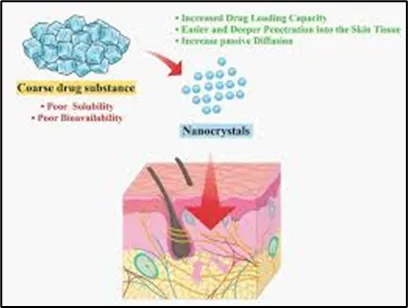
Fig. 1. Nanocrystals as drug delivery system
Nanocrystals are pure drug particles reduced to the nanometer scale and stabilized by minimal amounts of surfactants or polymers. Their remarkably large surface area, enhanced saturation solubility, and improved dissolution rate make them highly effective in increasing the absorption of poorly soluble drugs. Unlike many other nano drug carriers, nanocrystals consist only of the active drug molecule, allowing for high drug loading, simplified formulation, and improved patient safety.
Recent technological advances—such as high-pressure homogenization, wet media milling, and controlled precipitation—have improved the reproducibility, scalability, and stability of nanocrystal formulations. These advancements have expanded their applicability across various administration routes, including oral, parenteral, ophthalmic, pulmonary, and transdermal delivery. As a result, several nanocrystal-based formulations have already reached the pharmaceutical market, validating their clinical relevance.[2]
Despite their advantages, nanocrystals still face challenges related to long-term stability, aggregation, and regulatory standardization. Ongoing research is focused on surface engineering, targeted delivery, combination therapies, and hybrid nanostructures that integrate nanocrystals with other advanced carriers. These innovations position nanocrystals as a key component of next-generation drug delivery solutions with significant potential to improve therapeutic outcomes.
2. Rationale for Nanocrystal Drug Delivery
A major challenge in modern pharmaceutical development is the increasing number of drug candidates with poor aqueous solubility, which limits their absorption, bioavailability, and therapeutic performance. Traditional formulation strategies—such as salt formation, micronization, and use of solubilizing excipients—often fail to produce adequate bioavailability, especially for Biopharmaceutics Classification System (BCS) Class II and IV drugs. This has led to growing interest in nanotechnology-based solutions, with nanocrystal drug delivery systems emerging as a powerful approach.
Nanocrystals are pure drug particles reduced to the nanometer scale, typically stabilized with small amounts of surfactants or polymers. The rationale for using nanocrystals lies in their unique physicochemical and biopharmaceutical advantages, which directly address the limitations of poorly soluble drugs.
Key Reasons Supporting the Use of Nanocrystals
1. Enhanced Solubility and Dissolution Rate
Reducing drug particles to the nanoscale significantly increases their surface area. According to the Noyes–Whitney equation, this leads to faster dissolution in biological fluids. Improved dissolution ensures higher drug concentrations at the absorption site, leading to better therapeutic outcomes.[3]
2. Improved Oral Bioavailability
Nanocrystals increase saturation solubility and maintain higher drug concentrations in the gastrointestinal tract, promoting enhanced absorption through biological membranes. This is particularly beneficial for lipophilic and hydrophobic drugs.
3. High Drug Loading Capacity
Unlike lipid or polymer-based nanocarriers, nanocrystals consist almost entirely of the active pharmaceutical ingredient (API). This eliminates the need for carriers and allows for high drug loading, making them efficient and cost-effective.
4. Versatility Across Administration Routes
Nanocrystals can be incorporated into various dosage forms—oral tablets, suspensions, injectables, ophthalmic drops, inhalation formulations, and topical systems. Their compatibility across multiple routes broadens their therapeutic potential.[5]
5. Reduced Use of Excipients
Traditional solubility-enhancement techniques often require large quantities of surfactants or solvents, which can cause toxicity. Nanocrystals use minimal stabilizers, improving patient safety and formulation simplicity.
6. Faster Onset of Action
Improved dissolution and absorption lead to more rapid therapeutic effects, which is particularly beneficial in emergency or pain-relief medications.
7. Overcoming Food Effects
Many poorly soluble drugs show variable absorption depending on food intake. Nanocrystals reduce this dependency by maintaining higher solubility independent of digestive conditions.
8. Possibility for Targeted and Modified Release
Surface engineering of nanocrystals allows for improved mucoadhesion, targeted delivery to specific tissues, and controlled or sustained release profiles, enabling tailored therapeutic strategies.
9. Industrial Feasibility and Scalability
Techniques like high-pressure homogenization and wet milling are already industrially established, making nanocrystals suitable for large-scale commercial production.
Methods of Nanocrystal Production
Nanocrystals can be produced using several pharmaceutical engineering techniques designed to reduce particle size, enhance solubility, and improve drug performance. The methods fall into three main categories: top-down, bottom-up, and combination (hybrid) approaches. Each method offers specific advantages depending on the drug properties, scalability needs, and desired particle characteristics.[7]
A. Top-Down Techniques
These methods start with larger drug crystals and use mechanical force to break them into nanosized particles. They are widely used in industry due to high reproducibility and scalability.
1. High-Pressure Homogenization (HPH)
This is the most common and FDA-approved method.
Process
Drug suspension is forced through a narrow gap at very high pressure.
Intense shear forces, cavitation, and turbulence break the drug particles into nanocrystals.
Advantages
Suitable for large-scale production.
Produces uniformly small, stable particles.
No harsh solvents needed.[11]
Types
Dissocubes® method (using water-based media)
Nanopure® method (using non-aqueous media)
2. Wet Ball Milling / Media Milling
Also known as nanomilling.
Process
Drug powder is dispersed in a stabilizer solution.
Milling media (ceramic or zirconia beads) rotate at high speed.
Collisions between beads and drug particles reduce them to nanosize.
Advantages
Simple, cost-effective, and scalable.
Works well for hydrophobic drugs.
Commercial Example
NanoCrystal® technology
B. Bottom-Up Techniques
These methods form nanocrystals from molecular drug solutions. They rely on precipitation or crystallization processes.[13]
3. Anti-Solvent Precipitation
A widely used method for bottom-up manufacturing.
Process
Drug is dissolved in a solvent.
It is rapidly mixed with an anti-solvent where the drug has low solubility.
Rapid supersaturation causes nanocrystals to precipitate.
Advantages
Produces very small, uniform particles.
Low energy requirement.
Challenges
Requires careful control to prevent unwanted crystal growth or aggregation.
4. Controlled Crystallization Technique
Involves precise regulation of temperature, mixing, and solvent ratios to form nanocrystals.[17]
Advantages
Excellent for heat-sensitive drugs.
Allows control over crystal shape and size.
C. Combination (Hybrid) Methods
These combine top-down and bottom-up approaches to improve efficiency and particle stability.
5. Precipitation Followed by High-Pressure Homogenization (NanoEdge®)
Process
Drug is first precipitated into nano-sized particles (bottom-up).
Then homogenized to narrow particle size distribution (top-down).
Advantages
Produces highly uniform and stable nanocrystals.
Reduces processing time compared to using homogenization alone.
6. Precipitation Followed by Media Milling
Process
Precipitation creates small initial crystals.
Milling reduces them to optimal nanosize.[19]
Advantages
Increases production speed.
Produces stable formulations with consistent size.
D. Emerging and Novel Techniques
7. Supercritical Fluid Technology
Uses supercritical CO₂ for crystallization.
Advantages
Solvent-free, environmentally friendly.
Produces ultra-pure nanocrystals.
8. Spray Drying and Freeze Drying
Used to convert nanocrystal suspensions into dry powder form.
Advantages
Ideal for inhalation, oral, and transdermal dosage forms.
Enhances stability and shelf-life.[23]
9. Laser Fragmentation
Uses pulsed lasers to break microcrystals into nanocrystals in a liquid medium.
Advantages
Solvent-free, precise control over particle size.
Useful for heat-sensitive compounds.
Advantages of Nanocrystals
Nanocrystals have become one of the most promising strategies in modern drug delivery due to their ability to significantly enhance the performance of poorly soluble drugs. Their unique nanoscale properties offer several biopharmaceutical, technological, and clinical benefits. These advantages make nanocrystals highly attractive for pharmaceutical development and commercialization.
1. Enhanced Solubility and Dissolution Rate
Nanocrystals dramatically increase the surface area of drug particles, leading to faster dissolution in biological fluids.[25]
Improved dissolution enhances concentration at the absorption site.
Solubility enhancement helps poorly water-soluble drugs achieve therapeutic plasma levels.
2. Improved Bioavailability
By increasing solubility and dissolution, nanocrystals improve drug absorption across biological membranes.
Allows lower doses to achieve the same effect.
Beneficial for BCS Class II and IV drugs, which have solubility and permeability issues.
3. High Drug Loading Capacity
Nanocrystals are composed almost entirely of the active pharmaceutical ingredient (API).
No bulky carriers are needed.
Provides 100% drug content in many formulations.
More efficient compared to liposomes, nanoparticles, or polymeric carriers.[24]
4. Rapid Onset of Action
Faster dissolution leads to quicker drug absorption, providing a more immediate therapeutic response.
This is useful in pain management, cardiovascular emergencies, and CNS disorders.
5. Versatility in Administration Routes
Nanocrystals can be incorporated into a wide range of dosage forms:
Oral tablets and capsules
Injectable suspensions
Ophthalmic solutions
Pulmonary inhalation formulations
Transdermal and topical products
This flexibility broadens their clinical applications.
6. Reduced Use of Excipients
Nanocrystal formulations require only small amounts of stabilizers.
Minimizes exposure to surfactants and solvents.
Limits formulation-related toxicity.
Simplifies regulatory approval.
7. Enhanced Stability of Drug Molecules
Nanocrystallization can help stabilize drugs that degrade in solution.[22]
Solid particles are less prone to hydrolysis.
Improved shelf-life and storage stability.
8. Ability to Overcome Food Effects
Some drugs show variable absorption based on food intake. Nanocrystals reduce this dependency by maintaining higher solubility regardless of gastrointestinal conditions.
9. Scalable and Industrially Feasible
Methods like high-pressure homogenization and wet milling are already industrially established.
Manufacturing is cost-effective and scalable.
Suitable for commercial production.
10. Improved Patient Compliance
Better therapeutic performance allows lower doses or reduced dosing frequency.
Enhances convenience and safety.
Increases adherence in long-term therapy.[21]
11. Potential for Targeted and Controlled Release
Surface modification enables improved:
Mucoadhesion
Tissue targeting
Sustained or modified release
This supports precision medicine approaches.
Limitations of Nanocrystals
While nanocrystals offer significant advantages for enhancing solubility and bioavailability, they also present several limitations that must be considered during formulation, manufacturing, storage, and clinical use. Understanding these challenges is essential for optimizing their performance and ensuring long-term stability and safety.
1. Physical Instability (Aggregation and Ostwald Ripening)
Nanocrystals possess high surface energy, which makes them prone to aggregation during storage.
Particles may clump together, increasing particle size.
Ostwald ripening can occur, where larger crystals grow at the expense of smaller ones.
This can lead to changes in dissolution rate and reduced effectiveness.[20]
2. Requirement for Stabilizers
To prevent aggregation, nanocrystals require surfactants or polymers as stabilizers.
Choice and concentration of stabilizers are critical.
Incompatibility or toxicity issues may arise from certain stabilizers.
Excess stabilizers can lead to irritancy, especially in parenteral formulations.
3. Limited Chemical Stability
Although solid-state drugs are often more stable, some molecules may still degrade at the nanoscale.
Increased surface area may accelerate oxidation or hydrolysis.
Sensitive drugs may require special storage conditions.
4. High Energy Input in Top-Down Methods
Processes like high-pressure homogenization and wet milling require substantial mechanical energy.
Increases production costs.
Generates heat that may degrade thermolabile drugs.
Long processing times may be needed for hard crystals.[18]
5. Risk of Contamination from Milling Media
In media milling, the beads used for size reduction may shed contaminants.
Metal or ceramic fragments may enter the formulation.
Requires additional filtration and quality control measures.
6. Polymorphic Transformations
Nanocrystal processing can induce changes in crystal structure.
Altered polymorphs may affect solubility, stability, and bioavailability.
Requires careful characterization using DSC, XRD, etc.
7. Challenges in Drying and Redispersion
Transforming liquid nanocrystal suspensions into dry powder (via freeze-drying or spray-drying) can be problematic.
Nanocrystals may aggregate during drying.
Redispersion into original nanosize may be difficult without added stabilizers.
8. Scale-Up Issues
While several production methods are scalable, others still face challenges:
Maintaining uniform particle size distribution.
Reproducing laboratory conditions at industrial scale.[16]
Cost of high-performance equipment.
9. Limited Drug Applicability
Nanocrystals are most effective for poorly soluble, hydrophobic drugs.
Hydrophilic drugs may not benefit from nanocrystallization.
Not suitable for macromolecules, proteins, or peptides.
10. Regulatory Concerns
Nanocrystal formulations fall under advanced drug delivery systems, requiring extensive evaluation.
Lack of universal regulatory guidelines for nanoscale drugs.
Need for detailed safety, toxicity, and stability data.
Additional testing for parenteral and pulmonary formulations.
11. Potential Toxicity Concerns
Although they are pure drug particles, nanosized materials may behave differently in the body.
Risk of unexpected tissue accumulation.
Potential for altered pharmacokinetics.
Long-term safety data is still limited for some drugs.[15]
Applications of Nanocrystal Technology
Nanocrystal technology has gained widespread acceptance in the pharmaceutical and biomedical fields due to its ability to enhance solubility, dissolution, and bioavailability of poorly water-soluble drugs. The versatility of nanocrystals allows their incorporation into a wide range of dosage forms and therapeutic areas. Their simple composition, high drug loading, and scalable production methods make them suitable for numeros clinical applications.
1. Oral Drug Delivery
Oral administration is the most common route for nanocrystal formulations.
Applications
Enhancing absorption of BCS Class II and IV drugs.
Improving onset of action due to faster dissolution.
Reducing dose frequency by achieving better bioavailability.
Minimizing food-dependent absorption variations.[14]
Examples
Several marketed drugs like Fenofibrate nanocrystals and Sirolimus nanocrystals have shown significantly improved oral bioavailability.
2. Parenteral (Injectable) Delivery
Nanocrystals can be directly injected as sterile suspensions.
Applications
Delivering poorly soluble drugs intravenously without harmful solvents.
Achieving rapid therapeutic levels in the bloodstream.
Enabling controlled or sustained drug release by modifying particle properties.
Benefits
Reduced toxicity compared to solvent-based injections.
Higher patient safety and better tolerability.
3. Ophthalmic Drug Delivery
Nanocrystals improve drug retention and penetration in the eye.
Applications[12]
Enhancing solubility of drugs for treating glaucoma, inflammation, or infections.
Increasing corneal permeability and ocular residence time.
Reducing dosing frequency in eye drops.
Advantages
Better patient compliance due to improved formulation clarity and stability.
4. Pulmonary Drug Delivery
Nanocrystals can be converted to inhalable dry powders or nebulized suspensions.
Applications
Treating respiratory conditions such as asthma, COPD, or lung infections.
Delivering high-dose hydrophobic drugs directly to the lungs.
Improving local drug deposition while minimizing systemic exposure.
5. Topical and Transdermal Delivery
Nanocrystals enhance drug penetration into skin layers.[10]
Applications
Improving treatment of dermatological conditions such as psoriasis, fungal infections, and acne.
Enhancing permeation through the stratum corneum due to increased surface area.
Providing rapid onset for analgesic or anti-inflammatory formulations.
Benefits
Higher drug loading than gels or creams.
Better skin hydration and penetration.
6. Targeted Drug Delivery
Surface modification of nanocrystals enables tissue-specific targeting.
Applications
Delivering anticancer drugs to tumor tissues.
Attaching ligands or antibodies for receptor-mediated targeting.
Reducing systemic toxicity by focusing drug action on diseased tissues.
7. Controlled and Sustained Release Systems
Nanocrystals can be engineered to control drug release rates.[9]
Applications
Maintaining therapeutic levels for extended periods.
Reducing dosing frequency in chronic diseases.
Preventing peaks and troughs in drug concentration.
8. High-Dose Drug Delivery
Since nanocrystals contain nearly 100% active drug, they are ideal for drugs requiring large doses.
Applications
Anti-infective therapies
Anti-inflammatory treatments
Cardiovascular medications
9. Veterinary Medicine
Nanocrystal formulations are increasingly used in animal health.
Applications
Enhancing oral and injectable delivery for livestock and pets.[8]
Improving treatment efficiency while reducing drug waste.
10. Nutraceuticals and Herbal Drug Delivery
Nanocrystals help enhance the bioavailability of natural compounds with poor solubility.
Examples
Curcumin
Resveratrol
Quercetin
These compounds show improved antioxidant, anti-inflammatory, and therapeutic effects when formulated as nanocrystals.
Recent Advances in Nanocrystal Technology
Recent research and development in nanocrystal technology have pushed the boundaries of what nanocrystals can achieve in drug delivery. Here are some of the most significant and cutting-edge advances:
Nanocrystals are now being designed not just for drug delivery but also for cancer theranostics — combining therapy and diagnostics. (RSC Publishing)[6] For example, nanocrystals loaded with anticancer drugs have been engineered for targeted therapy, photothermal therapy, and imaging (MRI, CT, luminescence). (RSC Publishing) Their high drug loading, low toxicity, and flexibility in surface functionalization make them excellent for tumor targeting and real-time monitoring. (RSC Publishing)
Nanocrystals are increasingly used for enhanced topical drug delivery to the skin. (PubMed) Recent formulations improve skin penetration by using a high-concentration gradient, targeting hair follicles, or forming a “diffusional corona” on the skin surface. (PubMed) Specific advances in dermal delivery have shown better permeation and retention for treating skin disorders. (MDPI)
Scientists have developed compressed minitablets that contain nanocrystals for chronotherapeutic (time‑controlled) drug release. (MDPI) This approach enables drugs to be released at specific times of the day, which can improve treatment of diseases that follow circadian rhythms (e.g., hypertension).
Newer reviews and studies highlight advancements in stabilizer systems to prevent aggregation and improve long-term stability of nanocrystals. (Innovare Academics Journals) Emerging dosage forms and manufacturing technologies (e.g., supercritical fluid technology, microfluidic precipitation) facilitate better control over size, morphology, and scalability. (Ouci)[4]
There is growing momentum for translating nanocrystal-based formulations into marketed products. (Bentham Science) Recent patent trends and commercial formulations reflect increased industrial and regulatory confidence in nanocrystal platforms. (Drug Delivery Journal)
Advances in surface engineering allow nanocrystals to be functionalized with targeting ligands, polymers, or other moieties to improve specific delivery and reduce off-target effects. (RSC Publishing) Such functionalization supports more precise drug delivery, controlled release, and enhanced biocompatibility.
Novel “greener” production methods are being explored, such as stimulus-assisted nanoprecipitation, which uses external triggers (like light, heat, or microfluidic flow) to better control crystal formation with reduced solvent use. (arXiv) These methods aim to improve environmental sustainability and manufacturing scalability.[12]
Regulatory and Commercial Perspective of Nanocrystals
A. Regulatory Perspective
Nanocrystals, being nano-sized drug formulations, fall under strict scrutiny by regulatory agencies such as the FDA (USA), EMA (Europe), CDSCO (India), and ICH guidelines. Key regulatory aspects include:
1. Quality and Characterization Requirements
Regulators require detailed characterization of nanocrystals, including:
Particle size distribution and shape
Surface charge (zeta potential)
Crystallinity and polymorphism
Solubility and dissolution profile
Stability studies (physical, chemical, thermal)
2. Bioequivalence and Pharmacokinetics
Nanocrystal formulations must demonstrate bioequivalence or improved pharmacokinetic profiles compared to conventional forms.
Regulators may require:
Cmax, Tmax, and AUC studies for oral formulations
Plasma concentration and tissue distribution for parenteral formulations
3. Safety Evaluation
Toxicity studies (acute, sub-acute, chronic)
Assessment of nanoparticle-specific risks such as aggregation, immunogenicity, or unexpected biodistribution
Evaluation of excipients used as stabilizers[13]
4. Regulatory Guidelines
FDA’s Guidance for Industry: Liposome Drug Products & Nanotechnology Products
EMA: Reflection Paper on the Data Requirements for Nanomedicines
ICH Q8–Q10: Quality by Design (QbD) principles for nanocrystals
B. Commercial Perspective
Nanocrystals have significant commercial advantages, which have led to the development and approval of multiple market products:
1. Successful Marketed Products
Fenofibrate Nanocrystals – improved oral bioavailability
Itraconazole Nanocrystals (Sporanox®) – reduced food effect
Paclitaxel Nanocrystals (NanoPac®) – safer IV delivery without toxic solvents[23]
2. Platforms and Technologies
Several proprietary platforms help bring nanocrystals to market:
NanoCrystal® Technology (Elan/Nanocrystal) – used in oral and injectable formulations
SmartCrystal® Technology – combines top-down and bottom-up techniques for enhanced stability
NANOEDGE® Technology – scalable production for poorly soluble drugs
3. Market Potential
Nanocrystals address ~40% of poorly soluble drugs in the pharmaceutical pipeline.
Global market for nanocrystal-based drug delivery is growing rapidly due to:
Higher bioavailability
Reduced dosing frequency
Multi-route applicability (oral, injectable, ophthalmic, dermal)
4. Intellectual Property & Patent Considerations
Companies secure patents for:
Nanocrystal preparation methods
Stabilizer combinations
Formulations for specific drugs
Patent protection helps commercialize nanocrystals without generic competition immediately after approval.
5. Advantages for Pharmaceutical Industry
Faster time-to-market for reformulated existing drugs
Ability to rescue poorly soluble drug candidates
Offers cost-effective solutions with minimal excipients
Facilitates orphan drug and personalized medicine development[2]
FUTURE PERSPECTIVES
Future research is likely to focus on functionalizing nanocrystals with targeting ligands (e.g., antibodies or peptides) or imaging agents to create theranostic systems, enabling simultaneous therapy and diagnosis. (RSC Publishing) By combining therapeutic action with real-time tracking, these “smart” nanocrystals could improve treatment precision, reduce side effects, and personalize drug delivery.
Parenteral (injectable) formulations of nanocrystals are expected to expand, especially in oncology, where the high drug-loading capacity and improved solubility can enhance anti-cancer efficacy. (PubMed) Tailored nanocrystal suspensions might address challenges of hard-to-solubilize chemotherapy drugs, improving pharmacokinetics and reducing systemic toxicity.
Incorporation of stimuli-responsive mechanisms (e.g., pH, temperature, light) within nanocrystal formulations could enable controlled and on-demand drug release. For example, “stimulus-assisted nanoprecipitation” methods let researchers fine-tune nucleation and growth dynamics under external triggers. (arXiv) Such systems may allow intelligent drug delivery that dynamically responds to the physiological environment or disease-specific cues.[14]
In skin-related therapies, nanocrystals could be used in conjunction with novel delivery methods like microneedles to target deeper dermal layers or hair follicles, potentially treating hair loss or localized skin diseases. (PMC) The development of "plantCrystals" (nanocrystals derived from plant-based materials) offers a sustainable future direction, combining natural actives with nanoscale delivery. (PMC)
Green and scalable production techniques such as stimulus-assisted precipitation or continuous-flow systems could reduce solvent usage, improve batch-to-batch consistency, and lower production costs. (arXiv) Enhanced hybrid manufacturing methods (combining bottom-up and top-down) will likely improve control over particle size and stability, enabling commercial-scale translation.
As more nanocrystal-based therapies advance toward clinical trials, regulatory guidance will become clearer; there will be a greater need to define quality attributes, in vivo fate, and toxicity profiles. (Ouci) Collaboration between academia, regulatory agencies, and industry may accelerate the approval of nanocrystal formulations, especially for parenteral and oncology applications.
Given their high drug content, nanocrystals are ideal for personalized dosing, especially for hydrophobic drugs where minor changes in dose can impact efficacy or safety. Future work might involve integrating nanocrystals into personalized medicine platforms, combining them with diagnostics or patient-specific delivery schedules.
There is growing interest in developing biodegradable stabilizers and eco-friendly production paths to make nanocrystal technology more sustainable. In parallel, more research is needed to assess long-term safety, biocompatibility, and environmental impact of large-scale nanocrystal production.[5]
CONCLUSION
Nanocrystal technology represents a significant advancement in modern drug delivery, offering effective solutions to the challenges posed by poorly water-soluble drugs. By reducing drug particles to the nanoscale, nanocrystals enhance solubility, dissolution rate, and bioavailability, enabling more rapid and consistent therapeutic effects. Their high drug loading, minimal use of excipients, and versatility across multiple administration routes—oral, parenteral, ophthalmic, pulmonary, and topical—make them highly valuable in pharmaceutical development. Recent technological innovations, including high-pressure homogenization, wet milling, and stimulus-assisted precipitation, have improved the stability, scalability, and surface functionalization of nanocrystals. Applications in oncology, dermatology, chronotherapeutics, and personalized medicine highlight their clinical potential. Despite these advantages, challenges such as physical instability, aggregation, limited chemical stability, and regulatory concerns must be carefully addressed to ensure safe and effective use.
REFERENCES

Ghuge Sandhya, Shingote vishakha, Nanocrystals As Emerging Drug Delivery Systems: Advances And Future Perspectives, Int. J. of Pharm. Sci., 2026, Vol 4, Issue 7, 2492-2505, https://doi.org/10.5281/zenodo.21338464
 10.5281/zenodo.21338464