

We use cookies to ensure our website works properly and to personalise your experience. Cookies policy
Department of Pharmaceutics, Srinivas College of Pharmacy, Mangalore, Karnataka.
Nanosponges are emerging nanocarrier systems widely explored for controlled and targeted drug delivery applications, particularly in topical formulations. These porous, three-dimensional nanosized structures possess unique properties such as high drug-loading capacity, improved solubility enhancement, controlled release behavior, and enhanced bioavailability of poorly water-soluble drugs. The present review highlights the structure, types, materials, preparation methods, mechanism of drug release, evaluation parameters, and diverse pharmaceutical applications of nanosponges. Various preparation techniques including emulsion solvent diffusion, solvent evaporation, and ultrasound-assisted methods are discussed along with the role of polymers, solvents, and crosslinkers in nanosponge formation. Important characterization parameters such as particle size, entrapment efficiency, percentage yield, scanning electron microscopy, and in vitro drug release studies are also summarized. Furthermore, the review emphasizes the applications of nanosponges in oral, topical, antiviral, anticancer, oxygen delivery, agricultural, and detoxification systems. Advantages such as targeted delivery, reduced side effects, biocompatibility, and sustained drug release make nanosponges promising carriers in modern therapeutics. Despite challenges related to large-scale production and formulation optimization, recent advancements indicate significant future potential for nanosponges in next-generation drug delivery systems and biomedical applications.
Topical drug delivery is used for both local and systemic effects, but drug penetration is often limited by the skin barrier, creating challenges for formulation scientists. To address this, nanotechnology has led to the development of advanced drug delivery systems such as nanoparticles, nanoemulsions, nanosuspensions, nanofibers, and Nanosponges, which enable controlled and targeted drug delivery while reducing side effects. Nanosponges are specifically designed for topical applications due to their non-irritating, non-allergic, non-toxic, and non-mutagenic nature. They are particularly effective for delivering poorly water-soluble drugs by enhancing their solubility. Structurally, Nanosponges are tiny, spherical particles with sizes ranging from 250 nm to 1 µm, possessing a highly porous surface that allows efficient drug loading and controlled release.1
Nanosponges (NS) are insoluble, porous materials with nanometer-sized cavities and high absorption capacity, capable of forming inclusion complexes with various molecules. They can be obtained from both organic and inorganic components. These novel structures are extremely small—comparable to the size of a virus—and contain numerous internal cavities that can encapsulate drug molecules. By attaching specific chemical linkers, Nanosponges can be designed to target tumor cells, enabling site-specific drug delivery.2
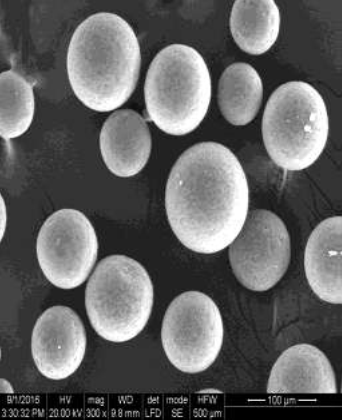
Fig 1: View showing smooth surface of individual Fig 2: View showing Nanosponge
Nanosponge
Targeted drug delivery has faced significant challenges, particularly in achieving precise drug localization and controlled release. To overcome these limitations, specially designed functionalized particles known as nanosponges have been developed. Nanosponges are tiny, virus-sized structures with numerous cavities that can encapsulate a variety of drugs. They can reach specific target sites and release the drug in a controlled manner. Additionally, nanosponges help improve the delivery of poorly water-soluble drugs by enhancing their solubility and ease of administration.3
Nanosponges are spherical, colloidal structures with a high capacity to solubilize poorly water-soluble drugs through both inclusion and non-inclusion mechanisms. Recently developed for drug delivery, they not only enhance drug solubility but also provide prolonged release and improved bioavailability. Due to their unique structure—hydrophobic internal cavities and hydrophilic external surfaces—they can encapsulate both hydrophilic and hydrophobic drugs, offering remarkable versatility in drug delivery applications.4
Nanosponges can be described as a three-dimensional network or scaffold, where the backbone consists of long-chain polyester structures. These are combined with cross-linking agents that act like tiny connectors, binding different parts of the polymer together to form a stable, porous structure.5
Physically, nanosponges exist as a dry powder and can be formulated for oral, topical, or parenteral administration. They can encapsulate a wide range of drugs, although the ideal drug molecule typically has a molecular weight below 400 Daltons. Due to their small size, nanosponges can circulate freely in the bloodstream until they reach and bind to a specific target site.6
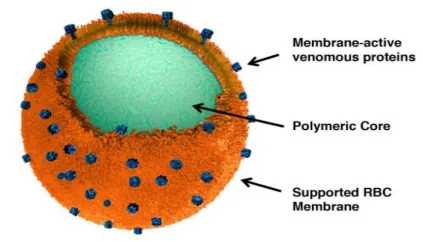
Fig 3: Morphological representation of nanosponge
TYPES OF NANOSPONGES7
MATERIALS USED IN NANOSPONGES8
Polymer: Hypercrosslinked polystyrene, CD (alkoxy carbonyl CD), Methylβ-CD,
Hydroxy propyl β-CD, Poly-valerolactone, Eudragit RS100, Acrylic polymer.
Copolymer: Poly (Valerolactone allyl valerolactone), Poly (Valerolactone allyl valerolactone oxypanedione), Ethyl cellulose, Polyvinyl alcohol.
Crosslinker: Carbonyl diimidazole (CDI), Carboxylic acid dianhydrides, Diarylcarbonates, Dichloromethane, Diisocyanates, Glutaraldehyde, Pyromellitic anhydride 2,2bis(acrylamide) acetic acid.
Polar solvents: Ethanol, Dimethylacetamide, Dimethylformamide.
Role of polymers 30,31,32,33,34
|
Polymer/Solvent |
Category |
Key properties |
Uses in Nanosponges |
|
Ethyl cellulose |
Matrix polymer |
Water-insoluble, film-forming, thermoplastic; chemically stable across pH range; good mechanical strength; soluble in organic solvents (ethanol, acetone, DCM); hydrophobic backbone with ethoxy substituents |
Primary matrix polymer for sustained/controlled drug release; forms the sponge skeleton via emulsion-solvent evaporation; retards drug diffusion for prolonged action; used in oral, topical, and transdermal nanosponge formulations |
|
Dichloromethane |
Solvent |
Low boiling point (39.6 °C); excellent solvency for hydrophobic polymers; low viscosity; immiscible with water; rapidly evaporates; volatile organic compound (VOC) |
Dissolves ethyl cellulose and lipophilic drugs in the organic phase during emulsion-solvent evaporation method; enables nanosphere formation upon emulsification; evaporates to harden nanosponge particles |
|
Acetone |
Solvent |
Miscible with water; low boiling point (56 °C); excellent solvent for many polymers and drugs; low toxicity relative to chlorinated solvents; fast evaporation rate |
Alternative organic solvent in solvent displacement/nanoprecipitation method; dissolves polymer–drug mixture before controlled addition to aqueous phase; creates nanosponge particles via rapid solvent diffusion and interfacial turbulence |
|
Polyvinyl alcohol |
Stabilizer |
Water-soluble; excellent emulsification and surfactant properties; film-forming; biocompatible; viscosity depends on molecular weight and degree of hydrolysis; non-ionic |
Aqueous phase stabilizer/emulsifier in emulsion-solvent evaporation; prevents particle aggregation during formation; controls nanosponge size (concentration ↑ → size ↓); aids in steric stabilization of the colloidal dispersion |
|
HPMC K4M |
Hydrophilic polymer |
Hydroxypropyl methylcellulose; water-swellable, gel-forming; viscosity ~4000 cP (2% w/v); pH-independent swelling; mucoadhesive; biodegradable; non-toxic; amphiphilic structure |
Blended with EC to modulate drug release rate; increases hydrophilicity and swelling; improves mucoadhesion for nasal/buccal/gastric delivery; used as a pore-former; enhances bioavailability of BCS Class II/IV drugs via nanosponge systems |
|
Carbopol 934 |
Bioadhesive polymer |
Crosslinked polyacrylic acid; highly swellable at neutral–basic pH; anionic; strong mucoadhesive; thickening/gelling agent; pH-sensitive swelling behavior; excellent bioadhesive strength |
Confers mucoadhesive properties to nanosponge gels/formulations; used in nanosponge-loaded hydrogels for topical, vaginal, and ocular delivery; pH-triggered drug release; prolongs retention at mucosal surfaces; enhances permeation |
|
Sodium alginate |
Natural biopolymer |
Anionic polysaccharide from brown algae; water-soluble; gels instantly in presence of Ca²⁺ ions (ionotropic gelation); biocompatible and biodegradable; mucoadhesive; pH-sensitive solubility |
Nanosponge matrix via ionic crosslinking with CaCl₂; coats nanosponges for pH-sensitive colon-targeted delivery (dissolves at neutral/alkaline pH); used in wound-dressing nanosponge systems; enhances drug entrapment efficiency for hydrophilic drugs |
METHOD OF PREPARATION:
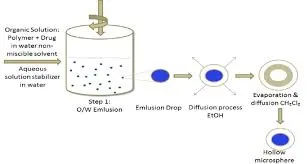
Emulsion solvent diffusion technique9
Nanosponges were fabricated employing the emulsion solvent diffusion method using varying ratios of ethyl cellulose (EC) and polyvinylpyrrolidone (PVP) as polymers. The drug along with ethyl cellulose was dissolved in an appropriate quantity of dichloromethane (DCM) or acetone to constitute the internal (dispersed) phase. This organic phase was then introduced dropwise into the external aqueous continuous phase, comprising polyvinyl alcohol (PVA) dissolved in distilled water, by means of a syringe pump at a controlled flow rate. The two phases were homogenized under continuous magnetic stirring at varying speeds for a period of two hours. The resultant nanosponges were recovered by filtration and subsequently subjected to drying in a hot air oven maintained at 40°C for 24 hours.
Solvent evaporation method10
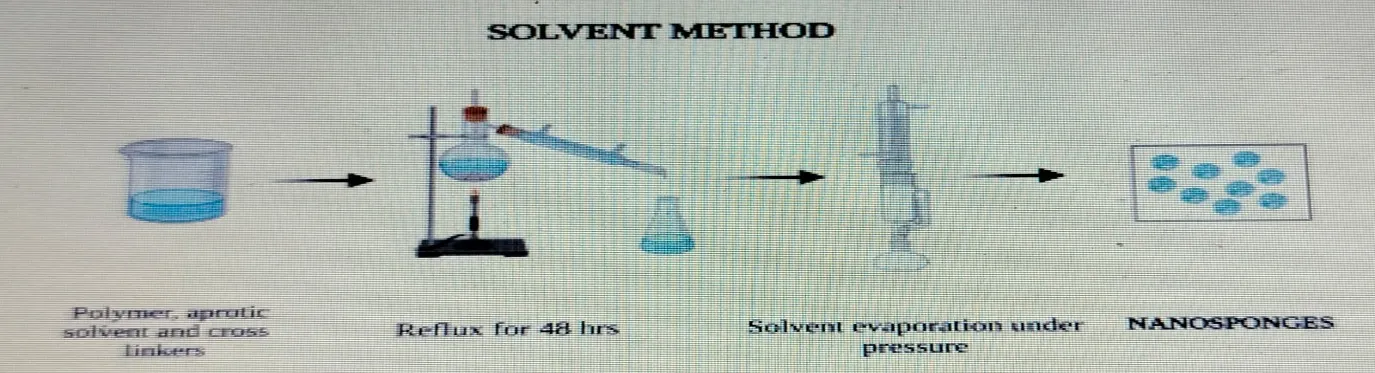
Nanosponges were prepared by the solvent evaporation method using different concentrations of rate-retarding polymers, namely hydroxypropyl methylcellulose K4 (HPMC K4), Carbopol 934, and sodium alginate, in combination with polyvinyl alcohol (PVA) as a co-polymer. The dispersed phase was prepared by dissolving the drug in a measured volume of dichloromethane (DCM) as the organic solvent. This organic dispersed phase was then gradually introduced into the aqueous continuous phase containing a predetermined quantity of PVA under continuous stirring using a magnetic stirrer. The resulting reaction mixture was subjected to stirring at 1000 rpm for three hours to ensure uniform mixing and formation of nanosponges. The formed nanosponges were subsequently separated by filtration using Whatman filter paper and dried in a hot air oven at 50°C for 2 hours. The dried nanosponges were then transferred and stored in a vacuum desiccator to facilitate complete removal of any residual organic Solvent.
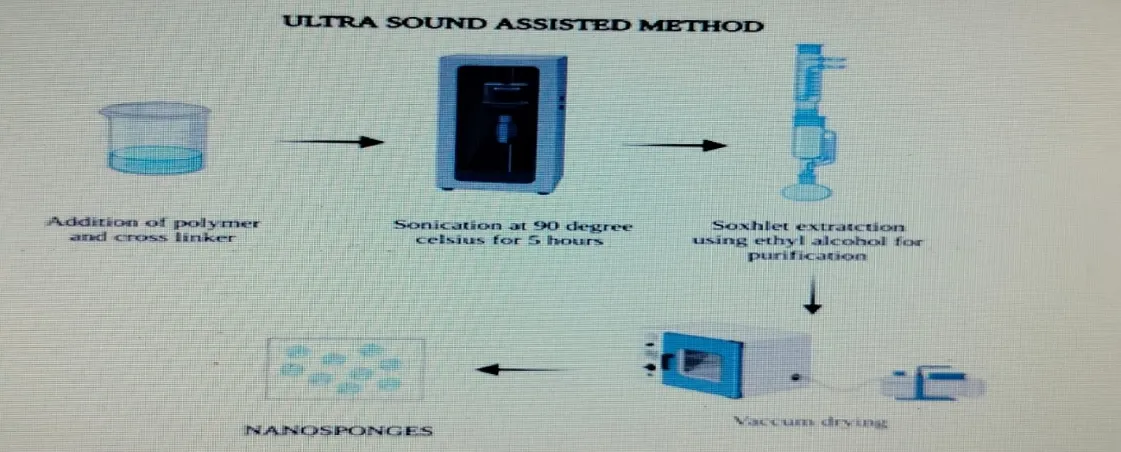
Ultra-sound assisted method11
The ultrasound-assisted synthesis method produces nanosponges of uniform size and homogeneous morphology through a continuous sonication process. In this technique, nanosponges are synthesized by allowing polymers and cross-linkers to interact in the absence of any solvent, with the aid of an ultrasound water bath. The reaction mixture was subjected to sonication at a temperature of 90°C for a duration of 5 hours. Upon completion of the sonication process, the product was allowed to cool to room temperature and exposed to ambient air, following which it was mechanically crushed and thoroughly washed with water to remove any unreacted polymer residues. Further purification of the obtained product was carried out by Soxhlet extraction using ethanol as the solvent, although this step was relatively time-consuming. In the final stage of the process, the purified product was dried under vacuum conditions to eliminate any remaining moisture and subsequently stored at 25°C for future applications.
FACTORS INFLUENCING NANOSPONGES FORMATION12,37,38
Type of polymer
The nature and type of polymer employed in the formulation plays a crucial role in determining both the formation and the overall performance of nanosponges. The polymer selected significantly influences the structural integrity, drug loading capacity, and release characteristics of the nanosponge system. For effective drug complexation to occur, it is essential that the cavity dimensions of the nanosponge are of an appropriate size to adequately accommodate the drug molecule of a specific size, thereby ensuring efficient encapsulation and controlled release of the therapeutic agent.
Type of drugs
For successful complexation with nanosponges, drug molecules must fulfill certain physicochemical criteria. The drug candidate intended for incorporation into nanosponge formulations should possess the following essential characteristics:
The molecular weight of the drug should fall within the range of 100 to 400 Daltons, ensuring compatibility with the nanosponge cavity dimensions. The structural configuration of the drug molecule should contain fewer than five condensed rings, which facilitates appropriate fitting within the nanosponge cavity. Furthermore, the aqueous solubility of the drug should not exceed 10 mg/mL, as nanosponges are particularly effective in enhancing the solubility and bioavailability of poorly water-soluble compounds. Additionally, the melting point of the drug substance should be below 250°C, which is a critical parameter influencing the complexation efficiency and thermal stability of the nanosponge-drug complex.
Temperature13
Variations in temperature can significantly influence the complexation between the drug and nanosponge. In general, an elevation in temperature tends to reduce the magnitude of the apparent stability constant of the drug-nanosponge complex. This phenomenon can be attributed to the progressive weakening of the intermolecular interaction forces that exist between the drug molecule and the nanosponge, particularly van der Waals forces and hydrophobic interactions, which are known to diminish with increasing temperature. As these binding forces weaken at higher temperatures, the stability and integrity of the drug-nanosponge complex are correspondingly compromised, ultimately affecting the complexation efficiency and the overall performance of the nanosponge-based drug delivery system.
Method of preparation
The technique employed for loading the drug into the nanosponge system plays a significant role in influencing the efficiency of drug-nanosponge complexation. The selection of an appropriate drug loading method is of paramount importance, as the effectiveness of any given preparation technique is largely governed by the physicochemical nature of both the drug and the polymer used in the formulation. Different methods may yield varying degrees of complexation efficiency depending on these inherent properties. Among the various drug loading techniques available, freeze drying has been widely reported and recognized as one of the most effective and reliable methods for achieving optimal drug-nanosponge complexation, as it preserves the structural integrity of the complex while ensuring maximum encapsulation efficiency and enhanced stability of the final formulation.
MECHANISM OF DRUG RELEASE FROM NANOSPONGES13
The mechanism of drug release from nanosponges is primarily governed by their distinctive open and porous structural architecture. Due to this characteristic open structure, the active pharmaceutical substances are incorporated in an encapsulated form within the vehicle, from which they possess the ability to migrate freely from the nanosponge particles into the surrounding vehicle medium. As this transfer occurs, an equilibrium state is gradually established, leading to saturation of the vehicle with the active ingredient. However, upon topical application of the formulation to the skin surface, the vehicle containing the active pharmaceutical ingredient becomes unsaturated, thereby disturbing the previously established equilibrium. This disruption in equilibrium initiates a directional flow of the active principles from the nanosponge particles through the vehicle toward the epidermis. As the vehicle progressively dries or gets absorbed into the skin, the continuous flux of active ingredients from the nanosponge reservoir to the skin surface is maintained. Consequently, the nanosponge particles retained on the skin surface serve as a sustained reservoir, ensuring prolonged release and availability of the active ingredient at the site of application, even after the vehicle has been completely absorbed or evaporated.
LOADING OF NANOSPONGES14
Prior to drug loading, nanosponges undergo pre-treatment to achieve a particle size below 500 nm. The nanosponges are suspended in distilled water and sonicated to minimize aggregate formation, followed by centrifugation to obtain the colloidal fraction. The isolated supernatant is then freeze-dried to obtain dry nanosponge powder. For drug loading, an aqueous suspension of nanosponges is prepared, and an excess quantity of drug is added and allowed to diffuse into the nanosponge matrix under continuous stirring for a predetermined time to achieve complete complexation. Subsequently, centrifugation is employed to separate the uncomplexed drug from the drug-nanosponge complex, and the drug-loaded nanosponges are obtained in solid crystalline form by the solvent evaporation method. The crystalline structure of the nanosponge significantly influences drug complexation efficiency, as crystalline nanosponges exhibit higher drug loading capacity compared to paracrystalline forms. In poorly crystalline nanosponges, drug incorporation occurs as a mechanical mixture rather than a true inclusion complex, which may adversely affect the drug release profile and overall therapeutic efficacy of the formulation.
EVALUATION PARAMETERS OF NANOSPONGES
Percentage yield15
The percentage yield of the prepared nanosponges is determined by accurately measuring the initial weight of the raw materials used in the formulation and the final weight of the nanosponges obtained after the preparation process. The percentage yield serves as an important parameter to assess the efficiency of the nanosponge preparation method and is calculated using the following formula:
Percentage Yield (PY) = (Practical mass of nanosponges / Theoretical mass (drug + polymer)) × 100
Entrapment efficiency16
Entrapment efficiency (%EE) is a critical parameter that represents the percentage of drug successfully incorporated and retained within the nanosponge matrix. To determine the entrapment efficiency, a precisely weighed quantity of nanosponge formulation from each batch was crushed using a mortar and pestle and uniformly dispersed in phosphate buffer of appropriate pH. The resulting dispersion was then subjected to centrifugation at a defined speed to effectively separate the entrapped drug from the unentrapped or free drug present in the supernatant. The supernatant was carefully collected and the concentration of the free drug was quantified spectrophotometrically at its characteristic absorption wavelength using a UV-Visible spectrophotometer. The percentage entrapment efficiency of each formulation batch was subsequently calculated using the following standard formula:
%Entrapment Efficiency = (Drug added − Free drug) / Total drug × 100
Particle size17
Particle size analysis is a fundamental characterization parameter that provides important information regarding the size distribution and physical stability of nanosponge formulations. The particle size of the prepared nanosponges was determined using a Malvern Zetasizer instrument, which operates on the principle of dynamic light scattering. The mean diameter of the nanosponge particles was measured from the obtained size distribution data. All measurements were performed at a fixed scattering angle of 90° to ensure consistency and reproducibility of the results across all formulation batches. Prior to each measurement, the nanosponge samples were appropriately diluted with distilled water to obtain an optimal scattering intensity and to avoid multiple scattering effects that may interfere with the accuracy of the measurements.
SEM Analysis18
Scanning Electron Microscopy (SEM) analysis was performed to evaluate the surface morphology, shape, and structural characteristics of the prepared nanosponges. For sample preparation, a small quantity of the nanosponge formulation was carefully and lightly sprinkled onto a double-sided adhesive carbon tape, which was firmly affixed to an aluminum stub. The sample-mounted stubs were subsequently sputter-coated with a thin layer of platinum to enhance the electrical conductivity of the sample surface and to improve the quality and resolution of the resulting images. The platinum-coated stubs were then carefully placed inside the scanning electron microscope chamber for analysis. The samples were randomly scanned across different regions of the stub surface, and photomicrographs were captured at an accelerating voltage of 20 kV to obtain clear and detailed images of the nanosponge surface. The average particle size of the nanosponges was subsequently determined from the obtained SEM photomicrographs by analyzing the dimensions of individual particles visible in the images.
Invitro dissolution study19
In vitro dissolution studies are performed to evaluate the probable influence of various formulation and process variables on the bioavailability and drug release behavior of the nanosponge formulation. In the present study, a USP Type-II paddle-type dissolution apparatus was employed to assess the in vitro drug release profile of the nanosponge formulations. The nanosponges were carefully placed into dialysis bags, which were subsequently immersed in 900 mL of suitable buffer solution serving as the dissolution medium. The dissolution study was conducted under physiologically relevant conditions, maintaining the temperature at 37.5°C with continuous stirring at a speed of 100 rpm to simulate the in vivo environment. At predetermined time intervals over a period of 12 hours, aliquots of 5 mL were withdrawn from the dissolution medium and immediately replaced with an equal volume of fresh buffer solution to maintain sink conditions throughout the study. The withdrawn samples were appropriately diluted whenever necessary, and the drug concentration in each sample was determined spectrophotometrically at the characteristic absorption wavelength of the drug using a UV-Visible spectrophotometer. The cumulative percentage drug release was calculated at each time point and plotted against time to obtain the in vitro drug release profile of the nanosponge formulations.
Table 1: Comparative table of Emulsion solvent diffusion method and Solvent diffusion method for preparation of Nanosponges 35,36
|
Parameter |
Emulsion solvent diffusion method |
Solvent evaporation method |
|
Basic principle |
Diffusion of partially water-miscible organic solvent into aqueous phase leads to nanosponge formation |
Evaporation of volatile organic solvent from emulsion droplets forms nanosponges |
|
Types of solvent |
Partially water-miscible solvents (e.g., ethanol, acetone) |
Water-immiscible volatile solvents (e.g., dichloromethane, chloroform) |
|
Process Mechanism |
Solvent diffuses into water → polymer precipitates → porous nanosponges formed |
Organic solvent evaporates → polymer solidifies → nanosponges formed |
|
Porosity of Nanosponges |
High porosity due to diffusion process |
Comparatively lower porosity |
|
Drug loading efficiency |
Generally higher due to gradual precipitation |
May be lower due to drug loss during evaporation |
|
Suitability |
Suitable for heat-sensitive drugs |
Not ideal for heat-sensitive drugs due to heating |
|
Application preference |
Preferred for topical and controlled release formulations |
Used when polymer requires non-polar solvent system |
APPLICATIONS
For oral drug delivery, nanosponges enhance the solubilization of poorly water-soluble drugs by entrapping them within their porous structure. Their nanoscale size provides a large surface area, which improves the rate of drug dissolution. Moreover, nanosponges prolong the residence time of the drug in the small and large intestines, allowing greater absorption and improved bioavailability.
An oxygen delivery system has been developed using cyclodextrin-based nanosponges. When incorporated into a hydrogel, β-cyclodextrin nanosponges improve the diffusion of oxygen across silicone membranes. These nanosponges are capable of storing oxygen and releasing it in a controlled and sustained manner. Therefore, oxygen-loaded nanosponges show potential in delivering oxygen to hypoxic tissues associated with various diseases.
Nanosponges can be utilized to deliver antiviral agents via nasal, pulmonary, and ocular routes. They facilitate targeted delivery of siRNA and antiviral drugs to the lungs and nasal epithelium, making them especially effective against respiratory viral infections. Additionally, nanosponges have demonstrated activity against viruses such as HBV, HSV, and HIV. Current nanosponge-based formulations include drugs like acyclovir (with Eudragit), zidovudine, saquinavir, and interferon-α.
Functionalized nanosponges (FNS) improve plant growth by delivering controlled amounts of nutrients and active agents, reducing the need for fertilizers and herbicides. They can encapsulate micronutrients like iron and zinc and release them gradually, enhancing nutrient uptake and photosynthesis. This controlled release increases crop yield, lowers chemical usage, and supports cost-effective, eco-friendly farming. Iron-loaded nanosponges also help prevent iron chlorosis, while their versatility allows development of tailored agricultural formulations.
Nanosponges (NSs) act as effective carriers for blood detoxification by absorbing toxins directly from the bloodstream. Their RBC-like structure helps bind and neutralize toxins, protecting healthy cells. For example, PLGA-based nanosponges coated with erythrocyte membranes can capture toxins like streptolysin O, while RBC-coated nanoparticles show potential in treating bacterial infections through anti-virulence action. Additionally, specialized nanosponges such as β-cyclodextrin-based systems can remove toxins like ochratoxin A, demonstrating strong adsorption capacity.
Nanosponges (NSs) serve as carriers for proteins, enzymes, antibodies, and vaccines, enabling both therapeutic and diagnostic applications. Cyclodextrin-based nanosponges are most commonly used, with α-, β-, and γ-cyclodextrins capable of efficiently encapsulating oxygen for extended durations. They can release oxygen in a controlled manner, with or without ultrasound, making them promising systems for regulated oxygen delivery.
ADVANTAGES OF NANOSPONGES27
DISADVANTAGES OF NANOSPONGES28
LIMITATIONS AND CHALLENGES29
RECENT ADVANCEMENT IN NANOSPONGES
Recent advancements in nanosponges have significantly contributed to the progress of medical research, particularly in nanoscale drug delivery. Their ability to provide targeted and controlled drug release enhances therapeutic effectiveness while reducing drug toxicity. Nanosponges are gaining importance in both medicine and nanotechnology, with potential applications extending to areas such as water purification. Current research focuses on reducing production costs by developing novel polymers, crosslinkers, and improved manufacturing techniques. The drug release behavior of nanosponges is influenced by factors like particle size, porosity, crystallinity, and degree of crosslinking. While traditional and ultrasound-assisted methods remain widely used, newer techniques such as solvent evaporation and bubble electrospinning are being explored. Additionally, recent trends emphasize large-scale production with higher yield, cost-effectiveness, and better reproducibility.
FUTURE PERSPECTIVES
Nanosponges are a versatile drug delivery system with strong potential in pharmaceutical and biomedical applications, enabling targeted and stimuli-responsive release that improves the solubility and bioavailability of poorly soluble drugs. They are gaining importance in cancer therapy due to enhanced efficacy and reduced toxicity, and can also deliver proteins, vaccines, and genetic material by protecting them from degradation. Additionally, nanosponges are being explored for antiviral and detoxification applications, including action against pathogens such as COVID-19, and show promise in topical and transdermal delivery. Future research focuses on developing biodegradable and eco-friendly nanosponges to enhance safety and compatibility, along with their emerging role in theranostics for combined diagnosis and treatment. Beyond medicine, they have potential in environmental applications such as pollutant removal. However, challenges including large-scale production, regulatory approval, and limited clinical data remain. Overall, with continued advancements, nanosponges are expected to play a key role in next-generation drug delivery systems.
REFERENCES


Gowtham Naik, Viresh Chandur, Nanosponges as Emerging Nanocarriers: A Review on Formulation Approaches, Characterization, and Topical Drug Delivery Applications Review, Int. J. of Pharm. Sci., 2026, Vol 4, Issue 6, 1563-1577, https://doi.org/10.5281/zenodo.20567832
 10.5281/zenodo.20567832