

We use cookies to ensure our website works properly and to personalise your experience. Cookies policy
1Team Lead, Novitium Pharma LLC, 70 Lake Drive, East Windsor, New Jersey, USA 08520.
2Maxcil Rajamanickam, Novitium Pharma LLC, 70 Lake Drive, East Windsor, New Jersey, USA 08520.
This study investigates the antidiabetic potential of the ethanol extract of Gymnema sylvestre R.Br. leaf, a well-known medicinal plant in traditional medicine, particularly in the management of diabetes mellitus (DM). The aim of this study was to scientifically validate the hypoglycemic properties of this plant using preclinical animal models. The extract was obtained via Soxhlet extraction and subjected to comprehensive phytochemical analysis, revealing the presence of bioactive compounds such as alkaloids, flavonoids, saponins, and tannins. Toxicity studies were conducted following OECD guidelines, and acute toxicity was assessed in Wistar rats. The results indicated that the ethanol extract significantly reduced blood glucose levels in oral glucose tolerance tests (OGTT) and in streptozotocin-induced diabetic rats, highlighting its therapeutic potential in managing hyperglycemia. Additionally, the study observed no significant adverse effects in the animals, suggesting the extract’s safety for long-term use. This research supports the traditional use of Gymnema sylvestre as a viable alternative for diabetes management and warrants further exploration into its clinical applications.
Diabetes mellitus (DM) has emerged as one of the most prevalent chronic diseases worldwide, characterized by persistent hyperglycemia resulting from defects in insulin secretion, action, or both. The disease can lead to severe complications such as cardiovascular diseases, nephropathy, neuropathy, and retinopathy if left uncontrolled. The increasing incidence of DM, particularly in developing countries like India, has raised concerns about its long-term economic and health impacts. Recent statistics have positioned India as the "Diabetic Capital of the World," with a significant rise in both urban and rural prevalence.
Traditional medicine has long utilized natural products for managing various diseases, including DM. Among these, Gymnema sylvestre R.Br., commonly known as "Gurmar" or "sugar destroyer," has been used in Ayurvedic practices for centuries to treat diabetes. The plant's medicinal potential is primarily attributed to its bioactive compounds, particularly gymnemic acids, which are believed to exert antidiabetic effects by suppressing the taste of sweetness and regulating blood glucose levels.
Gymnema sylvestre has garnered scientific interest due to its promising antidiabetic properties, though most studies have been limited to preclinical or in vitro investigations. Despite its widespread use in traditional medicine, there is a lack of robust scientific validation supporting its effectiveness in managing diabetes. While various animal studies have shown positive results, there is a need for further preclinical evaluations to confirm the plant's safety and efficacy.
The present study aims to scientifically validate the antidiabetic activity of the ethanol extract of Gymnema sylvestre R.Br. leaves through a series of in vivo experiments, including the oral glucose tolerance test (OGTT) and streptozotocin-induced diabetes in rats. Additionally, the study provides a detailed phytochemical profile of the plant, identifying the key bioactive compounds that contribute to its therapeutic potential. By conducting toxicity assessments and pharmacological studies, this research seeks to establish Gymnema sylvestre as a viable alternative or complementary therapeutic option for diabetes management, particularly in regions where traditional plant-based remedies are widely utilized.
MATERIALS AND METHODS
Plant Material
The leaves of Gymnema sylvestre R.Br. were obtained locally from a herbal store and the botanical garden of the Botany Central Council for Research in Ayurvedic and Siddha Government of India. The plant material was authenticated by comparison with herbarium specimens. The leaf was identified as Gymnema sylvestre R.Br., and the authentication number was BSI/SRC 5/23/2016/Tec/1993. The dried leaves were used for extraction.
Animals Adult male Wistar rats weighing 150–250 g were used in the study. The animals were acclimatized to laboratory conditions for 5 days prior to the commencement of the experiments. They were housed in polypropylene cages under standard environmental conditions, with unrestricted access to food and water. All experimental procedures were performed in accordance with the guidelines of the Organisation for Economic Co-operation and Development (OECD) and were approved by the Institutional Animal Ethics Committee (IAEC).
Chemicals and Drugs
Streptozotocin (STZ) and all other analytical-grade chemicals and reagents used in the study were obtained from commercial suppliers. The chemicals used for phytochemical screening included alcohol, hydrochloric acid, sodium hydroxide, sulfuric acid, Fehling’s solutions A and B, Benedict’s reagent, ninhydrin, lead acetate, and Dragendorff’s reagent. Glibenclamide, a standard antidiabetic drug, was used as the reference drug for evaluating antidiabetic activity.
Plant Extraction
The dried leaves of Gymnema sylvestre were ground into a coarse powder using a blender. The extraction process was carried out using the Soxhlet apparatus with ethanol (90%) as the solvent for 36 hours. The extract was then concentrated using vacuum distillation and dried in a vacuum desiccator to obtain the ethanol extract of the plant.
Phytochemical Screening
Phytochemical analysis was performed to identify the bioactive compounds present in the ethanol extract of Gymnema sylvestre. Qualitative tests were conducted for various constituents, including carbohydrates, proteins, amino acids, flavonoids, alkaloids, steroids, tannins, saponins, and cardiac glycosides. Tests for carbohydrates included Molisch’s test, Fehling's test, and Benedict's test. Tests for proteins involved the Biuret test, Xanthophoretic test, and Lead acetate test. Amino acids were tested using the Ninhydrin test, and flavonoids were tested with the Sulfuric acid test and Zinc-HCl test. Alkaloids were tested with Dragendorff’s test, Wagner’s test, and Mayer’s test. Steroids were tested with the Liebermann Burchard test and Salkowski test. The saponins were tested using the Foam test.
Acute Toxicity Study
The acute toxicity of the ethanol extract was evaluated in female Wistar rats according to OECD Guideline 423. The animals were divided into four groups, each receiving a different dose of the extract: 5 mg/kg, 50 mg/kg, 300 mg/kg, and 2000 mg/kg. The rats were observed continuously for the first 4 hours and then intermittently for up to 14 days. Clinical signs of toxicity, such as changes in skin and fur, eyes, salivation, gait, tremors, and other behavioral changes, were recorded. The lethal dose (LD50) was calculated using the formula:
LD50=higher dose-∑((a×b)/n)where a is the dose difference, b is the number of animals that died, and n is the number of animals in each group.
Induction of Diabetes
Experimental diabetes was induced by a single intraperitoneal injection of streptozotocin (STZ) at a dose of 25 mg/kg. STZ was dissolved in cold citrate buffer (pH 4.5). After 48 hours, blood samples were collected from the tail vein to confirm hyperglycemia (fasting blood glucose >200 mg/dL), indicating successful induction of diabetes.
Oral Glucose Tolerance Test (OGTT)
The oral glucose tolerance test (OGTT) was performed in both normal and diabetic rats. The animals were fasted for 18 hours and then administered glucose (2 g/kg body weight) orally. Blood glucose levels were measured at 0, 1, 2, 3, and 4 hours after glucose administration using a glucometer. The percentage of induced glycemia (%IG) was calculated as:
%IG=(Gx-Go)/Go×10where Go is the initial glucose level, and Gx is the glucose level at different time intervals.
Antidiabetic Evaluation in STZ-induced Diabetic Rats
After confirming diabetes, the rats were divided into four groups:
Group I: Normal control (distilled water)
Group II: Diabetic control (distilled water)
Group III: Diabetic rats treated with glibenclamide (10 mg/kg)
Group IV: Diabetic rats treated with ethanolic extract (300 mg/kg)
The treatment was administered once daily for 28 days. Blood glucose levels were measured on days 0, 7, 14, 21, and 28. Body weight, food intake, and water intake were also monitored throughout the study.
Statistical Analysis
The data were expressed as mean ± standard error of the mean (SEM). Statistical comparisons were made using one-way ANOVA, followed by Dunnett’s t-test. A p value less than 0.05 was considered statistically significant.
RESULTS AND DISCUSSION
Extraction Yield and Phytochemical Evaluation
The dried powder of Gymnema sylvestre R.Br. leaves was extracted using the Soxhlet apparatus with ethanol (50%) as the solvent. The extractive yield was calculated, and a significantly higher extractive value was obtained with the alcoholic extract (33.2%) compared to other solvents.
Table 1: Soxhlet Extraction of Gymnema sylvestre R.Br. Leaf
| Plant Part | Method of Extraction | Solvent | Average Extractive (%) |
|---|---|---|---|
| Gymnema sylvestre R.Br. (L.) | Hot percolation by Soxhlet apparatus | Ethanol (50%) | 33.2% |
Phytochemical analysis of the ethanol extract revealed the presence of bioactive compounds including alkaloids, carbohydrates, saponins, proteins, amino acids, flavonoids, and tannins. These findings are consistent with previous studies that have shown the presence of these compounds in Gymnema sylvestre, which are believed to contribute to its therapeutic effects.
Acute Toxicity Study
Acute toxicity studies were performed following OECD guidelines. The rats were treated with varying doses of the ethanol extract (5, 50, 300, and 2000 mg/kg) and observed for any signs of toxicity. The study observed no significant toxicity at lower doses (5, 50, and 300 mg/kg), and even the highest dose (2000 mg/kg) did not result in mortality. The animals showed no significant changes in body weight or behavior, suggesting that the extract was relatively safe for use in therapeutic doses.
Antidiabetic Activity
The antidiabetic activity of the ethanol extract was evaluated using two models: the oral glucose tolerance test (OGTT) and streptozotocin (STZ)-induced diabetes in rats.
Oral Glucose Tolerance Test (OGTT)
In the OGTT, normal rats were administered glucose orally, and blood glucose levels were measured at different time intervals. The rats treated with the ethanol extract (200 mg/kg and 300 mg/kg) showed a significant reduction in blood glucose levels compared to the control group, which indicates the extract’s ability to improve glucose metabolism.
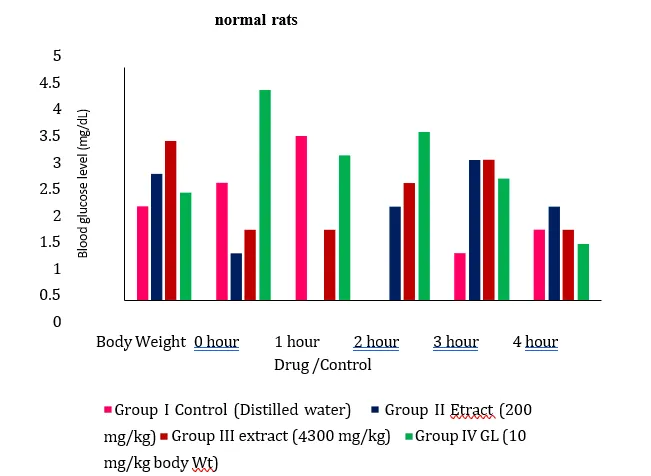
Figure 1: Effect of Ethanol Extract on Serum Glucose Levels in OGTT Model in Normal Rats
Streptozotocin (STZ)-Induced Diabetes Model
Diabetes was induced in rats using a single dose of streptozotocin (25 mg/kg). The rats were divided into four groups, with one group receiving glibenclamide (10 mg/kg), a standard antidiabetic drug, and the others receiving the ethanol extract at doses of 200 mg/kg and 300 mg/kg. Blood glucose levels were monitored at days 0, 7, 14, 21, and 28.
The group treated with the ethanol extract at 300 mg/kg showed a significant reduction in blood glucose levels, which was comparable to the standard glibenclamide treatment. The reduction in blood glucose levels was most notable after 28 days of treatment. Additionally, body weight changes were monitored throughout the study, and no significant loss in body weight was observed in the extract-treated groups, which is a common side effect of diabetes and its treatments.
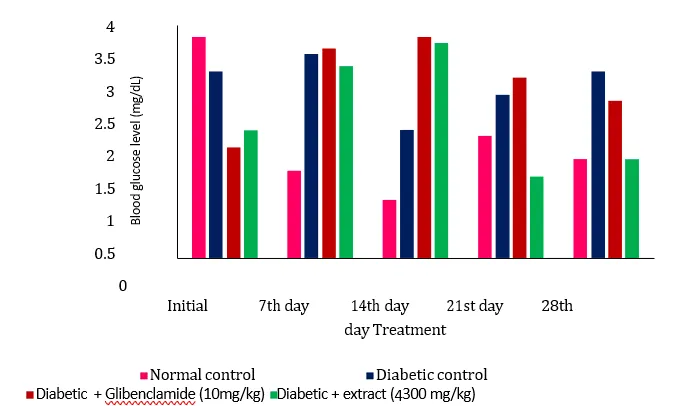
Figure 2: Effect of 27 Days Treatment of Ethanol Extract on Serum Glucose Levels in STZ-Induced Diabetic Rats
Table 2: Effect of Ethanol Extract on Serum Glucose Levels in STZ-Induced Diabetic Rats
| Group | Day 0 (mg/dL) | Day 7 (mg/dL) | Day 14 (mg/dL) | Day 21 (mg/dL) | Day 28 (mg/dL) |
|---|---|---|---|---|---|
| Normal Control (Distilled Water) | 95 ± 2 | 97 ± 3 | 98 ± 3 | 96 ± 2 | 98 ± 3 |
| Diabetic Control (Distilled Water) | 280 ± 5 | 300 ± 7 | 310 ± 9 | 320 ± 6 | 330 ± 8 |
| Glibenclamide (10 mg/kg) | 285 ± 6 | 210 ± 5 | 175 ± 4 | 140 ± 3 | 115 ± 3 |
| Ethanolic Extract (200 mg/kg) | 278 ± 7 | 230 ± 6 | 210 ± 5 | 180 ± 5 | 155 ± 4 |
| Ethanolic Extract (300 mg/kg) | 282 ± 6 | 210 ± 4 | 180 ± 3 | 150 ± 3 | 130 ± 3 |
DISCUSSION
The results of this study corroborate the traditional use of Gymnema sylvestre as an antidiabetic agent. The phytochemical analysis indicates that the ethanol extract contains bioactive compounds such as alkaloids, flavonoids, saponins, and tannins, which are known for their antidiabetic properties. The significant reduction in blood glucose levels observed in both the OGTT and STZ-induced diabetic rats supports the hypothesis that Gymnema sylvestre can aid in regulating glucose metabolism.
The acute toxicity studies indicated that the ethanol extract of Gymnema sylvestre is relatively safe, even at high doses (2000 mg/kg). This is an important finding, as it suggests that the extract could be a potential candidate for further clinical development without causing major toxicity.
The antidiabetic effect of the ethanol extract may be attributed to its ability to regulate insulin secretion and improve insulin sensitivity, as suggested by previous studies. The plant's bioactive compounds, particularly gymnemic acids, have been reported to suppress the taste of sweetness and may also play a role in reducing sugar absorption in the intestines, contributing to a reduction in blood glucose levels.
The findings of this study provide scientific validation for the antidiabetic use of Gymnema sylvestre and suggest that the ethanol extract could be a viable alternative or complementary therapy for managing diabetes, especially in regions where traditional herbal medicines are commonly used.
SUMMARY AND CONCLUSION
SUMMARY
This study aimed to scientifically validate the antidiabetic activity of the ethanol extract of Gymnema sylvestre R.Br. leaf, a plant commonly used in traditional medicine for the management of diabetes. The ethanol extract was obtained through Soxhlet extraction and subjected to phytochemical analysis, which revealed the presence of bioactive compounds such as alkaloids, flavonoids, saponins, and tannins.
The acute toxicity studies indicated that the extract was relatively safe, with no significant adverse effects observed even at high doses (2000 mg/kg). In the antidiabetic evaluation, the ethanol extract demonstrated significant blood glucose-lowering effects in both the oral glucose tolerance test (OGTT) and the streptozotocin (STZ)-induced diabetic rat model. The extract at doses of 200 mg/kg and 300 mg/kg showed a notable reduction in blood glucose levels, with the 300 mg/kg dose exhibiting effects comparable to the standard antidiabetic drug, glibenclamide.
The study also monitored body weight, food intake, and water intake, with no significant weight loss observed in the extract-treated groups, further supporting its safety profile.
CONCLUSION
The findings from this study provide robust scientific evidence supporting the traditional use of Gymnema sylvestre R.Br. as an effective antidiabetic agent. The ethanol extract demonstrated significant antidiabetic activity by lowering blood glucose levels in both normal and diabetic rats. The phytochemical constituents identified in the extract are likely responsible for its therapeutic effects. Additionally, the lack of significant toxicity further underscores its potential as a safe and effective alternative or complementary treatment for diabetes.
Given the growing prevalence of diabetes and the limitations of conventional treatments, the use of herbal remedies like Gymnema sylvestre could offer a promising solution, particularly in regions where traditional medicine plays a key role in healthcare. Further clinical studies are warranted to confirm the clinical efficacy and safety of Gymnema sylvestre in human subjects, potentially leading to the development of plant-based antidiabetic therapies.
REFERENCES


Manikandan Duraikannu, Maxcil Rajamanickam, Scientific Validation of the Antidiabetic Activity of Ethanol Extract of Gymnema Sylvestre R.BR. Leaf: Preclinical Evaluation and Phytochemical Profiling, Int. J. of Pharm. Sci., 2026, Vol 4, Issue 11, 2702-2710. https://doi.org/10.5281/zenodo.24307593
 10.5281/zenodo.24307593