

We use cookies to ensure our website works properly and to personalise your experience. Cookies policy
Department of Pharmaceutics, Deccan School of Pharmacy, Hyderabad, India.
Nanostructured lipid carriers (NLCs) are advanced lipid-based nanocarrier systems developed to overcome the limitations associated with conventional drug delivery systems and first-generation solid lipid nanoparticles (SLNs). NLCs consist of a blend of solid and liquid lipids that form a partially disordered lipid matrix capable of improving drug loading capacity, minimizing drug expulsion, and enhancing formulation stability. Due to their biocompatibility, biodegradability, controlled drug release behavior, and ability to encapsulate both hydrophilic and lipophilic drugs, NLCs have emerged as promising carriers for a wide range of therapeutic applications. This review discusses the composition, structural types, preparation techniques, characterization methods, advantages, and limitations of NLCs. Various methods for NLC preparation including high-pressure homogenization, microemulsion, solvent injection, phase inversion, and emulsification-solvent evaporation are highlighted. Important characterization parameters such as particle size, zeta potential, morphology, entrapment efficiency, crystallinity, and in vitro drug release are also discussed. Furthermore, the biomedical applications of NLCs through oral, topical, nasal, and ocular routes are summarized. Owing to their versatility and enhanced therapeutic performance, NLCs represent a promising platform for modern drug delivery and future pharmaceutical applications.
In recent years, nanoparticulate carriers have demonstrated considerable potential as delivery systems due to their unique characteristics and nanoscale size. Protection of the active ingredient from moisture, physiological pH, and enzymes, improved bioavailability, dose reduction, controlled drug release, extended circulation time, improved intracellular penetration, and targeted delivery to particular sites or organs through surface modifications of the carriers are some of their benefits. Additionally, they serve as carriers for a wide range of compounds, such as RNA, peptides, proteins, contrast agents, and antibodies. Numerous nanocarriers, including hydrogels, dendrimers, lipid nanoparticles, liposomes, polymeric nanoparticles, nanocrystals, nanotubes, and nanowires, have been developed for drug delivery and diagnostic applications.
The biocompatibility of lipidic drug delivery systems in comparison to polymeric and inorganic nanoparticulate delivery systems, as well as their ability to cross difficult physiological barriers—particularly the blood-brain barrier (BBB)—due to their lipophilicity, even in the absence of surface modifications, have drawn attention in recent decades. These delivery systems are also becoming increasingly appealing because of their affordability, ease of preparation, and potential for large-scale manufacturing [31].
Müller et al. separately created first-generation solid lipid nanoparticles (SLNs) using several techniques in the early 1990s as an affordable and adaptable drug delivery strategy. The primary application for these lipid-based nanosystems is in cosmetics. The drug can be encapsulated in a solid lipid matrix core by SLN, which are solid lipid cores encased in lipidic and surfactant shells. However, the solid lipid core's poor drug loading capacity is its main flaw. Other drawbacks of SLN include drug leakage and the polymeric transition to crystalline form, as well as initial burst release and stability problems during long-term storage. A novel second-generation lipid nanoparticle was developed in 1999 to address issues with the SLN.
In addition to the benefits of earlier lipidic nanoparticles, Nanostructured Lipid Carrier (NLC) is a nanocarrier that is more stable than SLN and has a large drug loading capacity. Because of the qualities they provided, NLCs entered the cosmetics industry in 2005 and now there are around 40 cosmeceuticals and topical products in the market [32].
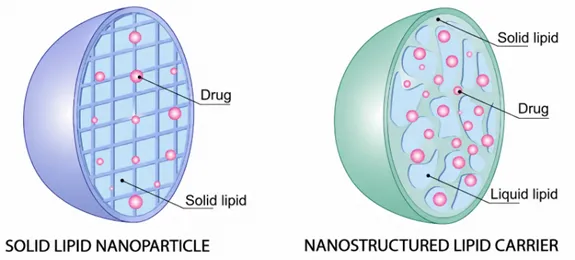
Figure 1 Structure of SLN and NLC
Through a variety of physiological pathways, NLCs have been used as promising delivery vehicles for a variety of therapeutic agents. The following sections provide a brief overview of NLCs' involvement in delivering various payloads for a range of therapeutic uses through numerous modes of administration.
Because of patient compliance, ease, and safety, the oral route is seen to be the best method of administration. However, drugs with low oral bioavailability are those with poor solubility, instability in the stomach's acidic environment, and vulnerability to the first pass effect. Increased solubility, improved stability against enzymatic degradation, extended circulation time, decreased clearance, and improved penetration and bioavailability are just a few benefits that NLCs provide for numerous drug candidates [1]. Furthermore, NLCs' lipid content is partially broken down into diglycerides and free fatty acids in the stomach and small intestine, which shortens transit times and lengthens the drug's residence time in the stomach and upper small intestine [1]. Additionally, NLCs promote bile secretion, which facilitates the solubilisation of drugs. NLCs have been documented in the literature for the oral administration of a number of drugs, including raloxifene, nintedanib, and simvastatin [3]. Drugs that were introduced into NLCs demonstrated sustained therapeutic effectiveness and improved oral bioavailability by promoting intestinal absorption.
An intriguing method of drug delivery that improves drug penetration, boosts efficacy, and permits brain targeting is intranasal administration of drugs loaded inside NLCs. Several drugs, including temazepam, ondansetron hydrochloride, and ketoconazole, have been effectively administered using NLCs [4]. It's interesting to note that drug-loaded NLCs can be added to in-situ gels to improve nasal retention and make drug transport across the membrane easier.
Since lipid-based nanocarriers can make drugs more soluble and facilitate their penetration through epidermal layers, they have been thoroughly investigated for topical drug delivery [8]. For a variety of therapeutic agents, including anti-psoriasis drugs (like curcumin and acitretin) [6], anti-inflammatory drugs (like meloxicam and diclofenac) [7], and anti-fungal treatments (like itraconazole) [8], recent research has shown that NLCs can improve skin targeting efficiency along with faster onset, sustained release, minimal skin irritation, and a good safety profile.
The different anatomical barriers of the eye, including the layers of cornea, sclera, and retina, as well as lymphatic tear turnover, nasolacrimal drainage, and reflex blinking, make ocular drug administration difficult. Because of their structure, NLCs increase corneal penetration and extend ocular residence time, which improves the bioavailability of drugs incorporated into them and lessens systemic side effects. NLCs have been effectively employed for the ocular delivery of various drugs, including dasatinib, amphotericin B, and ciprofloxacin.
NLCs are made up of an aqueous phase of a surfactant or mixture of surfactants (0.5–5% w/v) in various combinations with a blend of solid and liquid lipids (at a weight ratio of 70:30 up to 99.9:0.1) to form a disordered solid lipid matrix. In order to produce an amorphous lattice with significant irregularities in the produced core solid matrix, liquid lipids must be incorporated into the NLC manufacturing process. This maintains the physical stability of the nanocarriers while enabling better drug loading in comparison to the ideal crystalline solid matrix of restricted spatial capacity in the case of SLNs [5,9]. Triglycerides (like tristearin), fatty acids (like stearic acid), waxes (like carnauba wax), and steroids (like cholesterol) are among the solid lipids that can be used to produce NLCs. Medium chain triglycerides (like miglyol 812), natural oils (like olive oil), fatty acids (like oleic acids), and other oily substances (like paraffin oil) are examples of liquid lipids. NLCs can be divided into three categories based on the type of lipid content used: multiple, amorphous, and imperfect NLCs.
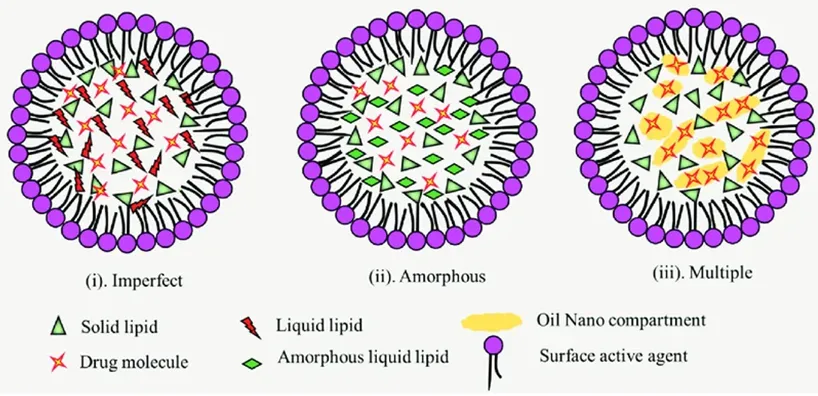
Figure 2 Different types of nanostructured lipid carriers (NLCs): (i) imperfect (ii) amorphous and (iii) multiple type
Imperfect NLCs are created by mixing lipids of various fatty acids (i.e., carbon chains of varying lengths and saturation). As a result, imperfections in the crystal lattice are created, allowing for a higher drug payload.
Amorphous NLCs can be produced by combining solid and liquid lipids to create a structureless amorphous matrix that improves drug loading.
Multiple NLCs are made up of a solid lipid matrix surrounding numerous liquid oil nano-compartments, resulting in oil-in-fat-in-water carriers. This is accomplished by employing a hot homogenisation process to blend a significant amount of liquid lipids with solid lipids. Phase separation of the surplus liquid lipids results in the formation of oily nanocompartments upon cooling. Drug loading capacity is improved by the presence of oil nano-compartments [1,5].
The literature reports a number of methods for creating NLCs. Solvent diffusion, solvent emulsification evaporation, solvent injection/solvent displacement, high pressure homogenization, microemulsion, probe sonication, and phase inversion are some of these. The emulsification-solvent evaporation approach, which is regarded as an effective, straightforward, and readily scalable methodology, is described in depth along with an overview of several of these methods.
For thermostable drugs, this technique uses hot, high-pressure homogenisation (HPH); for thermosensitive drugs, it uses cold HPH. Hot homogenisation is carried out at temperatures higher than the lipids' melting points. The aqueous phase, which is made up of hydrophilic emulsifiers and double-distilled water, and the lipid phase, which is made up of solid and liquid lipids and lipophilic emulsifiers, are created separately. Before being combined, the two stages are each heated to a high temperature. To get a tiny and consistent size distribution, the mixture can be further sonicated after being homogenised using a high-shear homogenizer [10]. In order to enable the quick recrystallisation of the solid lipid particles, cold HPH entails combining the drug with the lipid phase at a temperature marginally over the lipid melting point. The combination is then immediately cooled using liquid nitrogen or dry ice. After that, the particles are ground up and emulsified in a cold aqueous phase using a high-pressure homogeniser to enable the creation of smaller nanostructures. Large-scale manufacturing, avoidance of organic solvents, and enhanced product stability are some of this method's benefits; however, the high pressure and temperature requirements can give difficulties. Furthermore, rather than creating a uniform size distribution, insufficient homogenisation may lead to the formation of micro-particles [11].
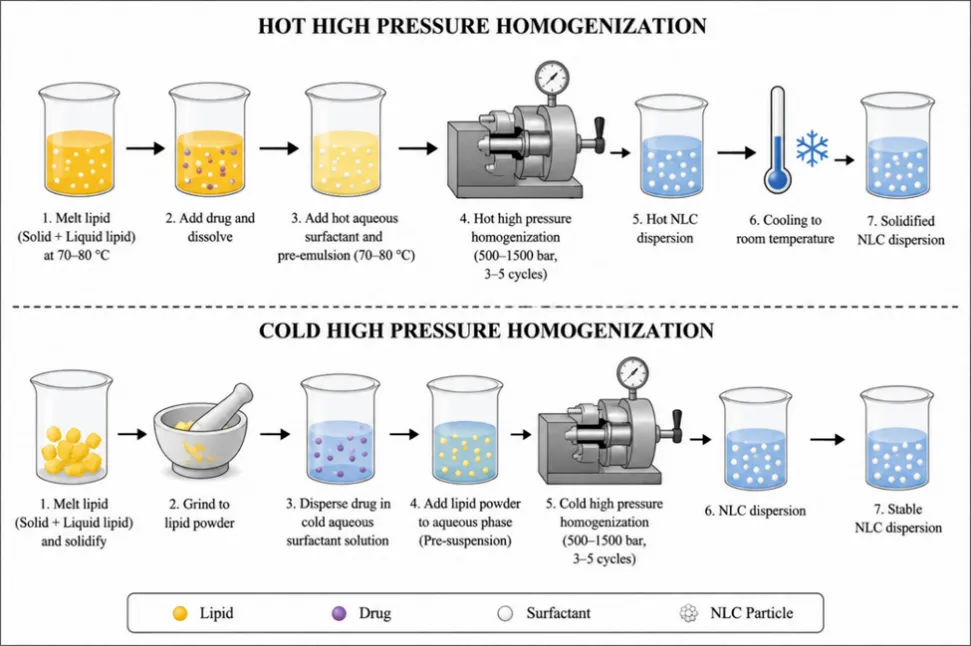
Figure 3 Hot & Cold High-Pressure Homogenization Techniques
This process creates an emulsion, either w/o or o/w, depending on the ratios utilised, by combining melting lipids with a hydrophilic aqueous phase that contains a surfactant and a co-surfactant. The particles are subsequently broken down into the micron size range by intensely mixing the emulsion. After that, a transparent, thermodynamically stable microemulsion is created. This is subsequently distributed in a chilled hydrophilic phase to further reduce particle size and produce NLCs. This process is straightforward, affordable, reproducible, appropriate for thermolabile drugs, and doesn't require any specialised machinery or energy to produce NLCs. However, the primary drawback of this method is thought to be the use of substantial amounts of surfactants [5,10].
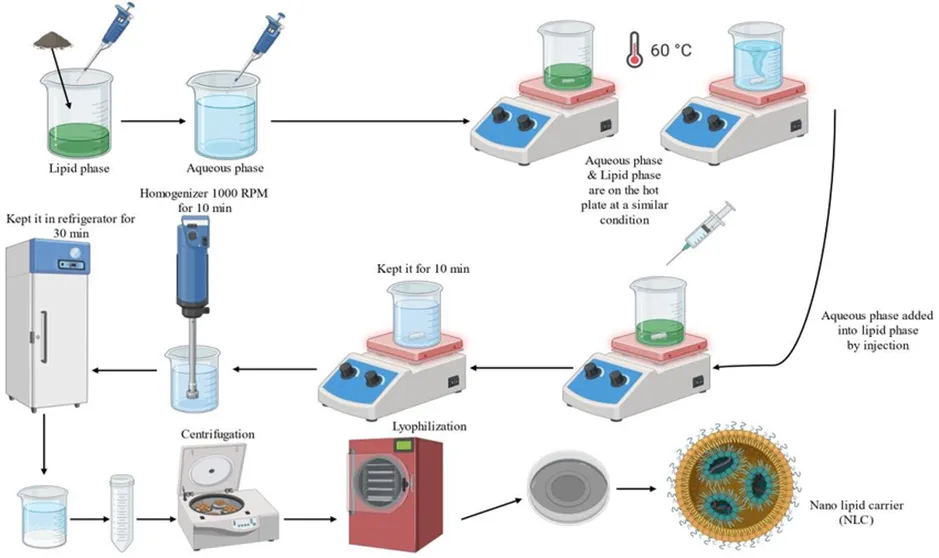
Figure 4 Microemulsion Technique
Lipids are dissolved in a water-miscible solvent and then quickly injected through an injection needle into an aqueous solution of surfactants in the solvent injection method, a straightforward and speedy production approach. The benefits of this approach include easy preparation and the avoidance of high heat, shear stress, and complex equipment. However, the usage of organic solvents and low particle concentration are this method's primary drawbacks [12,13].
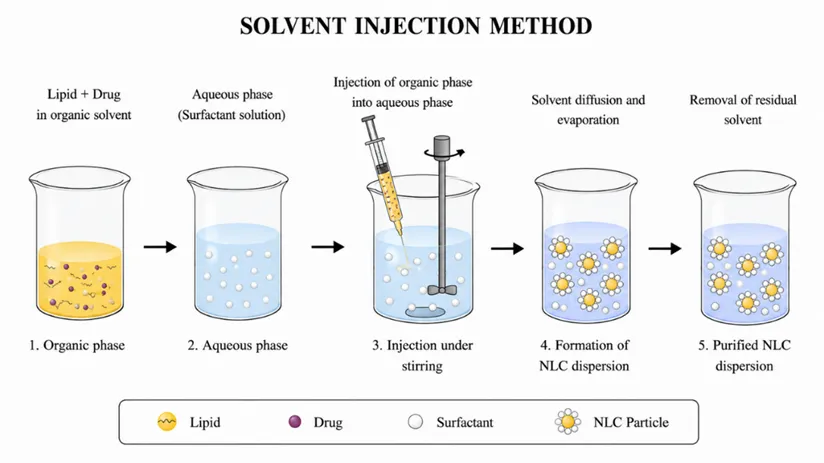
Figure 5 Solvent Injection Method
This approach involves gently mixing the drug, lipid, water, and surfactant, then heating the mixture to a temperature higher than the surfactant's phase inversion temperature. The surfactant is dehydrated during the heating process (above the inversion temperature), which changes its hydrophilic-lipophilic balance and, consequently, its affinity for each phase, i.e., the emulsion is inverted. The surfactant becomes hydrophilic again after rapid cooling. (with an ice bath, for example), which facilitates the development of nanoscale NLC particles [1]. This method's low energy input and avoidance of organic solvents are its advantages. However, created NLCs may have low stability, and occasionally multiple temperature cycles are needed [14].
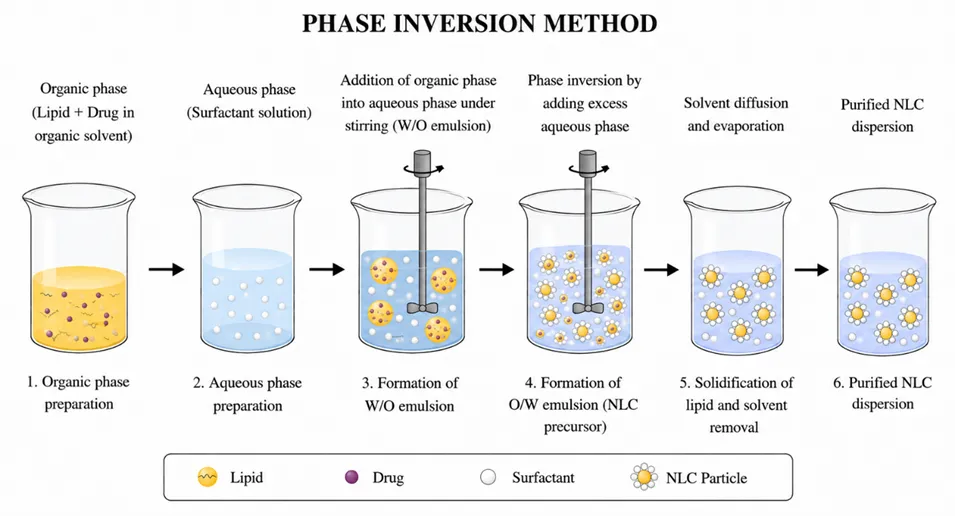
Figure 6 Phase Inversion Method for NLC preparation
Vanderhoff et al. initially created this technique in 1979 as a polymer emulsification procedure to enable the development of polymeric particles. This process involves dissolving lipids and drugs in a water-immiscible organic solvent (such as cyclohexane, dichloromethane, toluene, or chloroform), emulsifying the mixture in an aqueous phase that contains the surfactant, and then letting the solvent evaporate. Sonication is applied to the created pre-emulsion. The aqueous NLC dispersions are then obtained by cooling the dispersions to room temperature. A schematic illustration of the emulsification-solvent evaporation method is shown in Fig. 1. This technique is linked to a simple and quick production procedure. However, method uses organic solvents, thus the resulting suspension is diluted and requires additional ultra-filtration or evaporation [14]. The following is a thorough procedure for creating drug-loaded NLCs:
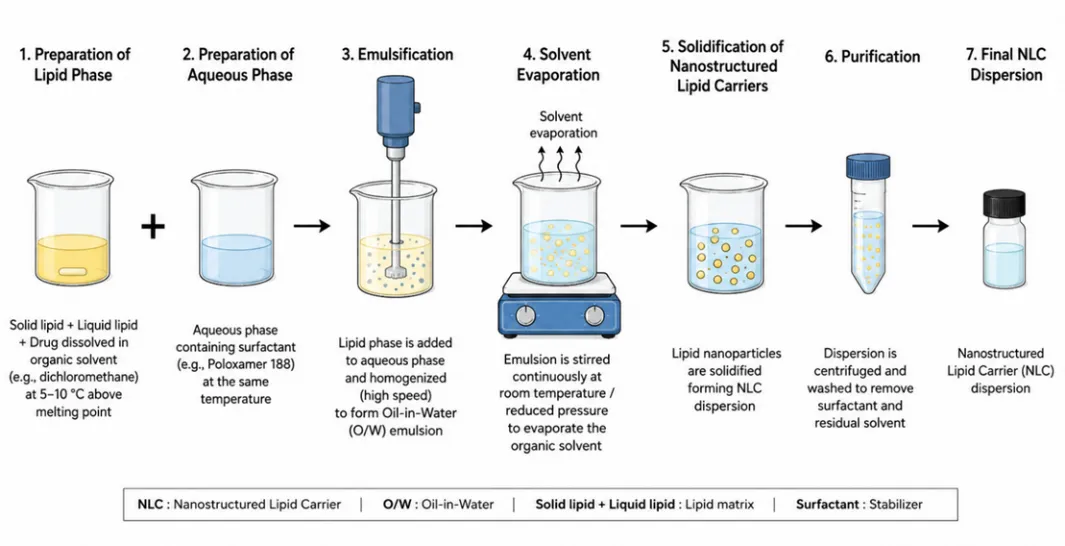
Figure 5 Emulsification-Solvent Evaporation Technique
Note: By acting as emulsifying agents, the surfactants slow down the separation of two phases and reduce the interfacial tension between water and lipid solvent. This increases the surface area of lipid droplets and produces smaller particles. One surfactant may not always be enough and may cause coalescence when left to stand. Therefore, the combination of surfactants that prevents aggregation upon standing by producing a film at the interface with adequate viscosity is chosen [2].
Particle size, which usually ranges from 50 to 500 nm, is essential for NLC bioavailability, penetration, and cellular uptake. Based on variations in light intensity caused by Brownian motion, dynamic light scattering (DLS) calculates the hydrodynamic diameter (Z-average). Size uniformity is measured by the polydispersity index (PDI), which ranges from 0 (monodisperse) to 1 (heterogeneous). Values below 0.3 indicate a homogenous dispersion, which is ideal for stable drug release [15].
Surface charge and colloidal stability are reflected in zeta potential. Enough electrostatic repulsion to stop aggregation is indicated by values close to or below -30 mV. Multiple scattering effects are decreased by dilution with deionised water prior to testing [16].
Size is governed by lipid composition, surfactant levels, and processing variables such as homogenization and sonication. Incorporation of liquid lipids reduces size compared to SLNs, while drug loading may enlarge particles due to increased viscosity. Particles below 200 nm are optimal as they improve absorption, stability, and dissolution of poorly soluble drugs [15,17].
Atomic force microscopy (AFM), transmission and scanning electron microscopy (TEM, SEM), and PCS can all be used to investigate the surface morphology of NLC. For the dimensions and structural characterisation of NLCs, these methods are tested and proven [18]. Several techniques for preparing samples for TEM, such as negative staining, freeze-fracture, and vitrification by plunge freezing, can provide distinct insights into the colloidal particles. The sample is placed on a copper or gold grid with a predetermined mesh size and stained with a heavy metal salt solution to provide a high contrast under an electron microscope. When the sample is examined under an electron microscope after drying, the nanoparticles stand out against the stain's darker backdrop [19]. The initial morphology of nano carriers may vary as a result of structural alterations brought on by dehydration during sample preparation. A reliable and essential tool for visualising colloidal drug delivery systems is cryo-transmission electron microscopy (cryo-TEM) and cryo-electron tomography (cryo-ET). The technique makes it possible to examine the sample in a vitrified frozen hydrated state, which makes it possible to see the nanoparticles precisely as they are in solution [20].
A key factor in determining the amount of drug loaded in NLC is the impact on the release characteristics. The ratio of the weight of the entrapped drug to the total weight of the drug introduced to the dispersion is known as entrapment efficiency (Ee). The ultrafiltration-centrifugation method determines the amount of drug encapsulated per unit weight of the NLC. Centrifugation is carried out in a centrifuge tube equipped with an ultrafilter after a known dispersion of NLCs has been created. A spectrophotometer is used to measure the amount of free drug in the supernatant following the proper dilution [21].
The entrapment efficiency in the NLCs is calculated by the following equation.
Entrapment Efficiency (%) = wa-wswa×100
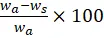
where, Wa is the initial weight of drug used and Ws is the amount of drug determined in supernatant after separation of the lipid and aqueous phase [22].
It is crucial to characterise the crystallinity of the NLC components since both the loaded drug and the lipid matrix may experience a polymorphic transitional change that could result in unwanted drug leakage during storage [23]. Differential Scanning Calorimetry (DSC) provides the heat gained or lost as a function of temperature due to physical or chemical changes inside a sample. The lipid state, melting, and crystallisation behaviour of solid lipids in nanostructures are all revealed by DSC experiments. Lipids' enthalpy and melting point decreased when NLCs used more surfactants and had a larger surface area due to their smaller size [24,25]. Pure drugs, pure lipids, and nanoparticles are all subjected to DSC examination. By examining how solid and liquid lipids mix, DSC characterisation can shed light on the structure of NLC [26].
Approximately 2-3 mg of the sample is sealed in a hermetic aluminium pan and heated from 20-100 °C at 5 °C/min using a DSC instrument (e.g., TA Q20), with an empty pan as reference. For reproducibility, three thermal cycles are applied to each formulation. Thermograms show lipid crystallinity by providing information on onset temperature, peak melting point, and enthalpy variations. In order to assess structural stability and encapsulation effectiveness, a shift in peak temperature or decreased enthalpy indicates lower crystallinity as a result of liquid lipid inclusion [27].
Dialysis bag diffusion is typically used to study the in vitro release of drugs from nanostructured lipid carriers (NLCs). This approach involves soaking a dialysis membrane (molecular weight cut-off 12–14 kDa) in a predetermined volume of NLC dispersion that contains a precisely calibrated dose of drug. The sealed bag is submerged in a release medium, usually simulated physiological fluids or phosphate buffer saline (PBS, pH 7.4), kept at 37 0.5 °C with continuous stirring to maintain sink conditions. To maintain volume consistency, aliquots are removed from the receptor compartment at predetermined intervals and replaced with fresh medium. To measure the amount of drug released, the collected samples are filtered and subjected to spectrophotometric or HPLC analysis.
In order to clarify the release behaviour, this process enables the evaluation of release kinetics and processes, which are frequently fitted to mathematical models like zero-order, first-order, Higuchi, or Korsmeyer–Peppas equations. Although other systems like Franz diffusion cells or USP dissolution apparatus may potentially be used based on formulation parameters, the dialysis method offers a straightforward yet efficient way to simulate drug diffusion across biological membranes [28].
Stability evaluations track changes in zeta-potential, PDI, and particle size over time (e.g., 30 days at 6°C and 25°C). When compared to monostearate versions, NLCs with glycerol distearate cores demonstrated better resistance to phase separation, highlighting the significance of lipid composition in avoiding aggregation or crystallisation. This metric is essential for predicting shelf life and practical application under various storage circumstances [15].
Fourier Transform Infrared Spectroscopy (FTIR), which monitors changes in functional groups and chemical bonds, is used to investigate drug-excipient interactions. FTIR can reveal details about several functional groups, including C=O, O-H, and N-H, by measuring the infrared absorption at various wavelengths that correlate to specific chemical vibrations. Shifts in the absorption peaks when compared to the reference spectra show interactions between the drug and excipients, such as Van der Waals forces or hydrogen bonds, which confirm the changes in molecular structures. The stability, release profile, and encapsulation efficiency are all influenced by the degree of these interactions [29,30].
Table 1 Applications of Nanostructured Lipid Carriers (NLCs)
|
Route |
Drug Example |
Therapeutic Benefit |
|
Oral delivery |
Simvastatin |
Improved oral bioavailability and prolonged therapeutic effect |
|
Topical delivery |
Itraconazole |
Enhanced skin penetration and sustained drug release |
|
Nasal delivery |
Ondansetron hydrochloride |
Improved brain targeting and nasal retention |
|
Ocular delivery |
Amphotericin B |
Enhanced corneal penetration and prolonged ocular residence |
|
Transdermal delivery |
Meloxicam |
Improved permeation and controlled release |
|
Anticancer delivery |
Curcumin |
Enhanced cellular uptake and therapeutic efficacy |
|
Pulmonary delivery |
Anti-asthmatic drugs |
Improved lung deposition and prolonged action |
|
Brain targeting |
Temazepam |
Increased BBB penetration and therapeutic efficiency |
CONCLUSION
Nanostructured lipid carriers have emerged as efficient and versatile lipid-based nanosystems capable of overcoming several limitations associated with conventional dosage forms and solid lipid nanoparticles. The incorporation of both solid and liquid lipids within the carrier matrix enhances drug loading capacity, minimizes drug expulsion, and improves long-term stability. NLCs exhibit excellent biocompatibility, controlled drug release behavior, and the ability to improve bioavailability of poorly soluble drugs. Their adaptability for multiple routes of administration including oral, topical, ocular, nasal, and parenteral delivery further highlights their significance in pharmaceutical research. Various preparation methods and characterization techniques have been developed to optimize their physicochemical properties and therapeutic performance. Despite certain challenges related to large-scale manufacturing, stability, and reproducibility, NLCs continue to demonstrate substantial potential as advanced drug delivery systems. Future research focusing on targeted delivery, clinical translation, and large-scale commercialization may further expand their applications in modern therapeutics.
Conflict of Interest: The authors declare that there is no conflict of interest regarding the publication of this article.
Funding: The authors declared that this study has received no financial support.
REFERENCES


S. M. Shahidulla, Babera Naaz, , Nanostructured Lipid Carriers in Modern Drug Delivery: Formulation Design, Functional Characterization, and Emerging Clinical Applications, Int. J. of Pharm. Sci., 2026, Vol 4, Issue 6, 7200-7213, https://doi.org/10.5281/zenodo.21032211
 10.5281/zenodo.21032211