

We use cookies to ensure our website works properly and to personalise your experience. Cookies policy
Department of Pharmaceutics, BCDA College of Pharmacy and Technology, 78, Jessore Road, Hridaypur, Barasat, Kolkata 700127, West Bengal, India.
Plant-derived medicines have attracted considerable interest as topical agents owing to their pharmacological effectiveness, favourable biocompatibility, and generally mild side-effect profiles. Conventional herbal preparations applied to the skin, however, are frequently restricted by weak cutaneous penetration, modest bioavailability, and the chemical instability of their active phytoconstituents. To address these shortcomings, nanotechnology-driven topical platforms have gained prominence, as they can improve solubility, promote permeation across the skin, regulate release kinetics, and ultimately raise therapeutic performance. A range of carriers at the nanoscale—such as nanoemulsions, liposomes, niosomes, solid lipid nanoparticles, nanostructured lipid carriers, and phytosomes—has been studied widely for transporting herbal actives through the skin. Such systems stabilise the encapsulated constituents, raise their bioavailability, and allow drug release to be directed and prolonged at the target tissue. Investigations published in recent years point to the value of these herbal nanosystems in treating psoriasis, eczema, acne, cutaneous wounds, and related skin conditions. Encouraging results notwithstanding, obstacles tied to safety profiling, scale-up manufacturing, regulatory clearance, and shelf-life stability still need to be resolved. The present review summarises current progress in nanotechnology-enabled herbal topical delivery, examines the therapeutic settings in which these systems are applied, and considers the directions required for their eventual clinical adoption and commercial development.
As the body’s largest organ, the skin forms a defensive boundary that guards against physical, chemical, and microbial threats. Its extensive surface and ready accessibility make it an appealing portal for administering drugs. Formulations applied to the skin are commonly used to treat conditions such as psoriasis, eczema, acne, fungal infection, and wounds. Relative to oral or injectable routes, the topical route carries notable benefits: it bypasses hepatic first-pass metabolism, lowers systemic exposure, encourages patient adherence, and concentrates the drug where it is needed.[1]
For many centuries, herbal remedies have been valued for being effective, comparatively safe, and inexpensive. The bioactive molecules they contain display anti-inflammatory, antimicrobial, antioxidant, antifungal, and tissue-repairing actions, which makes them well suited to cutaneous use. In practice, though, traditional herbal products are often hampered by limited permeation through the skin, reduced bioavailability, degradation of the active components, and poor retention at the intended site, all of which can blunt their clinical benefit. Nanotechnology has consequently arisen as a compelling means of improving how herbal agents are delivered to and through the skin. Nanocarrier systems, including nanoemulsions, nanolotions, liposomes, solid lipid nanoparticles (SLNs), and nanostructured lipid carriers (NLCs), have been extensively investigated for improving the solubility, stability, skin penetration, and controlled release of herbal bioactive compounds, thereby enhancing their therapeutic performance. [2-4]
Progress in this field over recent years has broadened the role of herbal nano-topical systems in managing inflammatory dermatoses, microbial infections, wound repair, and cutaneous malignancy. Formulations built on nanocarriers have shown gains in efficacy, deeper skin penetration, easier spreading, longer drug residence, and fewer required applications. Despite these advantages, challenges related to toxicity, long-term stability, large-scale manufacturing, regulatory approval, and clinical translation remain important concerns that require further investigation. Therefore, this review provides a comprehensive overview of herbal nano-topical drug delivery systems, with particular emphasis on nanoemulsions, nanolotions, liposomes, solid lipid nanoparticles (SLNs), and nanostructured lipid carriers (NLCs), including their formulation approaches, mechanisms of skin delivery, therapeutic applications, recent advancements, safety considerations, and future prospects in dermatological therapy. [5,6]
2. HERBAL TOPICAL DRUG DELIVERY SYSTEMS
2.1 Concept and Advantages
Herbal topical delivery systems are preparations designed to carry plant-derived actives onto the skin to achieve either local or systemic outcomes. This category spans creams, gels, ointments, lotions, and transdermal vehicles formulated with herbal extracts or isolated phytoconstituents. Their appeal lies in a natural origin, demonstrable therapeutic value, and a reduced likelihood of unwanted reactions. Because the drug acts locally, hepatic metabolism is avoided and patients tend to adhere more readily. Such formulations are routinely applied for wound repair, infection, inflammation, acne, eczema, and additional dermatological complaints.[7]
2.2 Skin Structure and Barriers to Drug Penetration
Structurally the skin comprises three layers—the epidermis, dermis, and hypodermis—of which the outermost stratum corneum poses the principal obstacle to drug entry. Built from keratin-filled cells embedded in a lipid matrix, this layer impedes the passage of therapeutic molecules. Permeation may proceed by intercellular, transcellular, or appendageal routes (Figure 1), and absorption is governed by attributes including molecular size, lipophilicity, and aqueous solubility. Because numerous herbal molecules permeate poorly, their performance is constrained and approaches that boost penetration become necessary.[8,9]
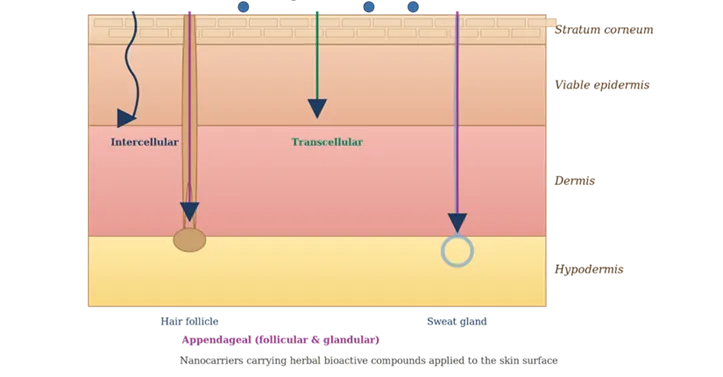
Figure 1. Principal routes of drug penetration across the skin—intercellular, transcellular, and appendageal (follicular and glandular)—exploited by herbal nanocarrier systems. Source: Authors own illustration
2.3 Challenges Associated with Herbal Topical Formulations
Traditional herbal topicals commonly encounter difficulties including weak solubility, restricted skin permeation, and the low bioavailability of their phytoconstituents. Several of these compounds also degrade readily when exposed to light, oxygen, humidity, or heat, which undermines both stability and potency. Batch-to-batch variation in extract composition adds a further hurdle to standardisation. Together these factors can lower therapeutic output and demand repeated dosing. Nanoscale carriers—among them liposomes, nanoemulsions, and solid lipid nanoparticles—have therefore been engineered to enhance stability, permeation, and the regulation of drug release.[10]
3. NANOTECHNOLOGY IN TOPICAL DRUG DELIVERY
3.1 Introduction to Nanotechnology
Nanotechnology concerns the engineering and use of materials sized between roughly 1 and 1000 nm with the aim of improving drug transport and clinical results. Within pharmaceutics it addresses the shortcomings of conventional dosage forms by raising solubility, stability, and bioavailability. Carriers operating at this scale—liposomes, nanoemulsions, niosomes, solid lipid nanoparticles, and phytosomes—are extensively applied to topical therapy. They can entrap herbal actives, shield them from breakdown, and govern their release. A small dimension paired with a high surface-area-to-volume ratio strengthens contact with the skin, which in turn improves penetration and therapeutic effect. For these reasons nanotechnology has become central to the design of advanced herbal topical products.[11,12]
3.2 Advantages of Nanosized Systems for Skin Delivery
Delivery systems at the nanoscale bring multiple benefits to topical use. Their fine particle size and expanded surface area promote adhesion to the skin, drug uptake, and retention at the site of application. By raising the solubility and bioavailability of sparingly soluble herbal components and protecting them from environmental degradation, these carriers improve performance. They additionally afford controlled, prolonged release that cuts the number of applications needed. Beyond this, they can direct the drug to particular skin strata, thereby limiting systemic exposure and adverse reactions. Gains in efficacy, stability, and adherence together render nanosystems particularly worthwhile for cutaneous drug delivery.[13]
3.3 Mechanisms of Skin Penetration Enhancement
Systems based on nanotechnology improve cutaneous penetration largely by circumventing the barrier role of the stratum corneum. Their reduced dimensions permit intimate contact with the skin surface, which aids diffusion and uptake of the drug. Numerous carriers interact with the skin’s own lipids, transiently reorganising them and raising permeability. Lipid-derived particles, in particular, can open routes that ferry actives into deeper tissue. Particles may also lodge within hair follicles and sweat glands, where they act as depots for sustained release. Acting in concert, these processes enhance penetration, retention, and the overall effectiveness of topical treatment (Figure 2).[14]
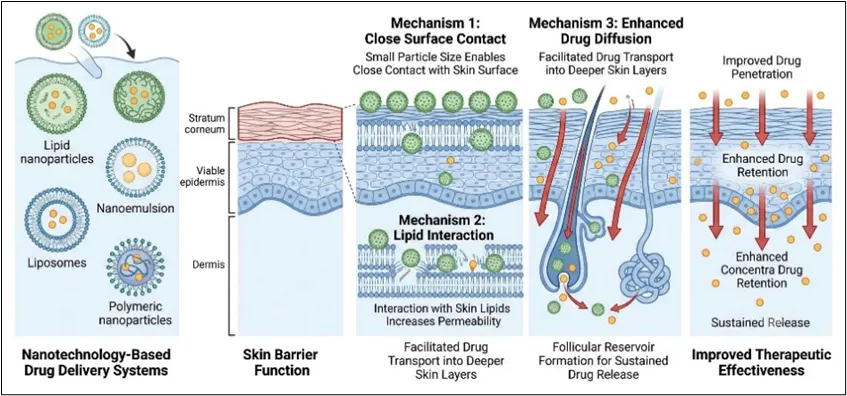
Figure 2. Major pathways involved in skin penetration and delivery of herbal bioactive compounds through nanocarrier systems. Source: Authors own illustration
4. TYPES OF HERBAL NANOCARRIERS USED IN TOPICAL DELIVERY
Of the many nanocarriers devised for herbal drug transport, nanoemulsions, nanolotions, liposomes, solid lipid nanoparticles (SLNs), and nanostructured lipid carriers (NLCs) feature most prominently in topical work, chiefly because they can deepen skin penetration, bolster stability, and heighten the therapeutic effect of herbal actives (Figure 3).[15]
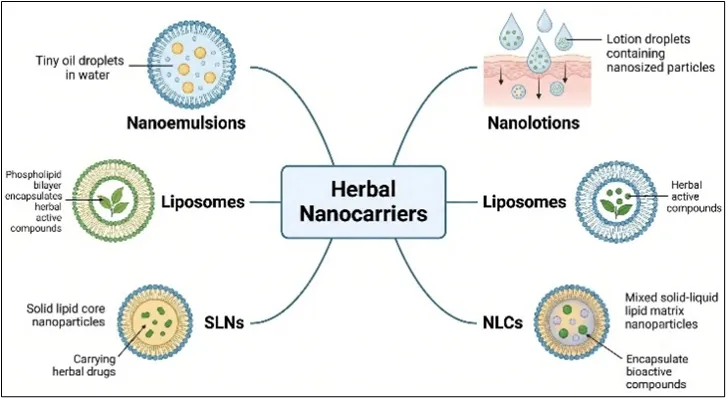
Figure 3. Common nanocarrier systems employed for topical delivery of herbal bioactive compounds. Source: Authors own illustration
4.1 Nanoemulsions
Nanoemulsions consist of oil and water dispersed colloidally and held stable by surfactants, with droplets that generally measure between 20 and 200 nm. They raise the solubility and cutaneous permeation of lipophilic herbal agents such as essential oils and curcumin. Offering smoother spreading, prompt release, and stronger bioavailability, these systems are well matched to the management of skin infection, inflammation, and wound repair.[16,17]
4.2 Nanolotions
Nanolotions are lotion-type topicals incorporating nanoscale carriers that aid the transit of herbal actives across the skin. In comparison with ordinary lotions they deliver deeper penetration, superior hydration, greater drug retention, and a controlled release profile. Their light, non-greasy feel and convenient application have prompted wide investigation for acne, eczema, psoriasis, and skin irritation.[18]
4.3 Liposomes
Liposomes are vesicles formed from phospholipids that can enclose herbal molecules of both water-loving and lipid-loving character. By engaging the lipid lamellae of the stratum corneum they improve penetration while simultaneously safeguarding the phytoconstituents against breakdown. Owing to their biocompatibility and capacity for sustained release, liposomes have been applied extensively to deliver herbal extracts such as Aloe vera, curcumin, and green tea polyphenols.[19,20]
4.4 Solid Lipid Nanoparticles (SLNs)
Solid lipid nanoparticles are nanoscale carriers built from solid lipids and stabilised with surfactants. They reinforce the stability of herbal compounds, meter drug release, and improve skin hydration by laying down an occlusive layer over the surface. SLNs have been employed effectively to convey herbal actives including curcumin, quercetin, and essential oils in the treatment of inflammatory and infectious skin conditions.[21]
4.5 Nanostructured Lipid Carriers (NLCs)
Nanostructured lipid carriers represent a refined, lipid-based design that blends solid with liquid lipids. Set against SLNs, they accommodate larger drug payloads, hold together more stably, and extend release further. NLCs deepen penetration and sustain therapeutic drug levels over prolonged intervals, which makes them particularly capable vehicles for herbal extracts and essential oils used in wound repair, acne therapy, and further dermatological settings.[22,23]
5. HERBAL BIOACTIVE COMPOUNDS USED IN NANO-BASED TOPICAL SYSTEMS
Bioactive constituents of plants have drawn marked attention in topical therapy on account of their broad pharmacological repertoire, which spans anti-inflammatory, antioxidant, antimicrobial, antifungal, and wound-healing effects. Many of them, however, suffer from weak aqueous solubility, low skin permeability, and fragile stability, all of which can curtail clinical benefit. Nanotechnology-based vehicles have been created precisely to counter these problems by improving stability, bioavailability, and skin penetration. A number of medicinal plant extracts and individual phytochemicals have been loaded successfully into nanocarriers to refine their topical delivery.[24]
5.1 Curcumin
Curcumin, the principal bioactive constituent of turmeric (Curcuma longa), shows strong anti-inflammatory, antioxidant, antimicrobial, and wound-healing actions. Its clinical promise is nevertheless tempered by poor aqueous solubility and weak cutaneous penetration. Nanoscale vehicles—including nanoemulsions, liposomes, and solid lipid nanoparticles—have been reported to raise its stability, bioavailability, and effectiveness in managing psoriasis, wound repair, and inflammatory dermatoses.[25,26]
5.2 Aloe vera
Aloe vera holds a variety of bioactive constituents—polysaccharides, vitamins, amino acids, and phenolics—that underpin its wound-healing, moisturising, and anti-inflammatory behaviour. Formulating Aloe vera at the nanoscale improves its cutaneous uptake and extends the release of its active components, rendering such systems useful for wound care, burn therapy, and skin regeneration.[27]
5.3 Neem
Neem (Azadirachta indica) is well known for antimicrobial, antifungal, anti-inflammatory, and antioxidant activity. Constituents including azadirachtin and nimbidin account for much of its therapeutic action. Loading neem extracts into nanoscale carriers improves their penetration into the skin and strengthens their performance against acne, fungal infection, and inflammatory skin disease.[28]
5.4 Clove
Clove (Syzygium aromaticum) is abundant in eugenol, a molecule recognised for antimicrobial, antioxidant, analgesic, and anti-inflammatory effects. Preparing clove at the nanoscale carries eugenol more efficiently into deeper skin layers and improves its action against microbial infection and inflammatory dermatoses.[29]
5.5 Tea Tree Oil
Tea tree oil, obtained from Melaleuca alternifolia, exhibits wide-ranging antimicrobial together with anti-inflammatory activity. When incorporated into nanoemulsions or lipid-based carriers, tea tree oil has shown greater stability and better skin penetration, which makes such formulations valuable for treating acne vulgaris and cutaneous infection.[30]
5.6 Bay Leaf
Bay leaf (Cinnamomum tamala) supplies flavonoids, phenolics, essential oils, and further phytoconstituents bearing antioxidant, antimicrobial, and anti-inflammatory properties. Nanoscale preparations of bay leaf extract have drawn growing interest for their possible role in psoriasis, eczema, and other skin disorders. Embedding the extract within nanolotions or nanoemulsions may improve penetration, reinforce stability, and amplify therapeutic effect.[31]
5.7 Other Medicinal Plant Extracts
A range of additional medicinal species—calendula, chamomile, licorice, green tea, rosemary, and Centella asiatica among them—has likewise been formulated into nanoscale topical systems. The varied therapeutic attributes of these plants justify their use in wound repair, skin renewal, anti-ageing products, and the control of inflammatory skin conditions. Nanotechnology continues to widen the therapeutic reach of herbal actives by enhancing both their delivery and their clinical behaviour.[32]
Numerous experimental studies have reported specific formulation parameters and therapeutic results for herbal nano-topical systems. Representative examples, together with their measured particle size, entrapment efficiency, and principal outcomes, are summarised in Table 1.[48-53]
Table 1. Representative published studies on herbal nano-topical formulations, summarising the nanocarrier used, key physicochemical characteristics, and principal therapeutic outcomes.
|
Herbal Active (Carrier) |
Particle Size / PDI |
Entrapment Efficiency |
Key Outcome |
Ref. |
|
Curcumin (SLN nanogel) |
133.9 nm / 0.33 |
89.5% |
Sustained 48 h release; reduced PASI score and pro-inflammatory cytokines in psoriatic mice |
[48] |
|
Curcumin (NLC gel) |
96.2 nm |
70.5% |
Higher ex-vivo skin deposition and permeation; improved HaCaT cell uptake for psoriasis and acne |
[49] |
|
Neem oil (SLN) |
221.6 nm / 0.95 |
82.1% |
Negligible drug leakage over 3 weeks; sustained antibacterial action against acne microbes |
[50] |
|
Tea tree oil (nanoemulsion gel) |
160–220 nm / <0.25 |
Oil content ~96% |
Stable on storage; dose-dependent inhibition zones against Propionibacterium acnes |
[51] |
|
Tea tree oil + clindamycin (nanoemulsion gel) |
19.4 nm |
— |
High skin deposition; effective antibacterial action and in-vivo wound healing |
[52] |
|
Aloe vera + ZnO (chitosan nanocomposite gel) |
ZnO ~33 nm |
— |
Antimicrobial against MRSA; significantly accelerated wound closure in vivo |
[53] |
6. APPLICATIONS OF HERBAL NANO-TOPICAL DRUG DELIVERY SYSTEMS
Herbal nano-topical systems have surfaced as attractive substitutes for conventional preparations across a spectrum of skin disorders. Housing herbal actives within nanocarriers strengthens their stability, skin penetration, bioavailability, and clinical effect. Accordingly, these formulations have been studied in depth for inflammatory skin disease, microbial infection, wound repair, and other cutaneous problems, the principal applications of which are mapped in (Figure 4).
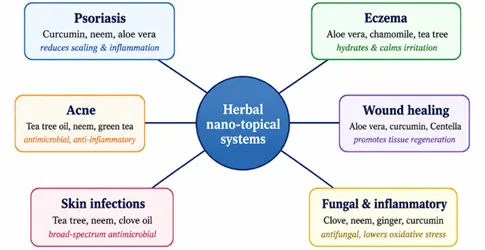
Figure 4. Major dermatological applications of herbal nano-topical systems, with representative herbal actives and their principal effects for each condition. Source: Authors own illustration
6.1 Psoriasis
Psoriasis is a long-standing inflammatory condition marked by scaling, erythema, and overgrowth of skin cells. Herbal nanoformulations based on curcumin, neem, or aloe vera improve how readily the actives traverse psoriatic skin. The resulting improvement in delivery lessens inflammation and scaling and yields better therapeutic outcomes, while the carriers themselves enable directed, sustained release at the lesions.[25,33]
6.2 Eczema
Eczema is an inflammatory disorder accompanied by itching, dryness, and impaired barrier function. Herbal nano-topical systems boost skin hydration and ease the delivery of anti-inflammatory phytoconstituents. Preparations built on aloe vera, chamomile, and tea tree oil have demonstrated improved skin retention and efficacy, and they help relieve irritation, inflammation, and discomfort.[27,34]
6.3 Acne Vulgaris
Acne vulgaris arises from surplus sebum, bacterial proliferation, and inflammation. Herbal nanoformulations supply antimicrobial and anti-inflammatory action while penetrating more readily into hair follicles. Nanoemulsions loaded with tea tree oil, neem, or green tea extract have shown encouraging anti-acne effects, curbing bacterial colonisation and inflammatory lesions.[28,30]
6.4 Wound Healing
Healing of wounds depends on the orchestrated stages of inflammation, tissue regeneration, and remodelling. Herbal agents such as aloe vera, curcumin, and Centella asiatica carry wound-healing properties that nanocarriers can amplify. The resulting formulations sustain release and improve the stability of the actives, encouraging collagen formation, tissue regeneration, and quicker wound closure.[17,26]
6.5 Skin Infections
Bacterial, fungal, and viral infections of the skin continue to be frequent clinical concerns. Herbal nano-topical systems sharpen the delivery and local retention of antimicrobial phytoconstituents at the infected area. Formulations carrying tea tree oil, neem, or clove oil have displayed broad-spectrum antimicrobial action, and the improved penetration aids both infection control and overall efficacy.[29,30]
6.6 Anti-Inflammatory Therapy
Inflammation is a central feature of several skin disorders, psoriasis, eczema, and acne included. Herbal actives such as curcumin, ginger, and aloe vera exert pronounced anti-inflammatory effects. Casting them in nanoscale form deepens their entry into the skin and raises efficacy, helping to lower inflammatory mediators and oxidative stress.[25,32]
6.7 Antifungal Therapy
Fungal infections of the skin frequently call for extended therapy because drug penetration and retention are poor. Herbal nano-topical systems improve permeation and release antifungal agents in a sustained manner. Formulations containing tea tree oil, neem, or clove oil have shown effective antifungal action, marking them as promising options for superficial fungal infection.[28,29]
7. RECENT ADVANCES IN HERBAL NANO-TOPICAL DRUG DELIVERY
Developments in nanotechnology have lately refined the cutaneous delivery of herbal actives. Conventional herbal products tend to struggle with poor solubility, low bioavailability, and restricted skin penetration. Nanoscale delivery platforms counter these constraints by reinforcing stability, permeation, and therapeutic output. Such systems further permit controlled release and extended residence at the target site. Consequently, herbal nano-topical formulations have attracted substantial attention within dermatological practice.[5,6]
7.1 Recent Formulation Approaches
Recent work has concentrated on nanoemulsions, nanolotions, SLNs, and NLCs as vehicles for herbal drugs. Measured against conventional products, these carriers offer better drug stability, higher loading, and greater skin permeation. Extracts of curcumin, aloe vera, neem, tea tree oil, clove, and bay leaf have all been incorporated successfully, and the resulting formulations show promise against acne, psoriasis, eczema, wounds, and microbial infection. Fine-tuning the formulation variables raises therapeutic performance still further.[15,22]
7.2 Smart Nanocarriers
Smart nanocarriers are sophisticated systems built to sharpen targeting and to govern release. They can concentrate herbal actives at the intended site while limiting systemic exposure, improving skin retention and therapeutic efficiency in the process. Their controlled-release behaviour is especially helpful for chronic skin conditions that demand long treatment courses. As a result, smart nanocarriers are gaining recognition as valuable instruments in topical therapy.[35,45]
7.3 Stimuli-Responsive Delivery Systems
Stimuli-responsive carriers discharge their cargo when prompted by cues such as pH, temperature, light, or enzymatic activity. This grants fine command over release and lifts treatment effectiveness. Within diseased skin, local physiological shifts can switch on the release of the encapsulated herbal compounds, an approach that curbs wastage and improves outcomes. Though still largely experimental, these systems carry considerable promise for future topical use.[36]
7.4 Combination Herbal Nanoformulations
Combination herbal nanoformulations bring several extracts or actives together inside one carrier. Acting on multiple disease pathways at once, this strategy can generate synergistic benefit. Pairings such as curcumin with aloe vera, or tea tree oil with neem, illustrate the idea. The resulting products may strengthen anti-inflammatory, antimicrobial, antioxidant, and wound-healing actions, with nanotechnology providing the means for stable, efficient co-delivery.[37]
7.5 Current Research Trends and Future Innovations
Present-day research stresses nanocarriers that are biocompatible, biodegradable, and environmentally sustainable. Enthusiasm is mounting for personalised therapy, multifunctional carriers, and nanotechnology-driven cosmeceuticals, and investigators are additionally turning to artificial intelligence to optimise both formulation design and performance. Progress in nanotechnology is anticipated to ease the clinical translation and commercialisation of herbal nano-topical products, widening their reach across dermatology, wound care, and cosmetic science.[38,39]
8. CHARACTERIZATION AND EVALUATION OF HERBAL NANO-TOPICAL DRUG DELIVERY SYSTEMS
Thorough characterisation and evaluation are indispensable for judging the quality, stability, safety, and therapeutic merit of herbal nano-topical preparations. A spectrum of physicochemical and biological measurements is taken to confirm that the developed carriers are both effective and appropriate for topical use; the overall development sequence is depicted in (Figure 5).[40]

Figure 5. Development workflow of herbal nano-topical formulations, from selection of actives and carriers through characterisation, evaluation, and safety assessment to clinical translation. Source: Authors own illustration
8.1 Particle Size Analysis
Particle size strongly shapes skin penetration, release behaviour, and the stability of the formulation. Finer particles present a greater surface area, which translates into improved bioavailability and stronger therapeutic effect. Dynamic light scattering (DLS) is the technique most often applied to gauge particle size.[40,41]
8.2 Polydispersity Index (PDI)
The polydispersity index reflects how uniform the particle size distribution is across a formulation. Lower values signal a more homogeneous and stable nanosystem, making this index a useful gauge of batch reproducibility.
8.3 Zeta Potential
Zeta potential quantifies the surface charge carried by nanoparticles and serves as a predictor of physical stability. The more strongly positive or negative the value, the greater the repulsion between particles and the lower the chance of aggregation during storage.
8.4 Entrapment Efficiency
Entrapment efficiency expresses the proportion of herbal actives successfully captured within the carrier. A high value guarantees sufficient drug loading and supports better therapeutic performance.
8.5 pH Determination
For comfort and to limit irritation, the pH of a topical product should align with the skin’s natural physiological pH. Measuring pH additionally yields insight into the stability of the formulation.
8.6 Viscosity Measurement
Viscosity governs how easily a topical product spreads, how consistent it feels, and how well it stays on the skin. A suitable viscosity makes application straightforward and lengthens contact time at the site of action.
8.7 In-Vitro Drug Release Studies
In-vitro release testing examines how herbal actives are liberated from their carriers. The data help forecast therapeutic behaviour and reveal whether the formulation delivers the drug in a controlled or sustained fashion.
8.8 Skin Permeation Studies
Permeation studies determine how effectively a nanoformulation crosses the skin barrier to deposit actives in deeper tissue. Franz diffusion cells are the apparatus most commonly used to assess this.[9,41]
8.9 Stability Studies
Stability testing tracks shifts in particle size, pH, viscosity, drug content, and visual appearance over the storage period. Such studies underpin product quality, efficacy, and shelf-life across the intended duration of storage.[40]
9. SAFETY EVALUATION AND TOXICITY CONSIDERATIONS
Assessing safety is a pivotal step when developing herbal nano-topical systems. While herbal medicines are widely viewed as gentler than synthetic alternatives, packaging their actives into nanocarriers can modify physicochemical character, biological interactions, and the way the material penetrates skin. A full safety appraisal is therefore vital to confirm that nano-based herbal products are effective, non-irritant, and fit for sustained topical use. A combination of in-vitro, ex-vivo, and in-vivo studies is typically undertaken to profile safety ahead of clinical application.[42,43]
Beyond the qualitative description of assays, several studies have quantified the cytotoxicity and irritation profiles of herbal nano-topical systems; representative in-vitro findings are summarised in Table 2.[54-57]
Table 2. Reported in-vitro safety and cytotoxicity outcomes for selected herbal nano-topical systems, illustrating the cell models, assays, and quantitative results used in safety evaluation.
|
Herbal Active (System) |
Cell Model / Assay |
Reported Safety Outcome |
Ref. |
|
Curcumin (SNEDDS/microemulsion) |
HaCaT & Caco-2 / MTT |
Non-cytotoxic at 5% w/v; preparations well tolerated |
[54] |
|
Curcumin (blank nanoemulsion) |
HaCaT & RAW264.7 / MTT |
Cell viability above 80% across concentrations; high cytocompatibility |
[55] |
|
Curcumin + EGCG (NLC) |
HaCaT / MTT |
Free curcumin IC50 9.05 µM; 1:5 curcumin:EGCG raised IC50 to 17.97 µM (reduced toxicity) |
[56] |
|
Achyrocline extract (nanoemulsion) |
HaCaT / MTT & HET-CAM |
Non-cytotoxic up to 10 µg/mL; non-irritant in HET-CAM; increased cell migration |
[57] |
9.1 Skin Irritation Studies
Irritation testing gauges whether a nano-topical product is liable to provoke redness, swelling, itching, or comparable adverse responses. These evaluations are usually carried out in animal models, reconstructed human skin equivalents, or clinical patch tests, and they serve to verify skin compatibility and confirm that the herbal nanoformulation is safe to apply.[46]
9.2 Cytotoxicity Studies
Cytotoxicity assays establish how a nanoformulation affects the viability and function of cells. Widely used tests—MTT, XTT, and LDH release—are run on keratinocytes, fibroblasts, and other pertinent cell lines. The findings pinpoint safe concentration windows and confirm that toxicity to healthy skin cells stays minimal.[42]
9.3 Biocompatibility Assessment
Biocompatibility testing investigates whether a formulation can fulfil its purpose without inflicting harmful biological consequences. It encompasses appraisal of cellular compatibility, tissue reaction, and any inflammatory response after application. A favourable biocompatibility profile is a prerequisite for the safe, long-term use of herbal nano-topical systems.
9.4 Regulatory Considerations
Before granting approval, regulators demand exhaustive characterisation, safety evaluation, and quality assessment of nanoscale products. Manufacturers are obliged to establish stability, efficacy, and toxicity profiles through standardised testing. Ongoing harmonisation of regulations remains important for advancing the commercialisation and clinical uptake of herbal nano-topical systems.[44]
10. CHALLENGES AND LIMITATIONS
Notwithstanding the rising interest in herbal nano-topical systems, a number of hurdles impede their adoption at clinical and commercial scale. Problems spanning formulation, stability, manufacturing, and regulatory clearance can compromise product quality, safety, and effectiveness. Overcoming these limitations is fundamental to converting research findings into marketable goods.[43,44]
10.1 Formulation Challenges
The intricate and inconsistent phytochemical make-up of herbal extracts can undermine the consistency and reproducibility of a formulation. Coupled with the weak solubility and fragile stability of many such compounds, this makes their incorporation into nanocarriers demanding. Careful optimisation of particle size, drug loading, and release profile is thus required to arrive at workable products.
10.2 Stability Issues
During storage, nanoformulations can undergo aggregation, phase separation, or drift in particle size, all of which erode effectiveness. The herbal actives themselves are vulnerable to light, oxygen, moisture, and heat. Suitable stabilisation measures and controlled storage are therefore needed to preserve product quality and shelf life.
10.3 Scale-Up and Manufacturing Difficulties
Encouraging as they are in the laboratory, herbal nanoformulations remain difficult to manufacture at scale. Production calls for specialised equipment, rigorous quality control, and reproducible processing. Inconsistency in formulation attributes together with elevated production costs may restrict commercial viability.
10.4 Regulatory Barriers
Securing regulatory approval for nano-based herbal products is complicated by the requirement for wide-ranging safety, toxicity, and efficacy data. The absence of globally aligned guidelines compounds the difficulty for manufacturers. Standardised characterisation procedures and transparent regulatory frameworks are essential if commercialisation is to succeed.[44]
FUTURE PERSPECTIVES
Herbal nano-topical systems have demonstrated marked potential for bettering the treatment of skin disorders. Advances in nanotechnology and in formulation science should further their efficacy, safety, and stability. Looking ahead, efforts ought to centre on inventive nanocarriers, exhaustive safety evaluation, and effective clinical translation. Such progress stands to broaden both the therapeutic and the commercial potential of herbal nanoformulations.[38,39]
Although relatively few herbal nano-topical formulations have reached the market, a number of nanotechnology-based topical and dermo-cosmetic products are already commercially available, illustrating the translational route; representative examples are listed in Table 3.[58-60]
Table 3. Examples of marketed nanotechnology-based topical and dermo-cosmetic products, indicating the nanocarrier type and active ingredient or intended use.
|
Product (Company) |
Nanocarrier |
Active / Use |
Ref. |
|
Ameluz (Biofrontera) |
Nanoemulsion |
5-Aminolevulinic acid; actinic keratosis and basal cell carcinoma |
[58] |
|
Estrasorb (Novavax) |
Nanoemulsion (topical emulsion) |
Estradiol hemihydrate; menopausal hormone therapy |
[58] |
|
Capture (Christian Dior) |
Liposome |
Anti-ageing cosmetic; first marketed liposomal skincare (1986) |
[59] |
|
Plenitude Revitalift (L'Oréal) |
Polymeric nanocapsule |
Retinol delivery; anti-ageing cream |
[59] |
|
Vinosun (Caudalie) |
Nanometric UV filters |
Sunscreen and anti-ageing with antioxidants |
[59] |
11.1 Personalized Herbal Nanomedicine
The personalised-medicine paradigm opens the door to herbal nano-topical formulations matched to the traits of individual patients. Variables such as skin type, disease severity, and response to treatment all bear on the outcome. Tailored delivery schemes may raise efficacy while trimming adverse effects, and progress in diagnostics is likely to assist the entry of personalised nano-topical therapies into routine care.
11.2 Advanced Nanocarrier Technologies
Future investigation is directed at advanced carriers offering better targeting, stability, and controlled release. Smart and stimuli-responsive designs can steer herbal actives toward particular skin layers, potentially lifting therapeutic effect while holding side effects in check. Innovations of this kind are expected to widen the clinical scope of herbal topical formulations.[47]
11.3 Clinical Translation and Regulatory Advancement
Despite favourable preclinical data, only a handful of herbal nano-topical formulations have made it into clinical use. Forthcoming studies should give weight to safety profiling, toxicity assessment, and large-scale clinical trials. Standardised test protocols and unambiguous regulatory guidance are indispensable for approval and commercialisation, and cooperation among academia, industry, and regulators will smooth the path to clinical translation.[43,44]
11.4 Commercial Opportunities and Future Research Directions
Rising consumer demand for natural dermatological products generates strong commercial prospects for herbal nanoformulations. Continuing advances in nanotechnology should aid the creation of novel pharmaceutical and cosmeceutical goods. Future work ought to prioritise scalability, cost-effectiveness, stability, and sustainable production, while the study of fresh medicinal species and environmentally friendly carriers may further improve outcomes.[38,39]
CONCLUSION
Nanotechnology-enabled herbal topical delivery systems have come forward as compelling means of raising the therapeutic performance of herbal medicines in dermatological care. Embedding herbal actives within carriers such as nanoemulsions, nanolotions, liposomes, solid lipid nanoparticles, and nanostructured lipid carriers strengthens their stability, skin penetration, bioavailability, and controlled release. These advanced systems have shown considerable potential against psoriasis, eczema, acne, cutaneous wounds, skin infection, and further inflammatory conditions of the skin. For all their merits, concerns over formulation stability, scale-up manufacturing, safety profiling, and regulatory approval persist as significant considerations. Sustained advances in nanotechnology, allied to comprehensive safety evaluation and harmonised regulatory frameworks, should help bring herbal nano-topical formulations into successful clinical use. Taken together, nanotechnology furnishes a promising foundation for extracting the full therapeutic value of herbal medicines and for developing safer, more effective, and more patient-friendly topical treatments for the dermatology of the future.
AUTHOR CONTRIBUTIONS
Author 1, Author 2, Author 3, and Author 4: Conceptualization, literature search, data collection, writing – original draft, visualization, and manuscript editing.
Author 5 and Author 6: Draft editing, supervision, scientific guidance, critical review of the manuscript and editing, final approval of the manuscript.
FUNDING
No funding received from any end.
ETHICS STATEMENT
The authors have nothing to report.
CONFLICTS OF INTEREST
The authors declare no conflicts of interest.
STATEMENT OF USAGE OF ARTIFICIAL INTELLIGENCE
Open AI platforms were used for grammatical corrections only.
DATA AVAILABILITY STATEMENT
Data is available from the corresponding author on request.
ORCID:
Nasimul Islam
https://orcid.org/0009-0006-3407-2063
Souradip Pal
https://orcid.org/0009-0000-1384-5668
Sourish Maity
https://orcid.org/0009-0007-3635-2541
Kankana Koner
https://orcid.org/0009-0006-2337-3477
Nityananda Mondal
https://orcid.org/0009-0001-8024-2872
Sanjiban Utpalkumar Sarkar
https://orcid.org/0009-0005-3587-2655
REFERENCES






Nasimul Islam, Souradip Pal, Sourish Maity, Kankana Koner, Nityananda Mondal, Sanjiban Utpalkumar Sarkar, Nanotechnology-Based Herbal Topical Drug Delivery Systems: Recent Advances and Future Perspectives, Int. J. of Pharm. Sci., 2026, Vol 4, Issue 6, 7224-7242, https://doi.org/10.5281/zenodo.21032933
 10.5281/zenodo.21032933