

We use cookies to ensure our website works properly and to personalise your experience. Cookies policy
Department of Pharmacy Practice, Government College of Pharmacy, Kathora Naka, Amravati, Maharashtra-444604, India.
Global developmental delay (GDD) has a significant impact on affected children, families and society. The present study was aimed to finding the prevalence and risk factors for developmental delay (domain wise) among children attending the pediatric department in the district general hospital, India. A descriptive observational studies included children aged less than twelve months, were assessed using the age specific assessment sheet for monitoring. A pre-designed, pre-tested schedule was used, which collected information regarding socio-demographic and environmental characteristics of pediatrics. The children were observed and assessed for their delay milestones. A total of 208 children were included in the study, with 58.2?ing males. The study found the prevalence of suspected developmental delay to be 52% and that of developmental alert/normal development with risk factors was 2%. Frequent and occasional hospitalizations might be significant factors for developmental delay. The prevalence of low birth weight varies across age groups, while 14.29% in neonates, 13.89% in infants, 4.55% in toddlers, 4.35% in preschool children, and 4% in school-age children. Down syndrome and autism were more prevalent in older age groups, while sickle cell disease was relatively rare. Behavioral and social, cognitive, and language domains of DD were observed in most of the toddlers, preschoolers, and school-age children. Maternal nutrition and chronic disease conditions of mother were the predominant causes of developmental delay in children. Behavioral and social, cognitive and language domains of GDD were observed in most of the toddlers, pre-school, and school-aged children.
A developmental delay occurs when a child does not develop the expected skills compared to his or her peers. Development refers to qualitative and quantitative changes and acquisition of a variety of competences for functioning optimally in a social milieu. Developmental delay occurs when a child has a significant delay in achieving milestones or skills in one or more developmental areas (e.g., gross motor skills, fine motor skills, speech/language, cognitive skills, personal/social skills, or activities of daily living). A significant delay has been traditionally defined as a discrepancy of 25 percent or more from the expected rate or a discrepancy of 1.5 to 2 standard deviations.[1] According to the World Health Organization (WHO), about 5% of the world’s children who were below 14 years of age suffered from moderate to severe developmental delay (DD) associated disability most of which would have been either prevented or managed, if detected early.[2] Understanding global developmental delay (GDD) is paramount for various stakeholders, including parents, caregivers, healthcare professionals, educators, policymakers, and society. Recognizing the importance of understanding GDD entails acknowledging its implications, challenges, and opportunities for intervention and support. The impact of GDD on affected children, their families, and society at large is enormous, leading to long-term impairment of academic achievement, social interaction, and overall quality of life. Children born with genetic or chromosomal abnormalities are at genetic risk. Environmental risk results from exposure to harmful factors either before or after birth and include poor maternal nutrition, maternal stress, poverty, exposure of a pregnant mother to certain drugs, toxins, irradiation, and infections that are passed from a mother to her baby during pregnancy or during birth. Children born prematurely are at a greater risk of developing developmental delay. Besides the above factors, birth asphyxia, birth injuries, neonatal sepsis, hyperbilirubinemia etc. may also contribute to developmental delay. The Bayley Scales of Infant and Toddler Development, Third Edition (Bayley-III), introduced by Nancy Bayley in 2006, is a widely used standardized assessment tool designed to evaluate the developmental functioning of infants and young children from birth to 42 months of age.[3] The Bayley-III assesses multiple developmental domains, including cognitive, language, motor, social-emotional, and adaptive behavior skills. Therapeutic services play a crucial role in promoting individuals' health, functioning, and quality of life across the lifespan. By addressing physical, cognitive, emotional, and social needs through evidence-based interventions, therapeutic professionals help individuals achieve their full potential and participate fully in meaningful activities and relationships. The several studies of the developmental milestones were done, but their studies were about considering the specific parameters like, Lu. et al. 2016 investigated an approach justified in children with GDD regardless of risk of poor development in young children in low and middle-income countries: an estimation and analysis at the global, regional, and country level.[4] Sharma, N. et al. 2019 suggested socio-economic, antenatal, natal and postnatal factors should be considered for prompt identification and initiation of intervention for DDs[5] Khandelwal N. et al. 2020 were identifying multiple modifiable risk factors for developmental delay in children with severe acute malnutrition will be helpful in devising early interventional strategies in low-middle income countries; however, the exact timing of such interventions should be investigated,[6] Sunderajan T. et al. 2019 were found the prevalence of speech and language delay was 2.53%. And the medical risk factors were, birth asphyxia, seizure disorder, and oro-pharyngeal deformity,[7] Valla L. et al. 2015 suggested developmental delays in early infancy, preterm and IUGR were found to have developmental delay with significant p-value.[8] To effectively manage, intervene, and implement preventive strategies, a thorough understanding of the risk factors contributing to GDD is essential. However, there is a serious lack of comprehensive research on the global prevalence of GDD in developing countries, where the burden is often higher due to limited access to health care, a greater prevalence of risk factors, and socioeconomic inequalities. Therefore, the objective of this study is to investigate the prevalence and risk factors for developmental delay (domain wise) among children attending the pediatric department in the district general hospital in India.
MATERIALS AND METHODS:
Materials Used:
An informed consent form, patient profile form ad charts/case sheets were used for data collection in the study.
Study Design:
The present study was an observational prospective and conducted at the pediatric ward and District Early Intervention Centre (DEIC) of the district general hospital, Maharashtra, for a period of 6 months from October 2023 to April 2024 with ethical approval (EC/9/2023).
Population and Samples:
Children attending the pediatric department, the age group of less than twelve years having etiological consideration with a developmental delay, either sex were recruited. A written informed consent form was obtained in local language before the participation of subjects from the parent and legal guardian of the patient in the study. The patient was informed about the purpose of the study, and the confidentiality of the data was maintained successfully. Patients who were not willing to participate were excluded from this study.
Data Collection:
Children’s data relevant to the study has been collected from treatment charts/case sheets, physical examinations, developmental assessment findings, and the patient or patient's caregiver's interview by using patient data collection forms from the pediatric ward and DEIC. A total of 1400 patients were attending DEIC, and 400 patients who met the inclusion criteria were systematically selected from 208 diagnosed with DD and comorbidities who had been enrolled in this study.
Data Management and Analysis:
Bayley Scales of Infant and Toddler Development Third Edition (BSID-III) tool used in assessing the development of each child in the following multiple developmental domains: cognitive, language, motor, social-emotional, and adaptive behavior skills. The principal investigator administered the BSID-III and Vineland-3 and the research assistant helped in filing completed research data collection sheets. The BSID-III measures early childhood developmental outcomes in three developmental domains, namely, motor (gross and fine motor combined), cognitive, and language/communication (expressive and receptive combined). The severity of developmental delays is classified using the BSID-III composite range.[9, 10]
RESULTS AND DISCUSSION:
A total of 1400 patients were attended to pediatric department, a total of 400 patients were analyzed, out of which 208 patients passed, diagnosed with DD and comorbidities, who had been enrolled in this study.
Socio-Demographic Characteristics:
Among 208 children assessed for developmental delay, 121 (58.18%) were male and 87 (41.82%) were female. Age-related development periods with defined intervals of distribution of study subjects are depicted in Table 1. More than half of the study population were preschooler and aged-children (58.16%) above three years of age. This was due to frequent visits for other comorbidity conditions after three years of age. In neonate and toddler age groups, both genders were equally at risk of developmental delay. The majority stayed in rural areas, with 63.94% of them staying in the high-density Amravati region (Table 1). The prevalence of developmental delay is higher in rural areas, indicating that the rural population exceeds the urban population, primarily due to the lack of facilities such as proper nutrition and access to healthcare. Based on the diagnosis, most children with global developmental delay (GDD) were observed across all age groups, especially neonates (7.14%), infants (65.21%), and toddlers (56.81%). The prevalence of genetic disorders such as Down syndrome and autism is higher in toddlers, preschoolers, and school-age children (Table 1). Among toddlers, 3 were diagnosed with GDD and Down syndrome; in preschool, 4; and in school-age children, 4. Regarding autism, 4 toddlers, 7 preschool children, and 6 school-age children were detected with GDD and autism. GDD with seizure disorder and intellectual disability (ID) children were only observed in old age group children. GDD with speech problems and ID were observed in all age groups except neonates. Prevalence of Down syndrome varies across age groups, with no cases reported in neonates and infants, 6.82% in toddlers, 8.70% in preschool children, and 5.33% in school-age children. Autism prevalence increases with age, being 9.09% in toddlers, 15.22% in preschooler children, and 6.67% in school-age children. Sickle cell disease has a low prevalence across all age groups, with 2.78% in infants, no cases in preschool children, and 1.33% in school-age children. Down syndrome and autism are more prevalent in older age groups, while sickle cell disease is relatively rare.
Table 1: Socio-demographic Distribution and Baseline Characteristics among Participants (n=208)
|
Characteristic |
Neonate (0-2 months) |
Infant (3-11 months) |
Toddler (0-2 yrs) |
Pre-Schooler (3-4 yrs) |
School-Aged child (5-12 yrs) |
|
Number (%) |
|||||
|
Gender |
|||||
|
Male |
04(1.9) |
23(11.06) |
22(10.6) |
30(14.4) |
42(20.2) |
|
Females |
03(1.4) |
13(6.2) |
22(10.6) |
16(7.7) |
33(15.8) |
|
Residency |
|||||
|
Rural |
05(2.4) |
20(9.6) |
28(13.5) |
29(13.9) |
49(23.6) |
|
Urban |
03(1.4) |
16(7.7) |
16(7.7) |
16(7.7) |
26(12.5) |
|
Determinants and Medical Conditions Associated with Developmental Delay |
|||||
|
GDD |
04(1.9) |
30(14.4) |
25(12) |
10(4.8) |
11(5.3) |
|
GDD with MR |
01(0.5) |
- |
3(1.4) |
7(3.4) |
13(6.5) |
|
GDD with Downs Syndrome |
- |
- |
5(2.4) |
6(2.8) |
7(3.4) |
|
GDD with Autism |
- |
- |
4(1.9) |
7(3.4) |
6(2.9) |
|
GDD with Seizure disorder |
- |
01(0.5) |
- |
3(1.4) |
3(1.4) |
|
Intellectual disability |
- |
- |
- |
1(0.5) |
20(9.6) |
|
intellectual disability (ID) with speech problem with seizure disorder |
- |
- |
- |
4(1.9) |
9(4.3) |
|
GDD with speech problem with intellectual disability |
- |
01(0.5) |
3(1.4) |
3(1.4) |
5(2.) |
|
GDD with Malnutrition |
01(0.5) |
01(0.5) |
- |
- |
- |
|
GDD with Hearing Impairment |
- |
03(1.4) |
3(1.4) |
- |
2(0.9) |
|
GDD with Visual Impairment |
01(0.5) |
01(0.5) |
3(1.4) |
01(0.5) |
- |
|
Frequency of Hospital Admission |
|||||
|
Rarely (1-2 times in 2 years) |
- |
- |
02(0.9) |
- |
02(0.9) |
|
Occasional (1-2 times in 6 months) |
- |
18(8.7) |
28(13.5) |
24(11.5) |
31(14.9) |
|
Frequently (1-2 times in 2 month) |
07(3.4) |
08(3.9) |
06(2.9) |
08(3.9) |
12(5.8) |
|
Few (1-2 times in year) |
- |
10(4.8) |
08(3.9) |
14(6.7) |
30(14.4) |
|
Nutritional Factor |
|||||
|
Breast feeding regularly |
3(1.4) |
11(5.3) |
13(6.2) |
16(7.7) |
37(17.8) |
|
Breast feeding mostly |
- |
24(11.5) |
19(9.1) |
10(4.8) |
14(6.7) |
|
Breast feeding occasionally |
3(14) |
1(0.5) |
11(5.3) |
13(6.2) |
19(9.1) |
|
No breast feeding |
1(0.5) |
- |
1(0.5) |
7(3.4) |
5(2.4) |
In neonates, frequent hospital admissions were observed in 7 (100%) cases. In infants, occasional hospital admissions were seen in 18 (50%) cases, frequent admissions in 8 (22%) cases, and a few admissions in 10 (36%) cases. Among toddlers, preschoolers, and school-age children, occasional hospital admissions were more common, with 28 (63%), 24 (52%), and 31 (41%) respectively. Frequent and occasional hospital admissions were observed across all age groups. It concludes that occasional hospitalization is the most common across all age groups. Infants have the highest prevalence of hospitalization, especially in the occasional category. School-age children have a significant number of hospitalizations in the few categories. Frequent and occasional hospitalizations might be significant factors for developmental delay. This is because hospital admissions in children were often due to infections or other medical conditions, and frequent admissions may result from weakened immunity, which can affect a child's developmental growth. Breastfeeding provides essential nutrients and promotes bonding between infants and caregivers contributing to optimal development. Ensuring access to nutritious and healthy food, breastfeeding support, and nutritional supplementation programs can help mitigate the risk of developmental delay associated with nutritional factors.
Prenatal, Perinatal and Genetic Risk Factors for Developmental Delay:
The most prevalent factor across all age groups was chronic disease condition (CDC), shown in Table 2. The prevalence of maternal nutrition (MN) ranges from 2.85% in neonates to 47.83% in preschool children, significantly impacting the latter group. Prevalence of low birth weight (LBW) varies across age groups: 14.29% in neonates, 13.89% in infants, 4.55% in toddlers, 4.35% in preschool children, and 4% in school-age children. The prevalence of birth complications (BC) was low across all age groups at 1.42%. However, toddlers have the highest prevalence of birth complications with trauma (BT) at 6.82%. Infants experience neonatal health conditions (NHC) the most, with a prevalence of 22.22%. The prevalence of premature birth is highest in school-age children at 29.33%. Combined factors show that 9.33% of school-age children have both SA and CDC, while 12% of toddlers have both MN and MST, and 3.03% of toddlers have both MN and MMH. The prevalence varies across age groups, affecting toddlers and preschool children as well. The prevalence of infection during pregnancy (IDP) was highest in preschool children. Toddlers and school-age children also experience IDP. While the prevalence of substance abuse (SA) was relatively low, it is present in all age groups and often combines with other factors, such as the CDC. Maternal mental health (MMH) and maternal stress and trauma (MST) also affect infants, toddlers, and preschool children. The prevalence of prenatal factors highlights the importance of maternal health during pregnancy. The frequency of occasional caregiving practices was most observed in all age groups, followed by normal practices. In previous studies, it was stated that, caregiving practices and the quality of parent-child interactions play a crucial role in shaping early development and promoting optimal outcomes in children. Positive parenting behaviors such as responsive caregiving, nurturing interactions, and stimulating environments facilitate cognitive, social, and emotional development in infants and young children.[11] The prevalence of maternal nutrition (MN) ranges from 2.85% in neonates to 47.83% in preschool children, significantly impacting the latter group. This finding is consistent with previous studies that indicate the prevalence of IDA is particularly high in infancy and early childhood due to increased iron requirements during rapid growth phases.[12] In the present study, prevalence of low birth weight (LBW) varies across age groups: 14.29% in neonates, 13.89% in infants, 4.55% in toddlers, 4.35% in preschool children, and 4% in school-age children. This may be because of their criterion, which they took as low birth weight; children less than 2 kg body weight at birth. Sachdeva et al. found low birth weight in 26 (46%) out of 46 children.[13] This finding was similar to our study.13 Shaahmadi F. et al. 2015 found low birth weight in only 96 of 537 children with global developmental delay, which is less compared to ours (42.2%).[14] Low birth weight is a commonly mentioned risk factor related to developmental delay; the previous literature indicated that it by itself, when taken in isolation, is relatively less important. The prevalence of birth complications (BC) was low across all age groups at 1.42%. However, toddlers have the highest prevalence of birth complications with trauma (BT) at 6.82%. Infants experience neonatal health conditions (NHC) the most, with a prevalence of 22.22%. The prevalence of premature birth is highest in school-age children at 29.33%. Combined factors show that 9.33% of school-age children have both SA and CDC, while 12% of toddlers have both MN and MST, and 3.03% of toddlers have both MN and MMH.
Table 2: Prenatal, Perinatal and Genetic Risk Factors with Developmental Delay
|
Risk Factors |
Neonate (0-2 months) |
Infant (3-11 months) |
Toddler (0-2 yrs) |
Pre-Schooler (3-4 yrs) |
School-Aged child (5-12 yrs) |
|
Number (%) |
|||||
|
Prenatal Factors with Developmental Delay |
|||||
|
Maternal Nutrition (MN) |
2(1) |
13(6.3) |
15(7.2) |
11(5.3) |
33(15.9) |
|
Chronic Disease Condition |
4(1.9) |
2(1) |
2(1) |
7(3.4) |
|
|
Infection During Pregnancy |
2(1) |
1(0.5) |
4(1.9) |
6(2.9) |
1(0.5) |
|
IDP and Substance Abuse (SA) |
- |
- |
2(1) |
2(1) |
6(2.9) |
|
Maternal Mental Health (MMH) and Maternal Stress and Trauma (MST) |
- |
5(2.4) |
2(1) |
6(2.9) |
2(1) |
|
SA and CDC |
- |
7(3.4) |
- |
1(0.5) |
- |
|
MN and MST |
1(0.5) |
- |
8(3.9) |
5(2.4) |
4(1.9) |
|
MN and MMH |
1(0.5) |
- |
- |
- |
- |
|
CDC and SA |
- |
1(0.5) |
- |
7(3.4) |
- |
|
IDP, MT and MST |
1(0.5) |
1(0.5) |
2(1) |
1(0.5) |
4(1.9) |
|
MN and CDC |
1(0.5) |
1(0.5) |
3(1.4) |
- |
12(5.8) |
|
MN, MST and SA |
- |
- |
- |
1(0.5) |
- |
|
MN, MMH, MST |
- |
- |
- |
- |
3(1.4) |
|
IDP, SA and MST |
- |
2(1) |
1(0.5) |
- |
- |
|
MMH |
- |
1(0.5) |
7(3.4) |
2(1) |
2(1) |
|
Perinatal Factors with Developmental Delay |
|||||
|
Low Birth Weight (LBW) |
1(0.5) |
5(2.4) |
2(1) |
2(1) |
2(1) |
|
Birth Complications (BC) |
- |
- |
- |
- |
3(1.4) |
|
BC with Birth Trauma (BT) |
- |
- |
3(1.4) |
2(1) |
- |
|
Neonatal Health Conditions |
1(0.5) |
- |
2(1) |
8(3.9) |
6(2.9) |
|
Premature Birth |
- |
7(3.4) |
14(6.7) |
8(3.9) |
22(10.6) |
|
LBW with BC |
- |
1(0.5) |
- |
2(1) |
2(1) |
|
Premature Birth with LBW |
1(0.5) |
2(1) |
3(1.4) |
2(1) |
7(3.4) |
|
Premature Birth, LBW & BT |
1(0.5) |
- |
- |
2(1) |
3(1.4) |
|
Prolong Labour with BT |
1(0.5) |
6(2.9) |
4(1.9) |
2(1) |
6(2.9) |
|
Prolong Birth, LBW with BT |
1(0.5) |
5(2.4) |
4(1.9) |
4(1.9) |
2(1) |
|
Normal Birth |
1(0.5) |
10(4.8) |
12(5.8) |
14(6.7) |
22(10.6) |
|
Genetic Factors with Developmental Delay |
|||||
|
Downs Syndrome |
- |
- |
3(1.4) |
4(1.9) |
4(1.9) |
|
Autism |
- |
- |
4(1.9) |
7(3.4) |
5(2.4) |
|
Sickle Cell Disease |
- |
1(0.5) |
2(1) |
- |
1(0.5) |
|
None |
7(3.4) |
35(16.8) |
35(16.8) |
35(16.8) |
65(31.3) |
|
Caregiving Practices Factors with Developmental Delay |
|||||
|
Regular |
2(1) |
8(3.9) |
10(4.8) |
17(8.2) |
34(16.4) |
|
Occasional |
5(2.4) |
28(13.5) |
30(14.4) |
27(13) |
37(17.8) |
|
Not recommended |
- |
- |
4(1.9) |
2(1) |
4(1.9) |
Domains Affecting on Developmental Delay by Behavioral and Social, Cognitive and Language Skills:
The maternal demographic and characteristics of those children completing three domains of the BSIDIII (cognition, language, and motor) are presented in Tables 3. Early identification and intervention can support children’s behavioral and emotional development. Addressing challenges in communication, behavior, and adaptability is crucial for positive outcomes. The prevalence of good communication skills 5 is highest in school-age children. Moderate communication skills 31 are prevalent across all age groups, with the highest count in toddlers. Poor communication skills (26) are most common in school-age children.
Table 3: Behavioral and Social, Cognitive and Language Skills Domains of Developmental Delay
|
Questions |
Scale |
Neonate (0-2 months) |
Infant (3-11 months) |
Toddler (0-2 years) |
Pre-Schooler (3-4 years) |
School-Aged child (5-12 years) |
|
Number (%) |
||||||
|
Behavioral and Social Domains of Developmental Delay |
||||||
|
Child interact with family members and peers |
Good |
- |
3(8.3) |
2(4.5) |
- |
4(5.3) |
|
Moderate |
3(42.9) |
32(88.9) |
32(72.7) |
28(60.9) |
37(49.3) |
|
|
Poor |
4(57.1) |
1(2.8) |
10(22.7) |
18(39.1) |
34(45.3) |
|
|
Child able to express emotions and need affectively |
Good |
- |
1(2.8) |
4(9.1) |
1(2.2) |
2(2.7) |
|
Moderate |
3(42.9) |
30(83.3) |
25(56.8) |
23(50) |
37(49.3) |
|
|
Poor |
4(57.1) |
5(13.9) |
15(34.1) |
22(47.8) |
36(48) |
|
|
Child shows any unusual repetitive behavior /restricted interest in activities |
Good |
- |
0(0) |
3(6.8) |
1(2.2) |
1(1.3) |
|
Moderate |
3(42.9) |
31(86.1) |
26(59.1) |
29(63) |
42(56) |
|
|
Poor |
4(57.1) |
5(13.9) |
15(34.1) |
16(34.8) |
32(42.7) |
|
|
Child respond to change in routine environment |
Good |
- |
- |
1(2.3) |
2(4.3) |
- |
|
Moderate |
6(85.7) |
31(86.1) |
31(70.5) |
30(65.2) |
50(66.7) |
|
|
Poor |
1(14.3) |
5(13.9) |
12(27.3) |
14(30.4) |
25(33.3) |
|
|
Cognitive and Language Skills Domains of Developmental Delay |
||||||
|
Child communicates their and wants |
Good |
- |
2(5.6) |
12(27.3) |
4(8.7) |
5(6.7) |
|
Moderate |
6(85.7) |
30(83.3) |
31(70.5) |
23(50) |
44(58.7) |
|
|
Poor |
1(14.3) |
4(11.1) |
1(2.3) |
19(41.3) |
26(34.7) |
|
|
Child able to follow simple instructions and command appropriate for their age |
Good |
- |
- |
- |
1(2.2) |
4(5.3) |
|
Moderate |
4(57.1) |
29(80.6) |
23(52.3) |
19(41.3) |
37(49.3) |
|
|
Poor |
3(42.9) |
7(19.4) |
21(47.7) |
26(56.5) |
34(45.3) |
|
|
Child engages in appropriate play and activities independently |
Good |
- |
- |
1(2.3) |
- |
3(4) |
|
Moderate |
3(42.9) |
29(80.6) |
29(65.9) |
26(56.5) |
40(53.3) |
|
|
Poor |
4(57.1) |
7(19.4) |
14(31.8) |
20(43.5) |
32(42.7) |
|
|
Child learning abilities /attention span |
Good |
- |
4(11.1) |
- |
1(2.2) |
4(5.3) |
|
Moderate |
4(57.1) |
29(80.6) |
27(61.4) |
22(47.8) |
35(46.7) |
|
|
Poor |
3(42.9) |
3(8.3) |
17(38.6) |
23(50) |
36(48) |
|
The ability to follow instructions shows a similar pattern, with moderate prevalence across all age groups. The missing data for engagement in play and learning abilities hinder a comprehensive discussion. Further assessment and targeted interventions are essential for children with communication and learning challenges. Most children fall into the moderate category for both communication and following instructions.
Motor Skills and Adaptive Domain of Developmental Delay:
Early intervention and targeted support are crucial for children with poor abilities in these areas. Neonates show limited motor skills, which is expected due to their age. Infants have a mix of moderate and good motor skills, with only one poor case. Toddlers demonstrate better motor skills overall (Table 4). Fine motor skills, infants struggle with fine motor skills, especially in the “poor” category. Toddlers showed improvement, but there’s still room for growth. Independence, infants have challenges in performing activities independently.
Table 4: Motor Skills and Adaptive Domain of Developmental Delay
|
Questions |
Scale |
Neonates |
Infants |
Toddlers |
Pre-School |
School-Age |
||||
|
Number (%) |
||||||||||
|
Motor Skills Domains of Developmental Delay |
||||||||||
|
Gross motor skills achieved |
Good |
- |
1(2.8) |
1(2.3) |
19(41.3) |
6(8) |
||||
|
Moderate |
4(57.1) |
32(88.9) |
26(59.1) |
24(52.2) |
39(52) |
|||||
|
Poor |
3(42.9) |
3(8.3) |
17(38.6) |
3(6.5) |
30(40) |
|||||
|
Fine motor skills achieved |
Good |
- |
1(2.8) |
- |
1(2.2) |
3(4) |
||||
|
Moderate |
4(57.1) |
23(63.9) |
25(56.8) |
28(60.9) |
44(58.7) |
|||||
|
Poor |
3(42.9) |
12(33.3) |
19(43.2) |
17(37) |
28(37.3) |
|||||
|
Child able to perform activities independently according to their age |
Good |
- |
2(5.6) |
3(6.8) |
1(2.2) |
4(5.3) |
||||
|
Moderate |
5(71.4) |
29(80.6) |
38(86.4) |
37(80.4) |
62(82.7) |
|||||
|
Poor |
2(28.6) |
5(13.9) |
2(4.5) |
8(17.4) |
9(12) |
|||||
|
Child achieved developmental milestones |
Completely |
- |
1(2.8) |
1(2.3) |
- |
1(1.3) |
||||
|
Partial |
4(57.1) |
27(75) |
33(75) |
19(41.3) |
35(46.7) |
|||||
|
Not achieved |
3(42.9) |
8(22.2) |
10(22.7) |
27(58.7) |
39(52) |
|||||
|
Adaptive Domains of Developmental Delay |
||||||||||
|
Achieved daily living skills |
Good |
- |
1(2.8) |
2(4.5) |
1(2.2) |
2(2.7) |
||||
|
Moderate |
5(71.4) |
34(94.4) |
31(70.5) |
22(47.8) |
48(64) |
|||||
|
Poor |
2(28.6) |
1(2.8) |
11(25) |
23(50) |
25(33.3) |
|||||
|
Need for support and assistance during performing activities |
Good |
- |
- |
- |
1(2.2) |
2(2.7) |
||||
|
Moderate |
3(42.9) |
29(80.6) |
28(63.6) |
25(54.3) |
50(66.7) |
|||||
|
Poor |
4(57.1) |
7(19.4) |
16(36.4) |
20(43.5) |
23(30.7) |
|||||
|
Therapy Outcomes |
||||||||||
|
Characteristics |
Neonates |
Infants |
Toddlers |
Pre-School Children |
School-Age Children |
|||||
|
Good |
- |
- |
1(2.3) |
- |
1(1.3) |
|||||
|
Satisfying |
1(14.3) |
15(41.7) |
10(22.7) |
11(23.9) |
23(30.7) |
|||||
|
Average |
5(71.4) |
21(58.3) |
15(34.1) |
29(63) |
42(56) |
|||||
|
Poor |
1(14.3) |
- |
- |
6(13) |
- |
|||||
Prevalence of Different Domains of GDD:
A relatively small percentage of children were developing normally across all domains. The highest percentage of normal development is observed in the motor skills domain. A significant portion of children were at risk for developmental delays across all domains. The highest percentage of children at risk is in the behavioral and social domains. A substantial percentage of children are experiencing delayed development poor across all domains. The highest percentage of delayed development is seen in the cognitive and language domains. It implies a high prevalence of children who are either at risk for or experiencing developmental delays across multiple domains. The behavioral and social domain has the highest percentage of children at risk, suggesting a need for targeted interventions in this area. The cognitive and language domain shows the highest percentage of children with delayed development, highlighting the need for early educational and therapeutic support. The relatively low percentage of children developing normally across all domains suggests that there might be underlying issues affecting child development on a larger scale, necessitating comprehensive assessment and intervention strategies. Overall prevalence for domains of developmental delay is given in Figure 1. Under normal development (Good), a relatively small percentage of children (2.16-5.40%) were developing normally across all domains. For moderate, a significant portion of children (58.89-66.34%) are at risk for moderate developmental delays across all domains.
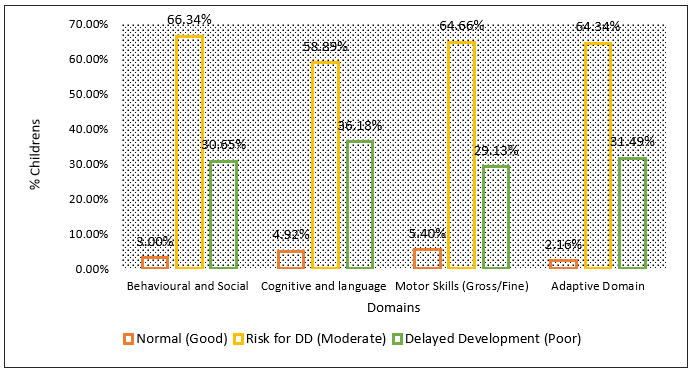
Figure 1: Overall prevalence for different domains of developmental delay
A substantial percentage of children (29.13-36.18%) were experiencing poor delayed development across all domains. Most school-age children, 42 out of 75, rated their satisfaction as average. Infants found their experience most satisfying 15 out of 16 (Table 4). Preschool children have the highest number of poor satisfaction ratings (6 out of 46). It’s essential to consider individual preferences and needs when assessing satisfaction levels.
CONCLUSION:
Total prevalence of global developmental delay (GDD) was 52%. Maternal nutrition and chronic disease conditions of the mother were the predominant causes of GDD in children. History of low birth weight and premature birth are significant concerns across all age groups. Socio-economic factors, low parental education, poverty, and access to healthcare predominantly affect the overall development of children. Behavioral and social, cognitive and language domains of GDD were observed in most of the toddlers, preschool, and school-age children.
REFERENCES

Mulchand Shende*, Deep Sunkawar, Ali Ehsan Shareef, Kanak Surjuse, Neha Rathod, Observational Study on Prevalence and Determinants of Delayed Milestones Among Pediatrics Attending District General Hospital, Int. J. of Pharm. Sci., 2025, Vol 3, Issue 8, 1256-1266. https://doi.org/10.5281/zenodo.16812108
 10.5281/zenodo.16812108