

We use cookies to ensure our website works properly and to personalise your experience. Cookies policy
1, 3, UFR Sciences et Technologies, Université Alassane OUATTARA, 01 BP V18 Bouaké 01, Côte d’Ivoire ;
2 Laboratoire de Biochimie Médicale, Université Alassane OUATTARA, BP V1801 Bouaké, Côte d’Ivoire ;
4, 5,6 Laboratoire de Chimie Bio-Organique et de Substances Naturelles, UFR SFA, Université Nangui ABROGOUA, 02 BP 801 Abidjan 02, Côte d’Ivoire
Côte d’Ivoire has a significant diversity of oilseeds that are still undervalued, such as Myrianthus arboreus and Anacardium occidentale. This study made it possible to evaluate the influence of traditional cooking processes on their properties. The analyzes were carried out according to AOAC and ISO standardized methods, and the fatty acid composition was determined by GC/MS. The results revealed a high energy value, with 499.27 ± 6.13 kcal/100 g for A. occidentale and 584.60 ± 5.89 kcal/100 g for M. arboreus. The analysis of the lipid profile showed a predominance of oleic acid (55.40%) in A. occidentale and linoleic acid (92.35%) for M. arboreus. Comparison with data obtained from raw samples highlights the modification of certain nutritional and biochemical parameters attributable to the applied heat treatments. However, the oil of A. occidentale exhibited higher antioxidant activity (IC50 = 0.52 mg/mL) than that of M. arboreus (IC50 = 0.65 mg/mL). Overall, these results show that heat treatments modify certain nutritional and functional characteristics of these oilseeds without altering their nutritional quality. Further studies on biological properties, preservation, and food or industrial applications would allow for the optimization of their use.
Oilseeds are an important source of nutrients and bioactive compounds beneficial to human health. In addition to their energy content, they contain essential fatty acids, phytosterols, and various antioxidant compounds that may contribute to the prevention of oxidative stress and certain chronic diseases[1,2]. Therefore, utilizing these plant resources is a major challenge for food diversification and the development of high-value-added products.
In Côte d'Ivoire, several local fruit species are traditionally consumed after various forms of preparation. The kernels of Anacardium occidentale L. (Anacardiaceae), commonly known as the cashew tree, are generally eaten after roasting, a process that improves their organoleptic qualities and facilitates their use in food. As for the seeds of Myrianthus arboreus P. Beauv. (Moraceae), from a fruit widely appreciated in certain regions of the country, they are usually consumed after cooking. These heat treatments, widely practiced locally, are likely to influence the chemical composition and functional properties of the seeds and the oils extracted from them.
Previous work has characterized the raw kernels of A. occidentale and the raw seeds of M. arboreus, highlighting their nutrient richness and potential value as sources of plant lipids [3,4,5,6,7,8]. However, consumers generally use these resources after preparation, while the effect of roasting or cooking on their nutritional and functional characteristics remains poorly documented.
In this context, the present study aims to promote the traditional methods of consuming these two species. Its objective is to evaluate the influence of roasting the kernels of A. occidentale and cooking the seeds of M. arboreus on their biochemical composition, mineral content, the physicochemical properties of the extracted oils, their fatty acid profile, and their antioxidant activity. Comparing raw samples with those that have undergone heat treatment will allow us to assess the impact of these preparation processes on the nutritional and functional quality of these local oilseeds, with a view to their improved use in the food, nutraceutical, and therapeutic sectors.
MATERIALS AND METHODS
Study Materials
The seeds of M. arboreus (Figure 1A) were obtained from ripe fruit harvested in the city of Daloa, located in west-central Côte d'Ivoire. After extraction, the seeds were dried at room temperature. The kernels were then collected, boiled at 100°C for 30 minutes, and dried under controlled conditions before being ground into a fine powder and stored under appropriate conditions until further analysis. The kernels of A. occidentale (Figure 1B) were obtained from nuts harvested in the Bouaké region of central Côte d'Ivoire. After shelling, the kernels were roasted at 130°C for 30 minutes, ground, and then stored in airtight containers, protected from moisture and light, until use. Samples were collected between june and july 2025.
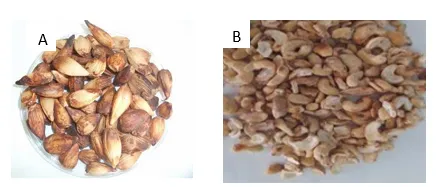
Figure 1: Cooked Myrianthus arboreus seeds (A) and roasted Anacardium occidentale kernels (B)
Methods
Physicochemical Analyses
All analyses were performed in triplicate, and results are expressed as mean ± standard deviation.
The biochemical composition (moisture, ash, protein, lipid, and carbohydrate content) was determined according to the standardized methods of AFNOR [9] and BIPEA [10].
Oil extraction was carried out by continuous Soxhlet extraction with hexane for three hours (3H), according to the method described by Bamba et al. (2015) [11].
The main physicochemical parameters of the oils, notably the saponification index, the acid index, the iodine index (Wijs reagent method) and the peroxide index, were determined according to the protocols described by Weber, Dioum, Mamyrbekova [12,13,14].
The fatty acid composition was established after lipid methylation followed by GPC analysis, in accordance with the method of Karleskind [15].
The mineral element content was determined by atomic absorption spectrometry (AAS) after mineralization of the samples, according to the recommendations of the IIAT [16].
The antioxidant activity of the unsaponifiable fractions of the oils was evaluated according to the method described by Katou [5], by determining the 50% inhibitory concentration (IC₅₀) against free radicals.
Statistical Analysis
The data obtained were processed using appropriate software[17]. The results are presented as mean ± standard deviation of three independent determinations. The comparison of means was performed at a significance level of 5% (p < 0.05).
RESULTS AND DISCUSSION
The results of the various analyses carried out on the roasted kernels of A. occidentale and the cooked seeds of M. arboreus were compared to those previously obtained on the corresponding raw samples[3,4,5,6,7,8]. This approach allows us to assess the influence of heat treatments (roasting and cooking) on the biochemical composition and nutritional properties of these two oilseeds.
Biochemical composition of almonds of A.occidentale and M. arboreus
The results of the biochemical composition of the raw and prepared samples are presented in Table 1. Overall, both species are characterized by a high energy value, testifying to their potential interest as food resources with high nutritional density.
The analysis of the biochemical composition shows that the thermal treatments had a limited effect on the water content of the samples (Table 1). A slight increase in humidity was observed after roasting A. occidentale almonds, while cooking M. arboreus seeds practically did not modify this parameter. The low water contents recorded in both species constitute an asset for their conservation by reducing the risks of microbial proliferation and alteration.
The lipid and protein contents were also little affected by the treatments applied. Toasting A. occidentale almonds is accompanied by a slight reduction in the lipid fraction and a slight increase in the protein content. Conversely, M. arboreus seeds show a slight increase in lipids after cooking, while their protein content decreases slightly. These variations can be attributed to concentration phenomena relating to changes in dry matter induced by heat.
Table 1: Biochemical composition of A. occidentale and seeds of M. arboreus in the raw state and after thermal preparation
|
Parameters |
Raw almonds of A. occidentale [6] |
Roasted almonds of A. occidentale |
Raw seeds of M. arboreus [8] |
Cooked seeds of M. arboreus |
|
|
|
Moisture % |
3,53 ± 0,13 |
2,30 ± 0,09 |
9,20 ± 1,54 |
9,10 ± 1,54 |
||
|
Fat % |
22,01 ± 0,85 |
19,51 ± 2,03 |
44,38 ± 3,66 |
45,09 ± 2,51 |
||
|
Protein % |
9,11 ± 0,26 |
8,65 ± 1,10 |
23,37 ± 1,97 |
22,75 ± 1,08 |
||
|
Ash % |
2,72 ± 0,19 |
3,02 ± 0,40 |
2,12 ± 0,44 |
1,5 ± 0,04 |
||
|
Total Carbohydrate % |
62,61 ± 0,46 |
61,92 ± 8,57 |
18,67 ± 4,81 |
19,45 ± 4,81 |
||
|
Energy Value (kcal/100g) |
573,15 ± 0,77 |
499,27 ± 6,13 |
575,57 ± 13,43 |
584,60 ± 5,89 |
||
A moderate decrease in ash content was observed in both species after heat treatment (Table 1), which could reflect minor losses of mineral compounds during preparation. Carbohydrates remained the major constituent of A. occidentale kernels, and their levels remained generally stable after roasting. In contrast, M. arboreus seeds contained significantly lower amounts of carbohydrates. This difference confirms the predominantly carbohydrate nature of A. occidentale kernels, while M. arboreus seeds are distinguished more by their high lipid and protein content.
The cooking and roasting processes also resulted in an increase in the energy value of the samples. This change could be due to a relative concentration of certain macronutrients resulting from the heat treatments.
Comparison of the prepared products reveals distinct nutritional profiles. Cooked seeds of M. arboreus are characterized by higher lipid and protein content, while roasted kernels of A. occidentale remain particularly rich in carbohydrates. These differences underscore the nutritional complementarity of the two species.
Overall, heat treatments did not lead to major changes in the biochemical composition of the samples and preserved their nutritional quality. The high energy values observed confirm the potential of these plant resources as sources of dietary energy. Furthermore, the high lipid and protein content of M. arboreus seeds enhances their potential for formulating highly nutritious foods, while A. occidentale kernels constitute a valuable source of energy-rich carbohydrates.
Mineral Content
The mineral content of the kernels of A. occidentale and the seeds of M. arboreus, both raw and after heat treatment, is presented in Table 2. The results highlight the presence of essential macronutrients, including magnesium (Mg), calcium (Ca), and potassium (K), as well as trace elements such as iron (Fe), zinc (Zn), and copper (Cu).
Table 2: Mineral content of the kernels of A. occidentale and the seeds of M. arboreus, both raw and after heat treatment
|
Minerals (mg/100g) |
Raw almonds of A. occidentale [7] |
Roasted almonds of A. occidentale |
Raw seeds of M. arboreus [4] |
Cooked seeds of M. arboreus |
|
Mg |
300,72 ± 0,57 |
300,09 ± 7,11 |
315,00 ± 26,03 |
311,00 ± 26,05 |
|
Ca |
31,73 ± 0,32 |
30,97 ± 1,09 |
465,50 ± 48,25 |
441,00 ± 9,45 |
|
K |
458,61 ± 7,83 |
460,35 ± 6,03 |
980 ± 58,72 |
1016 ± 18,70 |
|
Fe |
1,94 ± 0,09 |
1,43 ± 0,10 |
2,30 ± 0,40 |
2,62 ± 0,35 |
|
Zn |
4,85 ± 0,26 |
5,01 ± 0,62 |
0,82 ± 0,12 |
0,86 ± 0,02 |
|
Cu |
1,83 ± 0,08 |
1,57 ± 0,01 |
- |
- |
Overall, the toasting and cooking processes had little effect on the mineral composition of the samples. The contents observed after treatment remain close to those of the raw materials (Table 2), demonstrating the good stability of the mineral elements with respect to heat.
Among the macroelements analyzed, potassium (K) appears to be the predominant element in both species. The seeds of M. arboreus, however, are distinguished by higher K and Ca contents than the almonds of A. occidentale. On the other hand, the Mg contents are relatively comparable between the two species. These results confirm the particular interest of M. arboreus as a source of essential macroelements.
The analysis of trace elements also reveals marked differences between the two species. The seeds of M. arboreus have higher iron (Fe) content, while the kernels of A. occidentale are characterized by their high zinc (Zn) content. Copper (Cu) was detected only in the kernels of A. occidentale, a unique characteristic of this species among the two samples studied.
Comparison of the raw and processed samples shows that the slight variations observed after cooking or roasting could be related to concentration phenomena resulting from water loss or to minor modifications induced by heat treatment. However, these changes remain limited and do not alter the mineral quality of the products.
Overall, the results highlight the nutritional value of both species as sources of essential minerals. The seeds of M. arboreus are particularly distinguished by their richness in Ca, K, and Fe, while the kernels of A. occidentale are a valuable source of Zn and Cu. This mineral complementarity reinforces the interest of these plant resources for human nutrition, as the elements in question play a fundamental role in bone metabolism, oxygen transport, the maintenance of electrolyte balance, and proper neuromuscular function[18].
Physical and physicochemical characteristics of oils
The physical and physicochemical characteristics of the oils extracted from A. occidentale almonds and M. arboreus seeds, in the raw state and after heat treatment, are presented in Table 3.
Table 3: Physical and physicochemical parameters of A. occidentale and M. arboreus
|
Settings |
Raw almonds of A. occidentale[8] (Katou et al., 2024b) |
Roasted almonds of A. occidentale |
Raw seeds of M. arboreus[5] (Katou et al., 2021) |
Cooked seeds of M. arboreus |
|||||
|
Ir (25°C) |
1,464 ± 0,025 |
1,460 ± 0,016 |
1,470 ± 0,001 |
1,472 ± 0,001 |
|
||||
|
Density |
0,901 ± 0,016 |
0,902 ± 0,023 |
0,88 ± 0,01 |
0,885 ± 0,001 |
|
||||
|
Is (mg/g) |
391,29 ± 0,461 |
387,32 ± 0,46 |
169,23 ± 0,03 |
168,40 ± 11,14 |
|
||||
|
Ia (mg/g) |
9,53 ± 0,25 |
12,75 ± 0,11 |
2,80 ± 0,00 |
4,67 ± 0,01 |
|
||||
|
Ii (g 2/100g) |
90,69 ± 0,74 |
85,14 ± 0,34 |
171,84 ± 4,35 |
164,62 ± 9,52 |
|
||||
|
Ip (méq/kg) |
5,13 ± 0,09 |
10,67 ± 0,10 |
10,00 ± 0,00 |
11,57 ± 0,71 |
|
||||
|
Acides gras totaux % |
79,35 ± 5,21 |
75,47 ± 1,65 |
85,63 ± 3,44 |
82,78 ± 2,08 |
|
||||
Heat treatments have influenced the physical properties of the oils. The observed refractive indices and densities are characteristic of vegetable oils rich in unsaturated fatty acids. Oils of A. occidentale have slightly higher densities than those of M. arboreus. According to Ollé [19], these parameters suggest a predominance of monounsaturated fatty acids in A. occidentale oil, while M. arboreus oil is richer in polyunsaturated fatty acids.
The saponification value highlights differences between the two species. A. occidentale oils have higher values than M. arboreus oils. A decrease in the saponification value is observed after heating, reflecting a change in triglyceride composition, without any significant alteration in oil quality.
The acid value increases after roasting the kernels of A. occidentale and cooking the seeds of M. arboreus, indicating an increase in free fatty acid content. The oil from M. arboreus has an acceptable value, but monitoring and pre-refining of the A. occidentale oil are necessary.
The peroxide values increase, indicating a high degree of lipid oxidation; the difference is still clear compared to the roasted kernels. Indeed, at 130°C, oxidation is accelerated. An increase in this value is observed after cooking; therefore, the heat treatments applied have promoted the presence of oxidation products such as hydroperoxides.
The iodine value reveals a marked difference between the two oils. M. arboreus oils exhibit high iodine values. According to the classification reported by Dahouenon et al. (2012)[20], M. arboreus oils would always fall into the category of drying oils, while A. occidentale oils would fall into the category of non-drying oils. The higher degree of unsaturation confirms the significant presence of polyunsaturated fatty acids in M. arboreus oil.
Total fatty acid content decreased after heat treatment in both species; this could result from lipid loss due to toasting and cooking.
These results show that heat treatments altered the physicochemical characteristics of the oils. The increase in Ia and Ip could be explained by lipid hydrolysis and oxidation under the influence of heat in the presence of oxygen. The decrease in iodine value (Iv) confirms the sensitivity of double bonds to oxidative degradation.
Fatty acid profile determined by GC-MS
Compound identification was performed based on retention times and mass spectra obtained, and then confirmed by comparison with data reported in the literature.
Fatty acids identified in Myrianthus arboreus seeds by GC-MS
GC-MS analysis of the oil extracted from Myrianthus arboreus seeds yielded the chromatogram shown in Figure 2.
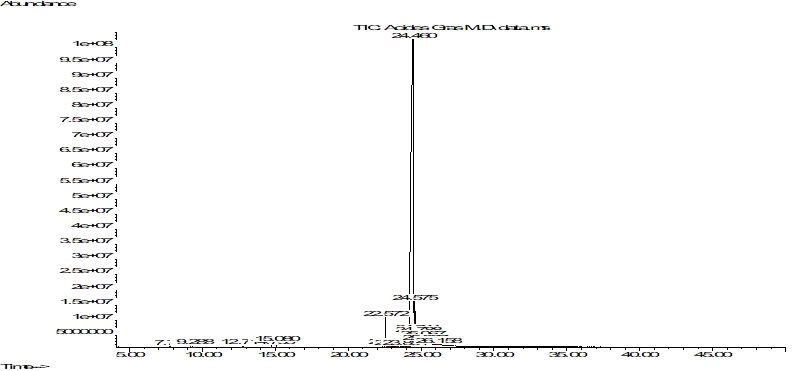
Figure 2: GC chromatogram of fatty acids in Myrianthus arboreus oil
Chromatographic analysis revealed two main fatty acids (Table 4): linoleic acid (octadeca-9,12-dienoic acid; C18:2) and palmitic acid (hexadecanoic acid; C16:0).
Table 4: Compounds identified by GC-MS in Myrianthus arboreus seeds
|
Peak |
TR (min) |
% |
Molecular formula |
Molar mass (g / mol) |
Fragmentation, m/z (%) |
Compounds identified |
|
1 |
22,572 |
4,18 |
C16H32O2 |
256 |
213 [C13H25O2]●; 185 [C11H21O2]● ; 157 [C9H17O2]●; 129 [C7H13O2]● ; 73 [CO3H5O2]●; [C7H13]● ; 56 [C4H8] +● |
hexadecanoic acid |
|
2 |
24,460 |
92,35 |
C18H32O2 |
280 |
280 (1) [M]+, 155 (37) [M-CH3] +; 143(45) [M-C2H3O; 137 (45) [M-C2H3O; 95 (12) [M-C2H3O-CH3] ●+; 71(8) [C5H11] ●+; 67 (8) [C5H7] ●+; 45(4) [CHO2] ●+; 45(4) [CHO2] +. |
octadeca-9,12-dienoic acid |
The mass spectrum in Figure 3 shows a molecular peak m/z 280 corresponding to the formula C18H32O2 of octadeca-9,12-dienoic acid, the molecular structure of which is shown in Figure 4.
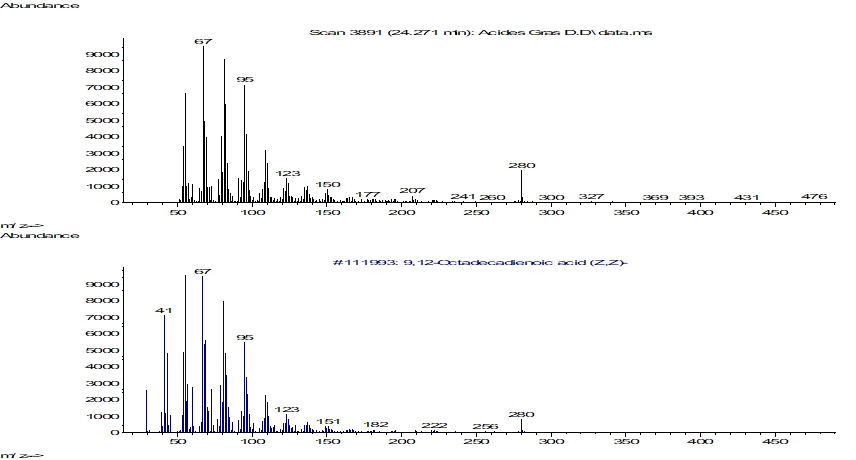
Figure 3: Mass spectrum of linoleic acid

Figure 4: Structure of linoleic acid
The results obtained reveal a very strong predominance of linoleic acid, which represents 92.35% of the total fatty acid composition, while palmitic acid constitutes only 4.18%. This distribution gives M. arboreus oil a lipid profile characterized by a remarkable richness in polyunsaturated fatty acids. The high linoleic acid content distinguishes this oil from many conventional vegetable oils. Indeed, this essential fatty acid plays a role in several major biological functions, including growth, maintaining the structural integrity of cell membranes, and proper tissue function in humans and animals [21,3]. Consequently, M. arboreus seeds appear as a potentially valuable source of essential fatty acids, which could be utilized in the fields of nutrition and the food industry. This high linoleic acid content also gives this oil particular functional value, polyunsaturated fatty acids as are known for their beneficial effects on cardiovascular health and their involvement in various physiological mechanisms. Therefore, the development of M. arboreus seeds could contribute to the growth of new oilseed resources with high nutritional value.
Fatty acids identified by GC-MS in Anacardium occidentale kernels
Gas chromatography-GC-MS analysis of the oil extracted from A. occidentale kernels yielded the chromatogram shown in Figure 5 and highlighted six major fatty acids (Table 5).
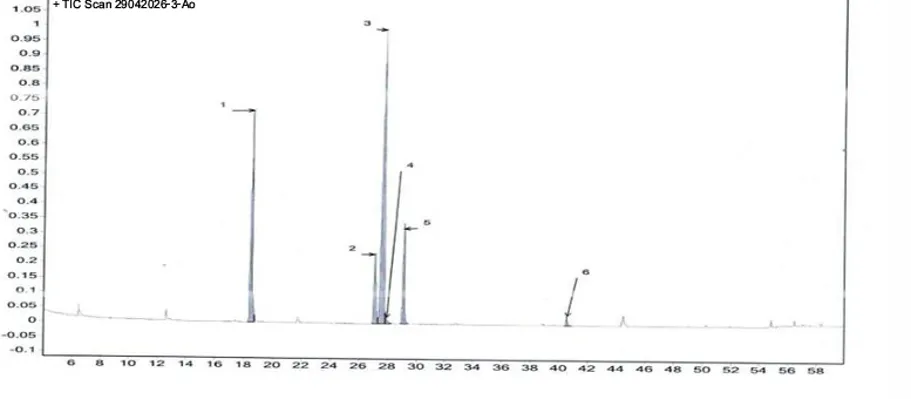
Figure 5: GC-MS chromatogram of fatty acids in Anacardium occidentale oil
The main fatty acids identified are oleic acid (55.40%), palmitic acid (23.53%), linoleic acid (8.23%), stearic acid (9.41%), vaccenic acid (1.19%), and arachidic acid (1.47%) (Table 5). This distribution reflects a predominance of monounsaturated fatty acids, which represent 56.59% of the total fatty acid composition, followed by saturated fatty acids with a content of 34.41%. This high monounsaturated fatty acids content is primarily due to the high proportion of oleic acid.
Table 5: Fatty acids identified by GC-MS in Anacardium occidentale kernels
|
Peak |
TR (min) |
% |
Molecular formula |
Molar mass (g / mol) |
Fragmentation, m/z (%) |
Compounds identified |
|
1 |
18.53 |
23.53 |
C16H32O2 |
256 |
213 [C13H25O2]● ; 185 [C11H21O2]●+ ; 157 [C9H17O2]●; 129 [C7H13O2]● ; 73 [CO3H5O2]●; [C7H13]● ; 56 [C4H8]+● |
Palmitic acid |
|
2 |
27.14 |
9.41 |
C18H36O2 |
284 |
284 [M]+; 239 [C17H35]+●; 199 [C12H23O2]+●; 169 [C12H25]+● ; 115 [C6H11O2]+●; 85 [C6H13]+●; 45 [CHO2]+● |
Stearic acid |
|
3 |
27.75 |
55.40 |
C18H34O2 |
282 |
282 [C18H34O2]+; 239 [C15H27O2]+ ● ; 143 [C8H15O2]+● ; 139 [C10H19]+● ; 96 [C7H13]+2● ; 54 [C4H6]+● ; 43 [C3H7]+● |
Oleic acid |
|
4 |
27.88 |
1.19 |
C18H34O2 |
282 |
282 [C18H34O2]+ ; 239 [C15H27O2]+ ●; 143 [C8H15O2]+● ; 139 [C10H19]+● ; 96 [C7H13]+2● ; 54 [C4H6]+● ; 43 [C3H7]+● |
Vaccenic acid |
|
5 |
29.13 |
8.23 |
C18H32O2 |
280 |
280 (1) [M]+, 155 (37) [M-CH3]+; 143(45) [M-C2H3O; 137 (45) [M-C2H3O; 95 (12) [M-C2H3O-CH3] ●+; 71(8) [C5H11] ●+; 67 (8) [C5H7] ●+; 45(4) [ CHO2] ●+; 45(4) [CHO2]+ |
Linoleic acid |
|
6 |
40.53 |
1.47 |
C20H40O2 |
312 |
312 [M]+; 227 [C14H27O2]+●; 197 [C14H29]+●; 185 [C11H21O2]+●; 127 [C6H19]+●; 115 [C6H11O2]+●; 85 [C6H13]+●; 71 [C5H11]+●; 57 [C4H9]+●; 43 [C3H7]+● |
Arachidic acid |
The lipid profile of A. occidentale oil is comparable to that of so-called oleic oils, particularly olive oil and rapeseed oil, whose oleic acid content is approximately 69% and 63.5%, respectively[22]. This similarity gives cashew oil particularly interesting nutritional properties.
Oils rich in monounsaturated fatty acids are known for their superior oxidative stability and their potential beneficial effects on cardiovascular health [23].
Furthermore, the presence of polyunsaturated fatty acids, especially linoleic acid, improves the nutritional quality of the oil by providing essential fatty acids that are vital for normal bodily function and are associated with a reduction in cardiometabolic risk [24]. A saturated fatty acid content of 34.41%, primarily composed of palmitic, stearic, and arachidic acids, was also observed. These compounds contribute to the oxidative stability of Anacardium occidentale oil.
The oils of M. arboreus and A. occidentale have distinct but complementary fatty acid profiles. The former is characterized by an exceptionally high linoleic acid content, while the latter is dominated by oleic acid. These results suggest that both species are potential sources of nutritionally valuable lipids and could be utilized in the food, pharmaceutical, and cosmetic industries.
Antioxidant activity of oils
The antioxidant activity of the oils of roasted A. occidentale almonds and cooked seeds of M. arboreus was evaluated based on their unsaponifiable fractions and compared to that of vitamin C used as a reference. The 50% inhibitory concentration (IC₅₀) values obtained are presented in Figure 6.
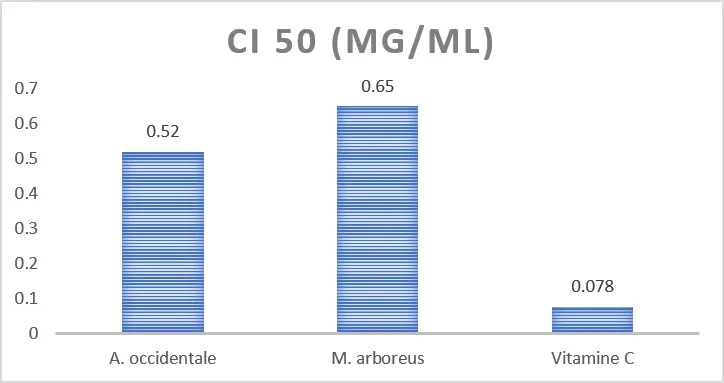
Figure 6: IC50 Values
The results show that the unsaponifiable fractions of both oils possess measurable antioxidant activity. However, this activity remains lower than that of vitamin C, which has the lowest IC50 value (0.078 mg/mL) and, consequently, the highest antioxidant capacity. Between the two species studied, A. occidentale oil exhibits better antioxidant activity than M. arboreus oil, with an IC50 of 0.52 mg/mL versus 0.65 mg/mL.
Overall, although their antioxidant activity is lower than that of vitamin C, A. occidentale and M. arboreus oils show interesting potential due to the presence of compounds capable of limiting oxidation. A. occidentale oil, however, appears to be the more promising of the two species in terms of antioxidant activity.
CONCLUSION
This comparative study highlighted the nutritional value of the kernels of Anacardium occidentale and the seeds of Myrianthus arboreus from Côte d'Ivoire. M. arboreus seeds are distinguished by their richness in lipids, proteins, calcium, and potassium, while A. occidentale kernels are characterized by higher levels of carbohydrates, zinc, and copper. The comparison between raw and processed samples shows that heat treatment modifies certain physicochemical parameters without significantly altering the nutritional properties of the two oilseeds.
The oil of A. occidentale is primarily rich in oleic acid (ω-9) and exhibits higher antioxidant activity, while that of M. arboreus is an excellent source of linoleic acid (ω-6).
Overall, these results confirm the potential of M. arboreus and A. occidentale to enhance the intake of unsaturated fatty acids. Their nutritional and functional properties also offer promising prospects for applications in the food, nutraceutical, and cosmetic sectors.
CONFLICT OF INTEREST
The authors declare no conflict of interest.
CONTRIBUTES OF AUTHORS
KYS and EDS contributed to the preparation of the manuscript, maintaining regular contact with all the other authors. DAP performed the antioxidant activity test using the DPPH assay and determined the IC50 inhibitory concentrations. DGYT also carried out the GC/MS analysis of fatty acids from the various oils in France. Finally, MBJA and BYA provided us with suitable protocols and then revised the final version of the manuscript before its submission.
ACKNOWLEDGMENTS
Our deepest gratitude goes first to the Department of Physics and Chemistry at Alassane OUATTARA University; then to the Laboratory of Bioorganic Chemistry and Natural Substances (LCBOOSN) at Nangui Abrogoua University; and finally to all those who contributed to the completion of this work.
REFERENCES
properties of cholesterol-dioleoylphosphatidylcholine mixtures. Biochim Biophys Acta. 2003; 13(2): 196- 208. DOI: https://doi.org/10.1016/j.bbamem.2003.08.006
Adlouni A. L’huile d’argan, de la nutrition à la santé. Phytothérapie, 2010 ; 8(2) : 89-97. DOI :
https://doi.org/10.1007/s10298-010-0538-9
grasse extraite des amandes de Afzelia Africana (Fabaceae-caesalpinioideae) de Côte d’Ivoire.
Rev. Ivoir.sci. Technol, 2009 ; 13: 191-198. DOI : https://revist.net
l'inférence statistique, Paris et Bruxelles, De Boeck et Larcier.
properties of cholesterol-dioleoylphosphatidylcholine mixtures. Biochim Biophys Acta. 2003; 13(2): 196- 208. DOI: https://doi.org/10.1016/j.bbamem.2003.08.006
Adlouni A. L’huile d’argan, de la nutrition à la santé. Phytothérapie, 2010 ; 8(2) : 89-97. DOI :
https://doi.org/10.1007/s10298-010-0538-9
grasse extraite des amandes de Afzelia Africana (Fabaceae-caesalpinioideae) de Côte d’Ivoire.
Rev. Ivoir.sci. Technol, 2009 ; 13: 191-198. DOI : https://revist.net
l'inférence statistique, Paris et Bruxelles, De Boeck et Larcier.

Katou Yapo Séverin, Djoupo Agnon Prisca, Douhoure Gnaoré Yoh Toussaint, Etekpo Dossou Sylvestre, Mamyrbekova-Békro Janat Akhnovna Et Békro Yves-Alain, Physicochemical characterization and GC/MS analysis of fatty acids in Myrianthus arboreus and Anacardium occidentale oils from Côte d'Ivoire : effect of cooking on their nutritional and functional quality, Int. J. of Pharm. Sci., 2026, Vol 4, Issue 8, 32-32, https://doi.org/10.5281/zenodo.22055419
 10.5281/zenodo.22055419