View Article

  • Phytochemical Analysis of Ocimum Sanctum from Odisha: An Investigation into Its Bioactive Compounds

  • Department Of Pharmaceutical Analysis, Om sai college of pharmacy and Health Sciences, Berhampur, Odisha, India- 760003.

Abstract

Tulsi, or Ocimum sanctum Linn., is a medicinal plant that is widely grown and respected throughout India, especially in Odisha, where it has both cultural and therapeutic value. In order to assess the existence of bioactive chemicals, the current work conducts a phytochemical analysis of Tulsi leaves that were gathered from several local habitats in Odisha. Following ethanol and methanol solvent extraction, plant samples were qualitatively screened for alkaloids, flavonoids, tannins, saponins, glycosides, terpenoids, and phenolic components. The results showed significant differences in phytochemical composition between collecting locations, indicating the impact of agroclimatic conditions on the generation of secondary metabolites. Strong antioxidant potential is shown by the number of flavonoids and phenolic substances, whereas antibacterial action is supported by alkaloids and saponins. The ethnomedical significance of Tulsi in Odisha is confirmed by this study, which also offers a scientific justification for its continued usage in conventional medical procedures. The findings also lay the groundwork for research led by bioactivity and the creation of herbal compounds with pharmaceutical uses.

Keywords

Extraction, Solvents, Conventional use, Pharmaceutical, Phytochemical

Introduction

× Popup Image

Many people know Ocimum sanctum Linn. as Tulsi or Holy Basil. It is a very important plant in Ayurveda and other ancient medical systems. Tulsi is from the Indian subcontinent and has been respected for hundreds of years because it has


many healing qualities and is sacred in many cultures. It is in the Lamiaceae family and has leaves that smell good and are full of medicinal chemicals and essential oils.

Ocimum tenuiflorum, or Ocimum sanctum, is a sacred Hindu plant that is revered throughout India. Its roots, leaves, and seeds, when taken orally, show the healing effect, which is beneficial for human body. The plant's common names are holy basil and sweet basil, Vishnu-priyatulsi in Sanskrit, Kalatulsi in Hindi, and India's holy basil in English.

Phytochemical studies of Ocimum sanctum have found that it contains many types of secondary metabolites, such as flavonoids, phenolic acids, tannins, saponins, glycosides, terpenoids, and essential oils. Eugenol, Rosmarinus acid, apigenin, ursolic acid, and carvacrol are some of the main chemicals that are thought to be responsible for its medicinal effects. Because these chemicals have anti-inflammatory, antibacterial, adaptogenic, hepatoprotective, and anticancer qualities, Tulsi is a very important plant for medicine.

To fully understand Tulsi's healing ability, it is important to get these phytochemicals out of the plant and describe them. Depending on how stable and neutral the target chemicals are, different extraction methods are used, such as Soxhlet extraction, maceration, and decoction. After that, looking for phytochemicals and using scientific methods like chromatography and spectroscopy help find and measure the active ingredients.

In-depth pharmacogenetic and phytochemical standardisation of Tulsi leaves has been the subject of more recent research. In order to establish quality parameters and guarantee the authenticity and purity of plant material, studies have included macroscopic and microscopic assessment, measurement of ash values, extractive values, loss on drying, preliminary phytochemical screening, and chromatographic profiling using TLC and HPTLC. The development of Tulsi-based formulations and the correlation of certain phytochemical profiles with biological activities, such antibacterial properties, depend on this kind of standardisation.

Ocimum sanctum is a well-researched medicinal plant having a wide variety of phytochemicals and several confirmed pharmacological activities, according to the literature. More targeted phytochemical research is still possible, nevertheless, with the goal of isolating, characterising, and quantifying individual molecules from various extracts and linking these components to certain biological activity.

A thousand of chemical molecules studied in this herb with a diverse structure; glycosides, alkaloids, sterols, terpenoids lactones and fatty acids have been studied.

    1. Phytochemicals:

Plants produced phytochemical components have properties of protection themselves and the human being against disease-causing agent. These actively chemical components have a property of disease protection and prevention.

Phytoconstituents is naturally chemical compounds occur in each part of the plants such as root, stem leaf, flower, and fruits. Phenolics compounds have mostly distributed a group of phytochemicals. It is benzene derivatives with one or more hydroxyl groups linked with the aromatic ring.

Naturally, these plants are available in whole worlds. These plants have many properties that are beneficial to human beings and complete society in the medicinal and pharmacological fields. Alkaloids, tannins, terpenoids, flavonoids, phenols are active compounds that show the physical and chemical reaction on the human being.

1.1.1 Importance of phytochemicals:

All plants consist of chemical compounds that provide them associate degree of biological process advantages, such as defence property against herbivores. Salicylic acid is an example of hormone in plant defence system. These compounds are called phytochemicals. Phytochemicals normally can protect plants and human against several predators, competitors, and pathogens.

Phytoconstituents are non-nutritious chemical of plants that contain properties of protecting and preventing diseases against diseases or illness. These are the nonessential nutrient that means that are not essential by the form for sustaining life. It is well-known that plants turn out these chemicals defend to guard to shield to safeguard themselves. However, recent analysis demonstrates that they will additionally protect humans against diseases. There are a thousand known phytochemicals. Some of commonly available phytocomponents are lycopene occur in tomatoes, isoflavones occur in soy and flavanoids occur in fruits. Phytochemicals included alkaloids, flavonoids, glycosides, tannins, saponins, steroids, carbohydrates, etc.

There are various types of phytochemicals mentioned below and each component works separately.

Antioxidant action– A varieties of phytoconstituents provide protection to our cells against oxidative damage and minimize the risk of producing some types of cancer due to antioxidant activity. Phytochemicals have inhibitor activity because of the presence of carotenoids (fruits, carrots), radical sulphides (onions, leeks, garlic), polyphenols (tea, grapes), flavonoids (fruits, vegetables).

Action of hormones – Isoflavones phytochemicals present in soy, possess human oestrogens and helps to minimize symptoms of menopausal and osteoporosis.

Enzymes Stimulation - Indoles chemicals are occurring in cabbages which stimulated the several enzymes that make the oestrogen less effective and minimize the risk for breast cancer. Other phytocomponents that interfere with enzyme, are proteolytic enzyme inhibitors (soy and beans) and terpenes (citrus fruits and cherries).

Interference of DNA replication - Saponins occurs in beans that interfere with the DNA replication of cells, thereby preventing the cancerous cell multiplication. Capsaicin occurs in hot peppers that protects deoxyribonucleic acid from carcinogens.

Anti-bacterial effect - The phytocompounds allicin found in garlic has anti-bacterial properties.

• Physical action – There are some phytochemical components that physically bind to human cell walls and prevent the adhesion of pathogens. Proanthocyanidins are accountable for the properties of anti-adhesion of cranberry. The consumption of cranberries can cut back the danger of tract infections and can improve dental health.

Phytochemicals are naturally occurred in several foods however it's expected that through ergonomics new plants are going to be developed, which are able to produce higher levels of phytochemicals. By this process it is easier to include sufficient phytochemicals in our food. The groups of phytoconstituents consist of several compounds, naturally present in medicinal plants. It is required as essential nutrients for the physiological action. Some phytochemicals are toxic for human are known as phytotoxins, such as aristolochic acid at less amount work as carcinogenic. Some phytocomponents work as antinutrients that interfere in the nutrient’s absorption. Others phytochemicals like as flavonoids and polyphenols work as prooxidants in maximum ingested quantity.

Alkaloids

Alkaloids chemicals are bitter in taste, generally toxic in nature widely occur in several medicinal plants. There are many categories with totally different mechanism of action as medication, both recreational and pharmaceutical. The several historic medicine; caffeine, berberine, cocaine, morphine, ephedrine, resprine, quinidine and quinine (Cinchona), nicotine, vincamine (Vinca minor), andvincristine (Catharanthus roseus) are contain alkaloids.

Glycosides

Glycosides chemical is present in various medicinal plants; cascara, rhubarb, and alexandrian senna as anthraquinone. The viscus glycosides are powerful medicine from medicative plants as well as herbaceous plant and liliaceous plant of the natural depression. They contain digoxin and digitoxin compounds which support the heart beating and function as diuretics. The digitalis, fingerflower, contains digitalis, a cardiac glycoside. The plants contain glycosides was used on heart related problems. Digoxin is utilized to treatment of atrial fibrillation, atrial flutter and sometimes heart failure.

Polyphenol

Different groups of polyphenols are widely spread in plants, having diverse roles in defence system against predators and plant diseases. It is consisting of hormone-mimicking phytoestrogens and astringent tannins. The plants contain phytoestrogen compounds have administered for minimizing the risk of gynaecological disorders, such as fertility, menstrual, and menopausal problems. Among these plants is Pueraria Mirifica, angelica, fennel, and anise. In Ayurvedic science, the astringent rind of the pomegranate is usage as medicine consist of polyphenols components called punicalagin. Angelica, also contain phytoestrogens compound, have been usage for gynaecological disorders. Polyphenols contain phytoestrogens (top and middle) that mimics of animal oestrogen (bottom).

Terpenes

Medicinal plants contain various types of terpenes and terpenoids and it is mostly occurred in resinous plants such as conifers. They are aromatic in nature and serve to repel herbivores. The fragrance of these chemicals is useful for made in essential oils, either for perfumes like as lavender and rose or for aromatherapy. Some terpenes have usage in medicinal purpose like as thymol is work an antiseptic and merely used as an anti-worm medicine called vermifuge. The volatile oil of Thymus vulgaris, consist of monoterpene thyme camphor, an antiseptic, and antifungal.

2.0 MATERIAL AND METHOD

The plant samples of different species were obtained from the nearby Nityananda College of Pharmacy local area of Kuruda and Sergarh in Balasore. The obtained leaf samples were cleaned with distilled water, dried under shade, powdered, and stored in airtight bottles.
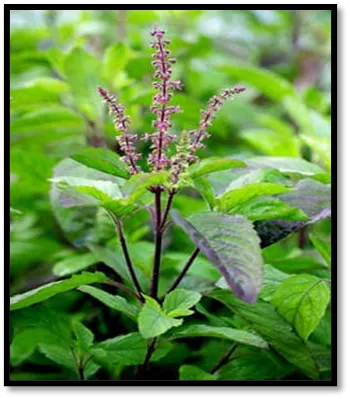
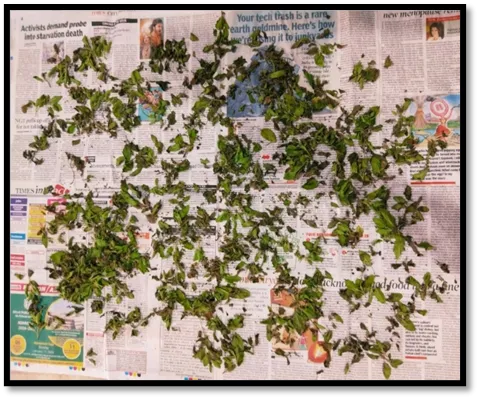


Fig 1: Ocimum sanctum (Tulsi)


  • Botanical description
  • Family: Lamiaceae
  • Height: 30–75 cm tall
  • Stems: Hairy
  • Leaves: Simple, opposite, ovate or elliptical, with toothed or serrated margins; they can be green or purple and have a strong aroma
  • Flowers: Small, purplish or crimson, in dense, whorled racemes
  • Fruit: Small nutlets containing numerous seeds
  • Habitat and cultivation
  • Native range: Indian subcontinent
  • Climate: Prefers moist, well-drained soil in sunny, tropical, and subtropical climates
  • Cultivation: Widely grown in India for both religious and commercial purposes, often in home gardens or temples
  • Harvest: Typically planted after the rainy season and requires a few months to mature before harvest.
  • Uses
  • Medicinal: Valued in traditional medicine for its adaptogenic properties; research suggests it has antimicrobial, antioxidant, and stress-protective effects.
  • Pest control: Dried leaves are traditionally mixed with stored grains to repel insects
  • Water disinfection: Used to purify water
  • Nutritional: A source of vitamins C and A, calcium, iron, and other phytonutrients 


Table 1: Reagents and Equipment used


CHEMICALS REQUIRED


APPARATUS REQUIRED

  1. Ethanol
  2. Distilled water
  3. Concentrated HCl
  4. Dilute HCl
  5. Concentrated H2SO4
  6. Chloroform
  7. Acetic acid
  8. Acetic anhydride
  9. KOH pallets.
  10. Mayer’s Reagent.
  11. Wagner’s Reagent
  12. Dragendorff reagent
  13. Molisch’s Reagent
  14. Benedict’s Reagent
  15. Millon’s Reagent
  16. 10% NaCl Solution
  17. 10% FeCl3 Solution
  18. 10% NaOH Solution
  19. 2% CuSO4 Solution
  20. 1% Gelatine Solution
  21. 2% Ninhydrin Solution


    1. Mortar and pestle
    2. Beaker
    3. Measuring cylinder
    4. Pipette
    5. Conical flask
    6. Round Bottom Flask
    7. Air tight Container
    8. Test tube
    9. Test tube holder.
    10. Soxhlet apparatus
    11. Water bath
    12. Heating mantle
    13. Weighing Balance
    14. Glass rod
    15. Spatula
    16. Filter paper


12.


  1.  
  2.  


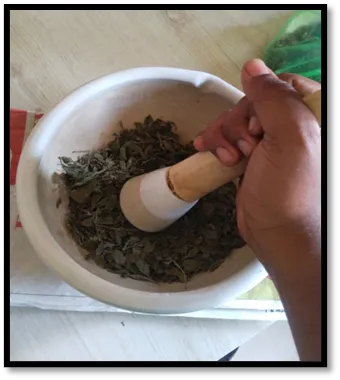
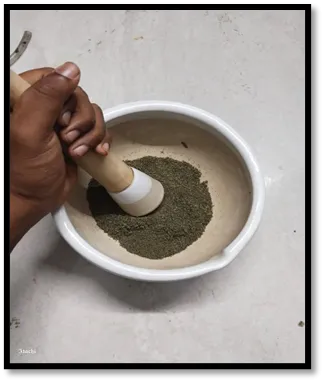
Fig 2: Preparing the powder from the dry leaves of ocimum sanctum by using mortar and pastle


2.1 EXTRACTION OF TULSI

The extraction of Tulsi (Ocimum sanctum) is a versatile process, with different methods used to obtain various types of extracts, each with a unique profile of active compounds.

2.2 TYPES OF EXTRACTION PROCESS.

  1. Maceration
  2. Soxhlet Extraction
  3. Decoction
  1. MACERATION

Maceration Extraction Process

I. Preparation of Plant Material

  • Collect fresh leaves of Ocimum sanctum.
  • Wash thoroughly to remove dust and impurities.
  • Dry under shade at room temperature to preserve heat-sensitive compounds.
  • Grind into coarse powder to increase surface area for solvent action.

II. Selection of Solvent

  • Common solvents: Ethanol, methanol, hydroalcoholic mixtures, or water.
  • Choice depends on target compounds:
  • Ethanol/methanol: Good for flavonoids, phenolics, glycosides.
  • Water: Extracts polar compounds like tannins and saponins.

III. Maceration Procedure

  • Place powdered plant material in a clean container.
  • Add sufficient solvent to completely immerse the material.
  • Seal the container to prevent evaporation.
  • Keep at room temperature for 24–72 hours, with occasional stirring or shaking to enhance extraction.
  • After maceration, filter the mixture to separate the solvent extract from plant residue.

IV. Concentration of Extract

  • Concentrate the filtrate using a rotary evaporator or by gentle evaporation.
  • Obtain crude extract containing bioactive phytochemicals.


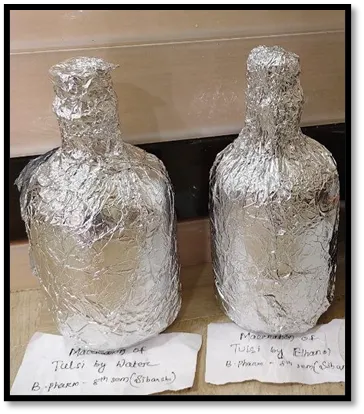
Fig 3: Maceration process of Ocimum sanctum by the solvent water and ethanol

  1. Soxhlet extraction
    1. Preparation of Plant Material
  • Collect fresh Ocimum sanctum leaves.
  • Wash thoroughly to remove dust and contaminants.
  • Dry under shade at room temperature to preserve heat-sensitive compounds.
  • Grind into coarse powder for better solvent penetration.

II. Selection of Solvent

  • Common solvents: Ethanol, methanol, hydroalcoholic mixtures, or petroleum ether.
  • Choice depends on target compounds:
  • Ethanol/methanol: Extracts phenolics, flavonoids, and glycosides.
  • Petroleum ether: Extracts essential oils and non-polar compounds like eugenol.

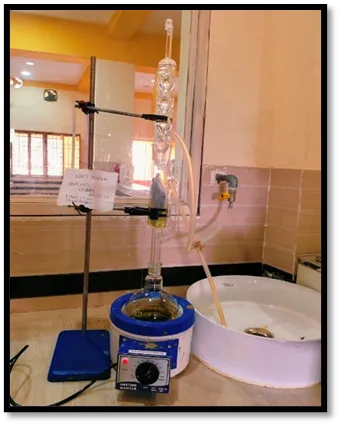
III. Soxhlet Extraction Setup

  • Place powdered leaves in a thimble inside the Soxhlet extractor.
  • Connect to a round-bottom flask containing the chosen solvent.
  • Attach condenser to allow continuous solvent recycling.


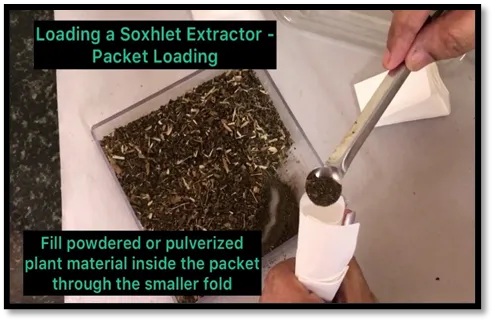
Fig 4: Preparation of Thembal

IV. Extraction Process

  • Heat solvent to boiling; vapours condense and drip onto plant material.
  • Solvent dissolves phytochemicals and siphons back into the flask.
  • Continuous cycles ensure thorough extraction.
  • Typical duration: 6–8 hours depending on solvent and plant load.

V. Concentration of Extract

  • After extraction, evaporate solvent using a Water bath.
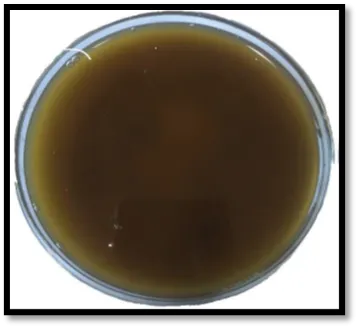
  • Obtain concentrated crude extract rich in phytochemicals.


Fig 5: Soxhlet’s extraction process of Ocimum sanctum by the solvent ethanol

  1. DECOCTION

Decoction Extraction Process

1. Preparation of Plant Material

  • Collect fresh leaves of Ocimum sanctum.
  • Wash thoroughly to remove dust and impurities.
  • Dry under shade at room temperature to preserve delicate compounds.
  • Cut or crush into small pieces for better solvent contact.

2. Choice of Solvent

  • Water is the primary solvent in decoction.
  • Sometimes hydroalcoholic mixtures are used, but traditional decoction relies on boiling in water.

3. Decoction Procedure

  • Place the plant material in a clean vessel.
  • Add water in a ratio of about 1:10 (w/v) – one part plant material to ten parts waters.
  • Boil gently for 15–30 minutes to allow extraction of water-soluble constituents.
  • Cool and filter to separate the liquid extract from plant residue.
  • The filtrate is the decoction, which can be concentrated further if needed.

4. Concentration of Extract

  • If required, reduce the volume by gentle heating to obtain a concentrated extract.
  • Store in airtight containers to prevent microbial growth.


Fig 6: Aqueous extract of Ocimum sanctum leaves
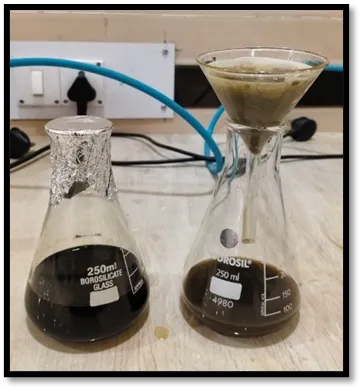


Fig 7: Filtration of extract

    1. IDENTIFICATION TESTS

Organoleptic characterization of ethanolic extract- The colour, odour, texture, taste, fracture of Ocimum sanctum (Tulsi) were characterized.

Phytochemical analysis of ethanolic extract of Ocimum sanctum- The ethanolic extract of Ocimum sanctum was subjected to phytochemical analysis find out the presence an absence of phytochemical constituents.

Flavonoid synthesis in plants is induced by light colour spectrums at both high and low energy radiations.

Low energy radiations are accepted by phytochrome, while high energy radiations are accepted by carotenoids, flavins, cryptochromes in addition to phytochromes.

The phytochemical tests employed for alkaloids, flavonoids, glycosides, proteins, fixed oil, carbohydrate and tannins, Cardiac glycosides, saponins and flavonoids and terpenoids.

    1. Test for alkaloids-
  1. Mayer’s test-
  • 2ml of ethanolic extract + 2ml of concentrate HCl + Few drops of Mayer’s reagent
  • Result: Obtaining of white precipitation or green precipitation indicates the presence of alkaloids.
  • Observation: We obtain the Green Colour precipitate so the test is positive.
  1. Wagener’s test-
  • 1ml of ethanolic extract + 1ml Wagner’s reagent
  • Result: Obtaining of Reddish-brown precipitation indicates the presence of alkaloids.
  • Observation: We obtain the Reddish-brown precipitation so the test is positive.
  1. Dragendorff test-
  • 2ml of aqueous extract + Few drops of Dilute HCl + 1 to 2ml of Dragendroff reagent.
  • Result- Obtaining of Reddish-brown or orange-red precipitation indicates the presence of alkaloids.
  • Observation: We obtain the Reddish-brown precipitation so the test is positive.
    1. Test for flavonoids-
  1. Sodium hydroxide test-
  • 2ml of ethanolic extract + 2ml of 10% NaOH solution
  • Result: Intense Yellow colour indicates the presence of flavonoids
  • Observation: We obtain the Intense yellow colour so the above test in positive.
  1. Ferric Chloride test-
  • 2ml of ethanolic extract + Few drops of 10% FeCl3 solution
  • Result: Obtaining of blue-green or blackish colour indicates the presence of flavonoids and phenolic compounds.
  • Observation: We obtain the blackish colour so the above test is positive.
  1. Alkaline reagent test-
  • 2ml of aqueous extract + 2ml of 10% NaOH solution
  • Result: Intense Yellow colour indicates the presence of flavonoids.
  • Confirmation: If we add few drops of dilute HCl then the yellow colour changes to colourless.
  • Observation: We obtain the Intense yellow colour and when we add some few drops of Dilute HCl the it turns into colourless solution so the above test is positive.

3.3 Test for glycosides-

  1. Liebermann’s test-
  •  2ml of ethanolic extract + 2ml of chloroform + 2ml Acetic acid + 1ml of conc. H2SO4. (place them for cool on ice)
  • Result: A colour change from violet to blue to green which indicates the presence of glycosides.
  • Observation: From the above test we obtain the green to dark green to black colour changes so the above test is negative.
  1. Salkowski’s test-
  • 2ml of ethanolic extract + 2ml of chloroform +1ml of conc. H2SO4
  • Result: Shaking gently then the reddish-brown colour obtained.
  • Observation: When we shake the above solution then we obtain the dark green colour so that the test is negative.
  1. Keller-Kelani test-
  • 5ml of ethanolic extract + 2ml Acetic acid + Few drops of 10% FeCl3 solution + 2ml of conc. H2SO4
  • Result: Brown ring formation indicates the presence of glycosides.
  • Observation: We obtain the black colour precipitation so that the above test is negative.
    1. Test for tannins-
  1. Ferric Chloride test-
  • 2ml of ethanolic extract + Few drops of 10% FeCl3 solution
  • Result: Obtaining of blue-green or blackish colour indicates the presence of flavonoids and phenolic compounds.
  • Observation: We obtain the blackish colour so the above test is positive.
  1. Gelatine test-
  • 2ml of aqueous extract + 2ml of 1% gelatine-10% NaCl solution
  • Result- White precipitation confirms the presence of tannins.
  • Observation: We obtain the yellowish-white precipitation that means the above test is positive.
    1. Test for Saponin-
  1. Foam test-
  • 1ml of aqueous/ethanolic extract + 5ml distilled water
  • 2ml of aqueous/ethanolic extract + 6ml distilled water
  • 5ml of aqueous/ethanolic extract + 5ml distilled water
  • Result: shake all the mixture for 15 minutes. If the foam produces from the above mixture, then saponin is present.
  • Observation: foam is produced after shaking that means the above solution mixture contains saponins.
    1. Test for carbohydrates-
  1. Molisch’s test-
  • 2ml of aqueous/ethanolic extract + 3-5 drops of Molisch’s reagent + 1mls of conc. H2SO4.
  • Result: If reddish-violet or purple colour obtain then the presence of carbohydrate is positive.
  • Observation: From the above test we get the reddish-violet or purple colour so that the above test is positive.
  1. Benedict’s test-
  • 2ml of aqueous/ethanolic extract + 2ml of Benedict’s reagent
  • Result: if brick-red colour formed then carbohydrate is present.
  • Observation: we obtain the dark green colour. So, the above test is negative.
    1. Test for steroids-
  • Chloroform test-
  • 2ml of ethanolic extract + 2ml of chloroform + 2ml of acetic anhydride +1ml of conc. H2SO4
  • Result: Shaking gently then the reddish-brown colour obtained.
  • Observation: When we shake the above solution then we obtain the reddish-brown colour so that the test is positive.
    1. Test for proteins-
  1. Biuret’s test-
  • 2ml of ethanolic extract +1 drop of CuSO4 Solution + 1ml of ethanol solution + KOH pallets
  • Result: If purple violet colour obtains then the test is protein positive. If colour indicates blue then the test is negative.
  • Observation: The mixture turns into blue colour.
  1. Ninhydrin test-
  • 2ml of ethanolic extract + 2ml of 2% ninhydrin Solution
  • Boil the mixture in the water bath for 2-5 minutes.
  • Result: If the colour changes to violet/purple/pinkish-purple then it contains proteins and amino acids.
  • Observation: It turns into light greenish-yellow so this test is negative.
  1. Million’s test-
  • 2ml of aqueous/ethanolic extract + 1-2 ml of million’s reagent
  • Shake and boil the mixture in the water bath for 2-5 minutes.
  • Result: Look for the formation of a red or brick-red colour or a reddish-brown precipitate.
  • Observation: No colour changes. That means this test is negative and the protein is absent.
    1.  Identification tests for eugenol

The presence and concentration of eugenol in Ocimum sanctum (Tulsi) extracts can be verified through traditional chemical assays alongside advanced analytical techniques, including UV spectroscopy, HPTLC, HPLC, and GC. These methods serve to both authenticate the compound and measure its specific levels within the plant material.

Classical Identification Tests

  • Ferric Chloride Test
    • Eugenol, being a phenolic compound, gives a blue-green coloration with ferric chloride solution.
  • Vanillin-HCl Test
    • Produces a pink to red colour due to the reaction of phenolic hydroxyl groups.
  • Potassium Permanganate Test
    • Eugenol undergoes oxidation, leading to discoloration of KMnO₄ solution.
  • Solubility & Odor
    • Eugenol is slightly soluble in water but soluble in alcohol and ether. It has a distinct clove-like aroma, which is a quick organoleptic marker.

4.0 RESULT AND DISCUSSIONS

Phytochemical investigations of Ocimum sanctum (Tulsi) consistently reveal the presence of bioactive compounds such as flavonoids, phenols, terpenoids, glycosides, saponins, and alkaloids, with aqueous and ethanolic extracts showing the richest profiles and strongest biological activities. These findings support its traditional use in antimicrobial, antioxidant, and therapeutic applications.

4.1 Results of Phytochemical Screening

  • Detected Compounds:
    • Carbohydrates, amino acids, – present in most extracts.
    • Phenols & flavonoids – abundant in aqueous and ethanolic extracts.
    • Glycosides – consistently found across solvent types.
    • Saponins – present in ethanolic and aqueous extracts.
    • Alkaloids & tannins – absent in aqueous extracts but present in organic solvents.
    • Absent compounds – proteins, glycosides, terpenoids etc.


Table 2: Identification test table of phytochemicals

SL No.

Phytochemicals

Test

Observation

Inferences

Compound +Ve/-Ve

1.

Alkaloids

Mayer’s test

Green Colour precipitate

Present

+Ve

Wagner’s test

Reddish-brown precipitate

Present

+Ve

Dragendorff test

Reddish-brown precipitate

Present

+Ve

2.

Flavonoids

Sodium hydroxide test

Reddish-brown precipitate

Present

+Ve

Ferric Chloride test

Reddish-brown precipitate

Present

+Ve

Alkaline reagent test

Intense yellow colour to colourless after adding few drops of HCl

Present

+Ve

3.

Glycosides

Liebermann’s test

green to dark green to black colour

Absent

-Ve

Salkowski’s test

dark green colour

Absent

-Ve

Keller-Kelani test

black colour precipitate

Absent

-Ve

4.

Tannin

Ferric chloride test

blackish colour

Present

+Ve

Gelatine test

yellowish-white precipitate

Present

+Ve

5.

Saponin

Foam test

foam is produced

Present

+Ve

6.

Carbohydrates

Benedict’s test

Dark green colour

Absent

-Ve

Molisch’s test

reddish-violet or purple colour

Present

+Ve

7.

Steroids

Chloroform test

reddish-brown colour

Present

+Ve

8.

Test for proteins

Biuret’s test

blue colour

Absent

-Ve

Ninhydrin test

light greenish-yellow

Absent

-Ve

Million’s test

No colour changes

Absent

-Ve


Table 3: Identification table of eugenol

Sl. No.

Methods

Principle


Observation/Result

Usefulness

1.

UV Spectroscopy

Absorption of UV light by aromatic ring

Peak around 280 nm

Quick qualitative check

2.

HPLC (High-Performance Liquid Chromatography)

Separation based on polarity

Clear peak corresponding to eugenol standard

Highly precise quantification


Fig 8: Graph of eugenol from UV spectroscopy
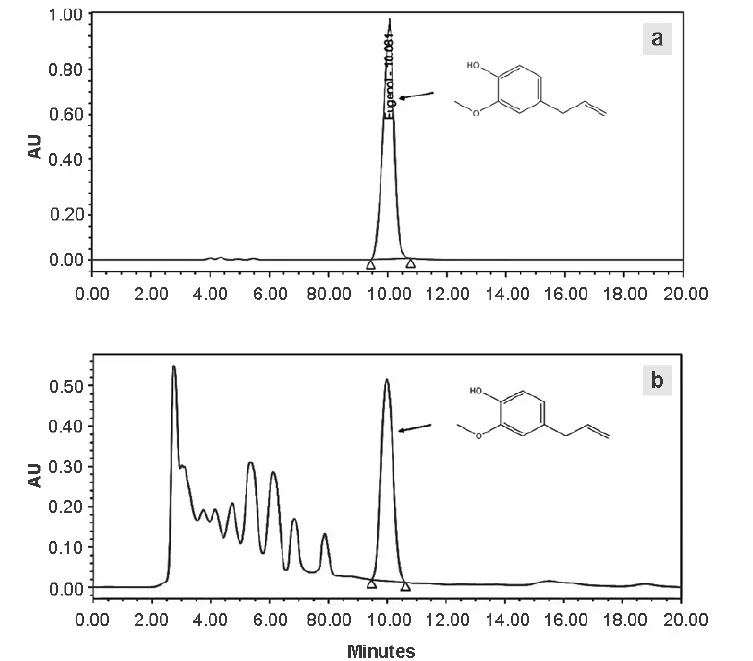


Fig 9: a-HPLC chromatogram of standard eugenol, b- HPLC chromatogram ethanol extract


CONCLUSION

Research into the phytochemistry of Ocimum sanctum (Tulsi) verifies a broad array of bioactive constituents, such as eugenol, frolic acid, flavonoids, tannins, saponins, and various essential oils. These compounds underpin the plant's recognized therapeutic effects, including its antioxidant, antimicrobial, anti-inflammatory, and adaptogenic capabilities.

As a primary chemical marker, eugenol can be detected using traditional colorimetric tests—like the ferric chloride and vanillin-HCl assays—as well as sophisticated analytical methods including HPLC, HPTLC, GC, and UV spectroscopy.

The diverse chemical profile of Tulsi not only justifies its historical significance in Ayurvedic medicine but also reinforces its utility in contemporary pharmacology. However, because the concentration of these phytochemicals fluctuates based on environmental factors, cultivar type, and post-harvest drying techniques, there is a critical need for rigorous, standardized protocols in both extraction and analysis.

REFERENCES

              1. Ocimum sanctum in Indian Medicinal Plants” K R, Kirtikar, B D Basu, (Published by LB Basu, Allahabad), 1965.
              2. Patil DA, Ahirrao YA. Ethnomedicinal knowledge of plants used by local people in Buldhana district of Maharashtra (India). J Eco biotechnology. 2011.
              3. “Formulation and Evaluation of Herbal Cough Syrup of Tulsi Using Molasses Base” Disha Patel, Komal Thakre, Kalyani Lanjewar (IJFMR) October2024.
              4. “Ocimum sanctum: A Review on the Pharmacological Properties.” Siva M., Shanmugam KR, Shanmugam B. (International Journal of Basic & Clinical Pharmacology) 2016.
              5. “Formulation and Evaluation of Herbal Cough Syrup.” Miss Shrushti Hadpe, Nilesh Gotarkar, Mangesh Hadap, Miss Falguni Jaiswal, Professor Sandhya Godi. (International Journal of Research Publication and Reviews) July 2024.
              6. Cambridge Advanced Learner’s Dictionary, Cambridge University Press, headword “herb”.
              7. P. Prakash, N. Gupta, “Theruptic uses of Ocimum Sanctum Linn. (Tulsi) with a note on eugenol and its pharmaceutical actions: A short review”, Indian journal of Physiol Pharmacol, 2005.
              8. Use of an Extract of Indian Sacred Plant Ocimum sanctum as an Anticariogenic Agent: An in vitro Study, Reshma Kochikar Pai, Sham S Bhat, Afreen Salman, Jagadish Chandra (IJCPD) May-August 2015.
              9. Kumar PK, Kumar MR, Kavita K, Singh J, Khan R. Pharmacological actions of Ocimum sanctum—a review article. IJAPBC 2012 July-Sept.
              10. Sanctum LDO. (tulsi): A potent medicinal herb. WebmedCental Pharmacol 2010.
              11. Pandey G, Madhuri S. Pharmacological activities of Ocimum sanctum (tulsi): a review. Int J Pharmaceutical Sci Review 2010 Nov-Dec.
              12. Sonam Raj, Hitesh Kumar “Phytochemical investigation and standardization of tulsi leaves foe anti-microbial activity” (IJRAR), May 2024.
              13. Mohammad Altamash, “Ocimum Sanctum (Tulsi): A Comprehensive Review of Its Botanical, Phytochemical, And Pharmacological Profile” Int. J. of Pharm. Sci., 2025.
              14. Khandelwal K. Practical pharmacognosy. Pragati Books Pvt. Ltd.; 2008.
              15. Mondal, S., Mirdha, B. R., & Mahapatra, S. C. (2009). The science behind sacredness of Tulsi (Ocimum sanctum Linn.). Indian Journal of Physiology and Pharmacology.
              16. Ashutosh Shival, Aboli Bornare, Aishwarya Shinde, (2020), General introduction, classification, morphology, phytoconstituents, traditional & medicinal uses, pharmacological activities of tulsi (ocimum sanctum), World journal of pharmaceutical research.
              17. Pattanayak, P., Behera, P., Das, D., & Panda, S. K. (2010). Ocimum sanctum Linn. A reservoir plant for therapeutic applications: An overview. Pharmacognosy Reviews.
              18. Dr. Vinod Sing, Ms. Sanika Amdekar, (2010), cimum sanctum (Tulsi); A bio pharmacological activities, Webmed Central Pharmacology.
              19. Parvati D.Shere, Apeksha B.Korde, (2021), Pharmacological activities of Ocimum sanctum (Tulsi); A review, World journal pharmaceutical research.
              20. Siva.M., Shanmugam KR., (2016), Ocimum sanctum; A review on Pharmacological properties, international journal of basic & clinical Pharmacology.
              21. Saxena, R. C., Gupta, B., & Saxena, V. L. (2012). Pharmacognostic and phytochemical studies on Tulsi (Ocimum sanctum Linn.). International Journal of Research in Pharmaceutical and Biomedical Sciences.
              22. BP P. Anita in economic botany (published by chand & company Ltd. Ramnagar New Delhi. 1990.
              23. Joseph B, Nair VM. Ethnopharmacological and phytochemical aspects of Ocimum sanctum Lin.-the Elixir of Life. 2013.
              24. “Ocimum tenuiflorum.” Wikipedia
              25.  Priya Panchal, Parvez N (2019) Phytochemical analysis of medicinal herb (Ocimum sanctum) Int J Nanomater Nanotechnol Nanomed.
              26. Borah, R. and Biswas, S.P. 2018. Tulsi (Ocimum sanctum), excellent source of phytochemicals. International Journal of Environment, Agriculture and Biotechnology.
              27. Khandelwal, K.R. 2001. Preliminary photochemical screening in Practical Pharmacognosy Techniques and Experiments. Nirali Publication Pune.
              28. Rajesh, H., Rao, S.N., Prathima, K., Shetty, Megharani, N., Rejeesh, E. P. and Lovely, N. J., 2013, Phytochemical analysis of aqueous extract of Ocimum sanctum linn, international journal of universal pharmacy and bio sciences.
              29. Sailaja, I., Shaker, I.A. and Ratna, Y.K., 2010, Antioxidant activity and phenolic contents in Ocimum sanctum and Ocimum bascilicum. Asian Journal of Bio Science.
              30. Laakso, L., Seppanen-Laakso, T., Hermann-Wolf, B. K. Knobloch. 1990. Constituents of the essential oil from the Holy Basil or Tulsiplant, Ocimum sanctum. Planta Med.
              31. Ravi, P., Elumalai, A., Eswaraiah, M. C. and Kasarla, R. 2012. A review on Krishna tulsi, Ocimum tenuiflorum linn. Int.J.Res. Ayurveda and Pharm.
              32. Vimalan, A.K., Sadanandan, K., Philip, M.P., Natrajan, N., Murugesan, M. and Damodaran,N.P. (1989). Proceedings of the 11th International Congress of Essential Oils, Fragrances and Flavours, New Delhi, India. 181–188p.Warrier, P. K. 1995. Indian Medicinal Plants. Orient Longman.
              33. Lawrence, B.M., Powell, R.H., Peele, D.M. 1980. in: Proceedings of the VIIIth International Congress of Essential Oils, Cannes, Fedarom Grasse.
              34. Machado, M.I.L., Silva, M.G.V., Matos, F.J.A. Craveiro, A.A., and Alencar, J.W. J.1999. Essent. Oil Res.
              35. Malik, M.S., Rafique, M. and Ahmed, R. 1986.Pakistan J. Sci. Ind. Res.

Reference

              1. Ocimum sanctum in Indian Medicinal Plants” K R, Kirtikar, B D Basu, (Published by LB Basu, Allahabad), 1965.
              2. Patil DA, Ahirrao YA. Ethnomedicinal knowledge of plants used by local people in Buldhana district of Maharashtra (India). J Eco biotechnology. 2011.
              3. “Formulation and Evaluation of Herbal Cough Syrup of Tulsi Using Molasses Base” Disha Patel, Komal Thakre, Kalyani Lanjewar (IJFMR) October2024.
              4. “Ocimum sanctum: A Review on the Pharmacological Properties.” Siva M., Shanmugam KR, Shanmugam B. (International Journal of Basic & Clinical Pharmacology) 2016.
              5. “Formulation and Evaluation of Herbal Cough Syrup.” Miss Shrushti Hadpe, Nilesh Gotarkar, Mangesh Hadap, Miss Falguni Jaiswal, Professor Sandhya Godi. (International Journal of Research Publication and Reviews) July 2024.
              6. Cambridge Advanced Learner’s Dictionary, Cambridge University Press, headword “herb”.
              7. P. Prakash, N. Gupta, “Theruptic uses of Ocimum Sanctum Linn. (Tulsi) with a note on eugenol and its pharmaceutical actions: A short review”, Indian journal of Physiol Pharmacol, 2005.
              8. Use of an Extract of Indian Sacred Plant Ocimum sanctum as an Anticariogenic Agent: An in vitro Study, Reshma Kochikar Pai, Sham S Bhat, Afreen Salman, Jagadish Chandra (IJCPD) May-August 2015.
              9. Kumar PK, Kumar MR, Kavita K, Singh J, Khan R. Pharmacological actions of Ocimum sanctum—a review article. IJAPBC 2012 July-Sept.
              10. Sanctum LDO. (tulsi): A potent medicinal herb. WebmedCental Pharmacol 2010.
              11. Pandey G, Madhuri S. Pharmacological activities of Ocimum sanctum (tulsi): a review. Int J Pharmaceutical Sci Review 2010 Nov-Dec.
              12. Sonam Raj, Hitesh Kumar “Phytochemical investigation and standardization of tulsi leaves foe anti-microbial activity” (IJRAR), May 2024.
              13. Mohammad Altamash, “Ocimum Sanctum (Tulsi): A Comprehensive Review of Its Botanical, Phytochemical, And Pharmacological Profile” Int. J. of Pharm. Sci., 2025.
              14. Khandelwal K. Practical pharmacognosy. Pragati Books Pvt. Ltd.; 2008.
              15. Mondal, S., Mirdha, B. R., & Mahapatra, S. C. (2009). The science behind sacredness of Tulsi (Ocimum sanctum Linn.). Indian Journal of Physiology and Pharmacology.
              16. Ashutosh Shival, Aboli Bornare, Aishwarya Shinde, (2020), General introduction, classification, morphology, phytoconstituents, traditional & medicinal uses, pharmacological activities of tulsi (ocimum sanctum), World journal of pharmaceutical research.
              17. Pattanayak, P., Behera, P., Das, D., & Panda, S. K. (2010). Ocimum sanctum Linn. A reservoir plant for therapeutic applications: An overview. Pharmacognosy Reviews.
              18. Dr. Vinod Sing, Ms. Sanika Amdekar, (2010), cimum sanctum (Tulsi); A bio pharmacological activities, Webmed Central Pharmacology.
              19. Parvati D.Shere, Apeksha B.Korde, (2021), Pharmacological activities of Ocimum sanctum (Tulsi); A review, World journal pharmaceutical research.
              20. Siva.M., Shanmugam KR., (2016), Ocimum sanctum; A review on Pharmacological properties, international journal of basic & clinical Pharmacology.
              21. Saxena, R. C., Gupta, B., & Saxena, V. L. (2012). Pharmacognostic and phytochemical studies on Tulsi (Ocimum sanctum Linn.). International Journal of Research in Pharmaceutical and Biomedical Sciences.
              22. BP P. Anita in economic botany (published by chand & company Ltd. Ramnagar New Delhi. 1990.
              23. Joseph B, Nair VM. Ethnopharmacological and phytochemical aspects of Ocimum sanctum Lin.-the Elixir of Life. 2013.
              24. “Ocimum tenuiflorum.” Wikipedia
              25.  Priya Panchal, Parvez N (2019) Phytochemical analysis of medicinal herb (Ocimum sanctum) Int J Nanomater Nanotechnol Nanomed.
              26. Borah, R. and Biswas, S.P. 2018. Tulsi (Ocimum sanctum), excellent source of phytochemicals. International Journal of Environment, Agriculture and Biotechnology.
              27. Khandelwal, K.R. 2001. Preliminary photochemical screening in Practical Pharmacognosy Techniques and Experiments. Nirali Publication Pune.
              28. Rajesh, H., Rao, S.N., Prathima, K., Shetty, Megharani, N., Rejeesh, E. P. and Lovely, N. J., 2013, Phytochemical analysis of aqueous extract of Ocimum sanctum linn, international journal of universal pharmacy and bio sciences.
              29. Sailaja, I., Shaker, I.A. and Ratna, Y.K., 2010, Antioxidant activity and phenolic contents in Ocimum sanctum and Ocimum bascilicum. Asian Journal of Bio Science.
              30. Laakso, L., Seppanen-Laakso, T., Hermann-Wolf, B. K. Knobloch. 1990. Constituents of the essential oil from the Holy Basil or Tulsiplant, Ocimum sanctum. Planta Med.
              31. Ravi, P., Elumalai, A., Eswaraiah, M. C. and Kasarla, R. 2012. A review on Krishna tulsi, Ocimum tenuiflorum linn. Int.J.Res. Ayurveda and Pharm.
              32. Vimalan, A.K., Sadanandan, K., Philip, M.P., Natrajan, N., Murugesan, M. and Damodaran,N.P. (1989). Proceedings of the 11th International Congress of Essential Oils, Fragrances and Flavours, New Delhi, India. 181–188p.Warrier, P. K. 1995. Indian Medicinal Plants. Orient Longman.
              33. Lawrence, B.M., Powell, R.H., Peele, D.M. 1980. in: Proceedings of the VIIIth International Congress of Essential Oils, Cannes, Fedarom Grasse.
              34. Machado, M.I.L., Silva, M.G.V., Matos, F.J.A. Craveiro, A.A., and Alencar, J.W. J.1999. Essent. Oil Res.
              35. Malik, M.S., Rafique, M. and Ahmed, R. 1986.Pakistan J. Sci. Ind. Res.

Photo
Tusar Pati
Corresponding author

Nityananda college of pharmacy Balasore Odisha India

Photo
Sagarika Tripathy
Co-author

Om sai college of pharmacy and Health sciences Berhampur Odisha India

Tusar Ranjan Pati, Sagarika Tripathy, Phytochemical Analysis of Ocimum Sanctum from Odisha: An Investigation into Its Bioactive Compounds, Int. J. of Pharm. Sci., 2026, Vol 4, Issue 7, 146-160, https://doi.org/10.5281/zenodo.21103994

More related articles
Preparion And Standerdization of Herbal Lozenges C...
Dr. Ashish Sarkar, Raviranjan Biswal, Dr. Afrin Alam, Anila Tudu...
An Observational Study of Hypertension in Dwandhaj...
Dr Hitixa Patel, Dr. Hardik Patel, Dr. Narendra Yadnik...
Design, Synthesis, and Antimicrobial Evaluation of Novel Schiff Base Derivatives...
Rajat Choudhary, Nilesh Pandey, Dr. Ravikant Kushwaha, Taukir Ansari...
A Prospective Observational Study on The Risk Factors and Management of Pyelonep...
Samruddhi Bagul , Kirti Suryawanshi , Aniket Kolekar , Rajeshwari Deshmukh ...
Related Articles
Formulation And Evaluation of an Aloe Vera-Based Herbal Face Wash for Skin Clean...
Hemant Kumar, Vishal Garg, Pushpendra Kumar Saini, Manoj Famda, Ashraf khan...
Gene Therapy in Future Medicine: Current Advances, Clinical Applications, Challe...
Naveen Garg, Vishal Garg, Hemant Kumar, Himanshu Yadav, Keshav Sharma...
Preparion And Standerdization of Herbal Lozenges Containing Tulsi and Mulethi Ex...
Dr. Ashish Sarkar, Raviranjan Biswal, Dr. Afrin Alam, Anila Tudu...
More related articles
Preparion And Standerdization of Herbal Lozenges Containing Tulsi and Mulethi Ex...
Dr. Ashish Sarkar, Raviranjan Biswal, Dr. Afrin Alam, Anila Tudu...
An Observational Study of Hypertension in Dwandhaj Prakruti ...
Dr Hitixa Patel, Dr. Hardik Patel, Dr. Narendra Yadnik...