

We use cookies to ensure our website works properly and to personalise your experience. Cookies policy
1. Principal, Vidya Niketan College of Pharmacy, lakhewadi, Pune, Maharashtra, India 413103.
2. Associate Professor, Vidya Niketan College of Pharmacy, lakhewadi, Pune, Maharashtra, India 413103.
3.Student, Vidya Niketan College of Pharmacy, lakhewadi, Pune, Maharashtra, India 413103
Geranium oil (Pelargonium graveolens) is a natural essential oil known for its medicinal and therapeutic properties. The present study aimed to characterize geranium oil and evaluate its in vitro anti-inflammatory activity. The oil was examined for its solubility, boiling point, UV-visible spectrum, FTIR, GC-MS, DSC, and TGA characteristics. UV spectroscopy showed a maximum absorption at 204.8 nm, while FTIR analysis confirmed the presence of hydroxyl, carbonyl, aromatic, and ester functional groups. GC-MS identified citronellol as the major constituent along with other bioactive compounds responsible for its biological activity. Thermal analysis demonstrated acceptable stability of the oil. The anti-inflammatory activity was evaluated using the protein denaturation assay and compared with a standard drug. Geranium oil exhibited significant inhibition of protein denaturation, indicating good anti-inflammatory potential. These findings suggest that geranium oil is a promising natural source of anti-inflammatory agents and may be useful for the development of herbal pharmaceutical formulations.
Medicinal plants have been used for centuries as a natural source of therapeutic compounds. Essential oils obtained from aromatic plants are widely recognized for their antimicrobial, antioxidant, anti-inflammatory, and wound-healing properties (1). Among these, Geranium oil, obtained from Pelargonium graveolens, is an important essential oil used in pharmaceutical, cosmetic, and aromatherapy products because of its pleasant fragrance and medicinal value (2).
Geranium oil contains several bioactive constituents, including citronellol, geraniol, linalool, and caryophyllene, which contribute to its pharmacological activities (3). These compounds exhibit strong antioxidant and anti-inflammatory effects by reducing inflammatory mediators and protecting tissues from oxidative stress (4). Because of these properties, geranium oil has attracted attention as a natural alternative for the management of inflammatory disorders.
Characterization of herbal products is essential to ensure their quality, purity, and therapeutic consistency. Modern analytical techniques such as UV-visible spectroscopy, Fourier Transform Infrared (FTIR) spectroscopy, Gas Chromatography–Mass Spectrometry (GC-MS), Differential Scanning Calorimetry (DSC), and Thermogravimetric Analysis (TGA) are commonly employed for this purpose (5,6). These techniques provide valuable information regarding chemical composition, functional groups, and thermal stability.
The present study aimed to characterize geranium oil using physicochemical and instrumental analytical methods and to evaluate its in vitro anti-inflammatory activity using the protein denaturation assay. The findings may support the future development of herbal formulations containing geranium oil for the treatment of inflammatory conditions (7).
Material and Methods
Pure Geranium oil (Pelargonium graveolens) was procured from a certified supplier and used throughout the study. Initially, the oil was evaluated for miscibility in various organic solvents and its boiling point was determined (8). UV-visible spectroscopy was performed to determine the maximum absorption wavelength (λmax), and a calibration curve was prepared according to Beer–Lambert's law for quantitative estimation (9).
FTIR spectroscopy was carried out over the range of 4000–400 cm⁻¹ to identify characteristic functional groups present in the oil (10). The phytochemical constituents were further analyzed using Gas Chromatography–Mass Spectrometry (GC-MS) to identify the major volatile compounds. Thermal properties were investigated by Differential Scanning Calorimetry (DSC) and Thermogravimetric Analysis (TGA) to evaluate thermal stability (11).
The in vitro anti-inflammatory activity of geranium oil was assessed using the protein denaturation assay. The percentage inhibition of protein denaturation was calculated and compared with the standard anti-inflammatory drug. All experiments were carried out in triplicate, and the results were expressed as mean values (12).
Results and discussion:
Geranium Oil: -
For further analysis, the miscibility of pure geranium oil was established. Geranium oil contains different pharmaceutical ingredients which shows the distinct pharmacological activities. Geranium oil is miscible in methanol, ethanol, chloroform, acetone, butanol, toluene, acetic acid and immiscible in water, Ethyl acetate. Miscibility of geranium oil was shown in Fig 24. and Table.6. respectively.
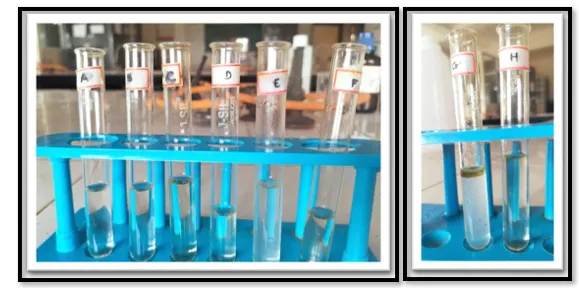
Fig. 1. Miscibility of Geranium Oil in Different Solvent
Whereas A-Methanol, B-Acetone, C-Butanol, D-Toluene, E-Ethyl Acetate, F- Water and G -Acetic Acid.
Table.1.Solubility of Geranium Oil in Different Solvent
|
Sr.No |
Solvent |
Solubility |
|
1. |
Methanol |
+ |
|
2. |
Acetone |
+ |
|
3. |
Butanol |
+ |
|
4. |
Toluene |
+ |
|
5. |
Ethyl acetate |
- |
|
6. |
Water |
- |
|
7. |
Acetic Acid |
- |
Whereas, (+) indicate sign soluble and (-) indicate sign in soluble.
Boiling point:
The Pelargonium grave lens plant yields geranium oil. Numerous high-quality cosmetic items, including soaps, detergents, creams, lotions, and balms, are also made with it. It is occasionally used to enhance or adulterate more expensive rose oils and is sold for use in aromatherapy and massage therapy. The boiling point of geranium oil was found to be at 250-258℃ which was shown in Fig.2.
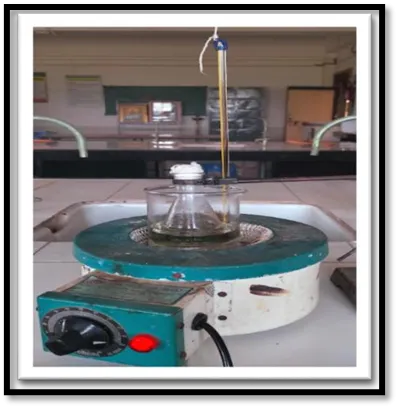
Fig. 2 Boiling Point of Geranium Oil
Determination of λmax:
The Geranium oil solution 10 µg/ml in ethanol was prepared and analyzed at 200 to 800 nmin UV spectrometer against ethanol as blank solution. The λ max Geranium oil solution was found to be at 204.8 nm. The λ max of Geranium oil was shown in Fig.3.
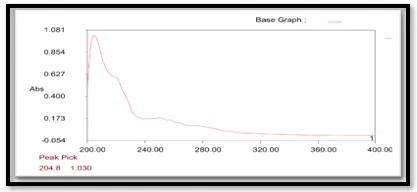
Fig.3. λmax of Geranium Oil in Ethanol
Calibration Curve of Pure Geranium Oil:
The calibration curve of pure geranium oil was performed as per standard procedures by preparing 2-10 µg/ml concentration was analyzed at 204 nm. The abs were recorded at various concentration shows straight line that crosses the origin. The calibration curve was followed the Beer’s-lambert law. The value of the coefficient of correlation was observed to be 0.9536. The different concentration absorbance and the calibration curve show in Table 8. and Fig.4 respectively.
Table.2. Absorbance of Geranium Oil at Different Concentration
|
Sr. No |
Concentration |
Absorbance |
|
1 |
1µg/ml |
0.16 |
|
2 |
2µg/ml |
0.32 |
|
3 |
3µg/ml |
0.474 |
|
4 |
4µg/ml |
0.57 |
|
5 |
5µg/ml |
0.865 |
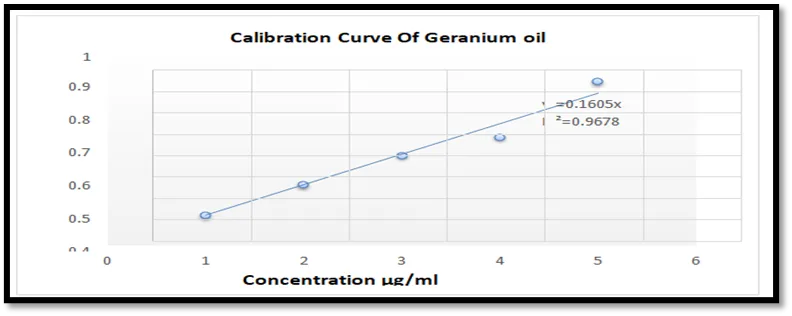
Fig.4. Calibration curve of pure Geranium Oil and correlation coefficient
FT-IR of Pure Geraniumoil
The FT-IR analysis was performed by Jasco FT-IR at wavelength 4000-400-1 at 4 cm-1 resolution. The FT-IR spectra of Geranium oil shows intense peak at 3401.48cm -1 of stretching vibrations of phenolic -OH group. The absorbance band at 2919.92cm -1 of stretching vibrations of C-H aromatic atom. The sharp absorbance band at 1719.08 cm -1 showsstretching of C=O (anhydride) group. The absorbance band at 1429.97-1511.97 cm -1 indicated stretching vibration of C=C olefinic and aromatic C=C group. The 1376.49 cm -1 absorbance band stand for bending vibration of phenolic C-O group. While the absorbance band at 1173.25 cm -1 is stretching vibration of aromatic ester (C-O) group. Fig 5. represent FTIR spectra of Pure Geranium oil and Table. 9 shows interpretation of FT-IR data.
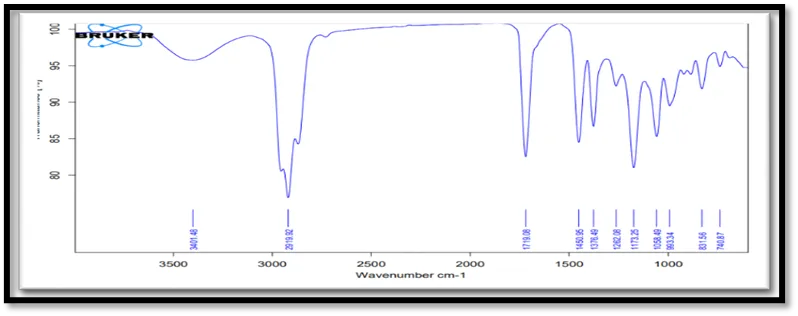
Fig.5.FT-IR spectra of Pure Geranium Oil
Table No.3. Interpretation of Pure Geranium Oil
|
Sr. No |
Wave Number (Cm -1) |
Vibration |
Functional Group |
|
1 |
3401.48 |
Stretching |
O-Haromatic |
|
2 |
2919.92 |
Stretching |
C-Haromatic |
|
3 |
1719.08 |
Stretching |
C=O |
|
4 |
1450.95 |
Bending |
C-Haromatic |
|
5 |
1376.49 |
Bending |
PhenolicC-O |
|
6 |
1173.25 |
Stretching |
C-O |
Gas Chromatography Mass Spectroscopy of Geranium Oil: -
The essential oil of Pelargonium graveolens was studied using two-dimensional gas chromatography-mass spectrometry (GC-MS), which revealed 21 components. Citronellol (33.65%), cyclohexane (2.74%), caryophyllene (2.92%), and citronellyltiglate (1.44%) ,6-octane-1-ol,3, 7-dimethyl-, formate (12.70%), linalool (2.74%), Cyclohexanone, 5-methyl-2-(1-methyl)-, (10.69), (1R,3aS,8aS)-7-Isopropyl-1,4-dimethyl-1,2,3 (12.58) were the eight substances that were most prevalent, which supports this hypothesis.
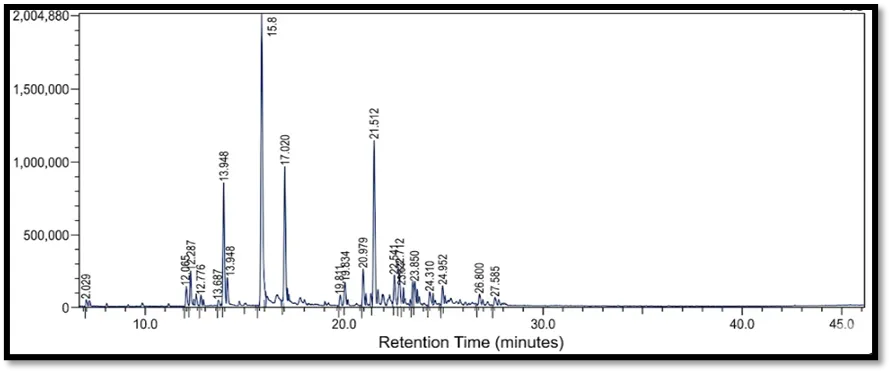
Fig.6.GC-MS of Geranium Oil
TableNo.4.GC-MSInterpretationofGeraniumOil
|
Sr. No |
Name Of the Compound |
Area (%) |
R.Time |
|
1 |
Citronellol |
33.65 |
15.84 |
|
2 |
Linalool |
2.74 |
2.061 |
|
3 |
Caryophyllene |
2.92 |
20.97 |
|
4 |
Citronellyltiglate |
1.44 |
26.80 |
|
5 |
6-octane-1-ol,3,7-dimethyl-, formate |
12.70 |
17.02 |
|
6 |
Cyclohexanone,5-methyl-2-(1-methyl)- |
10.69 |
13.94 |
|
7 |
(1R,3aS,8aS)-7-Isopropyl-1,4-dimethyl-1,2,3 |
12.58 |
21.51 |
Differential Scanning Calorimetry of Geranium Oil:
Figure.13 displays the analysis's findings utilising a differential scanning calorimeter (DSC). The DSC of geranium oil was determined endothermic peak with melting point. The DSC graph of geranium oil have low endothermic peak at 132.68⁰ C temperature due to hydrophobic nature of Geranium oil and this was represented in Fig.7. According to the findings, geranium oil's differential scanning calorimetry does not exhibit a significant peak. Geranium oil's melting peak has drastically decreased. Additionally, it showed new peaks when the effect of geranium oil's heat absorption decreased.
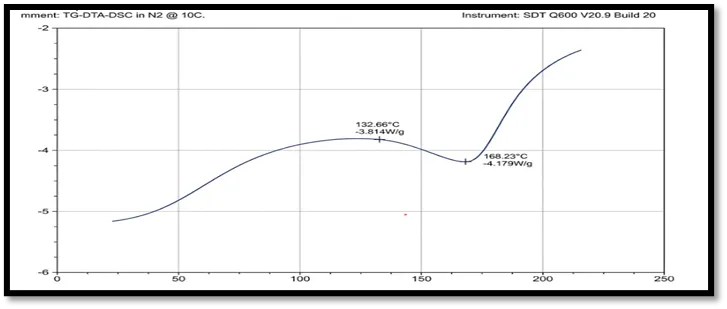
Fig.7. DSC graph of Geranium Oil
Thermal Gravimetric Analysis of Geranium Oil:
In this investigation, the geranium oil was exposed to a controlled temperature programme and atmosphere. A method for calculating the weight of a substance in relation to heat or time is called thermogravimetric analysis. The TGA graph of geranium oil is shown in fig: 8. The preparation's thermal strength comes from the interaction of the active ingredient and excipients. The weight loss of the sample was carried in that same percentage if the sample was damaged at high temperatures.
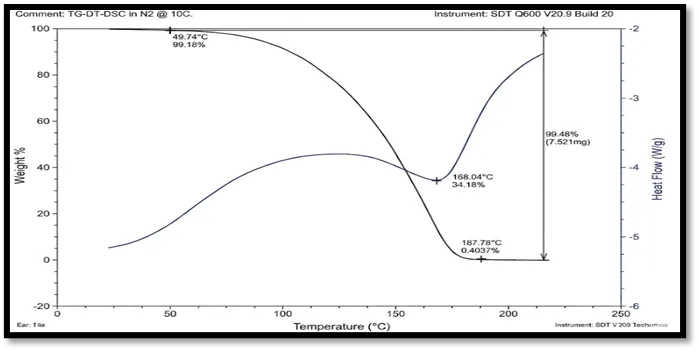
Fig.8.TGA graph of Geranium Oil
Anti-inflammatory Activity:
The geranium oil served as a form of anti-inflammatory medication. It reduces the production of pro-inflammatory cytokines such tumor necrosis factor- and interleukin-1 and inhibits the acceleration of nuclear factor b (NF-B) and activator protein, Geranium oil's hydrophobic nature reduces its medicinal impact. This approach is better suited for anti-inflammatory therapy, and by enhancing release patterns, it also extends retention time.
In-vitro anti-inflammatory Activity:
The in-vitro anti-inflammatory activity of pure geranium oil and optimized batch of carbon dots was carried by protein denaturation assay. The results are shown in Table 18., result it indicated that both pure geranium oil and carbon dots shows anti-inflammatory activity. The anti-inflammatory activity of pure geranium oil & optimizedbatch of Carbon dots was found to be 66.39% and 77.93% respectively. From result it indicates that protein denaturation inhibitory activity of geranium oil carbon dots has higher activity than pure geranium oil.
Table. 5.% Inhibition of Geranium Oil
|
Sr. No |
Concentration (µg/ml) |
Percentage(%)Inhibition |
||
|
Standard Drug |
Geranium Oil |
|
||
|
1. |
100 |
93.17% |
64.29% |
|
|
2. |
200 |
94.48% |
67.9% |
|
|
3. |
300 |
95.08% |
66.39% |
|
CONCLUSION
The present study successfully characterized Geranium oil (Pelargonium graveolens) using physicochemical and instrumental analytical techniques. UV spectroscopy, FTIR, GC-MS, DSC, and TGA confirmed the presence of important bioactive constituents, characteristic functional groups, and good thermal stability. GC-MS analysis revealed citronellol as the major component along with several other pharmacologically active compounds. The in vitro anti-inflammatory study demonstrated that geranium oil effectively inhibited protein denaturation, indicating significant anti-inflammatory potential. The findings support the traditional medicinal use of geranium oil and highlight its value as a natural therapeutic agent. Overall, the study suggests that geranium oil can serve as a promising ingredient for the development of herbal pharmaceutical and topical formulations. Further studies involving in vivo pharmacological evaluation, toxicity assessment, formulation development, and clinical investigations are recommended to establish its safety, efficacy, and therapeutic applications.
REFERENCES

Samrat Khedkar, Nitin Mali, Sumit Mule*, Phytochemical Characterization and In Vitro Anti-Inflammatory Evaluation of Geranium Oil (Pelargonium Graveolens), Int. J. of Pharm. Sci., 2026, Vol 4, Issue 7, 2432-2440. https://doi.org/10.5281/zenodo.21332839
 10.5281/zenodo.21332839