

We use cookies to ensure our website works properly and to personalise your experience. Cookies policy
Department of Pharmacology, RBVRR Women’s college of Pharmacy (Affiliated to Osmania university), Barkatpura, Hyderabad 500027
Chronic pain and inflammation underlie a wide range of pathological conditions, including arthritis, cardiovascular disease, neurodegeneration, and metabolic disorders. While NSAIDs, corticosteroids, and opioids remain the mainstay of treatment, their long-term use is limited by gastrointestinal, renal, cardiovascular, and dependence-related adverse effects, driving interest in safer plant-derived alternatives. This review evaluates the ethnobotanical, phytochemical, and pharmacological evidence for the analgesic and anti-inflammatory potential of the genus Annona (family Annonaceae), focusing on species including A. squamo-sa, A. muricata, A. reticulata, A. cherimola, A. senegalensis, A. glabra, A. montana, and A. diversifolia. A literature search of PubMed, ResearchGate, Academia, and Google Scholar was conducted using keywords related to Annonaceae phytochemistry, analgesia, and in-flammation. Traditional use across tropical and subtropical regions shows leaves, bark, seeds, and fruits of these species are widely employed for treating pain, fever, wounds, and inflammatory ailments. Phytochemical analysis reveals rich sources of acetogenins, alka-loids, flavonoids, terpenoids, and phenolic compounds, isolated via techniques such as HPLC, GC-MS, and LC-MS/MS. Preclinical studies using models such as carrageenan-induced paw edema, acetic acid-induced writhing, and formalin-induced nociception demonstrate consistent analgesic and anti-inflammatory activity, mediated through suppression of pro-inflammatory cytokines (TNF-?, IL-1?, IL-6), inhibition of nitric oxide and re-active oxygen species, and modulation of COX-1/COX-2 pathways. Despite promising pre-clinical findings, evidence remains largely at the animal-model stage, underscoring the need for compound isolation, mechanistic studies, toxicological evaluation, and clinical trials to validate Annona-derived phytoconstituents as therapeutic alternatives for pain and inflammatory disease management.
Pain and inflammation are complex physiological responses that play critical roles in tissue protection and healing. However, persistent or chronic inflammation contributes to the pathogenesis of numerous disorders, including arthritis, cardiovascular diseases, neurodegenerative conditions, and metabolic syndromes (1). Conventional pharmacological interventions such as non-steroidal anti-inflammatory drugs (NSAIDs), corticosteroids, and opioid analgesics are widely employed for the management of pain and inflammatory disorders. Nevertheless, their long-term use is frequently associated with adverse effects, including gastrointestinal ulceration, renal toxicity, cardiovascular complications, and dependence. Consequently, there is growing interest in the discovery of safer and more effective therapeutic agents from natural sources.
Medicinal plants have historically served as valuable reservoirs of bioactive compounds with diverse pharmacological properties. Among these, the genus Annona (family Annonaceae) has attracted considerable scientific attention due to its rich phytochemical diversity and broad spectrum of biological activities. The genus comprises more than 100 species distributed predominantly in tropical and subtropical regions, with important medicinal species including Annona muricata, Annona squamosa, Annona reticulata, Annona cherimola, and Annona senegalensis. Various parts of these plants, such as leaves, bark, roots, seeds, and fruits, have been extensively utilized in traditional medicine for the treatment of pain, inflammation, fever, infections, diabetes, and other ailments (2).
Phytochemical investigations have revealed that Annona species are rich sources of numerous secondary metabolites, including annonaceous acetogenins, alkaloids, flavonoids, phenolic compounds, terpenoids, tannins, essential oils, and glycosides. These phytoconstituents exhibit a wide range of pharmacological activities, such as antioxidant, anti-inflammatory, analgesic, antimicrobial, neuroprotective, and anticancer effects. (3) In particular, flavonoids and phenolic compounds have demonstrated the ability to modulate inflammatory mediators and oxidative stress pathways, whereas alkaloids and acetogenins contribute to diverse biological responses associated with pain and inflammation control.
Several experimental studies have reported significant analgesic and anti-inflammatory activities of extracts and isolated compounds from Annona species. For example, Annona muricata has been traditionally employed for the management of pain and inflammatory disorders and has demonstrated anti-inflammatory and analgesic effects in preclinical models. Similar pharmacological properties have also been reported. These activities are believed to arise from synergistic interactions among multiple phytochemicals capable of regulating inflammatory cytokines, cyclooxygenase pathways, nitric oxide production, and reactive oxygen species generation. (4)
Given the increasing demand for plant-derived therapeutics and the expanding body of evidence regarding the biological activities of Annona phytochemicals, a comprehensive evaluation of their role in pain and inflammation is warranted. Therefore, this review aims to summarize the major phytochemical constituents identified in Annona species and critically discuss their potential as promising bioactive principles for the management of pain and inflammatory disorders, highlighting current evidence, mechanisms of action, and future research perspectives. (5)
ETHANOBOTANICAL FEATURES
Annona squamosa (Sugar Apple / Custard Apple)
Annona squamosa is one of the most extensively utilized Annona species in traditional medicine across India, Southeast Asia, Africa, and South America. The leaves are commonly used as poultices for wounds, ulcers, boils, and skin infections. Decoctions of leaves and bark are traditionally administered for dysentery, diarrhoea, diabetes, fever, and rheumatism. The seeds are widely employed as insecticides and for treating lice infestations, while the fruits are consumed as nutritive tonics and digestive aids. In Ayurvedic and folk medicine, various parts of the plant are also used as anthelmintic, antimicrobial, and anti-inflammatory remedies. Ethnobotanical surveys indicate that rural communities frequently use leaf preparations to manage diabetes and hypertension. (6)
Annona muricata (Soursop / Graviola)
Annona muricata has a rich ethnomedicinal history throughout the Caribbean, Central and South America, Africa, and Asia. Traditional healers use the leaves as sedatives and remedies for insomnia, headaches, hypertension, diabetes, and inflammatory disorders. Fruit pulp is used for treating fever, diarrhoea, dysentery, intestinal parasites, rheumatism, and postpartum weakness. Crushed seeds are employed as antiparasitic agents, while bark and root decoctions are used against infections and fever. Indigenous populations have long used different parts of the plant for cancer-related ailments, although scientific evidence remains under investigation. (7)
Annona reticulata (Bullock's Heart / Custard Apple)
Annona reticulata is traditionally used in India, the Caribbean, Central America, and Southeast Asia. The leaves are applied externally to treat abscesses, wounds, and skin diseases. Root and bark preparations are used for epilepsy, dysentery, diarrhoea, and helminth infections. Folk practitioners employ the fruits as nutritional supplements and digestive stimulants. In traditional Indian medicine, leaf extracts are also used for reducing pain, inflammation, and fever. Seeds are utilized as insecticidal agents and for controlling ectoparasites. (8)
Annona cherimola (Cherimoya)
In the Andean regions of Peru, Ecuador, and Bolivia, Annona cherimola has been used traditionally for gastrointestinal disorders, digestive complaints, and parasitic infections. Infusions of leaves are consumed for anxiety, nervousness, and insomnia. The fruits are regarded as restorative foods and are frequently prescribed during recovery from illness. Seeds have historically been used as insecticides and antiparasitic agents, although their toxicity limits medicinal use. Traditional healers also employ leaf preparations for respiratory ailments and inflammatory conditions. (9)
Annona diversifolia (Ilama)
Native to Central America and Mexico, Annona diversifolia is used in traditional medicine mainly for gastrointestinal disorders, fever, and inflammatory conditions. Indigenous communities consume fruit pulp as a strengthening food and use leaf infusions to alleviate digestive discomfort and mild infections. Ethnobotanical reports also describe its use for improving general health and treating stomach ailments. (10)
Annona glabra (Pond Apple)
Annona glabra is employed in folk medicine in Central America, the Caribbean, and parts of South America. Traditional uses include treatment of intestinal disorders, parasitic infections, and inflammatory diseases. Bark and leaf preparations are commonly used for wound healing and fever management. Some indigenous groups use seed extracts as insecticidal preparations. (11)
Annona montana (Mountain Soursop)
Traditional communities in tropical America use Annona montana leaves, bark, and fruits to treat fever, infections, rheumatic pain, and digestive disturbances. Leaf decoctions are frequently employed as anti-inflammatory remedies, while fruit preparations are used as nutritional supplements and tonics. (12)
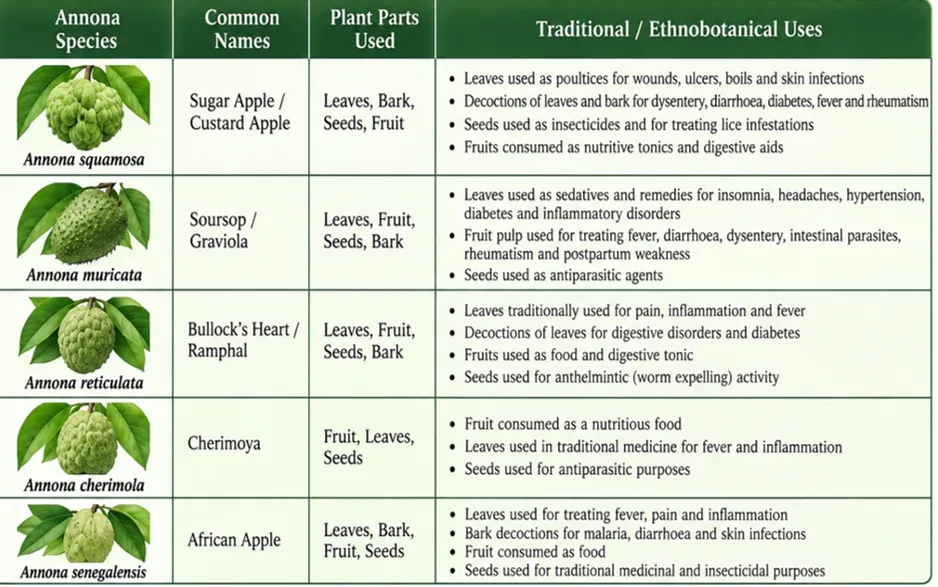

Fig :1 explains the of various parts of Annona species indicating ethnobotanical uses and traditional uses
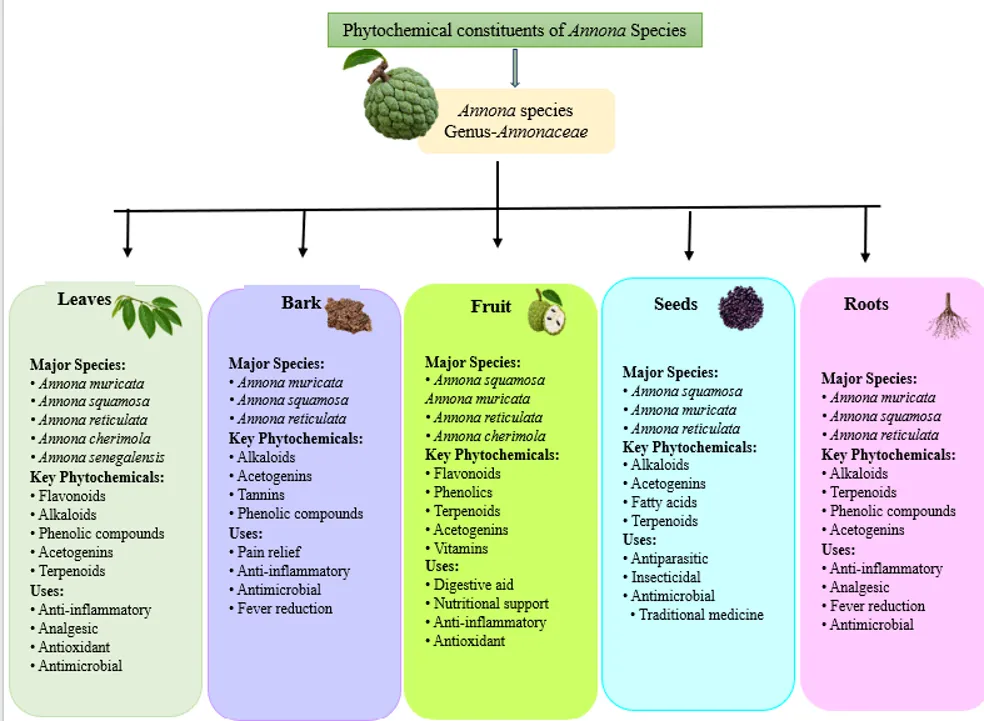
FIG:2 Phytochemical constituents of different parts of Annona species
METHODOLOGY
The information presented in this review was gathered through comprehensive search of academic research databases, peer-reviewed journals, and search engines. Searches of the Academia, PubMed, ResearchGate, and Google Scholar databases were performed using the keywords: Annonaceae, inflammation, pain management, chronic pain, analgesia, chemistry of Annonaceae family, anti-inflammatory properties of Annonaceae, analgesic properties of Annonaceae, mechanism of action, and phytochemical constituents of Annonaceae.
Bioactive constituents including acetogenins, alkaloids, flavonoids, and diterpenoids especially from leaves of Anona muricata species demonstrated consistent analgesic and anti-inflammatory effects in preclinical models. These phytochemical constituents act through suppression of pro-inflammatory cytokines (TNF-α, IL-1β, IL-6), inhibition of nitric oxide and reactive oxygen species, and modulation of COX-1/COX-2 pathway. (Table 1).
Table :1 Role of Annona species in preclinical models of Pain and Inflammation
|
Source (Annona species) |
Plant Part |
Bioactive Principles |
Experimental Models |
Key Findings |
||
|
Annona squamosa |
Leaves, fruits |
Acetogenins, diterpenes, cyclopeptides, flavonoids |
Carrageenan-induced pleurisy, Formalin-induced nociception, MTT assay |
Anti-inflammatory and analgesic activity: inhibited pro-inflammatory mediators (TNF-α, IL-1β, IL-6 and NO) and reduced inflammatory edema, leukocyte migration and nociceptive responses in experimental models. (13) |
||
|
Annona coriacea fractions (ethyl acetate, butanol) |
Leaves |
Flavonoids, acetogenins |
Acetic acid induced writhing, hot plate and formalin induced nociception, Carrageenan -induced inflammation in mice |
The fractions reduced acetic-acid-induced abdominal writhing and formalin-induced nociception, increased reaction time in the hot-plate test, and inhibited carrageenan-induced paw edema. (14) |
||
|
Annona atemoya |
Leaves, Fruits
|
Acetogenins, alkaloids, flavonoids |
Carrageenan-induced pleurisy, Formalin-induced nociception, Hot-plate test, Air-pouch model
|
Atemoya ethanolic extract showed significant analgesic activity by reducing writhing and paw-licking and increasing pain latency, while anti-inflammatory activity was demonstrated by inhibiting leukocyte migration in air-pouch and carrageenan-induced peritonitis models. (15) |
||
|
Annona reticulata |
Leaves
|
Flavonoids, alkaloids, terpenoids |
DPPH radical scavenging, membrane stabilization, Acetic acid writhing, formalin test, carrageenan-induced paw edema |
It showed that Annona reticulata leaves extract showed analgesic and anti-inflammatory activity. (16) |
||
|
Annona reticulata |
Leaves |
Alkaloids, tannins, terpenoids, coumarins
|
LPS-activated mouse peritoneal macrophages. |
It causes the inhibition of NO production which in turn causes anti-inflammatory effect. (17) |
||
|
Anona muricata |
Leaves |
Annonacin, annomurcin, flavonoids, alkaloids
|
Acetic acid induced writhing, hot plate and formalin induced nociception
|
The ethanolic leaf extract of Annona muricata showed significant, dose-dependent analgesic (antinociceptive) activity, reducing acetic acid-induced writhing and formalin-induced nociceptive responses and increasing hot-plate latency. (18) |
||
|
Annona senegalensis |
Leaves |
Kaurenoic acid, flavonoids, tannins
|
Acetic acid induced writhing, carrageenan paw edema in rat. |
Annona senegalensis leaf extracts demonstrated significant analgesic and anti-inflammatory effects. (19)
|
||
|
Annona muricata (ethanolic fraction) |
Leaves |
Annonacin, annomuricin A & B, flavonoids, alkaloids |
Carrageenan-induced paw edema, acetic acid-induced writhing |
The ethanolic leaf extract of Annona muricata demonstrated significant, analgesic and anti-inflammatory activities. It reduced acetic-acid-induced abdominal writhing and significantly inhibited carrageenan-induced paw edema.(20) |
||
|
Annona muricata |
Unripe fruit |
Acetogenins, phenolics, alkaloids |
Formalin test, hot-plate test, xylene ear edema, carrageenan edema |
COX-1 and COX-2 inhibitory activity and significant anti-inflammatory activity. (21) |
||
|
Annona muricata |
Fruit |
Acetogenins, phenolics, alkaloids |
Acetic acid-induced writhing, formalin test, hot-plate test, carrageenan-induced paw edema, and xylene-induced ear edema. |
Annona muricata fruit extract showed significant, analgesic activity, reducing acetic-acid-induced writhing and late-phase formalin pain and increasing hot-plate pain threshold; naloxone reversal suggested involvement of the opioidergic pathway. It also showed significant anti-inflammatory activity, reducing carrageenan-induced paw edema and xylene-induced ear edema, with evidence suggesting involvement of NO and COX-1/COX-2 inhibition. (22) |
The diversity of phytochemicals identified from different Annona species and plant parts, particularly leaves, seeds, fruits, and bark, which exhibit potential analgesic and anti-inflammatory activities. Major bioactive constituents include kaurenoic acid, terpenoids, flavonoids, phenolic compounds, alkaloids, and acetogenins. Among the various plant parts, leaves, seeds, and fruits appear to be important sources of bioactive constituents associated with pain and inflammation. Various extraction, separation, and identification techniques, including HPLC, UPLC, GC-MS, LC-MS/MS, and column chromatography, have been employed to characterize these compounds. Overall, the findings support Annona species, particularly their leaves, seeds, and fruits, as promising sources of phytochemicals for analgesic and anti-inflammatory applications. (Table-2)
Table :2 Phytochemicals of Annona Species and their Isolation Technique
|
Sr. No |
Plant Species |
Plant Part |
Phytochemicals |
Isolation Technique |
ref |
|
|
1. |
Annona reticulata (methanolic extract) |
leaves |
Terpenoids like diterpenoids (Annona Retin, kaurenoic acid, taraxerol, β-sitosterol,16α-hydro-19-al-ent-kauran-17-oic acid,6β-hydroxystigmast-4-en-3-one,17-acetoxy-16β-Ent- kauran-19-oic acid, 16α-hydro-ent-kauran-17,19-dioic acid), flavonoids(2s)-di-methylquiritigenin |
Methanol extraction → solvent partitioning → silica-gel column chromatography capillary GC-MS |
(23, 24, 25) |
|
|
fruit |
monoterpene (α-Pinene, β-pinene, myrcene, limonene, terpinen-4-ol), sesquiterpene (germacrene D) |
|||||
|
2. |
Annona muricata (ethyl acetate fraction) |
Leaves, seeds, fruits |
AnnomuricinE, and A, AnnopentocinA, B, Phenols (Sanguisorbic acid dilactone, mucic acid-kaempferol-malic acid-rhamnose, digallic acid dry, galloyl-quinic acid-rutinoside), alkaloids (squamolone, stepharine) acetogenins (Muricin D, Muricin E, Muricin I, Panatellin, Solamin, 5-Cis-reticulatacin-10-one), 2,3,19,23-tetra-OH-urs-12en-28oic-acid-glucose |
Ethyl-acetate extraction → silica-gel column chromatography → micro-column chromatography → preparative TLC → preparative HPLC
Extraction → fractionation → UPLC-ESI-MS/MS |
(26, 27, 28) |
|
|
3. |
Annona squamosa |
leaves |
sesquiterpene (Bicycloelemene, d-elemene, trans-caryophyllene, α-amorphene, γ-murolene, bicyclogermacrene), ketone(palmitone) |
(29, 30, 31) |
||
|
fruit |
Quinic acid, flavonoids (gallocatechin, catechin-related compounds, dihydroquercetin, gallocatechin gallate, dihydroxy quercetin), caffeoylhexoside, proanthocyanidin (procyanidin B1, procyanidin C1), alkaloid (Squamocin, bullatacin (rolliniastatin-2) annonacin and other annonaceous acetogenins |
Solvent extraction → HPLC-UV/HPLC-ESI-Q-TOF/LC-MS/MS analysis |
||||
|
4.
|
Annona cherimola |
fruit |
Kaurene diterpenes (kaurenoic acid/kaur-16-en-19-oic acid,) kaurenol; fatty acids: oleic, linoleic and other fatty acids, (sterols: phytosterols), phenolics: (catechin, epicatechin, gallocatechin derivatives), procyanidinsatechin, gallocatechin derivatives, galloylated flavan-3-ols and procyanidins
|
Extraction → silica-gel column chromatography → HPLC → preparative liquid chromatography
HPLC-DAD-MS/MS |
(32, 33, 34, 35) |
|
|
leaves |
Alkaloids (Anonaine, asimilobine, liriodenine, lanuginoside, stepharine, pronuciferine,) flavonoids (O-rutinoside-7-O-glucoside, O-rutinoside-7-O-pentoside.) |
|||||
|
5. |
Annona senegaleninsis (methanolic extract) |
bark |
Diterpenoid (kaur-16-en-19-oic acid), Alcohol (1-dodecanol; 1-naphthalenemethanol; 6,6-dimethyl-bicyclo [3.1.1] hept-2-ene-2-e345dxrthanol; 3,3-dimethyl-2-(3-methylbuta-1,3-dienyl) cyclohexane-1-methanol), steroid (3-hydroxyandrostan-17-carboxylic acid). |
Methanol: methylene-chloride extraction → solvent fractionation → silica-gel column chromatography → GC-MS
|
(36, 37) |
|
|
Leaves, seeds |
Phenolic acid (caffeic acid, p-coumaric acid, ferulic acid, chlorogenic acid, protocatechuic acid, gallic acid), flavonoids (naringenin, apigenin-6-C-glucoside, catechin, taxifolin and quercetin-3-O-glucoside) |
|||||
|
6. |
Annona glabra (hexane extract) |
leaves |
Terpenoids (E-Nerolidyl isobutyrate, limonene,) Aliphatic hydrocarbons (Tritriacontane, 13,17-dimethyl-tritriacontane) |
Extraction → fractionation → chromatography → silica-gel column chromatography → semi-preparative HPLC GC/MS Analysis
|
(38, 39, 40) |
|
|
Fruit, seeds |
phenols (3,4-dimethoxyphenyl O-β-d-glucopyranoside, 3,4-dihydroxybenzoic acid, Cherimolin-2, Desacetyluvaricin 4-Deoxyasimicin) terpenoids (blumenol A, cucumegastigmane I, and icariside B1), acetogenins (bullatacin, asimicin.) |
CONCLUSION
The present review consolidates substantial ethnobotanical, phytochemical, and pharmacological evidence supporting the traditional use of Annona species including A. squamosa, A. muricata, A. reticulata, A. cherimola, A. senegalensis, A. glabra, A. montana, and A. diversifolia in the management of pain and inflammatory conditions. These findings position Annona-derived phytoconstituents as potential disease-modifying alternatives to NSAIDs, corticosteroids, and opioids, whose long-term use carries gastrointestinal, renal, cardiovascular, and dependence-related risks. However, evidence remains largely preclinical. Future research should focus on isolating and characterizing the active compounds, clarifying their molecular mechanisms, conducting toxicological evaluation, and pursuing clinical trials to validate their therapeutic potential for both pain, Acute and chronic inflammatory diseases.
REFERENCES


Helchar Bhavani, Jorige Archana, Phytochemical Constituents of Annona Species as Promising Bioactive Promising Bioactive Principle in Pain and Inflammation, Int. J. of Pharm. Sci., 2026, Vol 4, Issue 9, 2195-2205. https://doi.org/10.5281/zenodo.22841834
 10.5281/zenodo.22841834