

We use cookies to ensure our website works properly and to personalise your experience. Cookies policy
School of pharmaceutical sciences, Department of pharmacognosy, shri guru ram rai university Dehradun
Trachyspermum ammi ( Ajwoin) is a medicinal plant contains various bioactive constituent that has a number of therapeutic properties. The present research objectives were to screen for phytochemicals in ajwoin and prepared transdermal patch with its essential oil and extract. And evaluated the initial patches efficacy. And also compare both the formulation oil and patch for best finding. Methods: Transdermal patch was formed by using some polymers and plasticizer and evaluated to assessed the effectiveness of the patch by various physicochemical parametes like appearance, folding endurance,weight variation, Thickness, pH, moisture content, moisture uptake and invitro study of drug release by using Franz diffusion cell. And phytochemical investigation of both aqueous and alcoholic extract of Trachyspermum ammi was done by standard procedure. Result: The aqueous extract of ajwoin was found to have more phytoconstituents as compared to its alcoholic extract. The prepared transdermal patch of both oil and extract showed acceptable physicochemical parametes , weight variation, thickness, folding endurance, moisture content , moisture uptake,pH, and invitro diffusion study revealed the successful release of active constituent from both the essential oil and extract of ajowain. In oil patch the initial burst release whereas extract patch showed comparetively slower release pattern.Conclusion :The transdermal patch of both extract and oil of Trachyspermum ammi was successfully formulated and possess acceptable physicochemical and phytochemical properties . And efficent diffusion profile The extract containing transdermal patch had slower and sustainable release than oil containing patch ( initial burst release).
For medication delivery applications, a transdermal system was developed about thirty years ago. Transdermal patches are widely known for their ease of use as a drug release method. This is especially true given the possibility of obtaining both local and systemic regulated and sustained drug delivery (1). When compared to other formulations, transdermal patches—a sort of semi-solid dosage form—offer a less frequent dosing schedule, zero-order drug release, a decrease in side effects, and a corresponding gain in patient compliance.
Transdermal patches are pharmacological preparations that are intended to be applied to intact skin in order to release one or more active components into the bloodstream. They are available in various sizes. Transdermal patches are non-invasive and non-irritating, and they are used in conjunction with continuous release drugs that have a specific duration of action. Topically applied transdermal drug delivery systems are dosage forms designed to transfer a pharmaceutical over the patient's skin at a therapeutically acceptable dose.
Low bioavailability caused by the liver's first-pass metabolism is one of the many problems and repercussions of traditional treatment regimens that require numerous doses. A medication must acquire some physio-chemical properties in order to be used as a model for transdermal drug delivery, such as short, smaller molecules with a shorter half-life that are required for low dosage, simple absorption, and decreased oral bioavailability [2]
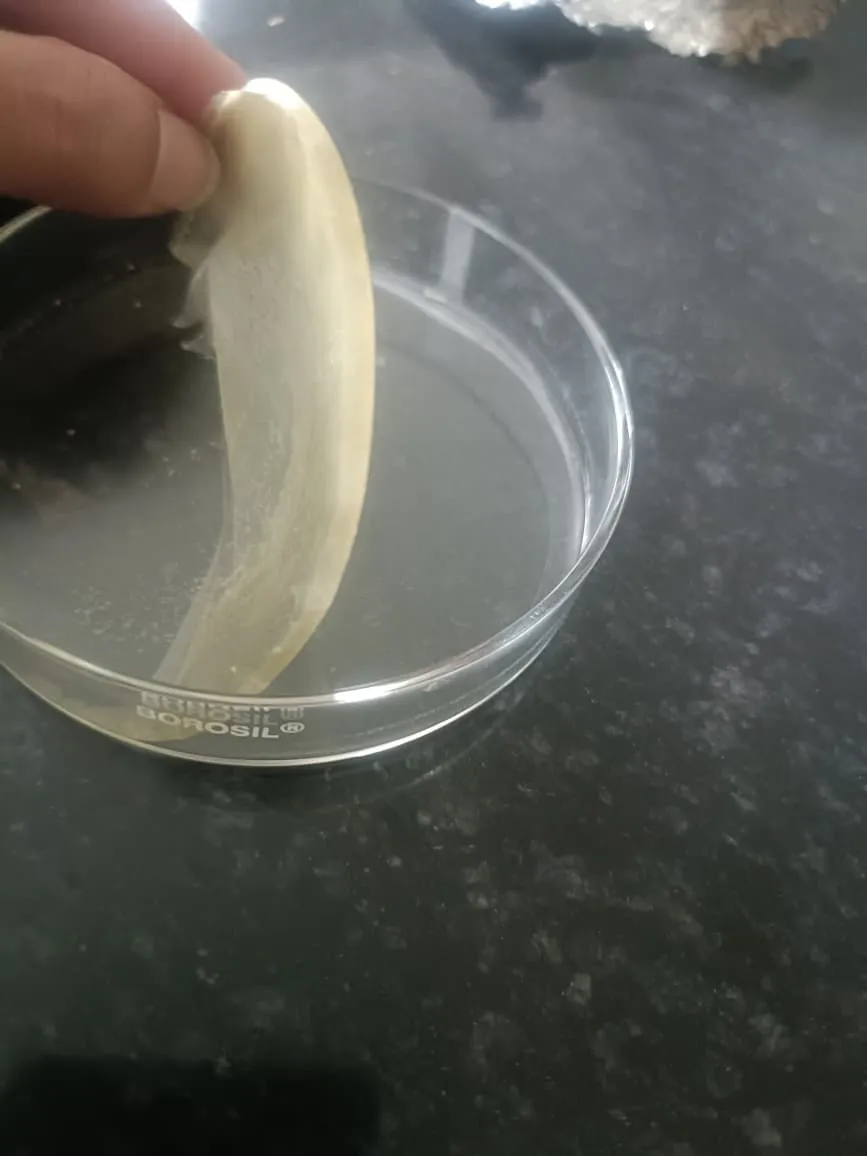
Fig. no. 1 Transdermal Patch
Types of Transdermal Patches
1. Single-layer Drug-in-adhesive: In this system, the gummy/adhesive layer not only helps the transdermal patch adhere to the porous membrane but also facilitates the drug's release and skin penetration. The active pharmaceutical ingredient (API) and all of the additional excipients are contained in a single layer.
2. Multi-layer Drug-in-Adhesive: The multi-layer drug-in-adhesive patch is similar to the single/solo layer patch, but it uses numerous layers of adhesive to release the medications in a regulated and predictable manner. Nonetheless, a single layer system is in charge of the drug's instantaneous release, while a second layer is in charge of its regulated and scheduled release9,10. Two different kinds of medications can be used with the Multi-layer Drug in Adhesive.
a): Reservoir system A distinct layer for the active pharmaceutical component makes up the reservoir transdermal system. The introduction of the drug as a solution or suspension in a liquid compartment divided by an adhesive layer and semipermeable membrane characterises the API layer. Between the skin and the release liner, a sticky layer is provided in the form of a continuous coating.
b) Matrix system: A drug suspension and solution are held in a semisolid matrix. The adhesive layer that surrounds the drug layer creates a semisolid matrix and is in charge of skin adhesion. Another name for it is a "monolithic system" [3]
Advantages:
Using herbal patches has several advantages, including:
Drawbacks:
Uses:
Polymers used in Herbal Transdermal patch
Polymers are chosen to create a flexible film, regulate the release of bioactive chemicals, and enhance the mechanical qualities of herbal transdermal patches. Hydroxypropyl methyl cellulose (HPMC), polyvinyl pyrrolidone (PVP), ethyl cellulose (EC), chitosan, and methyl cellulose are among the polymers that are frequently utilised. While ethyl cellulose functions as a hydrophobic rate-controlling polymer, HPMC and PVP are hydrophilic polymers that offer good film-forming capabilities and improve drug release. [4-8]
PLANT PROFILE
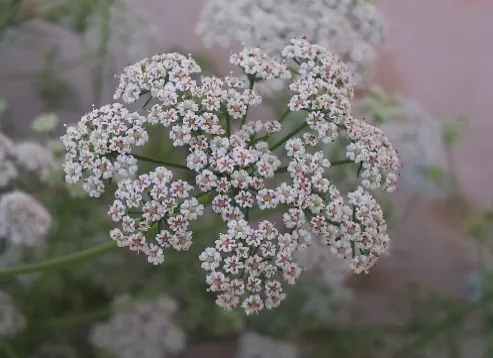
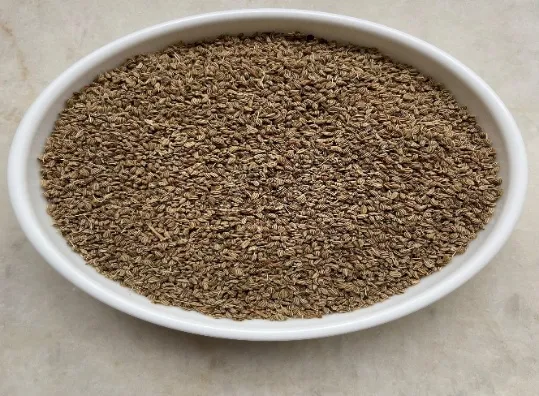
Fig. no. 2 : Trachyspermum ammi (Ajowain)
Classification:
Kingdom : Plantae
Clade: Tracheophytes
Clade: Angiosperms
Clade: Eudicots
Clade: Asrerids
Order: Apiales
Family: Apiaceae
Genus: Trachyspermum
Species: ammi
Description: Ajwain's small, oval, seed-like fruits are pale brown schizocarps, which resemble the seeds of other plants in the family Apiaceae such as caraway, cumin and fennel.[9] They have a bitter and pungent taste, with a flavor similar to anise and oregano. They smell like thyme because they also contain thymol, but they are more aromatic and less subtle in taste, as well as being somewhat bitter and pungent.[9]Even a small number of fruits tend to dominate the flavor of a dish.
Cultivation and production
Ajwain grows in dry, barren soil in its indigenous regions of India, Iran, Afghanistan, and parts of northern Africa.[9]
Culinary uses
The fruits are rarely eaten raw; they are commonly dry roasted or fried in ghee (clarified butter). This allows the spice to develop a more subtle and complex aroma. [10]
Essential oil
Hydrodistillation of ajwain fruits yields an essential oil consisting primarily of thymol, gama terpinene, para cymene, and more than 20 trace compounds which are predominantly terpenoids [11]
MATERIAL AND METHODOLOGY
Plant Material will be collected from local Dehradun region and authenticated for ensuring their proper identification.
2. Prepration of Plant Material:
Ajwain seeds were dried and coarsely powdered using motar and pestle. The powdered was stored in airtight containers for further use.
3. Materials and methods:
Chemicals and Solvents: Solvents for extraction (eg., Water , Ethanol , ), HPMC, Tween 80, Glycerine etc. for patches development
Before the extraction, the Trachyspermum ammi fruits were selected, washed, dried, and ground into a powder. Ethanol was used as a solvent in the Soxhlet equipment to obtain the extract. Additionally, the Clevenger apparatus produced the essential oil of ajwain. However, maceration was used to obtain the aqueous extract. After that, the extract was concentrated and dried to get rid of excessive solvent. After that, the extract and oil were kept in an airtight container for further usage. Phytochemical screening and formulation experiments were conducted on the extract and oil.[12-14]
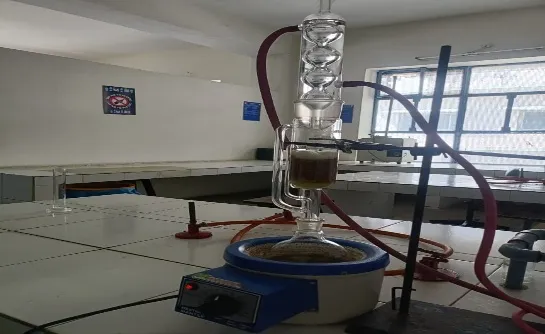
Figure:3 Extraction of ajwain seed by soxhlet extraction
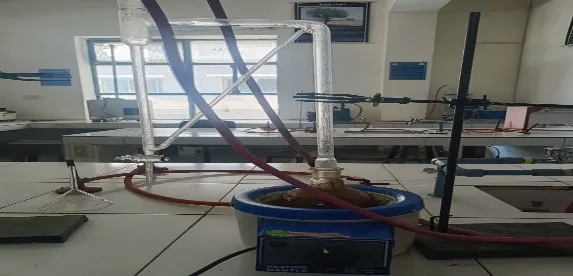
Figure no: 4 Isolation of ajwain oil by Clevenger apparatus.
5. Phytochemical screening
Initial phytochemical screening was performed on both ethanolic and aqueous extracts to identify different phytoconstituents, including: Alkaloids, tanins, Flavanoids, saponin,Glycoside, phenolics. These components were identified by specific color and precipitate reactions as per standard procedure. The observation were recorded from each test and compared inorder to determine the phytochemicals profile. This lead to the presence of bioactive constituent that has therapeutic potential .[15-22]
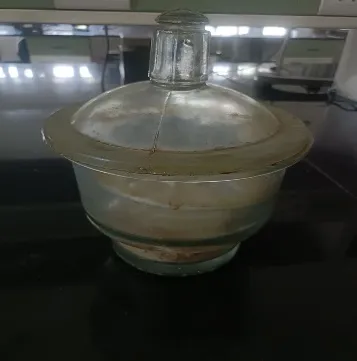
Solvent casting was used to create the transdermal patch that included ethanolic extract of Trachyspermum ammi and essential oil containg Transdermal patch. Under constant stirring, the necessary amount of HPMC and ethyl cellulose were dissolved in a 70:30 ethanol:water solvent system. Incase of essential oil containg patch , Tween 80 were added inorder to dissolve oil phase. After adding PEG-400 as a plasticiser, Carbopol 934 was applied. With constant magnetic stirring, the produced extract was gradually added to the polymeric solution until a homogenous mixture was achieved. The finished mixture was transferred onto a glass petri dish and allowed to dry at 40°C or room temperature. Patches were trimmed into appropriate sizes after drying and kept in a desiccator for additional assessment.[23-24]
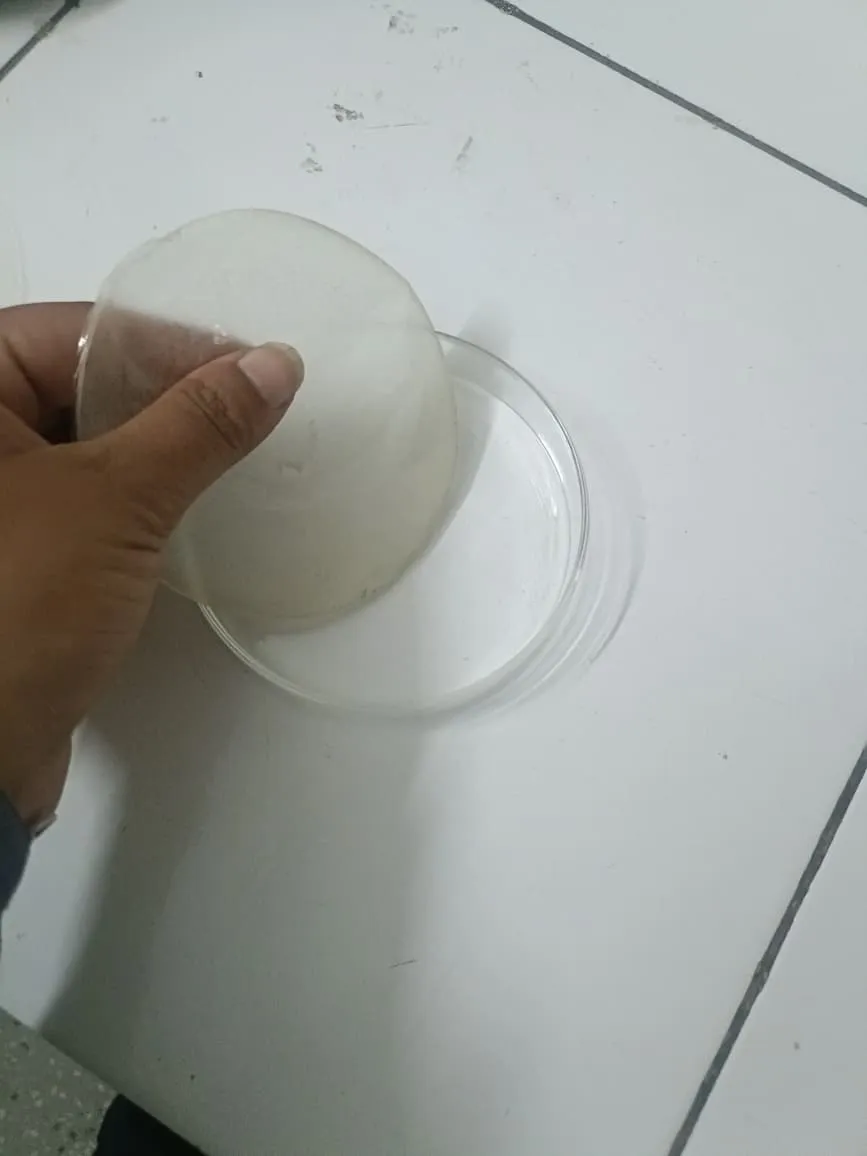
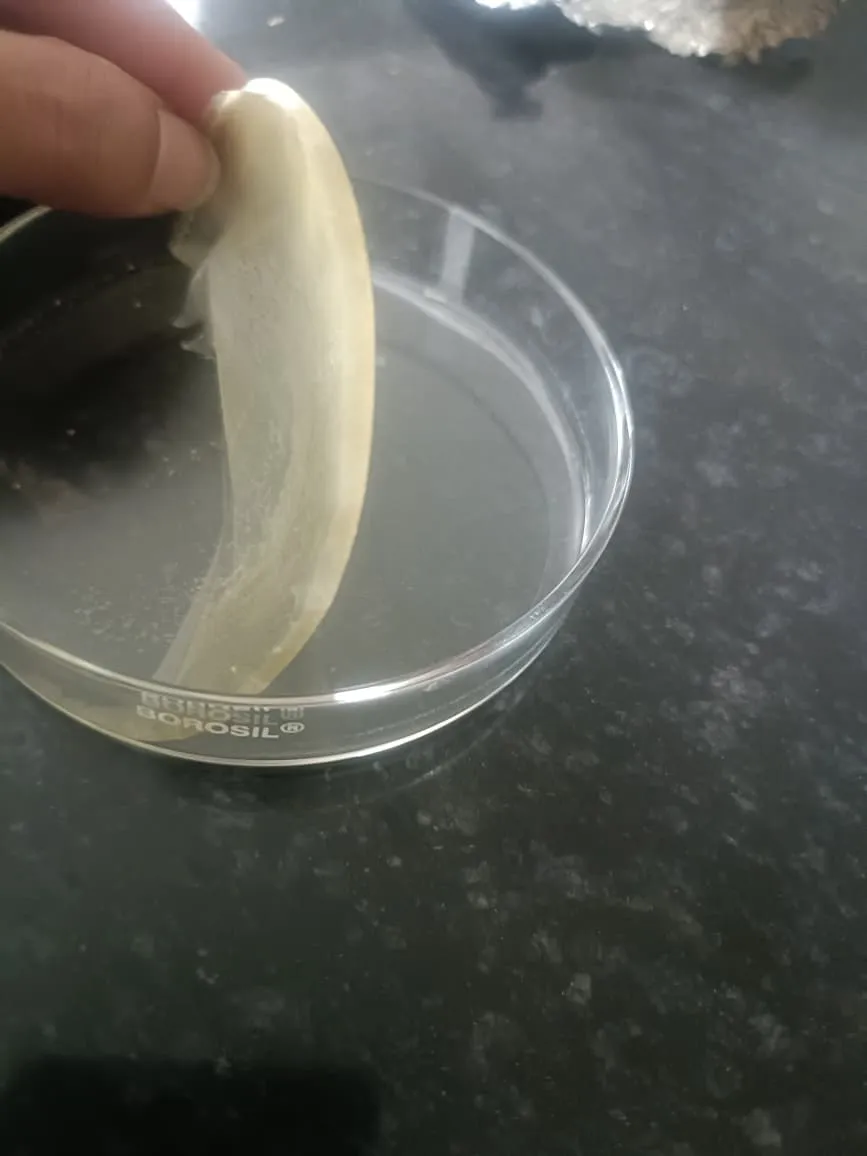
Figure : 5 Transdermal patch of ajwain extract
TABLE: 1 Formulation composition of extract & oil containing Transdermal patch
|
Ingredients |
F1(extract) |
F2(extract) |
F3 (extract) |
F4(oil) |
F5(oil) |
|
HPMC |
2.0 gm |
2.0 gm |
2.0 gm |
1.0gm |
1.0gm |
|
Ethyl cellulose |
1.0 gm |
1.0 gm |
1.0 gm |
1.0gm |
1.0gm |
|
PEG- 400 |
0.8 gm |
0.8 gm |
0.8 gm |
0.8gm |
0.8gm |
|
Carbopol 934 |
0.3 gm |
0.3 gm |
0.3 gm |
0.3gm |
0.3gm |
|
Extract & oil |
0.5 ml |
1.0 ml |
1.5 ml |
0.5ml |
0.5ml |
|
Tween 80 |
- |
- |
- |
0.5ml |
0.5ml |
|
Ethanol: water |
70:30 |
70:30 |
70:30 |
70:30 |
70:30 |
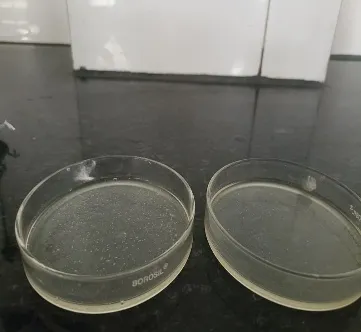
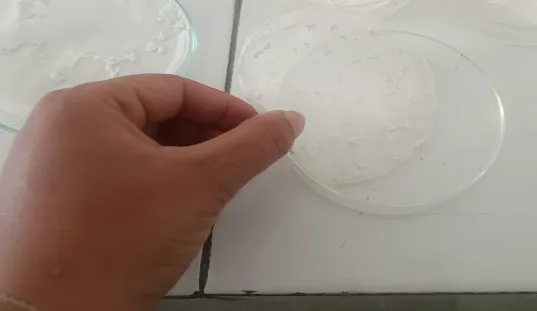
Figure: 6 Transdermal patch of ajwain oil
Evaluation of Transdermal patch
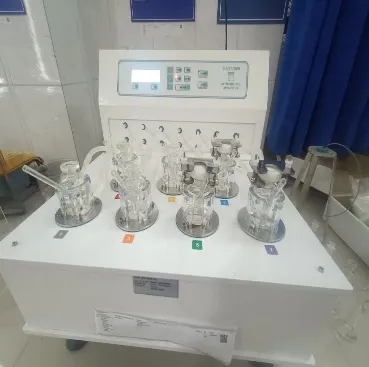
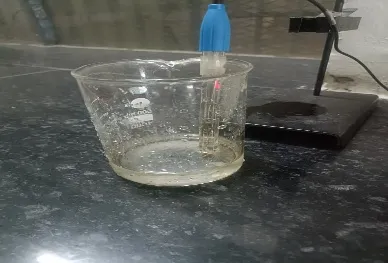
The number of parameters were used to evaluate the transdermal patch of both oil and extract of Trachyspermum ammi . Appearance , The path was flexible smooth and light brown in color. Folding endurance is detected by repeatedly folding the patch at same point until it broke. Thickness of patch is determined by using vernier caliper and measure the thickness of the patch , weight variation is calculated by weighng small part of each patch on a suitable digital weighing balance .pH was measured for skin compatibility . moisture content and moisture uptake were performed under different environmental conditions.Invitro study was also done by using Franz diffusion cell to know the releasecharacteristics of the active ingredients from the patches.[25]
A
B
c
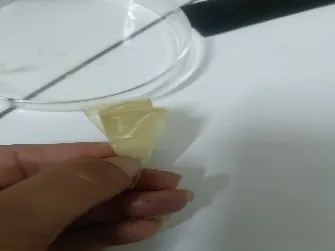
Figure: 7 Evaluations of Transdermal patch (A), (B), (C), (D)
RESULT AND DISCUSSION
Phytochemical investigation: In aqueous extract of ajwain major amount of phytoconstituent were found as compared to ethanolic extract , Tannin and phenolic both of these were found in aqueous and ethanolic extract whereas glycoside and saponin were not present in both the phases.The biological activity of ajwain increased by the presence of tannins and phenolic in the formulation of patch of both.
Evaluation of Transdermal patch of both OIL & Extract
Result Table no 1:
|
Parameters |
F1 ( OIL) |
F2 (OIL) |
F3(EXTRACT) |
F4(EXTRACT) |
F5(EXTRACT) |
|
Folding endurance |
10 |
14 |
20 |
17 |
25 |
|
Thickness(mm) |
1.3 |
1.1 |
0.5 |
0.5 |
0.4 |
|
Weight (gm) |
0.045g
|
0.075g |
0.015g |
0.015g |
0.025g |
|
Ph |
5.05 |
5.29 |
5.34 |
5.72 |
5.65 |
|
Moisture content (%) |
0.069% |
0.217% |
0.002% |
0.005% |
0.005% |
|
Moisture uptake(%) |
0.069% |
0.152% |
0.055% |
0.107% |
0.008% |
In vitro Drug release:
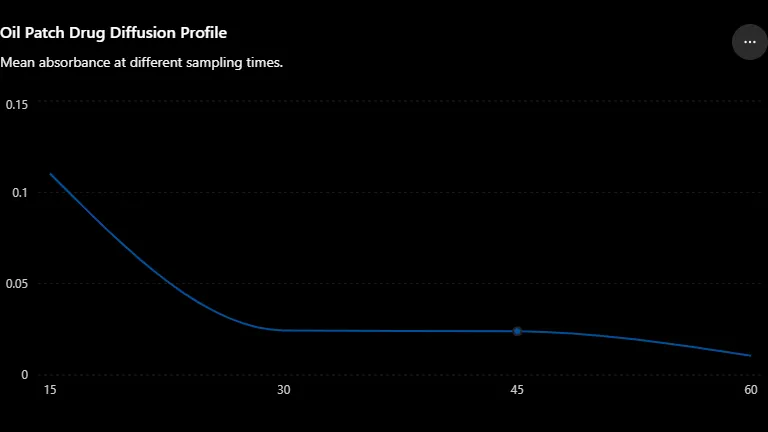
OIL PATCH DRUG DIFFUSION PROFILE
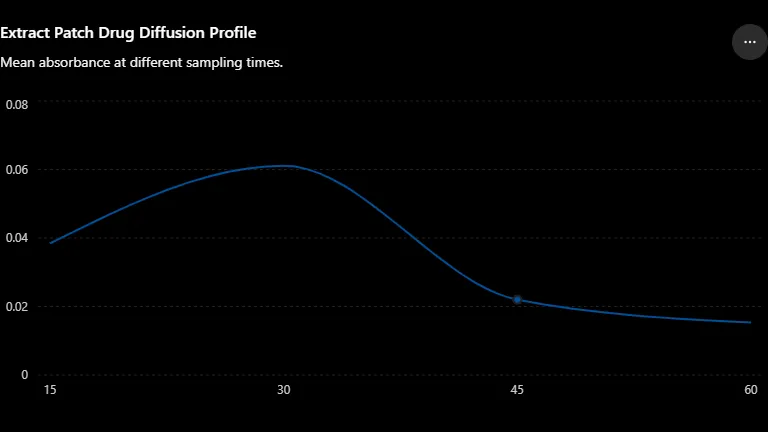
EXTRACT PATCH DRUG DIFFUSION PROFILE
COMPARISON OIL VERSUS EXTRACT
Table no : 2
|
Time( min) |
Oil mean Abs |
Extract mean Abs |
|
15 |
0.1103 |
0.0384 |
|
30 |
0.0244 |
0.0611 |
|
45 |
0.0239 |
0.0220 |
|
60 |
0.0106 |
0.0153 |
Discussion: At 15 minutes, the oil patch had the maximum absorbance, suggesting a quick initial release of chemicals. The extract patch, on the other hand, showed maximal absorbance at 30 minutes, indicating a relatively delayed release profile. At later time intervals, both formulations displayed a decrease in absorbance, suggesting decreased diffusion with time. Overall, the extract patch showed a more steady release before diminishing, while the oil patch showed a burst release pattern.
CONCLUSION
Transdermal patches with both oil and extract compositions were successfully created and assessed in this investigation. Acceptable weight fluctuation, thickness, folding endurance, moisture content, moisture uptake, displayed by the produced patches. The release of active ingredients from both formulations was verified by in vitro diffusion experiments utilising a Franz diffusion cell. The extract patch displayed a rather slow release profile, while the oil patch showed a quicker initial release (burst release). All things considered, both formulations showed favourable traits and efficient diffusion behaviour, suggesting their potential as transdermal drug delivery methods.
REFERENCES


Srishti Tiwari, Chandrashekhar Tailor, Gnana Rajan, Phytochemical Screening and Formulation of Trachyspermum Ammi Linn. ( Ajowain) Bioactive Compound Based Transdermal Patch Along with Their Preliminary Evaluation, Int. J. of Pharm. Sci., 2026, Vol 4, Issue 7, 161-171. https://doi.org/10.5281/zenodo.21104498
 10.5281/zenodo.21104498