

We use cookies to ensure our website works properly and to personalise your experience. Cookies policy
Godavari institute of Pharmacy Kolpa
Background: Oral disintegrating and dispersible tablet technologies rely heavily on the choice of disintegrant to achieve rapid tablet breakup, fast dissolution, and improved patient compliance. Synthetic superdisintegrants such as croscarmellose sodium, crospovidone, and sodium starch glycolate remain the industry standard, but concerns over cost, allergenicity, and the demand for sustainable, biocompatible excipients have driven sustained research interest in plant-derived mucilages. Method: A narrative literature review was conducted using PubMed, ScienceDirect, Google Scholar, and ResearchGate to identify peer-reviewed studies (predominantly 2009–2026) reporting the isolation, characterization, and tablet-formulation performance of Plantago ovata (isabgol) and Ocimum basilicum (sweet basil) seed/husk mucilages as natural superdisintegrants. Results: Across the reviewed studies, Plantago ovata mucilage consistently produced in vitro disintegration/dispersion times as low as 7-8 seconds at 8-12% w/w in fast-disintegrating and orodispersible formulations, while Ocimum basilicum mucilage and defatted seed powder achieved disintegration within 30-60 seconds at 3-9% w/w, both outperforming or matching several synthetic benchmarks at comparable or lower concentrations. Chemically, P. ovata mucilage is dominated by a highly branched arabinoxylan (arabinose:xylose relationships reported near 1:2 to 1:3), while O. basilicum mucilage is characterized by glucomannan- and xylan-rich acidic polysaccharide fractions with pronounced water-holding capacity. Both act principally through swelling and wicking mechanisms, and combined use of the two mucilages has been reported in factorial-design studies targeting further disintegration-time reduction. Conclusion: Plantago ovata and Ocimum basilicum mucilages represent well-characterized, low-cost, biodegradable alternatives to synthetic superdisintegrants capable of reducing disintegration time to single-digit seconds, with consequent potential to improve the dissolution rate and oral bioavailability of poorly water-soluble (BCS Class II) drugs. Standardization of extraction protocols and pharmacopeial quality specifications remain the principal barriers to wider regulatory and industrial adoption.
Oral solid dosage forms remain the most widely used and preferred route of drug administration owing to ease of self-administration, dosing accuracy, cost-effectiveness, and patient acceptability. A persistent challenge for conventional tablets, however, is achieving rapid disintegration and dissolution, particularly for pediatric, geriatric, and dysphagic patients, and for drugs whose oral bioavailability is limited by a slow rate of dissolution in the gastrointestinal tract. This has driven the development of fast-disintegrating, orodispersible, and mouth-dissolving tablet (ODT/MDT/FDT) technologies, in which the disintegrant is the single most influential excipient governing performance.
Disintegrants are classified as synthetic (e.g., croscarmellose sodium, crospovidone, sodium starch glycolate), semi-synthetic, and natural, with natural, plant-derived mucilages increasingly favored for their biocompatibility, biodegradability, low cost, and alignment with the pharmaceutical industry's broader shift toward green and sustainable excipients. Among natural sources, the mucilages of Plantago ovata Forsk. (isabgol/psyllium husk) and Ocimum basilicum L. (sweet basil) seeds have received sustained research attention over more than a decade because of their favorable swelling behavior, high water-holding capacity, and demonstrated ability to produce single-digit-second disintegration times in optimized formulations.
This review consolidates the published literature on P. ovata and O. basilicum mucilages as natural superdisintegrants, covering their botanical source and chemical composition, extraction and purification methods, mechanisms of disintegrant action, comparative and combined formulation performance, and their downstream implications for dissolution rate and oral bioavailability, with particular relevance to poorly water-soluble (BCS Class II) drug candidates.
1.1 Review Methodology
A structured literature search was performed across PubMed/MEDLINE, ScienceDirect, Google Scholar, and ResearchGate using combinations of the keywords "natural superdisintegrant," "Plantago ovata mucilage," "psyllium husk disintegrant," "Ocimum basilicum mucilage," "basil seed mucilage," "orodispersible tablet," and "fast disintegrating tablet." Original research articles, review articles, and technical monographs published primarily between 2007 and 2026 were screened for relevance; studies reporting formulation-level performance data (disintegration/dispersion time, wetting time, water absorption ratio, in vitro drug release) or mucilage characterization data (composition, swelling index, rheology) were prioritized for inclusion.
2. Superdisintegrants: Concept, Classification, and Mechanisms of Action
Superdisintegrants are excipients incorporated into solid dosage forms, typically at 1-10% w/w, to promote rapid breakup of the compressed tablet matrix on contact with an aqueous medium, thereby increasing the effective surface area available for drug dissolution. Unlike conventional disintegrants, superdisintegrants are effective at markedly lower concentrations owing to their more efficient water-uptake and matrix-disruption properties.
Disintegrants are broadly classified by origin into synthetic (e.g., crospovidone, croscarmellose sodium, sodium starch glycolate, ion-exchange resins), semi-synthetic, natural (plant mucilages and gums), and co-processed varieties. Several mechanisms have been proposed to explain disintegrant action, and it is generally accepted that no single mechanism operates in isolation; most agents act through a combination of pathways.
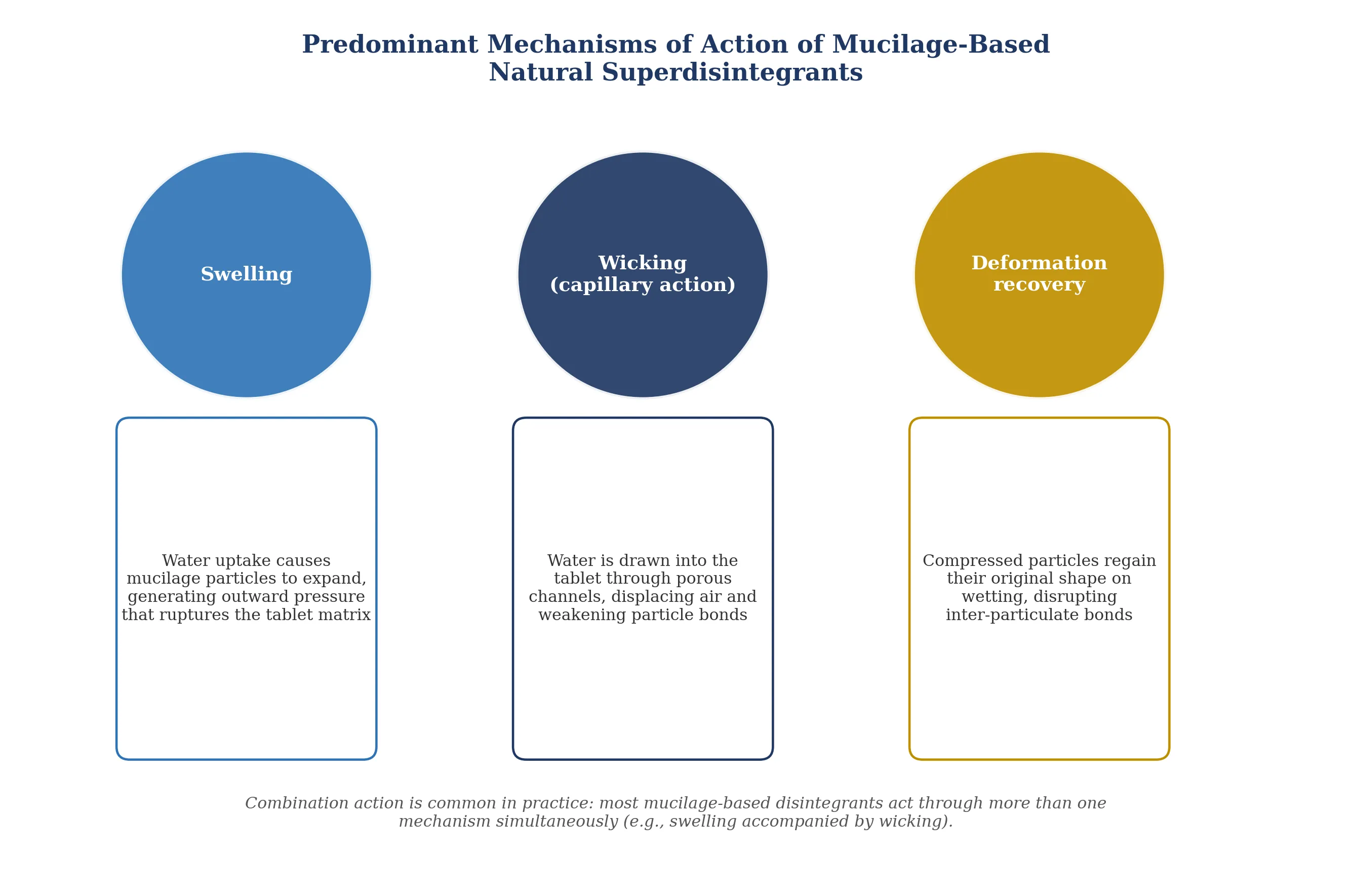
Figure 1. Predominant mechanisms of action underlying mucilage-based natural superdisintegrant performance: swelling, wicking (capillary action), and deformation recovery.
Swelling is generally regarded as the most significant mechanism for hydrophilic plant mucilages: on contact with water, the polysaccharide network absorbs fluid and expands, generating internal pressure that ruptures inter-particulate bonds within the tablet. Wicking refers to the capillary uptake of water through the porous tablet matrix, displacing adsorbed air and weakening the binder network, a mechanism that operates in parallel with swelling for many mucilages. Deformation recovery, particle-repulsion, heat of wetting, and (for select natural agents) enzymatic action have also been described, though these are comparatively less studied for plant-derived disintegrants.
Selection criteria for an ideal superdisintegrant include good mouth-feel, minimal gel formation (to avoid retarding dissolution once disintegration has occurred), high hydration capacity, absence of drug-excipient interaction, compatibility with co-formulated excipients, and acceptable powder-flow properties.
3. Plantago ovata Mucilage as a Natural Superdisintegrant
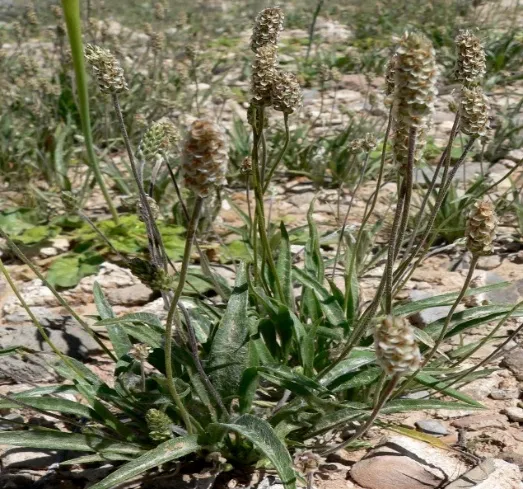
3.1 Botanical Source and Chemical Composition
Plantago ovata Forsk. (family Plantaginaceae), commonly known as isabgol or psyllium, is an annual herb cultivated extensively in India, Pakistan, and Iran, with India supplying approximately 85% of the world psyllium market. The husk, obtained by milling the seed, constitutes roughly 25-26% of seed weight and comprises about 34% insoluble fiber and 66% soluble fiber. The soluble fraction is dominated by a highly branched arabinoxylan polysaccharide, with reported arabinose:xylose ratios varying by source and extraction method (commonly cited in the range of approximately 1:3 to 1:0.4 arabinose:xylose depending on the fraction analyzed), together with minor proportions of galacturonic acid, protein (~0.94%), and ash (~4%). This arabinoxylan-rich matrix is responsible for the exceptional water-holding and gel-forming capacity that underlies its disintegrant behavior.
3.2 Extraction and Pharmaceutical Characterization
P. ovata mucilage is typically isolated by aqueous extraction of the husk or whole seed, followed by mechanical separation, filtration, and drying, with or without alcoholic precipitation to purify the polysaccharide fraction. The resulting mucilage or husk powder has been evaluated for micromeritic properties (angle of repose, Carr's index, Hausner ratio), swelling index, pH, viscosity, and Fourier-transform infrared (FTIR) spectral compatibility with model drugs prior to incorporation into tablet formulations.
3.3 Formulation Performance
P. ovata mucilage has been evaluated as a superdisintegrant across a range of fast-disintegrating and orodispersible tablet formulations. In a widely cited early study, Shirsand and Sarasija formulated fast-disintegrating tablets of prochlorperazine maleate using P. ovata mucilage (2-8% w/w) alongside microcrystalline cellulose and directly compressible mannitol; the optimized formulation containing 8% w/w mucilage and 60% w/w microcrystalline cellulose achieved an in vitro dispersion time of approximately 8 seconds, acceptable hardness (~2.63 kg/cm²), friability below 1%, and stable performance on short-term accelerated stability testing (40 °C/75% RH, 3 months).
Subsequent studies extended this approach to other model drugs. A 3² full factorial design study on domperidone fast-disintegrating tablets used P. ovata mucilage at 2-10% w/w with microcrystalline cellulose as diluent, evaluating hardness, friability, drug content uniformity, and in vitro dispersion, wetting, and water-absorption behavior. Mahant et al. formulated mouth-dissolving tablets of ondansetron hydrochloride using P. ovata mucilage as the sole natural superdisintegrant, with the optimized formulation (12% w/w mucilage) achieving a disintegration time of approximately 7 seconds and in vitro drug release of 98.57% within 15 minutes. P. ovata husk has also been used directly (without mucilage isolation) as a superdisintegrant in sublingual nifedipine tablets and in psyllium husk powder-based orodispersible meloxicam and valsartan formulations, the latter reporting a disintegration time of approximately 20.34 seconds, a wetting time of 12.60 seconds, and a water absorption ratio of 143.37 at effective concentrations.
4. Ocimum basilicum Mucilage as a Natural Superdisintegrant
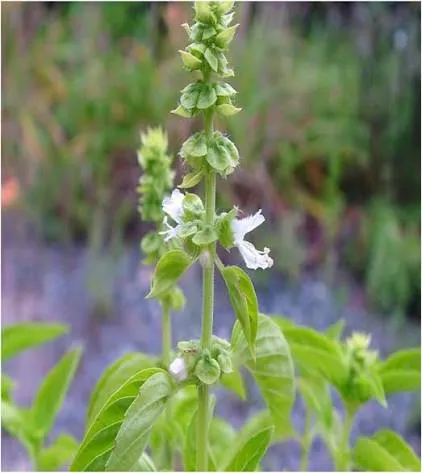
4.1 Botanical Source and Chemical Composition
Ocimum basilicum L. (family Lamiaceae), commonly known as sweet basil, produces a hydrophilic mucilage layer in its seed testa on contact with water, yielding a translucent gel within minutes of soaking. Reported mucilage yield is approximately 20-20.5% w/w of dry seed mass. Compositionally, basil seed mucilage has been characterized as containing substantial proportions of glucomannan (approximately 43%) and xylan (approximately 24%), together with a smaller glucan fraction, conferring an anionic character due to ionizable carboxylate groups. A related structural analysis identified an acidic polysaccharide fraction composed of xylose, arabinose, rhamnose, and galacturonic acid with a (1→4)-linked xylan backbone bearing branched side chains. The polysaccharide is of high molecular weight (reported in the range of ~2,320 kDa in one structural study), and the total dietary fiber content of the isolated mucilage has been reported as high as 98.5%.
4.2 Extraction and Purification
Basil seed mucilage is conventionally obtained by soaking cleaned seeds in warm distilled water (commonly cited around 60-67 °C for periods ranging from approximately 20 minutes to 1.6 hours), followed by mechanical agitation to detach the swollen mucilage layer from the seed core, filtration through muslin cloth, centrifugation to remove residual particulates, and oven-drying at approximately 45 °C. Alcoholic precipitation has additionally been used to fractionate basil seed gum into alcohol-soluble and alcohol-insoluble polysaccharide fractions for more detailed structural characterization.
4.3 Formulation Performance
O. basilicum mucilage and defatted seed powder have been evaluated as superdisintegrants across several orodispersible and fast-dissolving tablet systems. Bucktowar et al. formulated fast-dissolving paracetamol tablets using O. basilicum seed mucilage as the superdisintegrant, reporting satisfactory hardness, friability, and disintegration performance. In a comparative dispersible-tablet study, Patil et al. evaluated O. basilicum mucilage alongside P. ovata mucilage and reported that the mucilage obtained from O. basilicum was effective in promoting disintegration, though a direct relationship between swelling index and disintegration efficiency was not consistently observed. O. basilicum defatted seed powder, used as a direct-compression disintegrant in clopidogrel orodispersible tablets at 3, 6, and 9% w/w, produced disintegration times below one minute across all tested concentrations, with the 9% w/w formulation achieving approximately 32 seconds and near-complete (99%) drug release within 10 minutes. Related work has also demonstrated the utility of basil seed mucilage beyond disintegrant applications, including as a bioadhesive polymer carrier for naproxen sodium microspheres and suppositories, and as a component of mucoadhesive sublingual films, reflecting the versatility of its polysaccharide matrix in oral and mucosal drug delivery.
5. Comparative and Combined Applications
Several studies have directly compared or combined P. ovata and O. basilicum mucilages within the same formulation platform. Lakshmi et al. isolated and purified Carica papaya and O. basilicum seed mucilages for the preparation of orodispersible valsartan tablets, identifying the 10% w/w O. basilicum mucilage formulation as an optimized batch on the basis of rapid in vitro dissolution. Patil et al.'s comparative dispersible-tablet study evaluated both P. ovata and O. basilicum mucilages relative to a starch-powder standard disintegrant, finding P. ovata mucilage effective at lower concentrations (around 5%) relative to the other natural agents tested. Factorial-design approaches combining P. ovata and O. basilicum mucilages within a single formulation (targeting further reductions in disintegration time through complementary swelling/wicking behavior) have also been described in the orodispersible tablet literature, illustrating an emerging strategy of using natural mucilage blends rather than single agents to further optimize disintegration performance.
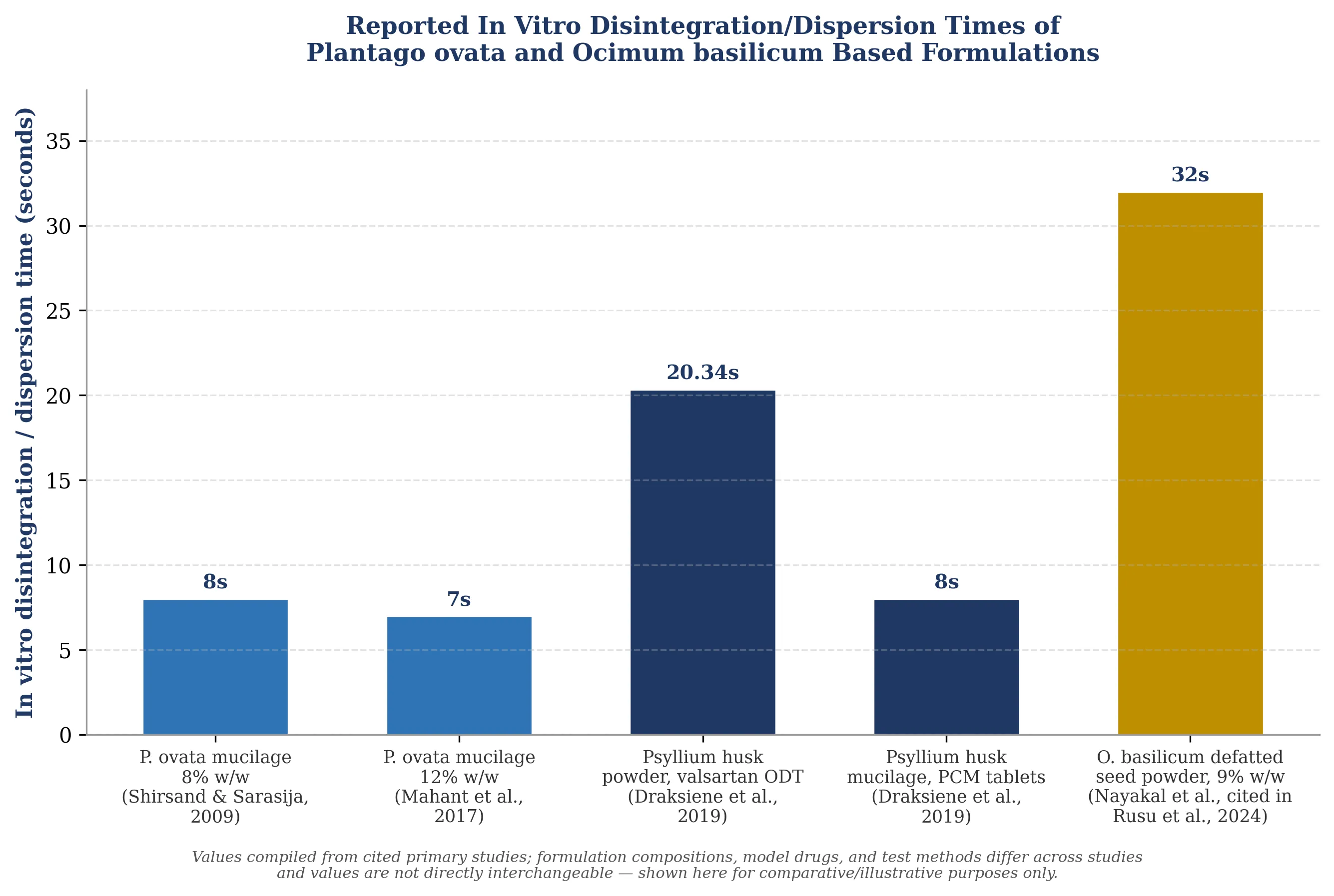
Figure 2. Comparative in vitro disintegration/dispersion times reported across selected published studies using Plantago ovata and Ocimum basilicum mucilage-based formulations. Formulation compositions, model drugs, and test methodologies vary between studies; values are compiled for illustrative comparison only and are not directly interchangeable.
Table 1. Summary comparison of Plantago ovata and Ocimum basilicum mucilages as natural superdisintegrants.
|
Parameter |
Plantago ovata mucilage |
Ocimum basilicum mucilage |
|
Botanical family |
Plantaginaceae |
Lamiaceae |
|
Plant part used |
Husk / seed |
Seed |
|
Approx. mucilage/husk yield |
25-26% (husk recovery) |
~20-20.5% w/w |
|
Dominant polysaccharide |
Highly branched arabinoxylan |
Glucomannan- and xylan-rich acidic polysaccharide |
|
Effective concentration range (reported) |
2-12% w/w |
3-10% w/w |
|
Reported disintegration/dispersion time (optimized batches) |
~7-8 s |
~30-60 s (defatted seed powder); faster with purified mucilage |
|
Predominant mechanism |
Swelling, wicking |
Swelling, wicking |
|
Other reported pharmaceutical uses |
Binder, controlled-release matrix, hydrogel carrier |
Bioadhesive carrier, mucoadhesive films, binder |
6. Disintegration, Dissolution, and Oral Bioavailability: The Mechanistic Link
The pharmaceutical rationale for using efficient superdisintegrants extends beyond patient-compliance considerations for orodispersible dosage forms. Per the Noyes-Whitney relationship, dissolution rate is directly proportional to the exposed surface area of the drug; rapid tablet disintegration into fine particles increases this surface area and can meaningfully accelerate the rate-limiting dissolution step for poorly water-soluble drugs. This is particularly relevant for Biopharmaceutics Classification System (BCS) Class II compounds, which are characterized by high membrane permeability but low aqueous solubility, such that dissolution rate rather than permeability is typically the rate-limiting step governing systemic absorption and oral bioavailability.
For BCS Class II drugs, formulation strategies that increase dissolution rate — including but not limited to efficient superdisintegrant selection — have been shown to translate into measurable bioavailability gains. Reported approaches such as liquisolid technology, solid dispersion, and self-nanoemulsifying systems demonstrate that increasing the rate and extent of drug dissolution at the primary absorption site can substantially increase area-under-curve (AUC) and peak plasma concentration (Cmax) relative to conventional formulations. Within tablet-based delivery specifically, disintegration rate and compression force have been shown to directly influence the achievable rate of supersaturation generation and hence the dissolution profile of BCS Class II actives. On this basis, natural mucilage-based superdisintegrants capable of achieving single-digit-second disintegration times, as documented for optimized P. ovata formulations, represent a mechanistically plausible and evidence-supported route to improving the dissolution — and by extension the oral bioavailability — of poorly soluble drug candidates, though drug-specific in vivo bioavailability confirmation remains necessary on a case-by-case basis.
7. Comparative Evaluation: Natural versus Synthetic Superdisintegrants
Natural mucilage-based superdisintegrants offer several advantages over their synthetic and semi-synthetic counterparts, including biocompatibility, biodegradability, low cost, wide local availability, and general alignment with green-chemistry and sustainable-excipient principles increasingly favored in pharmaceutical development. However, synthetic superdisintegrants such as croscarmellose sodium and crospovidone continue to offer batch-to-batch consistency, well-established pharmacopeial monographs, and predictable performance that natural agents do not yet reliably match.
Table 2. Comparative attributes of natural versus synthetic superdisintegrants.
|
Attribute |
Natural mucilage-based (e.g., P. ovata, O. basilicum) |
Synthetic (e.g., croscarmellose sodium, crospovidone, SSG) |
|
Source |
Plant-derived, renewable |
Chemically synthesized/modified |
|
Biocompatibility & biodegradability |
Generally favorable |
Variable; generally well-tolerated but non-biodegradable |
|
Batch-to-batch consistency |
Variable; dependent on agro-climatic and extraction factors |
High; standardized manufacturing |
|
Pharmacopeial standardization |
Largely lacking dedicated monographs |
Well-established (USP/Ph. Eur./IP monographs) |
|
Cost |
Generally low |
Moderate to high |
|
Effective use concentration |
Often 2-12% w/w |
Typically 1-8% w/w |
|
Regulatory pathway |
Requires in-house specification and safety data generation |
Established regulatory precedent |
|
Key limitations |
Microbial load, batch variability, potential allergenicity, lack of standardization |
Non-biodegradable, higher cost, occasional drug incompatibility |
8. Regulatory Status, Safety, and Limitations
Unlike synthetic superdisintegrants, which are governed by well-established compendial monographs (USP, Ph. Eur., IP), most plant-derived mucilages — including P. ovata and O. basilicum mucilages — lack dedicated pharmacopeial specifications for use as pharmaceutical excipients, though psyllium husk itself carries a long history of regulatory acceptance in food and dietary-fiber applications. This absence of standardized specifications complicates formal regulatory submissions and requires manufacturers to generate in-house acceptance criteria for physicochemical and microbiological quality attributes, along with supporting safety and toxicity data. Reported limitations of natural superdisintegrants more broadly include batch-to-batch compositional variability arising from agro-climatic and geographic factors, higher microbial bioburden relative to synthetic agents, potential for allergenic reactions or gastrointestinal effects (e.g., flatulence, bloating) at high doses, and a comparative lack of long-term stability data under varied storage conditions.
9. Future Perspectives
Several directions appear well-positioned to strengthen the pharmaceutical case for P. ovata and O. basilicum mucilages going forward. First, adoption of Quality by Design (QbD) frameworks — including risk assessment (e.g., Ishikawa/fishbone analysis of extraction and formulation variables) and formal design-of-experiments (DoE) optimization — can help address the batch-variability concerns that currently limit regulatory confidence in natural excipients, by systematically defining a validated design space for mucilage extraction yield, purity, and disintegrant performance. Second, chemical modification strategies (e.g., graft copolymerization, cross-linking) applied to psyllium and basil-seed polysaccharides, as already explored in food and materials-science contexts, may be extended to tune swelling kinetics and gel strength specifically for pharmaceutical disintegrant applications. Third, formal application of green-chemistry excipient-assessment tools and life-cycle framing, consistent with the broader industry shift toward sustainable pharmaceutical development, would strengthen the evidence base positioning these mucilages as environmentally preferable alternatives to synthetic disintegrants. Finally, generation of pharmacopeial-grade reference specifications and expanded in vivo bioavailability data (beyond in vitro disintegration and dissolution surrogates) for representative BCS Class II drug candidates remain priority areas for translating the strong in vitro evidence base into regulatory and industrial adoption.
10. CONCLUSION
The published literature reviewed here consistently supports Plantago ovata and Ocimum basilicum mucilages as effective, low-cost, and biodegradable natural superdisintegrants capable of achieving disintegration performance competitive with, and in several optimized formulations superior to, established synthetic agents at comparable or lower use concentrations. Their predominant swelling and wicking mechanisms, well-characterized arabinoxylan- and glucomannan/xylan-rich polysaccharide compositions, and demonstrated compatibility across a range of model drugs and dosage-form platforms (fast-disintegrating, orodispersible, and mouth-dissolving tablets) provide a strong mechanistic and empirical basis for their continued use and further optimization. Given the well-established relationship between disintegration rate, dissolution rate, and oral bioavailability for BCS Class II drugs, these natural mucilages represent a pharmaceutically and environmentally attractive platform, contingent on continued progress toward standardized extraction protocols, pharmacopeial specifications, and expanded in vivo validation.
Conflict of Interest
The authors declare no conflict of interest.
ACKNOWLEDGMENT
The authors acknowledge [Institution/Department name] for providing the necessary literature access and support for this review.
REFERENCES

Dr. Rahul Solunke*, Ghodke Sanket, Plantago ovata and Ocimum basilicum Mucilages as Natural Superdisintegrants for Enhancing Disintegration, Dissolution and Oral Bioavailability: A Comprehensive Review, Int. J. of Pharm. Sci., 2026, Vol 4, Issue 7, 2357-2367. https://doi.org/10.5281/zenodo.21318463
 10.5281/zenodo.21318463