

We use cookies to ensure our website works properly and to personalise your experience. Cookies policy
Department of Pharmacology, The Oxford College of Pharmacy.
Transdermal drug delivery offers a needle-free, patient-friendly alternative to oral and parenteral administration, but its clinical utility has historically been restricted to small, lipophilic molecules capable of crossing the stratum corneum. Polymeric dissolving microneedle (MN) patches have emerged as a versatile platform that overcomes this barrier by physically breaching the stratum corneum with micron-scale needles that subsequently dissolve within the skin, releasing an encapsulated payload without generating sharps waste. This assignment presents a comprehensive review of dissolving polymeric microneedle patches, with particular emphasis on their application for peptide and vaccine delivery. The skin's anatomical barrier function is first described, followed by an account of the polymers most commonly used in dissolving MN fabrication, including hyaluronic acid, polyvinylpyrrolidone, polyvinyl alcohol, carboxymethyl cellulose and poly (lactic-co-glycolic acid). Fabrication techniques such as micro molding, centrifugation, vacuum-assisted casting, droplet-born air blowing and three-dimensional printing are discussed alongside the mechanisms governing drug loading and release. Standard evaluation parameters, including mechanical strength, insertion force, dissolution kinetics and in vitro release testing, are outlined, and case studies of peptide (insulin and related biologics) and vaccine (influenza, COVID-19, and measles-rubella) delivery are reviewed, including the 2024 Lancet phase 1/2 clinical trial of a measles-rubella microneedle patch. The advantages, limitations, regulatory landscape and commercial status of the technology are critically appraised, and future prospects, including microneedle-based biosensing and closed-loop systems, are considered. The review concludes that dissolving polymeric microneedles represent a technically mature but commercially nascent platform, with scalable manufacturing and harmonized regulatory guidance identified as the principal barriers to widespread clinical translation.
Drug delivery science has long sought administration routes that combine efficacy with patient acceptability. Oral delivery, although convenient, is compromised by first-pass hepatic metabolism and enzymatic degradation, which is particularly limiting for peptide and protein therapeutics. Parenteral injection circumvents these losses but is invasive, requires trained personnel in many settings, generates biohazardous sharps waste, and is associated with needle-phobia, pain and poor adherence, especially in pediatric and chronic-disease populations. Conventional transdermal patches avoid these drawbacks but are essentially confined to potent, low-molecular-weight, lipophilic drugs because the outermost skin layer, the stratum corneum, presents a formidable diffusional barrier to hydrophilic and high-molecular-weight molecules such as peptides, proteins and vaccine antigens.
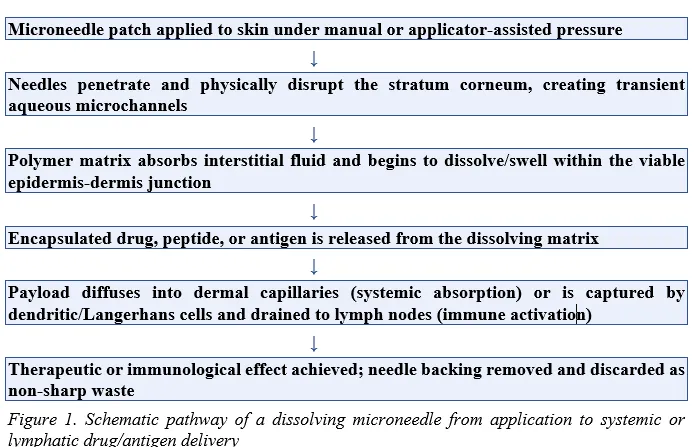
Microneedle (MN) technology was conceived to reconcile these competing demands. Arrays of micron-scale projections, typically 50 to 900 micrometers in length, are applied to the skin to create transient microchannels through the stratum corneum without stimulating the dermal nerve endings, thereby enabling painless delivery of a wide range of therapeutic cargos. Among the several MN architectures developed, dissolving polymeric microneedles are distinguished by their construction from water-soluble or biodegradable polymers that encapsulate the active pharmaceutical ingredient within the needle matrix itself. On insertion, the needles absorb interstitial fluid, dissolve or degrade, and release their payload directly into the dermis, leaving no sharp waste behind and removing the risk of needle-stick injury or re-use.
This single-step, self-disabling mechanism has made dissolving MN patches especially attractive for two classes of molecule that are otherwise difficult to deliver non-invasively: peptide and protein therapeutics, such as insulin, and vaccine antigens, which require intact biological activity and, ideally, engagement with the dense population of antigen-presenting cells resident in the skin. The purpose of this assignment is to provide an integrated account of the science underpinning dissolving polymeric microneedle patches, spanning skin physiology, materials chemistry, fabrication engineering, evaluation methodology, and the accumulating clinical evidence base, with a focus on peptide and vaccine applications, and to critically assess the advantages, limitations, regulatory status and future trajectory of the technology.
SKIN ANATOMY AND BARRIER FUNCTION
The skin is the largest organ of the human body and is structurally organized into three principal layers: the epidermis, the dermis, and the hypodermis (subcutaneous tissue). Each layer contributes distinct functional properties that must be understood before microneedle geometry and drug release kinetics can be rationally designed.
Epidermis and the Stratum Corneum
The epidermis is an avascular, stratified squamous epithelium approximately 50 to 150 micrometers thick, composed predominantly of keratinocytes that differentiate as they migrate outward from the basal layer through the stratum spinosum and stratum granulosum to form the outermost stratum corneum. The stratum corneum, typically 10 to 20 micrometers thick, consists of a nucleated, terminally differentiated corneocytes embedded in a continuous lipid matrix of ceramides, cholesterol and free fatty acids, arranged in a so-called 'brick and mortar' architecture. This organization renders the stratum corneum the rate-limiting barrier to percutaneous absorption, restricting passive diffusion largely to small (generally under 500 Da), moderately lipophilic molecules. Two principal trans epidermal pathways exist across intact skin: the intracellular route through corneocytes, which favors hydrophilic solutes, and the intercellular route through the continuous lipid matrix, which favors lipophilic solutes; a minor trans appendageal pathway also exists via hair follicles and sweat glands. Peptides, proteins and vaccine antigens, being large and hydrophilic, are effectively excluded by all three of these passive routes, which is the fundamental physiological rationale for microneedle-mediated delivery.
Viable Epidermis and Dermis
Beneath the stratum corneum lies the viable epidermis, which contains Langerhans cells, dendritic antigen-presenting cells that patrol the epidermis and are of particular relevance to vaccine delivery, since intradermal antigen deposition can directly engage this arm of the innate and adaptive immune system. The dermis, situated below the epidermis and typically 1 to 4 mm thick, is a vascularized, collagen- and elastin-rich connective tissue containing blood capillaries, lymphatic vessels, sensory nerve endings and additional populations of dermal dendritic cells and macrophages. Because the dermis is well perfused, drug or antigen deposited within it can be absorbed rapidly into the systemic circulation or, in the case of vaccine antigens, drained via the lymphatic system to regional lymph nodes where adaptive immune responses are initiated. The hypodermis, composed largely of adipose tissue, anchors the dermis to underlying muscle and bone and is generally not a target layer for microneedle delivery.
Microneedles are engineered to span the stratum corneum and terminate within the viable epidermis or superficial dermis, typically penetrating 150 to 900 micrometers, a depth sufficient to reach the microvasculature and immune cell populations while remaining shallow enough to avoid the dermal nerve plexus responsible for nociception, which is largely located below 400 to 1000 micrometers in most body sites. This anatomical targeting explains the near-painless sensation reported in clinical studies of microneedle application.
DISSOLVING POLYMERIC MICRONEEDLES: AN OVERVIEW
Dissolving polymeric microneedles are arrays of micro-projections fabricated entirely, or predominantly, from water-soluble or biodegradable polymers in which the active pharmaceutical ingredient is directly incorporated into the needle matrix. Unlike solid or coated microneedles, which act purely as physical conduits or surface-loaded carriers, dissolving microneedles combine the roles of penetration enhancer and drug reservoir within a single, self-effacing structure. Once inserted, the polymer matrix absorbs interstitial fluid, undergoes dissolution or swelling-mediated erosion, and releases its payload directly into the skin over a period ranging from seconds to several days depending on formulation design, after which the needle tips have completely disappeared, leaving behind only a patch backing that can be safely discarded without special sharps handling.
This self-disabling mechanism confers several conceptual advantages that are of central importance to the delivery of peptides and vaccines. First, drug loading occurs during fabrication rather than by post-formation coating, permitting higher payload capacity, an important consideration for vaccine antigens, which frequently require larger unit doses than small-molecule drugs. Second, because the needles vanish completely after use, there is no residual sharp waste and no possibility of needle re-use, addressing both biosafety and infection-control concerns that are particularly acute in mass vaccination campaigns in low-resource settings. Third, the aqueous, room-temperature fabrication conditions typically employed are comparatively gentle, which can help preserve the conformational integrity and bioactivity of labile macromolecules such as insulin, glucagon-like peptide-1 (GLP-1) analogues and protein antigens, in contrast to processes involving high shear, organic solvents or elevated temperature. Sartawi, Black shields and Faisal have reviewed these attributes in detail, noting that dissolving microneedles combine superior drug-loading capacity with simple, single-step fabrication and disposal relative to hollow or coated designs.1
MATERIALS USED IN FABRICATION AND TECHNOLOGY
The performance of a dissolving microneedle patch, encompassing its mechanical strength, dissolution rate, drug-release profile, and biocompatibility, is dictated primarily by the choice of matrix-forming polymer and any auxiliary excipients used to modulate its physicochemical behavior.
Natural and Semi-Synthetic Polymers
● Hyaluronic acid (HA): A naturally occurring glycosaminoglycan of the dermal extracellular matrix, HA is biocompatible, highly water-soluble and rapidly dissolving, making it one of the most widely used matrix polymers, particularly in cosmetic and vaccine-delivery microneedles; hybridization with inorganic nanoparticles such as silica has been explored to improve mechanical penetration efficiency.2
● Chitosan: A cationic polysaccharide derived from chitin, valued for its mucoadhesive and antimicrobial properties and its capacity to be blended with other polymers to modulate mechanical strength and degradation rate.
● Sodium alginate and carboxymethyl cellulose (CMC): Anionic polysaccharides that form robust hydrogel networks, often used as viscosity modifiers or as base-layer materials to support needle-tip polymers.
● Gelatin and silk fibroin: Protein-derived polymers offering good biocompatibility and, in the case of silk fibroin, tuneable mechanical strength and slow, sustained degradation suitable for extended-release formulations.
Synthetic Polymers
● Polyvinylpyrrolidone (PVP): A synthetic, highly water-soluble polymer widely used either alone or blended with hyaluronic acid, valued for its rapid dissolution, film-forming capacity and compatibility with a broad range of actives.9
● Polyvinyl alcohol (PVA): A biocompatible, water-soluble polymer whose dissolution rate can be finely tuned via its degree of hydrolysis (saponification) and molecular weight, enabling the design of both fast-dissolving and hydrogel-forming, slower-release microneedle systems.16
● Poly(lactic-co-glycolic acid) (PLGA) and polylactic acid (PLA): Biodegradable polyesters that degrade by hydrolysis rather than simple dissolution, allowing sustained, weeks-long release; frequently combined with PVP or PVA in multilayer or composite needle designs to balance mechanical insertion strength with controlled release.9
● Poly(methyl vinyl ether-co-maleic acid) (PMVE/MA): Used in swellable, hydrogel-forming microneedle variants that absorb interstitial fluid without fully dissolving, permitting extraction-based or reservoir-mediated sustained delivery.
Excipients such as trehalose and other sugars are frequently incorporated as stabilizers to protect the secondary and tertiary structure of peptide and protein cargos during the drying steps intrinsic to microneedle fabrication, while plasticisers (for example, glycerol) and cross-linking agents are used to fine-tune needle brittleness, flexibility and dissolution kinetics.19
Fabrication Techniques
The dominant fabrication approach for dissolving microneedles is micromolding, in which a polymer-drug solution is cast into a negative mould, typically fabricated from polydimethylsiloxane (PDMS) owing to its flexibility, optical transparency and ease of demoulding. Filling of the micron-scale mould cavities is assisted by centrifugation, vacuum degassing, or positive-pressure casting to overcome air entrapment and surface tension, after which a base or backing layer, often composed of a different (frequently drug-free) polymer solution, is cast over the filled mould and allowed to dry, before the solidified patch is peeled away from the mould.18 Alternative mould-free approaches include droplet-born air blowing, in which droplets of polymer solution are stretched between two plates and solidified by an air jet; electro-drawing, in which an electric field is used to draw fine polymeric fibers into needle-shaped structures under mild, solvent-sparing conditions well suited to labile biomolecules;9 and additive manufacturing (three-dimensional printing), which permits rapid, mould-free prototyping of bespoke needle geometries directly from digital designs, an approach of growing interest for veterinary and personalised-medicine applications.
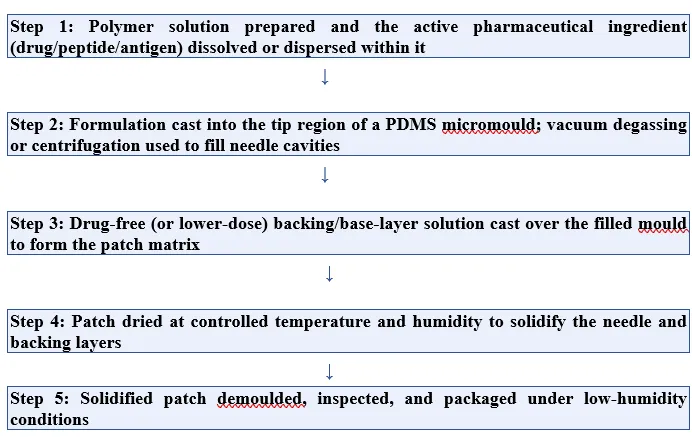
Figure 2. Generalized micro molding process for fabricating a drug-loaded dissolving microneedle patch
DRUG LOADING AND RELEASE MECHANISM
In dissolving microneedle patches, drug loading is typically achieved by one of two configurational strategies. In a homogeneous (single-layer) design, the active ingredient is uniformly distributed throughout the entire needle and, often, the backing layer; this is simple to fabricate but results in a portion of the dose remaining in the backing layer, which is not inserted into the skin and is therefore wasted. In a bilayer or tip-loading design, the drug is concentrated exclusively within the needle tips, which are the only structures that penetrate the skin, while the base and backing layers, cast subsequently and left drug-free, provide mechanical support; this configuration markedly improves delivery efficiency and is now widely favoured for costly biologics and vaccine antigens.6
The release of the incorporated drug once the microneedle is inserted in the skin is governed by the physicochemical behavior of the matrix polymer, and can be broadly classified into four overlapping mechanisms.
TABLE 1- Matrix materials involved in various drug release and drug loading mechanism in dissolving microneedle patches.
|
Release mechanism |
Governing process |
Representative matrix materials |
|
Diffusion-controlled |
Drug diffuses out of a swollen or partially dissolved polymer network down its concentration gradient |
PVP, PVA (low-crosslink), hyaluronic acid |
|
Dissolution-controlled |
Rapid, near-complete dissolution of the polymer matrix releases the entire drug payload almost instantaneously (typically within minutes) |
Fast-dissolving PVP, HA, sugar-based matrices |
|
Swelling-controlled |
Matrix absorbs interstitial fluid and expands without fully dissolving, gradually opening pores through which drug diffuses over hours to days |
Cross-linked PVA, PMVE/MA hydrogel-forming polymers |
|
Degradation-controlled |
Polymer backbone undergoes hydrolytic or enzymatic cleavage, releasing drug as the matrix erodes over days to weeks |
PLGA, PLA, silk fibroin |
In practice, release kinetics are further modulated by the drug's own physicochemical properties (molecular weight, solubility, charge), the polymer's molecular weight and degree of cross-linking, the drug-to-polymer ratio, and the needle geometry (aspect ratio and tip sharpness), which determines insertion depth and, consequently, contact with interstitial fluid. Rapidly dissolving formulations, delivering their full payload within one to five minutes of application, are generally preferred for vaccine antigens and acute-need peptides such as rescue insulin, since the patch can then be removed and discarded quickly, whereas swelling- or degradation-controlled systems are of greater interest where sustained, once-weekly or once-monthly peptide delivery is desired, reducing dosing frequency and improving adherence in chronic conditions such as diabetes.7
OVERVIEW OF MICRONEEDLE TECHNOLOGY
Dissolving microneedles are one of five broad architectural categories that have been developed within the wider field of microneedle-mediated transdermal delivery, each offering a distinct balance of drug-loading capacity, release kinetics, mechanical robustness and disposal profile.
TABLE- 2- Mechanism and key limitations of Various Microneedles.
|
Microneedle type |
Structure and mechanism |
Key limitation |
|
Solid |
Non-drug-loaded needles pre-treat skin to create microchannels, followed by conventional topical/patch application ('poke-and-patch') |
Requires a two-step application process; risk of channel closure before drug application |
|
Hollow |
Needles contain an internal bore through which liquid formulation is actively infused, similar in principle to a hypodermic needle |
Risk of needle blockage; more complex, costlier device engineering |
|
Coated |
Drug is coated as a dry film on the surface of solid needles and dissolves off after insertion |
Limited drug-loading capacity; coating uniformity challenges |
|
Dissolving |
Entire needle is fabricated from a drug-loaded, water-soluble/biodegradable polymer that dissolves after insertion |
Mechanical strength can be lower than metal/silicon needles; drug stability during fabrication/drying |
|
Hydrogel-forming (swellable) |
Cross-linked polymer needles swell by absorbing interstitial fluid, forming a continuous conduit for drug diffusion from an attached reservoir, without fully dissolving |
Slower onset of release; needle residue must be removed after use |
Among these, dissolving and hydrogel-forming microneedles are generally regarded as the most clinically promising for macromolecular and vaccine delivery, since they eliminate biohazardous sharps waste entirely, a property neither solid, hollow nor (fully) coated designs share. The technology has evolved substantially since the microneedle concept was first proposed in the 1970s, with recent innovation focused on stimulus-responsive ('smart') microneedles that release their payload in response to glucose concentration, pH, or an external trigger such as near-infrared light, biphasic or multilayer designs that combine a fast-releasing bolus dose with a sustained-release depot, and hybrid systems that integrate microneedles with iontophoresis, ultrasound or acoustic-wave enhancement to further improve delivery efficiency.5
EVALUATION PARAMETERS
Before a dissolving microneedle formulation can progress to preclinical or clinical evaluation, it must be characterized against a standard panel of physicochemical, mechanical and biopharmaceutical parameters.
● Morphological characterization: Needle geometry (height, base width, tip radius, inter-needle spacing) and array uniformity are examined by optical or scanning electron microscopy (SEM), since sharp tips (typically under 10 micrometers radius) and sufficient aspect ratio are prerequisites for reliable skin penetration.
● Mechanical strength (axial fracture force): Needles are compressed against a flat surface using a texture analyzer to determine the failure force per needle; this must exceed the skin's insertion resistance (typically reported in the range of 0.1 N per needle for the skin to yield) while remaining below the polymer's fracture threshold, so that needles bend or insert rather than snap.
● Skin insertion/penetration testing: Patches are applied to excised animal or human skin, synthetic skin-simulant membranes (for example, Parafilm-M stacked layers), or in vivo, and insertion depth and channel formation are assessed by histology, optical coherence tomography, or methylene blue/trypan blue staining.
● Dissolution and disintegration time: The time required for needle tips to fully dissolve or lose mechanical integrity after skin insertion is recorded, typically ranging from under one minute for fast-dissolving PVP/HA systems to several hours or days for degradation-controlled PLGA-based systems.
● Drug content and loading efficiency: The proportion of the intended drug dose successfully incorporated into the needle tips (as opposed to lost to the backing layer or during fabrication) is quantified by extraction followed by high-performance liquid chromatography (HPLC), UV-spectrophotometry, or enzyme-linked immunosorbent assay (ELISA) for protein/antigen payloads.
● In vitro drug release and permeation studies: Franz diffusion cells fitted with excised skin or synthetic membranes are used to characterize cumulative drug release and permeation flux over time, generating release profiles that inform in vivo dosing predictions.
● Moisture content and stability: Residual moisture, glass transition temperature, and storage stability (including accelerated and long-term stability studies) are assessed, since excess residual moisture can compromise needle mechanical strength and promote premature drug/antigen degradation.
● Biocompatibility and skin irritation: Cytotoxicity assays, skin irritation scoring (erythema/oedema) and, for vaccine antigens, preservation of immunogenicity/potency after the fabrication process, are assessed to confirm safety and functional integrity of the delivered payload.
Collectively, these parameters allow rational optimization of polymer selection, drug-loading strategy and needle geometry, and constitute the core dataset required to support regulatory submissions for microneedle-based products.1-5
APPLICATIONS IN PEPTIDES AND VACCINES DELIVERY
Peptide and Protein Delivery
Peptide and protein therapeutics represent one of the fastest-growing classes of pharmaceuticals, yet the great majority remain restricted to injectable formulations because of their large molecular size, hydrophilicity, and susceptibility to gastrointestinal and hepatic degradation following oral administration. Dissolving microneedles offer a needle-free alternative that bypasses these barriers. Insulin has been the most extensively studied model peptide in this context: microneedle-based insulin delivery systems, spanning dissolving, hydrogel-forming and glucose-responsive designs, have been reviewed by Zhao and colleagues, who note that dissolving microneedles allow strict control of insulin dosage while avoiding the pain and needle-phobia associated with multiple daily subcutaneous injections in diabetes management.7 Related work by Aich, Singh and Dang has reviewed the broader landscape of microneedle-based delivery of peptide drugs, highlighting successful preclinical delivery of molecules including insulin and other biotherapeutics via dissolving polymer needles.6 Hong and colleagues further catalogue glucose-responsive microneedle patches, in which the polymer matrix itself (for example, phenylboronic acid-functionalized hydrogels) senses ambient glucose concentration and modulates insulin release accordingly, offering a route towards closed-loop, 'smart' insulin delivery that could substantially reduce the self-management burden of type 1 and advanced type 2 diabetes.8 Beyond insulin, dissolving microneedle platforms have been investigated for parathyroid hormone, growth hormone, GLP-1 receptor agonists, and various therapeutic antibody fragments, with formulation efforts frequently centered on stabilizing excipients such as trehalose to preserve peptide secondary structure through the drying steps of fabrication.9
Vaccine Delivery
Vaccination is widely regarded as the application in which dissolving microneedle patches offer the most compelling combination of clinical and public-health advantages. The skin's dense resident population of Langerhans cells and dermal dendritic cells makes intradermal antigen deposition intrinsically immunogenic, in some studies permitting equivalent or superior immune responses at fractional antigen doses compared with intramuscular injection, a property of considerable value for pandemic preparedness and dose-sparing strategies.3 Because dissolving microneedle patches require no reconstitution, no cold syringe handling, and can, in principle, be self-administered or administered by minimally trained personnel, they are considered particularly well suited to mass immunization campaigns in low-resource and hard-to-reach settings, and microneedle patches have been identified by global health bodies as a high-priority innovation for closing gaps in childhood immunization coverage.2
The clinical evidence base has advanced substantially in the past five years. Vijayanand and colleagues reported that an adjuvanted, inactivated SARS-CoV-2 microparticulate vaccine delivered via a dissolving microneedle patch induced a robust humoral immune response in a mouse model, supporting the feasibility of microneedle-based COVID-19 vaccination.10 Most notably, Adigweme and colleagues reported the results of a phase 1/2, double-blind, randomised, active-controlled trial of a measles and rubella vaccine microneedle patch (MRV-MNP) conducted in The Gambia, in which 93% of infants seroconverted to measles and 100% seroconverted to rubella following patch administration, with seroconversion rates comparable to conventional subcutaneous injection and no serious safety concerns identified, a landmark result described in an accompanying Lancet commentary as new hope for reaching children currently missed by conventional immunisation programmes.1,2 Earlier foundational work by Leone and colleagues characterised the formulation and immunogenicity requirements for dissolving microneedle-based dermal vaccination more generally, establishing design principles, including antigen stability during fabrication and drying, that continue to inform current vaccine-patch development.11 Dissolving microneedle platforms have additionally been explored for influenza, hepatitis B, human papillomavirus, tuberculosis-booster and cancer immunotherapy applications, including delivery of checkpoint inhibitors and cancer vaccine antigens, reflecting the platform's broad applicability across both infectious-disease prevention and immuno-oncology.4
ADVANTAGES AND LIMITATIONS
TABLE 3- Advantages and Limitations of Dissolving microneedle patches
|
Advantages |
Limitations |
|
Painless, minimally invasive administration; avoids needle-phobia and improves patient adherence |
Mechanical strength can be inferior to metal/silicon microneedles, risking incomplete skin penetration if formulation is not optimised |
|
No generation of biohazardous sharps waste; needle tips dissolve completely after use |
Drug/antigen loading is limited by the small volume of the needle tips, restricting delivery of high-dose actives |
|
Single-step application combining penetration and drug delivery in one device |
Fabrication and drying processes may affect the stability/bioactivity of sensitive peptides and antigens |
|
Potential for self-administration, reducing reliance on trained healthcare personnel |
Batch-to-batch reproducibility and scale-up manufacturing remain technically challenging |
|
Improved thermostability relative to liquid injectable formulations in some designs, easing cold-chain requirements |
Long-term (multi-year) storage stability data remain limited for many candidate products |
|
Dense cutaneous immune cell population enhances immunogenicity, enabling potential antigen dose-sparing for vaccines |
Regulatory pathways and standardised quality-control frameworks are still being formalised internationally |
|
Suitable for peptides/proteins/antigens otherwise restricted to injection |
Manufacturing costs and sterility/aseptic processing requirements remain comparatively high versus conventional patches |
A recurring theme across the literature is that the very design features that make dissolving microneedles attractive, namely their small size, biodegradable composition, and payload embedded within a fragile polymer matrix, are also the source of their principal translational challenges: constrained drug-loading capacity, sensitivity of biologics to processing conditions, and the difficulty of achieving reproducible, sterile, large-scale manufacture at a cost competitive with existing delivery systems.5
REGULATORY STATUS AND COMMERCIAL PRODUCTS
The regulatory landscape for microneedle-based products remains in active development. Regulatory authorities, including the U.S. Food and Drug Administration (FDA) and the European Medicines Agency (EMA), have historically applied differing terminology to microneedle-based dosage forms; for example, the FDA has tended to describe such products using the term 'topical system', while the EMA has used 'patch', creating regional inconsistencies that complicate harmonised global development and labelling. A cross-agency white paper has called for standardised nomenclature and regulatory science frameworks specific to microneedle-based dosage forms to address this gap. To date, cosmetic microneedle products, marketed for indications such as fine-line and wrinkle reduction, have achieved the greatest commercial traction and regulatory clarity, with several dissolving hyaluronic-acid-based patches, including products manufactured using droplet-extension (DEN) technology, already available in Asian and other consumer markets and supported by published clinical safety and efficacy data. In the United States, microneedling devices intended for aesthetic use are regulated by the FDA as Class II medical devices, subject to 510(k) premarket notification and device-specific special controls.
By contrast, no drug- or vaccine-loaded microneedle array patch, defined as a combination product incorporating an active pharmaceutical ingredient within the needle structure, has yet received full marketing authorisation from either the FDA or the EMA, reflecting the technical, manufacturing and clinical-evidence hurdles that remain to be cleared. Nonetheless, clinical development has accelerated markedly: a search of the ClinicalTrials.gov registry identifies dozens of completed or ongoing microneedle trials, a growing subset of which specifically evaluate dissolving microneedle formulations, spanning vaccines (including the phase 1/2 measles-rubella patch trial in The Gambia), insulin, and nucleic-acid therapeutics.1 Leading organisations advancing dissolving and hydrogel-forming microneedle patches toward clinical and commercial translation include Micron Biomedical (a spin-out closely associated with the Gambia measles-rubella trial), Vaxxas (developer of the high-density microarray patch platform), and academic-industry collaborations building on foundational work from groups such as that of Mark Prausnitz at the Georgia Institute of Technology, a co-author of the 2024 Lancet trial. Economic modelling of vaccine microneedle patches suggests that, once manufacturing is scaled, per-dose costs could fall below thresholds that render the technology cost-effective relative to conventional needle-and-syringe immunization, particularly through reduced cold-chain, wastage and healthcare-worker labour costs, though capital investment required to establish sterile, GMP-compliant manufacturing facilities remains substantial, estimated in the low tens of millions of dollars for commercial-scale production.
FUTURE PROSPECTIVES
● Scalable, GMP-compliant manufacturing: Continued development of automated, high-throughput micro molding, roll-to-roll casting and mould-free (electro-drawing, 3D-printing) fabrication methods to bring per-unit manufacturing costs down to levels competitive with conventional vaccine vials and syringes.
● Harmonized regulatory frameworks: Convergence of FDA, EMA and other regional regulators on standardized terminology, quality-control specifications and clinical-evidence expectations specific to microneedle array patches, to streamline global product development and approval.
● Stimulus-responsive and closed-loop systems: Further refinement of glucose-responsive insulin-releasing microneedles and other 'smart' formulations that couple biosensing with autonomous, on-demand drug release, reducing patient self-management burden in chronic disease.
● Thermostable, cold-chain-independent vaccine patches: Expansion of formulation science to further improve long-term ambient-temperature stability of antigen-loaded patches, extending the reach of immunization programmed into regions lacking reliable refrigeration infrastructure.
● Combination and multiplexed patches: Development of microneedle arrays capable of co-delivering multiple antigens or therapeutic agents (for example, combined measles-rubella-additional-antigen patches, or dual-hormone patches for diabetes management) within a single application.
● Integration with digital health: Coupling of microneedle patches with wearable biosensing components to enable simultaneous diagnostic sampling (interstitial fluid biomarkers) and therapeutic delivery, supporting real-time, personalized dosing regimens.
● Expanded application in immuno-oncology and gene/nucleic-acid therapy: Continued exploration of dissolving microneedles for cancer vaccines, checkpoint-inhibitor delivery, and nucleic-acid (mRNA, siRNA, DNA) therapeutics, building on early evidence of favorable efficacy relative to conventional administration routes for several nucleic-acid classes.
CONCLUSION
Polymeric dissolving microneedle patches address a long-standing unmet need in pharmaceutical delivery: a painless, self-disabling, needle-free route capable of transporting large, hydrophilic peptide and vaccine antigen molecules across the formidable barrier of the stratum corneum. By embedding the therapeutic payload directly within a biodegradable polymer matrix, engineered from materials such as hyaluronic acid, polyvinylpyrrolidone, polyvinyl alcohol and poly(lactic-co-glycolic acid), and fabricated predominantly by micro molding or emerging mould-free techniques, this platform combines efficient skin penetration with tuneable, mechanism-specific drug release. The accumulating preclinical and clinical evidence base, culminating in the successful phase 1/2 trial of a measles-rubella vaccine microneedle patch, demonstrates that the technology can achieve immunogenicity and safety profiles comparable to conventional injection while offering substantial practical advantages for self-administration, cold-chain independence and biohazard-free disposal. Nonetheless, translation from laboratory prototype to routinely available medicine remains constrained by challenges in scalable sterile manufacturing, payload capacity, long-term stability, and the absence of a fully harmonized regulatory pathway. Continued interdisciplinary investment across materials science, pharmaceutical formulation, manufacturing engineering and regulatory science will be required to move dissolving polymeric microneedle patches from a promising experimental platform to a mainstream tool for peptide and vaccine delivery worldwide.
REFERENCES






N. Pallavi, Rohan. B, S.G. Shreyashree, Pradeep. M, Reshma. J, Jeevitha. S, Polymeric Dissolving Microneedle Patches: A Promising Transdermal Drug Delivery Platform for Peptides and Vaccines, Int. J. of Pharm. Sci., 2026, Vol 4, Issue 8, 5096-5109, https://doi.org/10.5281/zenodo.22202150
 10.5281/zenodo.22202150