

We use cookies to ensure our website works properly and to personalise your experience. Cookies policy
* 1,2,3 B. Pharm, Dr. R.G. Bhoyar Institute of Pharmaceutical Education and Research, Wardha, Maharashtra
4,5 Assistant Professor, Dr. R.G. Bhoyar Institute of Pharmaceutical Education and Research, Wardha, Maharashtra
6 Principal, Dr. R.G. Bhoyar Institute of Pharmaceutical Education and Research, Wardha, Maharashtra
The present study focuses on the preparation and evaluation of a herbal facewash tablet using Rosa gallica and Multani Mitti as the major natural ingredients. The aim of the study was to develop an eco-friendly, travel-friendly, and skin-compatible alternative to conventional liquid facewashes. The tablets were prepared by the direct compression method using ingredients such as rose petal powder, sandalwood powder, Multani Mitti, methyl cellulose, sodium lauryl sulphate, lactose, citric acid, and magnesium stearate. The formulated tablets were evaluated for various physicochemical and quality control parameters including organoleptic properties, hardness, thickness, friability, pH, foamability, spreadability, weight variation, washability, and skin irritancy. The results showed that the tablets possessed acceptable hardness, good foaming ability, satisfactory cleansing action, and a skin-friendly pH of 6. The formulation exhibited good spreadability and washability without causing irritation or redness on the skin. The presence of Multani Mitti provided effective oil absorption and deep cleansing, while Rosa gallica and sandalwood offered soothing, refreshing, and antioxidant effects. Thus, the developed herbal facewash tablet proved to be a safe, effective, economical, and environmentally sustainable alternative to conventional facewash products.
In recent years, there has been a growing demand for herbal cosmetic products due to increased awareness regarding the harmful effects associated with synthetic chemicals. Herbal cosmetics are formulated using natural ingredients obtained from plants, minerals, and other naturally occurring substances, making them safer, eco-friendly, and suitable for long-term use. These products not only enhance physical appearance but also provide therapeutic benefits while maintaining the natural balance of the skin.
Skin is the largest organ of the human body and serves as a protective barrier against environmental pollutants, microorganisms, and harmful ultraviolet radiation. Exposure to dust, pollution, excess oil, and microorganisms often leads to skin problems such as acne, pimples, irritation, and dullness. Therefore, regular cleansing of the skin is essential to maintain healthy and attractive skin. Conventional facewash products generally contain synthetic surfactants, preservatives, and chemicals that may cause dryness, irritation, and allergic reactions in sensitive individuals.
Herbal facewash tablets have emerged as an innovative alternative to conventional liquid facewashes. These tablets are compact, water-free formulations prepared by compressing herbal ingredients along with suitable excipients into a solid dosage form. They offer several advantages, including easy portability, reduced packaging waste, improved stability, lower preservative requirements, and convenience during travel. Upon contact with water, the tablets disintegrate rapidly to produce a cleansing lather that effectively removes dirt, oil, and impurities from the skin. Multani Mitti (Fuller’s Earth) is a natural clay widely used in cosmetic preparations because of its excellent oil-absorbing, cleansing, cooling, and skin-purifying properties. It helps remove excess sebum, dirt, and dead skin cells, making it especially beneficial for oily and acne-prone skin. Rosa gallica, commonly known as rose, possesses antioxidant, soothing, anti-inflammatory, and skin-refreshing properties that help improve skin texture and provide a natural glow.
The combination of Multani and Rosa gallica in a tablet dosage form provides a synergistic effect, offering deep cleansing along with skin nourishment and rejuvention. The successful formulation of such tablets requires careful selection of excipients to ensure adequate hardness, stability, rapid disintegration and overall user acceptability.
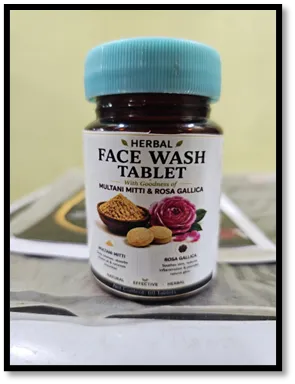
Fig. No. 01: Face wash tablet
Benefits of herbal facewash tablet
Objective:
How to Use Facewash Tablet
To use these tablets, you typically follow a simple three-step process:
Crush: Place 1–2 tablets in your palm and add a few drops of water.
Paste: Squish or rub them together to create a smooth, herbal paste or gentle lather.
Cleanse: Apply the paste to your wet face and neck, massage for about a minute, and rinse thoroughly.
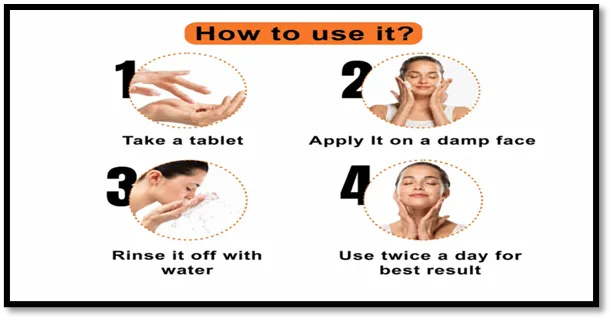
Fig. No. 02: How to Use Facewash Table
Plant Profile
1. Rose Petal Powder
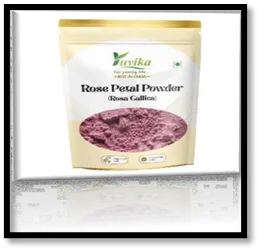
Fig. N0. 03: Rose Petal Powder
2. Sandalwood Powder
Common Name: Rose Petal Powder
Biological Source: Dried, Finely Ground Petals of Various Rose species
Family: Rosaceae
Geographical Source: Within India, It is Commercially Cultivated in Rajasthan, Maharashtra, Kerala and Tamil Nadu
Kingdom: Plantae
Species: Rose Centifolia
Chemical Constituents: Citric Acid, Malic Acid, Gallic Acid, Quercetin, Kaempferol and Citronellol
Uses: Skin care
Face packs: Helps brighten skin, reduce tan, and give a natural glow.
Acne control: Has mild antibacterial propertiesthat can reduce pimples.
Oil balance: Good for both dry and oily skin.
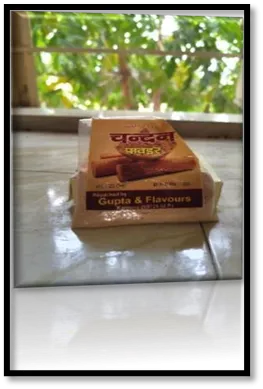
Fig. No. 04. Sandalwood Powder
Common Name: Sandalwood Powder
Biological Source: Derived From the Heartwood of the Santalum Album Linn
Family: Santalaceae
Geographical Source: Southern India, Especially Karnataka, Tamil Nadu, and
Kerala Kingdom: Plantae
Species: Santalum Paniculatum
Chemical Constituents: Sesquiterpene Alcohol, Hydrocarbons, Aldehydes, Ketones.
Uses: Skin care
Tan removal: Helps lighten sun tan and even out skin tone
Cooling effect: Relieves sunburn, prickly heat.
Oil control: Absorbs excess oil without over-drying
Anti-aging: Helps reduce fine lines and improves skin texture.
3. Multani Mitti
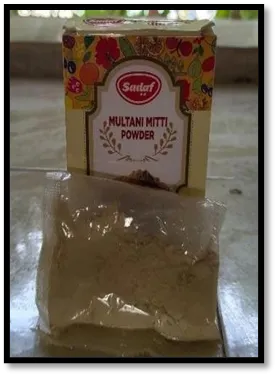
Fig. No. 05: Multani Mitti
Common Name: Fullers Earth
Biological Source: It is naturally occurring mineral rich sedimentary clay
Family: Adsorbent clays
Geographical Source: India, Pakistan
Kingdom: N/A
Species: N/A
Chemical Constituents: Hydrated aluminum silicates and various mineral oxides
Uses: Skin Care
Oil Control: making it highly effective for oily and acne-prone skin.
Acne & Blemish Reduction: its mild astringent nature helps fight bacteria and dry out active pimples
Tan Removal & Brightening: naturally fade tans and dark spots over time.
Soothing Sunburns: It provides instant relief from sun-induced redness and skin irritation.
MATERIAL AND METHODS
Materials
1. Apparatus: Beaker, Measuring Cylinder, Stirrer, Petri Plate, Mortar And Pestle
2. Instrumentals: Weighing balance, pH meter, Roche friabilator, pfizer hardness tester, vernier calliper.
3. Plant Source: Rose, Sandalwood Multani Mitti
4. Ingredients: Methyl Cellulose, Citric Acid, Sodium Lauryl Sulphate, Tween (poly sorbate), Lactose, Magnesium Stearate, Rose Petal Powder, Multani Mitti, Sandalwood Powder.
Formula:
Table No. 01: Formula of Facewash Tablet
|
Sr. No. |
Ingredients |
Quantity |
Role |
|
1. |
Multani Mitti |
12.75 g |
Exfolliating Agent |
|
2. |
Rose Petal Powder |
1.72 g |
Cleanser |
|
3. |
Sandalwood Powder |
3 g |
Fragrance |
|
4. |
Methyl Cellulose |
1.8 g |
Thickening Agent |
|
5. |
Citric Acid |
1.05 g |
Preservative |
|
6. |
Sodium Lauryl Sulphate |
3.6 g |
Foaming Agent |
|
7. |
Tween (poly sorbate), |
1.8 ml |
Surfactant |
|
8. |
Lactose |
3.05 g |
Filler |
|
9. |
Magnesium Stearate |
3 g |
Lubricant |
Methods And Preparation
A. Collection of herbs and chemicals
Herbs: Multani mitti, rose petal powder and sandalwood powder
Chemicals: Methyl Cellulose, Citric Acid, Sodium Lauryl Sulphate, Tween (Poly Sorbate), Lactose, and Magnesium Stearate
B. Preparation of herbal facewash tablet
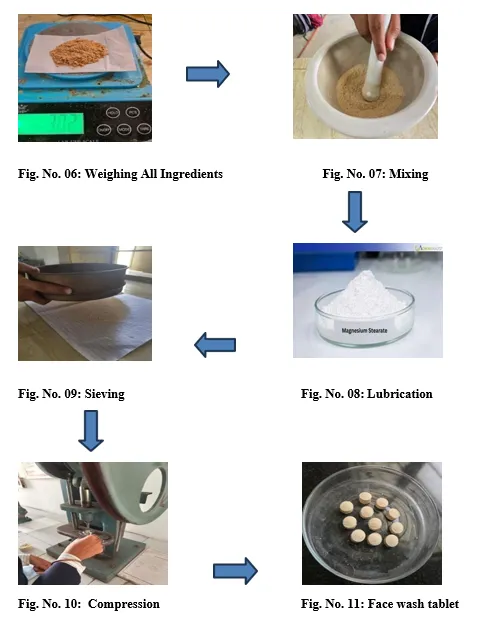
1. Weighing
All ingredients were accurately weighed.
2. Mixing
Multani mitti, rose powder, and sandalwood powder were mixed thoroughly.
Methyl cellulose, citric acid, sodium lauryl sulphate, and lactose were added to the mixture. Tween (polysorbate) was added dropwise and mixed uniformly to obtain a homogenous blend.
3. Lubrication
Magnesium stearate was added at the final stage. The blend was mixed gently to avoid over-lubrication.
4. Sieving
All ingredients were passed through #60 sieve to remove lumps and ensure uniform particle size
5. Compression
The powder blend was directly compressed into tablets using a tablet punching machine.
EVALUATION PARAMETER
To evaluate the prepared formulation evaluation tests like visual appearances, physicochemical properties, pH, hardness and various other tests were done.
1. Organoleptic properties
Colour: The colour of herbal facewash tablet was analyzed visually and found light brown colour
Odour: Checked to ensure the scent is pleasant and free from chemical
Apperance: The colour of herbal facewash tablet was checked and visually and found uniform consistency.
Texture: The texture of herbal facewash tablet was smooth and non-gritty
2. Consistency
Commercial and lab-formulated Multani Mitti tablets achieve their solid yet soluble consistency. They maintained a rigid solid state while remaining readily soluble upon application. The tablet remains stable during storage but undergoes rapid disintegration when introduced to an aqueous medium for use.
3. Cleaning Ability
Solid tablet face washes formulated with Multani Mitti are highly effective at providing deep cleansing, particularly for oily and acne-prone skin. It is remove sebum dirt and impurities from the skin, this confirm that product actually perform its intended job of deep cleaning.
4. Weight variation
According to IP (Indian Pharmacopoeia), 20 tablets were taken for the weight variation test. Each tablet is weighed individually using an electronic balance. The average weight is then calculated, and the deviation is recorded by comparing each individual weight with the average value.
Small variations in weight are negligible and can be accepted. However, the weight variation limit should not exceed ± 7.5%

The ability of a tablet to withstand for mechanical shock is known as hardness. Pfizer hardness tester is the instrument which is used to determined the hardness of tablet. Three to five tablets are randomly selected, their hardness is tested and the result are recorded. Tablets should have an average hardness 3 to 8.
6. Thickness test
A Vernier calliper is used to measure the thickness of tablets. To measure tablet thickness, place the tablet vertically between the jaw of calibrated vernier caliper, close the jaws gently until they touch the tablet surface without compressing or crushing it and then record the measurement of the tablet should be in limit of +5.
7. Friability test
Roche friabilator is the equipment which is used for the determination of friability (W initial). Note down the initial weight of the tablets individually. Tablets are placed in a plastic chamber which revolves at 25 rpm and they are subjected to fall from a height of 6 inches in the friabilator for about 100 revolutions.Then measure the weight ofthe tablet (Wfinal) and observe anyweight difference before tablet after the friabilator processing.
Limit: loss in weight less than 0.5 to 1% of the initial weight of the tablet should be considered as acceptable limits.
Formula: (initial weight-final weight)/ initial weight x 100
8. pH test
The pH of the tablet was calculated by using a digital pH meter by dissolving the tablet in distilled water and measuring the pH on the pH meter. The pH of 5% aqueous solution of the formulation was measured by using a calibrated digital pH meter at room temp. It can be done by making 15 aqueous solution of formulation and measure by using calibrated digital pH meter at constant temp.
9. Spreadability test
The spreadability of the tablet was tested in laboratory by rubbing the tablet on hand with water. The tablet placed in hand with few drops of water in palm to activate it, rub the formulation in circular motion and observe how smoothly it spread. The spreadability was found to be good.
10. Foamability test
Foamability test of the tablet was done by rubbing the tablet on both hands using water and observing the amount of foam formed.
Take 25ml water in a 50ml of cylinder and drop the tablet in the cylinder and cover the cylinder with hand and shake it vigorously for new min. measure the volume of the foam produced.
11. Irritancy test
Crush the facewash tablet and dissolve it in a predetermined, standardized volume of distilled water, mix until a uniformed paste solution is formed. Ensure the dorsal surface of your left hand is clean and dry. Make a specific 1 cm2 area on skin. Apply uniform layer of facewash tablet formulation to these marked area. Leave for 1-2 hrs. Observe it periodically 15 min intervals. Watch any symptoms like redness and irritation. After application no irritation or redness will found.
12. Washability test
Washability of facewash tablet can be determined by applying the formulation on the skin and wash with water and check manually. The facewash tablet can be easily and completely removed from skin without leaving a sticky or oily residue.
RESULT
Facewash tablet which is prepared by using multani mitti was formulated and evaluated successfully.
Table No. 02: Result
|
Sr. No. |
Parameter |
Observation |
Inference |
|
1. |
Organoleptic Properties Odor Color Appearance Texture |
Pleasant Light Brown Good Smooth and Non Gritty |
Pleasant Light Brown Good Smooth and Non Gritty
|
|
2. |
Consistency |
Solid |
Solid |
|
3. |
Cleansing Ability |
Good |
Good |
|
4. |
Weight Variation |
5 % |
Not more than+ 7.5 % |
|
5. |
Hardness Test |
5 |
Not more than 8 |
|
6. |
Thickness Test |
4 |
4 |
|
7. |
Friability Test |
0.56 |
Not more than 1 |
|
8. |
pH test |
6 |
Between 5 to 7 |
|
9. |
Spreadability test |
Fine |
Better |
|
10. |
Foamability test |
Good |
Good |
|
11. |
Irritancy Test |
No Irritation |
No irritation |
|
12. |
Washability test |
Good |
Good |
DISCUSSION
The present study was carried out to formulate and evaluate a herbal facewash tablet using Multani mitti along with natural ingredients such as rose petal powder and sandalwood powder. The formulation was successfully prepared by the direct compression method, which proved to be simple, economical, and suitable for herbal products.
All the evaluation parameters were performed to assess the quality and performance of the prepared tablets. The organoleptic properties such as color, odor, appearance were found to be acceptable. The pleasant fragrance of rose and sandalwood enhanced the overall appeal of the formulation, making it suitable for cosmetic use.
The weight variation test indicated uniformity among tablets, which shows proper mixing and accurate dosing of ingredients. The hardness of the tablets was within acceptable limits, suggesting that the tablets were strong enough to withstand handling, packaging, and transportation. At the same time, they were able to break down easily upon contact with water, which is an important requirement for a facewash tablet.
The friability values were within the standard range, indicating good mechanical strength and resistance to abrasion. The thickness of the tablets was found to be consistent, reflecting uniform compression during the manufacturing process.
The pH of the formulation was found to be suitable for skin application, which is essential to prevent irritation and maintain the natural balance ofthe skin. The foamability testshowed that the tablets produced adequate foam, which is important for effective cleansing action. Similarly, the spreadability was found to be good, allowing easy application on the skin.
The irritancy test showed no signs of redness or irritation, indicating that the formulation is safe and gentle for regular use. The presence of Multani mitti contributed to effective oil absorption and deep cleansing, while rose petal powder provided soothing and antioxidant effects. Sandalwood added cooling and fragrance properties, improving the overall user experience.
Overall, the evaluation results confirm that the formulated herbal facewash tablet possesses good physicochemical properties, stability, and user acceptability.
CONCLUSION
The present study successfully developed herbal facewash tablet as a new and convenient alternative to liquid facewash. This shows that a facewash can be prepared in tablet form while still being useful and effective for daily use.
The use of natural ingredients like multani mitti, rose, and sandalwood makes the product more skin-friendly and suitable for regular use. It also supports the growing trend of using herbal and chemical-free cosmetic products, which are considered safer for the skin.
Another important outcome of this study is that the tablet form is more eco-friendly. It helps in reducing plastic packaging and decreases the need for preservatives, which is better for both skin and environment.
The developed tablets are easy to carry, simple to use, and suitable for travel. This makes them more convenient compared to traditional liquid facewash, especially for people with busy lifestyles.
Overall, this study shows that herbal facewash tablets can be a good, safe, and practical option for skincare. With further improvement and large-scale production, this product can be introduced in the market as an effective and eco-friendly alternative.
ACKNOWLEDGEMENT
Author are highly thankful to Dr. R.G. Bhoyar Institute of Pharmaceutical Education And Research, Wardha, Maharashtra, for providing necessary facilities and guidance for carried out this research work.
REFERENCES





Rutuja Khond *, Kashif Sheikh, Ashita Ramteke, Shital Bhoyar, Ashvini Patmase, Nitin Indurwade, Preparation and Evaluation of Herbal Facewash Tablet Using Rosa Gallica and Multani Mittti, Int. J. of Pharm. Sci., 2026, Vol 4, Issue 7, 2410-2422. https://doi.org/10.5281/zenodo.21336613
 10.5281/zenodo.21336613