

We use cookies to ensure our website works properly and to personalise your experience. Cookies policy
1Professor in Biochemistry, Institute of Biosciences and Technology, MGM University, Chh. Sambhajinagar-431003.
2B. Tech Biotechnology, Institute of Biosciences and Technology, MGM University, Chh. Sambhajinagar-431003
Gamma-Aminobutyric Acid (GABA) is a non-protein amino acid widely recognized for its beneficial effects on human health, including its roles in reducing anxiety, regulating blood pressure, and promoting neurological health. In this study, an attempt is made to produce GABA using plant-based substrates—specifically carrot (Daucus carota) and radish (Raphanus sativus)—through microbial fermentation involving lactic acid bacteria (LAB). The selection of these vegetables is based on their availability, nutritional value, and natural content of fermentable sugars, which are critical for supporting bacterial growth and metabolic activity. Initially, the Anthrone test is performed to estimate the saccharide content present in the carrot and radish samples. The results confirmed the presence of sufficient levels of carbohydrates, ensuring that the plant extracts could serve as effective substrates for LAB fermentation. Fermentation is carried out under controlled conditions, facilitating the activity of LAB strains known for their ability to decarboxylateglutamate into GABA. Following fermentation, the Biuret test is performed to estimate the concentration of GABA, 0.012g/dl and 0.021g/dl of protein found in carrot and radish respectively. The findings confirm a significant production of GABA in the fermented samples compared to non-fermented controls, highlighting the effectiveness of using simple plant materials and traditional fermentation techniques for functional compound production. This study suggests a sustainable, low-cost approach for GABA production that could be further optimized for larger-scale production.
GABA (γ-aminobutyric acid) the non-protein amino acid is extensively found in both prokaryotes and eukaryotes. Numerous plants, animals, and microbes contain the non-protein amino acid gamma-aminobutyric acid (GABA) (Ramos-Ruiz et al., 2018). Its role is host-dependent: it serves as the main inhibitory neurotransmitter in the animal central nervous system (CNS) (Ngo & Vo, 2019), while it also helps plants fight off stress (Kinnersley & Turano, 2000). GABA production through fermentation has been chosen over extraction from natural sources, enzymatic synthesis, or chemical synthesis because of a number of benefits, such as the use of a sustainable fermentation medium as the starting material and green production under mild conditions with less of an impact on the environment (Luo et al., 2021). As a result, GABA is now regarded as a significant post biotic due to growing study in the area.
GABA has a high concentration in animal brain cells—roughly 1000 times higher than any other neurotransmitter in the same area. The primary neurotransmitter for quick inhibitory synaptic transmission, GABA is extensively dispersed throughout the central nervous system of mammals. About 20% to 50% of all synapses in the central nervous system use GABA as a neurotransmitter for both slow and quick inhibitory synaptic transmission. GABA functions at inhibitory synapses in the brain by binding to certain transmembrane receptors in the plasma membrane of pre- and postsynaptic neurons. Ion channels therefore open, allowing Cl-ions to enter the cell or K+ ions to exit, which results in a decrease in transmembrane potential and hyperpolarization. GABAA, GABAB, and GABAC are the three types of receptors that are involved in GABAergic neurotransmission. These receptors have been categorized based on structural and pharmacological distinctions. While GABAB is a metabotropic G protein-coupled receptor, GABAA and GABAC are ionotropic receptors. (Zhang et al., 2014)
With numerous beneficial biological qualities, the radish (Raphanus sativus L.; Cruciferae) is grown and consumed as a food all over the world. The possibility of using radish to treat a variety of illnesses is becoming more and more clear. Alkaloids and nitrogen compounds, coumarins, enzymes, gibberellins, glucosinolates (Barillari et al. 2005), organic acids, phenolic compounds, pigments, polysaccharides, proteoglycans, and sulphur compounds are all found in radish. These substances include calmodulin antagonists, growth inhibitors, anti-hypotensive agents, and inhibitors of platelet aggregation. They also have antimicrobial, antioxidative, antitumor, and antiviral properties (Aires et al. 2009; Vig et al. 2009). Certain elements possess immunological characteristics. The radish has a pungent principle and phytoalexins. Some ingredients promote intestinal motility, show serological action, and guard against heart disease. The substances in radish that have anti-inflammatory and antioxidant properties are inextricably connected to its biological activities (Shin et al., 2015).
The most significant crop in the Apiaceae family is the carrot (Daucus carota L.). It is a root vegetable that may be found all over the world. Originally utilized for medicinal purposes, carrots were later employed as food. Additionally, carrots contain a special blend of three flavonoids: luteolin, quercetin, and kaempferol (Horbowicz et al, 2008). Along with a variety of cinnamic acid derivatives, they are also abundant in other phenols, such as chlorogenic, caffeic, and p-hydroxybenzoic acids. Chlogenic acid accounts for 42.2% to 61.8% of the total phenolic compounds found in various carrot tissues among hydroxycinnamic acid and its derivatives (Gonçalves et al., 2009). Carrots contain bioactive polyacetylenes like falcarinol (which is the same as panaxynol) and falcarindiol. Water stress and carrot tissue cultivar affect the amount of falcarinol in fresh carrots. The most bioactive phytochemical among the polyacetylenes found in carrots is falcarinol. It is believed that this substance may activate the body's defenses against cancer. Its hydrophobicity and capacity to create an exceptionally stable carbocation with water loss, making it a highly reactive alkylating agent toward proteins and other biomolecules, may be the mechanism of action underlying falcarinol's beneficial effects. Daucuside and daucuso are sesquiterpenoids that were recently extracted from carrot seeds and have a cytotoxic effect on human stomach cell lines, in addition to other sesquiterpenes whose presence has also been detected in a number of biochemical investigations. (Da Silva Dias et., 2014)
Excessive excitation can lead to irritability, restlessness, insomnia, seizure, and movement disorders. GABA acts as a "brake" in stressful conditions, stimulating GABA receptors. Lower GABA concentrations are linked to neurological disorders like depression, insomnia, anxiety, and epilepsy. Drugs target GABAA receptors to treat anxiety, and GABA rice intake improves mental health and sleep quality. Natural therapies like yoga also enhance GABA levels. GABA inhibits tumor cell migration in liver cancer cells by binding to GABAB receptors, reducing the formation of primary tumors and intrahepatic liver metastasis. Chen et al. studied GABA's role in hepatocellular carcinoma (HCC) metastasis and found that GABAA receptors can reduce tumor formation and metastasis. GABA-enriched fractions of germinated brown rice have shown stimulatory and inhibitory effects on cancer cell proliferation (Zhang et al., 2014). Based on the above studies, the current study aimed to Quantify of the saccharides present in Carrot and Radish as well as to synthesise GABA from the same plant saccharides.
METHODOLOGY:
Preparation of Sample:
Radish and Carrot are grated and kept for drying in a hot air oven for 48-72hrs.The dried sample is then made into a fine powder using mortar pestle and a grinder. The powder of both carrot and radish is stored at room temperature without any contamination.
Anthrone test for Quantification of saccharides: (S. K. Thimmaiah, 1999)
A standard graph is plotted against standard and their optical densities and the test samples are calculated for the presence saccharides.
Preparation of fermentation broth for the production of GABA: (Kim et al., 2009)
10g of carrot and radish powder is added to 100ml distilled water each. Lactic acid bacteria are added to the mixture, then 2% glutamic acid is added to the mixture and it is incubated for 48hrs at 37°C.
Biuret test: (S. K. Thimmaiah, 1999)
A standard graph is drawn by plotting concentration of the standard on the X-axis versus absorbance on the Y-axis. From the graph the amount of protein (GABA) present in the sample tubes is calculated.
RESULTS AND DISCUSSION
An attempt made to synthesize GABA from carrot and radish saccharides and the following results obtained. The saccharides are estimated by Anthrone method shows total sugars as 0.86mg/dl and 0.72mg/dl respectively and the standard curve shows in the Table. 1 and Fig.1 The fermented saccharides are produced GABA which is estimated by Biuret methods shows 0.12g/dl in carrot and 0.021g/dl in radish respectively and the standard curve shows in the Table. 2 and Fig. 2.
Table No:1- Saccharides by Anthrone Test
|
S. No |
Std. Glucose |
D/W |
Anthrone Reagent |
Water bath for 8 mins. |
OD at 600nm |
Concentration in mg |
|
1 |
0.0 |
1 |

4ml |
0.0 |
00 |
|
|
2 |
0.2 |
0.8 |
0.06 |
20 |
||
|
3 |
0.4 |
0.6 |
0.12 |
40 |
||
|
4 |
0.6 |
0.4 |
0.20 |
60 |
||
|
5 |
0.8 |
0.2 |
0.26 |
80 |
||
|
6 |
1.0 |
0.0 |
0.34 |
100 |
||
|
Carrot |
0.5 |
0.5 |
0.11 |
36 |
||
|
Radish |
0.5 |
0.5 |
0.13 |
43 |
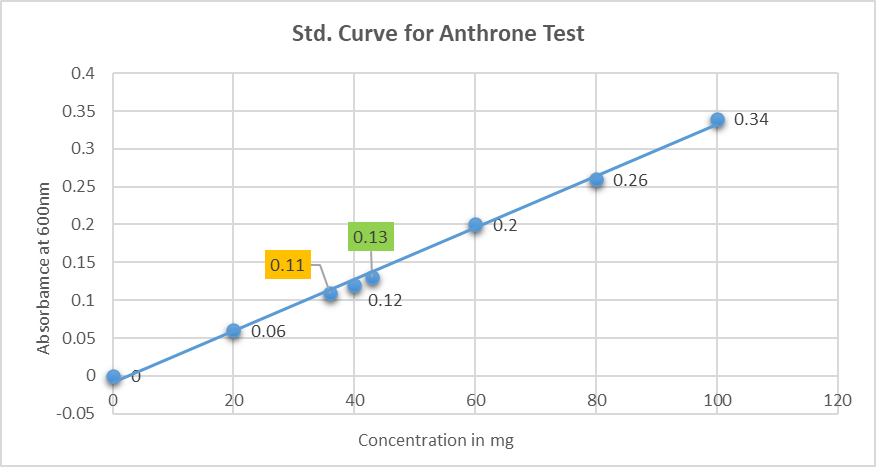
Fig. 1 Standard curve for the estimation of saccharides by Anthrone test
Table No.2: - Estimation of GABA by Biuret Test
|
Sr. No |
Std. BSA |
D/W |
Biuret reagent |
Incubation at 37°C for 30 mins. |
OD at 540nm |
Concentration in mg |
|
1 |
0.0 |
2.5 |

3ml |
0.0 |
00 |
|
|
2 |
0.5 |
2.0 |
0.03 |
2.5 |
||
|
3 |
1.0 |
1.5 |
0.06 |
5 |
||
|
4 |
1.5 |
1.0 |
0.09 |
7.5 |
||
|
5 |
2.0 |
0.5 |
0.12 |
10 |
||
|
6 |
2.5 |
0.0 |
0.15 |
12.5 |
||
|
Carrot |
0.5 |
2.0 |
1.44 |
120 |
||
|
Radish |
0.5 |
2.0 |
0.25 |
21 |
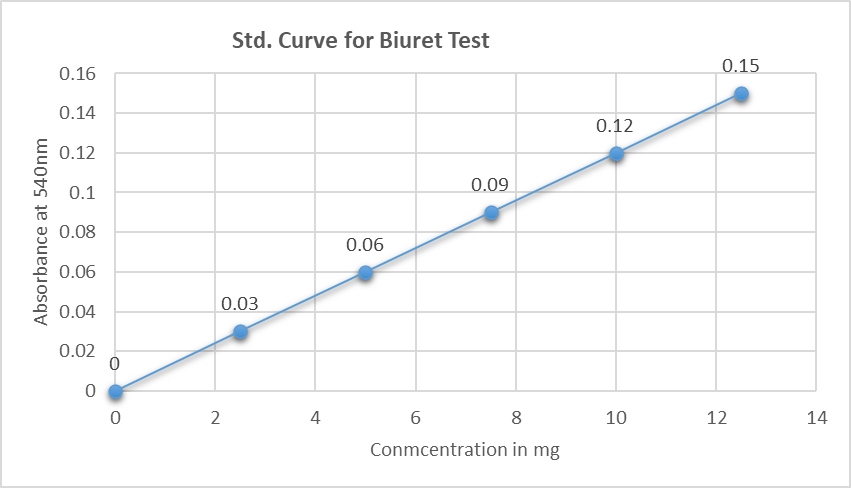
Fig 2: - Standard curve for the estimation of GABA by Biuret Test
In this study, Gamma-Aminobutyric Acid (GABA) was produced from plant (carrot and radish) juice via lactic acid fermentation using LAB. The selection of carrot and radish is strategic due to their natural abundance, high nutritional content, and the presence of fermentable sugars, which are essential for microbial growth. The Anthrone test confirmed the presence of significant levels of saccharides in both plant samples (carrot= 0.086g/dl & Radish= 0.072g/dl), indicating their suitability as carbon sources for LAB metabolism. Carrot, in particular, exhibited a slightly higher carbohydrate content, which may have contributed to enhanced bacterial activity and, consequently, GABA production.
The fermentation process involved the inoculation of plant extracts with LAB strains known for their glutamate decarboxylase activity. The bacteria utilize the sugars in the substrate for energy and convert glutamate to GABA as part of their metabolic process. Devecioglu et al. (2024), produced a functional fermented beverage enriched with GABA by fermenting carrot juice with pectin hydrolysates. In his study, it was observed that the amount of GABA in carrot juice varied between 25 and 46 mg/mL and increased with the increase in hydrolysate concentration. Nakatani et al. (2022) worked on Production of GABA-enriched tomato juice by Lactiplantibacillus plantarum KB1253. Under optimal reaction conditions using resting cells as catalysts, this strain produced 245.8 ± 3.4 mM GABA. Furthermore, this strain produced 41.0 ± 1.1 mM GABA from l-glutamic acid in tomato juice under optimal fermentation conditions. While in our study, Biuret test, although traditionally used for detecting proteins, is employed here as a colorimetric method to estimate GABA levels (Carrot= 0.12g/ml & Radish= 0.021g/ml) based on peptide interactions. The results indicate successful GABA synthesis, with more intense coloration observed in fermented samples compared to controls.
CONCLUSION
The present study successfully confirmed the production of Gamma-Aminobutyric Acid (GABA) from carrot (Daucus carota) and radish (Raphanus sativus) through lactic acid bacteria (LAB)-mediated fermentation. Initial saccharide analysis using the Anthrone test revealed higher fermentable sugar content in carrot (0.86mg/dl) compared to radish (0.72?mg/dl), providing a favourable substrate base for microbial activity. Post-fermentation analysis using the Biuret test indicated significantly higher GABA production in carrot (0.12 g/dl) than in radish (0.21?g/dl), suggesting that the greater availability of fermentable sugars positively influenced GABA biosynthesis. These findings highlight carrot as a more efficient plant-based substrate for microbial GABA production, emphasizing its potential application GABAergic drugs, such as benzodiazepines, which enhance GABA activity and are widely used for treating anxiety disorders and stress relief.
REFERENCES


Dr. Raja Kumar Parabathina*, Varun Shinde, Sakshi Bagul, Production of ?-aminobutyric acid (GABA) from plant (Carrot and Radish) based Saccharides, Int. J. of Pharm. Sci., 2025, Vol 3, Issue 5, 2317-2323. https://doi.org/10.5281/zenodo.15411871
 10.5281/zenodo.15411871