

We use cookies to ensure our website works properly and to personalise your experience. Cookies policy
College Of Pharmaceutical Sciences, Puri.
Green Analytical Chemistry (GAC) is an emerging scientific discipline that incorporates the principles of green chemistry into analytical practices with the objective of minimizing the environmental burden and potential risks to human health associated with conventional chemical analytical procedures.The 12 principles of green chemistry provide a strategic framework for the integration of Green Analytical Chemistry (GAC) across diverse scientific and industrial applications.Advancements in chromatographic and spectroscopic instrumentation have further contributed to greener analytical practices by enabling rapid analysis, lower energy consumption, and reduced reagent usage. Techniques such as ultra-high-performance liquid chromatography (UHPLC), supercritical fluid chromatography (SFC), and portable spectroscopic systems have improved analytical sensitivity and throughput with minimal ecological impact
Green Analytical Chemistry (GAC) is an emerging scientific discipline that incorporates the principles of green chemistry into analytical practices with the objective of minimizing the environmental burden and potential risks to human health associated with conventional chemical analytical procedures1.Green chemistry principles are being integrated into research and industry, driving sustainable tech and reducing environmental impact. Safety for humans and ecosystems is being prioritized.Traditional analytical methods can be pretty harsh on the planet . The focus is shifting towards greener alternatives that reduce waste, energy consumption, and environmental impact.A new framework is taking shape, focusing on reducing environmental footprint while keeping performance intact.Toxic reagents are being replaced, waste production is being minimized, and energy efficiency is being improved.Sustainable practices are being prioritized, waste prevention is being emphasized, and environmentally friendly solvents and conditions are being chosen. Energy consumption is also being reduced.Green Analytical Chemistry principles are rooted in the wider framework of green chemistry, focusing on the avoidance of harmful substances, reduction of waste formation, and enhancement of energy efficiency throughout analytical procedures [2-4].By minimizing the utilization of hazardous reagents, reducing energy requirements, and mitigating the production of toxic waste, Green Analytical Chemistry (GAC) aims to promote analytical methodologies that are environmentally sustainable and resource-efficient. The conceptual framework of GAC is grounded in the 12 principles of green chemistry, which serve as a systematic guideline for the development and application of eco-friendly, safe, and sustainable analytical procedures5.Green Analytical Chemistry (GAC) represents a transformative approach to chemical analysis, emphasizing environmental sustainability, resource efficiency, and ecological responsibility in analytical practices. Through the incorporation of the 12 principles of green chemistry, GAC seeks to minimize the environmental and health-related impacts associated with conventional analytical methodologies while fostering innovation in the development of sustainable analytical technologies. As global scientific and regulatory efforts increasingly focus on the monitoring and management of emerging contaminants, GAC has become a critical framework for advancing environmentally benign and efficient analytical strategies7.The significance of Green Analytical Chemistry (GAC) extends beyond its direct environmental advantages by promoting an integrated and sustainable approach to chemical analysis. Through the emphasis on real-time and in-process monitoring of analytical and chemical reactions, GAC facilitates the early identification and mitigation of process inefficiencies and hazardous by-products, thereby contributing to pollution prevention at the source. Furthermore, the incorporation of chemometric techniques enhances analytical accuracy, precision, and operational efficiency by enabling advanced multivariate data analysis while reducing reagent consumption and resource utilization. This transition from conventional reactive methodologies to proactive and preventive analytical strategies underscores the transformative role of GAC in redefining contemporary practices in analytical chemistry.
History of green analytical chemistry
The roots of green analytical chemistry can be traced to the environmental awareness movements of the 1960s and 1970s, when concerns about pollution, toxic chemicals, and industrial waste began influencing scientific research and regulation.
A major milestone came in 1991 when Paul Anastas introduced the concept of green chemistry at the United States Environmental Protection Agency. In 1998, Paul Anastas and John Warner formally published the 12 Principles of Green Chemistry, which became the foundation for environmentally safer chemical practices.
Analytical chemistry laboratories were recognized as significant consumers of:
This led scientists to adapt green chemistry ideas specifically for analytical procedures.
Development of Green Analytical Chemistry
The term “green analytical chemistry” began gaining attention during the late 1990s and early 2000s. Researchers aimed to redesign analytical methods to:
Key developments included:
Important Milestones
1990s: Introduction Phase
Scientists started modifying classical analytical methods to make them less polluting. Attention focused on reducing organic solvent consumption in chromatography and extraction methods.
Early 2000s: Establishment of Principles
Researchers proposed specific principles for green analytical chemistry. These principles emphasized:
2010: The 12 Principles of Green Analytical Chemistry
Miguel de la Guardia and Salvador Garrigues helped formalize the field by proposing the 12 Principles of Green Analytical Chemistry.
These principles encouraged:
Modern Era
Today, green analytical chemistry is widely used in:
Modern techniques often associated with the field include:
Significance
Green analytical chemistry helps:
Principle of green analytical chemistry
The 12 principles of green chemistry provide a strategic framework for the integration of Green Analytical Chemistry (GAC) across diverse scientific and industrial applications. For example, the principle of atom economy emphasizes the design and optimization of chemical reactions to maximize the incorporation of reactant atoms into the desired products, thereby minimizing waste generation. Likewise, the principle advocating the use of safer solvents and auxiliaries has stimulated the development of sustainable extraction and separation methodologies, including solid-phase microextraction (SPME) and supercritical fluid chromatography (SFC), which significantly reduce solvent consumption and environmental impact 9 .
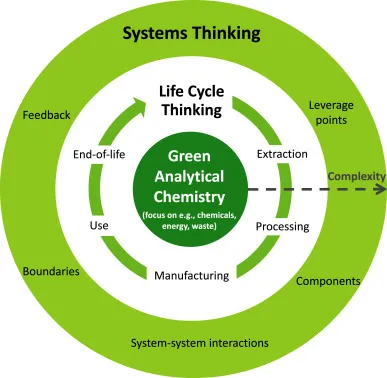
Advancement of greeen analytical chemistry
Recent advances in Green Analytical Chemistry (GAC) have focused on the development of sustainable, energy-efficient, and environmentally benign analytical methodologies that minimize the use of hazardous chemicals and reduce waste generation. Significant progress has been achieved through the adoption of miniaturized and solvent-free sample preparation techniques, such as solid-phase microextraction (SPME), stir-bar sorptive extraction (SBSE), and microextraction by packed sorbent (MEPS). In parallel, the application of green solvents, including ionic liquids, deep eutectic solvents, and supercritical fluids, has enhanced extraction efficiency while reducing environmental toxicity 10.
Advancements in chromatographic and spectroscopic instrumentation have further contributed to greener analytical practices by enabling rapid analysis, lower energy consumption, and reduced reagent usage. Techniques such as ultra-high-performance liquid chromatography (UHPLC), supercritical fluid chromatography (SFC), and portable spectroscopic systems have improved analytical sensitivity and throughput with minimal ecological impact 11. Additionally, the integration of automation, artificial intelligence, and chemometric tools has optimized analytical workflows, improved resource utilization, and enhanced data reliability.
The emergence of biodegradable materials, renewable sorbents, and nanostructured adsorbents has also expanded the scope of environmentally sustainable analytical procedures. Furthermore, lifecycle assessment (LCA) and greenness assessment metrics, including the Analytical Eco-Scale, AGREE, and GAPI tools, are increasingly employed to evaluate and compare the environmental performance of analytical methods 12. Collectively, these developments demonstrate the growing emphasis on sustainability and innovation in modern analytical science.
Technological Advancements in Green Analytical Practices
Technological Advancements in Green Analytical Practices refer to the development and implementation of sustainable analytical technologies designed to minimize environmental impact, reduce chemical consumption, and enhance energy efficiency in analytical processes. Recent advancements include the adoption of miniaturized and automated analytical systems, solvent-free or low-solvent extraction techniques, and the use of environmentally benign reagents and materials 13. Techniques such as ultra-high-performance liquid chromatography (UHPLC), supercritical fluid chromatography (SFC), capillary electrophoresis (CE), and portable spectroscopic devices have significantly improved analytical performance while reducing waste generation and energy requirements. Additionally, the integration of artificial intelligence, chemometrics, and sensor-based technologies has optimized analytical workflows, enhanced precision, and promoted resource-efficient laboratory practices. These innovations collectively support the principles of Green Analytical Chemistry by advancing sustainable, accurate, and cost-effective analytical methodologies14.
Green Extraction and Purification Methods
Sustainable Gas Chromatography and Liquid Chromatography
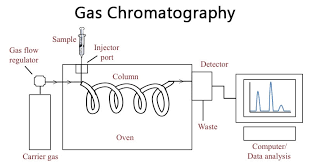
Sustainable Gas Chromatography and Liquid Chromatography involve the application of environmentally responsible practices in chromatographic analysis to minimize solvent consumption, energy usage, and hazardous waste generation while maintaining high analytical performance. In gas chromatography (GC), sustainability is achieved through the use of shorter and narrower columns, rapid temperature programming, energy-efficient instrumentation, and reduced carrier gas consumption, including the adoption of hydrogen as an alternative carrier gas 15. In liquid chromatography (LC), green strategies include the replacement of toxic organic solvents with safer alternatives, solvent recycling, miniaturization of chromatographic systems, and the implementation of ultra-high-performance liquid chromatography (UHPLC) to decrease analysis time and solvent usage .
Additional advancements such as supercritical fluid chromatography (SFC), microflow LC systems, and automated sample preparation techniques further contribute to sustainable chromatographic practices. The integration of green solvents, renewable materials, and energy-efficient technologies has significantly enhanced the environmental compatibility of chromatographic methods. These developments align with the principles of Green Analytical Chemistry by promoting safer, cost-effective, and resource-efficient analytical procedures.Modern gas chromatography (GC) systems are equipped with advanced safety mechanisms to minimize operational hazards associated with carrier gases and high-pressure systems. These safety features include integrated leak detection systems, automated shut-off valves, and precise flow-control regulators that ensure safe and stable instrument operation. Furthermore, the implementation of on-demand electrolytic hydrogen generators eliminates the necessity for high-pressure hydrogen gas cylinders, thereby significantly reducing storage-related risks and enhancing overall laboratory safety 16.In the field of liquid chromatography, the transition toward greener analytical methodologies has been driven by efforts to reduce organic solvent consumption and to investigate environmentally safer alternative solvents. Conventional liquid chromatography methods typically require substantial volumes of organic solvents, leading to increased environmental burden, hazardous waste generation, and higher operational costs. Consequently, the development of sustainable chromatographic strategies has become a major focus in modern analytical chemistry17.
Green Supercritical Chromatographic Technique
It is an environmentally sustainable chromatographic approach that utilizes supercritical fluids, predominantly supercritical carbon dioxide (CO₂), as the primary mobile phase for analytical separations. This technique significantly reduces the consumption of hazardous organic solvents commonly used in conventional liquid chromatography, thereby minimizing toxic waste generation and environmental impact. Owing to the unique physicochemical properties of supercritical fluids, including low viscosity, high diffusivity, and tunable solvating power, green supercritical chromatographic techniques provide rapid, efficient, and high-resolution separations with reduced energy requirements18. Additionally, the use of recyclable and non-toxic CO₂ enhances the sustainability, safety, and cost-effectiveness of the analytical process, aligning closely with the principles of Green Analytical Chemistry.Supercritical Fluid Chromatography (SFC) exhibits high analytical versatility and separation efficiency, enabling rapid and high-resolution chromatographic separations as a consequence of the low viscosity and elevated diffusivity of supercritical carbon dioxide (CO₂) employed as the mobile phase. Moreover, the addition of polar organic modifiers, including methanol and ethanol, enhances the polarity and solvating strength of the supercritical fluid, thereby improving the solubility and chromatographic behavior of polar analytes. Consequently, these modifications substantially broaden the analytical applicability of SFC, facilitating the effective separation and characterization of a diverse range of chemical compounds19-20.The most commonly employed supercritical fluid in Supercritical Fluid Chromatography (SFC) is Carbon Dioxide owing to its relatively low critical temperature (31.1 °C) and critical pressure (73.8 bar). Carbon dioxide is non-toxic, non-flammable, and readily accessible, rendering it an environmentally sustainable alternative to conventional organic solvents. Nevertheless, to enhance the polarity of the mobile phase and improve the solubility of polar analytes, organic modifiers or co-solvents such as Methanol, Ethanol, or Acetonitrile are frequently incorporated into the supercritical fluid system21.
future startegy of green analytical chemistry
Future Strategy of Green Analytical Chemistry
The future strategy of green analytical chemistry focuses on making analytical methods more sustainable, energy-efficient, safer, and environmentally friendly while maintaining high analytical performance. Scientists and industries are working toward “zero-waste” and “zero-pollution” analytical systems.
Major Future Strategies
1. Miniaturization of Analytical Systems
Future laboratories will increasingly use:
These systems:
Examples include handheld spectrometers and portable biosensors for field analysis.
2. Development of Solvent-Free and Green Solvent Techniques
Traditional organic solvents are often toxic and hazardous. Future strategies emphasize:
The goal is to replace harmful chemicals with biodegradable and safer alternatives.
3. Automation and Artificial Intelligence
Integration of:
will improve:
AI-assisted analytical systems can select optimal conditions with minimal chemical use.
4. Real-Time and In Situ Analysis
Future green analytical methods will avoid transporting samples to laboratories by using:
This reduces:
Applications are important in environmental monitoring, healthcare, and industrial quality control.
5. Energy-Efficient Instrumentation
Future instruments will focus on:
Analytical laboratories are expected to adopt:
6. Waste Reduction and Recycling
Green analytical chemistry aims toward:
Future labs may include closed-loop systems where chemicals are continuously purified and reused.
7. Use of Renewable and Biodegradable Materials
Researchers are developing:
These materials reduce dependence on petroleum-based laboratory products.
8. Green Nanotechnology
Nanomaterials will be designed with:
Green synthesis methods for nanoparticles will become increasingly important in analytical applications.
9. Digital and Paperless Laboratories
Future strategies include:
This reduces paper waste and improves efficiency.
Education and international regulations play an important role in promoting sustainable analytical practices across laboratories, industries, and academic institutions worldwide. They help ensure that analytical chemistry develops in an environmentally responsible and safe manner.
1. Education in Green Analytical Chemistry
Importance of Education
Education is essential for:
Modern chemistry education increasingly emphasizes sustainability and environmental protection.
Inclusion in Academic Curriculum
Many universities now include topics such as:
Courses are introduced in:
Laboratory Training
Students are trained to:
Green laboratory practices improve both safety and sustainability.
Research and Innovation
Educational institutions encourage research on:
Research funding agencies increasingly support sustainable analytical projects.
Awareness Programs and Workshops
Scientific organizations conduct:
These activities help scientists share new developments in green analytical chemistry.
2. International Regulations in Green Analytical Chemistry
International regulations aim to reduce environmental pollution and ensure safe chemical practices in laboratories and industries.
Role of International Organizations
Several organizations promote green analytical standards, including:
These organizations encourage environmentally safe analytical methods and chemical management.
Important International Regulations and Policies
REACH Regulation
European Chemicals Agency introduced the REACH regulation:
Its goals are:
ISO Standards
International Organization for Standardization develops standards related to:
Important standards include:
Green Laboratory Certification
Many institutions now adopt:
Examples include green laboratory initiatives in universities and pharmaceutical industries.
Regulations on Hazardous Chemicals
Countries worldwide regulate:
These regulations encourage the use of:
Global Sustainability Goals
Green analytical chemistry supports the:
Especially:
Universities and industries are expected to:
Global organizations may introduce sustainability certification systems for analytical laboratories.
Emerging Technologies in Future Green Analytical Chemistry
Some promising technologies include:
Challenges for the Future
Despite progress, some challenges remain:
CONCLUSION
Green analytical chemistry represents an important advancement in modern analytical science by combining accurate chemical analysis with environmental sustainability. It focuses on reducing the use of hazardous chemicals, minimizing waste generation, lowering energy consumption, and improving laboratory safety while maintaining reliable analytical performance.
The development of green analytical chemistry has encouraged the adoption of eco-friendly techniques such as miniaturized instruments, solvent-free methods, real-time analysis, biosensors, and automated systems. These innovations help protect human health and the environment while also reducing operational costs in laboratories and industries.
Green analytical chemistry plays a vital role in many fields, including environmental monitoring, pharmaceutical analysis, food safety, clinical diagnostics, and industrial quality control. International regulations, educational programs, and sustainable laboratory practices continue to support its global growth and implementation.
In the future, advances in artificial intelligence, nanotechnology, portable devices, and renewable materials are expected to make analytical methods even more sustainable and efficient. Thus, green analytical chemistry is not only a scientific approach but also an essential step toward achieving sustainable development and a cleaner, safer future for society and the environment.
REFFERENCES

Anup kumar Patra, Basanta kumar Behera, Recent Advances in Green Analytical Chemistry, Int. J. of Pharm. Sci., 2026, Vol 4, Issue 6, 1820-1830, https://doi.org/10.5281/zenodo.20591316
 10.5281/zenodo.20591316