

We use cookies to ensure our website works properly and to personalise your experience. Cookies policy
1,5Department of Chemistry, Mahatma Gandhi University, Meghalaya, 793101, INDIA.
2Department of Chemistry, The Assam Royal Global University, Betkuchi, Guwahati, Assam, 781035, INDIA.
3Bioinformatics Division, PGRRCDE, Osmania University, Hyderabad, Telangana, 500007, INDIA.
4Department of Chemistry, Madhab Choudhury College, Barpeta, Assam, 781301, INDIA.
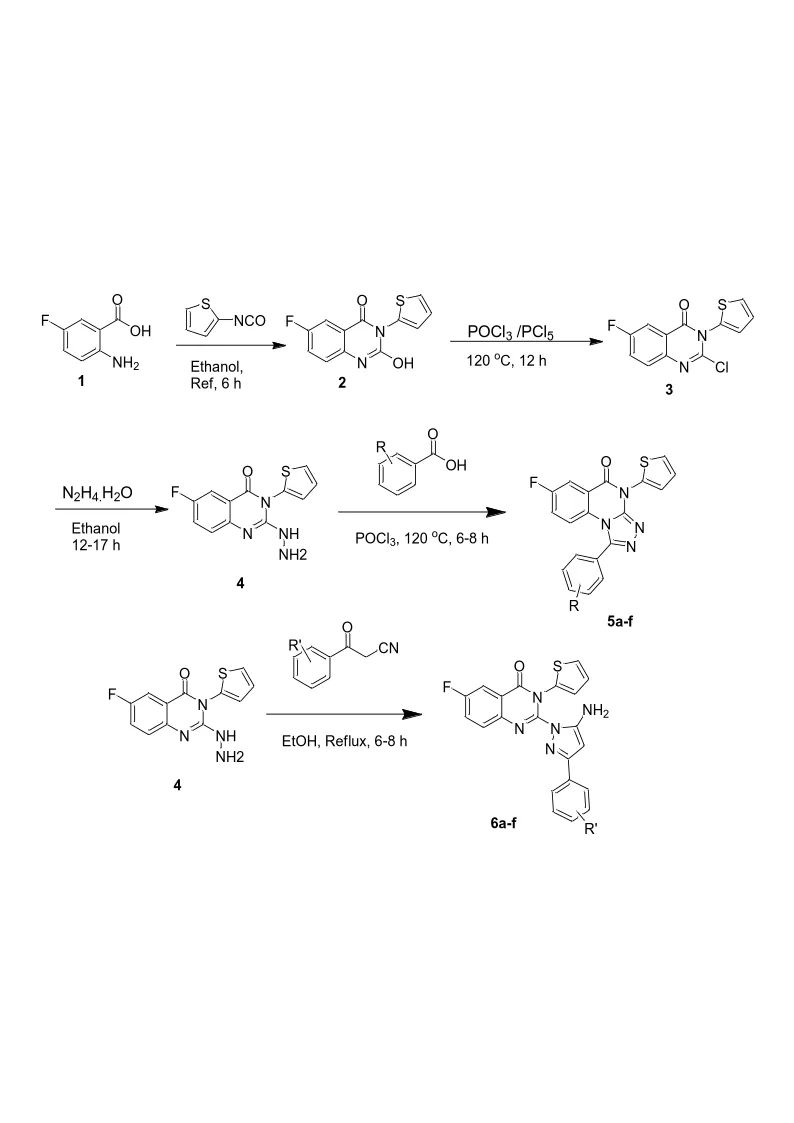
Quinazolinone derivatives bearing a trifluoromethyl substituent have attracted considerable attention. A series of novel pyrazole and triazole functionalized quinazolinone derivatives were prepared starting from 2-amino-5-fluorobenzoic acid on reaction with 2-isocyanatothiophene to get 6-fluoro-2-hydroxy-3-(thiophen-2-yl)quinazolin-4 (3H)-one 2, Compound 2 for chlorination reacts with POCl3 and obtained 2-chloro-6-fluoro-3-(thiophen-2-yl)quinazolin-4 (3H)-one 3. Compound 3 treated with hydrazine hydrate to affords 6-fluoro-2-hydrazinyl-3-(thiophen-2-yl)quinazolin-4 (3H)-one 4. Compound 4 on further reaction with aromatic acids to get triazole functionalized quinazolinone derivatives 5a-f. In another way compound 4 on reaction with 3-oxo-3-phenylpropanenitrile to obtain pyrazole functionalized quinazolinone derivatives 6a-f. All the final compounds evaluated for anticancer activity against four human cancer cell lines such as ‘HeLa-Cervical cancer (CCL-2); COLO 205-Colon cancer (CCL-222); HepG2-Liver cancer (HB-8065); MCF7-Breast cancer (HTB-22); and promising compounds which showed good activity have been identified and docking interactions are also identified.
Nitrogen containing heterocycles represent an exceptionally diverse and highly significant class of molecules. For decades, heterocyclic compounds have found wide-ranging applications across various fields, most notably in medicinal chemistry. Their importance in drug discovery is well recognized . Furthermore, many nitrogen heterocycles are key structural component of natural products and exhibit remarkable biological activity. [1-5]
Quinazolinone is a heterocyclic compound characterized by a fused benzene and pyrimidine ring system. It occupies a prominent position in medicinal chemistry owing to its wide range of pharmacological activities. The structural framework of quinazolinone enables effective interaction with multiple biological targets, making it a versatile and valuable scaffold for the development of therapeutic agents. The key reasons highlighting the importance of quinazolinones in medicinal chemistry are summarized below[6]. Quinazolinone based important molecules shown in figure 1.
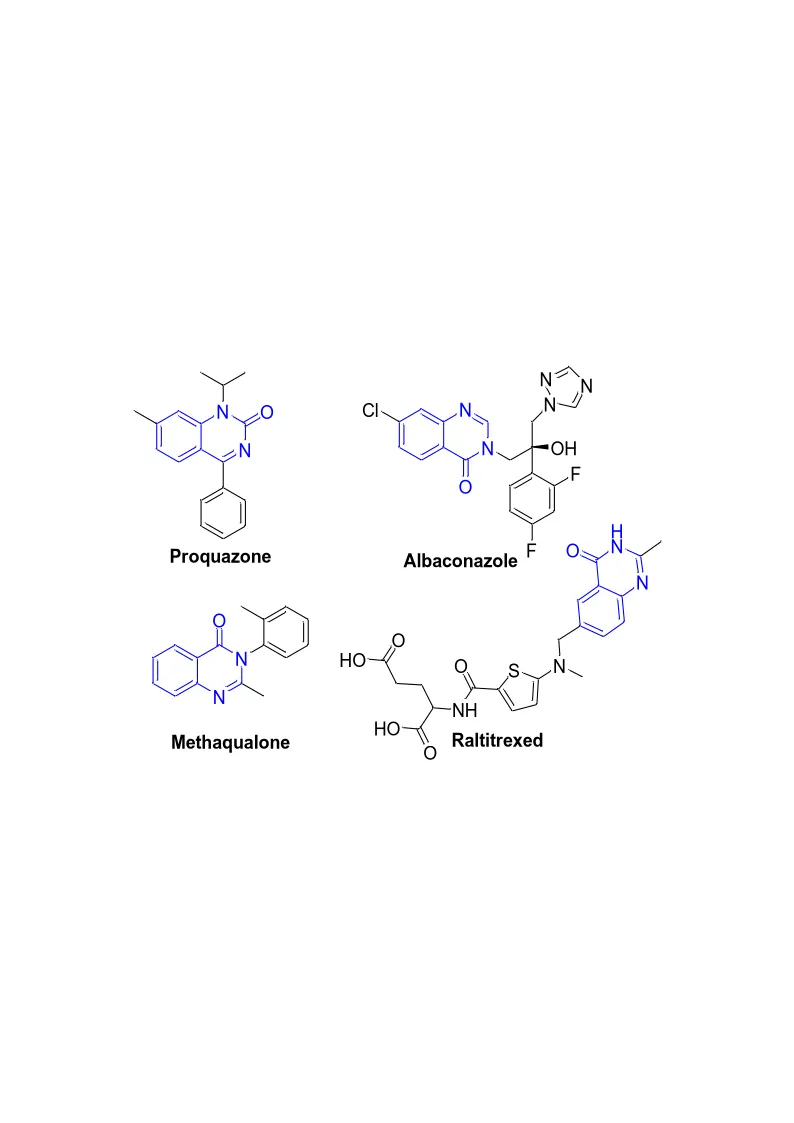
Figure 1: Biological Important Molecules Based on Quinazolinone
Quinazolinone molecules and their derivatives paid great attention due to their broad range of applications, biological activities like anticancer activity[7], antimicrobial properties[8], antimalarial activities[9], anti-inflammatory and analgesic effects[10], anti-convulsant Properties[11], Angiogenesis Inhibitor[12] and anti-tubercular activity[13] etc.,
Triazole and its derivatives have received significant attention over the past few decades because of their notable chemotherapeutic potential[14]. Literature reports indicate that triazole derivatives exhibit a broad spectrum of pharmacological activities, including antimicrobial [15], analgesic [16], anti-inflammatory and local anesthetic [17], anticonvulsant [18], antineoplastic [19], antimalarial [20], antiviral [21], antiproliferative [22], and anticancer activities [23]. Owing to these diverse biological properties, many triazole-based derivatives have been developed and are currently used as therapeutic agents [24].
Pyrazole, a heterocyclic scaffold, plays a significant role in developing new drugs and novel lead molecules with diverse biological profiles, making it a point of interest for researchers [25]. Pyrazole is found in many medicinal compounds, often in N-substituted or poly-substituted forms, eliciting potent pharmacological effects [26, 27]. Notable bio-isosteres of pyrazole include imidazole, thiazole, and others, with varying physicochemical and biological properties [27-29].
Molecular hybridization is an innovative strategy in drug design that involves the integration of pharmacophoric features from different bioactive molecules into a single hybrid entity (Figure 2). This approach is intended to improve the binding affinity and therapeutic efficacy of the resulting compound relative to its parent molecules. Moreover, molecular hybridization can produce compounds with modified selectivity, multiple mechanisms of action, and diminished adverse effects, thereby offering significant advantages in the development of new drugs.
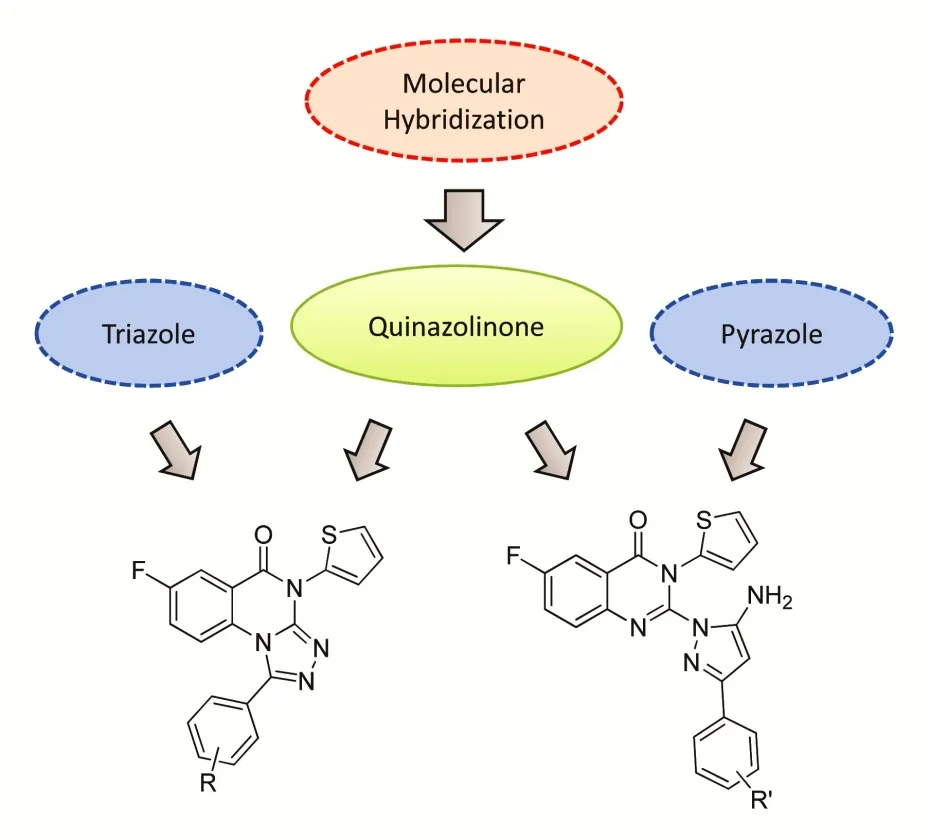
Figure 2: Hybrid Compounds of Molecular Hybridization.
Guided by literature reports emphasizing the importance of Fluorine and thiophene-substituted quinazolinones, we sought to design novel molecules using a molecular hybridization approach (Figure 2). Accordingly, a series of triazole fused and prazole functionalized quinazolinone derivatives was synthesized. The synthesized compounds were evaluated for their anticancer potential against four human cancer cell lines: HeLa (cervical cancer, CCL-2), COLO 205 (colon cancer, CCL-222), HepG2 (liver cancer, HB-8065), and MCF-7 (breast cancer, HTB-22). Among the tested compounds, 6c and 6e exhibited notable anticancer activity.
RESULTS AND DISCUSSION
CHEMISTRY
Novel series of triazole, pyrazole functionalized fluorine containing quinazolinone derivatives were prepared starting from 2-amino-5-fluorobenzoic acid on reaction with 2-isocyanatothiophene in ethanol reflux condition for about 6 hours to get 6-fluoro-2-hydroxy-3-(thiophen-2-yl)quinazolin-4 (3H)-one 2, Compound 2 for chlorination further reaction with POCl3/PCl5 refluxing condition for about 12 hours and obtained 2-chloro-6-fluoro-3-(thiophen-2-yl)quinazolin-4 (3H)-one 3. Compound 3 treated with hydrazine hydrate in ethanol at reflux for about 12-17 hours affords 6-fluoro-2-hydrazinyl-3-(thiophen-2-yl)quinazolin-4 (3H)-one 4. Compound 4 on further reaction with aromatic acids in the presence of POCl3 refluxing condition for about 6-8 hours to get triazole functionalized quinazolinone derivatives 5a-f. In another way compound 4 on reaction with 3-oxo-3-phenylpropanenitrile in ethanol refluxing condition for about 6-8 hours to obtain pyrazole functionalized quinazolinone derivatives 6a-f. Reaction details were outlined in scheme.
BIOLOGICAL EVALUATION
Anticancer activity
The newly developed triazole, pyrazole functionalized fluorine containing quinazolinone hybrids (5a-f and 6a-f) were assessed for their preliminary anticancer activity reports against a panel of four human cancer cell lines such as HeLa - Cervical cancer (CCL-2); COLO 205- Colon cancer (CCL-222); HepG2- Liver cancer (HB-8065); MCF7 - Breast cancer (HTB-22) by using of MTT assay and the obtained results were expressed with IC50µM, and 5-Fluorouracil as standard control, results were summarized in Table 1. Among tested compounds,6c and 6e showed most promising activity. These two compounds contains methoxy and trifluoromethl group at meta position of aromatic ring. 6c compound showed on COLO 205 = 8.4 ± 1.38 µM, and compound 6e showed on HeLa = 8.6 ± 1.17 µM. SARs structure-activity relationships says that methoxy and trifluoromethyl substituent at perticular position on aryl ring play a crucial role in enhancing anticancer activity by modulating electronic effects, improving lipophilicity, increasing metabolic stability, and strengthening interactions with cancer-related biological targets, thereby leading to improved potency and selectivity. All compounds responded up to the concentration of 91.6 µM
Table 1: In vitro Cytotoxicity of Newly Developed Compounds 5A-F and 6A-F in IC50 with Μm
_________________________________________________________________________
Compd. IC50 values (in µM)
HeLa COLO205 HepG2 MCF7
5a 76.6 ± 4.35 ND ND 80.3± 3.36
5b ND 39.6 ± 3.36 21.1 ± 2.23 ND
5c 13.7 ± 2.12 42.5 ± 3.36 ND ND
5d 25.1 ± 1.26 ND 55.2 ± 4.25 ND
5e 53.2 ± 4.13 ND 69.4 ± 3.16 ND
5f 91.6± 3.44 ND ND 75.5 ± 2.24
6a 22.6 ± 1.26 52.4± 4.21 31.2 ± 3.44 ND
6b 33.5± 3.44 64.5 ± 4.24 ND 79.4 ± 1.27
6c 11.5± 2.17 8.4 ± 1.38 10.5 ± 2.32 17.6 ± 1.24
6d 24.5± 5.17 67.5± 4.31 ND 43.3± 2.17
6e 8.6 ± 1.17 12.5± 2.17 10.6 ± 5.32 19.4 ± 1.04
6f 48.2 ± 2.21 56.3 ± 4.31 49.6 ± 3.57 ND
5-Fluorouracil (Std control)
1.8 ± 0.09 1.9 ± 0.11 1.7 ± 0.08 1.8 ± 0.07
ND = Not determine. up to the concentration of 91.6 µg/mL
Cell lines used: HeLa - Cervical cancer (CCL-2); COLO 205- Colon cancer (CCL-222); HepG2- Liver cancer (HB-8065); MCF7 - Breast cancer (HTB-22);
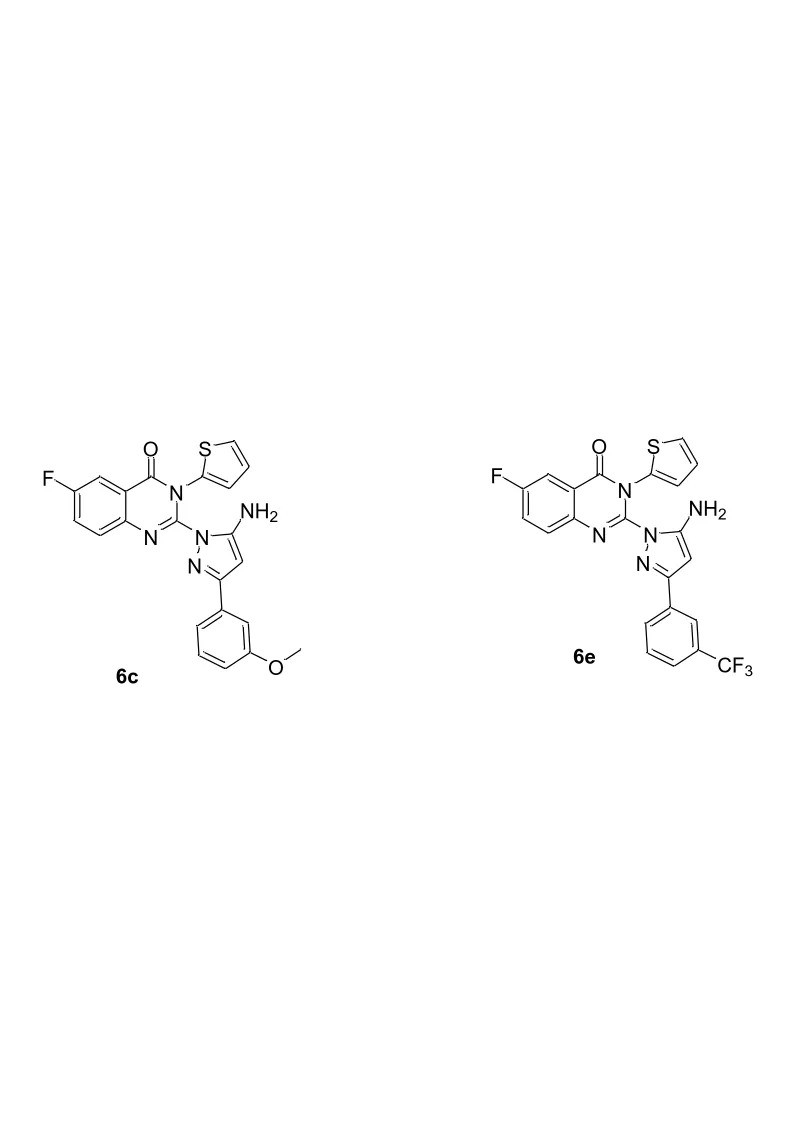
Molecular docking studies were performed on 1IKN focus on the protein IKAPPABALPHA/NF-KAPPAB COMPLEX, a nuclear transport receptor. Docking analyses typically evaluate how small molecules interact with key residues, predicting binding affinities and potential inhibitory effects on nuclear transport in human cells, including HeLa.
MATERIALS AND METHODS:
The in-silico molecular docking study was carried out for the two synthesized molecules by using the Autodock 4.2. Ligand preparation and grid generation were carried out by AutoDock 4.2. Receptor-ligand docking was carried out by Autodock. [30]
Selection of target protein and preparation of protein target structure.
The Crystal “IKAPPABALPHA/NF-KAPPAB COMPLEX” whose PDB ID is 1IKN, [31] was retrieved from the PDB (Protein Data Bank) and used for molecular docking. It seems to have a 2.30 Å resolution and one 236 aminoacid residues protein of chain A. The molecular weight of the protein is 26076.28 kDa. [32] AutoDockTools (ADT) 1.5.6 was used to prepare the input files and removed water molecules. All Hydrogens were added and saved it in PDBQT format.
Selection and Preparation of ligand molecules.
There were 2 molecules used in this study. Both the molecules were sketched in Tripos sybyl6.7 and minimized by using Gasteiger-Hückel charges and saved it in .mol2 format.[33] Both the ligands being uploaded individually in .mol2 format into the AutoDockTools, and torsion angles were set and saved it in PDBQT format.
Molecular docking Analysis
AutoDock 4.2 was performed to validate the binding efficacy of the protein-ligand complex. Molecular docking analysis was performed using Autodock 4.2 tool. Initially the missing residues were filled by using Modeller10.4. The protein 1IKN and ligands were uploaded individually and removed water molecules and added polar hydrogens. Later the protein was saved in pdbqt format. Autodock uses Genetic Algorithm. The standard docking procedure was employed for a rigid protein and a flexible ligand whose torsion angles were identified. Grid dimensions selected as 60, 60, and 60 points and the amino acids which are present in the active site were selected and centered the in x, y, and z directions was built with a grid spacing of 0.375 Å and a distance-dependent function of the dielectric constant were used for the calculation of the energetic map. The default settings were used for all other parameters. Lamarckian genetic algorithm method was employed for docking simulations. The default settings were used for all other parameters. At the end of docking, the best poses were analyzed for hydrogen bonding calculations using Autodock 4.2, Ligplot plus [34] and Biovia Discovery studio visualizer [35] From the estimated free energy of ligand binding (ΔGbinding, kcal/mol), the inhibition constant (Ki) for each ligand was calculated.
RESULTS AND DISCUSSION
The molecular docking analysis revealed that both Compound 6c and Compound 6e exhibit notable binding affinities toward the PDB ID: 1IKN. Binding affinities were observed to be ranging from -8.87 kCal/mol to -9.56 kCal/mol. A more negative binding energy suggests a stronger interaction between the ligand and the protein. Compound 6c demonstrated a binding affinity of −9.56 kcal/mol, which is significantly stronger than that of Compound 6e (−8.87 kcal/mol). The more negative binding energy of Compound 6c suggests a higher thermodynamic stability of the protein-ligand complex, indicating a potentially stronger and more favorable interaction with the active site of 1IKN.
The compound 6c exhibited highest most negative binding affinity value, which indicates their better capability to inhibit the protein 1IKN. Compound 6c was found to have the highest most negative binding energy of -9.56 kCal/mol compared to another compound. The compound interacted with three amino acid residue of the protein making three hydrogen bonds with residue Lys10, Glu204, Leu205 and Arg255 of chain “A”. The compound two exhibited most negative binding energy of -8.87 kcal/mol with interacting Lys10, Glu204, Leu205 and Arg255 of chain “A”. Both the compounds interacting with same amino acids.
Thus, the two synthesized compounds showed significant effect on the 1IKN protein.
| Compound number | Binding energy ΔG (kcal/mol) | Dissociation constant (kl) | Interacting amino acids |
|---|---|---|---|
| 1 | -9.56 | 98.51 nM | Lys10, Glu204, Leu205, Arg255 |
| 2 | -8.87 | 312.3 nM | Lys10, Glu204, Leu205, Arg255 |
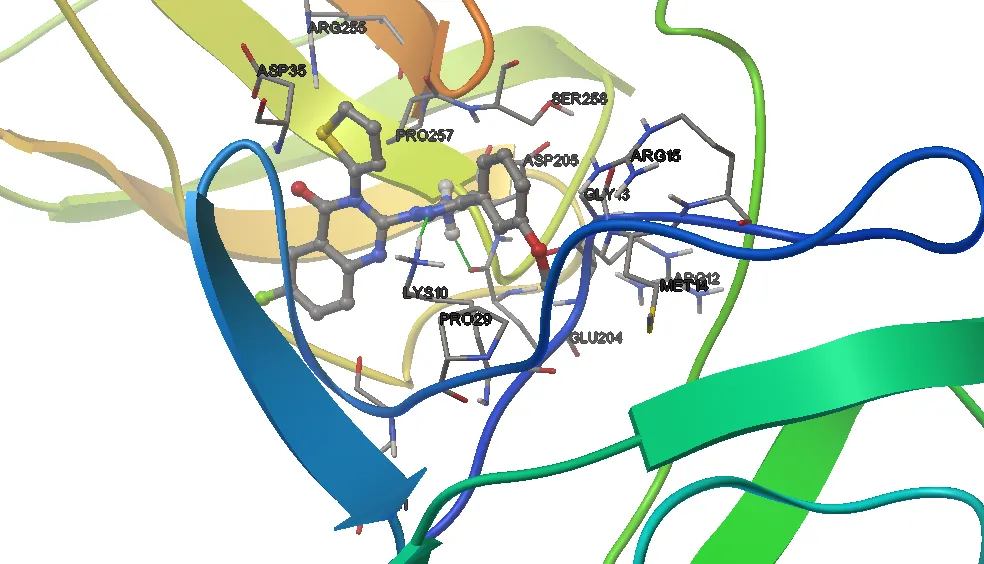
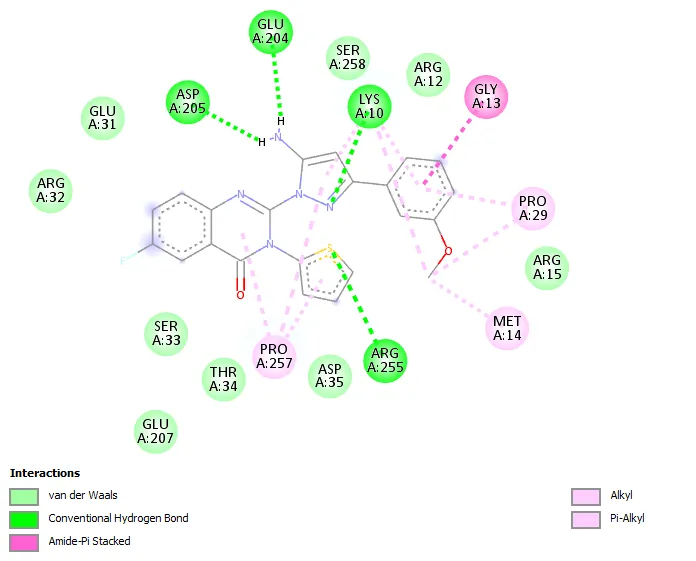
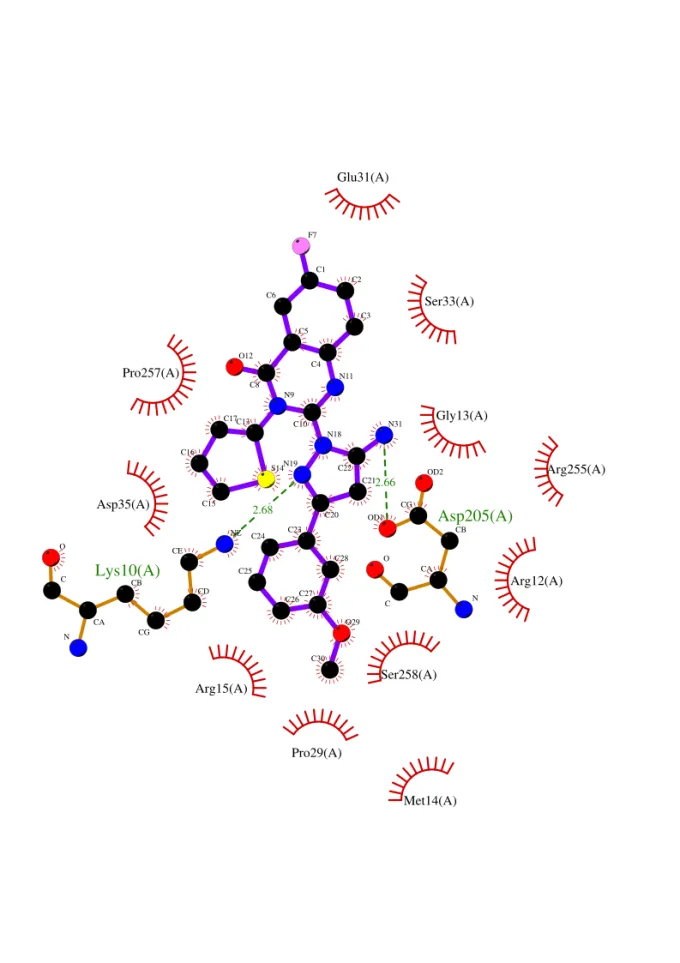
Fig.6c . Docking pose interactions of target compound 6c with active site of IKAPPABALPHA/NF-KAPPAB COMPLEX (PDB ID: 1IKN): (a) 3D structure; (b) 2D structure; (c) ligplot images;
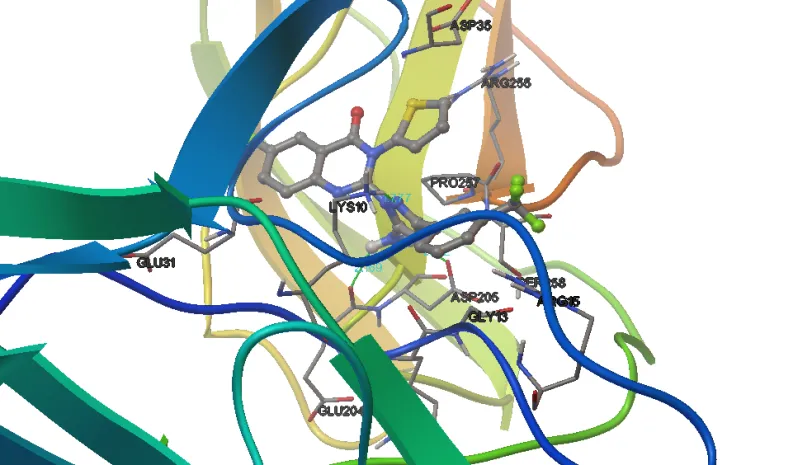
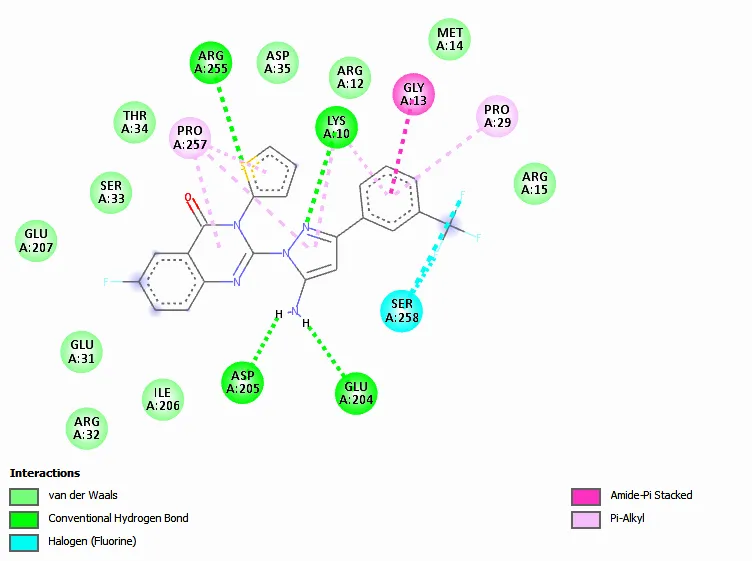
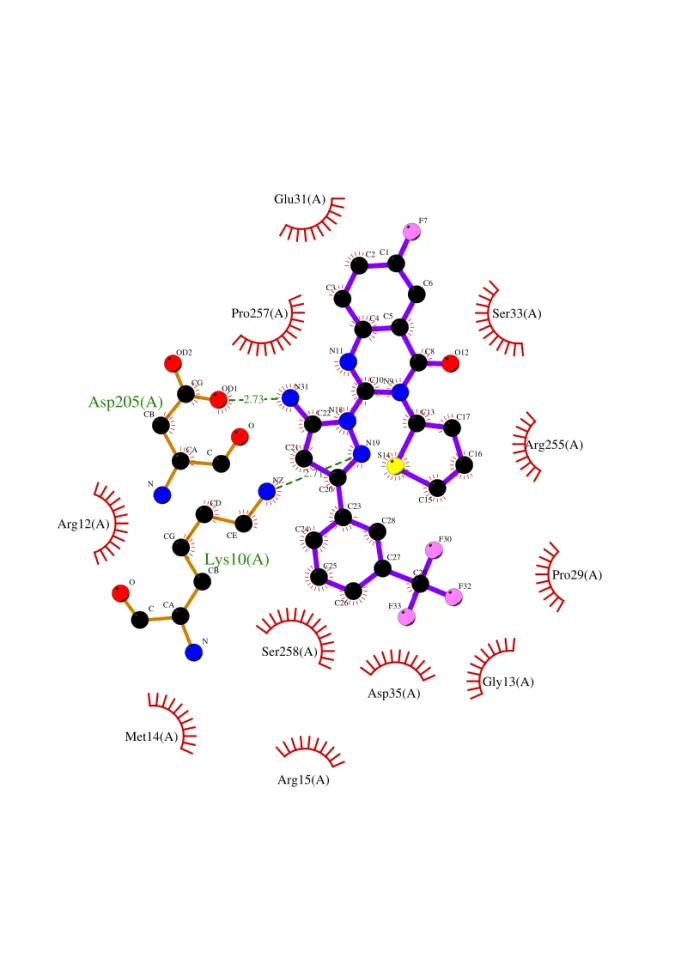
Fig.6e . Docking pose interactions of target compound 6e with active site of IKAPPABALPHA/NF-KAPPAB COMPLEX (PDB ID: 1IKN): (a) 3D confirmation, (b) 2D confirmation, and (c) ligplot images;
Cytotoxicity assay: Cytotoxicity of the compounds was determined on the basis of measurement of in vitro growth inhibition of tumor cell lines in 96 well plates by cell-mediated reduction of tetrazolium salt to water insoluble formazan crystals using 5-fluorouracil as a standard. The cytotoxicity was assessed using the MTT assay against a panel of five different human tumor cell lines: HeLa derived from human cervical cancer cells (ATCC No. CCL-2), COLO 205 derived from human colon cancer cells (ATCC No. CCL-222), HepG2 derived from human liver cancer cells (ATCC No. HB-8065), MCF7 derived from human breast adenocarcinoma cells (ATCC No. HTB-22).The IC50 (50% inhibitory concentration) values were calculated from the plotted absorbance data for the dose-response curves. IC50 values (in μM) are indicated as means ± SD of three independent experiments.
General procedure for the preparation of 6-Fluoro-2-hydroxy-3-(thiophen-2-yl)quinazolin-4 (3H)-one (2)
Charged 2-amino-5-fluorobenzoic acid 1 (0.5 g., 0.003 m) and 2-isocyanatothiophene in ethanol as solvent, reaction mixture was allowed to reflux condition for about 10-12 hours, and after confirmation of the product by TLC, reaction mixture was allowed to cool and obtained 6-fluoro-2-hydroxy-3-(thiophen-2-yl)quinazolin-4 (3H)-one 2 by filtration.
White solid; Yield 80%; 1H NMR (CDCl3, 300 MHz): δ 7.09 dd (1H, Harom), 7.31 dd (1H, Harom),7.45 (dd, 1H, Harom), 7.53 (d, 1H, Harom), 7.71 (d, 1H, Harom), 7.86 (s, 1H, Harom), 11.21 (br. s., 1H, -OH); MS (ESI): m/z [(M+H)+]: 263; Anal. calc. for C12H7FN2O2S: C 54.96, H 2.69, N 10.68 %. Found: C 54.98, H 2.70, N 10.71%.
General procedure for the preparation of 2-Chloro-6-fluoro-3-(thiophen-2-yl)quinazolin-4 (3H)-one (3)
10-15ml of POCl3 and PCl5 was slowly added to 6-fluoro-2-hydroxy-3-(thiophen-2-yl)quinazolin-4 (3H)-one (0.5 g., 0.001 m) 2 and this reaction mixture was allowed to reflux for about 12 hours, after completion of the reaction, POCl3 was completely removed under vacuum, excess POCl3 was neutralized with aq. Sodium bicarbonate. For extraction ethyl acetate and water was added to that reaction mixture, organic layer was separated and dried with sodium sulphate. Concentrate to get 2-Chloro-6-fluoro-3-(thiophen-2-yl)quinazolin-4 (3H)-one 3.
Yellow solid; Yield 79%; 1H NMR (CDCl3, 300 MHz): δ 7.02 (dd, 1H, Harom), 7.32 (dd, 1H, Harom),7.44 (dd, 1H, Harom), 7.51 (d, 1H, Harom), 7.69 (d, 1H, Harom), 7.81 (s, 1H, Harom); MS (ESI): m/z [(M+H)+]: 281; Anal. calc. for C12H6ClFN2OS: C 51.35, H 2.15, N 9.98 %. Found: C 51.36, H 2.14, N 9.99%.
General procedure for the preparation of 6-Fluoro-2-hydrazinyl-3-(thiophen-2-yl)quinazolin-4 (3H)-one (4)
0.5 mg of 2-Chloro-6-fluoro-3-(thiophen-2-yl)quinazolin-4 (3H)-one 3 was taken in 15-20 ml of hydrazine hydrate and allowed to reflux C for about 17 hours, after product confirmation by TLC, reaction mixture was dissolved in water and solid was separated and dried.
Dark yellow solid; Yield 71%; 1H NMR (CDCl3, 300 MHz): δ 4.43 (br. s., 2H, -NH2), 7.05 (dd, 1H, Harom), 7.32 (dd, 1H, Harom),7.40 (dd, 1H, Harom), 7.52 (d, 1H, Harom), 7.85 (d, 1H, Harom), 7.91 (d, 1H, Harom); MS (ESI): m/z [(M+H)+]: 277; Anal. calc. for C12H9FN4OS: C 52.17, H 3.28, N 20.28 %. Found: C 52.19, H 3.30, N 20.31%.
General procedure for the preparation of 7-Fluoro-1-phenyl-4-(thiophen-2-yl)-[1,2,4]triazolo[4,3-a]quinazolin-5 (4H)-one (5a)
6-Fluoro-2-hydrazinyl-3-(thiophen-2-yl)quinazolin-4 (3H)-one 4 on reaction with diverse substituted aromatic acid in the presence of POCl3 at 120 ºC condition for about 6 hours stirring. After confirmation of product formation by TLC, reaction mixture was allowed to cool and POCl3 was completely removed under vacuum water was added to reaction mixture and yellow solid was formed and collected by filtration and dried to get solid product 5a.
Yellow solid, Yield 81%, M.Pt. 168-170°C. 1H NMR (CDCl3, 300 MHz): δ 7.03 (dd, 1H, Harom), 7.13 (dd, 1H, Harom), 7.42-7.45 (m, 3H, Harom), 7.62 (dd, 1H, Harom), 7.82 (dd, 1H, Harom), 8.02-8.05 (m, 2H, Harom), 8.32 (dd, 1H, Harom). 13C NMR spectrum, δ, ppm: 119.1, 120.4, 121.3, 122.8, 123.3, 124.9, 125.7,126.8, 127.4, 128.6, 132.7, 138.3, 140.6, 144.1, 148.3, 151.2, 160.3; MS (ESI): m/z [(M+H)+]: 363; Anal. Calcd.for C19H11FN4OS: C 62.97, H 3.06, N 15.46%. Found: C 62.99, H 3.08, N 15.48%.
7-Fluoro-4-(thiophen-2-yl)-1-(p-tolyl)-[1,2,4]triazolo[4,3-a]quinazolin-5 (4H)-one (5b).
Yellow solid, Yield 72%, M.Pt. 175-177°C. 1H NMR spectrum, δ, ppm: 2.36 s (3H, -CH3), 7.03 dd (1H, Harom), 7.13 dd (1H, Harom), 7.32 d (2H, Harom), 7.48 d (2H, Harom), 7.62 dd (1H, Harom), 7.82 d (1H, Harom), 8.02-8.05 m (2H, Harom), 8.32 d (1H, Harom). 13C NMR spectrum, δC, ppm: δ 119.1, 120.4, 121.3, 122.8, 123.3, 124.9, 125.7,126.8, 127.4, 128.6, 132.7, 138.3, 140.6, 144.1, 148.3, 151.2, 160.3. Mass spectrum: m/z 363 [M+H]+. Found, %: C 62.99; H 3.08; N 15.48. C19H11FN4OS. Calculated, %: C 62.97, H 3.06, N 15.46.
7-Fluoro-1-(3-methoxyphenyl)-4-(thiophen-2-yl)-[1,2,4]triazolo[4,3-a]quinazolin-5 (4H)-one (5c).
Yellow solid, Yield 71%, M.Pt. 150-152°C. 1H NMR spectrum, δ, ppm: 3.82 s (3H, -OCH3), 7.26-7.30 m (3H, Harom), 7.35-7.38 m (2H, Harom), 7.55 s (1H, Harom), 7.61 s (1H, Harom), 7.66 dd (1H, Harom), 7.81 dd (1H, Harom), 8.21 dd (1H, Harom). 13C NMR spectrum, δ, ppm: 55.6, 120.3, 121.4, 122.7, 123.4, 124.8, 125.5, 126.3, 126.8, 128.0, 129.1, 130.5, 131.2, 136.5, 137.4, 138.7, 141.5, 143.4, 159.3, 161.6. Mass spectrum: m/z [(M+H)+]: 393; Anal. Calcd.for C20H13FN4O2S: C 61.22, H 3.34, N 14.28%. Found: C 61.24, H 3.35, N 14.30%.
1-(3-Ethylphenyl)-7-fluoro-4-(thiophen-2-yl)-[1,2,4]triazolo[4,3-a]quinazolin-5 (4H)-one (5d).
Light yellow solid, Yield 72%, M.Pt. 181-183°C. 1H NMR spectrum, δ, ppm: 1.24 t (3H, -CH3), 2.63 q (2H, -CH2), 7.26 s (1H, Harom), 7.38-7.42 m (3H, Harom), 7.55-7.58 m (2H, Harom), 7.69 s (1H, Harom), 7.41 dd (1H, Harom), 8.18 dd (1H, Harom), 8.25 dd (1H, Harom). 13C NMR spectrum, δ, ppm: 14.3, 24.4, 118.3, 120.8, 122.5, 123.4, 124.5, 125.5, 126.7, 127.3, 128.5, 129.0, 131.0, 133.8, 136.1, 138.3, 140.5, 142.6, 146.3, 159.8, 161.4. Mass spectrum: m/z [(M+H)+]: 391; Anal. Calcd.for C21H15FN4OS: C 64.60, H 3.87, N 14.35%. Found: C 64.62, H 3.89, N 14.38%.
1-(3-Chlorophenyl)-7-fluoro-4-(thiophen-2-yl)-[1,2,4]triazolo[4,3-a]quinazolin-5 (4H)-one (5e)
Yellow solid, Yield 78%, M.Pt. 147-149°C. 1H NMR spectrum, δ, ppm: 7.20-7.22 m (2H, Ar-H), 7.35-7.38 m (3H, Harom), 7.49 s (1H, Harom), 7.63 dd (1H, Harom), 7.71 s (1H, Harom), 8.26 dd (1H, Harom), 8.53 dd (1H, Harom). 13C NMR spectrum, δ, ppm: 120.3, 121.6, 122.7, 123.3, 124.5, 125.6, 126.3, 127.5, 128.3, 129.4, 130.3, 132.4, 133.5, 136.8, 138.6, 142.6, 143.4, 159.6, 160.8. Mass spectrum: m/z [(M+H)+]: 397; Anal. Calcd.for C19H10ClFN4OS: C 57.51, H 2.54, N 14.12%. Found: C 57.53, H 2.59, N 14.15%.
1-(4-Bromophenyl)-7-fluoro-4-(thiophen-2-yl)-[1,2,4]triazolo[4,3-a]quinazolin-5 (4H)-one (5f).
Dark brown solid, Yield 65%, M.Pt. 199-201°C. 1H NMR spectrum, δ, ppm: 7.25 s (1H, Harom), 7.37 d (2H, Harom), 7.46 d (2H, Harom), 7.66-7.69 m (2H, Harom), 7.82 dd (1H, Harom), 8.02 dd (1H, Harom), 8.32 dd (1H, Harom). 13C NMR spectrum, δ, ppm: 118.5, 120.3, 121.7, 123.4, 124.5, 125.6, 126.4, 128.4, 130.7, 132.6, 138.3, 140.3, 142.6, 145.4, 148.3, 157.8, 160.9. Mass spectrum: m/z [(M+H)+]: 442; Anal. Calcd.for C19H10BrFN4OS: C 51.71, H 2.28, N 12.70%. Found: C 51.73, H 2.30, N 12.73 %.
2-(5-Amino-3-phenyl-1H-pyrazol-1-yl)-6-fluoro-3-(thiophen-2-yl)quinazolin-4 (3H)-one (6a)
6-Fluoro-2-hydrazinyl-3-(thiophen-2-yl)quinazolin-4 (3H)-one 4 on reaction with 3-oxo-3-phenylpropanenitrile in ethanol refluxing condition for about 6-8 hours and after confirmation of product formation by TLC, reaction mixture was allowed to cool and ethanol was completely removed under vacuum water was added to reaction mixture and Light yellow solid was formed and collected by filtration and dried to get solid product 6a.
Light yellow solid, Yield 80%, M.Pt. 190-192°C. 1H NMR spectrum, δ, ppm: 5.95-5.98 br. s. (2H, -NH2), 7.10 dd (1H, Harom), 7.20-7.24 m (3H, Harom), 7.32-7.35 m (2H, Harom), 7.52 s (1H, Harom), 7.65 dd (1H, Harom), 7.77 d (2H, Harom), 7.84 dd (1H, Harom), 8.21 dd (1H, Harom). 13C NMR spectrum, δ, ppm: 119.2, 120.3, 121.7, 123.0, 123.4, 124.6, 125.6, 126.5, 127.3, 128.8, 129.4, 132.2, 135.4, 137.1, 139.9, 143.2, 146.7, 158.4, 161.3. Mass spectrum: m/z [(M+H)+]: 404; Anal. Calcd. for C21H14FN5OS: C 62.52, H 3.50, N 17.36%. Found: C 62.55, H 3.52, N 17.38 %.
2-(5-Amino-3-(p-tolyl)-1H-pyrazol-1-yl)-6-fluoro-3-(thiophen-2-yl)quinazolin-4 (3H)-one (6b)
Grey white solid, Yield 65 %, M.Pt. 162-164°C. 1H NMR spectrum, δ, ppm: 2.31 s (3H, -CH3), 5.85-5.88 br. s. (2H, -NH2), 7.18 dd (1H, Harom), 7.30 d (2H, Harom), 7.42 dd (1H, Harom), 7.51 d (2H, Harom), 7.63 d (1H, Harom), 7.66 d (2H, Harom), 7.84 s (1H, Harom), 8.09 dd (1H, Harom). 13C NMR spectrum, δ, ppm: 21.6, 120.5, 122.1, 122.9, 124.2, 125.6, 126.3, 127.4, 129.5, 129.6, 130.6, 131.7, 133.4, 135.7, 137.3, 139.6, 143.2, 146.3, 158.4, 161.5. Mass spectrum: m/z [(M+H)+]: 418; Anal. Calcd. for C22H16FN5OS: C 63.30, H 3.86, N 16.78%. Found: C 63.31, H 3.85, N 16.80%.
2-(5-Amino-3-(3-methoxyphenyl)-1H-pyrazol-1-yl)-6-fluoro-3-(thiophen-2-yl)quinazolin-4 (3H)-one (6c)
Grey solid, Yield 81%, M.Pt. 177-179°C. 1H NMR spectrum, δ, ppm: 3.82 s (3H, -OCH3), 5.85-5.88 br. s. (2H, -NH2), 7.15 dd (1H, Harom), 7.36-7.39 m (3H, Harom), 7.44 dd (1H, Harom), 7.48 s (1H, Harom), 7.51 d (2H, Harom), 7.62 s (1H, Harom), 8.18 dd (1H, Harom), 8.42 dd (1H, Harom). 13C NMR spectrum, δ, ppm: 55.9, 119.7, 120.4,121.0, 123.2, 123.3, 125.7, 126.8, 127.5, 128.3, 129.6, 131.1, 132.6, 133.1, 134.1, 137.8, 140.0, 142.0, 143.6, 146.8, 158.5, 161.7. Mass spectrum: m/z [(M+H)+]: 434; Anal. Calcd.for C22H16FN5O2S: C 60.96, H 3.72, N 16.16%. Found: C 60.98, H 3.75, N 16.18%.
2-(5-Amino-3-(3-chlorophenyl)-1H-pyrazol-1-yl)-6-fluoro-3-(thiophen-2-yl)quinazolin-4 (3H)-one (6d)
White solid, Yield 74%, M.Pt. 147-149°C. 1H NMR spectrum, δ, ppm: 5.89-5.92 br. s. (2H, -NH2), 7.19 dd (1H, Harom), 7.30-7.34 m (3H, Harom), 7.42 dd (1H, Harom), 7.49 s (1H, Harom), 7.55 d (2H, Harom), 7.63 s (1H, Harom), 8.16 dd (1H, Harom), 8.45 dd (1H, Harom). 13C NMR spectrum, δ, ppm: 118.4, 120.7,121.6, 123.4, 123.6, 125.8, 126.7, 127.6, 128.3, 130.4, 131.4, 132.3, 133.6, 135.4, 137.7, 140.4, 142.7, 143.6, 146.7, 158.3, 161.8. Mass spectrum: m/z [(M+H)+]: 438; Anal. Calcd.for C21H13ClFN5OS: C 57.60, H 2.99, N 15.99%. Found: C 57.62, H 2.97, N 15.98%.
2-(5-Amino-3-(3-(trifluoromethyl)phenyl)-1H-pyrazol-1-yl)-6-fluoro-3-(thiophen-2-yl)quinazolin-4 (3H)-one (6e)
Yellow solid, Yield 68%, M. Pt. 189-191°C. 1H NMR spectrum, δ, ppm: 5.90-5.93 br. s. (2H, -NH2), 7.18 dd (1H, Harom), 7.32-7.36 m (3H, Harom), 7.43 dd (1H, Harom), 7.49 s (1H, Harom), 7.56 d (2H, Harom), 7.64 s (1H, Harom), 8.16 dd (1H, Harom), 8.44 dd (1H, Harom). 13C NMR spectrum, δ, ppm: 119.3, 120.5, 121.6, 122.5, 124.5, 125.4, 126.6, 127.8, 128.4, 129.9, 130.8, 131.3, 132.5, 133.2, 135.3, 138.3, 140.2, 142.4, 143.8, 146.7, 158.6, 161.8. Mass spectrum: m/z [(M+H)+]: 472; Anal. Calcd.for C22H13F4N5OS: C 56.05, H 2.78, N 14.86%. Found: C 56.08, H 2.80, N 14.89%.
2-(5-Amino-3-(3-bromophenyl)-1H-pyrazol-1-yl)-6-fluoro-3-(thiophen-2-yl)quinazolin-4 (3H)-one (6f)
Dark yellow solid, Yield 69%, M.Pt. 155-157 °C. 1H NMR spectrum, δ, ppm: 5.88-5.91 br. s. (2H, -NH2), 7.20 dd (1H, Harom), 7.28-7.32 m (3H, Harom), 7.40 dd (1H, Harom), 7.48 s (1H, Harom), 7.53 d (2H, Harom), 7.62 s (1H, Harom), 8.11 dd (1H, Harom), 8.41 dd (1H, Harom). 13C NMR spectrum, δ, ppm: 119.6, 120.8, 121.5, 123.3, 123.5, 125.7, 126.8, 127.5, 128.4, 130.3, 131.2, 132.5, 133.7, 135.6, 137.8, 140.3, 142.8, 143.7, 146.6, 158.2, 161.9. Mass spectrum: m/z [(M+H)+]: 483; Anal. Calcd.for C21H13BrFN5OS: C 52.29, H 2.72, N 14.52%. Found: C 52.30, H 2.73, N 14.55%.
CONCLUSION
In conclusion, we have design and synthesized a new library of novel triazole, pyrazole functionalized quinazolinone scaffolds (5a-f and 6a-f) hybrids. All final products and intermediates were identified by IR, 1H NMR, 13C NMR and ESI Mass spectroscopy. Final compounds were evaluated for anticancer activity against four human cancer cell lines (HeLa - Cervical cancer (CCL-2); COLO 205- Colon cancer (CCL-222); HepG2- Liver cancer (HB-8065); MCF7 - Breast cancer (HTB-22)). Some of compounds responded on cell lines, all results were expressed with IC50 µM. Among screened compounds, compounds 6c and 6e showed promising activity on COLO 205 and HeLa cell lines with IC50 values 8.4 ± 1.38 µM and 8.6 ± 1.17 µM with reference of 5-Fluorouracil as standard control. Docking interactions were also evaluated for compounds 6c and 6e.
Supporting Information
Full experimental details, spectral data of the products, 1H NMR and 13C NMR of all the new compounds can be found via the Supplementary Content section of this article’s Web page.
ACKNOWLEDGMENTS
The authors Damodar Reddy and Krishna Reddy are thankful to the department of chemistry, Mahatma Gandhi University, Meghalaya for providing lab facility.
CONFLICT OF INTEREST
On behalf of all authors, the corresponding author states that there is no conflict of interest.
REFERENCES


Damodar Reddy Kasireddy, Krishna Reddy Yeduru, Shravan Kumar Gunda, Hitesh Das, Dr. Jahnabi Deka, Novel Triazole and Pyrazole Functionalized Quinazolinone Scaffolds as Anticancer Agents and Docking Studies, Int. J. of Pharm. Sci., 2026, Vol 4, Issue 11, 2905-2915. https://doi.org/10.5281/zenodo.24332864
 10.5281/zenodo.24332864