

We use cookies to ensure our website works properly and to personalise your experience. Cookies policy
Institute of Pharmacy and Research Badnera
Quality Assurance (QA) plays a critical role in ensuring data integrity compliance during regulatory audits across regulated industries such as pharmaceuticals, biotechnology, and medical devices. Data integrity is fundamental to demonstrating that data are accurate, complete, consistent, and reliable throughout their lifecycle. Regulatory agencies increasingly emphasize principles such as ALCOA+ to assess the trustworthiness of data supporting product quality and patient safety. Within this framework, QA functions as an independent oversight body responsible for establishing, maintaining, and continuously improving quality systems that safeguard data integrity. QA ensures compliance by developing robust policies, standard operating procedures, and training programs that promote proper data governance and ethical data handling practices. During regulatory audits, QA facilitates audit readiness by conducting internal audits, gap assessments, and risk-based reviews to identify vulnerabilities in data management systems. Additionally, QA oversees corrective and preventive actions (CAPA) to address identified deficiencies and prevent recurrence. By monitoring computerized systems validation, change control, and documentation practices, QA ensures traceability and accountability of data. Ultimately, the proactive involvement of Quality Assurance not only supports successful regulatory inspections but also fosters a culture of compliance and transparency. This culture strengthens organizational confidence in data integrity, enhances regulatory trust, and contributes to sustained compliance in an increasingly complex regulatory environment
Quality Assurance (QA) techniques are used to make sure that clinical trials are carried out in accordance with defined protocol, good clinical practice (GCP) guidelines, and legal requirements. These steps are necessary to ensure that the data used to assess treatment results is accurate and comprehensive. Because they offer crucial protections for participating patients and solid proof of the advantages and disadvantages of treatment modalities, well carried out clinical trials are essential. The GCP E6 protocol's International Council for Harmonization of Technical Requirements for Pharmaceuticals for Human Use (ICH) guidelines include instructions for keeping an eye on these studies. Monitoring in this sense refers to the supervision of the trial's development to guarantee adherence to the protocol, SOPs, GCP, and relevant regulatory standards.[1]In clinical research, quality assurance (QA) is essential to ensuring that trials follow relevant guidelines, such as the GCP and ICH. To ensure accurate results and protect the safety and well-being of study participant.[2]As a crucial component of the larger field of quality management, QA guarantees and confirms that clinical trials are carried out in accordance with these specified standards. Implementing quality systems during the trial planning stages is becoming increasingly important for patient safety and data reliability. It is advised that every clinical trial have a Certified Total Quality Management Professional (CTQMP) in order to guarantee study quality and reduce risks. The need for strict QA procedures is highlighted by the growing number of molecular targets and developing technologies that present substantial obstacles for practical adoption. International organizations dedicated to enhancing quality assurance in molecular pathology have been established as a result of this requirement. [3]

Figure no. 1 quality assurance
Data Integrity
Another crucial QA function in clinical trials is data integrity. To avoid mistakes or falsifications, QA teams keep a tight eye on data entry and collecting. As electronic data capture (EDC) systems proliferate, quality assurance (QA) makes sure they are established and maintained correctly, guaranteeing that data is safely kept and readily available for reporting and monitoring (FDA, 2004). In order to ensure compliance, QA also looks into any protocol violations, evaluating how they affect trial results and putting corrective and preventative actions (CAPAs) into place. Maintaining Data Integrity One facet of pharmaceutical R&D that cannot be compromised is data integrity. Throughout the development process, regulatory bodies demand that data be secure, accurate, and comprehensive. Product recalls, regulatory penalties, or loss of market authorization (EMA) are all possible outcomes of data integrity flaws. Pharmaceutical businesses need to put strong controls in place, like audit trails, restricted access, and frequent data assessments, to ensure data integrity. Validated software systems also guarantee safe data storage and traceability, satisfying the strict requirements for dependability and transparency specified by regulatory organizations (FDA, 2004). Maintaining data integrity not only complies with legal standards but also gives stakeholders and patients assurance that pharmaceutical goods are created using solid scientific principles. In pharmaceutical research and development, maintaining regulatory compliance is a complex, continuous process that calls for a multifaceted strategy. Pharmaceutical firms may confidently manage the complex regulatory environment by investing in strong processes, adopting cutting-edge technologies, and cultivating a culture of compliance. In addition to facilitating product approvals, these initiatives foster public, regulatory, and patient trust, which advances global healthcare. Pharmaceutical firms may contribute to the creation of a safer, more efficient future by being dedicated to quality, innovation, and risk management . [4]
Ensuring Data Accuracy & Integrity:
Data errors, such as erroneous transactions, duplicate entries, or missing information, can lead to financial miscalculations and compliance infractions. QA techniques including data validation, reconciliation, and anomaly detection help identify and address discrepancies before they affect company operations. ALCOA+ Data Integrity Principle to ensure the ALCOA + principles of Attributable, Legible, Contemporaneous, Original, Accurate, Complete, Consistent, Enduring, and Available, data integrity must be established.
Attributable: For dependable traceability, it is necessary to identify the person who generated or carried out an activity involving data. “Attributable” refers to the ability to clearly identify the individual responsible for generating, recording, or modifying data. This principle ensures accountability by linking each action to a specific person, along with the date and time. It supports transparency, enables traceability during audits or reviews, and helps maintain data integrity, reliability, and trustworthiness.
Legible: Must create the document in a format that is easy for others to read and comprehend in order to see where the data has gone. “Legible” means that all recorded data should be clear, readable, and easily understandable to anyone who needs to review it. Information must be written or presented in a way that prevents misinterpretation, whether in handwritten or electronic form. This ensures that data can be accurately traced, reviewed, and verified throughout its lifecycle, supporting transparency, consistency, and reliable decision-making.
Contemporaneous: “Contemporaneous” refers to the practice of recording data at the same time an activity is performed or immediately afterward. This ensures that information is accurate, complete, and reflects the actual sequence of events. Timely documentation reduces the risk of errors, omissions, or memory-based inaccuracies. It also preserves the authenticity of original records throughout the retention period, preventing backdating, overwriting, or unauthorized alterations. In order to record the document at the same time as the activity, contemporaneous should be established. To accurately depict the data collected during the retention period without replacement or erasure, an original record is required.
Original: Original refers to the first recorded version of the data or a certified true copy that accurately preserves the content and meaning of the original. This includes raw data, source documents, or initial electronic entries. Maintaining original records ensures authenticity and prevents data manipulation or loss of information. It allows for proper verification during audits and supports the credibility and reliability of the entire data lifecycle.
Accurate: GP data values must be recorded, calculated, analyzed and reported with precision and validity. The data should truly reflect the actual observations or results without errors, manipulation, or bias. Proper methods, calibrated instruments, and verified calculations must be used to ensure validity. Accuracy ensures reliability, supports sound decision-making, and maintains the overall integrity and quality of the data.
Completeness: Maintaining the data features in their entirety to show that there have been no omissions or deletions and to include a history of all updates and amendments since creation is what is meant by completeness. Every aspect of the activity, including raw data, observations, and results, should be fully documented. It also requires maintaining a clear history of any updates, corrections, or amendments, ensuring nothing is hidden or lost. This principle ensures transparency, enables full traceability, and provides a complete and accurate representation of the data throughout its lifecycle.
Consistent data handling plays a crucial role in minimizing disputes and misunderstandings within documentation. When any modification is made, it should be uniformly reflected across all related sections to ensure alignment and clarity. This consistency helps maintain trust in the data, as users can rely on the fact that all records are synchronized and accurately represent the same information. It also reduces confusion during audits, reviews, or cross-functional collaboration.
The principle of Enduring emphasizes that data must remain readable, accessible, and intact throughout its entire lifecycle and even beyond. This is achieved through proper backup systems, secure storage, and efficient archiving techniques. By preserving data over time, organizations ensure that historical records remain available for reference, compliance, and verification, even as technologies or systems evolve.
To promote coordination and transparency across teams and departments, data should be maintained in a centralized and trustworthy system. A single source of truth ensures that all stakeholders are accessing the same, up-to-date information, thereby reducing discrepancies and improving decision-making. Centralized systems also enhance accountability and streamline communication across the organization.
Although these principles serve as valuable guidelines for ensuring data integrity, they are typically implemented through a combination of system controls, policies, and procedural frameworks rather than being individually embedded as standalone features in computerized systems. Organizations integrate these principles into their overall data governance strategies, ensuring that controls such as audit trails, access management, and validation processes collectively uphold the integrity, reliability, and quality of data. [5]
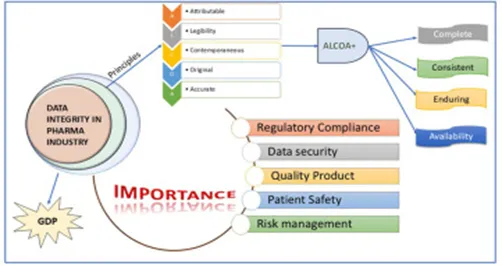
Figure No.2 Importance of Data Integrity
Regulatory Audits
Another name for this kind of audit is a third-party audit. This kind of audit is not carried out by the supplier or the customer. For the purpose of compliance, certification, or registration, a third-party audit is carried out by an independent body or regulatory agency.[6]such international regulatory organizations. These inspections are carried out by the Medicines and Healthcare Products Regulatory Agency (MHRA), the United States Food and Drug Administration (USFDA), the Therapeutic Goods Administration (TGA), Australia, the Medicines Control Council (MCC), South Africa, etc. A multidisciplinary company team and audit inspectors must make up the team that conducts the audit. Each of the following departments—production, quality control, warehouse, maintenance, administration/people, and marketing/sales—must have representatives. Since manufacturers must constantly adhere to GMPs, these audits can be carried out at any time (MHRA presently conducts about 10% of its inspections in the UK in this manner). Companies may also be audited by regulatory agencies in other nations where goods are sold (for example, the FDA examines manufacturers in Europe). Every regulatory inspector is highly skilled, professional, and well-trained. All MHRA inspectors will be listed in the registries of individuals qualified to serve as qualified individuals and lead auditors since they are all professionally qualified and have at least five years of relevant experience in a production operation. Production or import/export licenses may be restricted (or revoked) if a regulatory audit is not approved. (Recently, the FDA issued "punitive consensus decrees" on financial firms that failed to follow the GMPs and respond appropriately to the audit results. As a result, businesses must have clear procedures in place for handling audits, and employees must have the necessary training to be audited. Internal audits can offer beneficial practice opportunities [7].
Goals of an Audit
This intricate process's straightforward objective is to assess current operations and paperwork to see if they adhere to the set standards. The results of an audit will help us enhance procedures and create a better system for the company's benefit by assessing the advantages and disadvantages of quality assurance and control procedures. Laboratory testing is required to quantify or qualify the qualities of every product produced by a pharmaceutical company.The essential procedures that serve as the pharmaceutical industry's control and balancing system are quality assurance and control. The audit itself should easily accomplish its goal with the right planning and preparation. Building brand reputation and avoiding the negative consequences of non-compliance, including as penalties, unfavorable publicity, and legal action, can be achievedby effective auditing and strict adherence to standards [8].
Audit Objectives
The objectives of the audit include:

Figure No.3 Objectives of Audit
Ensuring Data Integrity: Best Practices and Strategies
Data plays a vital role in the pharmaceutical industry by supporting patient safety, ensuring product quality, and enabling the development of effective medicinal products for human use. Data may be generated and maintained in both electronic and paper-based formats. Regardless of the format, the principles and requirements for data integrity remain the same and must comply with established data integrity standards [10].
Data integrity refers to the accuracy, consistency, and reliability of data throughout its lifecycle within a database or any other information storage system. It ensures that data remains unchanged and trustworthy during creation, processing, transmission, storage, and retrieval. Maintaining data integrity is essential for organizations to safeguard information and make sound, evidence-based decisions [11]. Additionally, data integrity encompasses the extent to which data remains complete, accurate, consistent, and dependable over its entire period of use [12,13].
The phrase "data lifecycle" describes all of the events that take place with data during its entire existence, including its creation, recording, processing (including the transformation or transfer), applications, retention, archiving, retrieval, and destruction.2 "Data quality" is frequently employed as a proxy for "data integrity."[14]
As the pharmaceutical industry continues to evolve, ensuring data integrity has become a critical aspect of drug research, manufacturing, and regulatory compliance. The ability to maintain accurate, reliable, and complete data is increasingly essential to safeguarding the quality, safety, and efficacy of pharmaceutical products. In response to stringent regulatory expectations set by authorities such as the U.S. Food and Drug Administration (FDA) and the European Medicines Agency (EMA), pharmaceutical companies are required to establish and implement robust policies and procedures to preserve data quality throughout the entire product lifecycle [16]
SOP (Standard Operating Procedure) for Auditing:
1.PolicyStatement:
The policy statement should clearly define the organization’s commitment to conducting audits in a systematic, unbiased, and consistent manner. It must emphasize adherence to applicable industry standards, regulatory requirements, and internal quality systems. This section should also highlight the importance of audits in ensuring compliance, improving processes, identifying risks, and maintaining data integrity. It sets the foundation for accountability, transparency, and continuous improvement across all operations.
2. Establishing a Competent Auditing Team:
A qualified auditing team is essential for effective audits. This section should specify the required qualifications, such as relevant education, professional certifications, training in auditing techniques, and practical experience. It should define roles and responsibilities, including audit planning, execution, documentation, and reporting. Auditors must be objective and independent of the area being audited to avoid bias. Continuous training and skill development should also be emphasized to maintain competency.
3. Audit Purpose and Scope:
The purpose of the audit must be clearly stated, such as evaluating compliance, verifying data integrity, or assessing process efficiency. The scope should define the specific departments, processes, systems, or timeframes to be reviewed. Clearly outlining the scope ensures that the audit remains focused and comprehensive, avoids unnecessary overlap, and ensures that all critical areas are adequately examined for compliance and performance.
4. Auditing Frequency:
This section should define how often audits are conducted based on factors such as regulatory requirements, risk level, past audit findings, and organizational policies. High-risk areas may require more frequent audits, while low-risk areas may be audited periodically. Establishing a defined schedule ensures regular monitoring, timely identification of issues, and continuous compliance with standards and regulations.
5. Audit Reports and Distribution:
Audit findings must be documented in a clear, structured report that includes observations, evidence, deviations, and conclusions. The report format, content, and timelines for preparation should be defined. It should also specify how and to whom the report will be distributed, such as management, quality assurance teams, or relevant departments. Timely and accurate reporting ensures transparency, informed decision-making, and prompt corrective actions.
6. Corrective Actions:
This section should outline the process for identifying non-compliance, documenting findings, and implementing corrective and preventive actions (CAPA). Responsibilities for addressing issues should be clearly assigned, along with defined timelines. It should also include procedures for tracking, verifying, and closing corrective actions to ensure effectiveness. Proper monitoring helps prevent recurrence and supports continuous improvement.
Review and Updates of SOP:
The SOP should be periodically reviewed and updated to ensure alignment with current regulations, industry best practices, and organizational changes. Regular revisions help maintain relevance, improve efficiency, and ensure ongoing compliance. Feedback from audits, regulatory updates, and operational changes should be incorporated to keep the SOP effective and up to date.[17, 20]
Principles of Auditing
The principles of auditing offer a structure for carrying out trustworthy and efficient audits. To guarantee consistency and integrity in audit procedures, adherence to these standards is crucial. The following are the fundamental ideas of auditing:
Integrity is the foundation of auditing and requires auditors to perform their duties with honesty, professionalism, and strong moral principles. Auditors must remain objective, impartial, and free from any conflicts of interest that could influence their judgment. They should demonstrate accountability for their work and ensure that their actions build trust and credibility. Maintaining integrity ensures that audit outcomes are reliable, unbiased, and respected by all stakeholders.
Fair presentation means that auditors must report findings, conclusions, and recommendations truthfully and accurately, without distortion or bias. All significant observations, including nonconformities, limitations, and disagreements with the auditee, should be clearly documented and disclosed. This principle ensures transparency and prevents misrepresentation of facts. A fair and balanced report enables management to make informed decisions and take appropriate corrective actions.
Due professional care requires auditors to perform their work with diligence, competence, and attention to detail. They must apply their knowledge, skills, and judgment carefully in all audit activities. Auditors should recognize the importance of their role and the trust placed in them by the organization. This involves following systematic audit procedures, evaluating evidence critically, and ensuring that conclusions are well-supported and justified.
Confidentiality ensures that auditors protect sensitive information obtained during the audit process. They must not disclose, misuse, or exploit audit-related data for personal or professional gain. All information should be handled securely and only shared with authorized personnel. Maintaining confidentiality builds trust between auditors and auditees, encourages openness during audits, and ensures compliance with legal and ethical requirements regarding data protection.
Auditing is based on evidence, and since it is often impractical to examine all data, appropriate sampling techniques are used. Auditors should collect sufficient, relevant, and reliable evidence to support their findings and conclusions. Sampling must be done systematically to ensure that results are representative and unbiased. This approach enhances the credibility of audit outcomes and ensures that decisions are based on factual and verifiable information.
The risk-based approach focuses on identifying and evaluating risks and opportunities that may impact the audit objectives. Auditors prioritize areas with higher risk to ensure critical issues are thoroughly examined. This approach influences audit planning, execution, and reporting, allowing resources to be used efficiently. By concentrating on significant risks, audits become more effective in achieving objectives and providing valuable insights to the organization. [20, 19]
By following these guidelines, auditors can improve the efficacy, objectivity, and dependability of their audits while giving stakeholders useful and reliable information.
DISCUSSION
Quality Assurance (QA) plays a critical role in ensuring data integrity compliance during regulatory audits by establishing and maintaining robust quality systems. QA develops and enforces standard operating procedures, ensures proper documentation practices, and verifies that data are accurate, complete, consistent, and traceable throughout their lifecycle. Through routine audits, risk assessments, and employee training, QA identifies gaps and prevents data manipulation or loss. During regulatory inspections, QA acts as a key liaison, demonstrating compliance with data integrity principles such as ALCOA+. This proactive oversight helps organizations meet regulatory expectations and maintain audit readiness.
CONCLUSION
Quality Assurance plays a vital role in upholding data integrity and achieving regulatory compliance. Through effective quality systems, standardized procedures, and continuous monitoring, QA ensures that data remain accurate, complete, and reliable throughout their lifecycle. QA’s oversight during routine operations and regulatory audits helps identify risks, prevent data discrepancies, and demonstrate adherence to regulatory expectations. By fostering a culture of accountability and compliance, Quality Assurance not only supports successful audit outcomes but also enhances organizational credibility, regulatory trust, and long-term operational efficiency within regulated environments.
REFERENCES
Vedanabhatla SO, Gupta NV. A review on audits and compliance management. Asian J Pharm Clin Res. 2013;6(2):43-5.

Diksha Bawane, Bhagyashree Borade, Dr. S. Dighade, Role of Quality Assurance in Ensuring Data Integrity Compliance During Regulatory Audits, Int. J. of Pharm. Sci., 2026, Vol 4, Issue 6, 1914-1923, https://doi.org/10.5281/zenodo.20592090
 10.5281/zenodo.20592090