

We use cookies to ensure our website works properly and to personalise your experience. Cookies policy
Chatrapati Shivaji College Of Pharmacy, Deory Dist, Gondia
Female reproductive problems - like painful periods, excessive bleeding, pcos, unstable ovulation, dryness in the vagina, or hormone disturbances - affect countless women globally, frequently harming physical health, emotions, and fertility. While drugs such as nsaids and birth control pills are common solutions, prolonged usage links to unwanted outcomes: stomach troubles, shifts in gut bacteria, heart-related concerns, emotional swings, plus interference with natural hormones. For this reason, more women now explore herbal and integrative methods trusted over generations for both gentleness and results. In particular, ayurveda highlights three plants: vitex negundo, vitex agnus-castus, and saraca asoca (also called ashoka), traditionally applied to support cycle regularity and female vitality. Recent studies confirm these uses, revealing benefits such as lowered pelvic pain, decreased swelling, reduced cell damage from stress, relief from womb congestion, better hormonal harmony, stabilized egg release, and less irregular bleeding. Some plants have various active compounds - like flavonoids, lignans, glycosides, or tannins - that help produce several health benefits. Using worldwide research, this study gathers data from lab tests, chemical screenings, human trials, yet drug-herb evaluations to explore how these plants affect women’s reproductive issues.
Women's reproductive health is key to general public wellness and economic progress. Issues in the female reproductive system impact not just fertility or periods, yet influence mental health, job performance, alongside daily living (5). Common global gynecological problems include painful periods, heavy bleeding, polycystic ovary syndrome, irregular ovulation, thinning of vaginal tissue, plus pelvic organ dropping (1,5,10,11).
Dysmenorrhea impacts around half to nine-tenths of women during their periods, ranking among the most common reproductive health issues worldwide (5). Pain from this condition stems largely from high levels of prostaglandins, which cause intense uterine contractions, reduced blood flow, along with inflammation-related discomfort (6). Even though nsaids and hormone treatments exist, a significant number of patients stop using them because of side effects, medical restrictions, or poor relief (5).
Herbal remedies have treated women’s health issues for hundreds of years across traditions like ayurveda, unani, siddha, and chinese medicine (1,4). Global research shows over 400 plants are linked to managing menstrual problems (1). In ayurveda, specific herbs - ashoka, lodhra, shatavari, vitex, neem, and dashamoola - are noted for supporting uterus function, cleansing blood, reducing inflammation, or balancing hormones (4,26–33).
Vitex negundo and saraca asoca stand out because they’ve been widely tested in labs and clinics (15–25, 29–33). While addressing pain and swelling, these plants also influence hormonal activity and uterus function - so they’re useful for managing period-related issues.
2. Physiology of the female reproductive system

Fig. no. 1 female reproductive system
2.1 coordination between brain and reproductive organs
The female reproductive system works via close coordination among the hypothalamus, pituitary gland, ovaries, uterus, cervix, along with the vaginal tract (2,3). Normal menstrual cycles rely on accurate hormone signals across the hypothalamic–pituitary–ovarian (hpo) axis. Through this network, ovarian function repeats regularly while supporting overall reproductive well-being (3).
2.2 Hormonal Regulation of the Menstrual Cycle
The hypothalamus sends bursts of gnrh that prompt the anterior pituitary to release fsh or lh (2,3). Instead of combining them, these hormones act separately - fsh helps ovarian follicles grow and develop. Meanwhile, lh causes ovulation, when a mature egg is released. As a result, the ovaries make estrogen along with progesterone. These control how the endometrium builds up, gets thicker, then breaks down during each menstrual cycle (3).
2.3 Importance of Ovulation and Menstrual Regulation
Ovulation plays a key role in the monthly cycle, making pregnancy possible. If no egg is released, periods can become unpredictable, getting pregnant gets harder, also conditions like pcos might develop (3). Following ovulation, progesterone rises to support the womb’s lining; once it drops, the inner layer sheds - this causes bleeding known as menstruation (2).
2.4 Mechanisms Behind Menstrual Cramps
Too much prostaglandin PGF?α contributes significantly to menstrual pain. High levels trigger strong womb contractions, restrict blood supply, resulting in oxygen shortage that produces intense cramps during periods (5,6). On a cellular scale, these compounds excite nerves linked to pain while boosting substances like cytokines, bradykinin, or histamine - this worsens swelling and distress (6)
2.5 Role of Plant-Based Remedies in Menstrual Health
Herbal treatments help reduce period pain by affecting several body processes. For instance, they block prostaglandins while also lowering substances that cause inflammation. They adjust levels of female hormones and enhance both blood circulation and strength in uterus muscles. At the same time, these herbs protect cells from oxidative stress. Together, these effects show how plant-based options may support menstrual health and ease symptoms(6,20,21).
3. Pathophysiology and disease burden of dysmenorrhea
3.1 Classification of Dysmenorrhea
Dysmenorrhea means period pain; it falls into two main kinds - primary and secondary. While primary type happens without detectable pelvic issues, the secondary form arises from existing problems like endometriosis or fibroids. Conditions such as adenomyosis, pid, or polycystic ovary syndrome may lead to this second category. Each of these can cause ongoing lower abdominal discomfort, disrupted cycles, along with intensified health-related signs.
3.2 Pathophysiology
The main process behind primary dysmenorrhea involves an overproduction of prostaglandins in the uterus - particularly pgf2α - when menstruation starts. Elevated levels of these substances trigger intense uterine spasms, reduce blood supply to the womb, resulting in tissue oxygen shortage that brings sharp cramps and discomfort in the lower belly (5,6). On the other hand, secondary dysmenorrhea stems from anatomical issues, ongoing inflammation, or hormone imbalances within pelvic structures (5), therefore causing pain that tends to persist and return frequently.
3.3 Disease Burden
Dysmenorrhea is a widespread health issue that strongly affects how people function day to day. Missing classes or falling behind at school happens often, along with lower job output, mood struggles, stress, and relying heavily on painkillers - especially in young women (5). Research by macgregor et al. Shows it doesn't just interfere with everyday tasks; over time, it may influence education levels, career success, and general well-being (5). In contrast, findings from comprehensive analyses suggest plant-based treatments can noticeably lessen period pain while avoiding stomach or kidney problems tied to regular nsaid intake (6).
4. Global use of herbal medicines in menstrual disorders
4.1 Worldwide Adoption of Traditional Herbal Therapies
The application of plant-based treatments for period-related issues appears in key ancient practices - like Ayurveda, Chinese traditional therapy, African folk medicine, or native South American care methods. Research led by revealed distinct geographic differences in herb choices throughout Asia, Africa, Europe, alongside South America, shaped by local traditions and available species, but also highlighting widespread trust in nature-derived solutions for women’s reproductive concerns (1).
4.2 Predominant Medicinal Plant Families
Despite varying regions, certain plant families show up often in remedies for period problems. For example, verbenaceae, fabaceae, lamiaceae, zingiberaceae, or acanthaceae are common choices. Each holds plants loaded with flavonoids, terpenoids, alkaloids, also phenolics. These substances have effects that reduce inflammation while influencing hormones (1).
4.3 Commonly Utilized Herbs Across Regions
Plants including vitex varieties, turmeric, ginger, cinnamon, neem (azadirachta indica), along with ashoka (saraca asoca) are commonly applied in herbal medicine. Such herbs often treat menstrual pain, heavy bleeding, disrupted ovulation cycles, pms symptoms - also hormonal disturbances - which highlights their broad healing potential (1).
4.4 Converging Mechanisms of Action
Even though these plants come from different regions and traditions, their main way of working is quite alike. Their key benefits stem from one or more of four actions: reducing inflammation instead of just blocking it, easing pain through natural means rather than synthetic drugs, balancing sex-related hormones in a gentle manner, plus shielding cells from damage via antioxidative compounds - each playing a role in strengthening uterus function while making periods more manageable (1,6).
5. Overview of vitex negundo
5.1 Botanical Background and Traditional Importance
Vitex negundo linn., or nirgundi, is a fragrant medicinal shrub from the verbenaceae family. Found commonly in india, china, sri lanka, the philippines, along with parts of southeast asia, it thrives in warm tropical and subtropical zones (21–23). In traditional medicine - like ayurveda, siddha, and unani - it plays a key role due to long-standing use against pain, swelling, joint issues, female health problems, fevers, and infections caused by microbes (21,22). Owing to broad healing properties, this plant serves multiple purposes, especially linked to reducing inflammation and supporting women's wellness.

Fig.no.2 Vitex Negundo
5.2 Phytochemical Profile of Vitex negundo
Studies show vitex negundo holds many active chemicals. It includes flavonoids like casticin and vitexin; along with these are chromones, terpenoids, lignans, phenolic acids, glycosides, or essential oils - most linked to powerful biological effects (17,25). These substances work together, supporting pain relief, lowering inflammation, fighting free radicals, blocking microbes, or influencing hormone activity (17,18,25). Because of its varied makeup, the herb is widely used in treatments for menstrual discomfort, balancing sex hormones, and cutting cellular damage - which highlights value in women's health applications.

6. Pharmacological activities of vitex negundo
6.1 Analgesic and Antinociceptive Activity
A large number of studies point to the pain-relieving properties of vitex negundo. Gupta with tandon found that extracts from its leaves caused strong analgesia in lab animals - effects on par with common synthetic drugs (15). This was further supported by telang’s team, whose work showed activity both in the nervous system and at tissue level, suggesting several mechanisms behind the effect (16). In parallel, dharmasiri’s group noted marked reduction in pain behaviors, tied to blocking major inflammation-related signals linked to pain perception (20). Together, this evidence positions vitex negundo as a viable plant-based option for managing painful conditions such as menstrual cramps.
6.2 Anti-inflammatory Activity
Inflammation plays a key role in period pain; meanwhile, vitex negundo displays strong anti-inflammatory action. This effect happens via several pathways - by blocking prostaglandin formation, lowering nitric oxide levels, or reducing histamine discharge (16,18,20). According to kulkarni et al., leaf extracts also show clear membrane protection and inflammation control, which backs up their historical use for inflammatory issues (18). Such actions reduce swelling and irritation in the uterus linked to painful periods and related health problems.
6.3 Antioxidant Activity
Oxidative stress plays a key role in conditions like dysmenorrhea and pcos. Because of compounds such as flavonoids, phenolics, or essential oils, vitex negundo shows notable antioxidant effects. Research indicates the plant extract can neutralize free radicals effectively - this shields ovarian tissue, endometrial cells, even uterine muscle layers from harm (17,18). By countering oxidation, it lowers inflammation, supports healing processes, also promotes better reproductive function.
6.4 Role in PCOS Management
Recent studies suggest vitex negundo could help manage polycystic ovarian syndrome (pcos). In one experiment, found seed extracts reversed pcos-like symptoms caused by letrozole in animals; they observed less ovarian swelling, regular menstrual cycles, along with stabilized hormone levels (9). These results were linked to better ovary structure and fewer fluid-filled sacs. This implies the plant might influence key hormonal mechanisms tied to pcos development.
7. Vitex agnus-castus in Dysmenorrhea
Vitex agnus-castus, often called chaste tree berry, is widely recognized in european herbal medicine for easing pms and painful periods. Evidence from multiple trials - among them work by semenyna and korytko - shows patients given standardised vitex extracts experienced less severe period pain; their cycles also became more predictable (7). This effect appears tied to how the plant influences hormone regulation. Mainly, it stimulates dopamine d2 receptors, resulting in lower prolactin release, which helps relieve issues caused by hormonal fluctuations. It also helps balance estrogen and progesterone levels - key for reducing strong uterine contractions and period pain (7). Together, these effects position vitex agnus-castus as an effective, evidence-supported herb to ease painful menstruation.

Fig. no. 5 effect of vitex nigundo
8. Therapeutic Importance of Saraca asoca (Ashoka) in Gynecological Disorders
Saraca asoca (roxb.) De wilde - called ashoka - is an important medicinal plant from the fabaceae family, valued in ayurveda for strengthening the uterus (26–33). Found mainly in india, sri lanka, and parts of southeast asia, its stem bark shows strong biological activity; it often appears in traditional women's health remedies (27,30). In old medical writings, ashoka is named stree roga hara (treatment for female ailments), rakta stambhaka (reducer of heavy menstrual flow), or yonidosha nashaka (fixer of womb-related issues), showing broad use in reproductive care (26,29). People historically used bark extracts to treat painful periods, excess bleeding, white discharge, weak uterine muscles, hormone imbalances, and problems similar to endometriosis (29–33). Recent lab studies support these uses, revealing effects that tighten uterine tissue, reduce swelling, block estrogen pathways, and balance hormones - confirming its place in today’s herbal gynecology (30–33).

Fig. no.6 Saraca Asoca
9. Phytochemical profile of saraca asoca
Research shows saraca asoca contains many bioactive substances linked to health benefits (30–33). Its bark holds notable levels of flavonoids like quercetin and kaempferol; it also includes tannins, glycosides, sterols, saponins, phenolics, catechins, or anthocyanins - each playing different biological roles. Work confirms these compounds drive the plant's anti-inflammatory, uterus-stimulating, antioxidative, and blood-clotting actions, justifying application in female reproductive issues (25,33). Beyond this, findings point out how they shield uterine tissue while helping balance menstruation, reinforcing historical use for period-related concerns (31).
10. Biological effects of Saraca asoca
10.1 Uterine Tonic Activity
Saraca asoca improves uterine muscle strength while regulating contractions, which helps manage weak uterus function or heavy periods (29–31). Showed its value in treating women’s health issues by supporting womb tone (29). Later, verified these effects using lab-based studies (31).
10.2 Hemostatic Activity
Menorrhagia arises due to poor blood vessel control in the uterus and unstable lining. Saraca asoca helps by tightening tissues through tannins while flavonoids support vessel strength. In research, Ashoka was shown to lower heavy period flow; it also raised hemoglobin in women with low red blood counts (30–33).
10.3 Anti-Inflammatory and Analgesic Activity
Saraca asoca reduces inflammation and pain by blocking prostaglandins along with certain immune signals. This action helps ease menstrual cramps because it calms pelvic discomfort (5,6,33).
10.4 Antioxidant Activity
Oxidative stress plays a role in endometrial inflammation along with impaired ovarian function. Ashoka bark extract shows notable antioxidant effects that shield reproductive organs from oxidative harm (31).
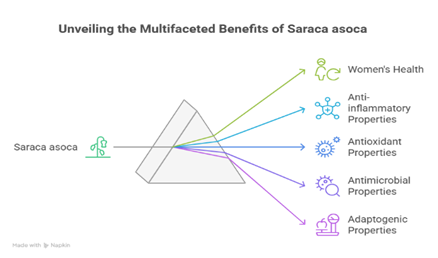
Fig. no. 7 effect of Vitex Negundo
11. Role of Ashokarista in Gynecological Disorders
Ashokarista is a fermented Ayurvedic preparation where Saraca asoca acts as the main active component. Because of strong uterotonic, anti-inflammatory, and hormone-modulating effects, this formula is commonly used in Ayurveda to treat heavy periods, painful menstruation, white discharge, hormonal issues, and weak uterus function (8,32). Thanks to combined plant ingredients, it supports regular menstrual cycles, improves tone of uterine muscles, and balances hormones - offering broad support for various female reproductive concerns.
11.1 Clinical Trial Evidence
Clinical tests on ashokarista's effect were done by using a single-blind, randomized method with placebo comparison. This research showed notable reductions in pain intensity - also shorter bleeding periods - in addition to more stable menstrual cycles, along with better overall health in patients taking ashokarista versus those on placebo (8,32). Notably, the treatment was well tolerated; besides being safe, it caused no major side effects, which supports its usefulness and appropriateness for extended use in female reproductive conditions (8).
12. Role of Neem (Azadirachta indica) in Pain and Inflammatory Disorders
Azadirachta indica, or neem, is widely noted for powerful pain-relieving and swelling-reducing effects - making it useful in easing women’s reproductive system discomfort. Research shows neem leaf extract lowers pain sensitivity while boosting morphine's effect in lab tests (19), indicating synergistic potential. It works via multiple routes: altering brain-based pain signals, blocking body-wide inflammation triggers, along with offering cell-protective benefits - all contributing to less womb-related irritation and period distress (19). Such biological mechanisms confirm its historical role in managing cycle-linked pain and supporting lower abdominal wellness.
13. Herb–Drug Interactions and Synergistic Therapy
Herbal remedies, if used alongside standard drug therapies, may boost treatment outcomes. According to kapoor and singla, these pairings don't just improve effectiveness - they also lower side effects linked to chemical-based medications (12). In addition, narayan pointed out that blending traditional indian plant-based formulas with mainstream medicine is becoming more relevant today, as it promotes care focused on the whole person rather than isolated symptoms (13).
Besides combining vitex and nsaids - this boosts pain relief while lowering stomach side effects - ashoka paired with iron helps treat heavy periods along with anemia (12,13). Another case involves neem used alongside opioids; here, pain control improves without raising the drug dose (19). These mixtures are now seen worldwide as practical options, providing better safety and stronger results in treating women’s health issues.
14. Pharmaceutical Dosage Forms and IP Standards
Herbal medicines come in many types of dosages - this helps boost healing effects, shelf life, and ease of use. Examples are pills, soft gels, liquid sweet mixes, cultured products, boiled herb drinks, or concentrated plant extracts; every type aims to deliver active ingredients more effectively. strict rules apply to forms like hard gel capsules: they must have even content distribution, break down within set time, keep moisture low, and stay free from microbes. Following these official guidelines ensures safer, reliable herbal products - also improves user adherence and steady health results(14).
15. Safety, Toxicity, and Quality Control
Most lab and clinical trials show vitex negundo, vitex agnus-castus, and saraca asoca are safe at standard doses - very low toxicity, few side effects seen in both animals and people (7,8,15–21,29–33). Though used for generations in traditional medicine, recent data confirm they’re well-tolerated, making them suitable for extended use in women’s health.
Even though herbal remedies are generally safe, problems with quality might weaken how well they work or make them unsafe. For instance, using the wrong plants, mixing in impurities, polluted ingredients, or unclear extraction methods can result in unreliable effects or harm. Following official testing rules - like those listed in the helps avoid these issues. Such guidelines confirm correct plant identity, cleanliness, strength, and shelf life of natural medicines, which protects users while supporting trust in both ancient and current herb-based treatments.
16. Role of Herbal Medicines in Other Female Reproductive Disorders
Herbal remedies are increasingly used to treat different women’s health issues - not just period pain. Because they can balance hormones or reduce inflammation, these natural treatments offer alternatives when standard drugs cause side effects or fall short. Some also protect cells with antioxidants or support organ structure through strengthening mechanisms. This mix of benefits makes them relevant in specific gynecological cases where mainstream medicine has gaps.
16.1 Polycystic Ovarian Syndrome (PCOS)
In women with pcos, plant-based remedies like vitex negundo may offer meaningful support. Research shows that extracts from its seeds helped normalize hormone levels, lower ovary-related swelling, while also boosting how the body responds to insulin - tested in animals using a letrozole-triggered model (9). Such results suggest it could aid in repairing normal ovarian function; at the same time helping align metabolic and fertility aspects, which positions this herb as a practical supportive option alongside standard care.
16.2 Vaginal Atrophy
Vaginal thinning often happens when estrogen drops - particularly after menopause - and is usually treated with estrogen. Still, because of worries about hormonal treatments, more attention has gone toward plant-based options that mimic estrogen or shield tissue layers. Such remedies tend to carry fewer dangers; they can boost moisture, strengthen cell lining, and ease discomfort while skipping the downsides of lab-made hormones (11).
16.3 Uterine Prolapse and Pelvic Weakness
Plant-based methods aimed at improving uterine and pelvic muscle strength have been explored mainly in animal studies, yet offer useful clues for women’s health care. Certain herbs that tone the uterus, reinforce connective tissue, or boost muscle function might help maintain pelvic structure - possibly aiding mild uterine descent or generalized pelvic instability (10). These natural options could work alongside physical therapy and similar conservative treatments.
On the whole, plant-based remedies are increasingly acknowledged due to their low risk, effectiveness, also wide-ranging benefits across various women’s reproductive issues.
17. Mega Discussion
The current review gathers experimental, clinical, plus ethnopharmacological data on herbal remedies used for female reproductive issues - especially dysmenorrhea, heavy periods, pcos, also hormone problems. Evidence from international, traditional indian medicine, alongside modern drug studies shows plants like vitex negundo, vitex agnus-castus, saraca asoca, or neem may offer real benefits in women’s health care (1–33).
Dysmenorrhea happens when high levels of prostaglandins cause strong uterus movements, reduced blood flow, along with pain due to inflammation (5,6). While current nsaid drugs ease symptoms by blocking cyclooxygenase enzymes, they may harm digestion, kidneys, or heart if used too long (5). On the flip side, natural remedies work in several ways at once - reducing pain, swelling, muscle spasms, oxidative stress, while also helping balance hormones (6,15–21,33). Because these treatments act through multiple pathways, plant-derived options are particularly useful for ongoing or repeating period-related issues.
Vitex negundo stands out due to consistent lab evidence supporting its medicinal use. Research shows clear pain-blocking and swelling-reducing effects - key factors linked to menstrual cramp mechanisms (15,16,18,20). Its active components, like flavonoids and terpenes, interfere with prostaglandins while stabilizing cell membranes, thus easing discomfort and lowering inflammation (17,18,25). Notably, seed extracts improved hormone imbalances and ovary-related swelling in animals with pcos-like conditions, pointing to hormonal influence (9). Because it both eases pain and adjusts hormone function, vitex offers broader benefits compared to standard nsaid drugs that target only symptoms.
Vitex agnus-castus adds weight to the research on vitex species regarding women’s reproductive functions. Because it affects dopamine pathways, it lowers prolactin while stabilizing estrogen and progesterone levels - this helps ease period pain and cycle instability (7). As a result, many herbal medicine systems across europe rely on it for premenstrual symptoms and discomfort during menstruation.
Saraca asoca is a key plant in ayurveda used to support uterus health and control bleeding. Its bark holds flavonoids, tannins, glycosides, besides phenolics - compounds tied to strengthening uterine contractions, lowering inflammation, fighting oxidative stress, also stopping blood flow (30–33). Trials on ashokarista show it helps reduce heavy periods, balance cycle patterns, along with boosting general health in cases of menorrhagia or painful menstruation (8,32). While hormone treatments can interfere with natural hormonal signals, ashoka acts by reinforcing uterine structure and blood vessel function, providing a more sustainable option over time.
The role of neem in aiding pain relief stands out. Because it boosts opioid effects while reducing discomfort on its own, this backs up historical use for inflammation and women's health issues involving pain (19). Moreover, its capacity to combat oxidative stress and influence immune response helps shield against long-term pelvic inflammation.
The idea of herbs working together with medicines is becoming more relevant in combined treatment methods. Herbal mixes might boost how well conventional drugs work, yet lower harmful effects from high doses (12,13). For instance, using vitex alongside nsaids could reduce the need for strong painkillers; similarly, ashoka along with iron helps manage heavy periods and anemia better. These blended treatments offer a practical path forward in care for women.
From a medicine standpoint, setting consistent levels in herbal products matters greatly. While the indian pharmacopoeia sets testing rules for capsules - focusing on even ingredient distribution, cleanliness from microbes, also ease of use by patients - the path forward faces hurdles. Even though research data supports effectiveness, differences in how extracts are prepared might affect results. Added to this, varying plant components get used without agreed-upon protocols across labs or manufacturers.
This review shows herbal medicines aren't just backup treatments - they’re backed by science, act on multiple levels, and offer safer ways to handle women’s reproductive issues. Because they tackle pain, swelling, hormone problems, cell damage, and weak uterus function at once, they provide a broader healing approach.
18. Future Scope and Research Gaps
Although herbal remedies have been used for ages in women’s health care - also gaining support from modern science - key knowledge gaps remain, blocking wider medical adoption. Fixing these flaws via rigorous, uniform studies based on solid data could boost trust and credibility worldwide.
18.1 Large-Scale Clinical Trials
Most existing medical data comes from limited or local research, limiting broad application. Large, collaborative studies - randomized and blinded - are essential to confirm findings while supporting wider recognition of plant-based treatments.
18.2 Standardization of Herbal Extracts
The effectiveness of plant-based treatments depends heavily on chemical variations caused by weather, soil, when they’re harvested, or how they’re processed. To get consistent results, it’s crucial to create clear, measurable standards for these extracts.
18.3 Mechanistic Molecular Studies
While several plants show definite health advantages, the way they work at a cellular level isn't fully known. Further research into gene activity changes, binding with receptors, cell communication routes, or control of proteins is required to clearly explain their medical impact.
18.4 Pharmacokinetics and Bioavailability
Some information is available on how herbal compounds are absorbed, moved through the body, broken down, or removed. To find the best dose and delivery method, along with safe effective ranges, detailed studies on their behavior in humans are needed.
18.5 Safety in Long-Term Use
Although ancient healing practices claim lasting safety, proof from current research remains weak. Long-term harm checks - especially for ongoing treatments like pcos, endometriosis, or heavy menstrual bleeding - are needed to verify safe use over time while spotting possible build-up risks.
18.6 Drug–Herb Interaction Profiling
As more people use combined medical approaches, it’s key to grasp how drugs and herbs might interact. To avoid harmful effects while using standard treatments alongside herbal products, thorough lab tests followed by human trials must be done. These steps help confirm whether mixtures are safe before they’re widely used in practice.
These gaps show a demand for organized, cross-field studies that could help move herbal gynecology toward practices backed by proof and recognized worldwide.
19. Limitations of Current Studies
Recent work on herbal treatments for women’s health issues shows potential - but findings are held back by flaws in design and application (9,15–21). Instead of solid human trials, much of the data comes from animal testing, which weakens real-world relevance. Dose levels aren’t consistent across studies; this variation hampers direct comparisons or repeated results. Moreover, how extracts are made differs widely - solvent types, plant components, and processing methods all vary, reducing trust in outcomes. A key drawback lies in poor documentation of side effects from drugs, along with limited monitoring data on prolonged herb usage. Together, these issues highlight a pressing demand for strict, research-backed guidelines in herbal gynecology - aiming at safety, effectiveness, and practical use.
FINAL CONCLUSION
Female reproductive issues are a major worldwide health challenge, impacting women's bodies, feelings, and social lives. While standard drug treatments help control symptoms, they may cause harmful side effects over time. Plant-based remedies, based on long-standing traditional use and now backed by current scientific studies, provide a broader, gentler, and more balanced option for treating these conditions.
Vitex negundo, vitex agnus-castus, and saraca asoca (ashoka) show strong research support for easing dysmenorrhea, menorrhagia, pcos, and hormone issues. Because they reduce pain, inflammation, and oxidative stress - while also regulating the uterus and hormones - they address core causes of menstrual problems. Unlike general remedies, these plants influence multiple physiological pathways involved in reproductive health. Traditional preparations such as ashokarista have produced reliable results in real-world settings, helping stabilize cycles and enhance daily functioning.
The use of herbal remedies alongside conventional drugs could improve personalized care for women, making treatment safer and more balanced. Yet widespread adoption requires solid evidence from big clinical trials, research on how these herbs move through the body, as well as consistent product standards to gain trust in mainstream medicine.
In short, herbal medicines are more than old remedies - they’re backed by science, affordable, also easy for patients to use, showing strong promise in treating women’s reproductive health issues.
REFERENCES
Borokar Aa, Pansare Ta. Plant Profile, Phytochemistry And Pharmacology Of Ashoka (Saraca Asoca Roxb., De Wilde): A Comprehensive Review. Int J Ayurvedic Herb Med. 2017;7(2):2524–2541



Aniket Bodalkar, Om Gaurkar, Simran Bahekar, Ankita Hatwar, Sandip Dhawale, Role of Saraca asoca and Vitex negundo in Menstrual Pain Disorders: A Synergistic Herbal Perspective, Int. J. of Pharm. Sci., 2026, Vol 4, Issue 3, 2651-2664. https://doi.org/10.5281/zenodo.19184034
 10.5281/zenodo.19184034