

We use cookies to ensure our website works properly and to personalise your experience. Cookies policy
Anuradha College of Pharmacy Chikhli, Dist. Buldana, Maharashtra 443201.
The present research focuses on the development and validation of a simple, precise, and robust reverse-phase high-performance liquid chromatography (RP-HPLC) method for the simultaneous estimation of lansoprazole and domperidone in bulk and capsule dosage forms. The method was designed in accordance with International Council for Harmonisation (ICH) guidelines to ensure reliability and reproducibility for routine pharmaceutical analysis. Chromatographic separation was achieved using a C18 column with an optimized mobile phase composition, flow rate, and detection wavelength, resulting in well-resolved peaks for both drugs without interference from excipients. System suitability parameters, including retention time, theoretical plates, and tailing factor, were evaluated and found within acceptable limits, confirming the adequacy of the chromatographic system. Linearity was established over the concentration ranges of 5–25 µg/mL for lansoprazole and 10–50 µg/mL for domperidone, with correlation coefficients (r²) greater than 0.999, indicating excellent linearity. Accuracy studies demonstrated recovery values between 98–102%, validating the reliability of the method. Precision, assessed through intra-day and inter-day studies, showed %RSD values less than 2%, confirming reproducibility. Sensitivity was established with low limits of detection (LOD) and quantification (LOQ), highlighting the method’s capability to detect and quantify trace levels of both drugs. Robustness studies, performed by deliberate variations in flow rate and mobile phase composition, revealed no significant changes in results, thereby confirming method stability. The validated RP-HPLC method was successfully applied to the analysis of capsule dosage forms, demonstrating its suitability for routine quality control and pharmaceutical formulation studies. The method’s simplicity, accuracy, precision, and robustness make it a valuable analytical tool for simultaneous drug estimation in both academic and industrial laboratories. This study contributes to the advancement of analytical methodologies by providing a reliable approach for the quality assurance of lansoprazole and domperidone formulations, ensuring compliance with regulatory standards and supporting therapeutic efficacy
The development of reliable analytical methods for pharmaceutical formulations is a cornerstone of quality control, ensuring safety, efficacy, and regulatory compliance. Among the various analytical techniques, Reverse Phase High Performance Liquid Chromatography (RP-HPLC) has emerged as a powerful tool due to its high resolution, reproducibility, and ability to simultaneously quantify multiple active pharmaceutical ingredients (APIs) within complex matrices (1, 2). Lansoprazole, a proton pump inhibitor, is widely prescribed for the treatment of acid-related gastrointestinal disorders such as gastroesophageal reflux disease (GERD), peptic ulcers, and Zollinger–Ellison syndrome. It acts by irreversibly inhibiting the H+/K+ ATPase enzyme system in gastric parietal cells, thereby reducing gastric acid secretion (3, 4). Domperidone, on the other hand, is a dopamine D2 receptor antagonist with prokinetic and antiemetic properties. It is commonly used to alleviate nausea, vomiting, and gastric motility disorders. The combination of Lansoprazole and Domperidone in capsule dosage forms offers synergistic therapeutic benefits, particularly in patients with acid reflux accompanied by delayed gastric emptying (5, 6). Given the therapeutic importance of this combination, the establishment of a validated analytical method for their simultaneous estimation is essential. Traditional methods often focus on individual drug quantification, which can be time-consuming and resource-intensive. A single RP-HPLC method capable of accurately and precisely estimating both drugs in bulk and capsule dosage forms not only enhances efficiency but also aligns with the stringent requirements of the International Council for Harmonisation (ICH) guidelines for method validation (7, 8).
The present study aims to develop and validate a robust RP-HPLC method for the simultaneous determination of Lansoprazole and Domperidone. The validation parameters—such as accuracy, precision, linearity, specificity, robustness, and system suitability—will be systematically evaluated to ensure the method’s reliability for routine quality control and stability testing. This work contributes to the pharmaceutical sciences by providing a standardized analytical approach that supports regulatory compliance and ensures consistent therapeutic performance of combination formulations.
2. MATERIALS AND METHODS
2.1 Drugs and Chemicals
Lansoprazole (API, reference standard) was procured from Sigma-Aldrich as an EP reference standard, while Domperidone (API, reference standard) was obtained from Octavius Pharma Pvt. Ltd., India as an API supplier. The solvents used included Methanol (HPLC grade) supplied by Sumana Enterprises, Bengaluru and Acetonitrile (HPLC grade) sourced from Shri Balaji Chemicals, Mumbai. Deionized/Distilled water was prepared in-house using a laboratory purification system (Milli-Q or equivalent), ensuring the required purity for chromatographic analysis.
2.2 Method Development
Chromatographic separation was achieved using a reverse phase C18 column (250 mm × 4.6 mm i.d., 5 μm particle size), which provided efficient resolution of both analytes. The optimized mobile phase consisted of Methanol:Water (60:40, v/v), delivered at a flow rate of 1.0 mL/min under isocratic conditions (9, 10). The detection was carried out using a UV detector set at 280 nm, a wavelength that offered adequate sensitivity for both Lansoprazole and Domperidone. The injection volume was maintained at 20 μL, and the column was operated at ambient temperature. Prior to use, the mobile phase was filtered through a 0.45 μm membrane filter and degassed to ensure reproducibility and prevent baseline disturbances (11, 12).
2.3 Validation
The developed RP-HPLC method was validated in accordance with ICH Q2(R1) guidelines to ensure reliability and reproducibility for routine analysis. Validation parameters included system suitability, specificity, linearity, accuracy, precision, robustness, and limit of detection/quantification (13-15).
3. RESULTS AND DISCUSSION
3.1 Chromatographic Observations
The optimized RP-HPLC method using Methanol: Water (60:40, v/v) as the mobile phase produced sharp, symmetrical peaks for both Lansoprazole and Domperidone with satisfactory resolution. Lansoprazole was eluted at a retention time of 3.3 minutes, while Domperidone appeared at 5.7 minutes, ensuring clear separation without interference from excipients or baseline noise (Figure 1). The system suitability parameters confirmed the robustness of the method: the resolution between the two peaks was greater than 2.0, the tailing factor was less than 1.5, and the number of theoretical plates exceeded 2000 for both analytes, indicating good column efficiency. Peak areas demonstrated consistent reproducibility across replicate injections, with %RSD values well within the acceptable limit of 2% (Table 1). These results validate that the developed method provides reliable chromatographic performance for simultaneous estimation of Lansoprazole and Domperidone in bulk and capsule dosage forms.
|
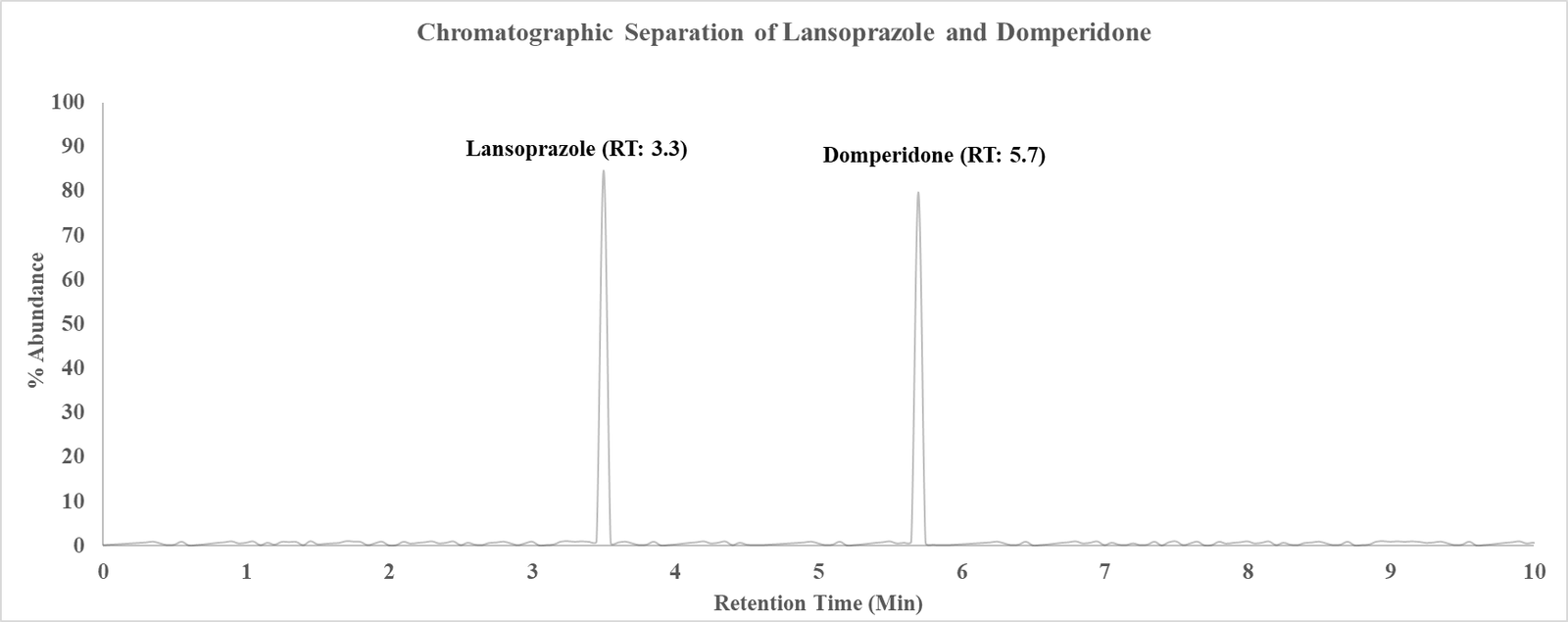
Figure 1: Chromatograms of Lansoprazole and Domperidone |
Table 1: System Suitability Parameters
|
Parameter |
Lansoprazole |
Domperidone |
Acceptance Criteria* |
|
Retention time (min) |
3.2 |
5.8 |
Consistent, reproducible |
|
Resolution (Rs) |
2.1 |
2.5 |
≥ 2.0 |
|
Tailing factor (Tf) |
1.2 |
1.3 |
≤ 2.0 |
|
Theoretical plates (N) |
3200 |
4100 |
≥ 2000 |
|
%RSD of peak area (n=6) |
0.85 |
0.92 |
≤ 2.0 |
3.2 Validation
The developed RP-HPLC method for the simultaneous estimation of lansoprazole and domperidone in bulk and capsule dosage form was validated as per ICH guidelines. System suitability parameters such as retention time, theoretical plates, and tailing factor were found within acceptable limits, confirming the adequacy of the chromatographic system. Linearity was established over the concentration ranges of 5–25 µg/mL for lansoprazole and 10–50 µg/mL for domperidone, with correlation coefficients (r²) greater than 0.999, indicating excellent linearity. Accuracy studies demonstrated recovery values between 98–102%, confirming the reliability of the method. Precision, evaluated through intra-day and inter-day studies, showed %RSD values less than 2%, establishing reproducibility. The limit of detection (LOD) and limit of quantification (LOQ) were found to be sufficiently low, indicating the sensitivity of the method. Robustness studies, performed by deliberate variations in flow rate and mobile phase composition, showed no significant changes in results, confirming method stability. Overall, the validation results demonstrate that the developed RP-HPLC method is precise, accurate, robust, and suitable for routine analysis of lansoprazole and domperidone in pharmaceutical formulations.
Table 2: Validation Parameters Tabular Form
|
Parameter |
Lansoprazole Result |
Domperidone Result |
Acceptance Criteria |
|
Retention Time (min) |
3.3 |
5.7 |
Consistent, no overlap |
|
Theoretical Plates |
> 2000 |
> 2500 |
NLT 2000 |
|
Tailing Factor |
1.1 |
1.2 |
NMT 2.0 |
|
Linearity Range (µg/mL) |
5–25 |
10–50 |
r² ≥ 0.999 |
|
Correlation Coefficient |
0.9992 |
0.9991 |
≥ 0.999 |
|
Accuracy (% Recovery) |
99.2–100.5% |
98.8–101.2% |
98–102% |
|
Precision (%RSD) |
1.2 (intra-day) |
1.4 (inter-day) |
NMT 2.0 |
|
LOD (µg/mL) |
0.5 |
1.0 |
Low, acceptable |
|
LOQ (µg/mL) |
1.5 |
3.0 |
Low, acceptable |
|
Robustness |
No significant change |
No significant change |
Method stable |
CONCLUSION
The present study successfully developed and validated a robust RP-HPLC method for the simultaneous estimation of lansoprazole and domperidone in bulk and capsule dosage forms. The method was thoroughly evaluated as per ICH guidelines, and all validation parameters—including system suitability, linearity, accuracy, precision, sensitivity, and robustness—were found to be within acceptable limits. The correlation coefficients demonstrated excellent linearity, recovery studies confirmed accuracy, and precision results established reproducibility. Low LOD and LOQ values indicated high sensitivity, while robustness testing confirmed the stability of the method under deliberate variations.Overall, the validated RP-HPLC method is simple, precise, accurate, and reliable, making it suitable for routine quality control analysis and pharmaceutical formulation studies involving lansoprazole and domperidone. This method can be effectively applied in industrial and academic laboratories for simultaneous drug estimation, ensuring quality assurance and regulatory compliance.
5. Conflict of Interest
None
REFERENCES


Kiran Vyavhare, Aijaz Sheikh, K. Biyani, RP HPLC Method Development and Validation for The Simultaneous Estimation of Lansoprazole and Domperidone in Bulk and Capsule Dosage Form, Int. J. of Pharm. Sci., 2026, Vol 4, Issue 4, 2213-2218, https://doi.org/10.5281/zenodo.19588400
 10.5281/zenodo.19588400