

We use cookies to ensure our website works properly and to personalise your experience. Cookies policy
Pravara Rural College of Pharmacy, Loni, Alihyanagar, Maharashtra, India 431736
Ayurveda is an ancient system of natural healing that dates back 5,000 years and originates from the Vedic culture of India. In recent decades, there has been significant growth in the area of herbal medicine. Both modern and ancient societies have recognized that medicinal plants and herbs possess compounds known for their therapeutic benefits. Historically, these plants were the primary source of active ingredients used to treat various human ailments. The resurgence of herbal medicine has led to an increase in research focused on the pharmacological properties of plants utilized in traditional healing practices. Among the Solanaceae family, the Solanum genus stands out as the largest, comprising over 2,000 species. Solanum surattense is recognized as one of the most effective plants within this family and is frequently employed in Ayurvedic medicine. Various parts of this plant—such as the stem, leaves, roots, and fruits—exhibit significant efficacy against both Gram-positive and Gram-negative bacteria, as well as fungal pathogens. Medicinal plants are distinctive for their ability to generate a wide array of chemical compounds that demonstrate impressive biological activities. Research into these plants has led to the identification of numerous bioactive compounds with remarkable therapeutic benefits. Solanum surattense, a perennial herb that grows wild, is extensively utilized in traditional medicine. A thorough review of the literature indicates that different parts of the plant, including roots, stems, leaves, fruits, and seeds, contain phytochemical compounds associated with a broad spectrum of pharmacological effects. Each part of the plant is known to possess medicinal properties. The objective of the current study was to streamline and present structured information regarding the pharmacological properties of S. surattense. This literature review uncovered recent research on the phytochemicals of S. surattense, highlighting how these active compounds exert various activities at the molecular level in essential biological processes.
Synonym: Botanical Name: Solanum surattense Burm. f. (syn. Solanum xanthocarpum Schrad. & Wendl.) The Solanum surattense belonging to the family Solanaceae is called kateli (Hindi), yellow berried or nightshade (English), kantakari (Sanskrit), kandangati (Tamil), nelamulaka (Tehgu), and bhejibaugana (Oriya)
Biologicl source: The biological source of Solanum surattense (syn. Solanum xanthocarpum) is derived from the whole plant, including its roots, leaves, fruits, and seeds. Belonging to the family Solanacae.[1]
Geographical souce It is widely distributed in tropical and subtropical regions, particularly in Australia, Ceylon, India, Malaysia, Polynesia, and Southeast Asia [2]
Uses: This plant has versatile medicinal properties such as anti-inflammatory, Anthelmintic, Anti-arthritic, Anti-asthmatic, Anti-bilious, Anti-catarrhal, Antiepileptic, Anti-gonorrhoeal, Anti-gout, Anti-hysteria, Anti-leprotic, Anti-migraine, Anti-phlegmatic, Anti-spasmodic, Anti-sterility, Anti-syphilitic, Anti-tussive, Appetizer, Bitter, Blood Purifier, Cathartic, Diuretic, Errhine, Expectorant, Febrifuge, Hair Tonic, Hepatoprotective, Lithontriptic, Purgative, Sialagogue, Stomachic.[3]
This plant is well-known for its medicinal properties in traditional Ayurvedic and Unani medicine. It is used to treat respiratory disorders, fever, asthma, and various skin diseases. The plant is a spiny, perennial herb or shrub that produces small yellow or green berries. [A8]
Botanical classification:
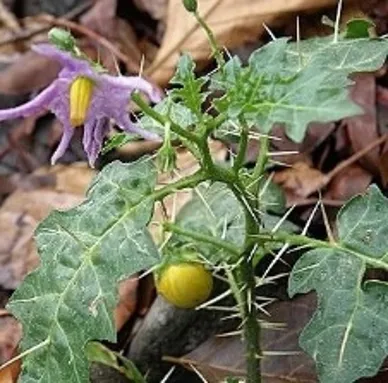
Figure 1 : Plant Solanum surattense
Morphology:
It is a prostrate herb Solanum surattense is a spiny, sprawling perennial herb that typically reaches a height of approximately 1.2 meters, often featuring a woody base
Stem: The stem is characterized by its thorny, branched structure, adorned with numerous small spines. It displays a highly branched configuration with a distinctive zigzag appearance, while the younger branches are enveloped in a thick layer of satellite and tomentose hairs. The straight, compressed prickles are smooth and glossy, ranging from 1 to 3 cm in length. The cylindrical stem measures between 0.7 and 1.4 cm in diameter, exhibiting a greenish hue, a prickly texture, and extensive branching.
Leaves: The leaves are small and ovate, featuring a prickly texture with deep elliptical lobes and a tapered base, distinguished by spines along the veins and edges. They possess a petiolate structure, with a prominently defined midrib. The overall shape of the leaves is deeply lobed, contributing to their unique appearance.
Flowers: Flowers are star-shaped, featuring five petals in shades of purple or violet, and can also be found in bluish-pink hues, arranged in extra-axillary racemes. The calyx is composed of five distinct, prickly lobes that are acuminate in shape. In addition to the purple variety, there are also white flowers that possess five petals, five sepals, and five stamens, with small anthers.
Fruits: The fruit is a small, round berry that transitions from green with white stripes when unripe to yellow upon ripening. It features a globular shape and contains many smooth, circular seeds within. Commonly referred to as "yellow berried nightshade," this fruit is characterized by its yellow color and berry-like form. [4,5]
Chemical constituents:
Cultivation & collection
Climate & soil
Propatgation
Harvesting
The plants produce flowers at 50-60 days after transplanting. Generally, in the month of October. Fruiting starts in the month of November. The plants have indeterminate growth, meaning that flowering and fruiting continues together.
Crop Maturity and Harvesting: It takes about five months from transplanting for first picking of matured berries. Complete crop harvesting can be done in the month of March. The berries are harvested before its colour turns from green to yellowish. About 2 to 3 pickings are done at 20-25 days intervals. Fruits is picked manually and kept in open for sun drying. Similarly, complete plant including roots is harvested at the end of season. It should be done before abscission of leaves starts.
Post-harvest Management: The whole plant should be uprooted after giving a shallow irrigation. The berries and whole herb should be dried in sun and dry herb is packed in gunny bags and stored in cool and dark place. Seed material for next crop should be obtained from fully matured and dry berries. After cleaning, seed should be treated with any fungicide, and then packed in polythene bags and kept at cool and dark place.[13]
Methodology
HF or a review article on Solanum surattense (also known as Solanum xanthocarpum), the Material and Methodology section should describe the process followed to gather,analyze,and synthesize the literature, since you're not conducting primary experimental research. Here's a sample format and content you can use or adapt:
MATERIAL AND METHODOLOGY
This review was conducted to collate, analyze, and synthesize available literature on Solanum surattense with respect to its phytochemical composition, ethnobotanical significance, pharmacological activities, and therapeutic potential. The following methodology was employed:
Literature Search Strategy
A comprehensive literature search was performed using various scientific databases including PubMed, ScienceDirect, Scopus, Google Scholar, and Web of Science. The search terms included "Solanum surattense", "Solanum xanthocarpum", "medicinal uses", "phytochemistry", "pharmacological activity", and "ethnobotany".
Inclusion and Exclusion Criteria
Inclusion: Peer-reviewed articles, ethnobotanical reports, pharmacological studies, and reviews published between [e.g., 2000 to 2024] were included.
Exclusion: Non-English articles, conference abstracts without full texts, and articles lacking sufficient data on Solanum surattense were excluded.
Data Extraction and Analysis
Relevant data regarding the plant’s morphology, phytoconstituents, traditional uses, and pharmacological activities (such as antimicrobial, anti-inflammatory, antioxidant, hepatoprotective, and antidiabetic properties) were extracted. The information was critically analyzed and organized into thematic categories.
Phytochemistry
Alkaloids, flavonoids, triterpenoids, tannins, saponins, glycosides, and steroids are said to be present in S. surattense roots. [1]
The fruits of S. surattense were first studied and utilized to isolate bioactive substances including the steroidal molecule carpesterol, the glycoalkaloid solanosine, and the steroidal alkoloids triterpinoids, coumarins, and caffeine. Steroid alkaloids such as solanocarpine, solamorgine, and solanocarpidine are found in S. surattense fruits. [2]
Triterpinins, sapogenins (lupeol and diosgenine), steroids (carpesterol, campesterol, daucosterol, stigmasterol, cycloortanol, and cholesterol), polyphenol (caffeic acid), coumarins (esculentin and aesculin), and other potent bioactive substances have also been documented [3]. The alkaloid solosodine, which varies in quantity between 1.1% and 4.6%, is highly concentrated in Solanum surattense berries [4].
The callus tissues of S. surattense contain diosgenin and β-sitosterol. The yield of diosgenin and β-sitosterol from callus tissues was significantly higher than that of plants that were grown organically. Additional analysis of S. surattense fruit extract revealed the presence of steroidal and alkaloid chemicals, including solamargine, β-solamargine, sitosterol, stigmasterol, campsterol, cyclocartanol, and cycloartinol. Dry seeds produced greenish yellow oil that was high in fatty acids, including arachidonic, steric, palmitic, oleic, and linoleic acids. [5]
Caffeic acid and oleanolic acid are found in the ethyl acetate fraction of plant roots.[6]
Plant fruits include saponins that can help treat cardiac conditions [7]. Diosgenin, carpesterol, and stigmasterol are found in plants and have anti-inflammatory properties [8–10].
Alkaloids, saponins, steroids, amino acids, and reducing sugar are said to be present in leaves and to have antibacterial properties. The fruit's aqueous extract yielded â-sitosterol and stigmasterol, which demonstrated strong immunomodulatory effects. [11]
Therapeutic properties
The different activities of Solanum surattense have been studied scientifically based on its experimental works.
Traditional medicine has been practiced since ancient times due to the vast range of Phytoconstituents that Bark, Leaves, Roots and other plants, such as Alkaloids, Terpenoids, Saponins, Steroids and Flavonoids have which include Phytochemicals. Further, scientific studies have shown that the ethnomedicinal compounds have isolated bioactive compounds which has modern medicinal effects.
S. surattense Burm F. (Solanaceae), a perennial herbaceous weed that grows in the south of Saudi Arabia, Farasan islands and India. It is traditionally used for treatment of fever, asthma, cough, toothache, sexual diseases and to promote female fertility [1, 2]. Moreover, ample of biological screenings of S. surattense revealed that it had a significant anti-fungal [3], anti-plasmodial [4], anti-hyperlipidemic [5] and anti-diabetic [6] efficacies. In addition, while S. surattense seeds aqueous extract has been shown to deplete the oxidative stress of cauda epididymal spermatozoa [7], its ethanol extract is recently shown to have diuretic activity [8] in albino rats. A rare 16β-H steroidal alkaloid saponin and six known saponins [9], including two new steroidal alkaloids, solanoside A1 and solanoside B2 have been isolated from S. surattense [10]
1] Antibacterial :
Many studies have existed completed activity accompanying the aim of emphasize the competencies of plant extracts for fear that the progress of the bacterial creatures. Leaf extract of S. surattense apply the unusual effect on bacterial strains. Sheeba (2010) stated a important decontaminating effect of intoxicating extracts of S. surattenseleaf against eight bacterial strains, Staphylococcus aureus (11.23 mm), Streptococus (9.22 mm), Bacillus subtilis (16.25 mm), Escherichia coli (14.19 mm), Pseudomonas aeruginosa (4.16 mm), Salmonella typhi (1.16 mm) Vibrio cholera (10.17 mm). No effect noticed accompanying Shigella dysentriea [11]. Fruits extracts of S. surattense shown potential effect in forbiding the following bacterial strains, Minimum and maximum zones of restriction noticed accompanying Micrococcus luteus (3.6, 12.7 mm) S. aureus (3.9, 14.0 mm) E. coli (8.6, 17.8 mm), S. typhi (6.5, 15.7 mm), M. varians (7.4, 10.3 mm) Pasteurella multifida (12.5, 20 mm) V. cholera (0 mm) [12]. Antibacterial adeptness of plant extracts was identical to the adeptness of standard drug medicine. Previous studies have stated that the uncontaminated exercise of S. xanthocarpum leaves against the five bacterial stains in the way that P. aeruginosa, S. typhi, S. aureus, E. coli, and Corynebacterium diphtheria (13). Among the solid extracts, ethyl acetate extracts exhibit moderate and general action against P. aeruginosa (8 ± 1.2 mm) and S. aureus (7 ± 1.0 mm), individually, and does frustrate inhibitory project for S. typhi. Other stable extractions, in the way that toxin, hexane and acetone shown that the very smallest decontaminating exercise against the S. aureus, P. aeruginosa, and C. diphtheriae.
2] Antioxidant property :
Antioxidants are worthy injurious the sensitive oxygen variety (ROS), that cause oxidative damage. Free radicals respond accompanying the bio fragments like DNA, proteins lipids and produce the poisonous belongings. So far, a a lot of plants stated to seize antagonistic-oxidant potential on account of rich phytochemical elements like phenols and Flavonoids. Yadav and others. (2014)reported the total phenolic and flavonoid content from leaf [25.91 gallic acid equivalent (GAE)/mg b.w] [17.7 Quercitien (QE)], stem (5.879 GAE/mg b.w) (3.129 QE), and product (4.975 GAE/mg b.w) (5.208 QE) phenol abundance signified as GAE and flavonoid content as Quercitien. The leaf holds extreme load of phenols and flavonoid than the stem and products.. It is also that judged the ROS scavenging adeptness of S. surattense leaf extracts against 2,2-diphenylpicrylhydrazyl scavenging venture, revealed that the plant extract shown unusual antioxidant action by any means test doses in a measurement-reliant tone. Fruit extracts too stated to carry a great deal of radical scavenging activity (about 80%) at hostile test conc. (250 µg/ml). No embellished project was noticed at raised test dosage conc. 500 and 1,000 µg/ml, on account of satiation effect (14). Similar judgments also seen from antagonistic-oxidant studies of S. surattense product extracts (15)
3] Analgesic activity :
There are too reports on the duty of tannins in antagonistic-nociceptive endeavor.. Besides alkaloids are famous for their capability to prevent pain understanding (16). The extracts of the plants and diclofenac sodium (10 mg/kg) again bestowed a more interminable abeyance occasion than the control group in the portable stove test in a shot accompanying approach. The plant extract of Solanum surattenseshown two together types of pain hindrance. The painkiller effect of the plants in two together models plans that they have happened acting through principal and minor machine (17). It has happened proved in the current studies that the early chapter of formalin inferred pain indicates the direct effect of formalin on nociceptors, inasmuch as the late state indicates that angering pain came expected weak on prostaglandin combination (18). Our results displayed that the ethanolic extract of Solanum surattense utilized meaningful inhibitory effect on nociceptive reaction of the late point of the angering pain model in the formalin test. The formalin test grant permission be a more valuable model of dispassionate pain at which point the late stage was helpless on minor redness and changes in principal convert The histamine, serotonin, prostaglandins, nitric group of chemical elements and bradykinin are complicated in the late state of the formalin test ( 19). There is forceful evidence that minor angering process is complicated in the late stage. The inhibitory effect of the extract on nociceptive answer in the late states of formalin test submitted that the antagonistic-nociceptive effect of the extract maybe on account of allure minor operation.Concerning to the phytochemical elements, the preliminary concerning qualities not quantities phytochemical hide accompanied the demeanor of alkaloids, tanins, gums, lowering sugars, alkaloids and terpenoids in the ethanolic extract of Solanum sutattense. Therefore, it is pretended that tannins and alkaloids present in the extract are being the reason for the noticed painkiller endeavor, that has happened stated as an antagonistic-anodyne constituent (20).
4] Antimalarial :
Emergence of sickness in many parts of globe on account of the happening of fighting of vectors. Availability of the antimalarial drugs again guide few reactions cause of allure artificial synthetic character. This makes necessary searching the secure and productive antimalarial drugs alternative to the existent one (21). Traditional curative information yields the antagonistic-malarial drugs like verbal attack and artemesin and their adeptness to control the malaria, aroused many analysts to find the identical potential antagonistic-malarial drug from the plant beginnings (Pulice and others., 2016). Ramazani and others. (2010) stated that S. surattense retain anti-malarial action. Solanum surattenseextract shown antiplasmodial project accompanying an IC50 = 50 µg/ml on K1 strain (Plasmodium falciparum opposing), IC50 = 40.88 µg/ml on chloroquine-delicate strain (Chloroquine-impressionable). Recently, It stated that the antiplasmodial endeavor of S. surattense aerial part distillation (ethyl acetate) against the P. falciparum. Accordingly, the IC50 of P. falciparum3D7 strain was displayed 17 µg/ml and Indonesia strain of P. falciparum strain presented 7 (0.41) µg/ml principles. In addition, the cytotoxicity (TC50 μg/ml) of S. surattense presented 75 (10.7) μg/ml against HeLa container lines. [22]
5] Anti hyperglycemic :
The intoxicating extract of Solanum surratense (EESS) (Family: Solanaceae) root was examined for allure antagonistic-diabetic effect in Wistar Albino rats. Diabetes was inferred in Albino rats by presidency of distinct prescription of Alloxan monohydrate (150mg/kg). The ethanol extract of Solanum surratense at the application of 200mg/kg and 400mg/kg, p.o. was executed as sole prescription per era to diabetes inferred rats for a ending of 21 days. The effect of EESS root on corpse pressure of the mammals, level of glucose in blood, antitoxin lipid sketch [cholesterol, triglycerides], antitoxin enzymes[antitoxin glutamate oxaloacetate transamines(SGOT), Serum glutamate pyruvate transaminases(SGPT), salty phosphatase(ALP)], total protein were measured in the diabetic rats. EESS root wringed important (p< 0.01) reductions of level of glucose in blood, lipid limits and antitoxin enzymes and important (p<0.01) reductions of level of glucose in blood. From duplicate result, it is decided that EESS root acquires important antagonistic-diabetic belongings in Alloxan persuaded diabetic rats.[23]
6] Anticancer :
Cancer is a group of existence doctoring afflictions and judgments of new anti-tumor drugs are individual of ultimate arising research regions of open products. The cytotoxic potential of methanolic extract of Solanum surattense burm F and allure differing parts were investigated by utilizing marinade shrimp fatality bioassay.The unrefined methanolic extracts of Solanum surattense crop disclosed cytotoxic exercises and prevent the growth of marinade insignificant worm until 90% at a aggregation of 500µg/ml all the while brine insignificant fatality bioassay. Various parts of methanolic crop extract likewise revealed very potent results that is Chloroform, n-butanol, Ethyl acetate and n-hexane parts shy the development of vinegar insignificant worm up to 70%, 100%, 90% and 100% individually at a aggregation of 500µg/ml all the while vinegar insignificant fatality bioassay. These results show much resemblance accompanying the cytotoxic effect made by Arcangelisia flava, Coscinium blumeanum and Fibraurea tinctoria. [24].This plant maybe thought-out as attainable beginnings of anticancer compounds. Further studies are required for synthetic description of the alive compounds and more broad organic evaluations [25]. The results supported by phytotoxicity assay presented that methanolic extract of Solanum surattense burm F suppresses the progress of Zia maize dash in addition to root (Fig 1 and 2) concerning the tumor of plants that were not considered with methanolic extract that is test compound. These results are in accordance with that stated by Javaid (2009) [26] for bioactive elements examined in water extract of Withania somnifera and Datura alba, that particularly suppress the development of two together root and dash of Rumex deutatus L., an main disorderly plant isin the direction of wheat, all along allelopathic protect assays. Similar results were proved by Mentha longifolia (Linn.) and Euphorbia prostrata that obstructed the tumor of wheat root and dash [27], [28].
7] Antihyperlipidemic :
Total cholesterol, Triglycerides, Phospholipids, and free oily acid levels in body tissue are the important biomarkers, to evaluate the hyper or hypolipidemic .They completed activity the biochemical studies on strepptozotocin inferred exploratory animal models. very depressed-mass lipoprotein cholesterol and reduced density lipoprotein cholesterol levels raised and extreme-bulk lipoproteins cholesterol levels depreciated, indicates the changed lipoprotein sketch.[29] Animal models treated accompanying S. surattenseplant extract normalized the red body fluid lipid characterization than distinguished accompanying control group (outside situation). The anti-hyperlipedemic capability of S. surattense was prepared the effect of standard drug Glibenclamide. This study proves the potential talent of S. surattense, as antagonistic-hyperlipedemic power and provides a controlled action for the use of S. surattense for the incident of persuasive cure to combat diabetes and allure mixed belongings on body absorption.[29]
8] Cardioprotective :
Myocardial harm results from the extended myocardial ischemia accompanying fatality of myocytes on account of interference of blood supply to an field of soul (30). According to WHO, it is the chief cause of depression and mortality during the whole of the experience (31). To overcome the heart attack, productive and safe cure is an next concern. The intentional the cardio protective effectiveness of S. surattense extracts against Isopropanol inferred myocardial harm in animal models. Enhanced level of indicator enzymes lactate dehydrogenase (LDH) and creatine kinase-influence/intellect (ck-MB) is noticed in body tissue of myocardial injured animal models. (32).Isopropanol persuaded myocardial harm is interfered by way of the β- adrogenic receptor. Acute β- adrogenic receptor stimulation expeditiously create ROS and still concave the total anti-oxidant volume. Treatment accompanying plant extracts revealed important cardio protection in a measure-weak form concerning the standard drug propanol.Some stated the occupancy of seven types of flavonoids and coumarins like esculentin. Esculentin is particularly well showed antagonistic-angering and antagonistic-oxidant activity, that plays a outstanding part in restorative of myocardial injury. Elevated levels of antitoxin cardiac gravestones like LDH and cK-MB are intensely diminished because of the occupancy of cardio guarding powers of S. surattense (33)
9] Hepatoprotective :
Hepatic ailments are individual of ultimate weighty and low ailments to the humankind.
Pathogenesis of the hepatic ailments, on account of the oxidative stress and swelling.
Despite, huge advances in the new cure, the administration of liver affliction is still a major challenge.
Solanum surattense crops secondhand as a usual cure to treat the disorders of the liver. Investigations of hepatic guarding type of S. surattense leaf and crop persistent allure potential for development as an direct hepatic power. Hepatotoxicity persuaded by element tetrachloride (CCl4) developed the fatality of hepatic containers and raised the level of antitoxin indicator enzymes [aspartate aminotransferase (AST), alanine aminotransferase (ALT), and soluble phosphatase level (ALP)]. Administration of the crop extract at lot 400 mg/kg presented a meaningful effect on threatening the antitoxin tombstone enzymes AST (67.71), ALT (75.66), and ALP (54.52). Reduction in the level of antitoxin stone enzymes with plant extracts was related to the effect of standard drug Silymarin AST (70.31), ALT (77.40), and ALP (59.80) (34). The complementary judgments of S. surattense crop extracts against paracetamol and azithromycin inferred hepatic harm. Leaf extracts, at reduced test dosage (100, 200 mg/kg), happened in a slight increase of CAT, SOD, and GSH enzymes, inasmuch as a larger lot rebuilt the level of antagonistic-oxidant enzymes. Solanum surattense extracts presented the hepatic guardianship, by lowering the oxidative stress inferred by CCl4. (35)
10] Antifertility :
Antifertility control the high birthrate and too supplies a believable resolution to the number of problems what the experience confronts. Contraceptive forms, most of the selections, are antifertility powers. Contraceptive drugs free are artificial/synthetic and in many cases raise the side effects. Hence, skilled is a need to change the synthetic drugs apiece reliable herbaceous drugs. Many plants have existed secondhand as antifertility agents in usual cure, but a very few of ruling class judged carefully. Among the contraceptives, chance of male unproductiveness powers is meager. Development of male unproductiveness powers thought-out expected a potential district of the inspection. Research studies on S. surattensestated to acquire excellent antifertility project. Administration of crop extracts at measure 0.5 mg/kg for event of 60 days to experimental subject models developed that noticeable the process of spermatogenesis. It was too evident that weakened number of basic and subordinate spermatocytes and spermatids equated accompanying noticeable of the spermatogenesis. In organ meat, chief containers were also considerably deteriorated, reinforces the antispermatogenic character of S. surattense crop .(36)
The S. surattense source extract more stated to maintain antifertility adeptness by consuming the oxidative potential of cauda epididymal spermatozoa. Administration of the children extract at the dosage of 10 mg/kg b.w to experimental subject models for a ending of 15 days developed meaningful decrease in the level of AST, ALT, glutamate dehydrogenase, Citric acid, and Isocitrate dehydrogenase was noticed. Sperm action was too depreciated in the animal model group medicated accompanying plant extract. Decreased oxidative potential in the cauda epididymal spermatozoa displays the antifertility effect of S. surattense sources. (37)
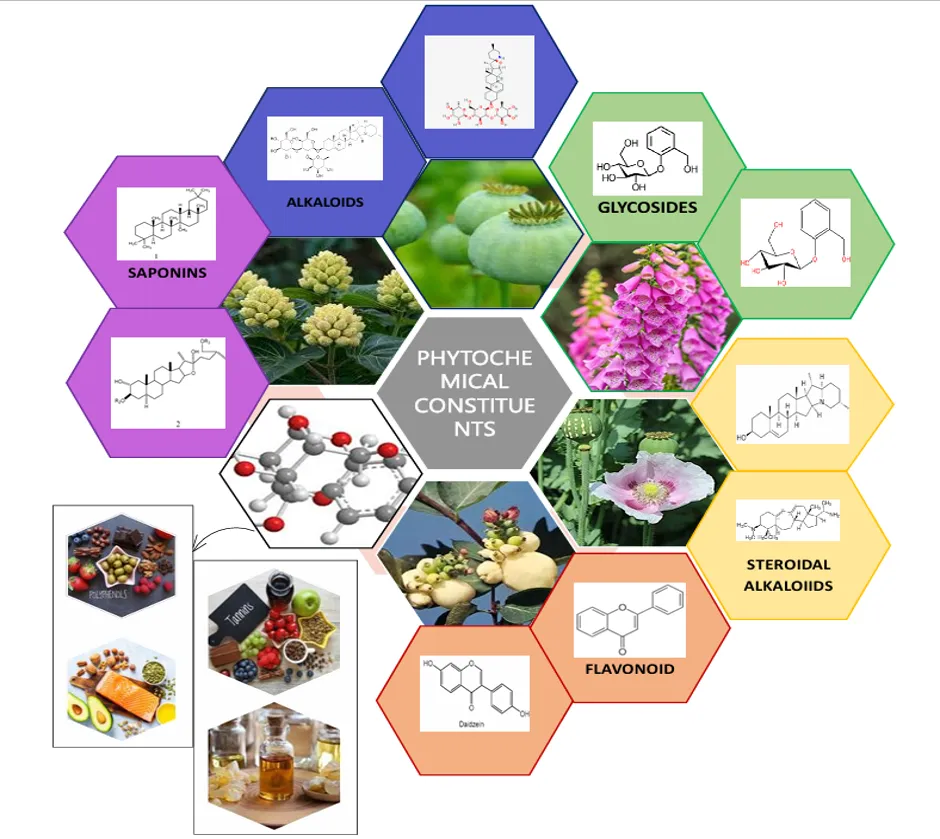
Figure 2 : Therapeutic properties
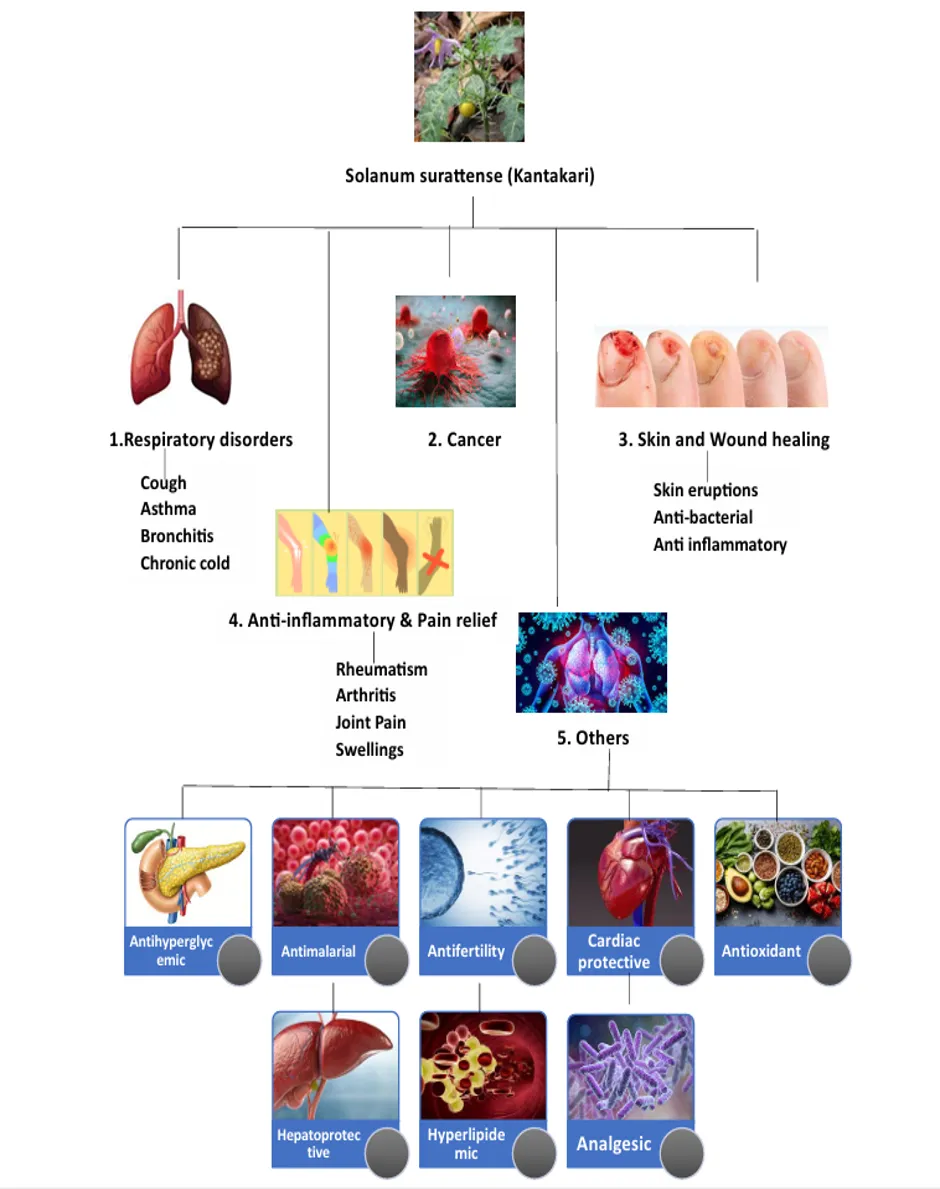
Figure 3 : Therapeutic properties
CONCLUSION
This review highlights the significance if the potential that Solanum Surattense holds as it contains active phytoconstituents like Glycoalkaloid, Alkaloids, Steroids , Tannins , Terpenoids , Saponins which shows a wide range of therapeutic values and can be used to treat and prevent various diseases and disorders.
FUTURE SCOPE
Many distinctive pharmacological sports have been shown by using specific plant elements. Systematic research ensures that maximum pharmacological studies are been accomplished in animal fashions however not enough for the improvement of a pharmaceutical product are. At the prevailing time, alternative tablets as natural capsules or natural tablets with synthetic pills have come to be popular for the safety and efficacy of herbal merchandise. it is able to cause the exploration of recent strategies for therapeutic and business software. So, the existing review concludes that the traditional medicinal plant S. surattense is an amazing source of phytochemicals and pharmacological importance for future pharmaceutical use. Many trials are being conducted to isolate the active constituents from various parts of the S. surattense plant to formulate it into medicinal form as it shows many properties like Anticancer, Antifungal, Antioxidant, Analgesic and Hepatoprotective.
ACKNOWLEDGEMENT
Antioxidant potential of Solanum surattense leaves is commonly evaluated using in vitro radical scavenging assays, including DPPH, hydroxyl radical, superoxide anion, and hydrogen peroxide scavenging methods. Ethanolic and aqueous leaf extracts are analyzed through spectrophotometric measurements at specific wavelengths such as 535 nm and 560 nm to quantify free radical inhibition. The effectiveness of these extracts is expressed as IC₅₀ values, which are routinely compared with standard antioxidants such as α-tocopherol and ascorbic acid.
Comprehensive pharmacognostic investigations involve macroscopic and microscopic examinations along with preliminary qualitative tests to confirm the presence of bioactive constituents. Phytochemical analysis of the leaf extracts reveals a diverse range of secondary metabolites, including alkaloids, flavonoids, tannins, glycosides, triterpenoids, sterols, and phenolic compounds. The total phenolic content has been reported as 46.7 mg gallic acid equivalents per gram, while metabolomic profiling identifies terpenoids as the dominant class (40.53%) among 338 detected metabolites, followed by phenolic derivatives (16.56%) and lipids (15.38%).
Collectively, these phytoconstituents contribute to the plant’s antioxidant, anti-inflammatory, antibacterial, and larvicidal activities. Notably, steroidal glycosides such as solamargine have demonstrated the ability to trigger apoptotic pathways, highlighting the therapeutic potential of Solanum surattense.
REFERENCES




Dr. Dattaprasad Vikhe, Gayatri Mokate, Surabhi Nemade, Jatin Kudnar, Vaibhav Bhone, Gaurao Damre, Solanum surattense: A Traditional Herb with Modern Relevance in Disease Management, Int. J. of Pharm. Sci., 2026, Vol 4, Issue 6, 1166-1180. https://doi.org/10.5281/zenodo.20550820
 10.5281/zenodo.20550820