We use cookies to ensure our website works properly and to personalise your experience. Cookies policy
The Pharmaceutical College Barpali, Bargarh, Odisha 768029, India.
Annona squamosa L. (family Annonaceae) is a tropical plant that is generally known as custard apple or sugar apple and is of considerable medicinal importance in traditional medicine. Various parts of the plant—such as the leaves, fruit, seeds, bark, and roots—have been used traditionally to treat diabetes, diarrhea, dysentery, fever, skin disorders, parasitic infections, and inflammatory conditions. The plant contains a variety of bioactive phytochemicals, including alkaloids, flavonoids, phenolic compounds, tannins, terpenoids, saponins, and annonaceous acetogenins, all of which account for its wide range of biological effects. Experimental studies have shown that A. squamosa has significant antioxidant, antimicrobial, anti-inflammatory, antidiabetic, hepatoprotective, anticancer, anthelmintic, and insecticidal properties. The seeds, in particular, contain a large amount of acetogenins and cyclopeptides which have considerable pharmacological potential. Apart from its medical uses, A. squamosa also has important roles in the food, cosmetic, agricultural, and nutraceutical industries. This review gives a brief summary of the botanical features, geographical distribution, phytochemical components, traditional medicinal applications, pharmacological actions, and possible therapeutic uses of Annona squamosa, emphasizing its value as a promising natural source of bioactive compounds for future pharmaceutical development.
Herbal medicine remains one of the oldest and most widely practiced systems of healthcare worldwide. Approximately 75–80% of the global population still depends on herbal medicine for primary healthcare needs, particularly in developing countries where traditional medicinal systems continue to play a vital role8. Herbal medicines are generally regarded as readily accessible, affordable, and culturally acceptable therapeutic options. They are often considered a valuable alternative for the management of various diseases in cases where conventional synthetic drugs fail to provide adequate relief or produce undesirable side effects such as lethargy and other adverse reactions5. In many parts of the world, herbal medicine continues to serve as a fundamental component of the healthcare system, and traditional herbal practitioners have long been recognized for their knowledge of indigenous medicinal plants used in the treatment of a wide range of disorders.
Traditional medicine employs herbal remedies prepared in various forms, including infusions, decoctions, powders, extracts, and tinctures. Medicinal preparations are derived from different parts of plants such as bark, leaves, fruits, seeds, roots, and flowers, which contain numerous phytoconstituents including alkaloids, tannins, saponins, sterols, fixed oils, glycosides, proteins, phenols, flavonoids, quinones, and terpenoids29. The processing of medicinal plants plays several important roles, including reducing toxicity and adverse effects, protecting active constituents, enhancing biological activity, and improving the ease of administration14. Both synthetic pharmaceuticals and traditional herbal medicines have originated from natural products, highlighting the significance of plants as a source of therapeutic agents 7.
Different data shows that A. squamosa seeds be potential for the new products discovery process based on a survey mainly focused on nutritional, phytochemical and biological properties. There is a potential for this plant species, A. squamosa seeds, to be used as an ingredient in the nutraceutical and food/nutrition industry (e.g., anticancer drugs and dietary supplements blockers against antitumoral) with beneficial effects on health 30.
Annona squamosa L., commonly referred to as custard apple, sugar apple, or sweetsop, is a fruit-bearing plant of medicinal significance within the family Annonaceae1. This species has been utilized extensively in traditional and folk medicine worldwide and is widely distributed in Myanmar, the West Indies, India, and other tropical and subtropical regions. Although its precise origin is debated, it is generally considered native to tropical America 2,3,30. Annona squamosa is a member of the genus Annona, which includes more than 120 species known for their edible fruits and medicinal properties 9. The Annonaceae family is among the largest in the order Magnoliales, comprising approximately 135 genera and over 2,300 species 21,22,28. The genus name Annona is derived from the Latin word anon, meaning “yearly produce,” which refers to the annual fruit-bearing characteristic of these species 10,24,25.
2.1 Biological Source
Custard apple (Annona squamosa L.) is a tropical tree or shrub belonging to the family Annonaceae. It is believed to be native to the Amazon rainforest and is widely cultivated in tropical and subtropical regions because of its edible fruits and medicinal value 17. Although the exact origin of A. squamosa remains uncertain, the species is extensively cultivated in tropical countries, particularly in warm climatic conditions such as the Brazilian semi-arid region 16.
2.2 Taxonomical Classification
Table No 1: Taxonomical Classification of Annona squamosa 10, 21,35,36
|
Taxonomic Rank |
Classification |
|
Kingdom |
Plantae |
|
Subkingdom |
Tracheobionta |
|
Division |
Magnoliophyta |
|
Superdivision |
Spermatophyta |
|
Class |
Magnoliopsida (Dicotyledons) |
|
Subclass |
Magnoliidae |
|
Order |
Magnoliales |
|
Family |
Annonaceae |
|
Subfamily |
Maloideae |
|
Genus |
Annona ; Annona L. |
|
Species |
A. squamosa; Squamosa; reticulata |
|
Tribe |
Abreae |
2.3 Vernacular Names
Table No 2: Vernicular Name of Annona squamosa
|
Language |
Vernacular Name |
|
Odia |
Ata |
|
Hindi |
Sharifa 2,4; Sitafal5 |
|
Arabic |
Gishta2 |
|
English |
Sweetsop, Custard apple, Sugar apple 3,4,5; sweet apers4 |
|
Myanmar |
Aw-za3 |
|
Telugu |
Sitaphal4; Seethaphalam5; Seetha phalam25 |
|
Gujarati |
Sitafal9 |
|
Marathi |
Sitaphal11 |
|
Indonesian |
Srikaya13 |
|
Urdu |
Sharifa14 |
|
Egyptian |
Keshta23 |
|
Bengali |
Ata 25 |
|
Malayalam |
Aathappazham, Seetha pazham25 |
|
Middle East |
Qishta, Ishta, or Ashta26 |
|
French |
Corossolier cailleux; Pommier cannelle27 |
2.4 Botanical Description
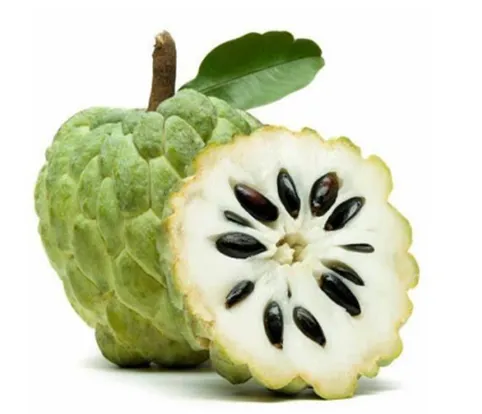
Annona squamosa is a small to medium-sized semi-evergreen tree or shrub that typically reaches a height of 3 to 8 meters, with a broad, open crown and irregularly spreading branches22,24. It is widely cultivated across India for its nutritious fruits, which generally mature between September and October4,12. The fruit is green, cone-shaped, and characterized by scaly segments, while the edible pulp is creamy white, sweet, aromatic, and rich in vitamins A and C10,11,22. Fruits usually measure 6 to 10 centimeters in diameter and contain 20 to 38 smooth, glossy black or dark-brown seeds17,22. The leaves are simple, lanceolate, and measure approximately 6 to 17 centimeters in length and 3 to 5 centimeters in width22.
This species thrives in dry tropical climates, tolerates mild frost, and grows optimally in well-drained soils, despite having a relatively shallow root system 10.
2.5 Geographical Distribution
Annona squamosa is widely cultivated across tropical and subtropical regions worldwide2,28. Native populations in the Andes first cultivated the species, and it was introduced to California in 187124. It is considered native to the West Indies and is extensively grown in the Philippines, India, and Thailand7,25,27. The species is also botanically associated with Jamaica, and its origin is linked to the West Indies and South America25,27.
In the seventeenth century, A. squamosa was introduced to southern China, Queensland (Australia), Polynesia, Hawaii, tropical Africa, Egypt, and the lowlands of Palestine21. The plant was likely introduced to Brazil as “fruta do conds” and later spread to the Philippines and other parts of Asia via the West Indies21.
Although its precise origin is uncertain, A. squamosa is widely cultivated in tropical regions, especially in areas with high temperatures such as the Brazilian semi-arid zone16. It thrives in lowland tropical climates across southern Mexico, tropical Africa, Australia, Central and South America, Hawaii, the United States, Polynesia, Florida, and the Antilles17.
The species is cultivated in tropical South America, southern Florida, Puerto Rico, Jamaica, Barbados, and dry regions of Australia. Historical records show its presence in Indonesia since the seventeenth century, after which it became established in southern China, tropical Africa, Egypt, and the lowlands of Palestine5.
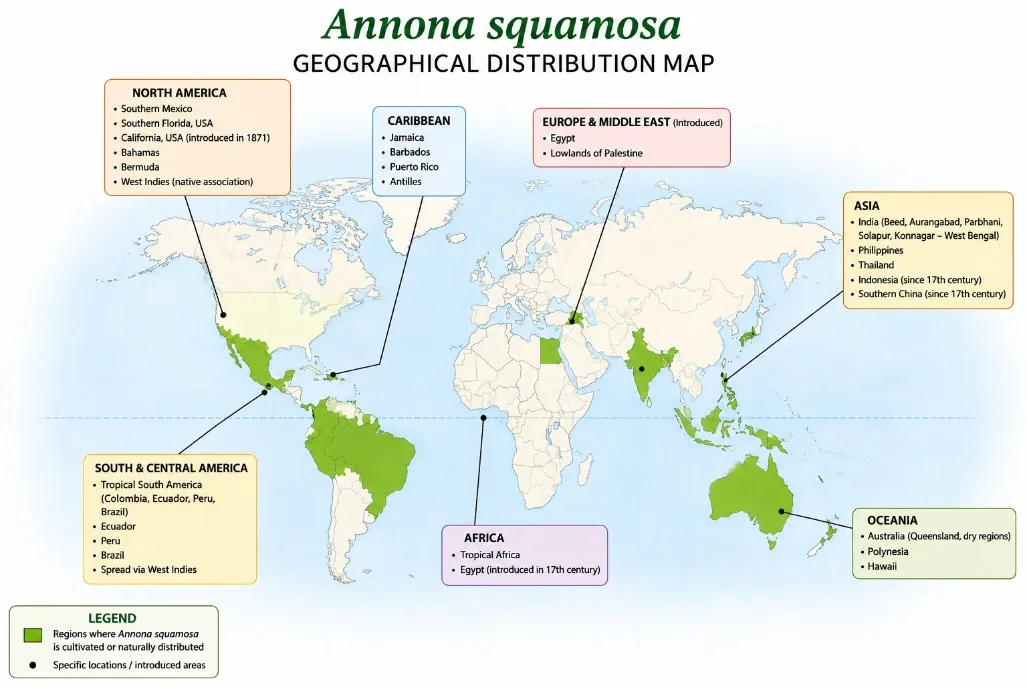
Figure No 3: Geographical Distribution Map
Annona squamosa is cultivated in Paukkhaung Township of the Bago Region3, Konnagar (West Bengal)7, Kabama Layout, Sabon Gari, Zaria11, tropical South America, southern Mexico, and soAnnona squamosa is cultivated in Paukkhaung Township (Bago Region)3, Konnagar (West Bengal)7, Kabama Layout (Sabon Gari, Zaria)11, tropical South America, southern Mexico, and southern Florida21. In India, it is extensively grown in Beed, Aurangabad, Parbhani, and Solapur districts12. The species is considered native to the New World tropics, especially northern South America, including Colombia, Ecuador, and Peru24. ted across the West Indies, South and Central America, Ecuador, Peru, Brazil, India, Mexico, the Bahamas, Bermuda, and Egypt15,30.
2.6 Nutritional and Phytochemical Characteristics
The increased consumption of custard apple is attributed to its nutritional value, pleasant flavor, and medicinal properties [26]. The seeds provide essential minerals such as potassium, phosphorus, calcium, sulfur, iron, manganese, zinc, and copper3. The fruit is a rich source of vitamins A, B, C, E, and K, as well as antioxidants, polyunsaturated fatty acids, and essential minerals2. Various parts of the plant contain glycosides, alkaloids, saponins, flavonoids, tannins, carbohydrates, proteins, phenolic compounds, phytosterols, and amino acids. These constituents are responsible for a broad spectrum of biological activities, including antifeedant, antimalarial, cytotoxic, immunosuppressive, anti-HIV, and antiplatelet aggregation effects26,27.
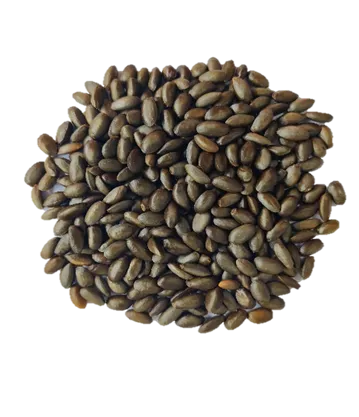
The seeds of A. squamosa consist of a seed coat (32.4%) and a seed kernel (67.7%), with a crude fatty oil content of approximately 22.2% on a dry weight basis. These seeds are particularly rich in alkaloids, flavonoids, phenolic compounds, annonaceous acetogenins, and cyclopeptides, which contribute to diverse pharmacological activities30. Experimental studies have shown that the seeds exhibit antibacterial, antioxidant, hepatoprotective, and antitumor or anticancer properties. Additionally, more than 400 bioactive compounds have been isolated from various parts of A. squamosa30. As a result, the fruit, leaves, bark, roots, and seeds are widely used in traditional medicine and are increasingly recognized for their medicinal, pharmaceutical, and nutraceutical applications 24.
3. Phytochemical Constituents
The majority of volatile oils in Annona squamosa have been reported from the fruit pulp and leaves21. Different parts of the plant contain a wide variety of bioactive phytochemicals, including acetogenins, alkaloids, flavonoids, phenolic compounds, tannins, terpenoids, steroids, saponins, glycosides, cyclopeptides, and fatty acids, which contribute to its diverse pharmacological properties.
Fruit:
The unripe fruit contains acetogenins, glycosides, alkaloids, flavonoids, phytosterols, steroids, saponins, volatile compounds, cyclic ketones, long-chain fatty acids, terpenoids, tannins, phenols, verbenone, and borneol33. In addition, the fruit has been reported to contain twelve known kaurane derivatives and two new kaurane diterpenoids, namely annosquamosin-A and annosquamosin-B 33.
The n-hexane fraction of the fruit pod contains several compounds, including 5-(propan-2-ylidene)cyclopenta-1,3-diene, 9,10-dehydro-isolongifolene, 6-((benzyloxy)methyl)-2,3,4-trimethylcyclohexyl formaldehyde, 2-methyloct-5-yn-4-yl-3-fluorobenzoate, methyl palmitate, n-hexadecanoic acid, trans-13-octadecenoic acid, octadecanoic acid, 3-(1,1-dimethylallyl)-scopoletin, 2-[(1,2-dimethylpiperidin-3-yl)methyl]-3H-indol-3-one, andrographolide, and nordextromethorphan.
Similarly, the dichloromethane (DCM) fraction of the fruit pod has been reported to contain spathulenol (1,1,7-trimethyl-4-methylene decahydro-1H-cyclopropa[e]azulen-7-ol), methyl palmitate, n-hexadecanoic acid, oleic acid, androsterone, kaur-16-ene, 2,3,4,6-tetramethyl-benzoic acid, and methyl-4,11-dimethyl-8-methylenetetradecahydro-6a,9-methanocyclohepta[a]naphthalene-4-carboxylate22.
Leaves:
The leaves are a rich source of alkaloids 21. Isoquinoline alkaloids have been isolated from the leaves, and approximately 59 chemical compounds have been identified from the leaf essential oil. The leaf oil is particularly rich in terpenes and sesquiterpenes, including β-caryophyllene (31.1%), δ-cardinene, α-muurolene (5.5%), and α-cadinol (4.3%). Two acetogenins, annoreticulin and isoannoreticulin, isolated from the leaves, have demonstrated selective cytotoxic activity against certain human tumor cell lines33.
The leaves also contain anonaine, benzyltetrahydroisoquinoline, borneol, camphene, camphor, car-3-ene, carvone, β-caryophyllene, farnesol, geraniol, 16-heptatriacontanone, hexacontanol, higenamine, isocorydine, limonene, linalool acetate, menthone, methyl anthranilate, methyl salicylate, methyl heptenone, p-(hydroxybenzyl)-6,7-(2-hydroxy,4-hydroxy)isoquinoline, n-octacosanol, α-pinene, β-pinene, rutin, stigmasterol, β-sitosterol, thymol, and n-triacontanol 24,27,23.
Root:
Root extracts have been reported to contain anolobine, liriodenine, norushinsunine, reticuline, anonaine, and isocorydine 27. Other constituents identified from the roots include borneol, camphene, camphor, carvone, β-caryophyllene, eugenol, geraniol, 16-heptatriacontanone, hexacontanol, higenamine, isocorydine, and limonene 33.
Stem:
Diterpenoids are commonly isolated from the stem and bark of A. squamosa21. The stem contains annosqualine, bullatacin, bullatacinone, annosquamosins A, and annosquamosins B27. In addition, six new ent-kaurane diterpenoids—annomosin A, annosquamosin C, annosquamosin D, annosquamosin E, annosquamosin F, and annosquamosin G—have been isolated from the stem 27,33.
Bark:
The bark is also rich in diterpenoids21. Reported constituents include acetogenins, squamone, 4-deoxyannoreticulin, cis-4-deoxyannoreticulin, (2,4-cis and trans)-squamoxinone, (2,4-cis and trans)-Mosinone A, Mosin B, Mosin C, squamotacin, molvizarin, (2,4-cis and trans)-squamolinone, (2,4-cis and trans)-9-oxoasimicinone, and bullacin B24,27. Additional compounds such as N-nitrosoxylopine, roemerolidine, and duguevalline have also been isolated from the bark, along with bullatacin 33.
Seeds:
The seeds contain annotemoyin-1, annotemoyin-2, squamosin, and cholesteryl glucopyranoside3. Phytochemical investigations have indicated that flavonoids are among the major constituents present in the seeds5, while acetogenins and cyclopeptides are reported to occur predominantly in the seed fraction 21.
The n-hexane extract of the seeds contains o-xylene, (E)-hept-2-enal, nonanal, 9-methyl-undec-1-ene, 1-dodecanol, (2E,4E)-deca-2,4-dienal, (E)-oct-2-enal, 8-heptadecene, methyl palmitate, n-hexadecanoic acid, 2-chloroethyl linoleate, (E)-methyloctadec-9-enoate, (E)-octadec-9-enoic acid, and palmitic anhydride 22.
Other compounds isolated from the seeds include acetogenin, samaquasine, annonacin, annonastatin, Cyclosquamosins A–I, Squamtin A, and Annosquamosin A24,27. The seeds are also reported to contain polyketides, annonaceous acetogenins (neurotoxins), cyclopeptides, carbohydrates, proteins, lipids, oleic acid, and linoleic acid 30.
Table 3: Phytochemical Constituents of Different Parts of Annona squamosa
|
Plant part |
Major phytochemical constituents |
Reference |
|
Whole plant |
Acetogenins, alkaloids, flavonoids, phenolic compounds, tannins, terpenoids, steroids, saponins, glycosides, cyclopeptides, and fatty acids |
21 |
|
Fruit (unripe) |
Acetogenins, glycosides, alkaloids, flavonoids, phytosterols, steroids, saponins, volatile compounds, cyclic ketones, long-chain fatty acids, terpenoids, tannins, phenols, verbenone, borneol |
13 |
|
Fruit |
Kaurane derivatives; annosquamosin-A and annosquamosin-B |
33 |
|
Fruit pod (n-hexane fraction) |
5-(Propan-2-ylidene)cyclopenta-1,3-diene, 9,10-dehydro-isolongifolene, methyl palmitate, n-hexadecanoic acid, trans-13-octadecenoic acid, octadecanoic acid, andrographolide, nordextromethorphan, etc. |
22 |
|
Fruit pod (DCM fraction) |
Spathulenol, methyl palmitate, n-hexadecanoic acid, oleic acid, androsterone, kaur-16-ene, tetramethyl-benzoic acid derivatives |
22 |
|
Leaves |
Rich in alkaloids; isoquinoline alkaloids; essential oil containing ~59 compounds |
21, 33 |
|
Leaf essential oil |
β-Caryophyllene, δ-cardinene, α-muurolene, α-cadinol (terpenes and sesquiterpenes) |
33 |
|
Leaves |
Annoreticulin, isoannoreticulin, anonaine, higenamine, isocorydine, limonene, geraniol, camphor, camphene, α-pinene, β-pinene, rutin, stigmasterol, β-sitosterol, thymol, n-triacontanol |
24,27,33 |
|
Roots |
Anolobine, liriodenine, norushinsunine, reticuline, anonaine, isocorydine |
27 |
|
Roots |
Borneol, camphene, camphor, carvone, β-caryophyllene, eugenol, geraniol, higenamine, limonene, hexacontanol |
33 |
|
Stem |
Diterpenoids |
21 |
|
Stem |
Annosqualine, bullatacin, bullatacinone, annosquamosins A and B |
27 |
|
Stem |
Ent-kaurane diterpenoids: annomosin A, annosquamosins C-G |
27,23 |
|
Bark |
Diterpenoids |
21 |
|
Bark |
Acetogenins, squamone, 4-deoxyannoreticulin, squamoxinone, Mosin A-C, squamotacin, molvizarin, squamolinone, 9-oxoasimicinone, bullacin B |
24,27 |
|
Bark |
N-Nitrosoxylopine, roemerolidine, duguevalline, bullatacin |
33 |
|
Seeds |
Annotemoyin-1, annotemoyin-2, squamosin, cholesteryl glucopyranoside |
3 |
|
Seeds |
Flavonoids, acetogenins, cyclopeptides |
5,21 |
|
Seed (n-hexane extract) |
o-Xylene, (E)-hept-2-enal, nonanal, 1-dodecanol, methyl palmitate, n-hexadecanoic acid, linoleate derivatives, oleic acid derivatives, palmitic anhydride |
22 |
|
Seeds |
Acetogenin, samaquasine, annonacin, annonastatin, Cyclosquamosins A-I, Squamtin A, Annosquamosin A, polyketides, proteins, lipids, carbohydrates, oleic acid, linoleic acid |
24,27,30 |
4. Traditional Uses
Traditionally, A. squamosa has been used to alleviate numerous health conditions51. Different parts of the plant are employed in folk medicine for the management of cardiac disorders, diabetes, hyperthyroidism, and cancer. The plant has also been traditionally used in the treatment of epilepsy, dysentery, worm infestation, constipation, hemorrhage, dysuria, fever, thirst, ulcers, and as an abortifacient4,5. Crushed seeds are commonly used in folk medicine for their insecticidal and antiparasitic activities, particularly for the treatment of head lice and dandruff infestations3,7.
Different parts of the plant are traditionally used as follows7:
5. Pharmacological Activities
The plant Annona squamosa L. has a wide range of pharmacological properties because of the many bioactive phytoconstituents it contains, such as annonaceous acetogenins, alkaloids, flavonoids, phenolic compounds, terpenoids, cyclopeptides, and essential oils. Various parts of the plant, for example the leaves, seeds, bark, roots, and fruits, have shown important biological activities in both in vitro and in vivo studies34,35 . The main pharmacological activities of A. squamosa are set out below.
5.1 Antioxidant Activity
The leaves, fruits and seeds of A. squamosa have a strong antioxidant activity due to their high level of phenolic compounds, flavonoids, tannins and proanthocyanidins. Extracts from the leaves have demonstrated powerful free-radical scavenging activity in the DPPH, ABTS, FRAP and reducing power tests37. They reduce lipid peroxidation and protect cellular components against oxidative damage by boosting endogenous antioxidant enzymes such as superoxide dismutase (SOD), catalase (CAT) and glutathione peroxidase (GPx)38. It is regarded as one of the main reasons for the hepatoprotective, antidiabetic and anticancer effects of A. squamosa39.
5.2 Antidiabetic Activity:
The young leaves of A. squamosa have traditionally been used in diabetes management. Experimental studies show that both aqueous and alcoholic leaf extracts significantly reduce blood glucose levels in streptozotocin- and alloxan-induced diabetic animal models40. These extracts improve glucose tolerance, increase plasma insulin levels, decrease glycated hemoglobin, and normalize altered lipid profiles. The antidiabetic effects are mainly due to flavonoids, alkaloids, and acetogenins. These compounds enhance insulin secretion, improve insulin sensitivity, inhibit intestinal carbohydrate-digesting enzymes, and reduce oxidative stress linked to diabetes41.
5.3 Antimicrobial Activity
The antimicrobial activity of extracts obtained from the leaves, seeds, bark, and fruit of A. squamosa has been found to be significant against a wide variety of Gram-positive and Gram-negative bacteria as well as several fungal pathogens. Extracts made using methanol, ethanol, acetone, and hexane have demonstrated inhibitory effects on Staphylococcus aureus, Escherichia coli, Pseudomonas aeruginosa, Klebsiella pneumoniae, and the Candida species42. This antimicrobial effect is mainly due to acetogenins, alkaloids, terpenoids, and phenolic compounds, which act by disrupting microbial cell membranes, interfering with enzyme systems, and inhibiting the synthesis of nucleic acids. The extracts from the seeds are especially known for their powerful insecticidal and antiparasitic properties43.
5.4 Hepatoprotective Activity
Several studies have found that extracts from the leaves of A. squamosa have a hepatoprotective effect concerning chemically induced liver damage. Administration of these extracts results in a significant decrease in the elevated levels of serum liver biomarkers, including alanine aminotransferase (ALT), aspartate aminotransferase (AST), alkaline phosphatase (ALP), and bilirubin, together with the restoration of normal liver histology44. This hepatoprotective action is mainly due to antioxidant and membrane-stabilising mechanisms, which prevent lipid peroxidation and help to maintain hepatocellular integrity. Flavonoids and phenolic compounds are seen as the main factors responsible for this activity45.
5.4 Anticancer and Cytotoxic Activity
Annona squamosa is especially famous for its potential against cancer, a property attributable to the presence of annonaceous acetogenins such as squamocin, bullatacin, annonacin, and annosquamosins46. These substances show selective cytotoxicity towards a number of human cancer cell lines, such as those from the breast, colon, liver, pancreas, and lungs. The acetogenins inhibit mitochondrial complex I (NADH: ubiquinone oxidoreductase), which results in a depletion of ATP, the induction of apoptosis, cell-cycle arrest, and the suppression of tumor cell proliferation. Moreover, experimental studies have demonstrated the chemopreventive and antilipid-peroxidative effects of extracts from the bark and seeds in animal models of carcinogenesis47.
5.4 Anti-inflammatory Activity
The leaf and bark extracts of A. squamosa have been shown to exhibit considerable anti-inflammatory activity in experimental studies48. They prevent protein denaturation, membrane lysis, and the production of inflammatory mediators such as prostaglandins and nitric oxide49. The flavonoids, alkaloids and terpenoids found in the plant exert their anti-inflammatory effect by influencing cyclooxygenase (COX), lipoxygenase (LOX) and pro-inflammatory cytokines. These results back the traditional practice of using crushed leaves for the treatment of wounds, ulcers, boils and inflammatory skin conditions50.
5.5 Anthelmintic and Antiparasitic Activity
The seeds of A. squamosa have long been used in traditional medicine to treat intestinal worms, lice infestation, and external parasites51.. Seed extracts show pronounced anthelmintic activity against several helminth species by causing paralysis and death of the worms52. Acetogenins and cyclopeptides are the principal antiparasitic constituents. Due to their strong insecticidal activity, seed preparations have also been used as natural pesticides and insect repellents53.
5.6 Antihypertensive and Cardioprotective Activity
Traditional systems of medicine regard preparations made from the fruit and leaves of A. squamosa as substances which have a calming effect on the heart and act to reduce blood pressure54. Experimental studies indicate that extracts from the leaves might have a vasodilatory and hypotensive effect, possibly by means of modulating calcium channels, causing vascular relaxation through nitric oxide and via antioxidant mechanisms. The improvement of the lipid profile together with a decrease in oxidative stress may also play a part in the cardioprotective effects of the plant55.
5.7 Neuroprotective Activity
Recent investigations show that the bioactive compounds in A. squamosa, especially flavonoids and acetogenins, might have a neuroprotective effect by decreasing oxidative stress, neuroinflammation, and neuronal apoptosis. Experimental studies have also indicated possible advantages in cases of memory impairment, neurodegeneration, and cerebral oxidative damage. Nevertheless, since some annonaceous acetogenins can show neurotoxicity when given in high doses, further toxicological and clinical studies are needed before the substances can be used therapeutically56,57.
6. Industrial and Therapeutic Uses
Different parts of Annona squamosa are used in the pharmaceutical, agricultural, cosmetic, and food industries.
CONCLUSION
Annona squamosa L. is a valuable medicinal plant with a rich phytochemical profile and many pharmacological activities. Alkaloids, flavonoids, phenolic compounds, terpenoids, and annonaceous acetogenins contribute to its antioxidant, antimicrobial, anti-inflammatory, antidiabetic, hepatoprotective, and anticancer effects. Traditional medicinal uses of different plant parts are increasingly supported by experimental evidence, especially the therapeutic potential of the seeds. Due to its medicinal, nutritional, and industrial importance, A. squamosa is a promising source of natural bioactive compounds. Further phytochemical characterization, toxicological evaluation, and clinical studies are needed to validate its therapeutic efficacy and support the development of standardized phytopharmaceutical and utraceutical products.
Conflict of Interest Declaration
The authors declare that there was no conflict of interest in this study. This study contains no research involving animals or humans.
REFERENCES




Shubhashree Das, Arnabaditya Mohanty, Sachhidananda Mahapatra, Ranjan, Kumar Sahoo Phytochemistry and Pharmacological Activities of Annona squamosa Extracts: A Comprehensive Review, Int. J. of Pharm. Sci., 2026, Vol 4, Issue 8, 3914-3929, https://doi.org/10.5281/zenodo.22081239
 10.5281/zenodo.22081239