We use cookies to ensure our website works properly and to personalise your experience. Cookies policy
Students od Pharm D, Nalanda Institute of Pharmaceutical Sciences, kantepudi (v). Sattenapalli (m), Guntur (Dist.)- 522438.
SRSE (Super-Refractory Status Epilepticus) can be defined as a severe neurological emergency involving ongoing or repetitive convulsions despite being treated with established types of medications. The basis of SRSE is neuronal hyperexcitability along with disrupted processes of inhibition and stimulation in neurotransmission, processes of transporting receptors, and neuroinflammation with immune system influences. Ketamine substance becomes an efficient treatment, especially when standard anesthetics (often intended to stimulate activity of the neurotransmitter GABA) do not succeed. Ketamine affects excessive processes of stimulation due to which the medication allows to balance between inhibitory and excitatory processes regardless of the use of other anesthetics. Neuroinflammation and autoimmune processes can also play a role in obtaining refractoriness, therefore immunomodulatory may be applied to see whether patients with autoimmune etiology have an improvement in the clinical situation. Among possible methods of immunotherapy, the use of corticosteroids, immunoglobulins given intravenously, plasma exchange, and targeted immunotherapy may be indicated. The possibility of applying ketamine infusion together with immunomodulatory therapy seems to represent a feasible approach to treatment of SRSE and improving the quality of patients' rehabilitation, however, it is necessary to remember that monitoring the outcomes of the treatment is equally important
Status epilepticus (SE) is an urgent neurological condition that is characterized by continuous or repeated seizure activity resulting in nerve damage, systemic problems, and significant fatalities. In spite of the development of anti-seizure drugs and the intensive care management process, some patients fail to respond satisfactorily to conventional treatment leading to refractory status epilepticus (RSE). When the seizure activity continues or recurs in spite of long-term anesthetic treatment, it turns into super-refractory status epilepticus (SRSE). SRSE is one of the most challenging forms of acute seizure disorder due to its long-lasting nature, insensitivity to typical treatments, as well as high incidence rate of brain injuries and fatalities [1].
The pathophysiological mechanism of SRSE is complicated and includes continuous neuronal hyper-excitability, damaged inhibitory neurotransmission, increased glutamatergic activity, change of receptors, and progressive alteration of neuronal structure and networks. In prolonged seizure activity, GABA (Γ-aminobutyric acid) inhibitory effect may be weakened, while the role of the excitatory NMDA (N-methyl-D-aspartate) receptor may become more pronounced. In addition, neuroinflammatory and immune-mediated mechanisms are becoming significant in seizure persistence. The activity of microglia, astrocytes, inflammatory cytokines, and immune pathways may play a role in the development of neuronal dysfunction and increased susceptibility to seizures [2].
Through these mechanisms, the design of techniques for treatment, which go beyond the traditionally administered GABAergic anesthetic agents, has been enabled. Specifically, ketamine, which is an NMDA receptor blocker, has been attracting great attention in SRSE, since it affects excessive neurotransmission via glutamate directly, and may provide a solution at a time when conventional anesthetic drugs have failed [3].
Simultaneously, the realization of the autoimmune and inflammatory origin of refractory seizures has resulted in increased interest toward neuroimmunomodulation. Patients with suspected or proven immune-mediated processes may benefit from corticosteroid therapy, intravenous immunoglobulin therapy, plasmapheresis, and selected targeted immunotherapies. Thus, the combination of ketamine-induced seizure suppression with the appropriate immunomodulatory therapy may represent a viable multimodal approach to treating patients with SRSE. This review introduces the mechanisms of action of ketamine infusion, discusses the neuroimmunomodulatory techniques, and reviews the safety of the methods and the potential ways of enhancing treatment outcomes.
2. Super-Refractory Status Epilepticus: Clinical Overview
To understanding super-refractory status epilepticus (SRSE) is necessary to remember how severe this disease is, especially in the context of neurological illnesses and critical medicine practice. It includes an episode of epiletic attack that is not going to stop even while taking normal dosage of drugs used to prevent seizures as well as using sedation. SRSE is a condition which causes damage to the brain and leads to bad health results and prolonged stay in ICUs. In this case, medical staff are supposed to monitor patients constantly, learn possible reasons and complications and conduct treatment in accordance with their state. As classic medications are ineffective, it is reasonable to think about the use of other therapies, such as ketamine infusion and neuroimmunomodulatory treatment [4].
2.1 Definition and Classification
The condition known as status epilepticus is described by prolonged seizure activity, or repeated seizures occurring before recovery of consciousness takes place. Refractory status epilepticus (RSE) refers to the occurrence of new seizures despite effective treatment of the initial seizure with benzodiazepines and subsequently with a second-line drug. RSE patients often require constant intravenous anesthetic treatment in a specialized unit. Super-refractory status epilepticus (SRSE) is commonly viewed as a form of status epilepticus that continues for at least 24 hours after the implementation of anesthetic treatment. The episodes may also recur during the tapering of anesthesia. Based on the clinical and electroencephalographic characteristics, SRSE is assigned as convulsive or nonconvulsive. Based on etiology, SRSE may be acute symptomatic, remote symptomatic, progressive, or cryptogenic [5].
2.2 Epidemiology and Clinical Burden
The number of examples of SRSE is small among the total number of cases of status epilepticus. However, it has a high cost in terms of morbidity and mortality. As seizures take a long time and patients may undergo several therapies, both the patients and healthcare system face heavy burden. The process of constant excitation of neurons increases the brain's metabolism and can result in excitotoxicity. The patients with SRSE could need a long stay in a hospital, mechanical ventilation, continuous EEG technique, and different combinations of anticonvulsants and anesthetics. Possible complications may include hypotension, respiratory failure, infection, metabolic disturbance, cardiac complications, and hyperthermia. Moreover, the effects of the application of anesthetic drugs can have adverse effects on patients' recovery process [6].
2.3 Etiology and Risk Factors
There are many different potential causes of super-refractory status epilepticus (SRSE). Stroke, intracranial hemorrhage, trauma-induced injury to the brain, infections affecting the CNS, brain tumors, changes in the metabolism of the body, hypoxic-ischemic encephalopathy, adverse reactions to drugs, and existing epilepsy can all be included in the causes. Those who suffer from epilepsy often do not adhere to medications or take inappropriate anti-seizure medications, or change medications suddenly, which makes them prone to seizures. Recently there have been major findings regarding autoimmune diseases and inflammation in relation to rare and difficult-to-treat seizure cases. Autoimmune encephalitis, as well as other antibody-linked lesions, can provoke prolonged seizure activities. Antibodies against nerve cells such as NMDA receptors, LGI1, and GABA might disrupt nerve signaling and increase hyperexcitability. Identifying this type of problem is important because it could be necessary to give corticoids, immunoglobulin, plasma exchange, and other medications in addition to anti-seizure medications to improve the health condition [7].
2.4 Clinical Manifestations and Diagnosis
SRSE presentation is influenced by seizure type and the etiological background. Convulsive SRSE entails sustaining either generalized or focal motor activities, loss of consciousness, autonomic imbalance, and respiratory insufficiency. On the other hand, nonconvulsive SRSE appears with states of confusion, mental change, unexplained coma, and borderline motor functioning. Continuous electroencephalography (EEG) is a key component of diagnosing the presence of electric seizures and monitoring the treatment process. CT and MRI are used for finding out any anatomical defect, while the laboratory tests are carried out to check metabolic, toxic, infectious, or systemic problems. In case any autoimmune origin of the condition is suspected, spine fluid testing and neuronal antibody testing can enhance diagnostic processes. Moreover, prompt recognition of the cause is crucial because SRSE is usually treated through complex combined methods. In some cases, ketamine may alleviate glutamatergic activity, while other neuroimmunomodulative treatments might assist with autoimmune and inflammatory processes [8].
3. Pathophysiology of Super-Refractory Status Epilepticus
The mechanisms underlying super-refractory status epilepticus (SRSE) are complicated. They include persistent nerve cell excitation, disturbance in neurotransmission, alteration of receptor expression, structural changes in synapses, and stimulation of inflammatory mechanisms. With repeated seizures, the equilibrium between excitation and inhibition of nerve cells gradually tilts toward excessive excitation as mentioned in (Table1). The alterations described reduce the efficacy of standard anticonvulsants and matter to the persistency of seizures. Therefore, it is of utmost importance to understand how these processes function to develop alternative strategies for treatment such as use of NMDA receptor antagonists like ketamine and neuroimmunomodulation [9].
3.1 Neuronal Hyperexcitability
One of the key characteristics of prolonged status epilepticus is neuronal hyperexcitability. This condition occurs when large groups of neurons exhibit repetitive and coordinated depolarization due to ongoing seizure activity, which causes excessive electrical discharges. There is increased intracellular calcium, which is followed by an influx of sodium ions, as well as increased metabolism which brings about stress in the neurons and can activate excess killing activity of the neurons during the seizures. Apart from that, continued excitation brings about structural maladaptation and the lowering of the threshold for subsequent seizures. An increased release of excitatory neurotransmitters, like glutamate, promotes neuronal firing further. At the same time, the mechanisms of inhibition become weaker [10].
3.2 GABAergic and Glutamatergic Dysfunction
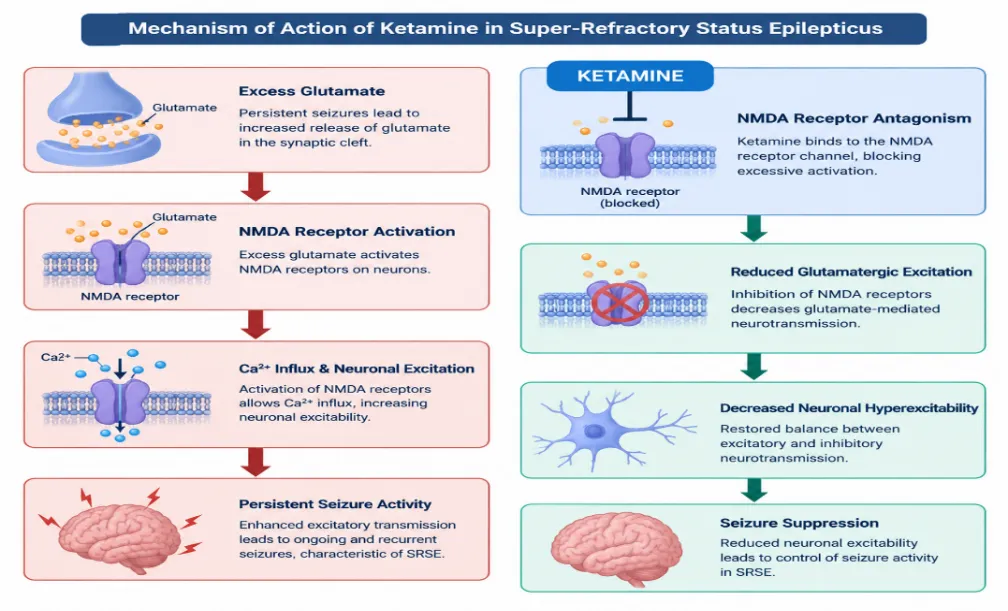
When it comes to normal neuronal activity, the nature of the γ-aminobutyric acid (GABA)-mediated inhibition and glutamate-mediated excitation must be balanced. In the case of status epilepticus, the disruption in balance becomes apparent in time. Thus, the GABAergic inhibition may fail because of the changes which occur in GABA receptor functioning and localization, thus affecting the power of GABA-producing drugs. There is a great increase in glutamatergic signaling especially when it is related to NMDA receptors. The excessive activation of NMDA receptors is the source of the increase of calcium flow into the cells, which leads to prolonged neuron firing. This is an important explanation of the need of using ketamine in SRSE. Since ketamine is an NMDA receptor blocker, it can decrease glutamatergic signals and establish the balance between excitatory and inhibitory effects when traditional GABA anesthetics are ineffective [11].
3.3 Receptor Trafficking and Synaptic Remodeling
Prolonged seizure activity results in significant alterations in both the quantity of neurotransmitter receptors and the way they work. One of the most important mechanisms in this regard is the internalization of GABA-A (synaptic) receptors. This may lead to a situation when even complete removal of receptors cannot stop patients feeling seized. The corresponding changes in NMDA receptor trafficking toward the cell surface may increase their activity leading to augmentation of excitatory neurotransmission as well. Besides, prolonged seizures may lead to different structural and functional alterations in synaptic neurons that include changes in their dendritic structure as well as connections between neurites. These changes, altogether, are called synaptic remodeling and may create neuronal networks resistant to indicated therapies [12].
3.4 Neuroinflammation and Immune-Mediated Mechanisms
Neuroinflammation plays a crucial role in SRSE pathophysiology. Sustained seizures activate microglia, astrocytes, and inflammatory pathways, which facilitate the secretion of cytokines such as IL-1β and TNF-α. The actions of these mediators increase neuronal excitability, disrupt the blood–brain barrier, and lead to sustained seizures in the patient. In certain cases, SRSE may occur as a result of autoimmune source disorders. Such disorders cause the patients to produce antibodies against neuronal or synaptic proteins, thereby further aggravating the processes of seizure chronification. The knowledge about such mechanisms allows the clinician to search for autoimmune origins behind SRSE, which leads to more appropriate use of treatments [13].
Table 1. Key Pathophysiological Mechanisms Involved in Super-Refractory Status Epilepticus
|
Mechanism |
Major Changes |
Contribution to SRSE |
|
Neuronal hyperexcitability |
Persistent neuronal depolarization |
Sustained seizure activity |
|
GABAergic dysfunction |
Reduced inhibitory signaling and GABA-A receptor availability |
Reduced response to GABAergic drugs |
|
Glutamatergic activation |
Increased glutamate and NMDA receptor activity |
Enhanced excitatory transmission |
|
Receptor trafficking |
Internalization of GABA-A receptors and increased NMDA receptors |
Development of pharmacoresistance |
|
Synaptic remodeling |
Altered neuronal connectivity and excitatory circuits |
Maintenance of recurrent seizures |
|
Neuroinflammation |
Microglial activation and cytokine release |
Increased neuronal excitability and BBB disruption |
4. Conventional Management of Refractory Status Epilepticus
The control of refractory status epilepticus (RSE) involves promptly stopping seizure movements, preventing the occurrence of cell injury, assuring that the respiratory and heart system is working normally, and treating the cause. The treatment process usually has several phases beginning from stabilization, then is followed by the benzodiazepines being treated for RSE, and finally, other forms of medication for stopping the seizures are applied. If the seizures continue for a long time, the patient will be treated in the intensive care unit and given intravenous anesthetic treatment to prevent seizures. Continuous EEG is important for checking how RSE is treated and determining whether seizures are still going on or not [14].
4.1 First- and Second-Line Antiseizure Therapy
In the initial management of new onset status epilepticus, the emphasis is on ensuring that the patient’s airway, breathing, and circulation are stabilized and that antiseizure treatment is introduced as quickly as possible. Benzodiazepines such as lorazepam, diazepam, and midazolam are very commonly used because of their potent stimulation of the GABA-A receptor. The importance of early administration cannot be overstated, since a delay may negatively impact the chances of stopping the seizures in time. The administration of first-line treatment with benzodiazepines is followed by the introduction of a second-line treatment if the seizures do not cease. Common options for such second-line therapy are levetiracetam, fosphenytoin or phenytoin, and valproate. In certain situations, phenobarbital may be chosen as an alternative. The choice of treatment is affected by multiple factors including patient characteristics, comorbid conditions, possible drug interactions, and local treatment protocols including contraindications one way or another [15].
4.2 Continuous Anesthetic Infusions
When seizures do not respond to treatment with antiepileptic drugs, doctors turn to the use of continuous intravenous anesthetics to stop the seizures. Some of the drugs commonly used are midazolam and propofol and barbiturates, such as pentobarbital or thiopental, which produce powerful sedation. Continuous EEG monitoring is usually required while administering the drugs. The goal of anesthetic treatment is the suppression of seizure activity while ensuring physiological stability. The treatment is clearly individualized depending on the EEG results, hemodynamic condition, and side effects from drugs. However, too lengthy anesthesia treatments can lead to hypotension, breathing problems, metabolic disorders, infection, and other issues. Furthermore, seizures can crop up when anesthetic treatment is cut down, giving rise to the clinical picture of SRSE [16].
4.3 Mechanical Ventilation and Intensive Care Support
Patients receiving continuous anesthesia usually require mechanical ventilation due to respiratory depression and lack of protective airway reflexes. Hence intensive care may become an important aspect of RSE treatment. Constant monitoring of blood pressure, heart rate, oxygenation, temperature, fluids, and metabolic parameters can diagnose and treat complications arising from the therapy. Supportive treatment will also include correcting abnormalities in electrolytes and glucose, ensuring the body is oxygenated and well perfused, preventing aspiration and infection, nutrition support, and complications of prolonged immobility. EEG monitoring is especially important as the clinical seizures may disappear while some of the electrographic activities continue. The goal is to stop seizures and avoid additional injury to the central nervous system and other systems [17].
4.4 Limitations of Conventional Therapies
Despite the fact that classic antiseizure medicines and drug applications are still very important in treating the RSE, their effectiveness is limited in long-lasting cases. The main problem here is the emergence of pharmacoresistance, which is the process in which seizures tend to be less and less controlled with the help of traditional methods. This may be caused by changes in the functions of both GABA-A and NMDA receptors during the long-lasting seizures. Anesthetic substances can also cause side effects of great importance. Among others, these substances can lead to low blood pressure, poor respiration, changes in metabolism, or prolonged sedation. The presence of seizures in the cases when an anesthetic is withdrawn makes treatment more complex. All these problems are relevant in the case of SRSE, when prolonged use of the standard methods increase the possibility of side effects while not giving the desired result. Therefore, it is necessary to consider other alternatives in SRSE treatment [18].
5. Ketamine in Super-Refractory Status Epilepticus
Ketamine has become an important supplementary treatment option for those with SRSE who do not have a good response to traditional seizure medications or anesthetics. Unlike benzodiazepines and some traditional anesthetics, which primarily increase GABAergic inhibition, ketamine primarily works by blocking NMDA receptors, which decreases excess glutamatergic stimulation as mentioned in (Figure1). This mechanism of action is especially relevant in prolonged status epilepticus, whereby GABAergic responsiveness may diminish, while excitatory neurotransmission increases [19].
5.1 Pharmacological Mechanism of Action
Ketamine is classified as a dissociative anesthetic and induces most of its effects through antagonizing NMDA receptors noncompetitively. Thus, ketamine causes reduction in the neuronal depolarization and calcium influx through downregulation of glutamate-dependent excitation. Therefore, ketamine can help stop the excitatory network of neurons that maintains the prolonged seizure activity. Moreover, ketamine is known for its analgesic, sedative, and sympathomimetic effects. In SRSE, its mechanism is complementary to that of GABAergic anesthetics, which justifies its use as the adjunct or, in some cases, the sole anesthetic drug. Targeting glutamatergic excitability is a strong advantage of ketamine in case of prolonged seizures with low response to the GABAergic drugs [20].
5.2 NMDA Receptor Antagonism
The NMDA receptor is a critical element in the process of excitatory neurotransmission in the central nervous system. During long-lasting seizures, too much glutamate is released and thus the NMDA receptor activation is too high, which leads to persistent neuronal excitation and calcium-dependent excitotoxicity. Ketamine acts directly on the NMDA receptor thus inhibiting the release of glutamate-mediated excitatory impulses. This mechanism is of clinical importance as prolonged seizures can lead to changes in receptor expression including decreased availability of synaptic GABA-A receptors and increased functional involvement of NMDA receptors. As a result, NMDA receptor inhibition may be effective even if GABAergic therapies are ineffective already. This property is the key reason for studying ketamine in the states of refractory and super-refractory seizures [21].
5.3 Ketamine Infusion Protocols and Dosing
In patients suffering from SRSE, ketamine is typically given in the form of a continuous intravenous infusion, after an initial dose. Different institutions and medical studies have different ways for treating patients, and dosage is based on seizures, EEGs, hemodynamics, and other medications used in conjunction with ketamine. Continuous EEG monitoring is done for effectiveness and to determine dosage adjustments. Alternative anesthetics can also be used when a single drug fails to suppress seizures effectively. The methodical titration and monitoring persist due to the inadequate standard techniques of dosing in SRSE [22].
5.4 Efficacy and Seizure Control
Increasing clinical experience and observational evidence indicate that ketamine can lead to meaningful seizure control in a subset of patients with RSE and SRSE, especially when traditional anesthetic treatments have failed. Ketamine's effectiveness may be related to the progressive role of glutamatergic mechanisms during long-term status epilepticus. Ketamine could also decrease the number of anesthetics due to which various undesirable effects provoked by long-term high-dose use of GABAergic anesthesia could be avoided. However, response rates differ in numerous studies performed because of differences in their patient populations, severity of diseases, initiation timing, dosage strategy, and definition of seizure control. Hence, ketamine should be regarded as an adjunctive treatment, rather than a treatment with universal success, and more prospective studies are necessary to understand its optimal usage [23].
5.5 Safety, Adverse Effects, and Monitoring
Ketamine has a unique safety profile when compared to usual anesthetic agents. It can lead to sympathetic effects, which may increase blood pressure and heart rate, but hemodynamic reaction can differ depending on the clinical condition and concomitant medicine. Other possible adverse effects could involve hypersalivation, emergence phenomenon, muscle rigidity, and also, although rarely, liver or urinary complications with the prolonged use. Patients treated with ketamine for SRSE must be closely monitored regarding neurologic, cardiac, respiratory, and metabolic indexes. The continuous EEG is essential for the evaluation of seizure suppression, whereas blood pressure, heart beat, the level of oxygen, liver functioning, and other relevant indexes should be measured depending on the duration and clinical state of a patient. In general, ketamine seems to be a feasible part of the multimodal SRSE treatment as GABAergic therapies may occur ineffective in controlling seizures [24].
6. Neuroimmunomodulation in Refractory Seizure Control
Recent studies increasingly show that neuroinflammation and abnormalities in immunity play a role in the development and persistence of refractory and super-refractory status epilepticus (SRSE). Seizure activity can lead to activation of microglia and astrocytes and cause cytokine signaling and blood-brain barrier dysfunction and, in turn, contribute to heightened neuronal excitability as mentioned in (Table2). In certain cases, autoimmune processes are involved in the production of seizures. The knowledge of these mechanisms leads to changes in the therapeutic approach, moving from the use of traditional antiseizure medications to immunomodulating therapy. Other treatment options include corticosteroids, IVIG, plasmapheresis, and several targeted immunotherapeutic regimens if they are indicated by the clinical picture, laboratory tests, or antibody factors [25].
6.1 Role of Neuroinflammation in SRSE
Neuroinflammation can lead to seizure activity and vice versa. Repeated seizures trigger microglia and astrocytes, releasing inflammatory agents, such as interleukin-1β and tumor necrosis factor-α. These substances have an effect on ion channels and their receptors in addition to synapses, causing neurons to firing faster. Moreover, inflammation can disturb the blood-brain barrier, allowing immune cells and inflammatory agents into the central nervous system. In this way, inflammation contributes to seizures and vice versa. These mechanisms suggest the necessity of using anti-inflammatory therapies for certain group of patients suffering from RSE and SRSE [26].
6.2 Autoimmune and Antibody-Mediated Epilepsies
Autoimmune epilepsy involves a potentially treatable form of refractory seizures. It can be a symptom of autoimmune encephalitis, or a solitary seizure disorder connected with antibodies to neuronal surface proteins, synaptic, or intracellular proteins. Some examples are antibodies directed against NMDA receptors, LGI1, CASPR2, GABA-A receptors, GABA-B receptors, and AMPA receptors. Patients may have rapidly progressing forms of seizures, cognitive or behavioral changes, psychiatric symptoms, movement disorders, autonomic dysregulation, or changes in consciousness. Therefore, autoimmune causes should be taken into account once the seizures are newly occurred, exceptionally severe, resistant to treatment, or accompanied by other signs of encephalitis. Cerebrospinal fluid examinations, tests to detect antibodies in serum and CSF, MRI studies, EEG, and appropriate investigations to exclude malignancies help to confirm the diagnosis of autoimmune epilepsy [27].
6.3 Corticosteroids and Intravenous Immunoglobulins
The utilization of corticosteroids has become prevalent in beginning immunotherapy for those who may have an autoimmune or inflammatory pathogenesis. Medications such as methylprednisolone can limit inflammatory pathways and diminish neurological events by disrupting the activity of the immune system. Treatment is determined on the basis of disease severity and the nature of the disease itself. Another immunotherapeutic agent is IVIG, which is believed to work by acting on multiple pathways one of which is the avoidance of harmful antibodies, as well as modulation of the immune response through controlling the activity of immune cells. Corticosteroids and IVIG can be given independently or in combination based on the individual case. Their effectiveness remains higher if there is an early detection of the immune etiology; however, the information regarding the use of these methods for SRSE is mostly based on observational studies, case series, and the experience with autoimmune encephalitis [28].
6.4 Plasma Exchange and Targeted Immunotherapy
Plasma exchange is a procedure that is capable of eliminating circulating antibodies that are harmful for the organism and also other mediators of the immune system from the blood stream. This method can be suitable for a patient if the condition suspected to be caused by the antibodies, especially if there is a need for fast removal of antibodies from the blood or if there are no substantial results following the key treatment. Specific immunotherapy can be applied for patients who have their autoimmune disease either diagnosed or highly suspected but insufficiently treated on the first stages of therapy. Experts may either use rituximab or other immunosuppressants, depending on the type of immune process [29].
6.5 Patient Selection and Biomarker-Guided Therapy
Not each individual with SRSE may benefit from immunotherapy. Patient selection should be done on the basis of clinical aspects, the course of the disease, EEG data, neuroimaging, abnormalities in the cerebrospinal fluid, as well as any evidence of autoimmune or inflammatory activity. The presence of such aspects as new-onset resistant status epilepticus, development of encephalopathy, psychiatric or behavioral changes, disorders of movement, autonomic dysfunction, and other inflammatory changes in CSF may indicate the immune mechanism of the disease. Biomarkers, particularly neuronal autoantibodies, make the process of detection of patients who might benefit from immune treatment easier; however, it is possible to have autoimmune epilepsy without antibodies, so the decision regarding treatment should not be done based solely on antibodies. It is necessary to use both clinical evaluations and laboratory evidence for making decisions about neuroimmunomodulatory treatment [30].
Table 2. Neuroimmunomodulatory Therapies for Refractory Seizure Control
|
Therapy |
Main Mechanism |
Potential Role |
|
Corticosteroids |
Suppress inflammatory and immune signaling |
Autoimmune/inflammatory epilepsy |
|
Intravenous immunoglobulin |
Modulates antibody-mediated and immune responses |
Suspected autoimmune epilepsy |
|
Plasma exchange |
Removes circulating pathogenic antibodies |
Antibody-mediated disorders |
|
Rituximab |
Depletes CD20-positive B cells |
Selected antibody-mediated epilepsy |
|
Targeted immunotherapy |
Modulates specific immune pathways |
Treatment-resistant immune-mediated cases |
7. Integrated Ketamine and Neuroimmunomodulatory Approach
In some cases of SRSE, the presence of excessive glutamatergic activity as well as the associated neuroinflammation justify the combination of treatments targeting the two pathological mechanisms. While ketamine works by suppressing excessive NMDA receptor activation, immunomodulatory treatment may target the inflammatory or autoimmune origin of the condition. Thus, a combination of the two treatments may facilitate control of the immediate seizure and processes continuing the seizures [31].
7.1 Rationale for Combination Therapy
Chronic state of prolonged status epilepticus causes decreases of neurotransmitter receptors and alterations in neuronal pathways. Ketamine acts via the excitatory glutamate pathway while immunotherapy likes to focus on correcting immune dysregulation. Together both methods make it possible to address two interconnected mechanisms of SRSE. The strategy is especially important in case of the failure of conventional GABAergic anesthetics or immune-mediated status cases. However, the approach should be still used as an individualized treatment [32].
7.2 Timing and Treatment Sequencing
The management of SRSE mainly relies on prompt intervention. The first hour of management should focus on halting the seizure activity quickly with the use of established medications that control seizures, and anesthetic treatment. In the cases where seizures are poorly controlled, ketamine can be administered since it could be potentially helpful at this point of treatment; especially in those cases where first-line medications were ineffective. At the same time, patients with any of the signs indicating autoimmunity or inflammation should undergo early diagnosis without unnecessary treatment delays. Once sufficient evidence suggests an autoimmune nature of the disease, immunotherapy could be started immediately; especially in severe refractory cases [33].
7.3 Multimodal Seizure-Control Strategies
The treatment of SRSE often requires the multimodal approach that uses a combination of anticonvulsants, anesthetics (analgesics), and ketamine. Continuous EEG helps to find out whether the treatment is effective in stopping seizures. Additional measures can be considered in some cases characterized as treatment-resistant. In particular, ketogenic diet therapy, immunotherapy, surgery, neuromodulation, etc. can be prescribed at some stage. The exact therapy has to be developed in accordance with pathology, characteristics of seizures, organ functions, and possible complications [34].
7.4 Clinical Challenges and Treatment Considerations
The integrated management of SRSE faces a number of obstacles. These obstacles include uncertainty over the timing and dose of the ketamine, different responses to immunotherapy, difficulty distinguishing between seizures and drug-induced sedation, and insufficient quality comparative clinical evidence. Long-term treatment may increase the risk of hypotension, infection, metabolic disorders, liver damage, and other complications associated with intensive care. Thus, treatment decisions should be based on collaboration between neurologists, intensive care physicians, pharmacists, and other specialists [35].
8. Monitoring, Safety, and Clinical Outcomes
Monitoring is vital in the management of SRSE as both the disease itself and its treatments have their own side effects that are neurological and systemic. Clinical examination alone would not suffice as the patients may be sedated or placed on a mechanical ventilator. Therefore, continuous EEG monitoring, cardiovascular monitoring, laboratory evaluation, and serial neurological examination are all necessary to assess treatment response and identify complications [36].
8.1 Continuous EEG Monitoring
Continuous EEG (cEEG) is one of the key techniques to consider for RSE or SRSE management as it allows for the determination of the status of electrographic seizures that could happen even if the patient shows no clinical signs. This feature becomes particularly essential when clinical convulsions have already stopped since electrographic status epilepticus can still be present. In addition, cEEG is used in a similar way standard EEG is applied to study how the patient is responding to anesthetic therapy (including ketamine application) and for detecting seizure recurrences throughout pharmacotherapy history. Goals of treatment must be designed individually since there is no guarantee that achieving total EEG suppression is always desirable or possible [37].
8.2 Hemodynamic and Metabolic Monitoring
Patients who receive anesthetic drugs via infusion should be monitored carefully regarding their circulation and breathing. The blood pressure and heart rate, saturation of oxygen in the body, respiratory condition and how much fluid they take in should be monitored regularly. In cases of hypotension due to anesthetic drugs, vasopressor can be required. Analysis of the blood must reveal information about glucose, electrolytes, renal and liver functions, acid-base balance and any other needed information depending on how the patient feels. Importance of monitoring increases significantly if the treatment period is long as possible metabolic complications and drug toxicity can influence the process and decisions ever more [38].
8.3 Neurological and Functional Outcomes
Seizure being terminated successfully does not guarantee complete recovery. The outcomes of SRSE may involve cognitive difficulties, motor problems, abnormal behaviour, and disability depending on the reasons as well as duration of seizures. Therefore, neurological examination should be continued even after the seizure is suppressed. Assessment of results may assess consciousness, cognitive function, neurological examination, ability to carry out activities of everyday life, rehabilitation demands, etc. Rapid rehabilitation and multidisciplinary support may provide better chances of recovery after a long and difficult SRSE [39].
8.4 Long-Term Seizure Recurrence and Prognosis
The long-term forecast relies on several factors, such as the underlying cause, how long status epilepticus lasts for, severity of brain damage, therapy response, and complications’ incidence in each case. The results are probably more favourable if the known cause is promptly treated. The follow-up visits will have to include assessment of seizure recurrence, anti-seizure medication use, cognitive functions, and neurological condition. Patients with autoimmune epilepsy will also need longer follow-ups due to the risk of seizure recurrence in spite of having been successful in treatment. Hence, the long-term care has to provide not just an end to seizures, but delay the recurrences and improve neurological condition [40].
9. Emerging Therapies and Future Perspectives
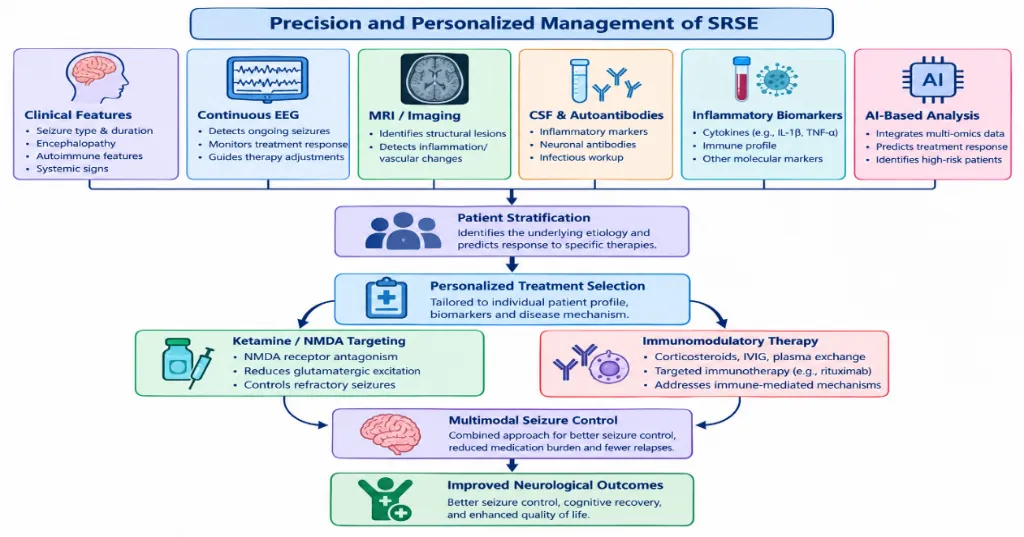
In spite of substantial progress made in treating those with SRSE, many patients still continue to be difficult to treat. The future of the field holds tremendous promise in terms of precision medicine, novel biomarkers, new treatment methods of seizure suppression, and personalized treatment approaches as mentioned in (Figure2). Better insight into the interaction of neuronal excitation, immune response, and network remodelling will allow to identify reactionary cohorts of patients to treatment [41].
9.1 Precision Immunotherapy
The goal of precision immunotherapy is to correlate remedies with the immune process causing seizure activity. When neuron-specific autoantibodies and immune pathways in SRSE appear on the scene, instead of practicing wide-spectrum immunosuppressive therapies on every patient with a hypothetical autoimmune SRSE origin, the clinician will be able to choose suitable treatment. Among the possible approaches are antibody-specific treatments, therapies against B-cells, regulation of cytokine pathways, etc. These techniques may enhance the treatment quality and limit the usage of immunosuppression [42].
9.2 Biomarkers for Treatment Selection
There is an urgent need for reliable biomarkers in order to identify patients that are likely to respond to treatments such as ketamine, immunotherapy, or other targeted therapies. Possible candidates for biomarkers may consist of neuronal antibodies, inflammatory cytokines, markers from cerebrospinal fluid, EEG properties, neuroimaging results, and molecular signatures. Integration of various types of biomarkers enables precise diagnostic and treatment assessment as compared to relying on an individual laboratory test. Future studies should focus on establishing clinically viable biomarkers that could enable early diagnosis, predict patient response to treatment, and improve monitoring of disease progression [43].
9.3 Novel NMDA-Targeted Therapies
The significance of excitation mediated by NMDA receptors during the prolonged occasions of seizures has sparked interest in the concept of therapies that would affect the process of glutamatergic neurotransmission. At present, Ketamine is seen as the most original antagonist of NMDA receptors that is used in this area but there are many alternative strategies targeting NMDA receptor signaling that will yield positive results as well. Future research will be carried out in the direction of obtaining new agents with better selectivity and predictable pharmacokinetics with minimized side effects. Investigation of the influence NMDA receptor activity has on the process of SRSE will give the opportunity to disclose the period for the best time to consider glutamatergic approaches [44].
9.4 Artificial Intelligence and Personalized Seizure Management
Artificial intelligence (AI) and machine-learning can be used for continuous EEG interpretation, seizure detection, predicting outcomes, and selecting treatments for patients on an individual basis. When applied to large datasets of EEG data, automated analysis can facilitate early detection of electrographic seizures, thus alleviating the burden caused by prolonged manual analysis. Systems equipped with AI can also combine EEG with clinical, lab, imaging, and molecular data to facilitate prediction of treatment outcomes and search for patients at risk of strongly refractor status epilepticus (SRSE) or recurrence. Although the technologies are still under development and require thorough clinical validation, their merger with precision pharmacology and neuroimmunology may lead to more personalized management of SRSE [45].
CONCLUSION
Super refractory status epilepticus (SRSE) refers to a serious neurological emergency, characterized by continuous neuronal overexcitability, GABAergic inhibition impairment, glutamatergic activity elevation, modification of receptor properties, and neuroinflammation. The aforementioned processes lead to resistance to the conventional antiepileptic and anesthetic treatment approaches, thus necessitating the use of alternative treatment methods. The use of ketamine as NMDA receptor antagonist may represent an efficient solution for managing seizures in the conditions of conventional GABAergic therapies’ insufficiency. Neuroimmunomodulation is becoming more important in practice, especially for the patients suffering from SRSE caused by autoimmune and inflammatory diseases. Corticosteroids, IVIG, plasma exchange, and various immunomodulatory agents could help managing the condition. Combination of ketamine with neuromodulatory agents may have an effect on the pathological chain. Nevertheless, the treatment should be tailored for every patient, and there are further clinical studies needed for determining correct dose and time for the therapy. The future developments in biomarkers, new pathways of immunotherapy, innovative NMDA-targeting agents, and artificial intelligence technologies could improve personalized management of SRSE.
REFERENCES

Nujeti Vishnu Kumar, Gayam Ramprasad, Super-Refractory Status Epilepticus: Role of Ketamine Infusion and Neuroimmunomodulation in Refractory Seizure Control, Int. J. of Pharm. Sci., 2026, Vol 4, Issue 9, 2228-2244, https://doi.org/10.5281/zenodo.22844501
 10.5281/zenodo.22844501