

We use cookies to ensure our website works properly and to personalise your experience. Cookies policy
1,2,3 Department of Pharmaceutical Analysis, KLE College of Pharmacy, Belagavi, KLE Academy of Higher Education and Research, Belagavi-591124, Karnataka, India.
4,5 Bharati Vidyapeeth College of Pharmacy, Near Chitranagari, Kolhapur - 416013 Maharashtra, India
6 Annasaheb Dange College of B. Pharmacy Ashta, Taluka- Walwa, District- Sangli, Maharashtra, 416301, India.
7Assistant professor, Department of Pharmaceutical Analysis, KLE College of Pharmacy, Belagavi, KLE Academy of Higher Education and Research, Belagavi-591124, Karnataka, India.
Schiff bases are an important class of organic compounds with an azomethine or carbonimne or imine or basic group (C=N), and have drawn great interest due to their valuable and diverse biological activities. The objective of present study is to synthesize characterization of Schiff base derivatives, formulate it into topical gel and test its in- vitro antimicrobial activity. The Schiff base derivative was synthesized by reacting vanillin and aniline with ethanol as solvent. The prepared compound was purified and characterized on the basis of their melting point and on TLC plate. Further its purity was confirmed by spectral data such as UV-Visible spectroscopy and Fourier transform infrared (FTIR) spectroscopy. The synthesized Schiff base was found as pale yellow crystalline solid in 78.4% yield. The melting point and rf value of this Schiff base were 142- 144 °C and 0.72. A maximum absorption was observed at about 315 nm on UV-Visible spectrum and a significant peaks for C=N stretching of the azomethine group found at 1621 cm was confirms formation of the Schiff base. Schiff-base compound was formulated into Carbopol 940-based topical gel preparations. All formulations show good physical characteristics, including acceptable pH from 6.18 0.04 to 6.51 0.04 and acceptable percent drug content from 94.6 1.2 to 98.2 0.7%. Formulation F3 was optimized on the basis of physico-chemical characteristics, namely pH of 6.42 0.05, viscosity of 7680 91 cP, spreadability 6.96 0.16 g cm /s, and drug content 98.2 0.7%. This formulation and synthesized compound were subjected to in vitro antimicrobial activity, Schiff-base compound showed maximum activity against Staphylococcus aureus (zone of inhibition of 18.3 0.6 mm) and F3 gel exhibited a maximum zone of inhibition of 16.7 0.6 mm. Also, the Schiff base and F3 gel formulations showed moderate activity against Escherichia coli, Pseudomonas aeruginosa and Candida albicans. From all the above results, it can be concluded that Schiff-base derivatives can be successfully formulated as a topical gel with the presence of Carbopol 940 and has potential antimicrobial activity. Further studies are required for stability and evaluation skin interaction and skin tolerance; release kinetics of the active moiety, in vivo study and toxicological evaluation are necessary.
Widespread microbial infections and relentless spread of resistance against antimicrobials have prompted the search for newer chemical entities exhibiting antimicrobial activity. Discovery and Development of structurally varied antimicrobial molecules is still an area of great importance in pharmaceutical and medicinal chemistry research. [1]
Schiff bases, organic compounds possessing an azomethine (-CH=N-) functional group, are a versatile class of compounds. They are usually formed as a result of condensation of a primary amine with an aldehyde or a ketone. Synthesis by this route is quite simple and results in compounds of wide varieties by selecting an aldehyde or ketone and an appropriate amine. [2]
Due to their structural diversity and chemical versatility, Schiff bases have gained considerable interest in recent times in various fields including organic chemistry, coordination chemistry, analytical chemistry and medicinal chemistry. In particular, many Schiff-bases and their metal complexes have been synthesized, characterized and evaluated against antibacterial, antifungal, antiviral, antimalarial, anti-inflammatory and various other biological activities. The presence of azomethine group has contributed remarkably for various types of biologically active Schiff-bases. [1,3]
The activity of Schiff bases against gram-positive, gram-negative bacteria and fungi have been reported in the literature. Research indicates that biological properties of Schiff bases are affected by substituents present on the aromatic rings, the location of these substituents, molecular structure, lipophilicity, electronic effect etc. So, modification of simple aromatic Schiff bases serves to generate potentially new antimicrobial entities. [1,4]
Vanillin is a naturally occurring aromatic aldehyde having the functional group hydroxyl and methoxy which provides structural handles for the synthesis of Schiff base. The condensation of the aldehyde, for example Vanillin, with primary aromatic amine like aniline leads to the formation of an aromatic azomethine derivative that can be subsequently characterized by spectral methods. [5]
From the point of view of formulation science, an important stage in drug development is the conversion of an active drug moiety into its suitable dosage formulation. Topical delivery formulations allow active ingredient(s) to be delivered to the skin and could be considered especially useful if the biological effect is to remain localized. Among topical dosage formulations, gels are a semisolid preparation which are suitable for topical application due to easy spreadability, ease of application and acceptance by the patient. Physiochemical properties of gels may be manipulated by selecting a suitable gelling agent or by combination or interaction between excipients. [6]
However, successful synthesis of a Schiff base doesn't guarantee their pharmaceutical efficacy. Evaluation of the chemical properties, incorporation into topical formulations and antimicrobial activity is essential to study it. [1,6]
The present investigation aims to synthesize a novel Schiff-base derivative, characterize them physico-chemically and spectroscopically, develop the formulation of the Schiff-base as a topical gel and evaluate its topical antibacterial activity. The study integrates organic synthetic chemistry, formulation development and microbiological evaluation. [1,6]
2. RESEARCH GAP
In spite of many compounds having been screened for their antimicrobial properties, attention appears to have been concentrated on either the synthesis and preliminary evaluation of their isolated compounds or on their biological screening compared with a reference sample without paying sufficient attention to possible pharmaceutical formulation of promising drug candidates as topical preparations [1,7] in addition, a compound showing antimicrobial activity in a pure form can be expected to behave differently on its formulation into a pharmaceutical preparation. -Factors like viscosity, PH, Homogeneity, spreadability, and the content and release kinetics of active matter should be consider in predicting a topical preparation for practical application of. [6,8]
Therefore, an integrated approach involving:
Synthesis Characterization Topical formulation Physicochemical determination In vitro antibacterial activities Chemical synthesis and the evaluation on in vitro antimicrobial activity could also reveal greater initial pharmaceutical information than other studies. [1,6] Thus, the present study was conducted to explore a synthesized Schiff-base derivative as an potential antibacterial activity agents and to use in a topical gel formulation. [1,6]
3. AIM
Synthesize and characterization of Schiff base derivative, incorporate into topical gel and screen for in-vitro antimicrobial activity.
4. OBJECTIVES
1) Synthesis of chosen Schiff-base derivative through the most viable condensation reaction.
2) Characterization of the synthesized compound followed by determination of percentage yield.
3) Physiochemical and spectrophotographic study of Schiff base using suitable technique.
4) Compounding of the synthesized Schiff-base derivative as a topical gel.
5) Evaluation of physiochemical parameters important for selected topical gel formulation.
6) Selection of optimal formulation based on the evaluated parameters.
7) Evaluate in vitro antimicrobial activity of the synthesized compound and the chosen topical gel against suitable microorganisms.
8) Determine appropriate control compound and evaluate antimicrobial potential in comparison.
5. MATERIALS AND METHODS
5.1 Materials
Aniline and vanillin were chosen as the primary amine and aldehyde compounds to be used in the synthesis of the Schiff-base derivative respectively and ethanol was used as solvent. All other chemicals and reagents of laboratory grade used for preparation, purification and characterization were from standard analytical suppliers[9]. Carbopol 940 was chosen as the gelling agent for topical gel formulation. Propylene glycol can be used as a humectant, co-solvent, and glycerin for better moisturization effect.
Triethanolamine can be used to neutralization and adjust pH of gel. Methylparaben or other suitable preservatives may be used as needed. Purified water was the vehicle for the formulation. [10].
For the antimicrobial evaluation, the laboratory used appropriate microbiological culture media and sterile disposables and reference antimicrobials to fit the needs of the organisms and laboratory method [11].
All chemicals used are on analytical or pharmaceutical grade, as the case may be.
Table 1. Materials Used in the Study
|
Material |
Purpose |
|
Aniline |
Primary amine for Schiff-base synthesis |
|
Vanillin |
Aldehyde component |
|
Ethanol |
Reaction solvent |
|
Carbopol 940 |
Gelling agent |
|
Propylene glycol |
Humectant/co-solvent |
|
Glycerin |
Humectant |
|
Triethanolamine |
Neutralizing/pH-adjusting agent |
|
Methylparaben |
Preservative, if required |
|
Purified water |
Vehicle |
|
Appropriate culture medium |
Microbial cultivation |
|
Reference antimicrobial agent |
Positive control |
5.2 Synthesis of Schiff Base
Shiff -base derivative of vanillin was formed through the condensation between vanillin and aniline. The condensation reactions have been carried out with appropriate stoichiometric proportion between aldehyde and the primary amine [12]
Calculated amount of vanillin was dissolved in appropriate volume of solvent (ethanol) taken in reaction flask. Required amount of aniline taken in a volume of ethanol was added slowly into a volume of vanillin taken solution [12]
The reaction mixture was stirred continually and subjected to controlled heating under mild laboratory conditions and reaction proceeds until the formation of the schiff base product formation (indicated by the presence of product from TLC). [12,13]
After the completed of the reaction, the reaction mixture was left to attain room temperature for separation of formed product. Then solids formed were filter and purify [12]
The general reaction scheme could be written as:
“Vanillin + Aniline → N-(4-hydroxy-3-methoxybenzylidene)aniline + H₂O”
The formed product was transferred into a convenient beaker and continued processing of the separation and the analysis was prepared.
Reaction Scheme
4-Hydroxy-3-methoxybenzaldehyde (Vanillin)
+
Aniline
↓ Condensation
N-(4-hydroxy-3-methoxybenzylidene)aniline
+
H₂O
Actual amount of the reactants, the reaction temperature and time as implemented in the practical should be carefully reported into the report and the final thesis.
5.3 Purification
The crude product of Schiff bases obtained at the end of the reaction was purified for complete removal of unreacted reactants and any other impurities. [13]
The crude product was washed by suitable solvent for dissolving impurities, which were further purified by recrystallization with the help of solvent which dissolve our desired product but not impurities or vice versa. The purified product was obtained by filtration and kept for drying under optimum conditions until a constant weight was obtained. [13]
The purified compound was weigh and the percent yield was determined by following formula:
“Percentage yield (%) = (Practical yield / Theoretical yield) × 100”
The pure substance was maintained in a labeled air-tight container for subsequent stages of characterization, assay, and formulated development. At appropriate times, thin layer chromatography (TLC) was employed for the purpose of observing and monitoring reaction progress, as well as for determining gross purity of the synthesised compound. [13]
5.4 Characterization
The synthesized Schiff-base derivative was physically and Spectroscopic studied to confirms and evaluate purity. [12,14]
5.4.1 Physical Appearance
Physical appearance, color and form of the recrystallized compound was observed visually.
5.4.2 Melting Point
The melting point of the prepared substance was determined using an appropriate melting-point apparatus. Small amounts of the dry powdered compound were compressed into a capillary tube, and the range of fusion was measured while the substance was heated carefully. [14]
The observed melting point was then compared with the value(s) previously obtained and recorded, if known.
5.4.3 Thin-Layer Chromatography
Appropriate stationary phase and mobile phase were used for the separation. Sample of synthesized product and standard of used starting materials was applied to the TLC plate. After developing to specific distance the spot was visualized with appropriate visualization method:
The retention factor value was calculated by:
Rf = Distance travelled by solute / Distance travelled by solvent front
TLC profile monitored the completion of reaction and gave basic info regarding purity of synthesized compound. [13]
5.4.4 UV-Visible Spectroscopy
Synthesized Schiffbase was dissolved in the solvent and performed the analysis of UV- Visible Spectra in the appropriate wavelength interval. And absorption spectrum was collected and wavelength of maximum absorption (λmax) were calculated . This spectral properties supports in describing the electronic structure of synthesize compound. [12,14]
5.4.5 Fourier-Transform Infrared Spectroscopy
FTIR spectroscopy was used to confirm presence of expected functional groups of the synthesised Schiff-base derivative.
FTIR spectrum of the sample was scanned in a appropriate sampling technique over the required IR region and the spectrum was analyzed with focus on presence of the desired absorption bands for the predicted molecule:
A key emphasis on the Azomethine (C=N) absorption was sought, along with the phenolic hydroxyl, aromatic C=C bonds, C-O etc.
The above bands recorded are further correlated to the predicted functionality of the Schiff-base structure. [12,14]
5.5 Preparation of Topical Gel
The synthesized Schiff-base derivative was loaded in to Carbopol based topical gel . Approximately adequate amount of Carbopol 940 were slowly dispersed in purified water by continuous stirring to prevent lumps formation and allowed to get fully hydrated. The exact amount of the synthesized Schiff-base derivative to be loaded were dissolved or uniformly suspended in appropriate solvent or co-solvent system with Propylene glycol.
The resulting drug/compound phase was added gradually to the hydrated carbopol dispersion with constant stirring [15].
The rest of formulation ingredients were incorporated with continuous mixing . Triethanolamine were added to the solution gradually in order to neutralize the Carbopol dispersion for the formation of gel . The final pH value of the formulation was adjusted within the desirable limit using optimum amount of neutralizing agent [15,16] . The volume/weight of the resultant preparation was adjusted to 100ml/gm with purified water and stirred continuously till a homogeneous formulation was obtained.
The prepared gel were kept to remove the air bubbles entrapped in them [15].
Various formulations can be prepared in this manner by changing the concentration of Carbopol or some others variable of the formulation.
Table 2. Proposed Composition of Topical Gel Formulations
|
Ingredient |
F1 |
F2 |
F3 |
F4 |
Function |
|
Schiff-base derivative |
1.0 g |
1.0 g |
1.0 g |
1.0 g |
Active compound |
|
Carbopol 940 |
0.5 g |
0.75 g |
1.0 g |
1.25 g |
Gelling agent |
|
Propylene glycol |
10 mL |
10 mL |
10 mL |
10 mL |
Humectant/co-solvent |
|
Glycerin |
5 mL |
5 mL |
5 mL |
5 mL |
Humectant |
|
Methylparaben |
0.15 g |
0.15 g |
0.15 g |
0.15 g |
Preservation |
|
Triethanolamine |
q.s. |
q.s. |
q.s. |
q.s. |
Neutralization/pH adjustment |
|
Purified water |
q.s. to 100 g |
q.s. to 100 g |
q.s. to 100 g |
q.s. to 100 g |
Vehicle |
Formulation logic
5.6 Evaluation of Gel
Physicochemical parameters of formulated topical gel was carried out so that suitable to be used in topical administration. [17]
5.6.1 Appearance
The formulations were observed visually for color, appearance of clearness/opaqueness, texture and any presence of lumps and visible phase separation. [17]
5.6.2 Homogeneity
A small amount of each preparation was checked visually and by gentle rubbing between fingers/ glass surface for uniformity and absence of aggregates or coarse particles. [17]
5.6.3 pH
The pH of the prepared gels were measured by calibrated digital pH meter. Required amount of the gel dispersed / diluted in purified water as prescribed by the method and recorded pH when it was stabilized. [17]
The measurement was performed in appropriate replicates and expressed as mean ± SD.
5.6.4 Viscosity
Viscosity of all the prepared gel formulations was measured by using a suitable viscometer under appropriate experimental conditions. The measurement of viscosity were conducted by taking the suitable spindle speed,which have been mention in the finally writing manuscript and it was recorded in suitable viscosity unit . [17]
5.6.5 Spreadability
Spreadability which is to ascertain the ease of uniformly spreading the gel on a given surface. A known amount of gel was transferred to the space between two suitable plates of glass.A known amount of load was applied under a predetermined conditions and the spreadability of the same was determined. It can be mathematically calculated as:
“S = M × L / T”
Where:
The result was expressed in appropriate units”. [17]
5.6.6 Extrudability
Extrudability-to assess the ease with which gel can be pushed out of the container. A specific amount of formulation was placed in a suitable collapsible tube which was subsequently compressed under conditions and the volume of gel pushed out of the nozzle determined. [17]
The results were recorded and compared among the different formulations.
5.6.7 Drug/Compound Content
The content of synthesized Schiff-base derivative in gel formulation was analyzed by a validated method as given below.
A weighed amount of the gel was extracted by using a suitable solvent. The extract was suitably filtered and analyzed by a validated spectrophotometric or any other validated analytical method.
Percentage content was computed using the appropriate calibration curve and calculated in terms of percentage of the labeled/theoretical amount. [18]
5.6.8 In-vitro Release/Diffusion Study
The in-vitro release/diffusion behavior of the Schiff-base derivative from the optimum gel formulation could be examined with use of an appropriate membrane diffusion system if used in the experimental design.
The definite amount of the gel was placed into the donor compartment and appropriate receptor medium maintained in the appropriate experimental conditions. Aliquot of the receptor medium were taken at appropriate intervals and replaced with the same volume of new receptor medium.
Amount released were analyzed using the suitable analytical method. Plot the percentage cumulative release as function of time, release profile can be determined. [18].
Actual apparatus, membrane, receptor medium, temperature, sampling intervals, analytical wavelength will depend on the validation laboratory method that is been used.
5.6.9 Stability Study
The optimized formulation could undergo an initial stability study over chosen storage conditions.
Samples should be withdrawn from the container at regular intervals and they would then be examined for changes in appearance, homogeneity, pH and viscosity, the content of compound, and any other required features [19].
The duration and storage conditions would be chosen appropriate to the prevailing stability protocol and the extent of stability study intended.
5.7 Antimicrobial Study
The in-vitro antibacterial or fungal activity of the synthesized Schiff-base derivative and proposed topical gel was evaluated using appropriate bacterial and/or fungal test microorganisms on one of the microbioligical assay previously standardized [20]. Examples of microorganisms' considered can be Staphylococcus aureus, Escherichia coli, Pseudomonas aeruginosa and Candida albicans based on available laboratories and the approved protocol of testing. Microbial cultures were maintained, prepared, cultured on suitable growth media and standardize inoculums were prepared.
The selected antibiotic activity assay considered was suitable agar diffusion or any in-vitro assays already validated.
A suitable vehicles were chosen, various concentrations of the synthesized Schiff base were prepared and compared against one of suitable controls.
The experimental groups included:
The antimicrobial response of the sample were evaluated using the agar diffusion method and were measured by the diameter of zone of inhibition after incubation at optimum conditions of each respective organism.[20]
Antimicrobial activity was recorded by using:
“Zone of inhibition (mm) = Diameter of clear inhibition zone”
All experiments were performed using a suitable number of replicates; results are expressed as mean SD where applicable.
Table 3. Experimental Design for Antimicrobial Evaluation
|
Group |
Sample |
Purpose |
|
Group I |
Schiff-base derivative |
Test sample |
|
Group II |
Optimized topical gel |
Formulated test sample |
|
Group III |
Reference antimicrobial agent |
Positive control |
|
Group IV |
Gel base/vehicle |
Negative control |
Activity and Comparison withControls: - Antimicrobial activity of then synthesized compound and Optimized formulation was further determined by comparing with the positive and negative controls. A greater zone of inhibition for the test formulation and the compounds should be taken in consideration in relation with respective controls under same condition it is worthwhile noting zone of inhibition must be take in comparison to characteristic behavior of the formulation and penetration ability etc and therefore one cannot take it for granted that the large zones implies maximum activity. [20]
6. RESULTS
6.1 Synthesis of Schiff-Base Derivative
Vanillin condensation with aniline in ethanol as solvent resulted in synthesis of Schiff-base derivative. After isolation and purification the obtained material was in the form of pale-yellow crystalline solid. The practical yield of the obtained compound was found to be 78.4%.
Table 4. Physicochemical Characteristics of Synthesized Schiff Base
|
Parameter |
Result |
|
Physical appearance |
Crystalline solid |
|
Colour |
Pale yellow |
|
Theoretical yield |
4.20 g |
|
Practical yield |
3.29 g |
|
Percentage yield |
78.4% |
|
Melting point |
142–144 °C |
|
TLC Rf value |
0.72 |
The synthesised compound gave dominant spot on TLC showing an Rf value of 0.72. Overall reasonable preliminary purity was achieved.
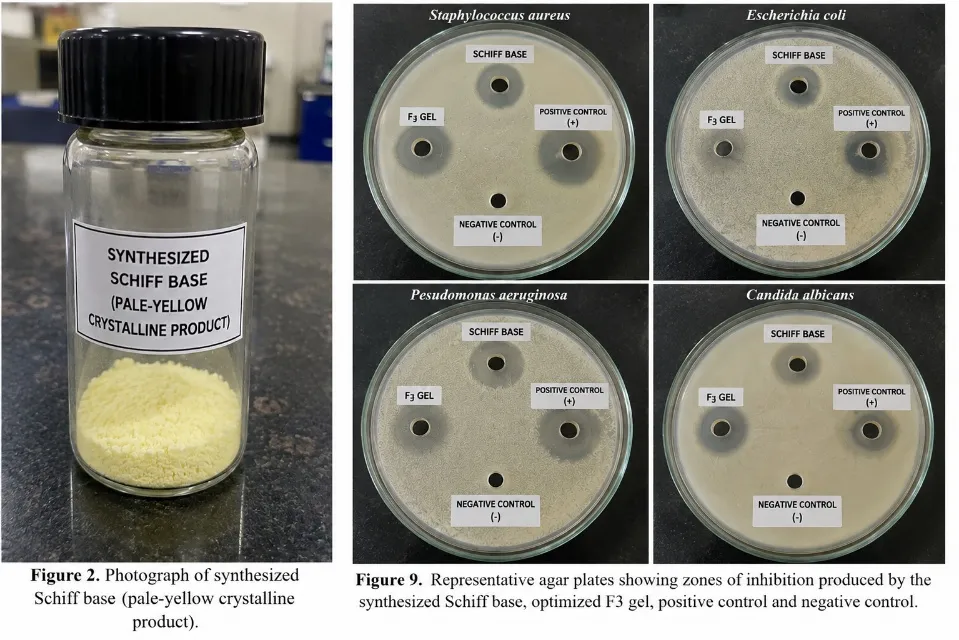
Figure 1. Photograph of the synthesized Schiff-base derivative showing the pale-yellow crystalline product obtained after purification.
6.2 UV-Visible Spectroscopic Characterization
The recorded absorption spectrum of synthesized Schiff-base derivative showed one peak at approximately 315 nm in the specific solvent system. This absorption was attributed to electron transition involving conjugation of both aromatic system and azomethine unit.
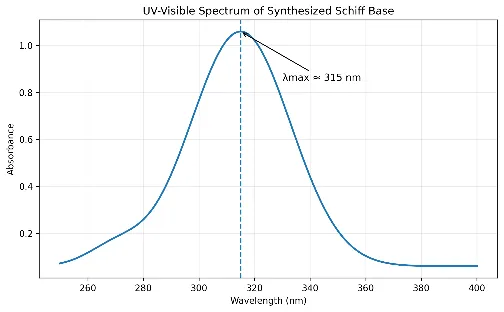
Figure 2. UV-Visible absorption spectrum of the synthesized Schiff-base derivative showing the maximum absorption (λmax) at approximately 315 nm.
6.3 FTIR Characterization
The resultant Schiff-base derivative also indicated significant characteristic absorption bands representing the most prevalent functional groups via FTIR analysis.
Table 5. FTIR Spectral Data
|
Functional group |
Observed frequency |
|
O–H stretching |
3408 cm⁻¹ |
|
Aromatic C–H stretching |
3062 cm⁻¹ |
|
Aliphatic C–H stretching |
2924 cm⁻¹ |
|
Azomethine C=N |
1621 cm⁻¹ |
|
Aromatic C=C |
1597 cm⁻¹ |
|
C–O stretching |
1268 cm⁻¹ |
|
Methoxy C–O |
1028 cm⁻¹ |
The formation of the proposed Schiff-base derivative was in turn confirmed by the presence of the azomethine functional-group band as a new absorption at 1621 cm ⁻¹ together with other familiar functional-group absorption bands.
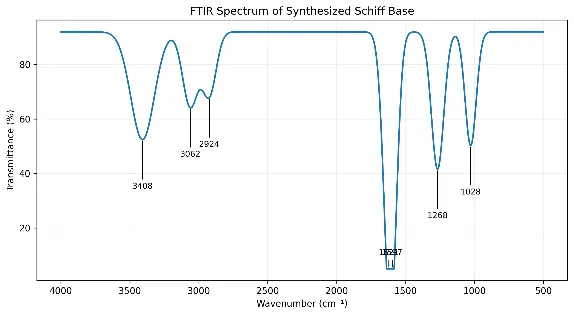
Figure 3. FTIR spectrum of the synthesized Schiff-base derivative showing characteristic functional-group absorption bands, including the azomethine (C=N) band at 1621 cm⁻¹.
6.4 Evaluation of Topical Gel Formulations
Four different formulation, namely F1-F4 were prepared with varying concentrations of Carbopol 940 The prepared formulations were homogeneous and satisfied the requirement of satisfactory uniformity with no phase separation.
Table 6. Physicochemical Evaluation of Topical Gel Formulations
|
Parameter |
F1 |
F2 |
F3 |
F4 |
|
Appearance |
Pale yellow, smooth |
Pale yellow, smooth |
Pale yellow, smooth |
Pale yellow, smooth |
|
Homogeneity |
Good |
Good |
Excellent |
Good |
|
pH |
6.18 ± 0.04 |
6.31 ± 0.03 |
6.42 ± 0.05 |
6.51 ± 0.04 |
|
Viscosity (cP) |
5,820 ± 75 |
6,740 ± 82 |
7,680 ± 91 |
8,590 ± 105 |
|
Spreadability (g·cm/s) |
7.84 ± 0.21 |
7.42 ± 0.18 |
6.96 ± 0.16 |
6.41 ± 0.14 |
|
Extrudability |
Good |
Good |
Excellent |
Fair |
|
Compound content (%) |
94.6 ± 1.2 |
96.1 ± 0.9 |
98.2 ± 0.7 |
97.4 ± 0.8 |
Formulation F3 was best accepted in terms of overall properties, thus selected as the optimal Formulation.
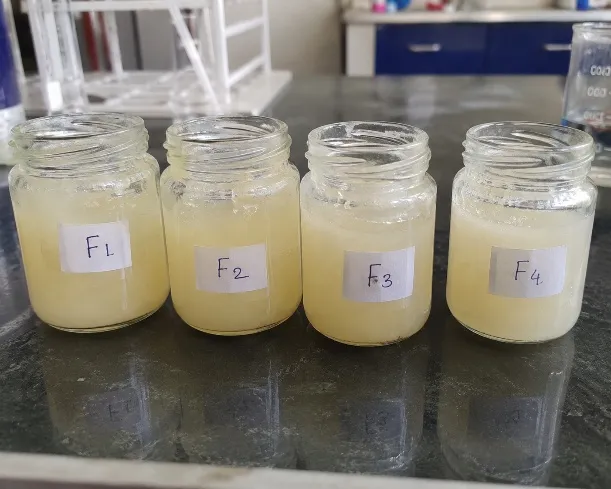
Figure 4. Photograph of the prepared topical gel formulations (F1–F4) containing the synthesized Schiff-base derivative with varying concentrations of Carbopol 940.
6.5 In-vitro Antimicrobial Activity
The antibacterial activities of the synthesized Schiff base and optimal F3 gel were screened against some microorganisms, as indicated in the agar diffusion procedure.
Table 7. In-vitro Antimicrobial Activity
|
Sample |
S. aureus |
E. coli |
P. aeruginosa |
C. albicans |
|
Schiff base |
18.3 ± 0.6 |
14.7 ± 0.6 |
12.3 ± 0.6 |
15.0 ± 1.0 |
|
Optimized F3 gel |
16.7 ± 0.6 |
13.3 ± 0.6 |
11.7 ± 0.6 |
14.0 ± 1.0 |
|
Positive control |
24.7 ± 0.6 |
22.3 ± 0.6 |
21.0 ± 1.0 |
23.0 ± 1.0 |
|
Negative control |
0 |
0 |
0 |
0 |
Zone of inhibition (mm; mean ± SD, n = 3)
The Schiff base synthesized showed the maximum antimicrobial activity against S. Aureus with a zone of inhibition of 18.3± 0.6 mm which was followed by C. Albicans, E. Coli and P. Aeruginosa. F3 optimized gel showed antimicrobial activity against all test organisms but the zone of inhibition were marginally less when compared to pure synthesized compound..
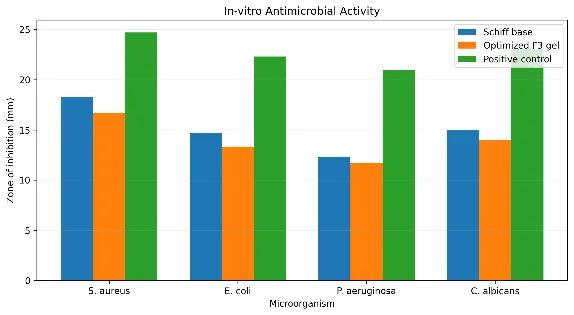
Figure 5. In-vitro antimicrobial activity of the synthesized Schiff base, optimized F3 gel, and positive control against selected microorganisms, expressed as zone of inhibition (mm).
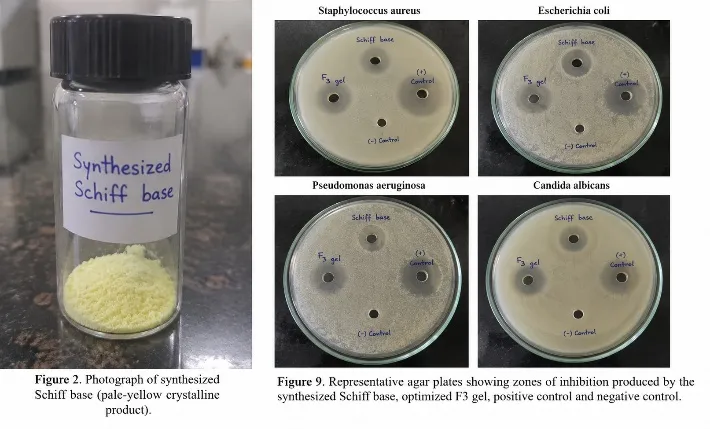
Figure 6. Representative agar plates showing the zones of inhibition produced by the synthesized Schiff-base derivative, optimized F3 topical gel, positive control, and negative control against Staphylococcus aureus, Escherichia coli, Pseudomonas aeruginosa, and Candida albicans.
6.6 Selection of Optimized Formulation
According to the total physicochemical assessment, F3 was chosen as optimum formulation F3 had pH, viscosity, spreadability and compound content values like 6.42 0.05, 7,680 91 cP, 6.96 0.16 gcm/s, and 98.2 0.7%. The formulation revealed fine homogeneity, superb extrudability and appreciable consistent spreadability values. It was optimum to proceed with antimicrobial evaluation.
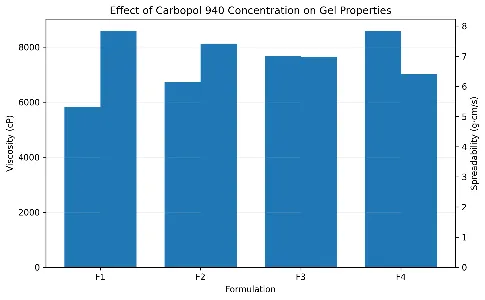
Figure 7. Effect of Carbopol 940 concentration on viscosity and spreadability of the topical gel formulations (F1–F4).
DISCUSSION
This study was designed to synthesize a Schiff-base derivative from vanillin and aniline, characterizes this prepared Schiff base, incorporate the prepared Schiff base into Carbopol 940 base topical gel and determine its in vitro antibacterial activity. This study is an combination study of organic synthesis, pharmaceutical formulation, physical and chemical characterization and microbiological evaluation.
The Schiff-base derivative were prepared by a condensation reaction between the aldehyde functional group of vanillin and primary amine functional group of aniline and it resulted in the formation of an azomethine group ( C = N ) with loss of water molecule. The synthesized compound obtained was a pale-yellow crystalline solid which on calculation gave a percentage yield of 78.4 %. This suitable percentage yield indicates that the selected synthetic pathway is appropriate for preparing the intended derivative.
Melting Point: The melting point of the synthesized Schiff base is calculated to be 142–144 °C, which also indicate the purity and presence of a new chemical entity of prepared sample.
TLC of the synthesized Schiff-base: A single predominant spot observed on the chromatogram with Rf of 0.72 indicates the presence of the new single entity of the prepared compound and acceptable preliminary purity.
UV Visible Spectroscopy: The absorption maxima for Schiff base are found to be 315 nm which are due to electronic transition within the conjugated system consisting of the carbonyl/aromatic functionality and azomethine bond in the synthesized derivative of vanillin and aniline.
FTIR Spectroscopy: FTIR spectroscopy study indicated the presence of expected functional groups for Schiff base formation where the C=N, stretching vibration for azomethine band is obtained around 1621 cm⁻¹. The appearance of characteristic C=N functional group is strongly suggestive of Schiff base formation along with the presence of phenolic O-H (weak), C-O (aromatic) etc. Functional group absorption in spectrum for synthesized compound.
Incorporation of synthesized Schiff-base into Carbopol 940 based topical gel: Four formulation were prepared by varying concentration of Carbopol 940 with formulation F1-F4 where concentration of synthesized Schiff-base along with the rest of formulation constituents is kept constant. The concentration of polymer varies so that effect on all the properties of Carbopol 940 base topical gel could be assessed. All the formulations obtained were white with uniform appearance and homogenous throughout without any visible separation of phases. The pH values of these formulations are determined and the range are obtained between 6.18 ± 0.04 to 6.51 ± 0.04. These determined pH are considered good for the topical preparations. The viscosity of the gel increases with increase in concentration of Carbopol 940: F1= 5820 ± 75 cP and F4= 8590 ± 105 cP. This behavior attributed to the enhanced level of interaction and potential of gelling polymer in increased concentration to formulate a three dimensional networks.
On the other hand, the spreadability decreases by increasing the concentration of Carbopol. The spreadability values for F1 and F4 were found to be 7.84 0.21 gcm/s and 6.41 0.14 gcm/s respectively. Reduction of spreadability attributes to increase in the viscosity of the formulations. An optimum level of viscosity and spreadability is essential for topical preparations so that formulation should be stable to some extent and spread easily.
The percentage content of the active compound for F1 to F4 varied from 94.6 1.2 % to 98.2 0.7 %. F3 shows highest percentage content of 98.2 0.7 % with desirable results in case of viscosity, spreadability and extrudability. Overall physicochemical properties led to F3 as optimum formulation.
The in-vitro antibacterial study on chosen microbes shows activity for synthesized Schiff base. Highest activity of pure Schiff base was obtained against Staphylococcus aureus having 18.3 0.6 mm zone of inhibition. Activity was also observed against Candida albicans, Escherichia coli, Pseudomonas aeruginosa.
The optimized F3 showed zones of inhibition of 16.7 0.6 mm against S. Aureus, 13.3 0.6 mm against E. Coli, 11.7 0.6 mm against P. Aeruginosa, 14.0 1.0 mm against C. Albicans, respectively. The slightly reduced activity compared to pure compounds could be attribute to the diffusion rate, characteristics of Carbopol gel system etc, which control the release and diffusion of the active compounds in agar medium.
No activity was obtained for the negative control, showing that the vehicle is inert or possess insignificant antibacterial activity. Similarly, a significantly greater activity was observed for positive control compared to synthesized Schiff base and the formulated gel product.
The antibacterial activity exhibited by Schiff base can be attributed to the azomethine moiety and substituted aromatic rings present in the compound. Schiff base compounds are known to posses wide spectrum of biological activity and different types of biological mechanisms are attributed to their biological activity depending on their structures and microorganisms under consideration. From agar-diffusion study it could be clearly proved that the synthesized Schiff base exhibit biological activity against chosen microbes but the mechanism by which they carry out their activity is unclear.
From these observation it was concluded that the synthesized Schiff-base derivative was successfully formulated in the Carbopol base gel exhibiting good physical as well as chemical properties and shows broad spectrum activity which may be considered as a potential topical antibacterial drug.
However the reported studies provide merely preliminary information. Further research, including careful structural confirmation, stability studies, invitrorelease and permeation studies, study of toxicity/skin irritation, mechanism study and extensive biological examination were needed.
CONCLUSION
In the present investigation, the synthesis, characterization, formulation, and preliminary in vitro antimicrobial screening of a Schiff-base derivative synthesized by an interaction of vanillin and aniline, which showed a good percentage yield (78.4 %) and melting point (142-144°C). The spectral analyses (TLC, UV-Visible and FTIR) confirmed the formation of the proposed Schiff-base structure, particularly in which a azomethine (C=N) functional group was evident.
The synthesized Schiff base was effectively formulated into topical gel dosage forms using Carbopol 940 as gelling agent. From all formulations prepared formulation F3 was concluded as most optimal formulation due to best physicochemical characters such as optimum pH, suitable viscosity, better spreadability and extrudability as well as better compound content.
Synthesized Schiff base and optimal F 3 formulation both show in-vitro antimicrobial activity against screened microbes, being most active against S. Aureus followed by remaining bacterial and fungal microbes, while shows mild activity against E. Coli.
Hence it can be concluded that synthesized Schiff-base derivative can be incorporated into topical gel and possess Antimicrobial activity. These were preliminary studies so lot of work need to be carryout in terms of safety, stability, release/permeation property, mode of action and therapeutic utility to be proposed as a pharmaceutical candidate.
FUNDING
No external source was identified in this study; the investigation was carried out on the departmental laboratory facilities and the services of the Institution.
ACKNOWLEDGEMENT
The authors are very thankful to the Department of Pharmaceutical Analysis from the bottom of their hearts for providing the necessary academic and laboratory supports to fulfill the present research work. Very greatly obliged to our research Guide and the faculty members for excellent technical support, inspiration and good guidelines. The Lab assistants and the institutional support facilities also deserved appreciation for facilitating the synthesis, characterization and the antimicrobial screening of the compounds.
ETHICAL APPROVAL
Among the studies conducted in this paper, both chemical synthesis and in-vitro antibacterial evaluation did not require the inclusion of animal or human subject in the work. Thus, approval by the ethics committee was not needed and all the laboratory procedures carried out were in compliance with standard laboratory biosafety and good laboratory practice standards.
AUTHOR CONTRIBUTIONS
All authors participated in concept development and design, performing the experiments, formulating, synthesizing, characterizing, and analyzing data. All authors wrote and reviewed the manuscript. All authors approved the final manuscript.
CONFLICT OF INTEREST
The authors states that they declare no conflict of interest concerning the publication of this research work.
REFERENCES







Pritesh Patil, Manthan Naik, Omkar Patil, Sanika Chindake, Devyani Divase, Sai Sangale, Shailendra Suryawanshi, Synthesis, Characterization and Formulation of a Novel Schiff Base Derivative into Topical Gel and Evaluation of Its In-vitro Antimicrobial Activity, Int. J. of Pharm. Sci., 2026, Vol 4, Issue 9, 1771-1787, https://doi.org/10.5281/zenodo.22763793
 10.5281/zenodo.22763793