

We use cookies to ensure our website works properly and to personalise your experience. Cookies policy
Department of Pharmacology, SNJB's Shriman Sureshdada Jain College of Pharmacy, Chandwad, Dist.: Nashik, India.
The gut microbiome, comprising trillions of microorganisms residing in the gastrointestinal tract, has emerged as a critical determinant of human health and disease, with profound implications for cancer development and therapeutic outcomes. This comprehensive review synthesizes current knowledge on the composition, functional dynamics, and immunomodulatory capacity of the gut microbiota, with particular emphasis on its role in carcinogenesis and cancer therapy response. We critically evaluate the mechanistic pathways through which microbial metabolites and community structures influence antitumor immunity, including microbial translocation, antigenic cross-reactivity, and metabolite-mediated immune modulation. The review systematically examines the impact of gut microbiome modulation on the efficacy and toxicity of chemotherapy, radiotherapy, and immunotherapy, highlighting specific microbial signatures associated with immune checkpoint inhibitor responses. We discuss emerging therapeutic strategies—including dietary interventions, probiotics, prebiotics, fecal microbiota transplantation, and phage therapy—and their potential to enhance treatment efficacy, mitigate adverse effects, and enable personalized cancer care. Finally, we identify key knowledge gaps, methodological challenges, and translational hurdles that must be addressed to realize the clinical potential of microbiome-based biomarkers and interventions in precision oncology
The term gut microbiota refers to the complex and dynamic ecosystem of microorganisms residing in the human gastrointestinal tract. This community, consisting of bacteria, viruses, fungi, parasites, and archaea, is essential for maintaining host homeostasis. Although the terms are often used interchangeably, microbiome specifically denotes the collective genetic material of these microorganisms. Together, the gut microbiota and microbiome play a vital role in influencing digestion, immune response, metabolism, and neurological health, underscoring their importance in overall well-being.
The term microbiome refers to the collective genetic material of microorganisms, whereas microbiota denotes the microorganisms themselves [1,2]. This ecosystem is now understood to be highly complex and is essential for the development and maintenance of physiological equilibrium. It influences various functions, including gut barrier integrity, metabolism, and the regulation of both the immune and nervous systems [3].
The gut microbiota's extensive metabolic capacity plays a central role in influencing host health. Microbial-derived metabolites, such as short-chain fatty acids (SCFAs) like butyrate, are vital for maintaining cellular barrier integrity, regulating metabolism, and promoting the production of key interleukins such as IL-10 and IL-18 [4]. However, this metabolic activity has a dual nature. The gut microbiota also produces harmful compounds, including branched-chain fatty acids linked to insulin resistance and diabetes, as well as phenolic molecules associated with cardiovascular diseases. Moreover, microbial production of trimethylamine, which the host converts into the pro-atherogenic Trimethylamine-N-oxide (TMAO), directly contributes to the development of atherosclerosis [3]. This dual capacity underscores the essential balance between a healthy, symbiotic microbiome and dysbiosis, which is increasingly implicated in various diseases, including cancer [5].
Oncology has undergone a paradigm shift in recent years, with the gut microbiota becoming a crucial factor in determining the success of cancer treatments [5,7]. There is growing evidence that the gut microbiome's composition and function can significantly impact the effectiveness of various anticancer therapies, especially immune checkpoint inhibitors (ICIs). Certain microbial taxa, such as Akkermansia muciniphila and Bifidobacterium, are linked to improved responses to immunotherapy, while others are associated with resistance or increased toxicity [5,45]. Additionally, the microbiome can influence the efficacy and side effects of chemotherapy and radiotherapy, presenting new opportunities for therapeutic intervention [32,35].
This review aims to offer a comprehensive summary of current knowledge on how gut microbiome modulation affects cancer therapy. It will first explore the mechanistic pathways through which the microbiota impacts host immunity and the tumor microenvironment. Following this, the review will critically assess clinical evidence connecting specific microbial signatures to responses to immunotherapy, chemotherapy, and other cancer treatments.
Lastly, we will examine the growing field of microbiome-targeted interventions — including dietary changes, probiotics, prebiotics, and fecal microbiota transplantation (FMT) — and evaluate their potential to improve treatment efficacy, reduce toxicity, and usher in a new era of personalized cancer care [5,7,45].
2. Gut Microbiome and Cancer
2.1 Gut Microbiota Composition and Host Interactions
Maintaining physiological balance and functional stability depends on the gut microbiome, which is made up of over 3,000 different bacterial species and about 40 trillion microorganisms [6,7]. The most prevalent phyla are Firmicutes and Bacteroidetes, with smaller populations of Proteobacteria, Verrucomicrobia, Actinobacteria, Fusobacteria, and Cyanobacteria [8]. Microbial density gradually increases along the gastrointestinal tract, ranging from approximately 10¹ cells per gram in the stomach to 10¹² cells per gram in the colon [9]. The combined microbial genomes contain about 5 million genes, significantly surpassing the human genome in functional capacity [6].
Three enterotypes of the gut microbiota are commonly identified, with Bacteroides, Prevotella, and Ruminococcus species predominating. Although the Prevotella-dominated enterotype corresponds to meals heavy in carbs and simple sugars, the Bacteroides and Bifidobacteriales-dominated enterotypes are related with diets high in lipids, animal proteins, amino acids, and saturated fats but low in fiber [44].
The gut's structural design allows for constant communication with the host immune system. Intestinal epithelial cells (IECs) and intraepithelial lymphocytes (IELs) make up the single epithelial cell layer that makes up the mucosa. Goblet cells create mucus that covers the surface of the epithelium, whereas paneth cells emit antimicrobial peptides. The lamina propria, a connective tissue that contains Peyer's patches and a variety of immune cells, such as antigen-presenting cells (APCs), innate lymphoid cells (ILCs), CD4 and CD8 T cells, and B cells, is located beneath the mucosal layer. The biggest immunological compartment in the body, gut-associated lymphoid tissue (GALT), affects both local and systemic immune responses [5]. ( complete rephrasing)
2.2 Dysbiosis and Carcinogenesis
Dysbiosis—defined as the loss of beneficial bacteria and overgrowth of pathogenic microorganisms—disrupts microbial homeostasis and promotes cancer development through multiple mechanisms, including chronic inflammation, DNA damage, and uncontrolled cell proliferation [15]. Specific bacterial strains have been implicated in colorectal cancer (CRC) pathogenesis, including Fusobacterium nucleatum, enterotoxigenic Bacteroides fragilis (ETBF), and Escherichia coli harboring the pks genomic island (pks⁺ E. coli) [12,13]. These bacteria drive carcinogenesis via distinct pathways: F. nucleatum activates TLR4/Keap1/NRF2 signaling, ETBF produces toxin-mediated DNA damage, and pks⁺ E. coli induces colibactin-associated genomic instability [12,13].
Beyond CRC, dysbiosis has been linked to gastric, liver, pancreatic, breast, and esophageal cancers [14]. Esophageal dysbiosis, particularly in achalasia patients, likely contributes to esophageal cancer development through chronic inflammation and stasis [14]. Dysbiosis promotes cancer-related processes including angiogenesis, apoptosis resistance, and cell proliferation [15]. Dietary factors profoundly influence this relationship. Transition from a low-fat to high-fat diet rapidly shifts the Firmicutes/Bacteroidetes ratio, promoting Firmicutes expansion—a pattern observed in overweight and obese individuals [16]. These metabolic and hormonal alterations represent another pathway through which the microbiome contributes to carcinogenesis [16].
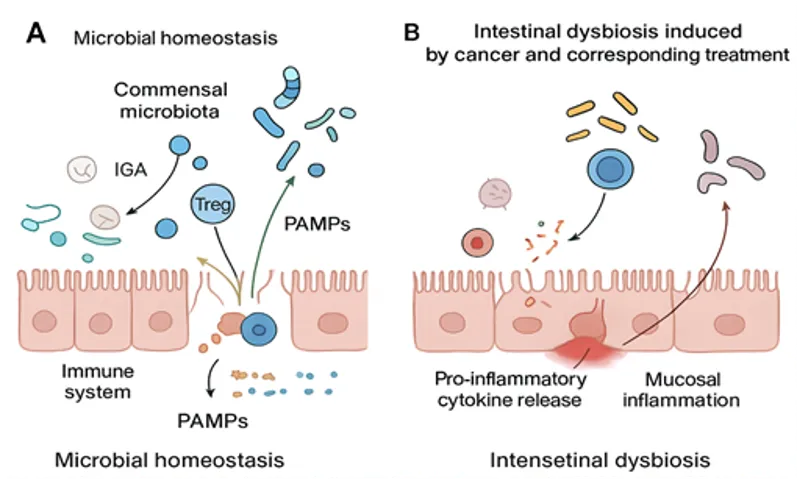
Figure 1. Gut microbial homeostasis and intestinal dysbiosis. Under physiological conditions, commensal microbiota maintain intestinal barrier integrity, immune tolerance, IgA secretion, and regulatory T-cell (Treg) activity. During cancer and cancer therapy, dysbiosis disrupts microbial balance, promotes mucosal inflammation, increases pro-inflammatory cytokine release, and contributes to disease progression.
2.3 Microbial Metabolites in Cancer
The gut microbiota produces a vast array of metabolites that influence cancer development through local and systemic effects [17]. Short-chain fatty acids (SCFAs)—particularly butyrate, propionate, and acetate—are among the most extensively studied microbial metabolites [4]. Butyrate serves as the primary energy source for colonocytes and functions as a histone deacetylase (HDAC) inhibitor, modulating gene expression, regulating apoptosis, and suppressing inflammation. Propionate and acetate influence gluconeogenesis and lipid metabolism, indirectly affecting cancer risk through metabolic pathways [4].
Secondary bile acids, produced by bacterial deconjugation and dehydroxylation of primary bile acids, have been implicated in colorectal carcinogenesis through DNA damage and activation of inflammatory signaling pathways [17]. Tryptophan metabolites, including indole derivatives, activate the aryl hydrocarbon receptor (AhR), influencing intestinal inflammation and immune regulation. Conversely, microbial production of trimethylamine, converted by the host to Trimethylamine-N-oxide (TMAO), promotes pro-inflammatory and pro-atherogenic effects [3]. These metabolites represent potential biomarkers for cancer risk and therapeutic targets for microbiome modulation [17].
2.4 Mechanisms of Gut-Immune Axis in Cancer
The gut microbiota orchestrates systemic immune responses through multiple interconnected pathways that directly influence antitumor immunity [5,45,46].
Microbial Translocation and Immune Activation
Gut barrier integrity is critical for maintaining immune homeostasis. When barrier function is compromised—through dysbiosis, chemotherapy, or radiotherapy—bacterial components (lipopolysaccharides [LPS], flagellin, peptidoglycan) translocate into the systemic circulation. These microbial products engage pattern recognition receptors (PRRs), including Toll-like receptors (TLRs) and NOD-like receptors (NLRs), on dendritic cells and macrophages, activating innate immune responses. Chronic TLR activation promotes pro-inflammatory cytokine production (TNF-α, IL-6, IL-1β), which can drive inflammation-associated carcinogenesis while paradoxically enhancing antitumor immune surveillance [5,47].
Antigenic Cross-Reactivity
A compelling mechanism linking gut microbes to antitumor immunity involves antigenic mimicry. Bacterial peptides sharing sequence homology with tumor-associated antigens can prime T cells that cross-react with tumor cells. This microbial "molecular mimicry" may explain why certain gut microbial signatures correlate with improved immunotherapy responses. For example, Bifidobacterium species have been shown to enhance CD8⁺ T cell infiltration into tumors through cross-reactive T cell activation [47].
Metabolite-Mediated Immune Modulation
Microbial metabolites directly influence immune cell differentiation and function. SCFAs promote the differentiation of regulatory T cells (Tregs) through histone acetylation at the Foxp3 locus, thereby suppressing inflammatory responses. However, SCFAs also enhance CD8⁺ T cell effector function and memory formation, suggesting context-dependent effects. Tryptophan metabolites, particularly indole derivatives, activate AhR on T cells and dendritic cells, modulating IL-22 production and mucosal immunity [4]. Bile acids influence Treg/Th17 balance through nuclear receptor signaling, impacting intestinal inflammation and potentially tumor immunity [17].
Innate Immune Sensing and Antitumor Immunity
Gut microbes influence the maturation and function of antigen-presenting cells. Microbially-derived ligands (LPS, flagellin, peptidoglycan) prime dendritic cells to produce IL-12 and IL-23, driving Th1 and Th17 responses essential for antitumor immunity [47]. Dysbiosis impairs dendritic cell maturation, reducing antigen presentation and T cell activation, thereby compromising antitumor surveillance. These mechanistic insights position the gut microbiome as a critical regulator of the tumor microenvironment and a promising target for cancer immunotherapy optimization [5,45,46].
3. Mechanisms of Gut Microbiome Modulation
3.1 Dietary Factors Influencing the Gut Microbiome
Dietary composition exerts a profound and rapid influence on gut microbial ecology. Long-term dietary patterns shape microbiome maturation, yet short-term interventions can induce significant changes within 3–4 days, often overwhelming individual genetic differences [22]. High-fiber diets promote saccharolytic bacteria that produce short-chain fatty acids (SCFAs), whereas high-fat, high-protein diets favor Bacteroides-dominated enterotypes [44]. Processed foods containing artificial sweeteners, combined with lifestyle factors such as smoking, drug use, and sleep disturbances, contribute to gut dysbiosis and chronic disease development [19].
Importantly, dietary interventions represent a readily accessible and potentially powerful strategy for microbiome modulation in cancer patients [17]. A study of human diet intervention found that changing or adjusting food types in a very short period can quickly change the structure of the gut microbiome, causing it to become completely different in 3 or 4 days and overwhelming individual differences in microbial gene expression and personal genetic background, demonstrating the universality and potential of dietary intervention [22].
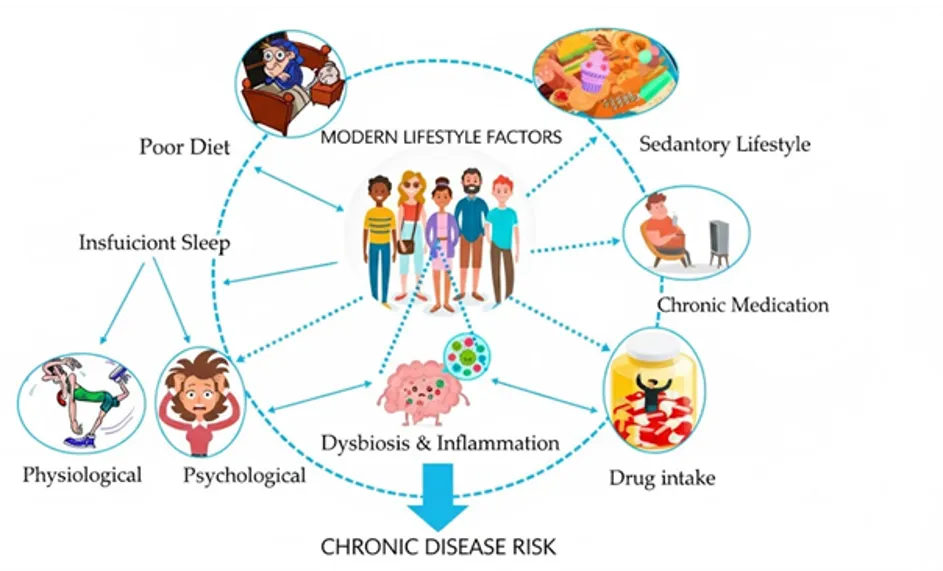
Figure 2. Lifestyle factors influencing gut microbiota composition. Dietary habits, insufficient sleep, sedentary lifestyle, chronic medication use, psychological stress, physiological stress, and drug intake collectively alter gut microbial composition, resulting in dysbiosis, chronic inflammation, and increased risk of chronic diseases including cancer.
3.2 Probiotics, Prebiotics, and Postbiotics
With increasing evidence of the gut microbiota's critical role in human well-being and illness, the significance of probiotics, prebiotics, and postbiotics in the medical field has grown due to their ability to promote health and treat disease by modulating the gut microbiota [23].
Probiotics are live microorganisms that confer health benefits when administered in adequate quantities [24]. Prebiotics are nondigestible compounds—typically dietary fibers—that stimulate the growth and activity of beneficial gut bacteria [25]. Postbiotics are bioactive compounds produced by probiotics during fermentation that promote gut health [26]. Together, these agents modulate the gut microbiota through "addition" (introducing beneficial organisms) and "subtraction" (eliminating harmful metabolites and pathogens), thereby alleviating or preventing disease [23,27].
In the cancer context, specific probiotic strains (e.g., Lactobacillus rhamnosus, Bifidobacterium species) have shown promise in reducing chemotherapy-induced diarrhea and enhancing immunotherapy responses [17]. Prebiotics encourage the growth of beneficial intestinal bacteria, whereas probiotics produce postbiotics through "addition" to regulate the gut microbiota and "subtraction" to remove harmful metabolites and exogenous substances, reducing their impact on the body and thus alleviating or treating diseases [23].
3.3 Antibiotics and Medications Affecting the Gut Microbiota
Antibiotics profoundly disrupt gut microbial diversity, metabolic activity, and community structure, promoting antibiotic-resistant bacterial selection [28]. These abnormalities can cause antibiotic-associated diarrhea and recurring Clostridium difficile infections. Antibiotic usage is becoming increasingly common, which is a major source of concern since it disrupts the gut microbiota, which is essential for the priming and development of the adaptive immune system [28].
Short-term antibiotic exposure requires 1–2 months for partial recovery, with some bacterial groups remaining depleted for 2–4 years [30]. Beyond antibiotics, proton pump inhibitors (PPIs) and metformin significantly alter gut microbiota composition [29]. Understanding the bidirectional relationship between medications and the gut microbiome is critical for improving therapy and generating novel treatment options [29].
In cancer therapy, antibiotic-induced dysbiosis has been consistently associated with reduced immunotherapy efficacy and increased immune-related adverse events [32,33]. The gut microbiota can take at least one to two months to return to pre-antibiotic levels, and certain bacterial groups may not fully recover even after two to four years. Taking probiotics before and after antibiotic usage can reduce the incidence of antibiotic-associated diarrhea, though more study is still needed in this area [30].
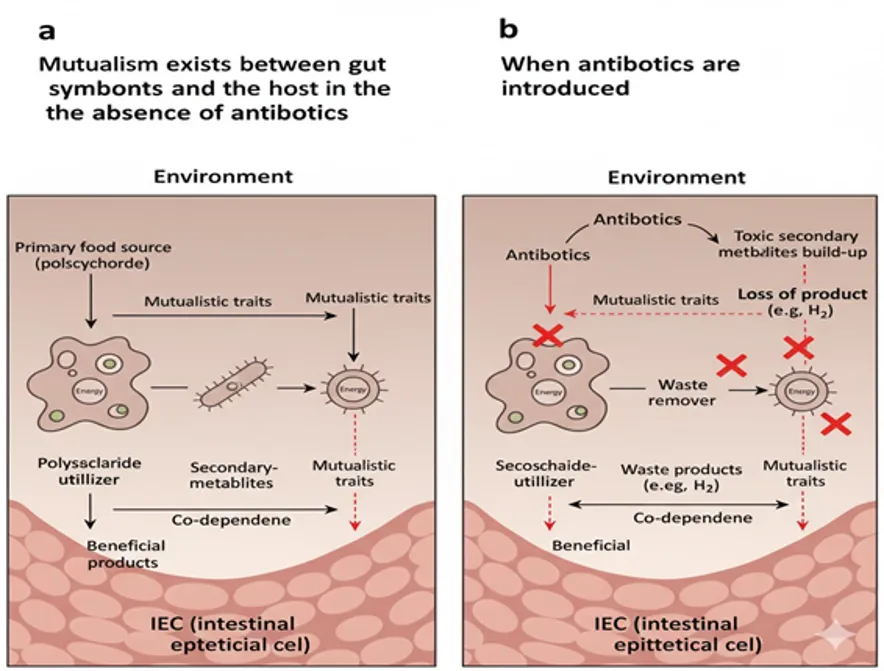
Figure 3. Effect of antibiotics on host–microbiota mutualism. In the absence of antibiotics, gut microorganisms maintain mutualistic interactions with the host through metabolite production and nutrient utilization. Antibiotic exposure disrupts microbial diversity, impairs beneficial metabolite production, promotes toxic metabolite accumulation, and weakens intestinal epithelial homeostasis.
4. Gut Microbiome and Cancer Therapy
The gut microbiota has emerged as a critical determinant of cancer treatment outcomes, influencing the efficacy and toxicity of chemotherapy, radiotherapy, and immunotherapy [32,45]. This section synthesizes current evidence across these therapeutic modalities.
4.1 Impact on Radiotherapy Outcomes
Radiotherapy induces dysbiosis characterized by reduced microbial richness and altered Firmicutes/Bacteroidetes ratios, contributing to radiation-induced enteritis and diarrhea [31]. This dysbiosis is related to a reduction in microbial richness and an imbalance in the Firmicutes to Bacteroidetes ratio, both of which are connected to an increased risk of diarrhea following radiation [31].
Studies in germ-free mice exposed to γ-rays demonstrate a causal relationship between gut microbiota and radiation enteritis [34]. Radiotherapy disrupts intestinal motility, promoting pathological bacterial colonization and severe radiation enteropathy [35]. The gut microbiota and its metabolites, particularly SCFAs, play protective roles in radiation-induced intestinal injury, suggesting that microbiome modulation could mitigate radiotherapy toxicity [35].
4.2 Impact on Chemotherapy Outcomes
The gut microbiota modulates chemotherapy outcomes through direct drug metabolism and indirect immune modulation [36,37]. Studies of 26 cancer patients receiving cytotoxic or targeted chemotherapy revealed significant gut microbiota alterations between baseline and treatment completion [36].
Specific gut bacteria have been demonstrated to alter cancer therapies by directly metabolizing drugs and modulating the host immune response [36,37]. The gut microbiota inhibits pathogen colonization, modulates gut immunity, supplies necessary nutrients and bioactive metabolites, and aids in energy balance [38]. Specific bacteria metabolize chemotherapeutic agents, affecting drug bioavailability and toxicity. For example, bacterial β-glucuronidases reactivate the active metabolite of irinotecan, contributing to severe diarrhea. Similarly, microbial metabolism influences methotrexate and cyclophosphamide efficacy [37].
Antibiotic-induced dysbiosis compromises the gut barrier, reduces beneficial metabolites, and diminishes immune activation, thereby impairing chemotherapy efficacy [41,42,43]. Broad-spectrum antibiotics can harm the gut microbiota by eliminating beneficial microorganisms in addition to killing pathogens, resulting in negative repercussions for the host [41,42]. Evidence to date strongly suggests that balanced composition of the microbiota and rich species diversity are essential for optimal functioning, which can be compromised in disease states [39,40].
4.3 Immunotherapy and the Gut Microbiota Connection
Mechanisms of Gut Microbiota-Immunotherapy Interaction
The gut microbiota profoundly influences immunotherapy outcomes, particularly immune checkpoint inhibitors (ICIs) [45,46]. Immunotherapy, which includes boosting the immune system to combat cancer, has been shown to be impacted by the gut microbiota makeup. Studies have revealed that the gut microbiota is critical in influencing the immune response to immunotherapy, particularly in the context of immune checkpoint inhibitors (ICIs) [45,46].
Mechanistically, gut microbes enhance antitumor immunity through multiple pathways:
Microbial translocation: Bacterial components (LPS, flagellin) cross the gut barrier, activating systemic innate immune responses.
Antigenic cross-reactivity: Microbial antigens mimic tumor antigens, priming cross-reactive T cells.
Metabolite-mediated effects: SCFAs and tryptophan metabolites influence T cell differentiation, dendritic cell maturation, and macrophage polarization [47]
Microbial Signatures and Immunotherapy Response
Clinical studies have identified specific microbial signatures associated with ICI response:
|
Bacterial Species |
Associated Therapy |
Key Finding |
|
Akkermansia muciniphila |
PD-1/PD-L1 blockade |
Correlates with improved response; oral supplementation restores efficacy in antibiotic-treated mice |
|
Bifidobacterium species |
CTLA-4 and PD-1 blockade |
Enhances T cell infiltration and anti-tumor immunity |
|
Faecalibacterium prausnitzii |
ICI therapy |
Associated with better response; anti-inflammatory properties |
|
Ruminococcus species |
ICI therapy |
Associated with response in melanoma patients |
|
Bacteroides species |
CTLA-4 blockade |
Influences Treg/Th17 balance and ICI response |
According to research, the gut microbiota can impact the effectiveness of immunotherapy by altering immune responses. For example, some gut bacteria may improve immunotherapy response by enhancing cytokine synthesis, which are signaling molecules that aid in immune response coordination. In contrast, some gut bacteria may impede the response by dampening the immune system [45,47].
Immunotherapy Toxicity
In addition to impacting immunotherapy effectiveness, the gut microbiota has been linked to the occurrence of immunotherapy-related side effects. Immuno-related adverse events (irAEs), such as colitis, pneumonia, and myocarditis, can develop as a result of immunotherapy disrupting the host immunological homeostasis [45]. The gut microbiota has been discovered to have a double-edged function in these events, with some bacteria potentially contributing to the formation of irAEs while others may help prevent them [45,48].
The relationship between immunotherapy and the gut microbiota is an active area of research, with continuing studies aiming at better understanding the complicated interactions between the two. Future research aims to uncover unique gut microbiota profiles linked with immunotherapy response and develop individualized treatment methods based on these patterns. Furthermore, researchers are investigating the potential of the gut microbiota as a biomarker for predicting response to immunotherapy and monitoring treatment results [48]
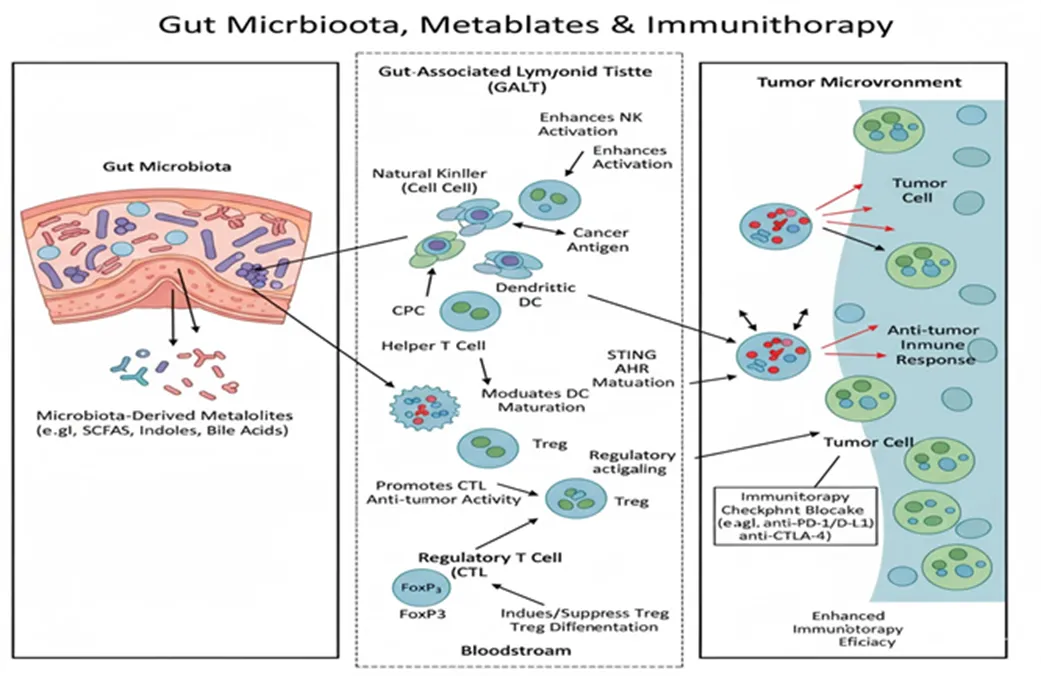
Figure 4. Mechanistic interaction between gut microbiota and cancer immunotherapy. Gut microbiota-derived metabolites activate gut-associated lymphoid tissue (GALT), regulate dendritic cells, T lymphocytes, natural killer cells, and regulatory T cells, thereby enhancing antitumor immune responses and improving the efficacy of immune checkpoint blockade therapy.
5. Therapeutic Strategies for Gut Microbiome Modulation
Emerging evidence supports microbiome modulation as a therapeutic strategy to enhance cancer therapy efficacy and reduce toxicity. Several approaches are under investigation.
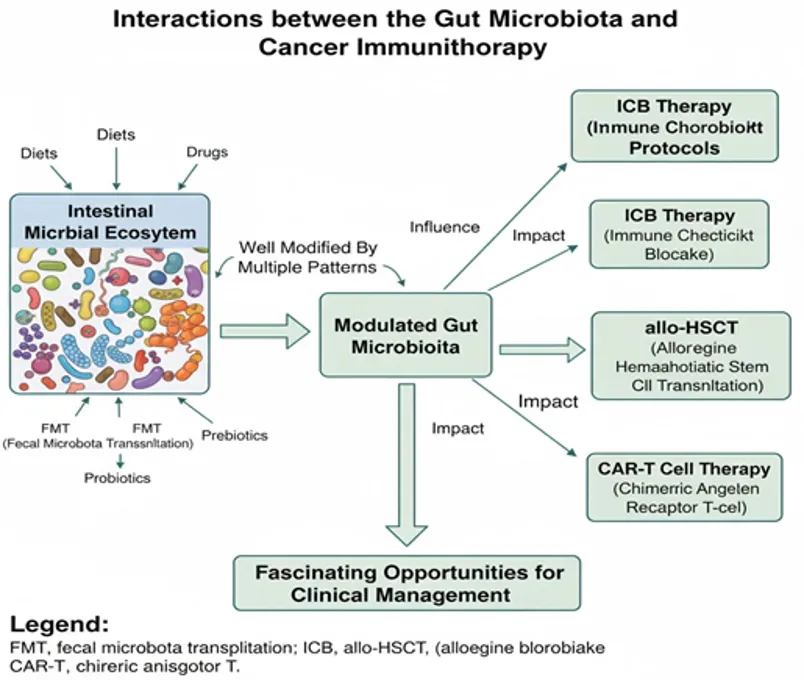
Figure 5. Gut microbiota modulation as a therapeutic strategy in cancer management. Dietary interventions, probiotics, prebiotics, fecal microbiota transplantation (FMT), and other microbiome-targeted approaches modify gut microbial composition, thereby influencing immune checkpoint blockade (ICB), CAR-T cell therapy, hematopoietic stem cell transplantation (allo-HSCT), and other immunotherapeutic outcomes.
5.1 Fecal Microbiota Transplantation (FMT)
FMT involves transferring fecal material from a healthy donor to a patient to restore a balanced gut microbiome. In cancer patients, FMT has been explored primarily in combination with immune checkpoint inhibitors. Clinical trials have demonstrated the safety and potential efficacy of FMT when combined with immune checkpoint blockade (ICB) therapy [58]. Notably, FMT from responder patients to non-responder patients has shown promise in converting non-responders to responders in melanoma and other cancers [58,59].
Mechanistically, FMT restores microbial diversity, reintroduces immunostimulatory bacteria (e.g., Akkermansia muciniphila, Bifidobacterium), and enhances intratumoral T cell infiltration. Probiotics/prebiotics supplementation, dietary treatments, fecal microbiota transplantation (FMT), and antibiotic delivery are all approaches of altering the gut microbiome [33]. However, standardization challenges—including donor screening, dosing, and administration route—remain unresolved [59].
5.2 Probiotics and Prebiotics
Probiotics (live beneficial bacteria) and prebiotics (non-digestible substrates) represent safer, more accessible microbiome modulation strategies. Specific probiotic strains have shown clinical benefit in cancer patients:
Prebiotics, particularly dietary fibers and galacto-oligosaccharides, promote beneficial bacterial growth and SCFA production. However, clinical evidence remains preliminary, and strain-specific, dose-dependent, and patient-specific factors require further investigation [23,59].
5.3 Dietary Interventions
Dietary modification represents a practical, scalable microbiome modulation strategy. High-fiber diets promote SCFA-producing bacteria and enhance ICI responses [62]. Ketogenic diets, fasting-mimicking diets, and calorie restriction may influence tumor metabolism and immune function, though clinical evidence is limited [62]. Precision nutrition—tailoring dietary recommendations based on individual microbiome profiles—represents a promising future direction [62].
Promising strategies include fecal microbiota transplantation (FMT), probiotics, prebiotics, and dietary interventions, which have shown clinical efficacy and are being explored for wider anti-cancer interventions [56]. Transferring fecal matter from a healthy donor to a patient to restore a balanced gut microbiome could improve outcomes in cancer treatment [59].
5.4 Phage Therapy and Other Emerging Strategies
Bacteriophage therapy—using viruses that selectively infect pathogenic bacteria—is emerging as a strategy to eliminate cancer-associated pathogens (e.g., F. nucleatum, ETBF) without disrupting beneficial bacteria. Phage therapy may reduce tumor-promoting dysbiosis and enhance therapy efficacy, though clinical applications remain experimental [59,64].
5.5 Combination Strategies
The future of microbiome modulation likely lies in combination approaches—integrating FMT, probiotics, prebiotics, dietary interventions, and phage therapy with conventional anticancer therapies. Rational combination strategies require mechanistic understanding of complementary pathways, optimal sequencing, and patient selection biomarkers [59,64]. These studies aim to reduce adverse effects and promote personalized medicine [59].
6. Clinical Biomarkers and Personalized Medicine
The gut microbiome offers promising opportunities for biomarker development and personalized cancer therapy.
6.1 Microbiome as a Biomarker of Treatment Response
Microbial signatures have been associated with immunotherapy response across multiple cancer types. Gopalakrishnan et al. demonstrated that melanoma patients responding to PD-1 blockade exhibited higher microbial diversity and relative abundance of Faecalibacterium species compared to non-responders [5]. Routy et al. showed that Akkermansia muciniphila correlated with improved PD-1/PD-L1 response in non-small cell lung cancer and renal cell carcinoma patients, and oral supplementation restored efficacy in antibiotic-treated mice [45]. Matson et al. identified Bifidobacterium longum, Bifidobacterium adolescentis, and Bifidobacterium bifidum as positively associated with ICI response in melanoma patients [48].
Microbial diversity itself—measured by the Shannon or Simpson indices—has been independently associated with improved ICI outcomes. Higher diversity correlates with enhanced T cell infiltration and reduced immunosuppressive cells in the tumor microenvironment [5,48]. There is a growing focus on personalized medicine, aiming to modulate the gut microbiota to enhance the efficacy of anti-cancer drugs and reduce treatment complications [52]. Leveraging genetic information to predict an individual's response to certain cancer therapies [60], profiling the gut microbiome to understand its impact on the individual's metabolism, immune response, and overall health [61], and considering the patient's diet and lifestyle [62] can influence treatment responses and cancer progression.
6.2 Multi-Omics and Systems Biology Approaches
Comprehensive microbiome characterization requires multi-omics approaches:
Integrating these data types with clinical outcomes using machine learning and systems biology approaches can identify predictive signatures, biomarker panels, and therapeutic targets [52]. This area investigates how the gut microbiota influences the outcomes of cancer therapies, particularly chemotherapy and immunotherapy. The research delves into the interactions between gut bacteria and the pharmacokinetics and pharmacodynamics of cancer treatments [57].
6.3 Personalized Microbiome Modulation
Inter individual microbiome variability—influenced by genetics, diet, environment, and medications—necessitates personalized modulation strategies. Host genetics influence baseline microbiome composition, dietary responses, and immune activation thresholds. Single nucleotide polymorphisms (SNPs) in immune genes (e.g., TLR4, NOD2) affect microbial recognition and inflammatory responses [52]. Stratified approaches—tailoring interventions based on baseline microbiome profiles, host genetics, and clinical characteristics—represent the future of microbiome-guided precision oncology [52,62].
7. Challenges and Future Directions
7.1 Current Limitations in Understanding Gut Microbiome-Cancer Interactions
Despite significant advances, substantial uncertainties persist in deciphering the exact mechanisms and applying this insight to therapeutic contexts [49-54].
Identifying relevant bacteria and their mechanisms of action: More research is needed to pinpoint specific bacterial species that influence cancer development and progression, and elucidate their exact interactions with the immune system and impact on tumor growth [49].
Determining causality: While associations between gut dysbiosis and cancer have been observed, it remains challenging to establish causality and determine whether microbial changes precede or result from tumor development [50].
Accounting for individual variability: The gut microbiome is highly personalized and can be influenced by many factors like diet, antibiotics, and host genetics. Accounting for this variability makes it difficult to draw generalizable conclusions about microbiome-cancer links [51].
Translating preclinical findings to humans: Most mechanistic studies demonstrating the gut microbiome's impact on cancer have been conducted in animal models. Extrapolating these findings to humans is challenging due to differences in physiology and environmental exposures [50].
Assessing the microbiome's role in cancer treatment: While the gut microbiome appears to influence responses to cancer therapies like immunotherapy, the specific microbial features that predict treatment outcomes are still being elucidated. More clinical trials are needed [52,53].
Developing targeted microbiome-based interventions: Probiotics, prebiotics, and fecal transplants have shown some promise in modulating the gut microbiome to improve cancer treatment, but more research is required to optimize these approaches [52,54].
The intestinal microbiota is becoming widely acknowledged as a crucial element in oncology. However, substantial uncertainties persist in deciphering the exact processes and applying this insight to therapeutic contexts. Addressing these challenges necessitates extensive, long-term research that combines diverse omics information to elucidate the intricate interactions among the microbiota, the human body, and cancer.
7.2 Clinical Trials and Regulatory Challenges
Ongoing and completed clinical trials are summarizing the role of gut microbiota in cancer treatment, while addressing challenges such as the impact of drugs and environmental factors on the gut microbiota composition [56]. Clinical trials have shown the safety and potential efficacy of FMT, especially when combined with immune checkpoint blockade (ICB) therapies. These studies are crucial as they suggest that microbiome modulation strategies involving FMT are generally safe for cancer patients [58].
Regulatory frameworks for microbiome-based therapies remain underdeveloped. Standardization challenges—including donor screening for FMT, sequencing methods, quality control, and manufacturing—must be addressed to facilitate clinical translation [59]. Research emphasizes the intricate relationship between the gut microbiota and cancer therapy, highlighting the impact of microbial interventions on cancer treatment efficacy [55]. Utilizing beneficial bacteria and fibers to support a healthy gut microbiome may improve the body's response to cancer treatment [59].
7.3 Future Avenues for Research and Therapeutic Development
Understanding Complex Interactions: Research emphasizes the intricate relationship between the gut microbiota and cancer therapy, highlighting the impact of microbial interventions on cancer treatment efficacy [55]. Utilizing beneficial bacteria and fibers to support a healthy gut microbiome may improve the body's response to cancer treatment. Tailoring diets to modify the gut microbiome composition could potentially enhance the effectiveness of cancer therapies [59].
Personalized Medicine: There is a growing focus on personalized medicine, aiming to modulate the gut microbiota to enhance the efficacy of anti-cancer drugs and reduce treatment complications [52]. Leveraging genetic information to predict an individual's response to certain cancer therapies [60], profiling the gut microbiome to understand its impact on the individual's metabolism, immune response, and overall health [61], and considering the patient's diet and lifestyle [62] can influence treatment responses and cancer progression.
Potential Therapeutic Strategies: Promising strategies include fecal microbiota transplantation (FMT), probiotics, prebiotics, and dietary interventions, which have shown clinical efficacy and are being explored for wider anti-cancer interventions [56]. Transferring fecal matter from a healthy donor to a patient to restore a balanced gut microbiome could improve outcomes in cancer treatment [59].
Mechanisms and Future Perspectives: Delving into the complex interactions between the gut microbiota and the host's metabolism, immune response, and cancer therapies includes how specific bacteria or viruses can affect the efficacy of treatments and the occurrence of treatment-related toxicity [63]. Considering the gut microbiome not only as a biomarker for predicting responses to cancer immunotherapy but also as a potential target for enhancing treatment efficacy involves strategies like probiotics/prebiotics supplementation, dietary interventions, fecal microbiota transplantation (FMT), and antibiotic administration [64]. Investigating distinct bacterial species and their mechanisms in modulating cancer growth, immune responses, and the effectiveness of chemotherapeutic drugs and immune checkpoint inhibitors (ICIs) [65] will be critical for advancing the field.
CONCLUSION
The gut microbiome plays a crucial role in cancer development and progression, influencing immune function, metabolism, and inflammation. Understanding its mechanisms can lead to therapeutic interventions in cancer therapy. Modulating the gut microbiota can enhance chemotherapy and immunotherapy efficacy. However, challenges remain, such as complexity, personalized interventions, and lack of standardized methodologies. Future research should focus on understanding these interactions, identifying therapeutic targets, and translating findings into clinical practice.
The growing recognition of the microbiome as a key determinant of cancer therapy outcomes positions it as both a promising biomarker and a therapeutic target. Continued research into the mechanistic pathways linking gut microbes to antitumor immunity, combined with rigorous clinical trials of microbiome-modulating interventions, will be essential for translating these scientific advances into tangible benefits for cancer patients. Ultimately, integrating microbiome modulation into precision oncology paradigms holds the potential to improve treatment efficacy, reduce toxicity, and personalize cancer care.
REFERENCES



Puja Suryawanshi, Dr. Aman Upaganlawar, Dr. Chandrashekhar Upasani, The Impact of Gut Microbiome Modulation on Cancer Therapy: A Comprehensive Review, Int. J. of Pharm. Sci., 2026, Vol 4, Issue 8, 3511-3529, https://doi.org/10.5281/zenodo.22053792
 10.5281/zenodo.22053792