

We use cookies to ensure our website works properly and to personalise your experience. Cookies policy
Shree Chhatrapati Shahu Maharaj Shikshan Sanstha Institute of Pharmacy, Maregaon 445303, Maharashtra, India.
The biological process of wound healing is intricate and includes phases of haemostasis, inflammation, proliferation, and remodelling. The creation of efficient and biocompatible wound dressing materials is necessary because chronic wounds and skin infections continue to be a significant global healthcare concern. Because of their excellent water-retention capacity, biocompatibility, flexibility, and capacity to sustain a moist wound environment, hydrogels have become viable wound care systems. The creation and assessment of a herbal hydrogel containing watermelon and bael leaf extracts for wound healing applications is the main goal of the current work.
Wounds have plagued patients for millennia, imposing a substantial burden on their careers, thus earning its designation as the ‘silent epidemic’. Approximately 4 million cutaneous wounds have been documented annually in affluent countries, with the number in developing nations in ascendance. Skin injury compromises the integrity of the skin’s framework, leading to a wound healing process that is characterized by a well-coordinated series of cellular and molecular reactions that aim to recuperate or replace the injured tissue.[1]
Crosslinked polymer chains having three-dimensional (3D) network architectures are known as hydrogels, and they have a comparatively high fluid absorption capacity. Hydrogels closely mimic live tissues due to their high-water content, soft texture, and porosity. Hydrogels have been used in a number of industries, including agriculture, biomaterials, the food industry, drug delivery, tissue engineering, and regenerative medicine, according to current research.[2]
The hydrogels are cross-linked; three-dimensional structures made of water-soluble polymers. Additionally, they can form coatings, microparticles, nanoparticles, and sections. Hydrogels are therefore typically used in clinical practice and clinical trials for a variety of uses, such as tissue design and regenerative medicine [3].
Wound healing occurs in four stages:
(A) blood balance
(B) inflammation
(C) expansion
(D) remodelling.[4]
Promote the healing of various wound types. Traditionally, the seeds of Mucuna pruriens (MP) Linn. and the leaves of Aegle marmelos (AM) (Linn.) Correa, a member of the Rutaceae family, are referred to as bael (or bel). Often referred to as cowage plant or Kovach, these members of the Fabaceae family are used to treat wounds and cuts. AM is native to India and is widely distributed in Bengal, Central and South India, and the Himalayan region. The leaves have expectorant, laxative, and astringent properties. There have been reports of both antioxidant and antimicrobial action.[5]

FIGURE 1: PHASES OF WOUND HEALING [6]
1.2: BENEFITS OF HYDROGELS
1. There are many different uses for hydrogels. because of distinct configurations and resemblances to various types of use.
2. Hydrogels offer a wet environment that accelerates the healing of wounds.
3. They assist in keeping the wound site well hydrated.
4. The surface of the wound is calmed and cooled using hydrogels.
1.3: HYDROGEL'S DIFFICULTIES
1. Hydrogels are easily torn during handling and have a low mechanical strength.
2. Skin maceration surrounding the wound may result from hydrogels' high-water content.
3. If hydrogels are not well conserved, they may encourage microbial growth.
4. During storage, some hydrogels exhibit poor chemical and physical stability.
5. Hydrogels made of natural polymers frequently have a brief shelf life. [7]
1.3: GOALS
1. To use appropriate extraction techniques to extract bioactive components from watermelon seeds and bel Patra leaves.
2. To combine these natural extracts with appropriate gelling agents (like Carbopol) to create a hydrogel composition.
3. To assess the hydrogel's physicochemical characteristics (pH, viscosity, spread ability).
4. To investigate hydrogel's antibacterial efficacy against typical wound infections.
5. To assess the hydrogel's capacity to heal wounds using laboratory or in-vitro testing techniques.
6. To evaluate the produced hydrogel's stability under various storage scenarios.
7. To assess how well herbal hydrogel works in comparison to a conventional formulation for wound healing.[8]
1.4: HYDROGELS SWELLING RESPONSE:
Physical Cues
• Electric field and temperature
• The magnetic field
• Light
• Pressure
• Audio [9]
Chemical Cues
• pH
• Ionic power
• The composition of the solvent
• Interaction between molecules [10]

FIGURE 2: HYDROGELS SWELLING RESPONSE
1.5: ANTIBACTERIAL HYDROGELS FOR THE HEALTH OF WOUNDS:
me bacteria, including Acinetobacter baumannii, Escherichia coli, Pseudomonas aeruginosa, Staphylococcus aureus, and Staphylococcus epidermis live in chronic wounds and may cause serious consequences for the patient. Opportunistic bacteria can enter, colonize, and grow at the site of many types of wounds, including burns and traumas, which may lead to infection. A prolonged healing period and, in certain cases, disability and death can result from infected wounds. Antibiotic misuse has led to the emergence of some multidrug-resistant (MDR) microorganisms. Antibiotic use as a treatment is therefore losing its ability to stop infections. Preventing antibiotic resistance and reducing mortality requires the development of innovative methods and technologies that employ antibiotics or antibacterial chemicals.[11]
1.6: Types of Hydrogels:
1.6.1: Pure Polymer
Hydrogels made from natural polymers, such as proteins and polysaccharides, originating from plants or animals are essential for encasing insecticides. They are prized for their biocompatibility, safety, and biodegradability, which guarantee environmentally benign breakdown following usage. These hydrogels can efficiently control pesticide release in soil to increase efficacy and reduce environmental damage from overuse since they are skilled at absorbing and holding onto water. Natural cellulose's structural properties improve pesticide encapsulation. Derivatives like carboxymethyl cellulose create networks that stop pesticide leaks and extend their release time. Derived from chitin, chitosan expands in response to pH variations and interacts with other polymers to regulate release rates.
1.6.2: Artificial Polymer
Because of their controlled shapes, mechanical strength, and chemical stability, synthetic polymer hydrogels—such as those derived from polyacrylamide (PAM) and PVA—are useful for encasing pesticides. These characteristics improve the stability and durability of pesticide release, increasing its use. PAM is particularly popular in biomedicines and agriculture because of its water retention and nontoxicity. But there are issues with using PAM. PAM synthesis uses acrylamide, which has the potential to be neurotoxic and release unreacted particles that could endanger human health and the environment.[12]
1.7: Biomedical Uses
Biosensing Applications: Peptide hydrogel biosensors have drawn more attention recently because of their high sensitivity to external stimuli like pH and temperature, good cell adhesion, well-known chemistry for structural modification, long-term chemical and mechanical stability, antifouling properties, tenable viscoelastic characteristics, and self-healing features. Hydrogels can be classified into two main groups based on their chemical structure: peptide hydrogels with high environmental sensitivity, such as to pH, temperature, or electrical fields, that are used alone without bioreceptors or other auxiliary sensing components, and peptide hydrogels with high porous structures and large internal surfaces that are applied in conjunction with sensing biomolecules, such as enzymes, DNA strands, and label molecules.
Delivery of Anticancer Drugs: Patients frequently have negative side effects from traditional cancer chemotherapy because the medicines are delivered uncontrollably to healthy cells, harming them. Peptide-based hydrogels have been employed as drug delivery systems to lessen these negative side effects and improve therapeutic efficacy because of their biocompatibility, tenable structure to load various drugs, water-filled mesoporous structures, and sensitivity to external stimuli to induce drug release. In actuality, hydrogels frequently enhance the chemical stability, solubility, and bioavailability of anticancer medications. Chemically speaking, there are two main ways that pharmaceuticals can be absorbed into hydrogels: through chemical or physical interactions.[21]
1.8: Using hydrogel as a carrier
Hydrogels' distinct internal structure, great biocompatibility, and mechanical stability make them perfect transporters and dressings. Hydrogels allow for the targeted release of therapeutic substances without being quickly eliminated by the kidneys. Antioxidants, bioactive compounds, and metal ions are examples of medicinal chemicals that may be more effective in treating DFU. The hydrogels are one of these therapeutic compounds that contribute to ROS scavenging, which is the primary function of antioxidants and a useful strategy for promoting wound healing and related processes.[22]
1.9: The Hydrogel's Mechanical Durability
Water-based hydrogels are fragile and brittle at the same time as being as soft as tissues. A crucial problem that needs to be resolved in order to create useful hydrogel bio adhesives is the mechanical fragility of hydrogels. Hydrogels cannot withstand the external forces imposed by the tissue environment because tissues move and deform often. Additionally, the toughening characteristic makes the hydrogel notch-insensitive, meaning that even in the presence of mechanical flaws or damages, it does not break. The hydrogel's network's reversible crosslinking allows it to return to its original mechanical structure and characteristics. The hydrogel's long-term stability is further guaranteed by its self-healing characteristic. TA is essential because it offers reversible crosslinking for self-healing and efficient energy dissipation for toughness.[23]
1.10: Hydrogels' Limitations
Insufficient Mechanical Power
Weak and easily shattered
Unsuitable for situations involving heavy loads
Poor Durability
can eventually deteriorate or lose its structure.
Some formulations have a short shelf life.
Restricted Drug Loading Capability
In particular for:
Drugs that are hydrophobic
Mostly appropriate for hydrophilic medications
Microbial Contamination Risk
High water content is conducive to microbial growth and necessitates:
Preservatives
Preparing sterile.[24]
2. PLAN OF WORK
2.1: Material & Method
Watermelon seed extract: Hydrating, anti-inflammatory, and antimicrobial
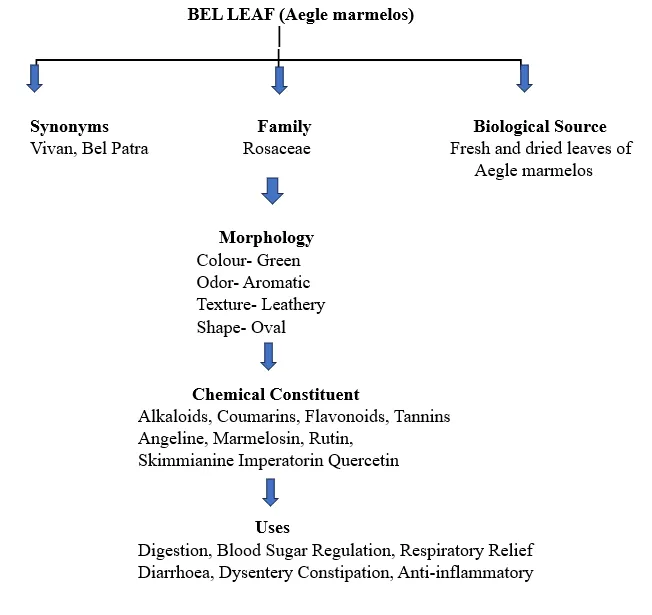
Bael leaf extract: Antioxidant and anti-inflammatory
Gelatine: A gelling agent
Glycerine: Humectant
Citric acid: pH correction
Solvent: Distilled Water
Citric acid: A preservative
Castor oil: An enhancer of penetration
Coconut oil: The cooling effect

2.1: Extraction Process (Maceration)
Step 1: Collection of crude drugs
Gather bel leaves and watermelon seeds from the market.
Make sure the seeds are clean.
Give them two to three days to dry.
Step 2: Extraction of Plan
Extraction of Watermelon Seed:
Gather watermelon seeds and give them a thoroug cleaning.

Dry them in shade for 2–3 days.
Grind the seeds into fine powder.
Take 10 g powder + 100 ml distilled water / ethanol.
Perform extraction using Maceration Process for 3–4 days.
Filter the extract.
Collect the watermelon seed extract
Bel Leaf Extract
|
|
Wash and shade dry for 2–3 days.

Grind into powder.

Take 10 g powder + 100 ml distilled water.

Perform extraction using Maceration Process for 3–4 days.

Collect the bel leaf extract
Preparation of Hydrogel:
1 gm of Gelatin is dispersed in 100 ml of distilled water.
Stir continuously using a magnetic stirrer.
Allow the mixture to swell for 1–2 hours.
Then add 5 ml watermelon seed extract 5 ml bel leaf extract Mix thoroughly.
Add glycerin (3–5 ml).
Add 0.1% Citric Acid as a preservative.
Citric Acid for adjusting the Ph [5-6]

Continuously stirring until the uniform gel formed
3.CHEMICAL TEST’S
1.Alcoloids
2. Flavonoids
3. Phenolic compound
1: TEST FOR ALCOLOIDS.
|
|
Test for Alkaloids |
Reagent Used |
Procedure |
Observation |
Inference |
|
|
1 |
|
Dragendorff’s Test |
Potassium bismuth iodide solution |
Add few drops of Dragendorff’s reagent to acidic plant extract |
Orange or reddish-brown precipitate |
Alkaloids present |
|
2 |
|
Mayer’s Test |
Potassium mercuric iodide solution |
Add Mayer’s reagent to acidic plant extract |
Cream or white precipitate |
Alkaloids present |
|
4 |
|
Hager’s Test |
Saturated picric acid solution |
Add Hager’s reagent to the extract |
Yellow crystalline precipitate |
Alkaloids present |
2. TEST FOR FLAVONOID’S
|
Test Name |
Reagent Used |
Observation |
Inference |
|
Shinoda Test |
Magnesium ribbon + Conc. HCl |
Pink/red colour appears |
Flavonoids present |
|
Alkaline Reagent Test |
NaOH solution |
Yellow colour disappears on adding acid |
Flavonoids present |
|
Lead Acetate Test |
Lead acetate solution |
Yellow precipitate forms |
Flavonoids present |
|
Zinc Hydrochloride Test |
Zinc dust + Conc. HCl |
Red coloration appears |
Flavonoids present |
3.TEST FOR PHENOLIC COMPOUND
|
Test Name |
Reagent Used |
Procedure |
Positive Observation |
Inference |
|
Ferric Chloride Test |
Neutral FeCl₃ solution |
Add a few drops of FeCl₃ to sample solution |
Violet, blue, green, or purple colon appears |
Presence of phenolic group |
|
Phthalein Dye Test |
Phthalic anhydride + Conc. H₂SO₄ + NaOH |
Heat sample with reagents, then add NaOH |
Pink colour develops |
Phenolphthalein formation indicates phenol |
|
Azo Dye Test |
Diazonium salt in alkaline medium |
React phenol with diazonium salt |
Orange/red azo dye forms |
Presence of phenolic compound |
EVALUATION PARAMETER:
|
SR.NO |
EVALUATION PARAMETERS |
OBESERVATION |
RESULT |
|
1. |
Physical Appearance |
Visual inspection |
Smooth
|
|
2. |
Colour |
Visual observation |
Greenish – brown
|
|
3. |
Odor |
Organoleptic Evaluation |
Characteristic herbal Odor |
|
4. |
Texture |
By touch and appearance |
Soft and non-greasy |
|
5. |
PH |
Digital ph. Meter |
5 to 5.7
|
|
6. |
Viscosity |
Ostwald viscometer |
4200 cps |
|
7. |
Homogeneity |
Visual examination |
No lumps or phase separation observed |
|
8. |
Spread ability |
Spread ability examine by spreading the gel |
Good spread ability |
|
9. |
Washability |
Wash with water |
Easily washable |
|
10. |
Swelling Index |
Swelling study |
85% swelling observed |
|
11. |
Stability study |
Room temperature storage |
Stable for 30 days without major changes |
RESULT AND DISCUSSION
The eco-friendly herbal hydrogel formulated using seed extract and leaf extract demonstrated promising characteristics for wound healing applications.
The formulation possessed suitable physicochemical properties such as acceptable pH, good viscosity, homogeneity, and stability, making it appropriate for topical use. The hydrogel matrix maintained adequate moisture at the wound site, which is essential for cell migration and tissue repair.
Seed and leaf extracts contain various phytoconstituents including flavonoids, phenolics, tannins, saponins, and alkaloids that contribute to antimicrobial, antioxidant, and anti-inflammatory activities. These phytochemicals help protect the wound from microbial infection and oxidative stress, thereby accelerating the healing process.
The antimicrobial study confirmed that the herbal extracts effectively inhibited the growth of pathogenic microorganisms commonly associated
CONCLUSION
Using watermelon seed extract and bel leaf mucilage, the current study effectively created an environmentally friendly herbal hydrogel for improved wound healing activity. The prepared hydrogel showed satisfactory physicochemical properties such as suitable pH, good viscosity, homogeneity, spread ability, and stability, making it suitable for topical application. Because natural herbal extracts contain phytoconstituents such flavonoids, tannins, alkaloids, phenolic compounds, and terpenoids, they have antibacterial, antioxidant, and anti-inflammatory qualities. These bioactive components support quicker tissue regeneration and wound healing, keep the wound environment moist, and prevent microbial infection. The optimized batch outperformed the other created formulations in terms of stability, consistency, and skin compatibility without producing irritation. Additionally, the hydrogel demonstrated high washability and swelling performance, both of which are critical qualities for successful wound dressing applications. Thus, compared to synthetic wound healing formulations, the proposed herbal hydrogel can be regarded as a promising, safe, biodegradable, and affordable option. Its efficacy for commercial medicinal uses may be established by additional research, such as clinical trials, in-vivo studies, and enhanced antimicrobial evaluation.
REFERENCES



Suhas Khandagale, Pratiksha Chende, Supriya Bhagat, Dr. Nilesh Chachda, To Develop an Eco-Friendly Herbal Hydrogel by Using Seed Mucilage and Leaf Extract for Enhanced Wound Healing, Int. J. of Pharm. Sci., 2026, Vol 4, Issue 6, 7214-7223, https://doi.org/10.5281/zenodo.21032355
 10.5281/zenodo.21032355