

We use cookies to ensure our website works properly and to personalise your experience. Cookies policy
Yash Institute of Pharmacy, Aurangabad, Maharashtra, India
The Fenugreek Seed (Trigonella foenum-graecum) is an annual herb which belonging to the family which called as Fabaceae and has been extensively used in various systems of medicine such as traditional medicine systems like Ayurveda and Unani. The Fenugreek seeds are a rich in source of various proteins, steroidal saponins, polyphenols ,fibers, flavonoids, alkaloids, vitamins, and essential fatty acids that are contribute to their therapeutic properties like hair nourishment and scalp health. Hair oil is prepared from fenugreek extracts is increasingly recognized as a natural remedy for hair growth stimulation, prevention of hair loss, dandruff reduction, and overall hair conditioning. Various extraction methods such as including cold pressing, solvent extraction, and infusion in carrier oils, are employed to obtain fenugreek oil. This review summarizes the phytochemistry, methods of preparation, applications, and therapeutic benefits of fenugreek-based hair oil, while highlighting its safety profile and future prospects in cosmetic and pharmaceutical formulations.
Hair Follicle
The hair follicle is a specialized, tubular structure embedded within the skin that functions as the site of hair formation and attachment.
It is surrounded by inner and outer root sheaths that provide mechanical support, protection, and guidance to the developing hair fiber.
The follicular unit terminates near the sebaceous gland, which secretes sebum essential for lubrication and maintenance of scalp health.
The hair shaft produced within the follicle is a keratinized structure composed of three concentric layers: cuticle, cortex, and medulla.
The cortex constitutes the major portion of the hair shaft and is responsible for tensile strength, elasticity, and pigmentation, while the cuticle forms a protective outer barrier.
The medulla, when present, occupies the central region of the hair shaft and varies according to hair type.
The shape and orientation of the hair follicle play a key role in determining hair texture and curl pattern.
Relevance to Hair Follicle Function
Fenugreek (Trigonella foenum-graecum)–based hair oil supports normal hair follicle activity by supplying bioactive phytoconstituents such as saponins, flavonoids, alkaloids, and proteins. These compounds contribute to improved follicular nourishment and help maintain the structural integrity of the hair follicle. Regular application of fenugreek oil may enhance follicular anchorage, thereby reducing premature hair shedding and supporting the formation of stronger hair fibers.
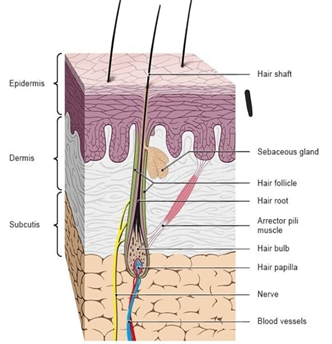
Figure 1: Structure of the Hair
Hair Types
Hair classification is mainly determined by the pattern and degree of curl formation. The curvature of hair is largely influenced by the shape and orientation of the hair follicle. Hair type is determined by genetics. Andre walker, known for decadesas Oprah winfreys stylist, is credited with devising a system that classifies hair according to one of four curl pattern.
Hair Growth Cycle
Hair growth occurs through a cyclic process consisting of three sequential phases: anagen, catagen, and telogen.
The anagen phase represents the active growth stage during which the hair fiber is continuously produced and may persist for several years on the scalp.
The catagen phase is a brief transitional stage characterized by cessation of active growth and partial regression of the hair follicle.
The telogen phase is a resting period during which the follicle remains inactive and the fully formed club hair is eventually shed.
Initiation of a new anagen phase results in the displacement of the previously formed hair, leading to normal hair shedding.
Relevance to Hair Growth Cycle
Fenugreek hair oil is believed to influence the hair growth cycle by promoting a favorable scalp environment for sustained anagen (growth) phase activity. Its nutritive and antioxidant components help protect follicular cells from oxidative stress, which is known to disrupt normal hair cycling. By improving scalp circulation and follicular metabolism, fenugreek oil may assist in delaying premature transition to the telogen phase, thereby reducing excessive hair fall.
Problems
Disorders affecting the hair and scalp, although rarely life-threatening, represent a major cosmetic and psychosocial concern.
The scalp’s dense follicular population, abundant sebaceous glands, and warm environment can predispose it to microbial colonization.
Common scalp conditions include seborrheic dermatitis, which presents with inflammation, itching, oily skin, and scaling.
Tinea capitis is a fungal infection of the scalp that primarily affects the skin and hair shafts, particularly in children.
Scalp folliculitis involves inflammatory changes of the hair follicle and may result from bacterial or fungal infection.
Pediculosis capitis is a contagious infestation caused by head lice and commonly affects the scalp and adjacent regions such as the neck and ears.
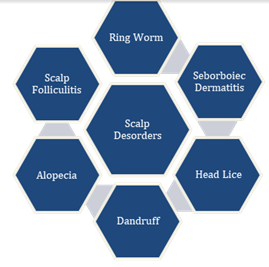
Figure 2: Some Scalp Disorder[ 3]
The cause of some disorders is known, but others possibly idiopathic. The method used to treat these conditions is vital to preserving one’s personal hygiene.[3]
Relevance in Dandruff and Scalp Disorders
Fenugreek exhibits antimicrobial and anti-inflammatory properties that are valuable in managing common scalp disorders. Fenugreek hair oil may help reduce scalp flaking, itching, and irritation associated with conditions such as seborrheic dermatitis. Its antifungal activity supports the control of dandruff-causing microorganisms, while its soothing effect aids in restoring scalp comfort and hygiene.
Primary Hair Loss Disorders
Hair loss disorders may be classified into scarring and non-scarring alopecias based on follicular damage.
Non-scarring alopecias arise due to disturbances in the hair growth cycle, follicular miniaturization, or mechanical stress.
Telogen effluvium is characterized by diffuse hair shedding and may occur following physiological or psychological stressors such as illness, surgery, or childbirth.
Androgenetic alopecia presents as patterned hair loss in men and diffuse thinning with frontal hairline preservation in women.
Traction alopecia results from prolonged mechanical pulling of hair and is potentially reversible if identified early.
Trichotillomania is an impulse control disorder involving repetitive hair pulling, leading to irregular patches of hair loss with broken hairs.
Traction alopecia: hair loss due to chronic mechanical traction from hair styling, which is reversible in early stages but might become irreversible due to follicular deletion owing to sustained traction.
Scarring alopecias
Scarring types of alopecia (also known as cicatritial alopecias) refer to forms of hair loss in which hair follicles are destroyed owing to inflammation, or rarely, malignancy (such as cutaneous lymphoma). Affected skin shows loss of follicular ostia (the openings of the hair follicle though which the hair fiber emerges through the skin), but the early stages might resemble alopecia areata.
Relevance in Hair Loss and Alopecia Management
Fenugreek hair oil may play a supportive role in non-scarring alopecia by strengthening hair roots and minimizing breakage. Its antioxidant activity helps protect hair follicles from environmental and physiological stressors implicated in conditions such as telogen effluvium and androgenetic alopecia. In traction-related hair loss, fenugreek oil may improve hair resilience and reduce follicular stress when used alongside appropriate hair care practices.
Genetic hair disorders
Many syndromic and non-syndromic types of hair loss are due to single gene mutations. The mutations can affect follicular development, normal hair cycling and hair fiber fragility; most conditions are present from infancy or childhood. Types of alopecia areata
Hair Oil
Hair oil are hair care products. Hair care products are defined as the formulations which are used for the purpose of cleansing, modifying the hair texture, providing nourishment to the hair and maintaining the healthy appearance of hair.[5] Hair oil are hair care formulation applied to the hair for the treatment of hair disorder such as baldness, greying of hair, hair fall, dry hair and also helps in providing nourishment to hair.[6] Herbal cosmetics are high in demand due to increasing interest of mankind towards them also herbal cosmetics are more effective with negligible side effects and ingredients are easily available.[7] Herbal hair oil is an essential part of herbal cosmetics. Herbal hair oil is more preferred and used in many aliments of hair.[8] They not only promote hair growth but also provide necessary moisture to the scalp rendering in beautiful hair.[8] Herbal oil which contain herbal drugs are known as hair tonic.[9] Herbal hair oil provides a number of essential nutrient which are important to maintain the normal function of sebaceous gland and promote natural growth of hair.[10] These are one of the most well recognized product for the treatment of hair.[11] The use of hair oil is increasing everyday in line with the improvement in standard of living of people To give natural flavours and colours to hair oil the herbal essences and perfumes are added. Benefits. We live in polluted world which is not hair friendly. That is when herbal hair oil comes into practice. Herbal oil is a blend of bhringraj ,jatamansi, amla, hibiscus, rosemary, almond and other herbs. [6]
Their benefits are as follow:
Table 1: Functions Of Herbal Hair Oil
|
Sr. No |
Herbs |
Value of the Ingredients |
|
|
Amla |
Hair Growth Promotor |
|
|
Jatamansi |
The Flavoring Agent |
|
|
Neem |
The Antimicrobial |
|
|
Shatavari |
Growth Of Hair |
|
|
Shankhpushpi |
Nerve Tonic |
|
|
Brahmi |
Nerve Tonic |
|
|
Kapur |
Stimulating Agent |
|
|
Fenugreek |
Hair Growth Promotor |
|
|
Pudina |
The Flavouring Agent |
|
|
Til Oil |
The Vehicle |
Hair care is a significant component of personal grooming, with a growing global demand for herbal and chemical-free cosmetic formulations. Synthetic hair care products often contain parabens, sulfates, and silicones that may cause adverse effects such as scalp irritation, dryness, and long-term hair damage. Hence, the shift towards herbal oils as safe and sustainable alternatives has accelerated.
Fenugreek (Trigonella foenum-graecum) is an ancient medicinal plant cultivated widely in India, the Mediterranean, and North Africa. Traditionally, fenugreek seeds have been used for culinary, medicinal, and cosmetic purposes. In hair care, fenugreek oil is especially valued for its ability to strengthen follicles, prevent dandruff, delay premature greying, and improve hair texture.[6]
Hair oils are hair care products used to prevent and treat baldness or hair aggression, and other conditions. They also promote the luxurious growth of hair. Hair oils contain herbal medications and are used as hair tonics. Hair care products come in two varieties. main category: hair tonics and hair grooming products. In essence, these are medicinal plant extracts made of oil. Many different herbs have been used to treat hair. Brahmi , Shikakai , Reetha , Lemon, Tulsi , Henna, Neem, Methi, and amla are some of these herbs. Marigold , Liquorice Root , Musk Root , Hibiscus , Nutmeg , Jantamasi , Chitraka , Mahabhringraj , Thyme , Parsley , And Rosemary.[4]
Natural hair oil is a vital part of natural cosmetics. Many hair products use natural hair oil, which is more widely used. They not only successfully encourage hair growth but also give the scalp the vital moisture it needs to produce gorgeous hair. Herbal oil containing herbal pills is called a hair tonic. Some vital nutrients that may be required to sustain the regular function of the sebaceous glands and promote hair growth are provided by natural hair oil. These are some of the best hair care products that are easily recognized. As human preferences for living arrangements change, so does the use of hair oil, which makes it possible to add herbal flavors, colorings, and essences to hair oil.[6]
Graecum Trigonella foenum Linn. Frequently Fenugreek is a herb with a strong aroma. It primarily includes Saponins, Luteolin, Flavonoids, And Quercetin. Proteins (26%), Fats (6%), Carbohydrates, Galactomannan (44%), Diosgenin, Tigogenin, Gitogenin, And Trigonelline.[7]
Using fresh fenugreek leaf paste on a regular basis promotes hair growth and maintains natural color, prevents dandruff, and keeps hair silky . [8]
The Fenugreek seeds being high source of Protein are very useful in hairfall ,so it helps in treating baldness, thinning of hair and hair fall. It also has Lecithin, a natural emollient which helps in strengthening and moisturisation of hair. It also keeps the dandruff away and keeps the hair free of lices .[9]
PLANT PROFILE ( PHARMACOGNOSTIC ACCOUNT )
Synonym : Fenugreek
Biological source : the drug consist of the dried ripe seeds of Trigonella foenum-graecum Linn., subfamily Papilionaceae , family Leguminousae.
Table 2: Plant Profile
|
Kingdom |
Plantae |
|
Division |
Magnoliophyte |
|
Class |
Magnoliopsidaa |
|
Family |
Fabales |
|
Genus |
Trigonella |
|
Species |
Foenum-graecum |
|
Bionomial name |
Trigonella foenum-graecum |
PHYTOCHEMISTRY OF FENUGREEK SEEDS
Fenugreek seeds are chemically diverse, containing numerous bioactive constituents that contribute to their therapeutic potential:
- Saponins (diosgenin, yamogenin, tigogenin): Promote hair growth and possess antifungal activity.
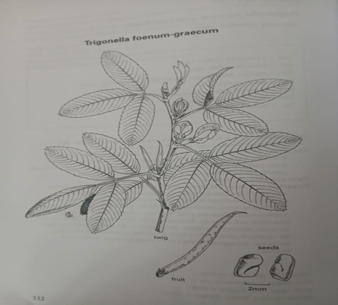
Figure 3: Fenugreek Plant
SEED GERMINATION
Fenugreek seeds germinate around 10 h after the start of seed imbibition at 25 C in the dark (Reid and Bewley1979). The seeds should be at least 95 % pure and have 80 % germination rate (Prasad 2011). In the presence of sufficient moisture, oxygen and heat the seeds follow an epigeal process, so that the emergent cotyledon is pulled from under the soil surface during germination. Within the imbibition process which is demonstrated to be under the control of galactomannan function (Reid and Bewley 1979), water inactively is absorbed by the seed that result in endosperm swelling. As the cells absorb water they elongate, extending the radicle to form a primary root toward the soil, which eventually will develop into secondary roots. Protrusion of the radicle by more than 5 mm is considered a sign of fenugreek seed germination (Petropoulos 2002). [7]
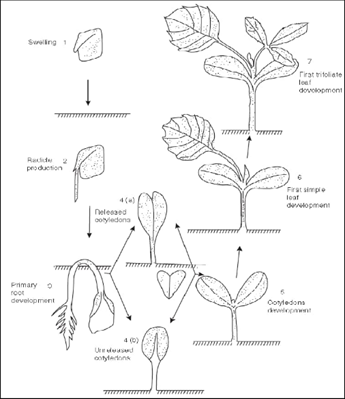
Figure 4 : Seed Germination of Fenugreek
METHODS OF EXTRACTION
Several extraction techniques are used to obtain fenugreek oil, depending on the scale of production and desired purity:
1. Cold Pressing: Mechanical pressing of seeds at low temperatures; retains heat-sensitive nutrients.
2. Solvent Extraction: Use of organic solvents (ethanol, hexane) to isolate active compounds; common in large-scale processing.
3. Maceration/Infusion: Soaking crushed seeds in carrier oils (e.g., coconut, almond, olive) and heating mildly to transfer active ingredients.
4. Supercritical Fluid Extraction (SCFE): Advanced method using supercritical CO? for high-purity extracts.
Table 3 : Extraction Methods
|
Method |
Solvent |
Pressure |
Polarity Of Natural Product Extracted |
|
Maceration |
Aqueous And Non – Aqueous Solvents Used |
|
Depending On Extracting Solvent |
|
Percolation |
Aqueous And Non – Aqueous Solvents Used |
Atmosphere |
Depending On Extracting Solvent |
|
Reflux Extraction |
Aqueous And Non-Aqueous Solvent Used |
|
Depending On Extracting Solvent |
|
Soxhlet Extraction |
Organic Solvents Used |
|
Depending On Extracting Solvent |
1. Extraction and GC-MS Analysis
Fenugreek seed oil was extracted using Soxhlet extraction with n-hexane, yielding 5.55 ± 0.05% oil with yellowish color. GC-MS analysis identified 23 compounds covering 99% of the oil composition.
Variation from previous studies attributed to extraction method and solvent differences.
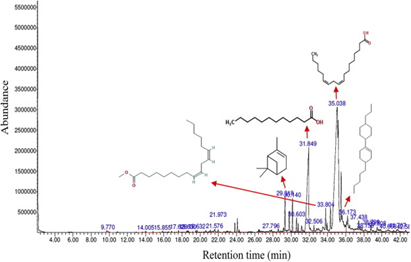
Figure 5: GC-MS Characterization of Fenugreek Seed Oil
2. FTIR Analysis
Identified functional groups: carboxyl, hydroxyl, alcohols, amides, phenolic compounds, and fats.
Key peaks:
3. Antioxidant Activity
Fenugreek seed oil shows better sensitivity against ABTS radicals due to faster kinetics.
4. Total Phenolic Content (TPC)
Determined using Folin-Ciocalteau method.
TPC = 38.97 ± 0.34 mg GAE/g oil, indicating high correlation with antioxidant potential.
5. Total Flavonoid Content (TFC)
Measured spectrophotometrically using quercetin as standard.
TFC = 14.417 ± 0.23 mg QE/g oil, supporting strong antioxidant capacity.
6. Biological Significance
Major and minor compounds contribute to:
Suggests potential pharmaceutical applications of fenugreek seed oil.[8]
FORMULATION OF FENUGREEK HAIR OIL
Various ingredients were used in the production vegetable hair oil is shown in the table: All dried herbs like fenugreek seeds, black Cumin, curry leaves, hibiscus, Tulsi were weighed and ground whip and mix with coconut oil. Now the contents were boiled for 15 minutes and filtered through a muslin cloth. For filtered coconut oil and castor oil is added to increase the volume (100 ml).
Table 4: Ingredients and Quantity
|
Sr. No |
Ingredients Quantity (gm) |
|
|
Fenugreek seed 20 |
|
|
Hibiscus 20 |
|
|
Curry leaves 18 |
|
|
Black cumin 20 |
|
|
Castor oil 30 |
|
|
Coconut oil 50 |
Process for formulation of fenugreek oil: Weigh all ingredients Fenugreek seeds added in castor oil and keep to soak in sulight . Grind and boil all the ingredients in coconut oil. Filter all the ingredients and make up the volume with coconut oil.
EVALUATION OF FENUGREEK HAIR OIL
The produced oil was subjected to physical and biological tests judicial decision Physical assessment Physical assessment includes specific gravity and Viscosity
Specific gravity –Take a volumetric bottle and wash it with distilled water dry in the oven with water for 15 minutes, cool, close with a cap and consider it (a). Now fill a bottle of the same specific gravity with the sample and cap it and reweigh (b). Determine the weight of the sample per milliliter
weight loss (a-b)
Viscosity –Viscosity was determined on oswal viscometer PH.
Sensitivity test –The finished vegetable hair oil was apply 1 cm on the skin of the hands and leave in the sunlight for 4-5 min.[10]
FENUGREEK OIL
An essential component of natural cosmetics is natural hair oil. Natural hair oil is more popular and used in many hair products. Not only do they effectively promote hair growth, but they also provide essential moisture to the scalp, resulting in beautiful hair. Hair tonic is the term for herbal oil that contains herbal pills. Natural hair oil provides some essential nutrients that may be necessary to maintain the sebaceous glands' regular function and encourage hair growth. Those are among the best products for hair treatment that can be accurately identified.The use of hair oil is increasing daily in tandem with the evolution of human preferences for living arrangements, allowing hair oil to incorporate herbal flavors and colorings, herbal essences, and We are introduced to perfumes.A review on formulation and evaluation of herbal hair oil [11]
Fenugreek (Trigonella foenum-graecum L. Leguminosae) is one of the oldest medicinal plants, originating in India and Northern Africa.An annual plant, fenugreek grows to an average height of two feet. The leaves and seeds, which mature in long pods, are used to prepare extracts or powders for medicinal use. Applications of fenugreek were documented in ancient Egypt, where it was used in incense and to embalm mummies. In modern Egypt, fenugreek is still used as a supplement in wheat and maize flour for bread-making.1 In ancient Rome, fenugreek was purportedly used to aid labor and delivery. In traditional Chinese medicine, fenugreek seeds are used as a tonic, as well as a treatment for weakness and edema of the legs.2 In India, fenugreek is commonly consumed as a condiment2 and used medicinally as a lactation stimulant. There are numerous other folkloric uses of fenugreek, including the treatment of indigestion and baldness. The possible hypoglycemic and antihyperlipidemic properties of oral fenugreek seed powder have been suggested by the results of preliminary animal and human trials.[12]
Fenugreek (Trigonella foenum graecum)
Part used : Seed.
Properties: Demulcent, emollient, expectorant, aphrodi-siac, astringent, galactagogue, tonic. What it affects: Lungs, stomach, intestines, and reproductive organs.
Preparation and amount: Infusion: Steep 5-15 min.
Take 1 cup during the day, hot or cold. Decoction: Simmer 5-15 min. Take 6 oz. 3 times daily. Tincture: 30-60drops 3 times daily. Fluid extract: Take 1/2-1 tsp. 3 times daily. Powder: Take 2-10 #0 capsules (10-60 grains) 3times daily.
Purposes: Internally, Fenugreek is one of the oldest medicinal plants, dating back to Hippocrates and the ancient Egyptians. It is useful for all mucous conditions of the lungs. Large amounts of the decoction are given to strengthen those suffering from tube. Fenugreek is one of the oldest therapeutic plants used internally, having been used by Hippocrates and the ancient Egyptians. It is beneficial for all lung mucous problems. To help those with tuberculosis or those recuperating from a sickness, large doses of the decoction are administered. Flu, bronchitis, stomach ulcers, diabetes, gout, asthma, emphysema, hay fever, heartburn, hoarseness, migraines, neuralgia, sciatica, and gas are among its other benefits. It helps with sinus issues and asthma by decreasing mucous. encourages nursing women to breastfeed. lowers blood sugar and cholesterol levels. beneficial to the eyes. Fenugreek is applied externally to treat dry skin diseases, boils, carbuncles, abscesses, and sore throats. Drink and gargle the tea; it's great for sore throats.[13,14]
RATIONALE FOR USE IN HAIR CARE
The popularity of fenugreek-based hair oil is attributed to
Prevent hair loss : The Fenugreek seeds being high source of Protein are very useful in hairfall ,so it helps in treating baldness, thinning of hair and hair fall. It also has Lecithin, a natural emollient which helps in strengthening and moisturisation of hair. It also keeps the dandruff away and keeps the hair free of lices. [15]
APPLICATIONS AND BENEFITS
Fenugreek oil is reported to have multiple therapeutic applications in hair care:
SAFETY AND LIMITATIONS
Fenugreek oil is generally safe for topical use. However, mild allergic reactions may occur in sensitive individuals. Excessive application can cause scalp greasiness. Current evidence on clinical efficacy is limited, and standardized formulations with validated dosages are required for large-scale therapeutic use.[18-25]
CONCLUSION
Fenugreek seed oil is a promising herbal formulation in hair care, offering multiple benefits including hair growth stimulation, dandruff control, and improved hair texture. Its affordability, safety, and alignment with consumer demand for herbal cosmetics highlight its potential for incorporation into modern cosmetic and pharmaceutical formulations. Future studies should focus on clinical trials, formulation standardization, and comparative studies with conventional treatments.
REFERENCES


Pratiksha Wagh, Sejal Phonawane, Pooja Karpe, An Overview of the Fenugreek (Trigonella Foenum– Graecum) Seed Oil in Hair Care Applications, Int. J. of Pharm. Sci., 2026, Vol 4, Issue 2, 240-252. https://doi.org/10.5281/zenodo.18459461
 10.5281/zenodo.18459461