

We use cookies to ensure our website works properly and to personalise your experience. Cookies policy
Ashokrao Mane Institute of Pharmaceutical Science and Research Save, Maharashtra.
This research work deals with the preparation and assessment of fast dissolving Ibuprofen tablets (FDTs).Fast dissolving tablets formulated to disintegrate quickly in mouth without requiring water on swallowing, thereby improving patient co-operation and dysphasic patients. In this research, Fenugreek seed mucilage was isolated and utilized because of its good swelling capacity and quick disintegration behavior. The formulated tablets were examined for various parameters including hardness, friability, weight variation, and in-vitro dissolution. The optimized formulation showed quick disintegration (around 30 sec) and drug release (approximately 99%), indicating efficient performance. Stability studies demonstrated that the formulation remained stable under accelerated conditions with minimal changes in drug release. Overall, the research concludes that fenugreek seed mucilage is an effective, natural, and economical superdisintegrant for the development of FDT of Ibuprofen, provide immediate relief and enhanced patient compliance.
"A solid dosage form containing medicinal substances, which disintegrates quickly, usually within a matter of seconds, when placed upon the tongue" is the definition of fast-dissolving tablets. When it comes to traditional pills, resistance to take frequently seen in elderly, pediatric, and psychiatric patients, while physical difficulties while swallowing (dysphagia) can happen at any age but are especially common in the elderly and those with dementia. All patient groups frequently experience challenges and resistance to taking tablets. Fast dissolving tablets were developed to overcome problems associated with swallowing conventional tablets. The phrases fast dissolve refer to the same drug delivery methods. Quick penetration of water absorption by tablet, the tablet structure creates permeability, resulting in faster tablet breakdown, is the reason for the tablet's ability to dissolve orally. The drug is released when the dosage form is placed on the tongue. As saliva descends into the stomach, the medications can be dissolved in oral cavity, esophagus. Easy swallowing without the use of water, quick beginning of action, enhanced dissolve rate, faster stomach absorption, greater bioavailability after oral administration, reduced metabolism of a drug during its first passage through the liver, and increased patient adherence are all benefits of the fast-dissolving tablets.[1]
The oral route is the most commonly preferred method of drug administration, because it is simple, convenient, and acceptable to patients. Tablets are most popular oral solid dose form due to its portability, stability, & convenience of manufacturing. However, patients especially elderly peoples may be less cooperative if they have difficulty swallowing pills and capsules. To address this issue, fast-dissolving pharmaceutical drug delivery system devices that dissolve quickly in the mouth without the need of water have been developed. The goal of this work was to produce quickly dissolving ibuprofen tablets using Fenugreek seedsmucilage. Foenum-graecum, sometimes known as fenugreek seeds, is a naturally occurring superdisintegrant. Fenugreek mucilage was chosen because of its fast-disintegrating properties, which reduce hydration time & enhance fluid absorption to decrease tablet disintegration time and quickly attain a therapeutic ibuprofen plasma concentration. A simple and cost-effective the tablets were employed using the direct compression technique.[2]
Essential features for Fast dissolving Drug Delivery System:
Benefits of a drug delivery system that dissolves quickly:
1. Enhanced safety results from avoiding the possibility of choking or asphyxia during oral delivery of traditional formulations because of physical blockage.
2. Following the involvement of FDTs, new business opportunities such as Diversification of products, promotion of products, patent extension, and management throughout the product life cycle become simple.
3. FDTs are frequently developed for already-approved medicationns with the goal of extending the drug's patent life through product differentiation.[6]
4. These tablets can be administered without the use of water.
5. The drug dissolves quickly and produces faster therapeutic action due to quick absorption.
Disadvantages of fast dissolving drug delivery system:
1. It is challenging to manufacture drugs with comparatively high dosages into FDTs.
2. FDTs may not be the ideal option for patients who also use anti-cholinergic drugs.
3. The mechanical strength of tablets is typically inadequate.
4. If tablets are not made correctly, they may leave the tongue with a bad taste or grittiness.
5.They are more vulnerable to deterioration due to temperature and humidity. Because fast-dissolving tablets are moisture absorbing, they placed in a moisture free environment.[8]
Ibuprofen:
General Characteristics of Ibuprofen[9]
Superdisintegrants:
When tablets come into touch with an aqueous environment, disintegrants aid in their breakdown into tiny particles or fragments. Superdisintegrants help tablets break apart quickly, leading to enhanced drug release, which is necessary for quicker drug release and effect. In comparison to the total weight of dose units, they are utilised at a lower concentration of 1–10% by weight.[10]
Superdisintegrant selection criteria: [11]
Particles ought to be tiny. It must not be harmful. compatible with the medication and other excipients. strong ability to stay hydrated. Excellent flow characteristics Excellentmouthfeel Effective in smaller quantities
Advantages of Superdisintegrants:
It is required at a very low concentration and has no discernible effect on the powder blend's compressibility or flow ability.
Disadvantages of Superdisintegrants:
The substance gets affected by water or humidity, which can make it degrade or lose its stability over time.[12]
Aim:
To formulate and evaluate fast dissolving tablets of Ibuprofen using fenugreek seeds mucilage as a natural superdisintegrants.
2. Objectives:
1. Ibuprofen fast-dissolving pills are made by direct compression. to assess how several superdisintegrants, such as sodium starch glycolate, crospovidone, and sodium croscarmellose, affect the disintegration time.
2. To contrast the drug release patterns of various formulations in vitro.
3. To evaluate the optimized formulation's stability.
3. Literature Review:
Khairnar D.A. et al. (2014): Superdisintegrants are utilized in low concentrations Gaikwad U. et al. (2019): Fast dissolving tablets are designed to disintegrate quickly in the oral cavity without water, improving patient compliance especially in pediatric and geriatric patients.
Arumilli S. et al. (2023): Fenugreek seed mucilage was studied as a natural superdisintegrant and showed excellent swelling property leading to faster disintegration of tablets.
Aulton M.E. et al. (2018): Direct compression is a simple and cost-effective method widely utilized for preparation of tablets, especially suitable for fast dissolving formulations.
Khar R.K. et al. (2013):Superdisintegrants like sodium starch glycolate and crospovidone enhance the disintegration and dissolution rate of tablets.
Pahwa R. et al. (2011): Natural superdisintegrants are preferred over synthetic ones due to their biocompatibility, low cost, and eco-friendly nature.
Kaur V. et al. (2016):Superdisintegrants enhance tablet disintegration by swelling and water absorption mechanisms.
Sweetman S.C.et al. (2009): Ibuprofen is a non-steroidal anti-inflammatory drug (NSAID) utilized for pain, fever, and inflammation but has poor water solubility. but significantly enhance drug release and tablet performance.
Lachman L. et al. (2015): Evaluation parameters like hardness, friability, and disintegration time are essential to ensure tablet quality.
Branch S.K. et al. (2005): Stability studies under accelerated conditions are important to confirm the shelf life and performance of pharmaceutical formulations.
4.Materials and Methods:
Table No.4.1 Ingredients utilized in formulation
|
Sr No |
Ingredients |
Role |
|
1. |
Ibuprofen |
API |
|
2. |
Starch Glycolate |
Binder |
|
3. |
Lactose |
Diluent |
|
4. |
Mannitol |
Sweetning agent |
|
5. |
Talc |
Glident |
|
6. |
Magnesium Stearate |
Lubricant |
|
7. |
Fenugreek mucilage |
Disintigrants |
4.1Preformulation Studies:[12]
4.1.1 Bulk density:
Bulk density could be calculated by pouring the mixture into a graduated cylinder. The weight (M) of the powder and Vp, or bulk volume, was computed. The bulk density was calculated using the following formula:
Pb = MVp

Where,
Pb stands for bulk density.
M = Sample weight in grams
Vp = Sample volume in milliliters
4.1.2 Tapped density:
The measuring cylinder with the blend's known mass inside was tapped for a predetermined duration. The lowest possible volume (Vt) occupied the cylinder, and the blend's weight (M) was measured with a tap density tester. The following formula was used to determine the tapped density:
Pt =MVt

Where.
Pt stands for tap density.
M = Sample weight in grams
Vt = sample tap volume in meters
4.1.3 Percent compressibility:
The compressibility index (C) is calculated using the formula that follows shows how simple. It is possible to make material flow. This is the most simple technique for calculating the powder's free flow.[13]
C=[Pt-Pb/Pt]×100

Table No.4.2 Co-relation between Percent compressibility and flow property
|
Percent compressibility |
Flow property |
|
4-11 |
Excellent |
|
11-15 |
Good |
|
17-20 |
Fair passable |
|
22-34 |
Poor |
|
32-37 |
Very poor |
|
<40 |
Very very poor |
4.1.4 Angle of repose:
The angle was determined using the fixed funnel method rest. A funnel that can be raised vertically to The mixture was poured using the maximum cone height (h). Once the radius (r) of the heap was determined, the formula was utilized to Type equation here.

Tan θ


Where,
θ

h is the cone's height.
r is the cone base's radius.
4.1.5 Hausner’s Ratio:
It serves as a stand-in for powder flow ease. The formula that follows was employed to compute it. Conversely, the bulk density is the density tapped. Hausner's ratio is 1.25, which is lower(1.25).
Hausners Ratio = PtPb

4.2 Fenugreek seed extraction and purification:
4.2.1 Procdure for Extraction and purification of fenugreek seeds:
After properly cleaning 100 grams of fenugreek seeds, they were soaked in 1000 millilitres of distilled water for an entire night at room temperature.
Direct compression technique:
Compressing tablets directly from drug and excipient combinations without any further processing is known as direct compression. It is highly efficient and has advantages over other tablet manufacturing methods like wet granulation. Pretreatment such as wet granulation is not necessary because the mixture to be crushed essential sufficient flow characteristics and cohere under pressure. The disintegration and dissolution of direct-compression fast-dissolving tablets are often significantly aided by superdisintegrants.
To promote efficient fragmentation, the type and quantity of disintegrates must be chosen carefully. Dissolution or disintegration capabilities can be further enhanced by adding additional formulation ingredients like effervescent agents or water-soluble excipients. Because tablet size and hardness have a significant impact on the disintegrates' efficacy disintegrant incorporation method is the most favoured technique for preparing tablets.[10]
4.3 Evaluation Parameters:[15]
4.3.1 Tablet thickness:
Fast-dissolving tablets were designed to be thick. A Vernier caliper was utilized to determine the average value.following the use of five pills. Tablet thickness should be kept within a standard range of five percent or less. The majority of tablets have uniform diameter unless they were made with different dies. Slight variation in tablet thickness; the diameter of the tablet has a significant impact on its hardness and dissolution profile. A vernier caliper was used to measure the thickness and diameter of the tablets.
4.3.2. Tablet Hardness:
The Monsanto hardness tester was used to precisely determine the hardness of the fast-dissolving tablets. Each group's defeat strength was measured in kg/cm2.
.4.3.3 Friability:
The tablet's friability was utilized as a proxy for solidity using a Roche friability tester. Twenty tablets are after being consumed, they are meticulously measured & put inside the friability tester. The tester continued to run up to 100 rotations or at 25 rpm for four minutes. The following equation served to calculate
F = Initial weight - Final weight divided by initial weight × 100
4.3.4 weight Variations:
A weight-based version of tablets is utilized in this process. On a digital scale, ten tablets were weighed individually. Following the determination of the average tablet weight, the tablet's weight variance was noted in grams.
% Variation =Individual wt - Average wt/Averagewt×100
4.3.5 Dissolution Studies:
An investigation into in-vitro dissolution was carried out at 50 rpm using a dissolve test apparatus (electro lab). As a 800 ml of pH 6.8 phosphate buffer were utilized as dissolving media, filtered after two minutes. Shimadzu 1800 UV was utilized to determine how much medication was dissolved. spectrophotometer made in Japan. The precise amount of dissolving medium 5 ml was extracted. The temperature is maintain at (37.50°C). The in vitro dissolution rate is calculate utilizing the following technique forevery formulation during the course of the inquiry.
Features of dissolution:
Electro lab equipment; temperature: 37±0.50C
RPM: Five milliliters were withheld for five minutes at 50 rpm.
λ max: 310 nm [16]
Dissolution characteristics:
equipment utilized - Electro lab Temperature - 37± 0.50C
RPM - 50 rpm 5 ml were withheld for 5 minutes
λ max - 310nm .[16]
Absorbance Measurement of Standard and Test Samples:
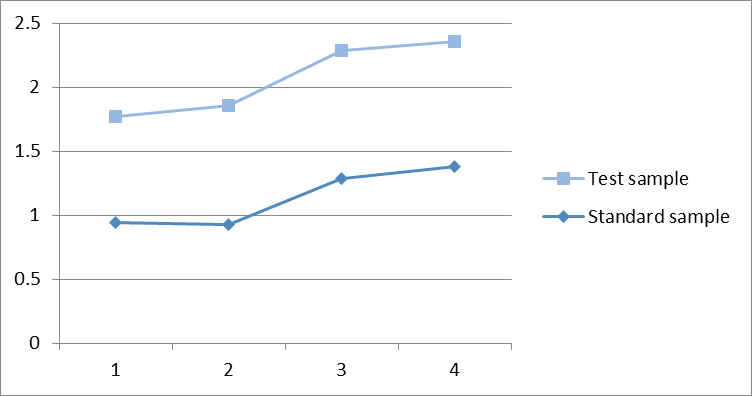
Table no. 4.3 Dissolution Absorbance Measurement Table
|
Sr. No. |
Marketed Preparation Standard (Absorbance) |
Test Sample (Absorbance) |
|
1 |
0.939 |
0.831 |
|
2 |
0.930 |
0.930 |
|
3 |
1.287 |
0.996 |
|
4 |
1.383 |
0.972 |
4.3.6 Disintegration Study:
Six tablets were utilized in this test, with one tablet inserted into each tube (3 inches long andutilizing distilled water (as a disintegration medium) with a 10 mesh screen) of the device at a recording the time in seconds at a rest of 28 to 32 cycles/ min and 37 degrees Celsius. when the apparatus was free of lumps.[17]
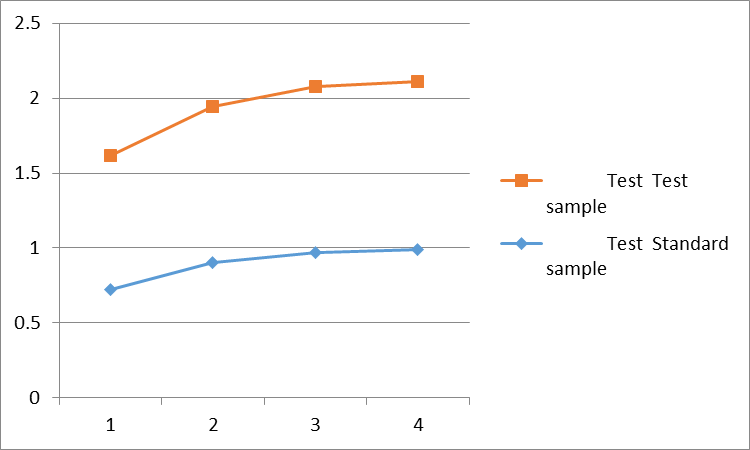
Table No. 4.4Disintigration Absorbance Measurement Table
|
Sr.No. |
Marketed Preparation Standard(Absorbance) |
Test Sample (Absorbance) |
|
1 |
0.721 |
0.896 |
|
2 |
0.902 |
1.042 |
|
3 |
0.972 |
1.102 |
|
4 |
0.992 |
1.120 |
4.3.7 Stability studies:
The stability results for Formulation kept for 0 and 1 months at 40°C±2 °C and 75%±2% RH, show that there are no discernible changes in the formulation's color or odour. The tablets consistent disintegration time of 14 seconds demonstrates that they retain their integrity even after one months of accelerated storage. Regarding dissolution, there is a minor decline in the percentage of drug dissolution from 99.3% to 99.17% during the one-month storage period, indicating a low decrease in the effectiveness of drug release. According to these findings, Formulation generally demonstrates good stability under these accelerated storage conditions, with
dissolution performance only slightly altered. Additional long-term To verify the formulation's durability over a longer shelf life, stability studies might be necessary.[18]
5.RESULTS AND DISCUSSION:
Table No.5.1Organoleptic Properties of Fenugreek Seeds Mucilage
|
Sr.no
|
Parameters |
Obsevation |
|
1.
|
Colour |
Pale yellow to light brown |
|
2. |
Odour |
Characteristic, slightly pungent (typical fenugreek smell) |
|
3. |
Texture |
Sticky, viscous, and gel-like when hydrated; smooth |
|
4. |
Solubility |
insoluble in organic solvents like ethanol, chloroform, and acetone |
|
5. |
Taste |
Slightly bitter and mucilaginous |
Table No.5.2 Characterization of Fenugreek Mucilage
|
Parameter |
Batch 1 |
Batch 2 |
|
pH |
6.2 |
6.5 |
|
Bulk density |
0.37g/cm3 |
0.41g/cm3 |
|
Tapped Density |
0.47g/cm3 |
0.46g/cm3 |
|
Hausnr Ratio |
1.25 |
1.26 |
|
Flow Property |
Good |
Good |
5.1. Tablet thickness test:
A caliper was used to analyzed the tablet's thickness, and results were expressed as mean values of 05 measurements.
|
Tablet No.
|
1 |
2 |
3 |
4 |
5 |
|
Thickness (mm) |
3.3 |
3.4 |
3.2 |
3.3 |
3.4 |
Average Thickness =∑Thickness of Tablet/n
=3.3+3.4+3.2 +3.3+3.4/5
= 16.65

slightly higher and more variable thickness (≈3.5–5.5 mm). The test formulation's decreased hardness is deliberate; a lower compression force produces a porous matrix that facilitates quick water wicking and tablet disintegration. This porosity and decreased compression directly lead to the increased thickness.
5.2. Tablet hardness determination:
The hardness of five tablets was determined to be average. The Pharma Test Multi-Check System has been applied to tablet hardness measurements
|
Tablet No.
|
1 |
2 |
3 |
4 |
5 |
|
Hardness kg/cm2 |
3.1 |
3.2 |
3.0 |
3.3 |
3.1 |
Average hardness =∑Hardness of Tablet/n
= 3.1+3.2+3.0+3.3+3.1/5
= 15.75

= 3.14kg/cm2
The typical marketed tablet has a moderate hardness of 3–5 kg/cm² and a uniform, controlled thickness of ≈3.0–4.0 mm. This illustrates an ideal ratio of disintegration to mechanical strength. However, the test FDT reveals lower hardness (2–4 kg/cm²)
5.3. Friability studies:
A total 20 tablets were taken at random, weighed, and dusted before being put in the friabilator to descend freely 100 times for 4 min at a speed of 25 rpm from a height of six inches. After that, the tablets were weighed and dusted once more. The percentage of weight lost as a result of abrasion or fracture was noted reduction of weight.
W1=Initial Weigh of Tablet (before test) = 6.50 gm
W2=Final Weight of Tablet(after test) = 6.46 gm
%Friability = W1-W2/W1×

= 6.50 - 6.46 / 6.50 ×

= 0.6
The friability of the tablets was observed to be within acceptable limits (<1%), indicating good mechanical stability.
5.4.Weight variation testing:
Weight variation testing the USP 30 (USP 30 USA Pharmacopeia, 2007) was followed in conducting the test. Ten tablets were weighed individually. The mean value of ten measurements was used to express the results.
|
Sr No. |
Tablet weight [mg] |
|
1 |
197 |
|
2 |
196 |
|
3 |
199 |
|
4 |
203 |
|
5 |
198 |
|
6 |
199 |
|
7 |
200 |
|
8 |
201 |
|
9 |
203 |
|
10 |
197 |
Formula:% Deviation=wi-WAvgWage×100
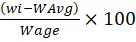
=196-200200×100
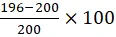
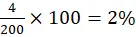
The Indian Pharmacopoeia (IP) limits for weight variation (±5–10%, depending on tablet weight) are met by both formulations. The test reveals "slight variation," but the marketed tablet is said to be "very consistent." This implies that, although less accurate than industrial manufacturing, the lab-scale procedure (hand filling/direct compression) is still within allowable bounds for dose uniformity.
5.5. Dissolution test:
Pour 900 milliliters of phosphate buffer (pH 6.8) into the dissolution vessel. Keep the temp. at 37 ± 0.5°C. Put one tablet of ibuprofen inside the container. At 50 rpm, rotate the paddle. Take samples out at predetermined intervals of time. Utilizing UV spectrophotometry at 276 nm, filter and examine the samples.
Determine the drug release percentage.% Drug Release=Amount ofDrug ReleaseTotalAmountofDrug×100

|
Sr. No. |
Time(min) |
%Drug Release for Marketed Preparation |
%Drug Release Test |
|
1 |
2 |
35% |
35% |
|
2 |
5 |
60% |
58% |
|
3 |
10 |
80% |
70% |
|
4 |
15 |
88% |
86% |
|
5 |
20 |
92% |
90% |
|
6 |
30 |
96% |
94% |
The manufactured FDT produces ≥80% drug release in 10–15 minutes, whereas the commercial tablet dissolves at least 80% in 15–30 minutes. For ibuprofen therapy, this quick dissolution results in a quicker release of the medication.
Absorption Measurement for Standard and Test Sample:
5.6. Disintegration test:
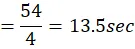
Fill the disintegration apparatus with distilled water maintained at 37 ± 2°C.Place one tablet in each tube of the basket rack assembly. Operate the apparatus so that the basket moves up and down at 28–32 cycles per minute. Observe the tablets until complete disintegration occurs. Record the time taken for complete disintegration.
Average DT=∑ Disintigration time of Tablet/n
Average=Disintigration time of Tabletn

=(12+14+13+15)/4

=544=13.5sec
|
Sr No. |
Time(min) |
% Drug Release Marketed Preparation (Absorbance) |
% Drug Release Test Sample (Absorbance) |
|
1 |
2 |
40% |
38% |
|
2 |
5 |
54% |
50% |
|
3 |
10 |
75% |
70% |
|
4 |
15 |
80% |
78% |
|
5 |
20 |
93% |
85% |
|
6 |
30 |
98% |
93% |
The formulated fast dissolving tablet (FDT) dissolves in less than 30 seconds, but the advertised fast ibuprofen tablet takes between one and five minutes to dissolve. The use of superdisintegrants, such as fenugreek seed mucilage, and the very porous structure of the manufactured tablet are responsible for this notable decrease in disintegration time.
CONCLUSION
The present research successfully demonstrated the formulation and analysis of rapidly dissolving tablets (FDTs) of Ibuprofen using fenugreek seed mucilage as a natural superdisintegrant. The tablets formulated by the direct compression method showed satisfactory pre-compression and post-compression parameters, indicating satisfactory flow properties, acceptable hardness, minimum friability, and uniform weight variation. This optimized batch showed fast tablet dispersion along with excellent drug release characteristics (~99%), confirming its effectiveness as a fast dissolving system.Fenugreek seed mucilage demonstrated effective performance as a natural disintegrating agent, showing better performance compared to some synthetic agents in terms of faster disintegration and enhanced drug release. Additionally, This formulated formulation showed good stability during accelerated storage studies with minimal changes in dissolution and physical characteristics. Overall, this research concludes that fenugreek seed mucilage is a promising, economical, biodegradable, and safe natural alternative for the formulation of fast dissolving tablets, enhancing patient adherence and providing quick therapeutic action.
FUTURE PERSPECTIVES
The majority of fast-dissolving drug delivery systems are a tablet that breaks down or dissolves in the mouth without the need to chew or drink water. dissolving quickly or Disintegrating tablets are not only recommended for individuals who Disintegrating tablets are not only recommended for individuals who have trouble consumption, but they're also perfect for active individuals. Dosage forms that dissolve quickly have been widely utilized to enhance treatment with a number of significant medications. Diabetes is characterized by elevated blood sugar levels. overreacting to missed insulin during exercise. Although there are numerous binders and disintegrants, Pharmaceuticals are still needed in the industry. Super disintegrants, which are extremely compatible and multifunctional, enabling high-dose multifunctional, enabling high-dose formulations, etc.).Tablets are currently being developed. Research may lead to opportunities in the field of enhanced or processed excipients. Additionally, augmentation processes to be utilized in this research are straightforward, economical, and ecological and requires less time. The clear benefits of solid dosage forms and shifting The need for technology will continue the hunt for more recent excipients. The more recent excipients must be compatible with the newest technologies as well as production equipment, but also with the creative active concepts like those derived from biotechnology. Advances in the manufacturing and excipient fields Traditional inert materials have been established thanks to machinery. excipients as a purpose.
REFERENCES
Branch SK. Guidelines from the International Conference on Harmonisation (ICH). J Pharm. Biomed Anal. 2005;38(5):798–805.




Aditya Patil, Dr. Umesh Jirole, Dhanashree Jirole, Abhijeet Kulkarni, Digvijay Kesare, Shubham Patil, Pranita Bhoite, Formulation And Evaluation of Fast Dissolving Tablet of Ibuprofen Using Fenugreek Seed Mucilage as A Natural Superdisintegrants, Int. J. of Pharm. Sci., 2026, Vol 4, Issue 6, 780-790, https://doi.org/10.5281/zenodo.20526829
 10.5281/zenodo.20526829