

We use cookies to ensure our website works properly and to personalise your experience. Cookies policy
Oriental Collage of Pharmacy and Research, Oriental University, Indore, MP
Alzheimer’s disease (AD) is a progressive neurodegenerative disorder characterized by cognitive decline, memory impairment, and neuronal loss. Despite the availability of pharmacological treatments such as cholinesterase inhibitors and NMDA receptor antagonists, their efficacy is limited, and side effects remain a concern, creating a demand for safer and more effective alternative therapies. Rosmarinus officinalis (rosemary), a widely used culinary and medicinal herb, has gained attention for its neuroprotective and cognitive-enhancing properties. Preclinical studies in rodent models of AD have demonstrated that rosemary extracts and its bioactive constituents, including rosmarinic acid and carnosic acid, can improve learning and memory, reduce oxidative stress, attenuate neuroinflammation, inhibit amyloid beta aggregation, and modulate cholinergic neurotransmission. Clinical studies, though limited, suggest that rosemary supplementation or aromatherapy may confer mild to moderate improvements in cognitive function and memory retention in individuals with mild cognitive impairment or early-stage AD. The neuroprotective mechanisms of rosemary appear to be multifaceted, involving antioxidant activity, anti-inflammatory effects, anti-amyloidogenic properties, and enhancement of synaptic plasticity. Collectively, these findings indicate that rosemary has promising potential as an adjuvant therapy in Alzheimer’s disease. Future research should focus on well-designed clinical trials, standardized extract formulations, and detailed mechanistic studies to validate its efficacy and translate preclinical benefits into clinical outcomes.
1.1 Alzheimer’s Disease
Alzheimer’s disease (AD) is a chronic, progressive neurodegenerative disorder that primarily affects memory, learning, and other cognitive functions. It is the leading cause of dementia in the elderly and represents a major global health challenge. [1] According to the World Health Organization, over 55 million people worldwide are living with dementia, and Alzheimer’s disease accounts for approximately 60–70% of these cases. The prevalence of AD is projected to increase substantially due to aging populations, placing a significant burden on healthcare systems, caregivers, and society. [2]
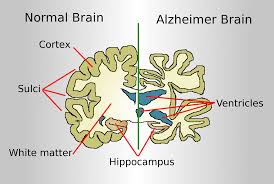
Figure no. 1 Alzheimer’s Disease
The pathophysiology of AD is complex and multifactorial. Key features include the accumulation of amyloid-beta (Aβ) plaques, formation of neurofibrillary tangles composed of hyperphosphorylated tau protein, oxidative stress, chronic neuroinflammation, and cholinergic neuron loss. [3] These processes disrupt synaptic function, impair neuronal communication, and ultimately lead to progressive cognitive decline. Oxidative stress and inflammatory processes are particularly significant, as they exacerbate neuronal damage and accelerate disease progression. The multifaceted nature of AD underscores the need for multi-targeted therapeutic approaches. [4]
1.2 Limitations of Conventional Therapy
Currently approved pharmacological interventions for AD primarily focus on symptom management rather than disease modification. Cholinesterase inhibitors, such as donepezil, rivastigmine, and galantamine, aim to increase acetylcholine levels in the brain, whereas NMDA receptor antagonists like memantine modulate glutamatergic signaling to reduce excitotoxicity. While these drugs provide temporary symptomatic relief, their overall efficacy is limited. [5]
Moreover, long-term administration of these medications can be associated with adverse effects, including gastrointestinal disturbances, dizziness, hepatotoxicity, and cardiovascular complications. These limitations highlight the need for alternative or complementary therapeutic strategies that can safely target multiple pathological pathways and provide sustained neuroprotection. [6]
1.3 Role of Natural Products in Neuroprotection
Natural products, particularly medicinal plants, have garnered significant interest in recent years as potential neuroprotective agents. Phytochemicals possess multiple bioactive properties, including antioxidant, anti-inflammatory, anti-amyloidogenic, and cholinergic-modulating effects. Unlike single-target synthetic drugs, herbal compounds can act on several molecular pathways simultaneously, potentially offering broader protection against neurodegenerative processes. [7]
Several herbal agents have demonstrated efficacy in preclinical studies for improving cognitive function and reducing neuronal damage. These findings suggest that natural products may complement conventional therapies, improve patient outcomes, and provide safer long-term options for AD management. [8]
1.4 Rosemary (Rosmarinus officinalis)
Rosmarinus officinalis, commonly known as rosemary, is a perennial aromatic herb of the Lamiaceae family, traditionally used for culinary and medicinal purposes. It contains a rich array of bioactive compounds, including rosmarinic acid, carnosic acid, carnosol, and essential oils such as 1,8-cineole and camphor. [9]
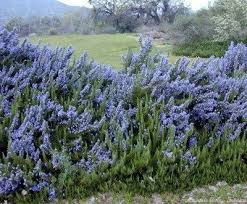
Figure no. 2 Rosemary (Rosmarinus officinalis)
Historically, rosemary has been associated with memory enhancement and cognitive stimulation. Contemporary research has expanded on these claims, indicating that rosemary and its constituents exhibit neuroprotective effects through multiple mechanisms. These include antioxidant activity, suppression of neuroinflammation, inhibition of amyloid-beta aggregation, and modulation of cholinergic neurotransmission. Such multi-targeted actions make rosemary a promising candidate for supporting cognitive function and slowing neurodegenerative processes in AD. [10]
1.5 Purpose of the Review
The primary objective of this review is to systematically examine the neuroprotective and cognitive-enhancing effects of rosemary in the context of Alzheimer’s disease. Specific goals include:
This review aims to provide a comprehensive understanding of rosemary as a potential adjuvant or alternative therapy for Alzheimer’s disease, highlighting its significance in the ongoing search for safe and effective neuroprotective interventions.
2. Chemical Constituents and Mechanisms of Action of Rosemary (Rosmarinus officinalis)
2.1 Introduction
Rosmarinus officinalis (rosemary) is an aromatic perennial herb belonging to the Lamiaceae family, widely cultivated in the Mediterranean region. Beyond its culinary uses, rosemary has attracted significant scientific interest due to its rich phytochemical composition and potential neuroprotective properties. [11]The therapeutic effects of rosemary are largely attributed to its bioactive compounds, which exhibit antioxidant, anti-inflammatory, anti-amyloidogenic, and cholinergic-modulating activities. Understanding the chemical constituents and their mechanisms is critical for elucidating rosemary’s role in cognitive enhancement and neuroprotection, particularly in Alzheimer’s disease. [12]
2.2 Major Chemical Constituents of Rosemary
Rosemary contains a diverse array of phytochemicals, including phenolic diterpenes, phenolic acids, flavonoids, and essential oils. The main bioactive constituents relevant to neuroprotection include: [13]
|
Class |
Compound |
Neuroprotective Activity |
References |
|
Phenolic diterpenes |
Carnosic acid, Carnosol |
Potent antioxidants, reduce neuronal oxidative stress, inhibit amyloid-beta aggregation, anti-inflammatory |
Hussain et al., 2022; Mirza et al., 2021 |
|
Phenolic acids |
Rosmarinic acid |
Free radical scavenger, anti-inflammatory, inhibits acetylcholinesterase |
Pengelly et al., 2012; Balasa et al., 2020 |
|
Flavonoids |
Apigenin, Luteolin |
Neuroprotective via antioxidant and anti-inflammatory pathways |
Ali et al., 2008 |
|
Essential oils |
1,8-Cineole, Camphor, α-Pinene |
Modulate neurotransmission, improve memory and attention, mild cholinesterase inhibition |
Ozarowski et al., 2013; Lindheimer et al., 2013 |
Notes:
2.3 Mechanisms of Neuroprotection
Rosemary exerts its cognitive-enhancing and neuroprotective effects through multiple interrelated mechanisms, which are particularly relevant to Alzheimer’s disease pathology. [14]
2.3.1 Antioxidant Activity
2.3.2 Anti-inflammatory Effects
2.3.3 Anti-amyloidogenic Effects
2.3.4 Cholinergic Modulation
2.3.5 Synaptic Plasticity and Neurogenesis
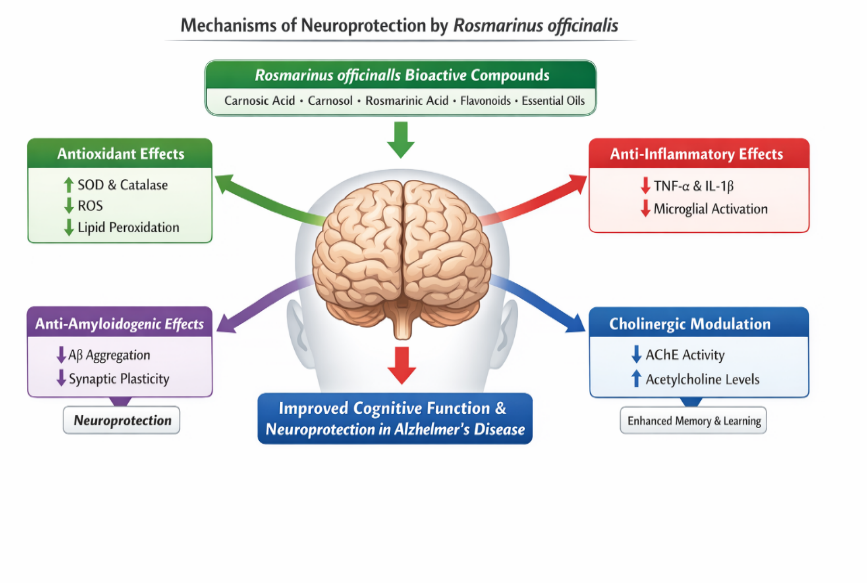
Figure no. 3 Mechanisms of Neuroprotection
3. Evidence from Preclinical Studies
Extensive preclinical studies have highlighted the neuroprotective and cognitive-enhancing effects of Rosmarinus officinalis and its active compounds, such as carnosic acid and rosmarinic acid. These studies utilize a variety of animal models that replicate key features of Alzheimer’s disease. [20] The scopolamine-induced model, which mimics cholinergic deficits, has been widely employed to evaluate memory impairments. Amyloid-beta (Aβ)-induced models replicate the neurotoxic plaque accumulation seen in AD, while transgenic mice overexpressing human amyloid precursor protein or presenilin mutations provide insight into progressive neurodegeneration and cognitive decline. [21]
Cognitive outcomes are typically assessed through behavioral tests including the Morris water maze, Y-maze, and passive avoidance tests. In these models, administration of rosemary extract or its bioactives consistently improves spatial learning, memory retention, and exploratory behaviors. [22] Biochemical analyses further corroborate these cognitive improvements, showing significant reductions in oxidative stress, suppression of pro-inflammatory markers such as TNF-α and IL-1β, and inhibition of acetylcholinesterase (AChE) activity. These effects collectively suggest that rosemary acts through a combination of antioxidant, anti-inflammatory, anti-amyloidogenic, and cholinergic-modulating mechanisms, providing strong evidence for its potential in preventing or mitigating AD-related cognitive deficits. [23]
4. Evidence from Clinical Studies
Several clinical studies have investigated the cognitive effects of rosemary in humans, using both aromatherapy and oral supplementation. Aromatherapy interventions have demonstrated improvements in attention, memory, and overall cognitive performance, particularly in elderly individuals and those with mild cognitive impairment. [24] For example, inhalation of rosemary essential oil has been associated with enhanced memory recall and sustained attention, highlighting its acute cognitive benefits. [25]
Oral supplementation trials with rosemary extracts have reported positive effects on standardized cognitive measures, including the Mini-Mental State Examination (MMSE) and the Alzheimer’s Disease Assessment Scale-Cognitive Subscale (ADAS-Cog). Most clinical studies indicate that rosemary is well tolerated, with minimal adverse effects, reinforcing its potential as a safe adjunctive therapy for cognitive enhancement. [27]
DISCUSSION
The available preclinical and clinical evidence consistently demonstrates that Rosmarinus officinalis and its bioactive compounds, such as carnosic acid and rosmarinic acid, exert neuroprotective and cognitive-enhancing effects. Animal studies show improvements in memory, learning, and synaptic function, supported by reductions in oxidative stress, neuroinflammation, and acetylcholinesterase activity. Clinical studies, though limited, report enhanced attention, memory recall, and cognitive scores with both aromatherapy and oral extracts. While these findings are promising, the overall strength of evidence is constrained by small sample sizes, variability in extract composition, and short study durations. Compared with other herbal neuroprotectants, rosemary exhibits a multi-targeted mechanism, addressing oxidative, inflammatory, and cholinergic pathways simultaneously, which may offer advantages over single-target interventions.
CONCLUSION
Rosemary demonstrates significant multi-target neuroprotective and cognitive-enhancing potential, making it a promising adjuvant therapy for Alzheimer’s disease. Its antioxidant, anti-inflammatory, anti-amyloid, and cholinergic-modulating effects provide a scientific basis for its traditional use in memory enhancement. However, the development of standardized extracts and more extensive clinical trials is necessary to establish its efficacy and safety in human populations.
Future Perspectives
Future research should focus on long-term, well-controlled clinical trials to validate rosemary’s cognitive benefits. Exploring combination therapies with other herbs or conventional drugs may enhance therapeutic outcomes. Detailed pharmacokinetic and pharmacodynamic studies are also needed to optimize dosing and bioavailability. Finally, rosemary’s potential in functional foods or nutraceuticals offers an exciting avenue for preventive strategies against cognitive decline.
REFERENCES

Vijay, Dr. Sudha Vengurlekar, Dr. Sachin Kumar Jain, Meta Analysis of the Neuroprotective and Cognitive Enhancing Effects of Rosemary (Rosmarinus officinalis) in Alzheimer’s Disease, Int. J. of Pharm. Sci., 2026, Vol 4, Issue 3, 2024-2032. https://doi.org/10.5281/zenodo.19089372
 10.5281/zenodo.19089372