

We use cookies to ensure our website works properly and to personalise your experience. Cookies policy
Department of Shalakya Tantra, DMM Ayurveda College Yavatmal, Maharashtra, India.
Background: Pharyngitis is one of the most common conditions encountered in outpatient and ENT practice, accounting for more than 2% and 5% of all outpatient primary-care visits in adult and paediatric populations respectively, with viral aetiology in the majority of cases (1). In Ayurvedic parlance this presentation is discussed under the Kanthagata Rogas described by Acharya Sushruta, and correlates symptomatically with Kaphaja Rohini, Kanthashalooka and Galagraha, all arising from vitiation of Kapha-Pradhana Tridosha in the Gala (throat) region (4,7). The present case is described as Galashotha, denoting inflammatory swelling of the throat with Kapha-Pitta predominance, in view of associated burning sensation and mild erythema alongside Kapha-dominant swelling and mucus production.Methods: A 26-year-old patient presented to the Shalakya Tantra (ENT) OPD of DMM Ayurved College, L.K.A. Rugnalaya, Yavatmal, with low-grade fever, rhinorrhea, nasal congestion, cough, mild tonsillar erythema without exudate, hoarseness of voice, gastroesophageal reflux, dysphagia, sore throat and generalised body ache of five days' duration. After Nidana Panchaka assessment, an Ayurvedic diagnosis of Galashotha with Kapha-Pitta predominance was made. The patient was managed with Khadiradi Vati, Laxmivilas Rasa, Avipattikar Churna and Sitopaladi Churna orally, along with Dashamoola Kwatha and Yashtimadhu Churna Kwatha as Kavala (gargle), with Pathya-Apathya advice and steam inhalation, and was followed up at 7-day intervals.Result: Progressive relief was observed in throat pain, congestion, cough, hoarseness, dysphagia and reflux symptoms over successive follow-ups, with near-complete resolution by the end of treatment and no adverse events.Conclusion: This case supports the utility of a combined Shamana (oral) and Kavala (local) Ayurvedic protocol in the management of Galashotha/acute pharyngitis with Kapha-Pitta predominance and offers a template for correlating classical Kanthagata Roga nomenclature with contemporary clinical presentations of pharyngitis.
Pharyngitis, characterised by inflammation of the pharynx, nasopharynx and tonsillar tissue, is among the most frequent complaints seen in family medicine and ENT outpatient departments. Its incidence peaks in the late winter to early spring, and roughly four-fifths of cases are of viral origin, with the remainder attributable to bacterial and, rarely, fungal pathogens (1). While the great majority of cases are self-limiting, correct clinical differentiation is important because group A streptococcal (GAS) infection carries a risk, albeit small, of suppurative and non-suppurative complications such as peritonsillar abscess, acute rheumatic fever and glomerulonephritis (1).
In classical Ayurvedic literature, Acharya Sushruta enumerated seventeen diseases occurring in the Kanthapradesha (throat region) under Mukharoga (4,7,15). Among these, Kaphaja Rohini and Kanthashalooka are described as arising from a Sthira (immobile), Gurvi (bulky) swelling of the throat caused by vitiated Kapha Dosha, producing Srotonirodha (obstruction) that manifests as dysphagia and throat discomfort (4). Acharya Charaka similarly describes Galagraha as a Kapha-predominant Tridoshaja disorder of the Gala Pradesh, arising from aggravation described in the Trisothiya Adhyaya of Sutrasthana (7). The present case is labelled Galashotha — literally, inflammatory swelling of the throat — to reflect a Kapha-Pitta predominant presentation in which classical Kapha features (Kandu, Kapha excess, swelling) coexist with Pitta features (mild erythema, burning sensation), distinguishing it from a purely Kaphaja picture.
This article first reviews the modern and Ayurvedic understanding of pharyngitis/Galashotha along with the pharmacological basis of the formulations used, and then presents a single case managed at the Shalakya Tantra OPD, DMM Ayurved College, Yavatmal, to illustrate the clinical application of this integrated understanding.
Review of Literature
1. Modern perspective on pharyngitis
Sore throat and pharyngitis represent more than 2% and 5% of all outpatient primary-care visits for adult and paediatric populations respectively (1). Viral pathogens (rhinovirus, adenovirus, coxsackievirus, coronavirus, respiratory syncytial virus, Epstein–Barr virus, among others) account for the majority of cases, while Streptococcus pyogenes (GAS), Haemophilus influenzae, Mycoplasma pneumoniae and, rarely, Candida albicans account for the bacterial and fungal minority (1). Clinical differentiation among these is difficult on presentation alone, since sore throat, odynophagia and fever are common to all causes and typically peak by day 3–5 before resolving by day 10 (1). Physical findings can aid diagnosis: tonsillar hypertrophy, erythema and posterior-pharyngeal "cobble-stoning" suggest viral aetiology; anterior cervical lymphadenopathy, scarlatiniform rash, tonsillar exudate and palatal petechiae raise suspicion of GAS infection; and angular cheilitis with curd-like plaques suggests a fungal cause (1).
Predictive scoring systems — the modified Centor score, originally derived by Centor and colleagues and later modified by McIsaac, and the FeverPAIN score — are used to estimate pretest probability of streptococcal infection and to guide rational use of rapid antigen detection testing, throat culture and antibiotics, since indiscriminate antibiotic use contributes to resistance without proportionate clinical benefit (1,14). Current guidance favours symptomatic management (hydration, analgesia with NSAIDs/paracetamol, and short-course corticosteroids for severe odynophagia) for low-risk patients, reserving antimicrobial therapy for those who are severely ill, at high risk of complications, or who fail to improve within 3–5 days (1). This conservative, evidence-based approach to antibiotic stewardship strengthens the rationale for exploring well-tolerated adjunctive or alternative approaches such as Ayurvedic Shamana and Kavala therapies in appropriately selected, uncomplicated cases.
2. Ayurvedic perspective: Galashotha and allied Kanthagata Roga
Acharya Sushruta's description of Kaphaja Rohini attributes the throat swelling to vitiated Kapha Dosha producing a Sthira, Gurvi, Srotonirodhi swelling, with Pratisarana, Nasya and Kavaladharana recommended as the principal lines of treatment (4,15). Kanthashalooka is likewise attributed to vitiation of Kapha-Pradhana Tridosha localised to the Gala Pradesh, producing a firm, immobile Granthi (nodular swelling) with pain resembling pricking thorns (Kantakas) (4). Acharya Vagbhata recommends treating Kanthashalooka on the same lines as Kaphaja Rohini (4,15).
स्रोतोनिरोधिन्यपि मन्दपाका गुर्वी स्थिरा सा कफसम्भवा वै॥
srotonirodhinyapi mandapākā gurvī sthirā sā kaphasambhavā vai
"That (Rohini) which obstructs the channels, suppurates slowly, and is heavy and firmly fixed — that is Kapha-born." (Sushruta Samhita, Nidana Sthana, Mukharoga Nidana 16/49)
Charakacharya's concept of Galagraha, discussed in the Trisothiya Adhyaya of Sutrasthana, similarly identifies Kapha Dosha aggravation as the principal governing factor, producing acute inflammatory change in the Gala Pradesh (7,17). Acharya Kashyapa additionally lists fever, loss of appetite, oral discharge, itching and swelling of the throat and head region as accompanying features (7), findings that align closely with the modern clinical picture of pharyngitis — throat pain, posterior-pharyngeal congestion, cough, fever and dysphagia. Nidana (causative factors) described in the Ashtanga Hridaya for Gala disorders include intake of Kapha-Pitta aggravating articles such as meat of aquatic/marshland creatures, root vegetables and fermented beverages, together with exposure to cold, damp environments and incompatible food combinations (7,18).
यस्य श्लेष्मा प्रकुपितस्तिष्ठत्यन्तर्गले स्थिरः। आशु सञ्जनयेच्छोफं जायतेऽस्य गलग्रहः॥
yasya śleṣmā prakupitastiṣṭhatyantargale sthiraḥ, āśu sañjanayecchophaṁ jāyate'sya galagrahaḥ
"When a person's vitiated Kapha becomes firmly lodged within the throat and rapidly produces swelling there, Galagraha arises in him." (Charaka Samhita, Sutrasthana, Trishothiya Adhyaya 18/22)
In all Mukhagata Rogas, Acharya Sushruta notes predominant vitiation of Rakta and Kapha Dosha (4,16). Where an additional Pitta component is clinically evident — as in the burning sensation, mild mucosal erythema and reflux-associated presentation of the present case — the condition is more precisely described as a Kapha-Pitta predominant Galashotha rather than a purely Kaphaja disorder. The classical treatment triad of Shodhana/Shamana (internal medication), Pratisarana (local application) and Kavaladharana/Gandusha (gargling) remains central to management regardless of this dosha-weighting, with the choice of individual formulations adjusted to balance the additional Pitta involvement (4,7,9).
3. Pharmacological basis of the therapeutic formulations
Khadiradi Vati: A classical multi-ingredient herbo-mineral preparation with Khadira (Acacia catechu) as its principal drug, described across Charaka Samhita, Bhaishajya Ratnavali, Yogaratnakara and other compendia for Mukha Roga, Danta Roga, Galaroga, Kasa and Aruchi (5). Khadira itself is Tikta-Kashaya Rasa, Laghu-Ruksha Guna, Sheeta Virya, with Vata-Kaphahara action, and the formulation as a whole balances Vata, Pitta and Kapha while alleviating sore throat, reducing hoarseness and improving vocal clarity (5). Its flavonoid, phytosterol and alkaloid content underlies documented anti-inflammatory and antioxidant activity, supporting its traditional use as a chewable in tonsillitis and other oral/throat disorders (5,10). Independent pharmacological review of Khadira (Acacia catechu) confirms significant antimicrobial, antioxidant and anti-inflammatory activity across its heartwood, bark and leaf extracts, lending contemporary support to its classical use in Mukha and Kantha disorders (10).
Laxmivilas Rasa: A herbo-mineral Rasa formulation described in Bhaishajya Ratnavali and other Rasa texts, classically indicated in Kustha, Prameha, Amavata, Sthoulya, Shirorog and — notably — Dushta-Pratishyaya, on account of its predominantly Kapha-Vataghna action (1, referring to source document on Laxmivilas Rasa). Bhaishajya Ratnavali further lists indications extending to disorders of Mukha, Karna, Nasa and Akshi under Kapha-Vata dushti of the Majjavaha Srotas. Its Abhraka Bhasma content contributes Rasayana and broad-spectrum anti-inflammatory activity relevant to upper respiratory tract conditions (Laxmivilas Rasa monograph).
Sitopaladi Churna: A five-ingredient classical Churna (Sitopala, Vanshalochana, Pippali, Ela and Twak) described in Bhaishajya Ratnavali and Charaka Samhita for Kasa, Shwasa, Jwara and Pratishyaya (2). Contemporary pharmacological evaluation attributes to it expectorant, bronchodilator, anti-inflammatory, antimicrobial and immunomodulatory activity, with Pippali acting as a bio-enhancer that improves the bioavailability of co-administered drugs (2,12), an action attributed largely to piperine, its principal alkaloid (12). Clinical studies cited in this literature report symptomatic improvement in chronic bronchitis, allergic rhinitis and adjuvant tuberculosis therapy, supporting its role in Kapha-predominant upper respiratory and throat conditions (2).
Yashtimadhu (Glycyrrhiza glabra): Yashtimadhu is Madhura Rasa, Guru-Snigdha Guna and Sheeta Virya, classically regarded as Kanthya (beneficial for the throat and voice) and is one of the most frequently cited drugs among Charaka's Urdhwajatrugata Mahakashayas (6). It pacifies Rakta and Pitta Dosha through its Madhura Rasa and Sheeta Virya, and in Pratisarana with honey produces Shodhana and Ropana of the throat, an action documented to relieve sore throat, cough and bronchial catarrh (4,9). The honey (Madhu) Anupana used with several formulations in this protocol is itself supported by clinical evidence of benefit in acute cough (13). Modern studies confirm anti-inflammatory, antioxidant, antimicrobial (including against cariogenic and oropharyngeal organisms) and wound-healing activity, and licorice-based mouth rinses/patches have shown clinical benefit in aphthous ulcers and radiation-induced oral mucositis (6), supporting its inclusion here as a Kavala Kwatha.
Dashamoola: A combination of the roots of ten plants (Brihat and Laghu Panchamoola) with Ushna Virya, classically used for inflammatory and painful conditions (8). Experimental evaluation in rat and mouse models has demonstrated anti-inflammatory activity (carrageenan-induced paw oedema, acetic-acid peritonitis, cotton-pellet granuloma) and analgesic activity (acetic-acid writhing test) comparable to aspirin, along with in-vitro anti-platelet activity (8). As a Kavala Kwatha, Dashamoola reduces mucus production, exerts mucolytic action, and soothes throat inflammation through a combined anti-inflammatory and Swedana (mild fomentation) effect during gargling, consistent with the broader documented benefits of Kavala/Gandusha as a therapeutic modality for Kanthagata disorders (9).
Avipattikar Churna: A classical Pitta-pacifying Churna traditionally used to correct Agni and manage Amlapitta-type disorders. In the present case it was included to address the associated gastroesophageal reflux, which is a recognised aggravating factor for posterior-pharyngeal and laryngeal irritation via reflux of gastric contents into the upper aerodigestive tract (11), complementing the throat-directed formulations above. As this formulation was not covered in the source literature reviewed for this article, its detailed pharmacological profile is not elaborated here and would benefit from separate documentation.
Case Report
A 26-year-old patient presented with complaints of low-grade fever, rhinorrhea, nasal congestion, cough, mild tonsillar erythema without exudate, hoarseness of voice, gastroesophageal reflux, dysphagia, sore throat and generalised body pain of five days' duration, to the Shalakya Tantra (ENT) OPD of DMM Ayurved College, L.K.A. Rugnalaya, Yavatmal, on 29/06/2026.
History of Present Illness
The patient was apparently normal one week prior to presentation. Symptoms developed gradually with throat discomfort, rhinorrhea, dry cough, dry and sore throat, dysphagia, gastroesophageal reflux and tiredness of voice. The patient initially approached contemporary medical services and used lozenges and NSAIDs, which provided only temporary relief of dry cough and sore throat. As symptoms did not resolve satisfactorily and continued to aggravate, the patient presented to this hospital for Ayurvedic management. No other past history was noted.
Personal History
Diet: Mixed (vegetarian + non-vegetarian); Appetite: Moderate; Bowel: Unsatisfactory, 2 times/day; Micturition: Satisfactory, 5–6 times/day; Sleep: Normal; Addiction: None.
Occupational History
Patient is a student.
Diagnosis
On examination of the oropharynx followed by telescopic evaluation, the patient was diagnosed with acute pharyngitis with swelling. Based on assessment of Nidana Panchaka, the Ayurvedic diagnosis of Galashotha with Kapha-Pitta predominance was made.
On Examination (O/E)
Nose: Pale nasal mucosa with nasal congestion. Ear: No abnormality detected. Throat — Anterior pillars: Congested; Tonsils: Mild tonsillar erythema; Posterior pillars: Congested; Posterior pharyngeal wall (PPW): Redness and swelling of the follicular tissue.
Therapeutic Intervention
|
Drug |
Dose |
Route of Administration |
Duration |
|
Khadiradi Vati |
250mg BD |
Orally / Chushanartha (chewing) |
15 days |
|
Laxmivilas Rasa |
250mg BD with Madhu |
Orally |
15 days |
|
Avipattikar Churna |
5gm HS |
Orally, with lukewarm water |
15 days |
|
Sitopaladi Churna |
5gm BD with Madhu |
Orally |
15 days |
|
Dashamoola Kwatha |
3gm Two times a day |
Gargling (Kavala) |
15 days |
|
Yashtimadhu Churna Kwatha |
3gm Two times a day |
Gargling (Kavala) |
15 days |
Pathya-Apathya
The patient was strictly advised to avoid ice cream, cold drinks, chocolates, fast food, fermented food items, spicy food, oily food and colour-chemical-containing items, as well as excessive speaking and frequent hawking/clearing of the throat. The patient was advised to cover the mouth with a mask or clean handkerchief when exposed to dusty or smoky environments, to take steam inhalation through the mouth twice daily with plain water, to take lukewarm water throughout the day as a routine, and to perform Kavala with the prescribed medicines.
Follow-up and Results
|
Duration |
Result |
Pharyngoscopic Findings |
|
7th day of treatment |
Mild relief in throat pain, cough frequency and hoarseness; dysphagia and reflux symptoms mildly decreased. |
Mild improvement in congestion of pillars; PPW swelling largely unchanged. |
|
15th day of treatment |
Significant improvement in sore throat, cough, nasal congestion and voice quality; reflux symptoms notably reduced. |
Decreased congestion of anterior and posterior pillars; reduction in follicular swelling over PPW. |
Clinical Photographs
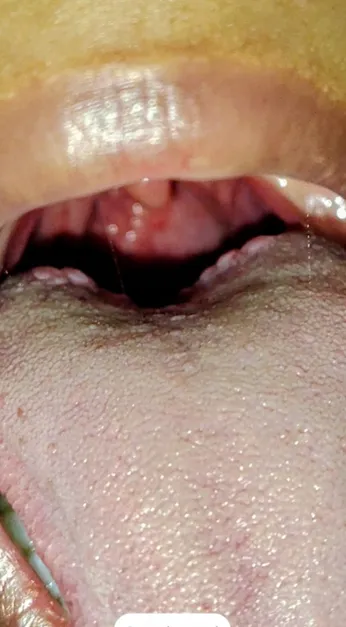
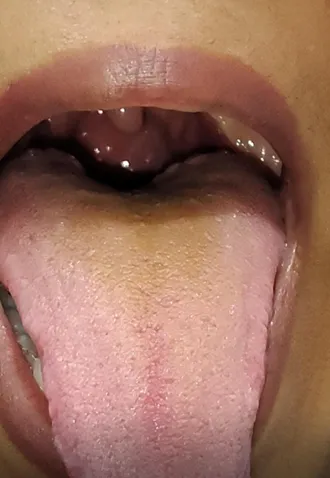
Figure 1: Oropharyngeal appearance – 7th day of treatment Figure 2: Oropharyngeal appearance – 15th day of treatment
Figure 1 shows mild residual congestion of the pillars and follicular changes of the posterior pharyngeal wall on the 7th day of treatment. Figure 2, taken on the 15th day of treatment, shows a visibly healthier, less congested oropharyngeal mucosa, consistent with the progressive clinical improvement recorded in the Follow-up and Results table above.
DISCUSSION
The clinical presentation in this case — low-grade fever, nasal congestion, cough, mild tonsillar erythema without exudate, hoarseness, dysphagia and sore throat — is characteristic of viral or mild bacterial pharyngitis as described in contemporary literature, where such features typically peak within 3–5 days and resolve without major complication (1). The absence of tonsillar exudate and the Centor/FeverPAIN-consistent low-risk picture would, in a purely biomedical framework, favour symptomatic management over antimicrobial therapy (1,14) — an approach broadly congruent with the Ayurvedic Shamana strategy adopted here.
From the Ayurvedic standpoint, the combination of Kapha-dominant signs (nasal congestion, cough, mucus, follicular swelling of the PPW) with Pitta-dominant signs (mild erythema, burning-type discomfort, gastroesophageal reflux) supports the diagnosis of Galashotha with Kapha-Pitta predominance rather than a purely Kaphaja Rohini/Kanthashalooka picture (4,7,15). Accordingly, the treatment protocol combined Kapha-Vata pacifying agents (Khadiradi Vati, Laxmivilas Rasa, Sitopaladi Churna) with a Pitta-correcting agent (Avipattikar Churna) to address the reflux component, alongside two Kavala Kwathas — Dashamoola, chosen for its documented anti-inflammatory and analgesic action (8), and Yashtimadhu, chosen for its Kanthya, Pitta-Raktahara and mucosa-healing properties (4,6).
Khadiradi Vati and Laxmivilas Rasa acted as the principal oral Shamana agents targeting Kapha-Rakta vitiation in the Mukha and Kantha region (4,5), while Sitopaladi Churna contributed expectorant and antitussive action relevant to the associated cough and nasal congestion (2). The dual Kavala regimen is consistent with the classical principle that Kavaladharana is among the foremost interventions for Kanthagata disorders (4,7,9): Dashamoola Kwatha reduced local inflammation and mucus production through its Ushna Virya and mucolytic action (8), while Yashtimadhu Kwatha provided a soothing, Sheeta Virya counterbalance appropriate to the Pitta component, supporting mucosal healing (4,6). Avipattikar Churna addressed the Pitta-driven reflux, which is a recognised aggravating factor for posterior-pharyngeal irritation (11) and was a distinguishing feature of this case compared to purely Kaphaja presentations reported in similar case reports (4,7).
The progressive symptomatic improvement observed over the 7- and 15- follow-ups mirrors outcomes reported in comparable single-case reports of Kaphaja Rohini/granular pharyngitis and Galagraha managed with analogous Shamana-plus-Kavala protocols, where marked to complete relief was documented within three to four weeks (4,7). No adverse effects were observed during the course of treatment, consistent with the generally favourable safety profile reported for these classical formulations and their individual ingredients in the pharmacological literature reviewed above (2,5,6,8,10,12).
As with any single-case report, the findings here are illustrative rather than confirmatory; the natural self-limiting course of most pharyngitis (1) means that spontaneous resolution cannot be excluded as a contributor to the improvement observed. Controlled clinical studies with larger sample sizes and standardised dosing are needed to validate the efficacy of this specific combination protocol in Galashotha with Kapha-Pitta predominance.
CONCLUSION
This case report illustrates that a combined oral (Khadiradi Vati, Laxmivilas Rasa, Avipattikar Churna, Sitopaladi Churna) and Kavala (Dashamoola Kwatha, Yashtimadhu Churna Kwatha) Ayurvedic protocol, supported by appropriate Pathya-Apathya, produced progressive and substantial relief in a case of Galashotha (acute pharyngitis) with Kapha-Pitta predominance, without adverse effects. The dosha-specific tailoring of therapy — addressing both the Kapha-dominant local swelling/congestion and the Pitta-dominant erythema/reflux component — appears clinically relevant and merits evaluation in larger comparative studies.
Conflict of Interest
None declared.
Source of Support
Nil.
Ethical Clearance
Not applicable / as per institutional protocol (to be confirmed).
REFERENCES


Dr. Bhupendra Rathod, Dr. Gaurav Dhotre, Dr. Jayantkumar Wagh, A Case Study of the Clinical Association of Galashotha with Acute Pharyngitis and Its Ayurvedic Treatment, Int. J. of Pharm. Sci., 2026, Vol 4, Issue 7, 6076-6084, https://doi.org/10.5281/zenodo.21721646
 10.5281/zenodo.21721646