

We use cookies to ensure our website works properly and to personalise your experience. Cookies policy
1,2,3,4 School of Biotechnology Jawharlal Technological University, Kakinada
2Head Of School Of Biotechnology, Jawharlal Technological University, Kakinada
Annona squamosa leaves possess substantial phytochemicals and antioxidant activity, rendering them highly suitable for the development of health-benefiting herbal teas(botanical infusion), Present study aimed to develop a functional herbal (green) tea from A. squamosa leaves, Key objectives included conducting phytochemical analysis and evaluating the antioxidant activities of the leaf extract, while also considering the toxicological profile of its secondary metabolites. Additionally, an in-silico study for antioxidant activity was conducted using the 1HD2 protein from PDB in Docking software PyRx with Annona squamosa Phyto-chemicals from the literature, Phytochemical screening and antioxidant activity assays were performed on the A. squamosa leaf extract. Formulated herbal teas were subjected to an sensory evaluation, followed by scoring to assess various attributes, Results indicated that A. squamosa extract exhibits significant antioxidant reserves and displays a dose-dependent antioxidant activity, suggesting considerable potential for therapeutic applications. Among the docked protein-ligands 10 highest dock score compounds were retained and analysed for ADMET studies.
Sugar apple (Annona squamosa L.) is an important seasonal fruit belonging to the family Annonaceae. It is indigenous to tropical America and considered one of the significant minor fruits of India. In India, custard apple occupies approximately 29.87 thousand hectares, yielding about 228.37 million tonnes annually[¹]. height varies between 3–8 meters, leaves are oblong-lanceolate or lanceolate, measuring 6–17 cm in length and 3–5 cm in width, with alternately arranged on short petioles. The bark is thin grey, while the flowers are greenish and openly elongated shoots. Fruit exhibit various forms round, heart-shaped, ovate, or conical—measuring 5–10 cm in diameter, with numerous rounded protuberances on its surface. Seeds are oblong, shiny, smooth, dark brown to blackish, and 1.3–1.6 cm long. Fruit pulp, which contains a high sugar content (about 58% of dry mass), is exceptionally sweet and rich in calories. Squamosa has potential Hepatoprotective property exhibited an decrease in direct serum bilirubin [2]. The plant is also reputed for its diverse medicinal properties[³].
Its juice is traditionally used to treat Pyrexia in Traditional medicine[⁴]. The pulp has been reported to have anti-cancer activity[⁵]. It cultivated for Decor purposes and often intercropped with banana plantations[⁶]. Roots are having muscle relaxant effects. Seeds display sympathetic actions such as pupil dilation, reduction in secretions, dryness of the mouth, and antitumor activity [7]. Pulp is also used in preparing ice creams and milk-based beverages [8].
Several alkaloids have been isolated from the plant, including glaucine (a major aporphine), protoberberine, and tetrahydroisoquinoline. Other identified chemical constituents include atidine, histisine, oxophoebine, reticuline, hetidine, heterophylline, isoatisine, hetisine, heterophyllisine, hetisinone, and benzoyl heteratisine[9]. NMR spectral analysis helps identify compounds such as liriodenine and oxoanalobine, extracts of root contain various components like borneol, camphene, camphor, car-3-ene, carvone, β-caryophyllene, 16-hetriacontanone, hexacontanol, higemamine, eugenol, farnesol, geraniol, isocorydine, and limonine [10].
In silico techniques have become indispensable in the early stages of drug discovery, especially in understanding the interaction between small molecules and biological macromolecules, one of the widely used techniques is molecular docking, which predicts the preferred orientation of a ligand when bound to a target receptor to form a stable complex (Lengauer & Rarey, 1996). This method is fundamental to structure-based drug design, aiding in the identification and optimization of potential therapeutic compounds.[11]
PDB, PubChem, PyMOL, Cabs-flex and Discovery Studio—form a best ecosystem for conducting virtual screening and molecular docking studies, enabling researchers to accelerate the drug discovery pipeline through computational means, The Docking Software PyRx is used for scoring purpose. Docking was performed between ligand and protein molecules using PyRx having auto dock vina plugin [12]
Oxidative stress is the major cause for severe and chronic degenerative diseases such as auto-immune and immuno-modulatory diseases and is potential for cellular damage due to its defective function arises from imbalance of redox reactions in cell like ROS, RNS, peroxide, superoxide etc., Anti-oxidants play a pivot role in delaying or preventing or reducing the oxidation of oxidizing agents and reducing free radicals by its scavenging property [13]
The Present study was conducted to evaluate the invitro anti-oxidant activity along with preliminary Phytochemical screening was carried out to identify the presence of secondary metabolites which includes Flavonoid, glycoside, saponins, tannins, phenols and steroid in the crude leaves extract of Annona Squamosa. The test results of our study confirmed the presence of phenols, flavonoids, tannins, carbohydrates, tannins, glycosides, and steroids. The total phenolic content and the total flavonoid content present in the sample extracted from the acetone/water of 1:1 ratio was analysed for its anti-oxidant activity along with in-silico-screening by using 1HD2 protein obtained from PDB and by in-vitro analysis using DPPH.
In this present study, the different flavoured tea samples were also compared for their activities, The catechins percentage should be within the safety index for edible use, Anti-oxidant Activity of Annona Squamosa by highest scored compound gluacine in in-silico needs to be assessed addressed and analysed in future studies for its further contribution towards Anti-oxidant Activity.
The top ten compounds of Annona phytochemical compounds with targeted protein of 1HD2 analysed for interaction profile and to find potential Hit candidates based on docking scores and residual interactions with using molecular docking experiments along with their drug-likeness and pharmacokinetic profiles.
Alejandro et.al., studied Glaucine’s 2HTS property in an oxidizing radical and the hydroxyl groups of boldine and its derivatives contribution for an antioxidant activity through a mechanism of electron transfer through de-protonation. [17]
So, this compound glaucine contained Annona squamosa leaf extract Infusion can be a Botanical Drug Infusion (Green Tea) of interest, and the ADMET Studies were carried out by using-by-using ADMET-AI.[18]
Annona Squamosa major contains alkaloids amongst them the aporphine’s annonaine role was studied by Dash et.al., vitamin C rich squamosa can also be an potential anti-ageing and about approximately 42mg/100g is of total VitaminC.[19]
2.MATERIALS AND METHODS
INVITRO STUDY:
2.1MATERIALS:
Materials of this study were dried Annona squamosa leaves ,5% acetic acid, Bendict’s reagent, Ninhydrin reagent, Dragendroff’s reagent, H2so4,chloroform,ethanol, wagners’s reagent, 1%lead acetate, Fecl2, 2%NaOH, Ammonia solution Acetic anhydride, methanol, distilled water, FC reagent,Na2CO3, NaHCO3 , olive oil, Gallic acid, quercetin, AlCl3, pottasium acetate, Phosphoric acid ,HCL test tube stands, Soxhlet apparatus, UV- Visible spectrophotometer, two glass cuvette’s .
2.2SAMPLE COLLECTION:
The leaves been washed with sterile water and stored in a pyrogenic conditions and shade dried and grounded to powder by using the electric cutter.
2.3SOXHLET EXTRACTION:
About 10grams of Annona squamosa leaf powder in a whatmann filter paper and make sure it is folded without any leakages of the sample and place it in a Soxhlet apparatus 100 ml of distilled water and 100 ml of acetone is taken in an RBF attached to it. The whole setup is placed on a heating mantle, the temperature is setup to 1000c, the acetone gets vapourised and rises up into the condenser where is condenses back and liquid falls into the plant sample used as in the place of thimble and extract certain compounds into the RBF roughly 10cycles were performed.[14]
2.4PRELIMINARY PHYTOCHEMICAL ANALYSIS:
2.5QUALITATIVE ANALYSIS [15]
2.5.1CARBOHYDRATES:
BENDICT’S TEST:
1 ml of sample extract is treated with 1ml of benedict’s reagent and is allowed to heat for few minutes at 80-1100C.
Green colour indicates presence of reducing sugars.
2.5.2PROTEINS:
NINHYDRIN TEST:
Take 1ml of sample in a test tube and add 1ml of Ninhydrin reagent to the sample
2.5.3ALKALOIDS
DRAGENDROFF’S TEST:
1ml of sample is treated with 1ml of dragendroff’s reagent and is mixed well,
The orange PPT indicates presence of alkaloids.
WAGNER’S TEST
1ml of sample is treated with 1ml of wagner’s reagent yields reddish brown,
The reddish brown ppt represents presence of alkaloids in the sample.
2.6.1TERPENOIDS
Add 2ml of chloroform and 1ml of H2SO4 to 1ml of sample extract then allowed for heating in water bath for 2mins at 500C, grey colour ppt occurs.
2.6.2TEST FOR TRITERPENOIDS
To 1.5 ml of extract, 1 ml of Libermann-Buchard reagent (acetic anhydride + concentrated sulphuric acid) was added. Blue green colour formation indicated the presence of triterpenoids.
2.7TEST FOR TANNINS (FERRIC CHLORIDE TEST)
To 1 ml of the extract, 1 ml of 0.008 M potassium ferricyanide was added and then 1 ml of 0.02 M ferric chloride containing 0.1 N HCl was added. Appearance of blue–black colour indicates the presence of tannins.
2.8TEST FOR FLAVONOIDS
2.8.1NaoH TEST:
1ml of sample is added to 2%NaOH, yellow colour is observed.
2.8.2SHINODA TEST
To 2 ml of the extract, 1 ml of 1 percent ammonia solution was added. Appearance of yellow colour indicates the presence of flavonoids.
2.9. SAPONINS
2.9.1FOAM TEST
2 ml of crude extract was mixed with 5 ml of distilled water in a test tube and it was shaken vigorously. Add some drops of olive oil. The formation of stable foam is taken as an indication for the presence of saponins.
2.10.TEST FOR ACIDS
1ml of extract was treated with sodium bicarbonate solution. Formation of effervescence indicates the presence of acids.
2.11. LIPIDS
2.11.1EMULSIFICATION TEST
Take 5ml of sample and add 5ml of chloroform and 10ml of methanol (2:1) ratio place the solution in separating funnel. Separate the upper- and lower-layer using funnel extraction method collect the bottom layer. Take the equal volumes of ethanol and water into two eppendrof tubes and also add equal volumes of the lower volume into another, the result will be cloudy appearance after mixing.
2.12QUANTITATIVE TEST (16)
QUANTITATIVE ANALYSIS
Quantitative analysis determines the amount of specific phytochemicals present.
Folin-ciocalteu (fc) test (for total phenolics):
This method is used to determine the total phenolic content.
REAGENTS:
Reagent 1 (Na2CO3): 10g of sodium carbonate is dissolved in 100ml of distilled water.
Reagent 2 (Folin-Ciocalteu Reagent): This reagent is a key component for the assay.
STANDARD CURVE PREPARATION:
A stock solution of gallic acid (a common phenolic standard) is prepared by dissolving 1mg in 1ml of distilled water.
Serial dilutions of gallic acid are prepared at different concentrations. These dilutions are then used to create a standard curve, which is essential for quantifying the phenolic content in unknown samples.
The absorbance is measured at 760nm using a UV-Vis spectrophotometer.
2.13ALUMINIUM CHLORIDE (ALCL3) METHOD (FOR TOTAL FLAVONOIDS):
This method is used to determine the total flavonoid content.
Reagents:
Aluminium chloride (AlCl3) solution: 2.5mg is dissolved in 1ml of ethanol.
Potassium acetate (CH3COOK) solution: 2.4g is dissolved in 250ml of distilled water.
Standard calibration Preparation:
A stock solution of quercetin (a common flavonoid standard) is prepared by dissolving 1mg in 1ml of methanol.
Serial dilutions of quercetin are prepared at different concentrations, and a standard curve is generated.
The formation of a yellowish colour is observed, and the absorbance is measured at 510nm using a UV-Vis spectrophotometer.
2.14ANTIOXIDANT ACTIVITY (DPPH ASSAY)
The DPPH (2,2-diphenyl-1-picrylhydrazyl) assay is a common and relatively simple method used to measure the antioxidant activity of samples. This method relies on the ability of antioxidant compounds to scavenge DPPH free radicals.
Principle: The DPPH radical is stable and shows a strong absorption at 517nm, giving it a deep violet colour. When antioxidants are present, they donate hydrogen atoms to the DPPH radicals, neutralising them. This causes the violet colour to fade, and the absorbance at 517nm decreases. The change in colour from violet to light yellow/colourless indicates antioxidant activity.
•Calculation of Antioxidant Activity: The percentage of antioxidant activity is calculated using the following formula:
AA% = [ (Acontrol - A_sample) / Acontrol ] x 100
2.15 TEA PREPARATION:
The Annona Squamosa leaf powder was combined with different flavoured ingredients that are described in the below mentioned below. The combinations of the flavours were added and powdered to make the final product.
The ingredients include Jaggery powder – 6.0g, Cinnamon powder – 0.02g, Cardamom powder – 0.02g, Clove powder – 0.02g, Pepper powder – 0.02g, Annona Squamosa Leaf powder – 0.3g, Butterfly Pea – 0.13g, Mineral Water – 100ml, different flavoured ingredients were powdered and mixed to make the formulations which are used for different flavours and their respective antioxidant activity and sensory evaluation with scoring was recorded.
IN-SILICO EVALUATION: -
In the In-silico Evaluation Process the protein of interest is obtained from the Protein data bank RCSB PDB PDB ID - 1HD2: Human peroxiredoxin 5 https://rcsb.org and prepared for pre docking purpose by removing the heteroatoms and water molecules and assigned the hydrogen ions to the protein and loaded as macromolecule in the Pyrx software for docking purpose, ligands were added and energy minimization was carried out ,the pyrx runs on the auto dock vina plugin , the results obtained were stored in the consequent files for the further assessment of interaction studied loaded to pymol for interaction visualization was carried out in biovia discovery studio, about 112 Annona phytochemicals were assessed the docking was performed for phytochemical constituents is obtained from literature review for finding the potential anti-oxidant’s other than the poly-phenols and flavonoids amongst them 10 potential candidates were further assessed for ADMET studies.
3.RESULTS:
3.1PRELIMINARY PHYTOCHEMICAL ANALYSIS: It was conducted and presented in a tabular format and was conducted for leaf extract in the Aectone: water (1:1)
|
S.NO |
Test |
Phytochemical |
Result |
|
|
Benedicts |
Carbohydrate |
+ |
|
|
Ninhydrin |
Protein |
+ |
|
|
Dragendroff’s |
Alkaloid |
+ |
|
|
Wagner |
Alkaloid |
+ |
|
|
Chloroform: sulfuric acid |
Terpenoid |
+ |
|
|
Libermann Buchard |
triterpenoid |
+ |
|
|
Fecl2 |
Tannin |
- |
|
|
Shinoda |
Flavonoid |
+ |
|
|
Foam Test |
Saponin |
- |
|
|
Na2CO3 |
Acid |
+ |
|
|
Emulsification |
Lipid |
+ |
Table:1 (+ means the test showed reaction occurred and optical inference noted i.e., presence of chemical constituents and - means absence of phytochemical)
3.2PHENOLIC AND FLAVONOID TEST:
The Phenolic and flavonoid concentrations of the extract was measured spectrophotometer of UV Visible spectrophotometer at the 760nm range for Phenols and 510nm range for flavonoid using Gallic acid and quercetin as standards and the unknown concentration of extracts were compared for estimation and the tabular columns of the analysis are presented below
Table 2: Quantification Of Phenols
|
S.No |
Volume of the sample (µg/mL) |
Vol of distilled water (ml) |
Vol of FC reagent (ml) |
Vol of Na2CO3 (ml) |
OD (766nm) |
|
0 |
0 |
1 |
0.5 |
2 |
0.000 |
|
1 |
0.2(200µl) |
9.8 |
0.5 |
2 |
0.109 |
|
2 |
0.4(400µl) |
9.6 |
0.5 |
2 |
0.398 |
|
3 |
0.6(600 µl) |
9.4 |
0.5 |
2 |
0.574 |
|
4 |
0.8(800 µl) |
9.2 |
0.5 |
2 |
0.622 |
|
5 |
1(1000µl) |
0 |
0.5 |
2 |
1.080 |
|
Unknown 1 |
-(0.2 µl) |
- |
- |
- |
1.343 |
|
Unknown 2 |
-( 0.4µl) |
- |
- |
- |
2.288 |
Table 3 : Quantification Of Flavonoids
|
S.No |
Data Point 1 |
Data Point 2 |
Data Point 3 |
Data Point 4 |
Data Point 5 |
Data Point 6 |
Data Point 7 |
Data Point 8 |
|
Volume of the sample (µg/mL) |
0 |
0.2(200µl) |
0.4(400 µl) |
0.6(600 µl |
0.8(800 µl |
1(1000 µl |
Unknown 1(0.2 µl) |
Unknown 2(0.4µl) |
|
Vol of distilled water (ml) |
1 |
9.8 |
9.6 |
9.4 |
9.2 |
0 |
- |
- |
|
Volume of AICI3 (ml) |
3 |
3 |
3 |
3 |
3 |
3 |
- |
- |
|
Volume of potassium acetate (µL) |
200 |
200 |
200 |
200 |
200 |
200 |
- |
- |
|
OD (511nm) |
0.000 |
0.100 |
0.122 |
0.195 |
0.517 |
1.194 |
0.390 |
0.613 |
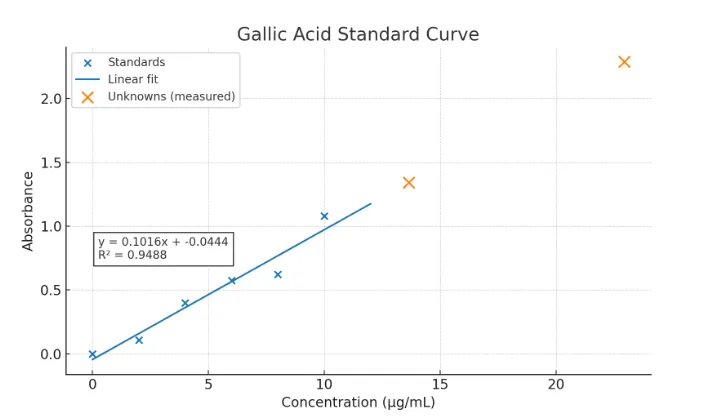
Fig:1 Standard Gallic Acid Graph
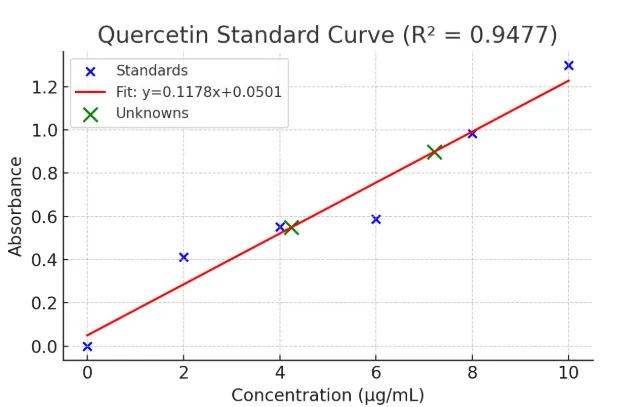
Fig 2: Standard Quercetin Graph
The total phenolic content and Flavonoid concentrations of the unknown was calculated and DPPH analysis was carried out using UV visible spectrophotometer at 517 nm and the results along with tabular column followed by sensory evaluation with the infusions of the formulations prepared from F1 to F4
Table 4: Antioxidant Percentage for individual flavours employed for formulations along with control
|
Individual Flavours |
Absorbance (Abs Or Od) |
|
Methanol |
0.000 |
|
Cardamom |
0.290 |
|
Cinnamon |
0.232 |
|
Clove |
0.212 |
|
Butterfly pea |
0.194 |
|
Sugar |
0.753 |
|
Pepper |
0.183 |
|
A.Squamosa |
0.257 |
|
Control |
1.153 |
3.3 Antioxidant Activity Of Different Tea Extracts(Infusions) With Sensory Evaluation:
The acceptance test was performed to evaluate the palatability and preference for Annona Squamosa tea prepared with various flavourings. A group of 25 individuals aged between 20 and 40 participated in the test. Specialists were chosen based on their ability and willingness to participate in the tactile assessment of tea, without prior information about the ingredients used, served the tea at a temperature of 60 °C to 70 °C. Individuals were instructed to score their acceptance for five attributes of scoring as follows colour, aroma, flavour, astringency, and overall acceptability. A 5-point scale was used, where '1' indicated dislike very much, and '5' meant 'like very much'.
All the individuals selected were selected on the basis of random with their free consent participated in the survey and were requested to score based on their experience.
Table 5: Antioxidant Activity Of Different Tea Extracts
|
S.No |
Sample Name |
Absorbance Of The Sample |
Antioxidant Activity (Aa%) |
|
1 |
Clove sample tea extract |
0.228 |
80.22% |
|
2 |
Cardamom sample tea extract |
0.231 |
79.96% |
|
3 |
Cinnamon sample tea extract |
0.248 |
78.49% |
|
4 |
Pepper sample tea extract |
0.243 |
79.44% |
Table 6: Scoring of the samples
|
Flavours |
Total Individuals served |
Individuals liked |
% of people liking tea |
Colour |
Texture |
Aroma |
Astringency |
Overall compatibility |
|
F1 (clove + base leaf Annona Squamosa) |
25 |
20 |
80% |
3.5 |
3.0 |
2.5 |
3 |
3.5 |
|
F2 (pepper + Annona Squamosa) |
25 |
19 |
76% |
3 |
3 |
2.5 |
3 |
3 |
|
F3 (cardamom + base leaf Annona Squamosa) |
25 |
25 |
100% |
5 |
4 |
4.5 |
4.5 |
5 |
|
F4 (cinnamon) + A. squamosa) |
25 |
21 |
84% |
3 |
4 |
3.5 |
3 |
4 |
3.4 IN-SILICO ASSESMENT:
Preprocessing for Docking includes the protein obtained from PDB was subjected for dock prep in which all the heteroatoms ,water molecules ,ligands were removed and in case of any structural issues were resolved during the dock prep step in chimera, the quality of the protein was assessed by Errat,Verify3d, All ram plots, the protein of interest was of good quality 96%, during protein validation the residues in favorable region and allowed region of 99.3%, so the protein can be used for docking purpose the protein prepared is presented in the below image
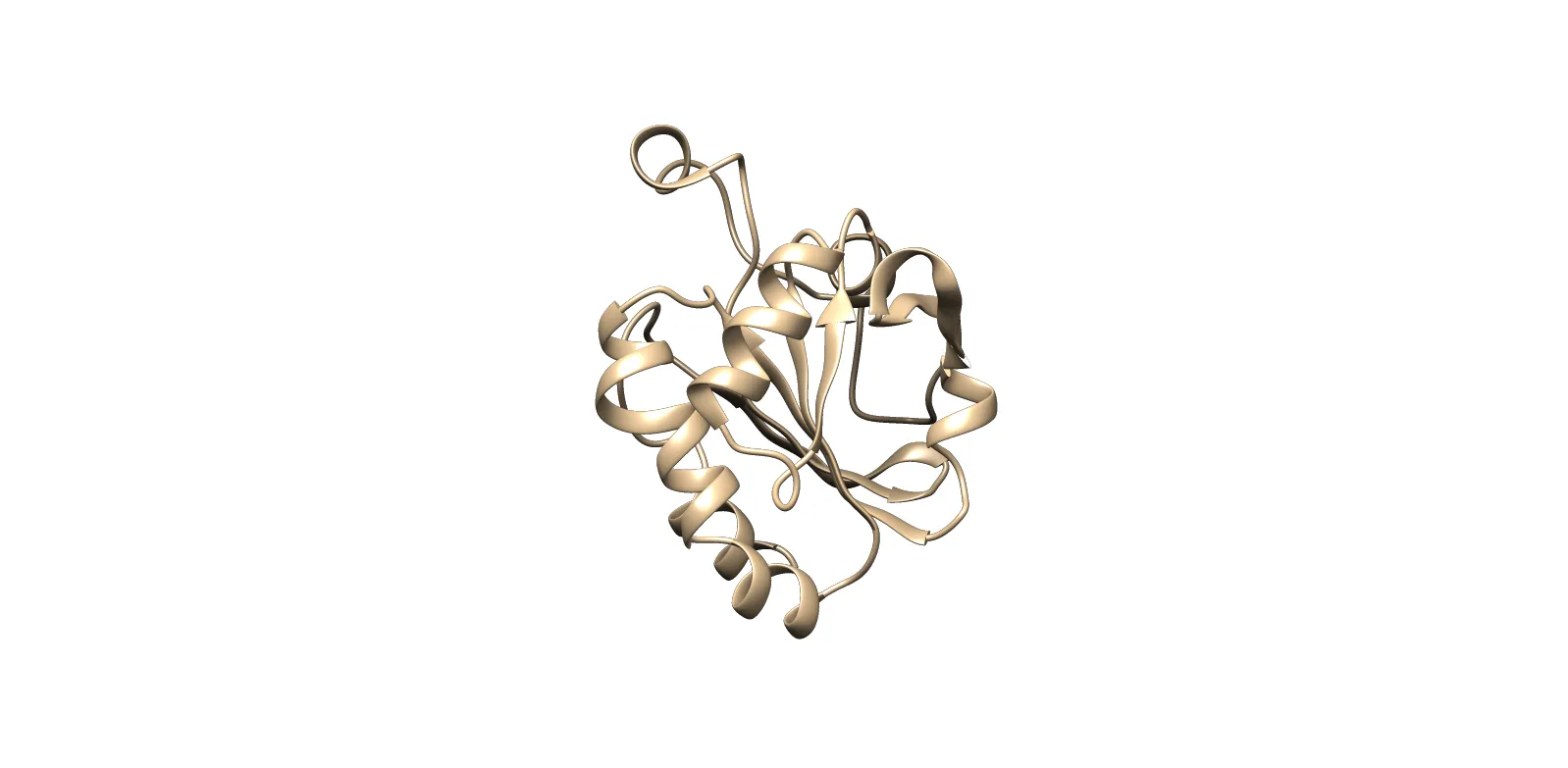
Fig:3 Prepared protein in 3D(PDB:1HD2)
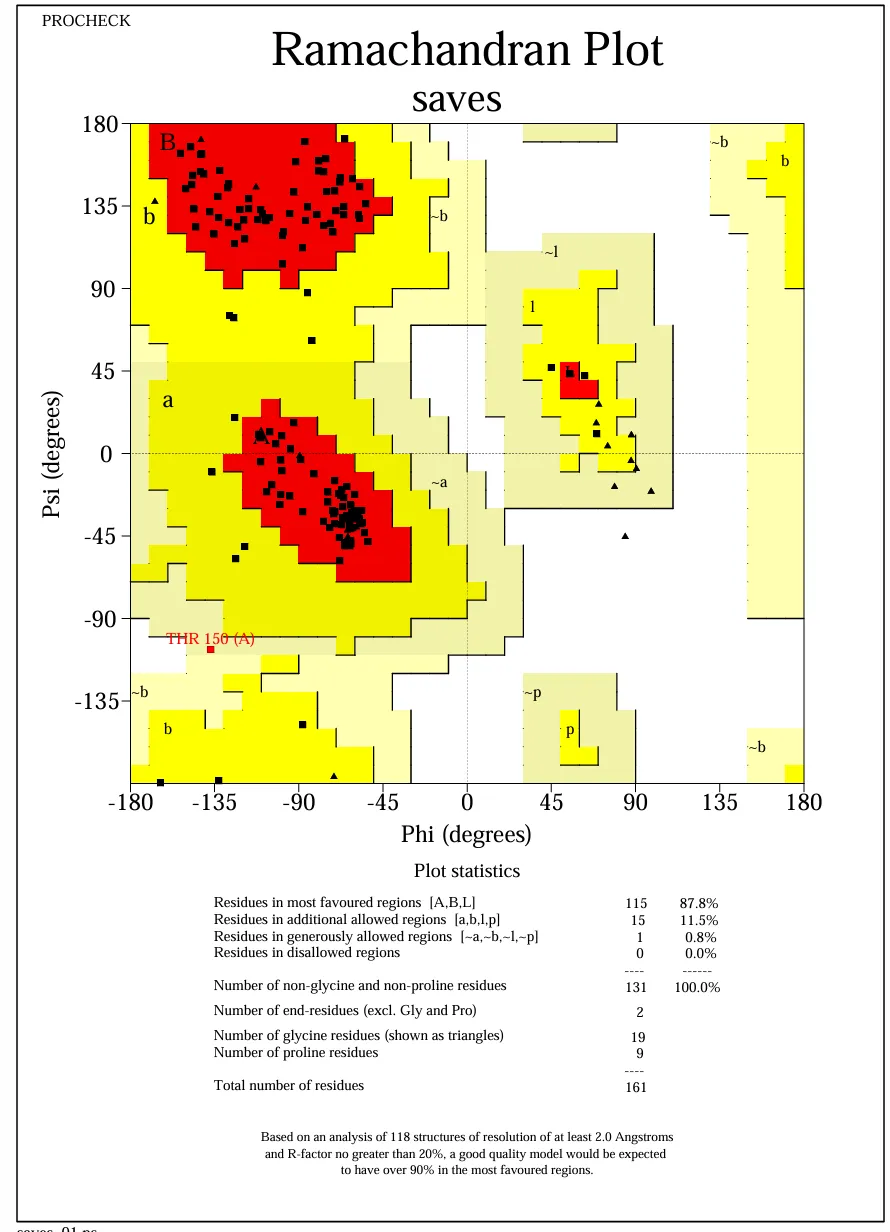
Fig:4 Ramchandran Plot
The docking was performed using PyRx which runs on Auto dock Vina Plugin the dock score obtained is presented below for best 10 out of 112 Annona phytochemical constituents obtained from PubChem, the model with best dock score is subjected for interaction analysis comparative with the reference and ADMET was carried out by ADMET AI,
3.5 POST DOCK PREP EVALUATION:
The ligands were loaded and protein is selected as Macromolecule in Pyrx and Vina-Run was executed the role of benzoate in PRDX5 activity with the close residues for its possible role in anti-oxidant activity was studied comparatively with Annona phytochemicals obtained from literature survey
The dock scores are as follows for best 10 along with ADMET Properties are Presented in the following tables, subsequently the comparative interaction profile of the active ligand with docked reference is as follows in table 7-9
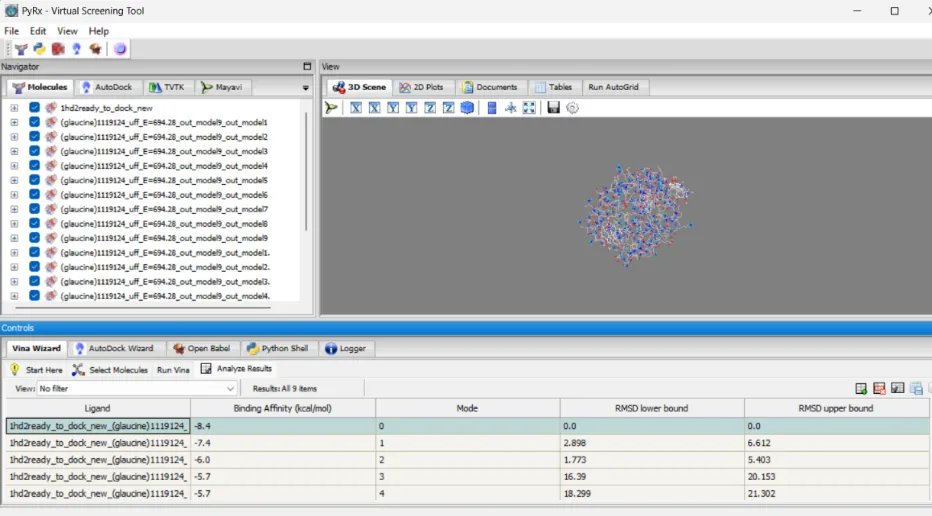
Fig:6 Pyrx Dock Score Of Glaucine
Table:7(Dock Score With Physiological Evaluation)
|
Phytochemical |
Dock Score(kcal/mol) |
G.I Absorption |
BBB |
Quantitative Drug likeliness estimation |
T1/2 |
Hepato clearance |
|
Glaucine |
-8.4 |
55.80% |
90.77% |
93.87% |
13.38 hr-1 |
44.82% |
|
Romerine |
-6.8 |
90.62% |
99.22% |
80.65% |
30.77hr-1 |
68.51% |
|
Norlaureline |
-7.3 |
96.36% |
90.62% |
97.60% |
9.18hr-1 |
55.64% |
|
Lanuginosine |
-7.4 |
98.57% |
65.96% |
52.73% |
56.27hr-1 |
72.82% |
|
Anonaine |
-7.5 |
95.62% |
94.34% |
88.21% |
19.02hr-1 |
53.94% |
|
Xylopine |
-7.8 |
95.19% |
89.84% |
97.60% |
10.45hr-1 |
55.02% |
|
Cyclosquamosin A |
-7.6 |
7.87% |
0.70% |
13.11% |
61.75hr-1 |
24.35% |
|
Annosquamosin E |
-7.8 |
62.12% |
25.25% |
60.14% |
3.06hr-1 |
89.41% |
|
Annosquamosin F |
-6.7 |
57.74% |
19.23% |
40.21% |
0.1hr-1 |
79.84% |
|
Annosquamosin G |
-6.7 |
51.22% |
8.96% |
52.19% |
15.66hr-1 |
60.57% |
Table:8(Ligands Analysis Lipinski Violation)
|
No. |
Compound Name |
LogP |
LogS |
Lipinski Violations |
Absorption |
Molecular Weight |
|
1 |
Annosquamosin E |
3.4 |
-4.2 |
0 |
High |
450.5 |
|
2 |
Annosquamosin F |
3.2 |
-3.9 |
0 |
High |
432.4 |
|
3 |
Annosquamosin G |
3.8 |
-4.0 |
0 |
High |
455.6 |
|
4 |
Anonaine |
2.8 |
-3.6 |
0 |
High |
337.4 |
|
5 |
Roemerine |
3.1 |
-3.5 |
0 |
High |
348.3 |
|
6 |
Norlaureline |
2.7 |
-3.9 |
0 |
High |
320.2 |
|
7 |
Cyclosquamosin A |
4.0 |
-4.3 |
0 |
High |
470.8 |
|
8 |
Glaucine |
3.5 |
-3.6 |
0 |
High |
355.45 |
|
9 |
Lanuginosine |
3.4 |
-3.7 |
0 |
High |
357.42 |
|
10 |
(−)-Xylopine |
3.0 |
-3.9 |
0 |
High |
315.37 |
Table:9(Interaction Study)
|
S.No |
Ligand |
Interacting residues |
Types of Bonds |
|
|
Annosquamosin E |
ARG95 GLY74 ALA90 LEU76 ARG86 |
Conventional Hydrogen bond (2), Alkyl (3) |
|
|
Annosquamosin F
|
ALA70 LEU86 ARG86 |
Conventional Hydrogen bond (1), Alkyl (2) |
|
|
Annosquamosin G
|
ARG 86 ALA70 LEU 96 |
Conventional Hydrogen (2), Alkyl (3) |
|
|
Anonaine |
GLU16 ALA 90 GLY72 LEU 96 |
Conventional Hydrogen bond (1), Pi-Anion (2), Alkyl (2) |
|
|
Roemerine |
GLU16 ARG 86 ALA 70 |
Pi-Anion (1), Alkyl (2) |
|
|
Norlaureline |
GLU16 ALA 90 GLY72 LEU96 |
Conventional Hydrogen Bond (1), Pi-Anion (2), Alkyl (2) |
|
|
Cyclosquamosin A |
GLU16 ARG95 Gly72 ALA90 LEU96 |
Conventional Hydrogen Bond (2), Pi-Sigma (1), Pi-Alkyl (1), Carbon-Hydrogen bond (1), Unfavourable (1) |
|
|
Glaucine |
CYS47 ARG127 VAL39 PRO45 GLY46 GLY148 GLY146 PRO40 |
Conventional Hydrogen Bond (1), Vanderwalls (4), Pi-Alkyl (3), Alkyl (1) |
|
|
Lanuginose |
ASN21 ARG86 GLY17 GLU16 LEU96 ALA90 |
Pi-Alkyl (2), Conventional Hydrogen bond (2), Pi-Anion (3), Carbon Hydrogen bond (1) |
|
|
Xylopine
|
GLU16 ASN21 GLY92 ALA90 LEU96 |
Pi-Anion (2), Conventional Hydrogen bond (2), Pi-Alkyl (2) |
The Interaction Study i.e., the 2d conformation of benzoate ligand within the protein is studied for the close residues and are identified as Cys47(Conventional H Bond) And Arg127(Attractive charge) for Anti-oxidant Activity is presented below.
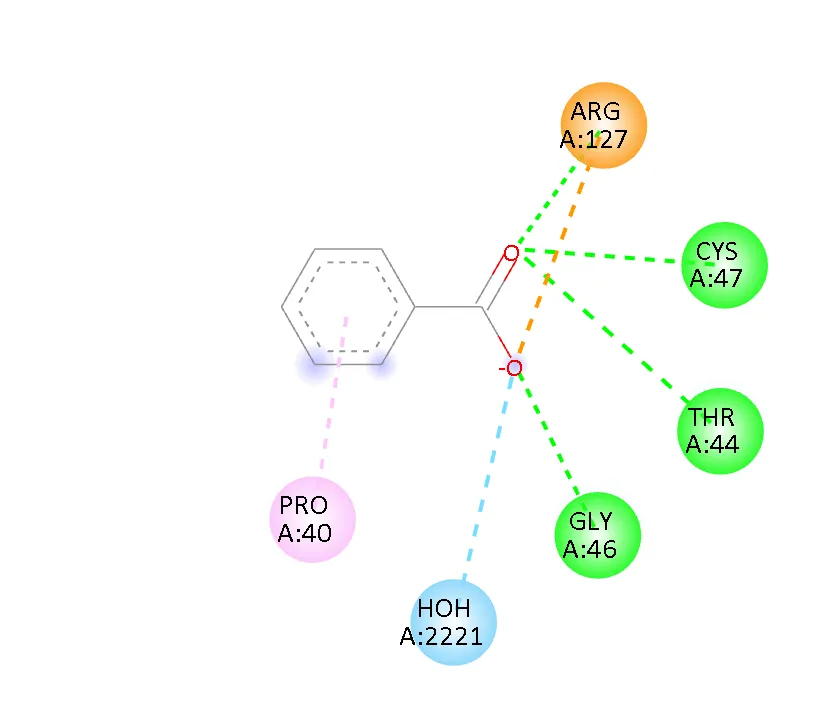
Fig:7 Benzoate
And the Best Dock Score Compound Gluacine with Protein Alone is -8.4 and also studied for 2d interaction study confirmed that the ligand gluacine also bounded to residues Cys47(Alkyl) And Arg127(Pi-Alkyl bond), Which needs to be further investigated for Chemical Analysis for enhanced Anti-oxidant Activity.
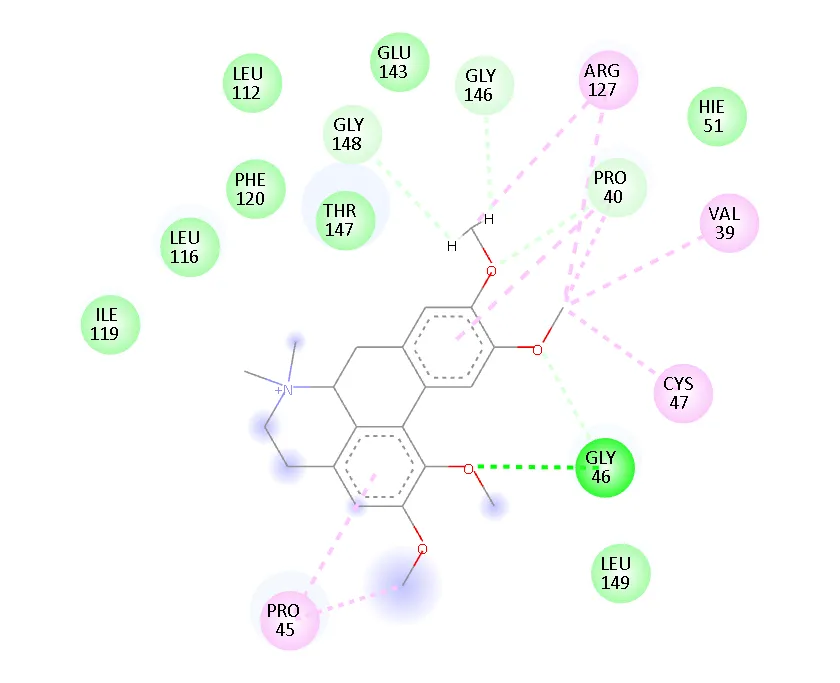
Fig:8 Gluacine
4.CONCLUSION:
The test results of our study confirmed the presence of phenols, flavonoids, tannins, carbohydrates, tannins, glycosides, and steroids. The total phenolic content observed in the sample was 341.5mgGAE/g, and the total flavonoid content present in the sample was 84.5mgQE/g.
In this study, the clove flavour tea extract exhibited the highest antioxidant activity of 80.22% compared to other tea flavours. The catechins percentage was present in the edible form, and no toxic levels were reported. The main focus is to enhance the health benefits to society, provide protection from various hazardous concerns like cancers and several other diseases. Annona Squamosa decoction infused with different flavours can be a low-calorie diet, as no high-calorie ingredients were added. The different flavours used were Annona Squamosa with Cinnamon, Cardamom, Pepper along with Butterfly pea flower as an Additive. All the ingredients used were having many known health benefits, and no other artificially added colours or sweeteners were used in the preparation of this tea.
Along with it the Comparative In-silico Screening for Anti-Oxidant Activity was Conducted by taking 1HD2 Protein obtained from PDB and docked with Annona Squamosa leaves Phytochemicals from Research articles Using PYRX (AUTODOCK VINA in built), And Bio-via Discovery studio For Interaction of Docking studies And Cabs Flex for Apo Dynamics. The Anti-oxidant Activity of Annona Squamosa by Highest Scored Compound Gluacine needs to be assessed, addressed and analysed in Future Studies for its Contribution towards Anti-oxidant Activity. The Formulation F3 (Cardamom with base leaf Annona Squamosa) was most preferred in terms of sensory evaluation with 100% acceptance rate. The ADMET studies that the Gluacine as a potential anti-oxidant compound with less toxic profile.
REFERENCES




Satyadev Rentala*,Ramesh Malothu,K.Divya,Sandeep vedanarayana M.S., A Comprehensive Formulation Evaluation And Complementary In-Silico Screening Of Anti-Oxidant Activity For Active Phyto-Constituents In Annona Squamosa As Medicinal Beverage(Green Tea), Int. J. of Pharm. Sci., 2026, Vol 4, Issue 7, 5700-5715. https://doi.org/10.5281/zenodo.21688540
 10.5281/zenodo.21688540