

We use cookies to ensure our website works properly and to personalise your experience. Cookies policy
Department of Pharmacognosy, Bharathi College of Pharmacy, Bharathinagara, Mandya - 571422, Karnataka, India.
The present study aims to establish comprehensive Pharmacognostical, phytochemical and physicochemical standards for the stem bark of Filicium decipiens, a traditionally important medicinal plant. Detailed macroscopic and microscopic evaluations were performed to authenticate the crude drug. Macroscopically, the stem bark exhibited a rough texture, whitish-grey outer surface and brownish orange inner surface with a slightly astringent taste. Microscopical analysis revealed a well-developed cork region, parenchymatous cortex containing starch grains and prismatic calcium oxalate crystals, and a prominent phloem region embedded with stone cells and sclereids. Powder microscopy further confirmed diagnostic features such as polygonal cork cells, lignified stone cells, fibre sclereids, and compound starch grains. Physicochemical parameters including moisture content, ash value, foaming index, fluorescent analysis and extractive values were determined as per standard procedure, indicating acceptable quality and purity of the crude drug. The alcohol soluble extractive value (20%w/v) was higher than water soluble extractive value (12%w/v), suggesting a higher concentration of alcohol soluble constituents. Preliminary phytochemical screening revealed the presence of glycosides, Saponin, flavonoids, carbohydrates, fats and proteins. These findings provide a scientific basis for identification, standardization, and further pharmacological exploration of Filicium decipiens stem bark
Traditional medicines are well known for their affordability and easy accessibility. They are also best source for treatment for poor communities as primary health care. Uses of medicinal plants are as old as 4000-5000 B.C. long before people were depending on herbal plants for their medicinal uses. Earlier reference of medicinal plant usage has been reported in Rig-Veda later ancient records also documented in detail its practice by physicians (an indigenous system of medicine)1. Medicinal plants are important components of indigenous medical systems and serve as valuable sources of secondary metabolites. It is used for drug development and synthesis. Medicinal plants play vital role in the development of human culture around the world. Herbal medicines reduce the use of chemical remedies3. They possess low occurrence of side effects and problematic effects4. There have been tremendous increases in past two decades in the usage of herbal medicine. However, there is large scope for research data in this field5. Natural products have been in use all over the world by as for example in Traditional Chinese medicine, Ayurveda, kampo, traditional Korean medicine and Unani. Though, there may be areas that need validation in there systems, they are valuable clues for further research. The World Health Organization (WHO) found significance of herbal medicines and created strategies, guidelines and standards for botanical medicines, applied for cultivation and manufacture6.
Filicium Decipiens (fern tree) belongs to the sapindaceae family. It is a large tree up to 25m tall. It is found in evergreen and semi-evergreen forests, which is native to Sri Lanka, the Western Ghats of southern India, and small highland areas of East Africa. Filicium Decipiens is traditionally used as anti-diabetic agent in India and Sri Lanka7. In Indonesia, the tree is known as “kiarapayung” locally and commonly cultivated in gardens and roadsides as ornamental, noise barrier and windbreak plant8.
The wood is reddish brown, occasionally with darker lines, heavy, hard, straight gained, and fine- and even-textured. The fractionation of ethyl acetate stem bark extracts by column chromatography led to the isolation of one compound such as stigmasta-7, 22-dien-3-ol (Spinasterol) 9. The Dichloromethane extract of the stem of Filicium Decipiens yielded a new natural product 24 norneohopa-4(23),22(29)-diene-3β,6β,7β-triol 7-caffeate (1)10.
Taxonomical Classification: 11
Kingdom: Plantae
Division: Angiosperms
Class: Magnoliopsida
Order: Sapindales
Family: Sapindaceae
Genus: Filicium
Species: F. decipiens
Synonyms: Filicium decipiens
Filicium elongatum Radlk.ex Taub.
Jurighas decipiens (Wight & Arn.) kuntze
Rhus decipiens Wight & Arn.
Pteridophyllum decipiens (Wight & Arn.) Thwaites
Vernacular Names:-12-14
English: - Fern tree, soap berry.
Sinhala: - Pihimbiya.
Tamil: - Chitteraivempu, Kattupuvarasu, Ningal, Athadali, Eruvillipaalai.
Malayalam: - Irumbarakki, Neeroli, Valmuriccha, Muriccha, Sanimaram, attali.
Kannada: - Kaadu hoovarasi, neeroli.
Telugu: - Patta kunkudu.
Collection of plant material:
In November 2025, the plant material was collected from Botanical garden of Bharathi College Bharathinagara, Karnataka, India. The plant was identified and authenticated by Dr.Thejesh Kumar, HOD, Department of Botany, and Bharathi College Bharathinagara. A herbarium voucher specimen was prepared and preserved in the Department of Pharmacognosy, Bharathi College of Pharmacy, Bharathinagara, for future reference.
Drying and size reduction of the stem bark:
Filicium decipiens stem bark were collected and shade-dried at room temperature until they reached a consistent weight. The dried material was then coarsely ground with a mechanical grinder, passed through sieve No. 80 to achieve a consistent particle size, and stored in an airtight container in a cool and dry environment for further experimental tests.
The stem bark of Filicium decipiens was examined macroscopically to determine their colour, texture, size, shape, fracture, odour, and taste. The crude drug was evaluated with the naked eye by placing the individual raw samples on a clean white paper surface for proper observation and assessment.
Microscopic analysis offers a thorough examination of the plant material, allowing the identification of organized drugs based on their histological characteristics. Enlarging minute structures provides comprehensive information on crude medicine and helps validate the structural characteristics of the plant material being studied.
Qualitative Microscopy
Transverse section of the stem bark
To prepare thin transverse sections, fresh Filicium decipiens stem bark were collected, washed thoroughly with water, and sectioned from the middle portion of the lamina. These thin sections were kept in water to preserve their moistness. To make interior structures more visible, staining agents such as safranin, Phloroglucinol, and diluted hydrochloric acid (HCl) were applied. [15, 16]
Powder Microscopy
A few drops of chloral hydrate were applied to a glass slide containing a small amount of stem bark powder. After that, the slide was heated to prevent the chloral hydrate from evaporating. A coverslip was carefully placed to avoid air bubbles, and excess chloral hydrate was removed using blotting paper. The sample was stained with Phloroglucinol and concentrated HCl to confirm lignified tissues. A mixture of Phloroglucinol and concentrated HCl (1:1 ratio) was applied on a separate slide, and the Preparation was examined under the microscope. [15, 16]
Quantitative Microscopy
Quantitative microscopy is crucial for identifying, characterizing, and standardizing crude drugs and determining their cellular content. The quality and purity of the plant material can be assessed using several crucial metrics.
Physicochemical constants:
Physicochemical parameters were determined according to the standard procedures prescribed in the Indian Pharmacopoeia. The evaluated parameters included ash value, extractive values, loss on drying, fluorescent analysis, and foaming index.
Preliminary phytochemical studies:
Preliminary phytochemical screening of the stem bark of Filicium decipiens was carried out using standard procedures described by Kokate C.K., Purohit A.P., and Gokhale S.B. The tests were performed to identify the presence of various phytochemical constituents in the plant material.
Macroscopical studies:
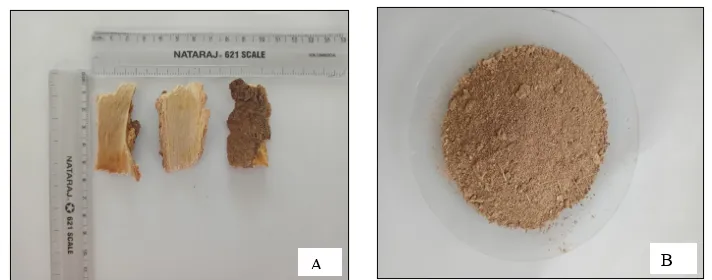
Fig. 1.1 A. Measurement of Stem Bark
B. Stem bark Powder
Table.1. Macroscopical character of stem bark of Filicium decipiens includes.
|
S. No. |
Organoleptic Characteristics |
Observation |
|
Stem bark |
||
|
|
Size and Shape |
3 mm thickness, Rectangular in shape |
|
|
Color |
Whitish grey on surface, and the other side brownish orange |
|
|
Surface & texture |
Rough |
|
|
Odour |
Not characteristic |
|
|
Taste |
Slightly astringent |
Microscopical Character: -
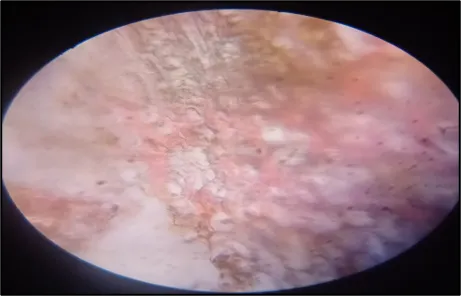

Fig.1.2.phloem region Fig.1.3.phloem region along with stone cells
Transverse section of stem bark
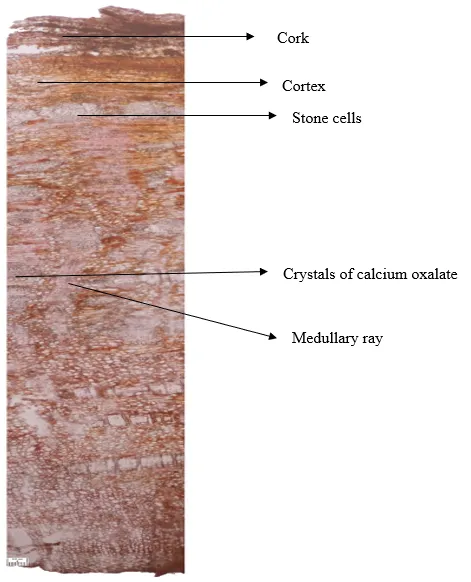
Fig.1.4. Transverse section of stem Bark showing cork, cortex, medullary ray, stone cells, crystals of calcium oxalate
Transverse section of Stem Bark
The transverse section of stem bark will exhibits a well-developed outer cork region composed of multiple layers of compactly arranged cork cells. These cork cells are exfoliated and appear compressed, forming up to 25 layers. The cells contain brownish contents. Beneath the cork lies the cortex, which is made up of several layers of parenchymatous cells, extending up to about 30 layers in thickness. The cortical cells are scattered within this region are starch grains and prismatic crystals. The phloem covers most of the stem bark. Starts with continuous layers of stone cells followed by parenchymatous cell layers. Patches of stone cells and fibre sclereids are observed scattered all over the phloem region. Multiseriate medullary are observed to run in between the stone cells and fibre sclereids patches. Prismatic crystals of calcium oxalate and starch grains are observed all over the phloem region.[17-19]
Powder microscopy of Stem bark
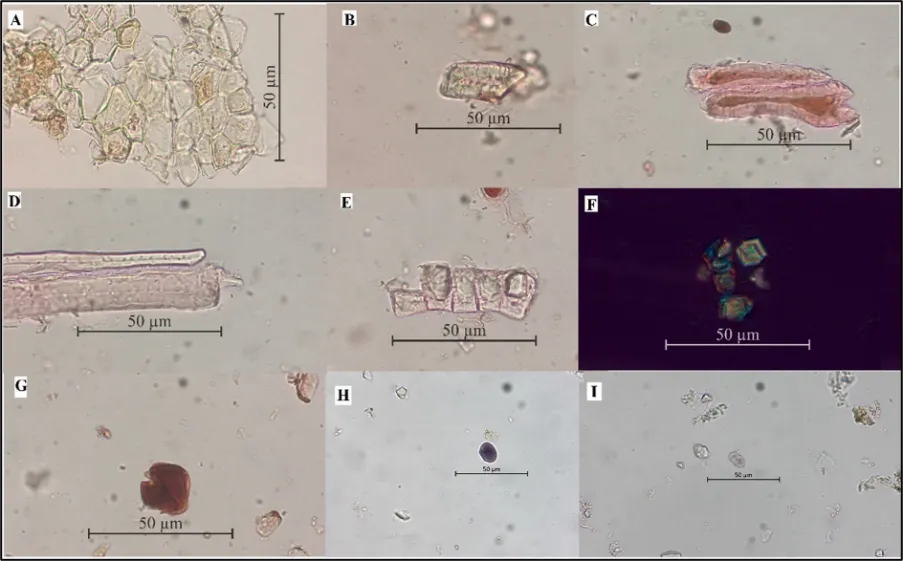
Fig.1.5. Powder microscopy of Filicium decipiens Stem Bark A) Cork cells in surface view, B) Stone cell, C) Stone cells with brownish content & D) Sclereids fibre, E) Prismatic crystals in visible light F) Prismatic crystals under polarizer G) Brownish content H) Simple starch grain I) Bi-compound starch grains (15-20um)
Powder microscopy
Bark powder is in brownish colour (Fig.1.1.B)
The cork cells are thick and polygonal in shape; stone cells are observed either singly or in groups, with a lumen containing brownish cell contents, reflecting lignified mechanical tissue. The powder also shows the presence of brown-colored cellular content; Fibre sclereids are present, characterized by thick walls and narrow lumen.
Prismatic crystals of calcium oxalate are frequently observed, often embedded within parenchymatous cells; starch grains are evident in both simple and compound forms, with sizes reaching up to 10µm in diameter. [17-19]
Physicochemical Parameters
Moisture content determination is a critical parameter in maintaining pharmacopeial standards. Excess moisture can promote microbial growth and chemical degradation, thereby affecting the stability, safety, and shelf life of the crude drug. Hence, the observed moisture content indicates the quality and proper storage condition of the plant material.
Ash values also play a significant role in the evaluation of crude drugs. The total ash value provides an estimate of the total inorganic content present in the sample. It is particularly useful in detecting the presence of foreign inorganic matter such as silica, sand, soil, or metallic salts, which may indicate contamination or adulteration. (Table 2)
Fluorescent analysis revealed characteristic colour changes under different reagents and UV light, which can helpful for identification of correct drug material. Determining the Saponin content is helpful to know the presence of Saponin and it also helpful for carry out any other formulation. (Table 5)
Furthermore, extractive values are important indicators of the quantity of active constituents present in the crude drug. In the present study, the alcohol-soluble extractive value (20% w/w) was found to be higher than the water-soluble extractive value (12% w/w), suggesting that a greater proportion of phytoconstituents are soluble in alcohol. These extractive values serve as useful parameters for evaluating the solvent-soluble components and overall quality of the crude drug. (Table 3)
Table 2: Showing Results for Quantitative Evaluation of the stem bark of Filicium decipiens
|
Evaluation parameter(%W/W) |
Stem bark (%w/w) |
|
Moisture content Fresh sample |
48.55% |
|
Powdered sample |
11% |
|
Total ash |
12.44 |
|
Acid insoluble ash |
0.88 |
|
Water soluble ash |
2.66 |
|
Sulphated ash |
13.11 |
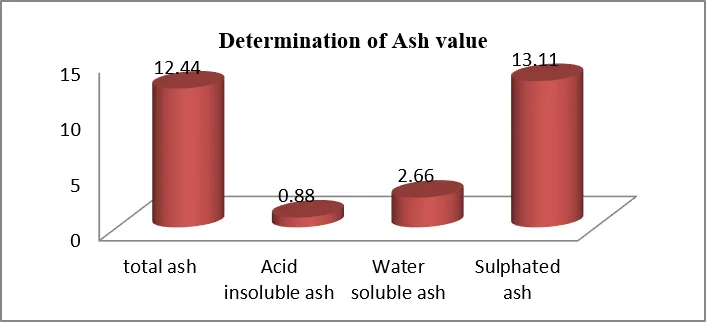
Fig.1.6. The graph illustrate the ash value of Filicium decipiens stem bark, including total ash, acid insoluble ash, eater soluble ash, sulphated ash. Among the evaluated parameters sulphated ash showed the highest value (13.11%w/w), while acid insoluble ash was comparatively lower (0.88%w/w) indicating minimal contamination with siliceous matter.
Table 3: Extractive Values of stem bark of Filicium decipiens
|
Evaluation parameter(%W/V) |
Stem bark (%w/v) |
|
Alcohol soluble extractive value |
20 |
|
Water soluble Extractive value |
12 |
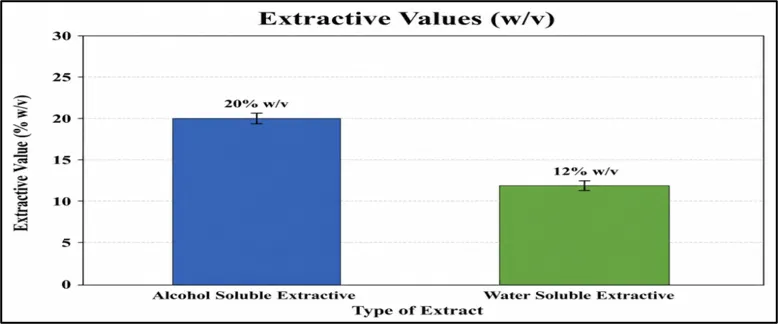
Fig.1.7.Graphical representation of extractive value (Graph shows higher amount of compound dissolves in alcohol than the water).
Preparation of stem bark Extracts
Preparation of stem bark extracts by Soxhlet apparatus using different polar and non-polar solvents such as petroleum ether, chloroform, ethyl acetate, and methanol.
Percentage yield = Weight of the extract x 100
Weight of packing material
TABLE 4: Percentage yield of stem bark extract of Filicium decipiens
|
SI.NO |
SOLVENTS |
PERCENTAGE YIELD (%) |
|
1. |
Petroleum ether |
0.51 |
|
2. |
Chloroform |
0.3 |
|
3. |
Ethyl acetate |
0.36 |
|
4. |
Methanol |
7.11 |
Table 5: Fluorescence analysis of stem bark powder of Filicium decipiens
|
|
Color |
|
||
|
Reagents |
Daylight |
At 254nm |
At 366nm |
|
|
Dist. Water |
Light brown |
Purple |
Sky blue |
|
|
Conc. HNO3 |
Orange red |
Blackish purple |
Purple |
|
|
1% KOH |
Reddish brown |
Blackish purple |
Blackish purple |
|
|
1N. aq. NaoH |
Reddish brown |
Blackish purple |
Sky blue |
|
|
50% H2SO4 |
Light brown |
Greenish blue |
Crystal lightish black |
|
|
50% HNO3 |
Light reddish brown |
Blackish purple |
Dark purple |
|
|
50% HCl |
Light brown |
Violet |
Blackish crystal |
|
|
Methanol |
Brown |
Dark purple |
Grey |
|
|
Benzene |
Light brown |
Reddish brown |
Grey |
|
Preliminary Phytochemical Studies:
The preliminary phytochemical investigation of the petroleum ether, chloroform, ethyl acetate, methanol extract of stem bark of Filicium decipiens showed the presence of glycosides, Saponin, flavonoid, carbohydrate, fat and oil, proteins and amino acid, presented in Table 6.
Table 6: Qualitative Analysis of Phytochemicals in stem bark extract of Filicium decipiens
|
PHYTOCONSTITUENTS |
PE |
CL |
EA |
ME |
|
Alkaloids |
- |
- |
- |
- |
|
Glycosides |
- |
- |
- |
+ |
|
Saponin |
- |
- |
- |
++ |
|
Flavonoid |
- |
- |
- |
+ |
|
Carbohydrates |
- |
+ |
+ |
+ |
|
Fats and oil |
+ |
- |
- |
- |
|
Proteins and amino acid |
- |
+ |
+ |
- |
|
Steroid and Triterpenoid |
- |
- |
- |
- |
Note: (+) = Present; (-) = Absent
PE-Petroleum ether, CL- Chloroform, EA- Ethyl acetate, ME- Methanol
DISCUSSION
The present investigation established detailed Pharmacognostical, physicochemical, fluorescence, and preliminary phytochemical standards for the stem bark of Filicium decipiens. The generated data may serve as important reference parameters for authentication, identification, and quality control of the crude drug.
Macroscopical evaluation revealed characteristic organoleptic features such as rough bark texture, whitish-grey outer surface, brownish-orange inner surface, and slightly astringent taste, which are useful for preliminary identification of the plant material. Microscopical examination of the transverse section demonstrated diagnostic anatomical features including multi-layered cork cells, parenchymatous cortex, stone cells, fibre sclereids, starch grains, prismatic calcium oxalate crystals, and Multiseriate medullary rays. These anatomical structures are considered important pharmacognostic markers for authentication of stem bark drugs. Powder microscopy further confirmed the presence of polygonal cork cells, lignified stone cells, fibre sclereids, starch grains, and prismatic calcium oxalate crystals under visible and polarized light. Such microscopic characteristics are highly useful for identification of powdered crude drugs and detection of adulteration in herbal materials.
Physicochemical evaluation revealed that the moisture content of the powdered stem bark was within acceptable limits, indicating proper drying and reduced susceptibility to microbial spoilage during storage. The total ash value was found to be 12.44% w/w, indicating the presence of physiological inorganic constituents in the plant material. The acid-insoluble ash value was comparatively low (0.88% w/w), suggesting minimal contamination with siliceous matter such as sand and soil. Water-soluble ash and sulphated ash values were recorded as 2.66% w/w and 13.11% w/w, respectively, reflecting the inorganic mineral composition of the bark tissue. The alcohol-soluble extractive value (20% w/w) was higher than the water-soluble extractive value (12% w/w), indicating that alcoholic solvents extracted a greater proportion of phytoconstituents from the stem bark. Higher alcohol-soluble extractive values generally indicate the abundance of polar and moderately polar bioactive compounds such as flavonoids, glycosides, and saponins.
The foaming index was found to be greater than 1000, as persistent foam greater than 1 cm was observed in all test tubes, confirming the significant presence of saponins in the stem bark powder. Fluorescence analysis of the powdered drug treated with different reagents exhibited characteristic colour changes under daylight, 254 nm, and 366 nm ultraviolet light, which may serve as useful parameters for identification and quality evaluation of the crude drug. Preliminary phytochemical screening revealed the presence of glycosides, flavonoids, saponins, carbohydrates, fats and oils, and proteins in various solvent extracts of the stem bark. Among all extracts, the methanolic extract showed the maximum number of phytoconstituents, indicating its effectiveness in extracting biologically active secondary metabolites. These phytoconstituents are widely associated with antioxidant, antimicrobial, anti-inflammatory, and ant diabetic activities, which may correlate with the traditional medicinal uses of Filicium decipiens.
Overall, the present findings provide comprehensive Pharmacognostical and physicochemical standards for the stem bark of Filicium decipiens and may serve as valuable reference data for identification, authentication, standardization, and future pharmacological investigations of the plant.
CONCLUSION
The present investigation successfully establishes detailed Pharmacognostical, phytochemical and physic-chemical standards for the stem bark of Filicium decipiens. The study highlights distinctive macroscopic, microscopic, and powder characteristics that can be effectively used for identification and authentication of the crude drug. Physicochemical parameters and extractive values confirm the quality, purity and suitability of the plant material for medicinal use. The presence of bioactive phytoconstituents such as glycosides, flavonoids, and saponins supports its traditional therapeutic applications.
These findings contribute significantly to the standardization and quality control of Filicium decipiens and provide a scientific basis for its inclusion in herbal pharmacopoeias. Furthermore, the study lays a foundation for future research focusing on isolation, characterization and pharmacological evaluation of active constituents from the stem bark.
Acknowledgement
My profound appreciation goes out to the Bharathi Education Trust in Bharathinagara, Mandya, and Karnataka for their priceless assistance. For their unwavering support, I am grateful to Mr. Prem Kumar, research officer CSMCARI, Chennai.
CONFLICTS OF INTEREST
No conflicts of interest.
Funding status
The authors declare that no funding was received for this work.
REFERENCES


Yogesha J S, Pavithra T, Dr. T. Tamizhmani, Rakshitha C, Shalini B V, Psychotropic and Phytochemical Synergy in Counteracting Stress Induced Neuronal Damage, Int. J. of Pharm. Sci., 2026, Vol 4, Issue 9, 1966-1976, https://doi.org/10.5281/zenodo.22793047
 10.5281/zenodo.22793047