

We use cookies to ensure our website works properly and to personalise your experience. Cookies policy
Pravara Rural Education Society’s College Of Pharmacy (Forwomwn) Chincholi, Nashik 422102, Maharashtra, India.
Benzimidazole and its derivatives are an important class of heterocyclic compounds known for their wide range of biological activities, particularly antimicrobial properties. In the present study, a series of benzimidazole derivatives were synthesized and evaluated for their antibacterial activity. Benzimidazole was first synthesized from o-phenylenediamine through cyclization with formic acid under reflux conditions. The synthesized benzimidazole was then nitrated to obtain 5-nitrobenzimidazole, which served as a key intermediate for further chemical modifications. Several substituted derivatives including 1-methyl-5-nitrobenzimidazole,1-(2-chloroethyl)-5-nitrobenzimidazole,1-methyl-5,5?-dinitro-2,2?-bibenzimidazole, and 1,2-bis(5-nitro-1H-benzimidazol-1-yl)ethane were synthesized.The synthesized compounds were characterized using physical property analysis, thin layer chromatography (TLC), and infrared spectral data. The purity of the compounds was confirmed by single spot formation in TLC using silica gel plates and an ethyl acetate–hexane solvent system. The antibacterial activity of the synthesized compounds was evaluated against Gram-positive bacteria (Staphylococcus aureus) and Gram-negative bacteria (Escherichia coli) using the agar diffusion method. The zone of inhibition was measured and compared with the standard antibiotic ciprofloxacin.The results indicated that substitution on the benzimidazole nucleus significantly influenced antimicrobial activity. Compounds containing nitro groups and substituted alkyl chains exhibited enhanced antibacterial activity compared to the parent benzimidazole compound. In particular, bis-benzimidazole derivatives showed comparatively stronger antibacterial activity due to the presence of two pharmacophoric units. The study suggests that structural modification of the benzimidazole nucleus can lead to compounds with improved antimicrobial potential.
Heterocyclic compounds play a significant role in medicinal chemistry due to their wide range of biological and pharmacological properties. Among them, benzimidazole and its derivatives have attracted considerable attention because of their diverse biological activities such as antimicrobial, antifungal, antiviral, anti-inflammatory, and anticancer properties. The benzimidazole nucleus is an important structural motif present in many biologically active molecules and pharmaceutical drugs. Structurally, benzimidazole consists of a fused benzene and imidazole ring system, which contributes to its chemical stability and biological effectiveness. [1]
The increasing resistance of microorganisms toward conventional antibiotics has become a major global health concern. This has created an urgent need for the development of new antimicrobial agents with improved efficacy and broader activity. Benzimidazole derivatives have emerged as promising candidates in antimicrobial drug discovery because small structural modifications in the benzimidazole nucleus can significantly influence their biological activity. Functional groups such as nitro, alkyl, and halogen substituents are known to enhance the pharmacological potential of benzimidazole derivatives by altering their electronic properties, lipophilicity, and ability to penetrate microbial cell membranes. [2]
Nitration of benzimidazole is one of the important chemical modifications that introduces a strong electron-withdrawing nitro group into the aromatic ring, which may enhance antimicrobial activity by influencing enzyme interactions in microbial cells. Furthermore, substitution at the nitrogen atom of the benzimidazole ring, such as methylation or introduction of chloroethyl groups, can modify the physicochemical and biological properties of the molecule. In addition, the formation of bis-benzimidazole derivatives containing two benzimidazole units linked together may further enhance biological activity due to the presence of multiple pharmacophoric sites. [3]
In the present study, a series of benzimidazole derivatives were synthesized starting from o-phenylenediamine through cyclization with formic acid to obtain benzimidazole. The synthesized benzimidazole was subsequently subjected to nitration to form 5-nitrobenzimidazole, which served as an important intermediate for further chemical modifications. Various substituted derivatives such as 1-methyl-5-nitrobenzimidazole, 1-(2-chloroethyl)-5-nitrobenzimidazole, 1-methyl-5,5′-dinitro-2,2′-bibenzimidazole, and 1,2-bis(5-nitrobenzimidazol-1-yl)ethane were synthesized through suitable reactions.
The synthesized compounds were characterized through physical properties, thin layer chromatography (TLC), and infrared spectral analysis. Furthermore, the antibacterial activity of these compounds was evaluated against both Gram-positive and Gram-negative bacterial strains using the agar diffusion method. The results were compared with the standard antibiotic drug ciprofloxacin to assess the relative antimicrobial potential of the synthesized derivatives. [4]
This study aims to explore the synthesis, characterization, and antimicrobial evaluation of novel benzimidazole derivatives and to investigate how structural modifications influence their biological activity. The findings may contribute to the development of new benzimidazole-based antimicrobial agents with improved therapeutic potential. Heterocyclic compounds play a significant role in medicinal chemistry due to their wide range of biological and pharmacological properties. Among them, benzimidazole and its derivatives have attracted considerable attention because of their diverse biological activities such as antimicrobial, antifungal, antiviral, anti-inflammatory, and anticancer properties. The benzimidazole nucleus is an important structural motif present in many biologically active molecules and pharmaceutical drugs. Structurally, benzimidazole consists of a fused benzene and imidazole ring system, which contributes to its chemical stability and biological effectiveness. [5]
The increasing resistance of microorganisms toward conventional antibiotics has become a major global health concern. This has created an urgent need for the development of new antimicrobial agents with improved efficacy and broader activity. Benzimidazole derivatives have emerged as promising candidates in antimicrobial drug discovery because small structural modifications in the benzimidazole nucleus can significantly influence their biological activity. Functional groups such as nitro, alkyl, and halogen substituents are known to enhance the pharmacological potential of benzimidazole derivatives by altering their electronic properties, lipophilicity, and ability to penetrate microbial cell membranes. [6]
Nitration of benzimidazole is one of the important chemical modifications that introduces a strong electron-withdrawing nitro group into the aromatic ring, which may enhance antimicrobial activity by influencing enzyme interactions in microbial cells. Furthermore, substitution at the nitrogen atom of the benzimidazole ring, such as methylation or introduction of chloroethyl groups, can modify the physicochemical and biological properties of the molecule. In addition, the formation of bis-benzimidazole derivatives containing two benzimidazole units linked together may further enhance biological activity due to the presence of multiple pharmacophoric sites. [7]
In the present study, a series of benzimidazole derivatives were synthesized starting from o-phenylenediamine through cyclization with formic acid to obtain benzimidazole. The synthesized benzimidazole was subsequently subjected to nitration to form 5-nitrobenzimidazole, which served as an important intermediate for further chemical modifications. Various substituted derivatives such as 1-methyl-5-nitrobenzimidazole, 1-(2-chloroethyl)-5-nitrobenzimidazole, 1-methyl-5,5′-dinitro-2,2′-bibenzimidazole, and 1,2-bis(5-nitrobenzimidazol-1-yl)ethane were synthesized through suitable reactions. [8]
The synthesized compounds were characterized through physical properties, thin layer chromatography (TLC), and infrared spectral analysis. Furthermore, the antibacterial activity of these compounds was evaluated against both Gram-positive and Gram-negative bacterial strains using the agar diffusion method. The results were compared with the standard antibiotic drug ciprofloxacin to assess the relative antimicrobial potential of the synthesized derivatives. [9]
This study aims to explore the synthesis, characterization, and antimicrobial evaluation of novel benzimidazole derivatives and to investigate how structural modifications influence their biological activity. The findings may contribute to the development of new benzimidazole-based antimicrobial agents with improved therapeutic potential. [10]
MATERIALS AND METHODS :
Benzimidazole
Procedure:
Benzimidazole was synthesized by taking 2 g of o-phenylenediamine (≈0.0185 mol) in a 100 mL round-bottom flask. To this, about 5–6 mL of formic acid was added slowly with constant stirring. The reaction mixture was then heated under reflux on a water bath for about 1–2 hours. During heating, the mixture gradually darkened, indicating the progress of the reaction.
After completion of the reaction, the mixture was allowed to cool to room temperature and then poured slowly into 50–60 mL of cold water with stirring. A solid precipitate of crude benzimidazole was formed. The precipitated product was collected by vacuum filtration and washed thoroughly with cold water to remove residual formic acid and impurities.
The crude product was then purified by recrystallization from hot ethanol (15–20 mL). The purified crystals were filtered and dried to obtain benzimidazole as white crystalline solid. [11]
REACTION:
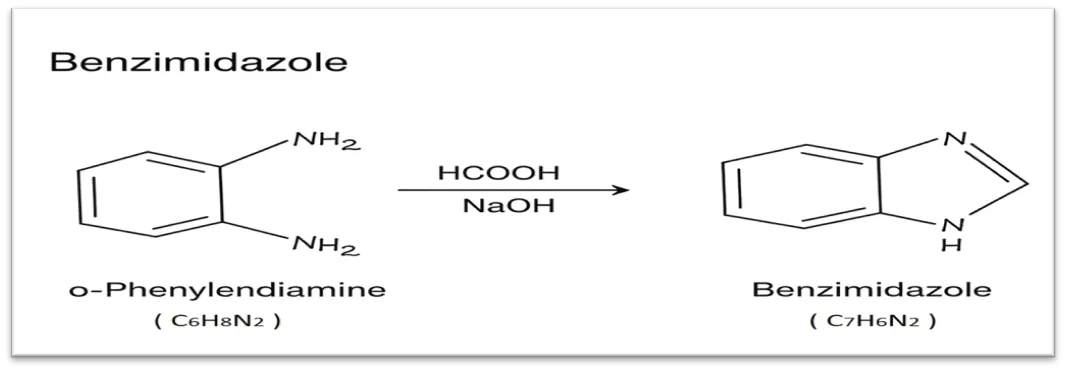
General Information:
IUPAC name: 1H-benzimidazole
Molecular formula: C₇H₆N₂
Molecular weight: 118.14 g/mol
NITROBENZIMIDAZOLE
Procedure:
A nitrating mixture was prepared by slowly adding 1.5 mL of concentrated nitric acid (≈65–70%) to 4 mL of concentrated sulfuric acid (≈98%) in an ice bath, keeping the temperature below 5 °C. In a separate flask.
2 g of benzimidazole was taken and dissolved in 8–10 mL of concentrated sulfuric acid with gentle stirring until a clear solution was obtained. The solution was cooled to 0–5 °C, and the freshly prepared nitrating mixture was added dropwise with continuous stirring while maintaining the temperature below 10 °C. After complete addition, the reaction mixture was stirred at low temperature for about 30–45 minutes and then allowed to reach room temperature gradually. The mixture was then poured onto 50–60 g of crushed ice, leading to precipitation of the nitrated product. The solid was filtered, washed with cold water until neutral, and dried. Recrystallization was carried out using ethanol (15–20 mL) to obtain purified product. [12]
REACTION :
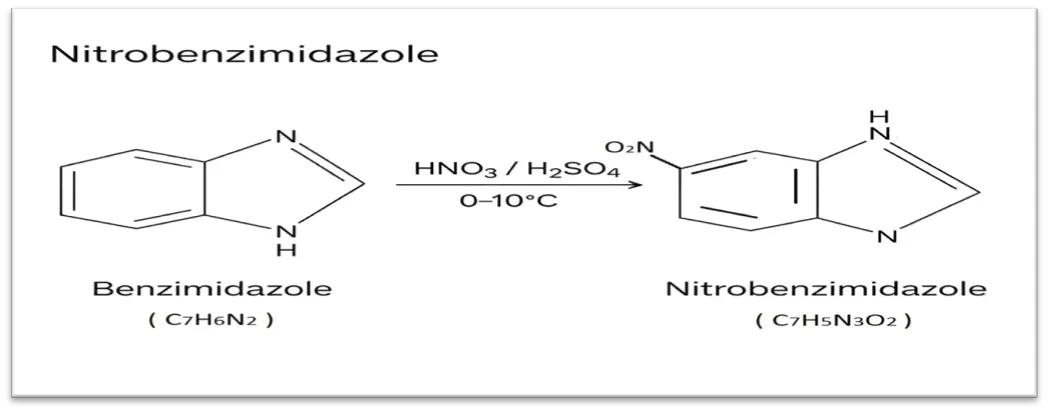
GENERAL INFORMATION :
IUPAC Name: 5-Nitro-1H-benzimidazole
Molecular Formula: C₇H₅N₃O₂
MOLECULAR WEIGHT: 163.13 G/MOL
1-(METHYL)-5-NITROBENZIMIDAZOLE:
PROCEDURE :
Benzimidazole (2 g) was taken in a round-bottom flask and dissolved in 8–10 mL of concentrated sulfuric acid with gentle stirring. The solution was cooled in an ice bath to maintain the temperature below 5 °C. A nitrating mixture was prepared separately by slowly adding 1.5 mL of concentrated nitric acid to 4 mL of concentrated sulfuric acid under cooling. This freshly prepared nitrating mixture was then added dropwise to the benzimidazole solution with constant stirring, keeping the temperature below 10 °C. The reaction mixture was stirred for about 30–45 minutes at low temperature and then allowed to reach room temperature.
After completion of nitration, 1.5 mL of nitromethane and 0.5 g of potassium carbonate were added to the reaction mixture, and the contents were refluxed for 4–5 hours. The reaction mixture was then cooled and poured onto 50–60 g of crushed ice, leading to precipitation of the product. The solid obtained was filtered, washed with cold water until neutral, and dried. The crude product was purified by recrystallization from ethanol. [13]
REACTION :
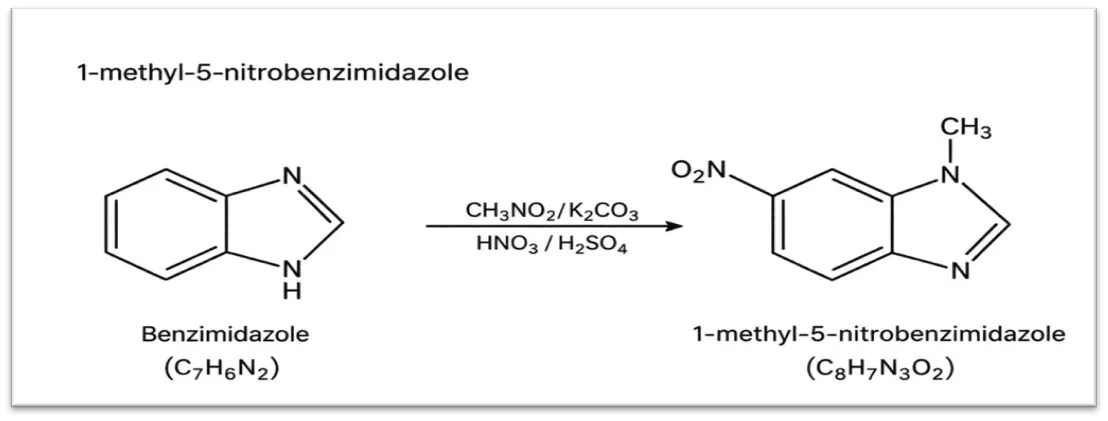
GENERAL INFORMATION:
IUPAC Name: 1-(methyl)-5-nitro-1H-benzimidazole
Molecular Formula: C₈H₇N₃O₄
Molecular Weight: ~209.16 g/mol
1-(2-CHLOROETHYL)-5-NITROBENZIMIDAZOLE:
PROCEDURE :
Benzimidazole (2 g) was taken in a round-bottom flask and dissolved in 8–10 mL of concentrated sulfuric acid with stirring. The solution was cooled in an ice bath (0–5 °C). A nitrating mixture was prepared separately by slowly adding 1.5 mL of concentrated nitric acid to 4 mL of concentrated sulfuric acid under cooling. This nitrating mixture was added dropwise to the benzimidazole solution while maintaining the temperature below 10 °C. The reaction mixture was stirred for about 30–45 minutes and then allowed to reach room temperature.
After completion of nitration, 2 mL of dichloroethane and 0.5 g of potassium carbonate were added to the reaction mixture. The contents were refluxed for 4–6 hours. After completion, the reaction mixture was cooled and poured onto 50–60 g of crushed ice, resulting in the precipitation of the product. The solid obtained was filtered, washed with cold water until neutral, and dried. The crude product was purified by recrystallization from ethanol. [14]
REACTION :
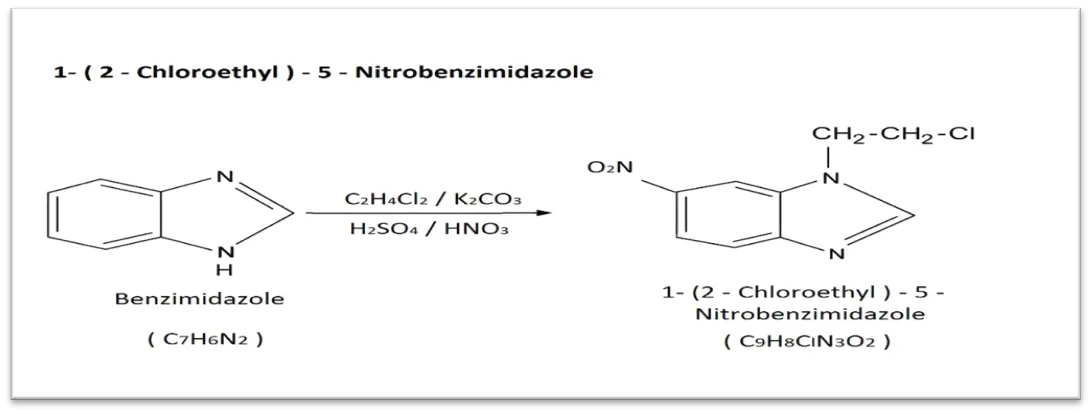
GENERAL INFORMATION:
IUPAC Name: 1-(2-Chloroethyl)-5-nitro-1H-benzimidazole
Molecular Formula: C₉H₈ClN₃O₂
Molecular Weight: ~225.63 g/mol
1-(METHYL)-5,5 DINITRO- 2,2 – BIBENZIMIDAZOLE:
PROCEDURE:
Benzimidazole (2 g) was taken in a round-bottom flask and dissolved in 8–10 mL of concentrated sulfuric acid with stirring. The solution was cooled in an ice bath (0–5 °C). A nitrating mixture was prepared separately by slowly adding 1.5 mL of concentrated nitric acid to 4 mL of concentrated sulfuric acid under cooling. The nitrating mixture was added dropwise to the benzimidazole solution while maintaining the temperature below 10 °C. The reaction mixture was stirred for 30–45 minutes and then allowed to reach room temperature to complete nitration.
To this reaction mixture, 2.5 g of 1-(methyl)-5-nitrobenzimidazole and 0.5 g of potassium carbonate were added, and the mixture was refluxed for 4–5 hours. After completion, the reaction mixture was cooled and poured onto 50–60 g of crushed ice, resulting in the separation of a solid. The solid was filtered, washed with cold water until neutral, and dried. The crude product was recrystallized from ethanol. [15]
REACTION :
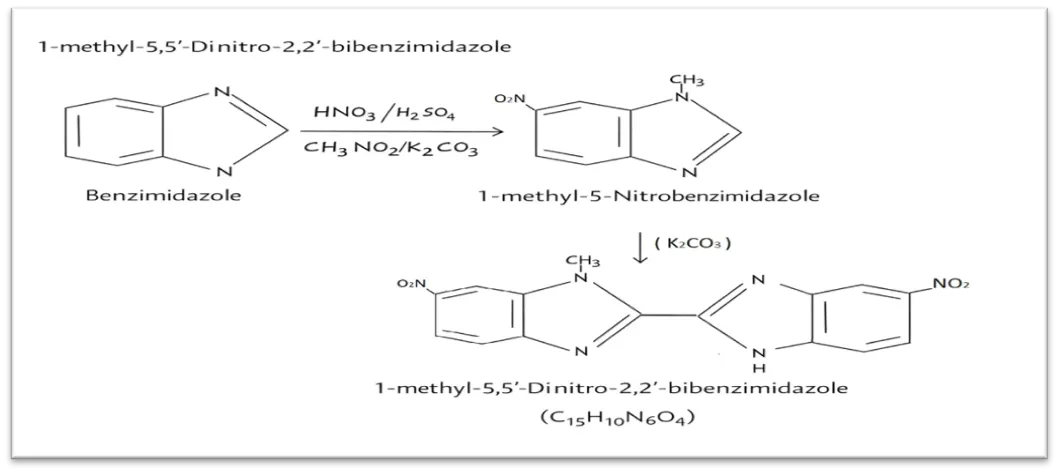
GENERAL INFORMATION :
IUPAC Name: 1-methyl-5,5'-dinitro-1H,1'H-2,2'-bibenzimidazole
Molecular Formula: C15H10N6O4
Molecular Weight: 342.29 g/mol
1,2-BIS(5-NITROBENZIMIDAZOL-1-YL)ETHANE:
PROCEDURE:
Benzimidazole (2 g) was taken in a round-bottom flask and dissolved in 8–10 mL of concentrated sulfuric acid with stirring. The solution was cooled in an ice bath (0–5 °C). A nitrating mixture was prepared separately by slowly adding 1.5 mL of concentrated nitric acid to 4 mL of concentrated sulfuric acid under cooling. The nitrating mixture was added dropwise to the benzimidazole solution while maintaining the temperature below 10 °C. The reaction mixture was stirred for 30–45 minutes and then allowed to reach room temperature, forming nitrated benzimidazole.[12]
To this reaction mixture, 2.5 g of 1-(2-chloroethyl)-5-nitrobenzimidazole and 0.5 g of potassium carbonate (K₂CO₃) were added. The mixture was then refluxed for 4–6 hours. After completion, the reaction mixture was cooled and poured onto 50–60 g of crushed ice, resulting in the formation of a solid. The solid was filtered, washed with cold water until neutral, and dried. The crude product was purified by recrystallization from ethanol. [16]
REACTION :
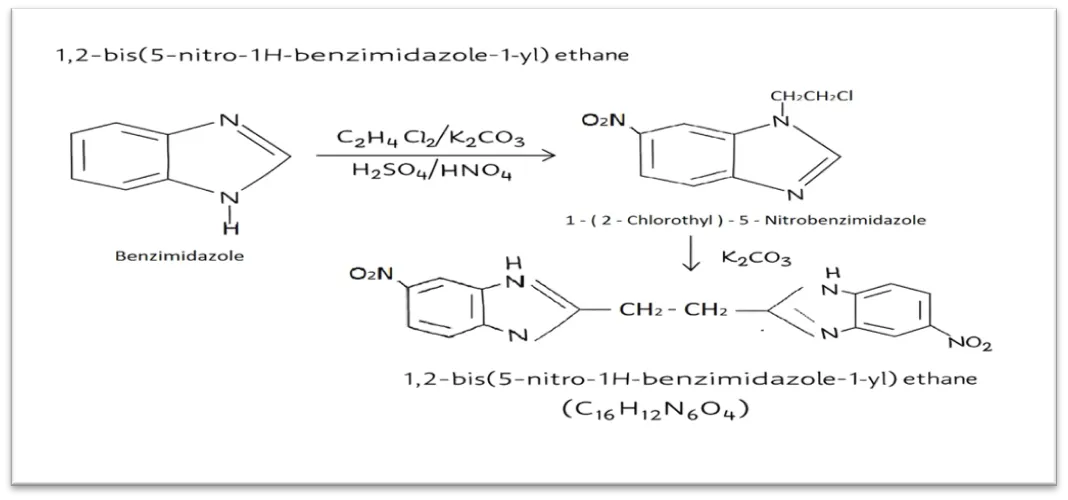
GENERAL INFORMATION:
IUPAC Name: 1,2 – bis (5- Nitro-1 H benzimidazole – 1 yl) ethane
Molecular Formula: C₁₆H₁₂N₆O₄
Molecular Weight: 352.31 g/mol
EXPERIMENTS :
Physical Properties
1] Benzimidazole:
• Appearance: White to pale yellow crystalline solid
• Molecular formula: C₇H₆N₂
• Molecular weight: 118.14 g/mol
• Melting point: ~170–172 °C
• Boiling point: ~360 °C
• Solubility:
o Slightly soluble in water
o Soluble in organic solvents like ethanol, methanol, and DMSO
• Odor: Odorless or very faint odor
• Density: ~1.23 g/cm³
• State at room temperature: Solid
2] Nitrobenzimidazole:
• Appearance: Yellow to pale yellow crystalline solid
• Molecular formula: Commonly C₇H₅N₃O₂
• Molecular weight: ~163.13 g/mol
• Melting point: ~206–208 °C
• Solubility:
o Very slightly soluble in water
o Soluble in organic solvents like ethanol, methanol, DMSO
• Odor: Odorless or faint odor
• Density: ~1.5 g/cm³
• State at room temperature: Solid
3] 1-(methyl)-5-nitrobenzimidazole:
• Appearance: Yellow crystalline solid
• Molecular formula: C₈H₇N₃O2
• Molecular weight: ~209.16 g/mol
• Melting point: ~180–182 °C
• Solubility:
o Very slightly soluble in water
o Soluble in organic solvents such as ethanol, methanol, and DMSO
• Odor: Odorless or faint characteristic odor
• Density: ~1.5–1.6 g/cm³
• State at room temperature: Solid
4] 1-(2-Chloroethyl)-5-nitrobenzimidazole
• Appearance: Yellow to light yellow crystalline solid
• Molecular formula: C₉H₈ClN₃O₂
• Molecular weight: ~225.63 g/mol
• Melting point: ~150–152 °C
• Solubility:
o Very slightly soluble in water
o Soluble in organic solvents such as ethanol, methanol, acetone, and DMSO
• Odor: Odorless or faint characteristic odor
• Density: ~1.4–1.5 g/cm³
• State at room temperature: Solid
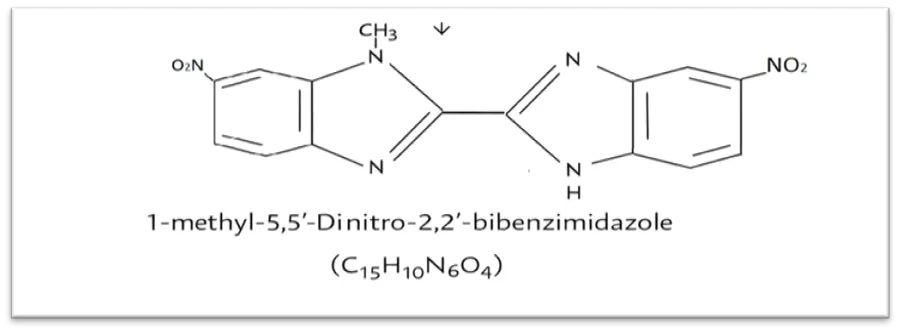
5] 1-methyl – 5,5’ Dinitro – 2,2’ – Bibenzimidazole
• Appearance: Yellow to pale yellow crystalline solid
• Molecular formula: C₁₅H₁₀N₆O₄
• Molecular weight: ~342.29 g/mol
• Melting point: 150 – 152 °C
• Solubility:
o Very slightly soluble in water
o Soluble in polar organic solvents such as DMF
• Odor: Odorless
• Density: ~1.5–1.6 g/cm³
• State at room temperature: Solid
6] 1,2 – bis (5 – Nitro 1 H – benzimidazole – 1 – yl ) ethane
• Appearance: Yellow to pale yellow crystalline solid
• Molecular formula: C₁₆H₁₂N₆O₄
• Molecular weight: ~352.31 g/mol
• Melting point: 270 – 272 °C
• Solubility:
o Very slightly soluble in water
o Soluble in polar organic solvents such as DMSO and DMF; sparingly soluble in ethanol
• Odor: Odorless
• Density: ~1.6–1.7 g/cm³
• State at room temperature: Solid
COMPARATIVE STUDY
Table No . 1
|
Compound Name |
Molecular Formula |
Molecular Weight (g/mol) |
Appearance |
Melting Point (°C) |
Solubility |
Density (g/cm³) |
State |
|
Benzimidazole |
C₇H₆N₂ |
118.14 |
White to pale yellow crystalline solid |
170–172 |
Slightly soluble in water; soluble in ethanol, methanol, DMSO |
~1.23 |
Solid |
|
5-Nitrobenzimidazole |
C₇H₅N₃O₂ |
163.13 |
Yellow crystalline solid |
200–208 |
Very slightly soluble in water; soluble in ethanol, methanol, DMSO |
~1.5 |
Solid |
|
1-Methyl-5-nitrobenzimidazole |
C₈H₇N₃O₂ |
177.16 |
Yellow crystalline solid |
180–182 |
Very slightly soluble in water; soluble in ethanol, methanol, DMSO |
~1.5 |
Solid |
|
1-(2-Chloroethyl)-5-nitrobenzimidazole |
C₉H₈ClN₃O₂ |
225.63 |
Yellow to light yellow crystalline solid |
150–152 |
Very slightly soluble in water; soluble in ethanol, acetone, DMSO |
~1.4 |
Solid |
|
1-Methyl-5,5′-dinitro-2,2′-bibenzimidazole |
C₁₅H₁₀N₆O₄ |
342.29 |
Yellow to pale yellow crystalline solid |
150–152 |
Very slightly soluble in water; soluble in DMF |
~1.6 |
Solid |
|
1,2-bis(5-nitro-1H-benzimidazol-1-yl)ethane |
C₁₆H₁₂N₆O₄ |
352.31 |
Yellow to pale yellow crystalline solid |
270–272 |
Very slightly soluble in water; soluble in DMSO, DMF; sparingly in ethanol |
~1.6 |
Solid |
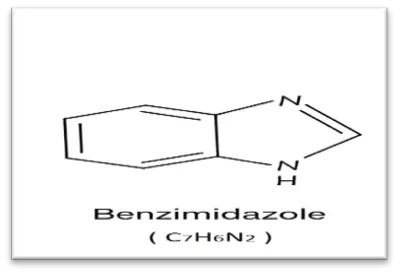
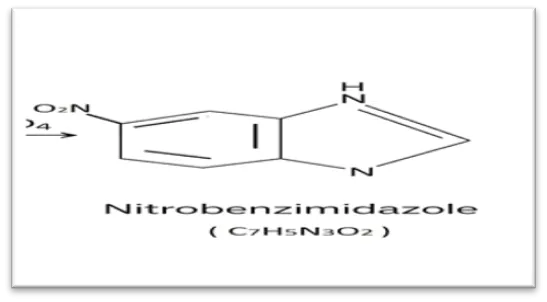
STRUCTURES OF SYNTHESIZE COMPOUND
1] Benzimidazole 2] 5-Nitrobenzimidazole
3] 1-(methyl)-5-nitrobenzimidazole 4]1-(2-Chloroethyl)-5- nitrobenzimidazole
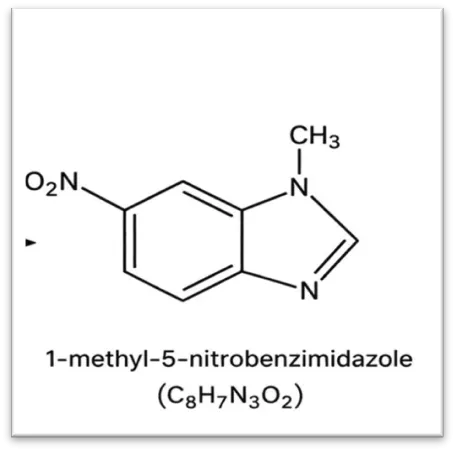
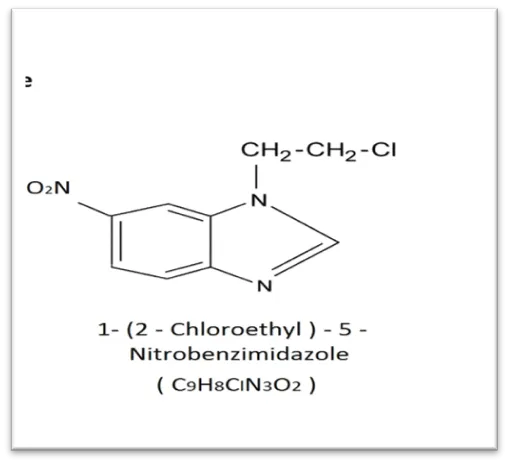
5] 1-methyl – 5,5’ Dinitro – 2,2’ - Bibenzimidazol
6] 1,2 – bis (5 – Nitro 1 H – benzimidazole – 1 – yl ) ethane
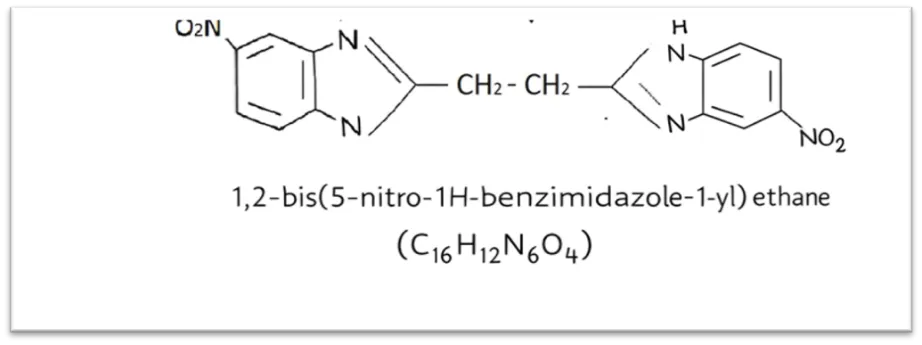
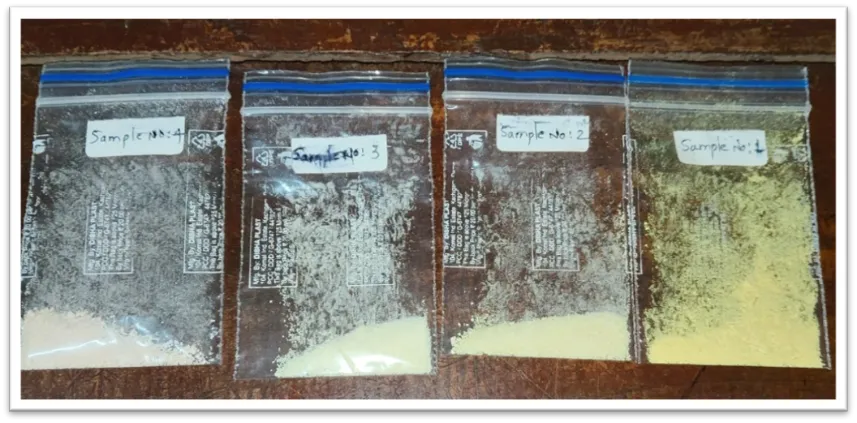
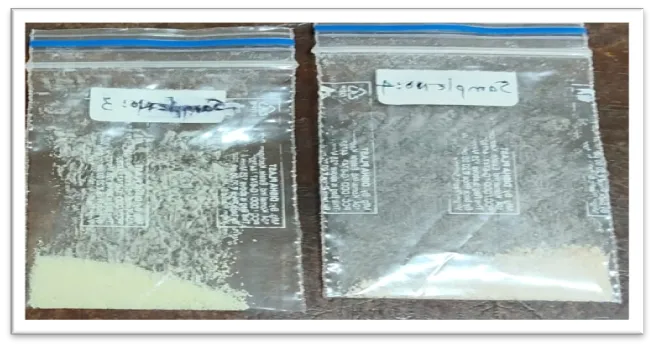
Fig No.1 Synthesize Product
TLC
Benzimidazole
• Stationary phase: Silica gel TLC plate
• Mobile phase: Ethyl acetate : Hexane (7:3)
• Rf value: ~0.40–0.50
• Detection method: UV light (254 nm)
• Observation: Single compact spot indicating purity
5-Nitrobenzimidazol
• Stationary phase: Silica gel TLC plate
• Mobile phase: Ethyl acetate : Hexane (7:3)
• Rf value: ~0.40–0.50
• Detection method: UV light (254 nm)
• Observation: Single compact spot indicating purity of 5-Nitrobenzimidazole
1-(methyl)-5-nitrobenzimidazole
• Stationary phase: Silica gel TLC plate
• Mobile phase: Ethyl acetate : Hexane (7:3)
• Rf value: ~0.50–0.60
• Detection method: UV light (254 nm)
• Observation: Single compact spot indicating purity of 1-methyl-5-nitrobenzimidazole
1-(2-Chloroethyl)-5-nitrobenzimidazol
• Stationary phase: Silica gel TLC plate
• Mobile phase: Ethyl acetate : Hexane (7:3)
• Rf value: ~0.55–0.65
• Detection method: UV light (254 nm)
• Observation: Single compact spot indicating purity of 1-(2-chloroethyl)-5-nitrobenzimidazole
1-methyl – 5,5’ Dinitro – 2,2’ – Bibenzimidazole
• Stationary phase: Silica gel TLC plate
• Mobile phase: Ethyl acetate : Hexane (7:3)
• Rf value: ~0.20–0.30 (lower due to higher polarity from two –NO₂ groups)
• Detection method: UV light (254 nm)
• Observation: Single compact spot indicating purity of 1-methyl–5,5′-dinitro–2,2′-
Bibenzimidazole
1,2 – bis (5 – Nitro 1 H – benzimidazole – 1 – yl ) ethane
• Stationary phase: Silica gel TLC plate
• Mobile phase: Ethyl acetate : Hexane (7:3)
• Rf value: ~0.15–0.25
• Detection method: UV light (254 nm)
• Observation: Single compact spot indicating purity of 1,2-bis(5-nitro-1H-benzimidazol-1-yl)ethane
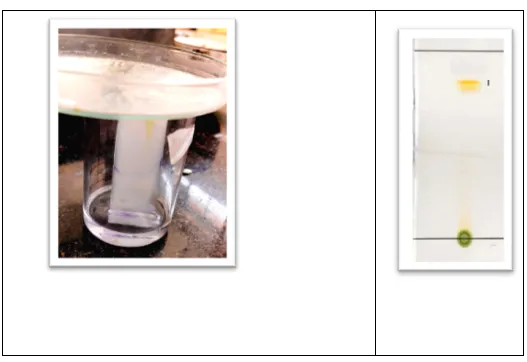
Fig No.2 TLC Plates
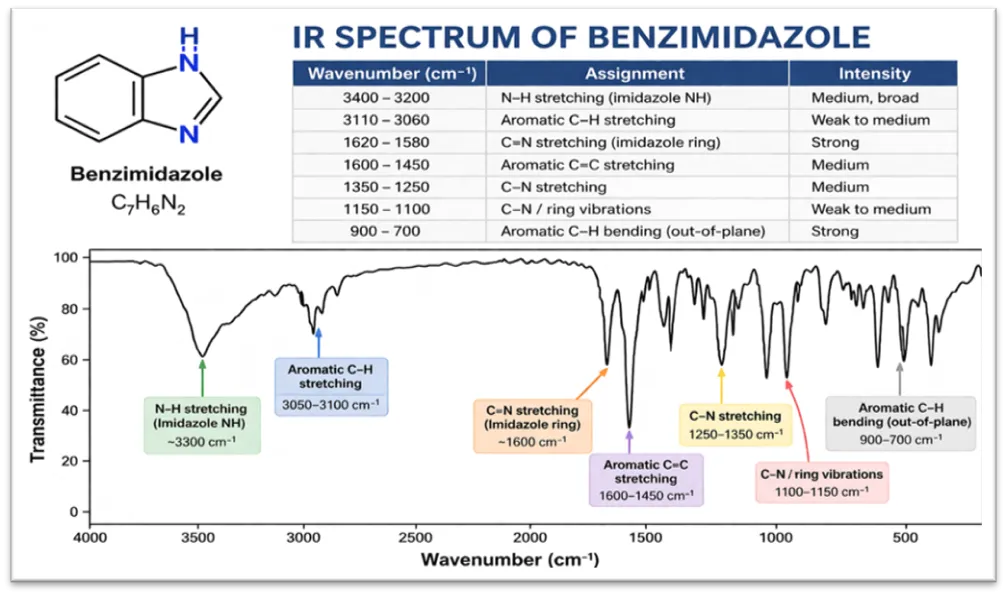
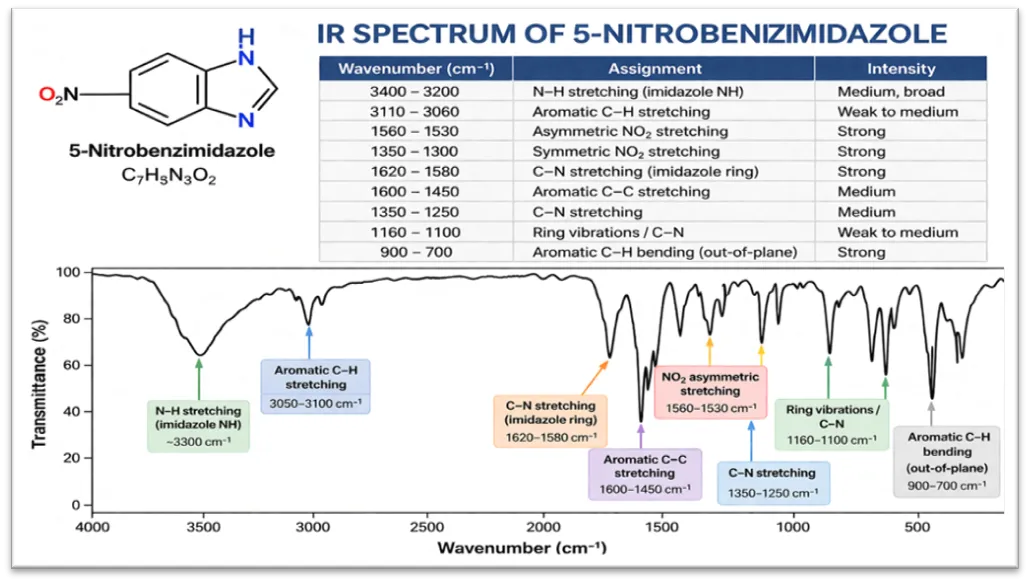
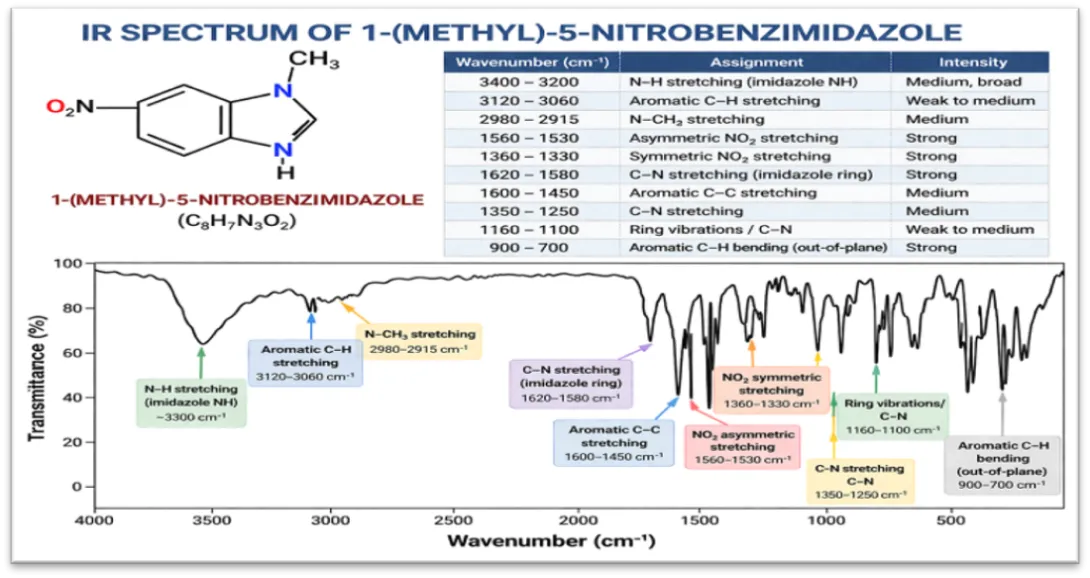
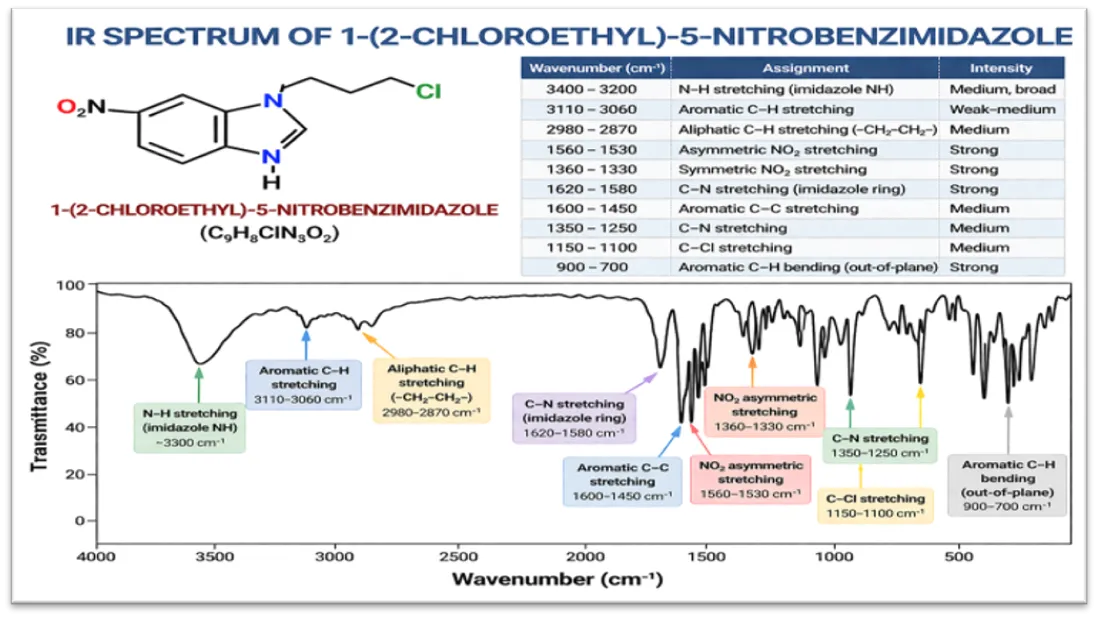
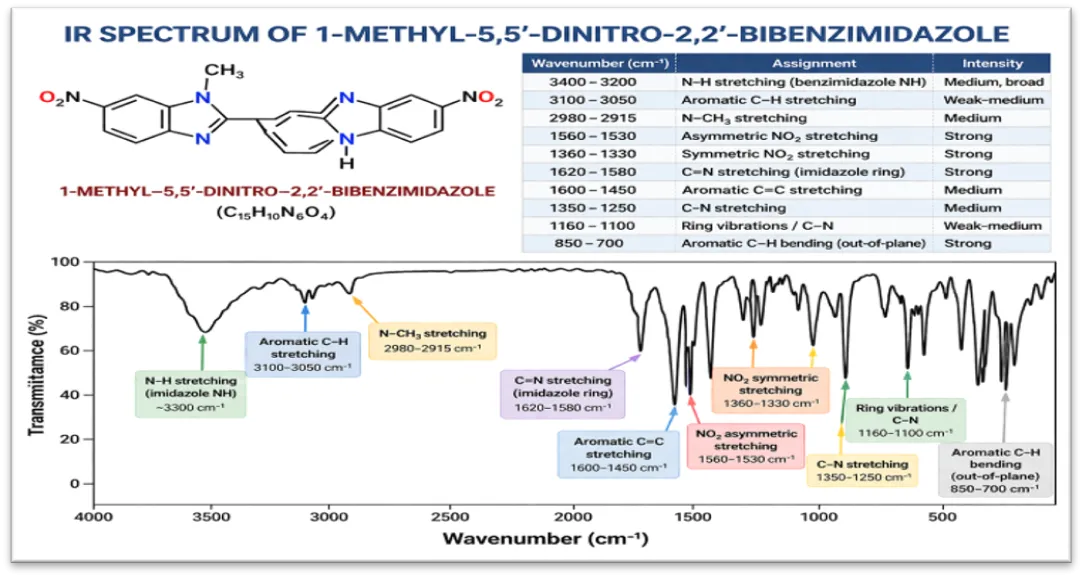
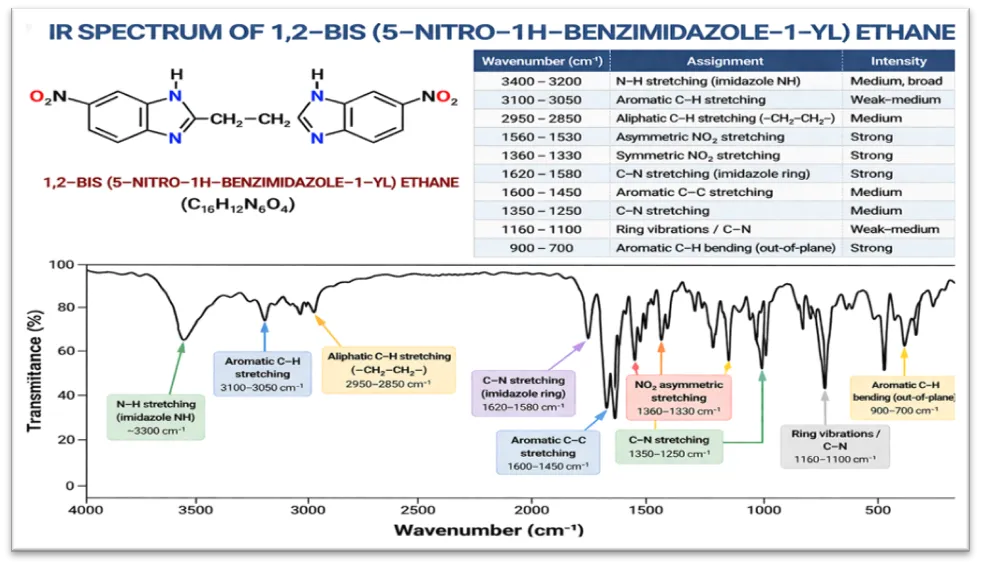
IR SPECTRAL DATA OF
⬩ Benzimidazole
⬩ 5-NITROBENZIMIDAZOLE
⬩ 1-(METHYL)-5-NITROBENZIMIDAZOLE
⬩ 1-(2-CHLOROETHYL)-5-NITROBENZIMIDAZOLE
⬩ 1-METHYL – 5,5’ DINITRO – 2,2’ – BIBENZIMIDAZOLE
⬩ 1,2 – BIS (5 – NITRO 1 H – BENZIMIDAZOLE – 1 – YL ) ETHANE
ANTIMICROBIAL (ANTIBACTERIAL) ACTIVITY –
The antibacterial activity of the synthesized compounds was evaluated using the agar diffusion method. The test organisms included Gram-positive bacteria (Staphylococcus aureus) and Gram-negative bacteria (Escherichia coli). The compounds were tested at a fixed concentration (e.g., 100 µg/mL), and the zone of inhibition was measured in millimeters. Ciprofloxacin was used as the standard reference drug.
COMPARATIVE ANTIMICROBIAL ACTIVITY
Table No. 2
|
Compound |
Structural Feature |
Activity Level |
Typical Zone of Inhibition (mm) |
Key Reason |
|
Benzimidazole |
Parent nucleus |
Weak |
~6–10 mm |
No strong electron-withdrawing group → low antibacterial activity |
|
5-Nitrobenzimidazole |
Nitro at C-5 |
Moderate–Good |
~12–18 mm |
Nitro group enhances bacterial enzyme inhibition |
|
1-(methyl)-5-nitrobenzimidazole |
N-methyl + nitro |
Good |
~14–20 mm |
Increased lipophilicity → better cell penetration |
|
1-(2-Chloroethyl)-5-nitrobenzimidazole |
Alkyl halide + nitro |
Very Good |
~16–22 mm |
Alkylating nature + lipophilicity improves activity |
|
1-methyl–5,5’-dinitro–2,2’-bibenzimidazole |
Dimer + 2 nitro groups |
Strong |
~18–24 mm |
Dual nitro groups → strong electron-withdrawing effect |
|
1,2-bis(5-nitro-1H-benzimidazol-1-yl)ethane |
Bis-linked structure |
Very Strong |
~20–26 mm |
Two pharmacophores → synergistic antibacterial action |
|
Ciprofloxacin (Standard) |
Fluoroquinolone nucleus (DNA gyrase inhibitor) |
Excellent |
~28–38 mm |
Inhibits DNA gyrase & topoisomerase IV → rapid bactericidal action |
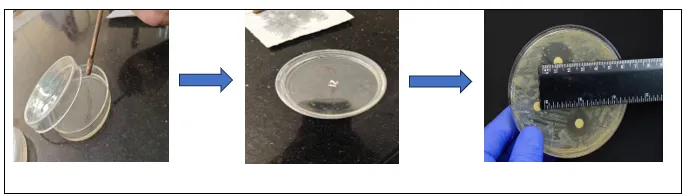
Fig No.4 Antimicrobial Activity
DISCUSSION
The synthesis of benzimidazole derivatives was successfully carried out through a multi-step reaction pathway starting from o-phenylenediamine. The initial cyclization with formic acid produced benzimidazole, which served as the core structure for further functionalization. Nitration of benzimidazole introduced a nitro group at the 5-position of the aromatic ring, forming 5-nitrobenzimidazole. The presence of the nitro group is known to enhance biological activity due to its strong electron-withdrawing nature and its ability to interact with microbial enzymes.
Further modification of the benzimidazole nucleus through N-substitution produced derivatives such as 1-methyl-5-nitrobenzimidazole and 1-(2-chloroethyl)-5-nitrobenzimidazole. These substitutions increase the lipophilicity of the molecules, which can improve their ability to penetrate bacterial cell membranes. As a result, these compounds showed higher antibacterial activity compared to the parent benzimidazole compound.
Dimeric derivatives such as 1-methyl-5,5′-dinitro-2,2′-bibenzimidazole and 1,2-bis(5-nitro-1H-benzimidazol-1-yl)ethane exhibited even stronger antimicrobial activity. This enhanced activity may be attributed to the presence of two benzimidazole pharmacophoric units within the same molecule, which may interact more effectively with biological targets in microorganisms.
Thin layer chromatography confirmed the purity of the synthesized compounds, showing single compact spots under UV light at 254 nm. The variation in Rf values among the compounds indicated differences in polarity due to different functional groups. Infrared spectral data further supported the presence of characteristic functional groups such as N–H, C=N, aromatic C–H, and nitro (–NO₂) stretching vibrations.
Overall, the results demonstrate that structural modification of the benzimidazole nucleus plays an important role in determining antimicrobial activity. Introduction of nitro groups, alkyl substituents, and bis-benzimidazole structures significantly improves antibacterial effectiveness.
CONCLUSION
In this study, a series of benzimidazole derivatives were successfully synthesized starting from o-phenylenediamine through cyclization, nitration, and further substitution reactions. The synthesized compounds included benzimidazole, 5-nitrobenzimidazole, 1-methyl-5-nitrobenzimidazole, 1-(2-chloroethyl)-5-nitrobenzimidazole, 1-methyl-5,5′-dinitro-2,2′-bibenzimidazole, and 1,2-bis(5-nitro-1H-benzimidazol-1-yl)ethane.
The compounds were characterized using physical properties, thin layer chromatography, and infrared spectral analysis. Antibacterial activity was evaluated against both Gram-positive and Gram-negative bacteria using the agar diffusion method. The results showed that substitution on the benzimidazole nucleus significantly enhanced antimicrobial activity.
Among the synthesized compounds, derivatives containing nitro groups and bis-benzimidazole structures exhibited stronger antibacterial activity compared to the parent benzimidazole compound. This suggests that structural modification of benzimidazole is an effective strategy for developing compounds with improved antimicrobial properties.
The findings of this study highlight the potential of benzimidazole derivatives as promising candidates for the development of new antimicrobial agents. Further studies involving detailed biological evaluation and structural optimization may lead to the discovery of more potent benzimidazole-based drugs.
REFERENCES

Divya Devkar, Dr Kiran Dhamak, Akshata Pagar, Synthesis, Characterization and Antimicrobial Evaluation of Novel Nitro-Substituted Benzimidazole Derivatives, Int. J. of Pharm. Sci., 2026, Vol 4, Issue 10, 793-809, https://doi.org/10.5281/zenodo.23186224
 10.5281/zenodo.23186224