

We use cookies to ensure our website works properly and to personalise your experience. Cookies policy
Center for Experimental Drug Design and Development, Department of Pharmaceutical Chemistry, Al Shifa College of Pharmacy, Perinthalmanna, Malappuram, Kerala 679325, India
Cancer remains one of the world's most significant health burdens, and the limitations of existing chemotherapy – narrow tumor selectivity, dose-limiting toxicity, and the steady emergence of resistant tumor clones – continue to push medicinal chemists toward structurally new leads. Thiophene and benzimidazole are two such starting points: each ring system already carries an independent track record in oncology, and joining the two has become an increasingly common strategy for building conjugates with sharper target engagement and more favorable drug-like properties. This review draws together recent work on thiophene–benzimidazole hybrids and organizes it around mechanism of action rather than synthetic methodology. Across the literature surveyed here, these hybrids and their close structural relatives act mainly along five overlapping paths: disruption of tubulin assembly at the colchicine-binding site, interference with DNA topoisomerases I and II, activation of the mitochondrial apoptotic cascade, inhibition of receptor tyrosine kinases such as the epidermal growth factor receptor (EGFR), and suppression of tumor angiogenesis through vascular endothelial growth factor receptor-2 (VEGFR-2). For each mechanism, representative compounds, their reported potencies, and the structure–activity patterns that emerge are discussed in turn. Taken as a whole, the evidence points to thiophene–benzimidazole hybridization as a genuinely underused but promising route toward selective, multitargeted anticancer agents.
Cancer still sits near the top of the list of causes of death worldwide. The most recent GLOBOCAN figures put the 2022 tally at roughly 20 million new diagnoses and 9.7 million deaths, with the gap between high- and low-resource health systems remaining stark. Lung, breast, colorectal, prostate, and stomach cancers account for most of this burden, and the number of new cases each year is expected to keep climbing as populations age and exposure to risk factors such as tobacco use, obesity, and chronic infection persists.[1] Surgery, radiotherapy, and the newer targeted and immune-based therapies have all moved the field forward, yet conventional cytotoxic chemotherapy is still what most patients receive for a large share of malignancies. Its usefulness, though, is held back by the same problems that have dogged it for decades: narrow selectivity between tumor and healthy tissue, dose-limiting toxicity, and resistance that tends to appear sooner or later, whether intrinsic or acquired. These persistent gaps are what keep medicinal chemists searching for genuinely new chemical scaffolds capable of engaging validated cancer targets more cleanly.
Heterocyclic “privileged scaffolds” – ring systems that keep reappearing across otherwise unrelated, clinically useful drugs – occupy a central place in this search. Benzimidazole is a textbook example. Built from a benzene ring fused to imidazole, it mimics the purine bases closely enough that its derivatives can engage nucleic acids and a wide range of enzyme pockets through hydrogen bonding, π-stacking, and simple hydrophobic contact². That resemblance helps explain why benzimidazole shows up repeatedly among anticancer agents and mechanistic tool compounds – the microtubule-disrupting agent nocodazole, the alkylator bendamustine, and the PARP inhibitor veliparib all carry the scaffold – and it has kept researchers busy designing new benzimidazole derivatives aimed at tubulin, topoisomerases, and kinases alike.[2]
Thiophene, a simple five-membered sulphur ring, brings an independent and equally well-documented history to the table. It ranks among the more common ring systems found in United States Food and Drug Administration-approved small molecules, contributing favorable lipophilicity, metabolic robustness, and specific binding character to drugs such as the thymidylate synthase inhibitor raltitrexed, used in colorectal cancer, and the selective oestrogen receptor modulator raloxifene.[3,4] Thiophene-based anticancer agents reported so far rarely work through a single mechanism; interference with tubulin dynamics, DNA-damage pathways, and kinase signalling all turn up depending on the substitution pattern.[3]
Molecular hybridization – stitching two or more pharmacophores into one molecule – has become a standard way to push potency higher, get around single-target resistance, or simply give a compound more than one way to act on a cancer cell.[5] Several groups have applied exactly this logic to thiophene and benzimidazole, producing conjugates that keep the useful features of both rings while opening new positions for further optimization.[6] The results reported so far are encouraging: recent thiophene–benzimidazole hybrids show potent, and in some cases sharply selective, cytotoxicity against pancreatic, lung, breast, and colorectal cancer lines, with follow-up mechanistic work pointing to EGFR inhibition, tubulin disruption, topoisomerase interference, and apoptosis induction as the underlying routes.[6,7,8]
This review pulls together recent literature on thiophene–benzimidazole conjugates, and on closely related benzimidazole- or thiophene-based hybrids, and organizes it by mechanism of action rather than by synthetic route. The sections that follow work through the rationale for combining the two scaffolds, tubulin polymerization inhibition, DNA topoisomerase inhibition, mitochondrial apoptosis, EGFR and related kinase inhibition, and VEGFR-2-driven suppression of angiogenesis, before closing with a discussion of the structure–activity patterns and multitarget potential that cut across all of these. The aim is for this mechanism-first synthesis to give medicinal chemists a useful starting point for designing the next generation of thiophene–benzimidazole anticancer agents. The parent thiophene and benzimidazole ring systems, together with nocodazole – a clinically used agent whose own structure, a thiophene-2-carbonyl group fused onto a benzimidazole-2-carbamate, is itself a working example of the hybridization strategy discussed throughout this review – are shown in Figure 1.


(a) (b)
Figure 1. Chemical structures of (a) thiophene [9], (b) benzimidazole.[10]
MOLECULAR HYBRIDIZATION STRATEGY: RATIONALE FOR COMBINING THIOPHENE AND BENZIMIDAZOLE PHARMACOPHORES
Molecular hybridization in cancer drug design usually works by grafting a pharmacophore tied to one target onto a scaffold that engages a second, independent target, with the hope of a single molecule carrying better potency, altered selectivity, or simply more than one way to act[5] For thiophene–benzimidazole conjugates specifically, this means pairing the electron-rich, flat thiophene ring – a reasonable stand-in for phenyl or furan when a hydrophobic pocket needs filling – with the hydrogen-bonding capacity and purine-like geometry of benzimidazole⁶. Some series fuse the two rings directly into a rigid, planar tricycle; others connect them through a flexible acetamide, hydrazone, or triazole bridge that lets each half of the molecule adjust independently inside the binding site.[6,7,8] What comes out of the structure–activity data across these series is that neither the substitution pattern nor the linker chemistry is fixed – both can be tuned, meaning thiophene–benzimidazole hybridization works less like a single pharmacophore and more like an adjustable platform that can be pushed toward tubulin-, topoisomerase-, or kinase-directed activity depending on how it is built.[5,6]
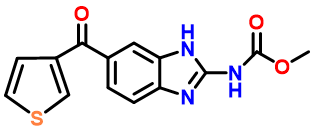
Figure 2. Chemical structures of nocodazole, a marketed thiophene–benzimidazole hybrid microtubule inhibitor.[11]
INHIBITION OF TUBULIN POLYMERIZATION AT THE COLCHICINE-BINDING SITE
Microtubules – dynamic polymers built from α/β-tubulin heterodimers – are essential for building the mitotic spindle, and pulling that structure apart stops a cancer cell at the G2/M phase and pushes it toward apoptosis. That dependency has made tubulin one of the most thoroughly validated targets in oncology. Benzimidazole has turned out to be a particularly good scaffold for colchicine-site tubulin inhibitors: its shape lets it settle into the compact hydrophobic pocket at the α/β-tubulin interface through a mix of aromatic stacking and hydrogen bonding. A recent critical review of benzimidazole-based tubulin inhibitors works through the structure–activity trends across dozens of these series and notes that well-substituted 2-arylbenzimidazoles, along with fused benzimidazole–heterocycle hybrids, often retain low- to sub-micromolar antiproliferative potency while directly blocking tubulin assembly in vitro.[12]
A good illustration comes from a set of benzimidazole–indazole hybrids carrying the trimethoxyphenyl “A-ring” typical of colchicine-site ligands: these compounds reached sub-100-nanomolar antiproliferative activity, overcame paclitaxel resistance in a resistant ovarian cancer line, and were confirmed by X-ray crystallography to sit directly in tubulin's colchicine pocket.[13] A related quinazolinone–benzimidazole series blocked tubulin polymerization in vitro, broke up the cellular microtubule network, arrested cells at G2/M, and shrank tumors substantially in a melanoma xenograft model[14]. Thiophene-containing scaffolds contribute to this same mechanism from a different angle: an epothilone analog carrying an N-(2-hydroxyethyl)-benzimidazole side chain kept its high-affinity microtubule binding and nanomolar potency [15], while trimethoxyphenyl-substituted benzothiazoles – close cousins of benzimidazole – turned out to be colchicine-site inhibitors with low-micromolar activity against prostate cancer lines [16]. Further afield, quinoline mimetics of combretastatin A-4, the natural product that first defined the colchicine site, inhibit tubulin polymerization while also triggering apoptosis – a pairing of mechanisms that shows up repeatedly across this literature and reinforces the point that microtubule disruption and programmed cell death are rarely separate stories [17]. Put together, these findings suggest that a well-designed thiophene–benzimidazole conjugate has a reasonable structural case for acting as a colchicine-site tubulin inhibitor in its own right.
INHIBITION OF DNA TOPOISOMERASES I AND II
DNA topoisomerases I and II relieve the topological strain that builds up during replication, transcription, and recombination by briefly cutting and resealing one or both DNA strands. Because rapidly dividing cancer cells depend so heavily on this activity, both enzymes have long been targets of clinically used drugs such as camptothecin derivatives and etoposide². Benzimidazole derivatives interfere with topoisomerases through two fairly distinct routes: as “poisons,” which trap the transient enzyme–DNA cleavage complex and turn a normally short-lived break into a lasting, lethal one, or as catalytic inhibitors, which block an earlier step in the cycle – usually ATP binding or the enzyme's initial approach to DNA – without ever trapping that complex².
A series of benzimidazole–chalcone hybrids illustrates the catalytic route rather neatly: these compounds blocked topoisomerase II-mediated DNA relaxation more effectively than etoposide itself, were antiproliferative and pro-apoptotic in lung cancer cells, and were shown by docking and mechanistic work to act as non-intercalative catalytic inhibitors rather than classical poisons – a distinction that matters clinically, since catalytic inhibitors carry a lower theoretical risk of the secondary malignancies sometimes linked to topoisomerase II poisons¹⁸. Hybridizing benzimidazole with 1,2,4-triazole has produced topoisomerase I-directed compounds along similar lines: one such series reached low-micromolar cytotoxicity against a lung adenocarcinoma line while also inhibiting isolated topoisomerase I directly, with modeling studies supporting a direct interaction with the topoisomerase I–DNA complex¹⁹.
Broader reviews of benzimidazole pharmacology add a further point worth noting: the flat, extended geometry of bis-benzimidazole and related fused ring systems lets them bind duplex DNA with high affinity in their own right, which can distort DNA conformation enough to block cleavable-complex formation even without the compound touching the enzyme directly². Because thiophene-fused benzimidazole conjugates share that same extended, planar geometry, this DNA-mediated route is plausibly open to them as well. Taking both mechanisms together – direct enzyme inhibition and DNA-binding-mediated interference – topoisomerase disruption looks like a second, well-supported pathway through which thiophene–benzimidazole hybrids could exert anticancer activity.
INDUCTION OF MITOCHONDRIAL APOPTOSIS AND CASPASE ACTIVATION
Mitochondrial, or intrinsic, apoptosis is the pathway most of the mechanisms discussed in this review eventually feed into, so demonstrating apoptosis has become a near-standard part of evaluating any new thiophene- or benzimidazole-based anticancer hybrid. A 2-arylbenzimidazole conjugate tested against MCF-7 breast cancer cells produced the classic signature of this pathway: collapsed mitochondrial membrane potential, cytochrome c release into the cytosol, a rise in reactive oxygen species, more Bax, and less Bcl-2, all while sparing normal breast epithelial cells. Interestingly, cell death in that case proceeded without caspase-7 or caspase-9 involvement, a reminder that benzimidazole-triggered apoptosis does not always follow the canonical caspase cascade²⁰. A different picture emerged with thiazolobenzimidazole–thiazole hybrids tested against colon carcinoma cells, where the lead compound outperformed doxorubicin and docking studies pointed to stable, favorable-energy binding at a colon-cancer-relevant protein target, suggesting that apoptosis there was driven more directly by target engagement²¹.
The fused thiophene–benzimidazole EGFR series discussed earlier shows how tangled these mechanisms can get in practice: its most active compounds caused S- and G2/M-phase arrest and apoptosis in lung cancer cells alongside suppressed EGFR phosphorylation, higher LC3B-II (an autophagy marker), and elevated p27, evidence that kinase inhibition, cell-cycle arrest, autophagy, and apoptosis were all happening together rather than as separate events⁶. Benzimidazole/1,2,3-triazole hybrids aimed at EGFR were described by their own authors in similarly explicit terms as “apoptotic antiproliferative agents,” pairing nanomolar growth inhibition with clear markers of programmed cell death⁷. Across all of these examples, whatever triggers it – tubulin disruption, a blocked topoisomerase, a jammed kinase, or a direct mitochondrial hit – apoptosis keeps showing up as the shared endpoint that ties the different mechanisms in this review back together.
INHIBITION OF EGFR AND RELATED PROTEIN TYROSINE KINASES
The epidermal growth factor receptor, a receptor tyrosine kinase whose overactivity drives proliferation and survival signaling in a wide range of solid tumors, is blocked clinically by small molecules such as erlotinib and gefitinib – a well-established strategy that fused thiophene–benzimidazole conjugates are now being built to join. A series of acetamide-linked hybrids tested against pancreatic (PANC-1) and lung (A549) cancer cells alongside normal bronchial epithelial cells produced two standout leads 4d,6d one of which reached sub-100-nanomolar activity against PANC-1 cells with a selectivity index above 1500 relative to normal cells. Both leads suppressed EGFR phosphorylation in cells, and docking against several EGFR kinase-domain crystal structures suggested they were binding the same hinge region targeted by approved EGFR inhibitors.[6


Figure 3: structure of 4d, 6d [6]
Other thiophene-containing series reach a similar conclusion through different chemistry. Thiophenyl thiazolyl-pyridine hybrids, made in a one-pot multicomponent reaction, were potent against lung adenocarcinoma cells and were computationally predicted to sit in the EGFR ATP pocket through favorable non-covalent contacts.[8] Benzimidazole/1,2,3-triazole hybrids aimed at the same target reached low-nanomolar growth inhibition in their most active members.[7] Some designs push further and target two kinases at once: benzothiazole hybrids carrying thiazolidinedione, thiadiazole, or cyanothiouracil groups were built as dual EGFR/VEGFR-2 inhibitors, reaching low-micromolar cytotoxicity in colorectal, hepatocellular, and breast cancer lines with a comfortable safety margin against normal fibroblasts. [22] Taken together, this body of work makes EGFR inhibition, often paired with a second kinase target, a solidly supported and clinically plausible mechanism for thiophene–benzimidazole hybrids to pursue.
SUPPRESSION OF TUMOR ANGIOGENESIS VIA VEGFR-2 INHIBITION
Tumors cannot grow much beyond a few cubic millimeters without a new blood supply, and that angiogenic switch runs mainly through vascular endothelial growth factor signaling at its receptor, VEGFR-2 – the same target behind approved anti-angiogenic drugs such as sorafenib and sunitinib, and one that keeps drawing new benzimidazole- and thiophene-based hybrid designs. [23,24] 2-Phenylbenzimidazole derivatives built as VEGFR-2 inhibitors showed solid in vitro potency against MCF-7 breast cancer cells, with docking confirming favorable contacts at conserved VEGFR-2 active-site residues.[23] A broader survey of benzimidazole-based EGFR/VEGFR-2 inhibitors reports that many of these hybrids reach sub-100-nanomolar to low-nanomolar VEGFR-2 inhibition, typically binding both the ATP site and an adjacent hydrophobic pocket that only opens up in the kinase's inactive conformation.[24]
The oxadiazole–benzimidazole chemotype extends this same profile: the lead compound in one such series was selectively cytotoxic to PANC-1, A549, and MCF-7 cancer cells over two normal cell lines, with VEGFR-2 immunolocalization studies and molecular dynamics simulations supporting genuine target engagement and favorable predicted drug-likeness from in silico ADME profiling.[25] Closer to the scaffold pairing this review is built around, pyrazole–thiophene hybrids were deliberately designed as multitarget inhibitors of wild-type EGFR, the resistant T790M mutant, and VEGFR-2 all at once; the best-balanced compound in that series inhibited both EGFR forms comparably while still measurably blocking VEGFR-2, a useful demonstration that thiophene-containing hybrids can be engineered around kinase-domain resistance mutations without giving up anti-angiogenic activity[5]. Benzoxazole derivatives, another benzimidazole bioisostere built as VEGFR-2 inhibitors, have likewise been shown to induce apoptosis in hepatocellular and breast cancer lines, reinforcing how often anti-angiogenic and pro-apoptotic activity travel together in this structural family²⁶. Multitarget hybrids linking a sulfonamide–triazole core to carbonic anhydrase, matrix metalloproteinase-2, and VEGFR-2 pharmacophores add a further example of angiogenesis inhibition being combined with a complementary anti-invasive mechanism in one molecule²⁷. Altogether, this evidence makes VEGFR-2 blockade, usually alongside EGFR or another kinase, a fourth mechanism that rationally designed thiophene–benzimidazole conjugates are well positioned to reach.
STRUCTURE–ACTIVITY RELATIONSHIP TRENDS AND MULTITARGET POTENTIAL
A few structure–activity patterns recur often enough across these mechanisms to be worth calling out. First, substituent electronics on the benzimidazole 2-position and around the thiophene ring shift potency and mechanism together: electron-withdrawing groups that raise molecular polarity tend to favor kinase-hinge hydrogen bonding and therefore EGFR/VEGFR-2 activity, while bulkier, planar trimethoxyphenyl- or triazole-bearing groups favor binding at the colchicine site instead. [8,12] Second, the linker connecting thiophene to benzimidazole – rigid and fused versus a flexible acetamide, hydrazone, or thiazole bridge – sets how much conformational freedom the molecule has when engaging its target, and that freedom can be enough to swing the dominant mechanism from tubulin disruption toward topoisomerase or kinase inhibition instead. [6,21] Third, selectivity for cancer over normal cells varies considerably from series to series, but the best-reported compounds reach genuinely striking numbers, with selectivity indices exceeding 1000-fold in the most favorable cases, which at least shows that a wide therapeutic window is achievable with the right substitution pattern⁶.
One theme comes up again and again across reviews of both parent scaffolds: because thiophene and benzimidazole each independently support engagement of several distinct oncology-relevant targets, hybridizing the two puts a molecule in a good position to hit two of them at once, a kinase and tubulin, say, or a kinase and a topoisomerase, which is generally considered a useful way to slow the emergence of resistance compared with single-target drugs.[3,4,28] As more of these series get paired with crystallographic and docking data, that multitarget potential should only become easier to design toward deliberately, rather than arrive at by chance.
CONCLUSION
Thiophene and benzimidazole are each, on their own, well-established privileged scaffolds in anticancer drug discovery, and combining them rationally has already produced a growing set of conjugates active against tubulin polymerization, DNA topoisomerases I and II, mitochondrial apoptosis, EGFR and related kinases, and VEGFR-2-driven angiogenesis. That range of mechanisms, reachable from a single scaffold pairing, together with the favorable physicochemical properties each ring brings on its own, makes thiophene–benzimidazole hybridization a genuinely versatile platform that still has plenty of room to grow. What happens next – structure-based design carried further, in vivo efficacy and toxicity worked out properly, and multitarget optimization pursued more deliberately – will decide whether the promising in vitro and molecular-docking results summarized here turn into anticancer candidates that actually reach the clinic.
ACKNOWLEDGEMENT
Fathima C O gratefully acknowledges Al Shifa college of pharmacy , Perinthalmanna for providing literature access and facilities to prepare this review.
CONFLICT OF INTEREST
The authors declare no conflict of interest.
REFERENCES



Fathima C O, Jibin Joy, Artha Rajagopal K, Amrutha P. Anil, Alagha K, Megha Santhosh M, Hiba Abdul Razak, Thiophene–Benzimidazole Conjugates as Anticancer Agents: A Mechanism-Based Review, Int. J. of Pharm. Sci., 2026, Vol 4, Issue 10, 734-743. https://doi.org/10.5281/zenodo.23170381
 10.5281/zenodo.23170381