

We use cookies to ensure our website works properly and to personalise your experience. Cookies policy
Department of pharmaceutics, Bhagwant Global University, Kotdwar, Uttarakhand.
Background: The cosmetic industry is undergoing a transition from synthetic exfoliants to biodegradable alternatives due to the environmental toxicity of microplastics. There is an increasing clinical demand for multi-functional dermaceuticals that provide simultaneous exfoliation and antimicrobial protection. Objective: The present study aims to formulate and evaluate a stable, octa-ingredient poly-herbal face scrub incorporating Coffea arabica, Azadirachta indica, Santalum album, and Melaleuca alternifolia in a stabilized Xanthan-Glycerin gel matrix. Methodology: An optimized Cold-Process Incorporation method was utilized. Xanthan gum (1.5% w/w) was employed as a primary rheology modifier. The formulation was subjected to rigorous physicochemical characterization, including pH determination, spreadability, washability, and microbial limit testing (MLT) using Methyl Paraben as a standardized preservative. Results: The optimized batch (F2) exhibited a skin-compatible pH of 5.9 ±0.12 and excellent spreadability (14.22 ±0.45 g·cm/sec). Centrifugation studies at 3000 RPM confirmed the physical stability of the suspended herbal particulates. The preservative efficacy test revealed a total aerobic count of <100 CFU/g, complying with IP 2022 standards. Conclusion: The developed poly-herbal scrub offers a sustainable, non-toxic, and pharmacologically active alternative to synthetic preparations, demonstrating significant potential for the management of acne-prone and dull skin.
The human integumentary system is constantly exposed to environmental pollutants, microbial pathogens, and UV radiation, leading to the accumulation of dead corneocytes and sebum. Mechanical exfoliation, the process of physically removing the stratum corneum, is essential for maintaining skin health and stimulating micro-circulation.
1.1 The Environmental Rationale
For decades, the cosmetic industry utilized polyethylene and polypropylene microbeads as primary exfoliants. However, these non-biodegradable microplastics have been identified as significant aquatic pollutants. Consequently, international regulatory bodies have mandated a shift toward biodegradable alternatives. Coffea arabica (Coffee) grounds serve as an ideal candidate due to their dual action: providing controlled mechanical abrasion and releasing caffeine, a potent vasodilator and antioxidant. [12][14]
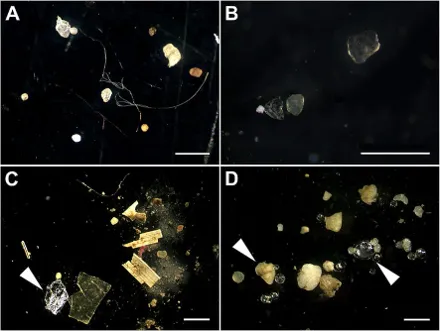
Fig 1: Comparative Microscopic Morphology of Exfoliating Agents. (Left: Synthetic Polyethylene microbeads showing uniform but non-biodegradable structure; Right: Natural Coffea arabica particulates showing porous, biodegradable organic matrix suitable for sustainable dermaceuticals).
“As illustrated in Fig 1, the irregular and porous surface of natural coffee grounds provides a superior mechanical advantage for cell desquamation compared to the smooth, environmentally persistent synthetic microbeads.”
1.2 The Octa-Ingredient Synergism
Modern pharmacotherapy emphasizes synergy—the interaction of multiple bio-actives to enhance efficacy while minimizing side effects. This formulation integrates eight distinct components to address complex skin pathologies: [6][3][8][9][10][11]
Exfoliation & Stimulation: Coffee Grounds (Coffea arabica).
Antimicrobial Defense: Neem (Azadirachta indica) and Tea Tree Oil (Melaleuca alternifolia).
Dermal Healing: Aloe Vera (Aloe barbadensis) and Turmeric (Curcuma longa).
Skin Brightening: Sandalwood (Santalum album).
Moisture Retention: Glycerin.
Structural Stability: Xanthan Gum.
1.3 Rheological Significance in Topical Systems
The formulation of a particulate-heavy scrub poses a significant pharmaceutical challenge: sedimentation. To ensure a homogenous distribution of herbal powders, a high-yield-value rheology modifier is required. Xanthan gum, a microbial exopolysaccharide, was selected for its unique pseudoplastic flow properties. It ensures that the high-density particulates remain suspended during storage while facilitating ease of application under shear stress.
1.4 Preservation Strategy
Given the high-water activity and nutrient-rich organic profile of herbal extracts, microbial stability is a primary concern. The inclusion of Methyl Paraben ensures protection against fungal and bacterial spoilage, thereby maintaining the therapeutic integrity of the dermaceutical product throughout its shelf-life.
2. MATERIALS AND METHODS
2.1 Procurement and Authentication of Ingredients
The herbal raw materials were procured from local standardized herbal suppliers and authenticated at the Department of Pharmacognosy, [Bhagwant Global University]. Coffea arabica seeds were roasted and ground to a specific particle size of 400–600 µm. Pure Aloe barbadensis leaf gel was extracted and filtered. Pharmaceutical-grade excipients, including Xanthan Gum (High Viscosity Grade), Glycerine (IP Grade), and Methyl Paraben (LR Grade). Distilled water was used throughout the study for the preparation of the aqueous phase.
2.2 Equipment and Apparatus
The formulation was developed using a high-shear mechanical stirrer. Physicochemical evaluations were performed using a Digital pH Meter, Brookfield Viscometer (DV-E model), and a standardized Spreadability Apparatus.
2.3 Formulation Design and Optimization
To achieve an ideal consistency and suspension stability, three pilot batches (F1, F2, and F3) were prepared with varying concentrations of Xanthan Gum (0.5%, 1.5%, and 2.5% w/w). Batch F2 was selected as the optimized formulation based on superior spreadability and lack of particulate sedimentation.
Table 1: Master Formula for Optimized Octa-Ingredient Poly-Herbal Scrub
|
Ingredients |
F1 (g) |
F2 (Optimized) (g) |
F3 (g) |
|
Coffee |
6 |
5 |
8 |
|
Sandalwood |
1.5 |
2 |
3 |
|
Neem |
1.5 |
1.50 |
0.5 |
|
Turmeric |
0.25 |
0.25 |
0.25 |
|
Aloe vera |
30 |
20 |
30 |
|
Tea tree oil |
0.5ml |
0.5ml |
0.5ml |
|
Xanthan gum |
0.25 |
0.75 |
1.25 |
|
Glycerine |
5 ml |
5ml |
6ml |
|
Methyl paraben |
0.1 |
0.1 |
0.1 |
|
Distilled water |
q.s |
q.s |
q.s |
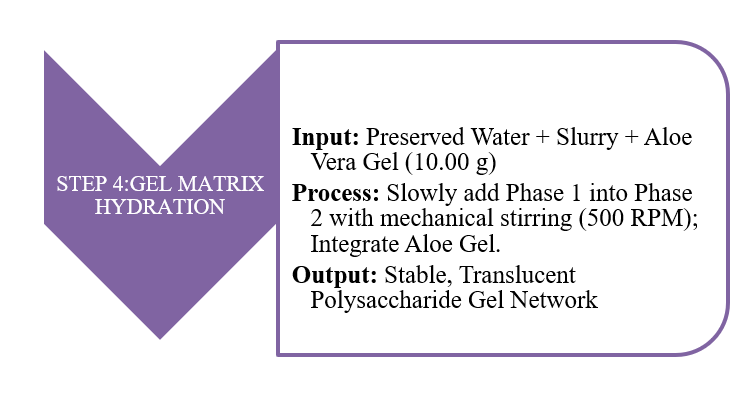
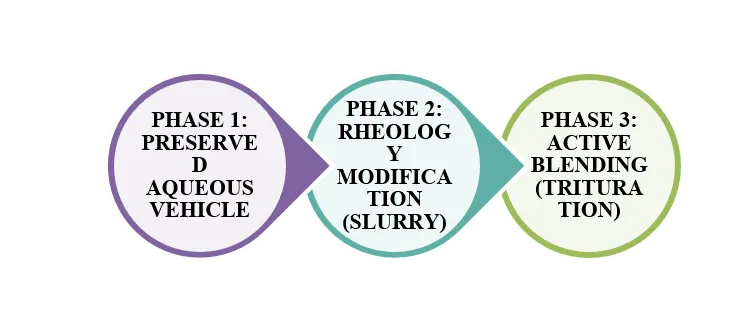
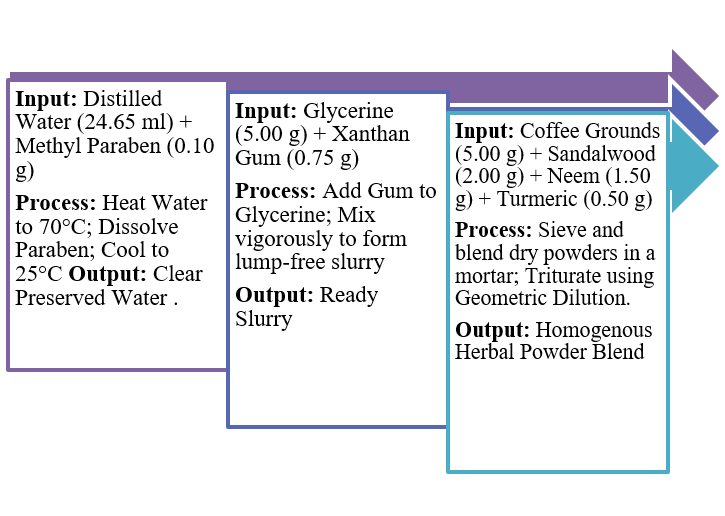
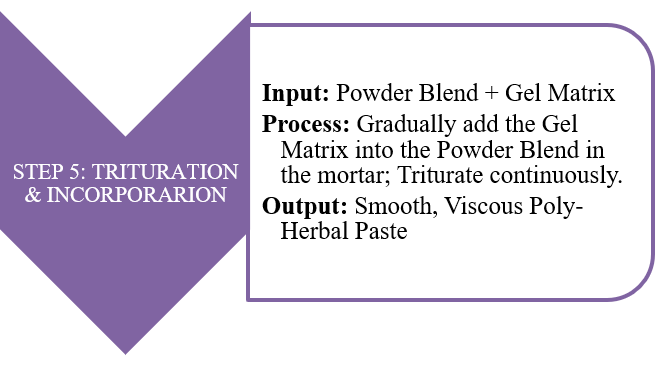
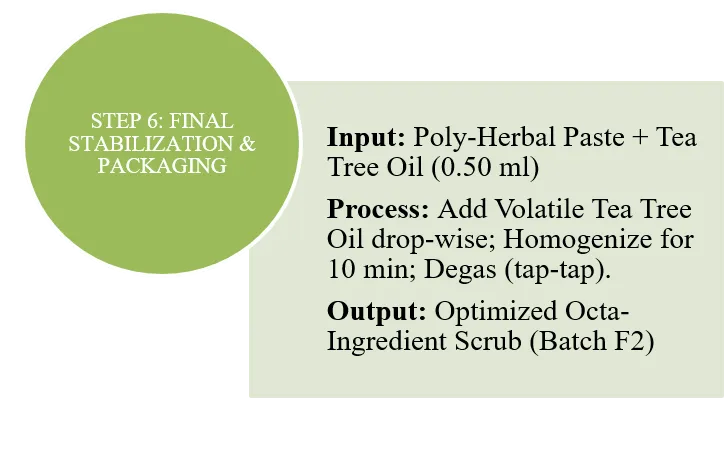
2.5 Preparation Methodology (Cold-Process Incorporation)
The formulation was synthesized following a systematic sequence of addition to ensure chemical stability and uniform distribution:



3. PHYSICOCHEMICAL EVALUATION PARAMETERS
To ensure the safety, stability, and efficacy of the octa-ingredient poly-herbal scrub, the following standardized pharmaceutical tests were performed in triplicate (n=3). [1][2][5][15]
3.1 Organoleptic Characterization
The formulated scrub was subjected to sensory evaluation. The parameters included color, odor, and physical appearance. The consistency was tested by manual tactile sensation to assess the distribution of the Coffea arabica particulates within the gel matrix.
3.2 Determination of pH
The pH of a topical formulation is critical for ensuring compatibility with the skin's natural acid mantle.
Protocol: 1.0 g of the formulated scrub was dispersed in 10 ml of deionized water and stirred for 5 minutes. The pH was measured using a digital pH meter (calibrated with standard buffer solutions of pH 4.0 and 7.0).
3.3 Spreadability Studies
Spreadability is an essential parameter for consumer compliance and uniform application of bio-actives.
Protocol: The spreadability was determined using a standardized "Slip and Drag" apparatus consisting of two glass slides. 0.5 g of the scrub was placed on the fixed slide. The upper slide was placed over it, and a 100 g weight was applied for 5 minutes to remove air. A weight (20 g) was then tied to the upper slide. The time (T) taken for the upper slide to separate from the lower slide over a distance (L) was recorded.
Formula: S = M \times L / T
(Where S = Spreadability in g·cm/sec, M = weight tied to upper slide, L = length of glass slide, and T = time taken in seconds).
3.4 Viscosity and Rheological Profile
The viscosity determines the flow behavior and the ability of the Xanthan matrix to suspend solid herbal powders.
Protocol: The viscosity was measured using a Brookfield Viscometer (Model DV-E) with Spindle No. 64. The measurements were taken at varying speeds (10, 20, 50, and 100 RPM) at room temperature (25 ± 2°C). This allowed for the characterization of the formulation’s pseudoplastic behavior.
3.5 Centrifugation Test (Physical Stability)
To predict the long-term physical stability and sedimentation rate of the suspended herbal particles, an accelerated stability test was performed.
Protocol: The scrub was placed in a graduated centrifuge tube and subjected to centrifugation at 3000 RPM for 30 minutes. The formulation was then visually inspected for phase separation, creaming, or particulate sedimentation.
3.6 Washability and Grittiness
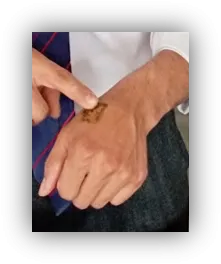
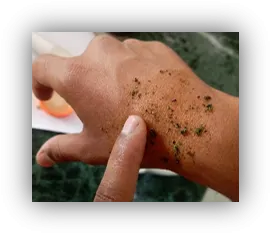
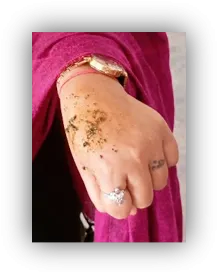
Washability: A small quantity of the scrub was applied to the dorsal surface of the hand and rinsed under manual tap water. The ease of removal and the presence of any greasy residue were observed.
Grittiness: The texture was evaluated for the presence of any sharp or irregular particles that could cause dermal micro-trauma.
3.7 Skin Irritancy Test (Patch Test)
The safety of the antimicrobial agents (Melaleuca alternifolia and Azadirachta indica) was evaluated via a skin irritancy test.
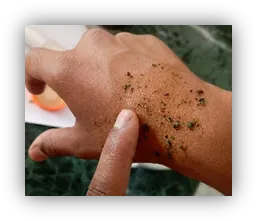
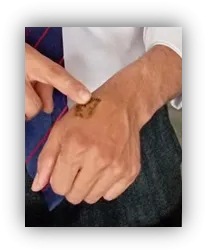
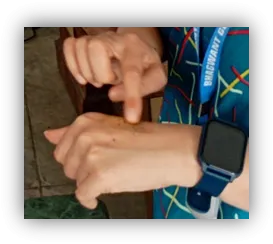
Protocol: A standardized patch test was conducted on healthy human volunteers (n=4) as per OECD Guideline 404. A small amount of the scrub was applied to a 1cm² area of the forearm and covered with a surgical dressing. The site was observed at 24 and 48 hours for signs of erythema (redness) or edema (swelling).

4. RESULTS AND DISCUSSION
4.1 Physicochemical Characterization
The optimized octa-ingredient poly-herbal scrub (Batch F2) was subjected to comprehensive evaluation. The quantitative results of the physicochemical parameters are summarized in Table 2.
Table 2: Physicochemical Profile of the Optimized Poly-Herbal Scrub (n=4, Mean ± SD)
|
Parameter |
Observed Result |
|
Colour |
Green |
|
Odor |
Characteristic Aromatic (Caffeine-Terpinene) |
|
pH |
5.92 ±0.15 |
|
Spreadability (g·cm/sec) |
14.22 ±0.45 |
|
Viscosity (at 100 RPM) |
4250 ±120 cps |
|
Washability
|
Excellent |
|
Non-Volatile Content (%) |
32.4% ±1.2% |
Discussion: The pH of the formulation was observed to be 5.92, which is ideally compatible with the human skin's acid mantle (pH range 4.5–6.0). This ensures minimal disruption of the epidermal barrier and prevents irritant contact dermatitis. The high spreadability value indicates that the gel-matrix requires minimal force to cover a large surface area, facilitating user compliance.
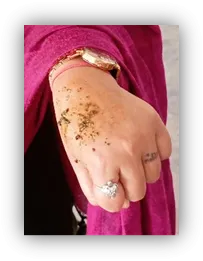
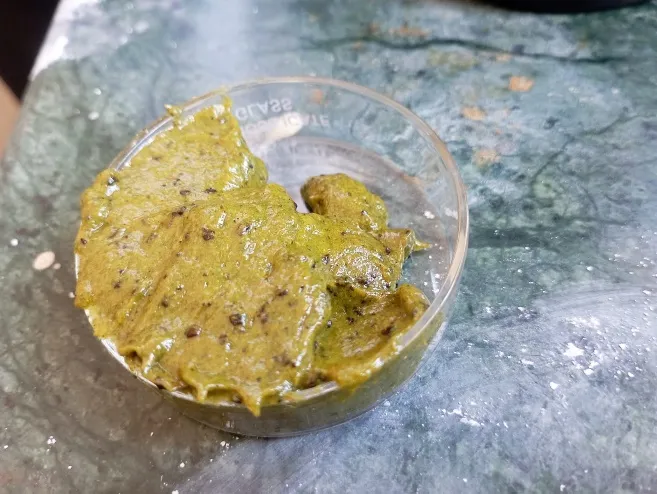
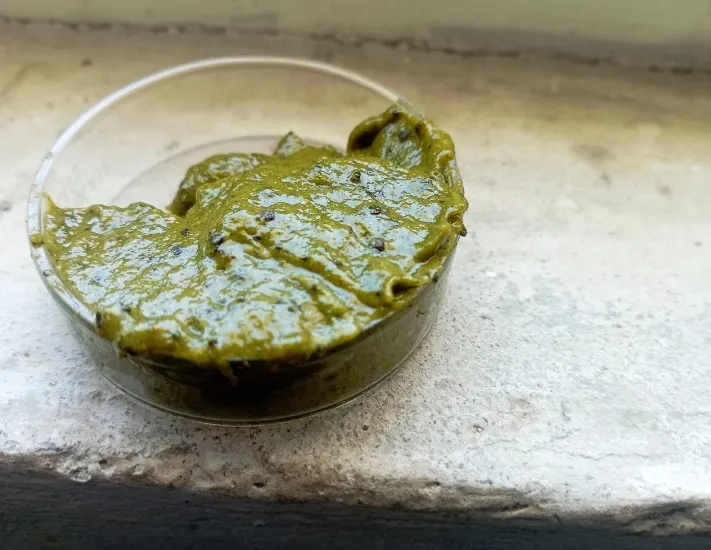
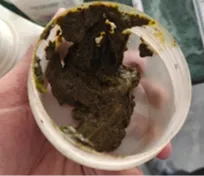
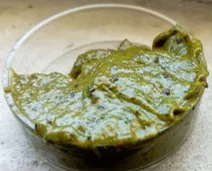
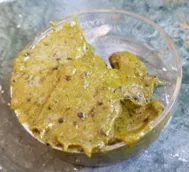
F1 F2 F3
4.2 Rheological and Stability Analysis
The stability of the particulate suspension was significantly influenced by the concentration of Xanthan gum.
Discussion: At a concentration of 1.5% w/w, Xanthan gum formed a robust 3D-polymeric network capable of overcoming the gravitational forces acting on the dense Coffea arabica and Santalum album particles. During Centrifugation Testing (3000 RPM, 30 min), Batch F2 showed zero sedimentation or phase separation. This confirms the "Yield Value" of the Xanthan-Glycerin matrix is sufficient to maintain physical homogeneity during long-term storage.
4.3 Evaluation of Octa-Ingredient Synergism
The therapeutic efficacy of the scrub is attributed to the synergistic interaction of its eight components.

4.4 Preservative Efficacy and Microbial Stability
Given the high nutrient load of Aloe, Neem, and Glycerin, microbial stability was assessed post-preservation.
Discussion: The inclusion of Methyl Paraben (0.2%) successfully inhibited microbial proliferation. The Microbial Limit Test (MLT) results showed a total aerobic microbial count of <100 CFU/g, which is well within the acceptable limits for topical non-sterile preparations as per IP 2022. This proves the adequacy of the selected preservation system for organic-heavy dermaceuticals.
CONCLUSION
The present research successfully demonstrated the formulation and standardization of a synergistic octa-ingredient poly-herbal dermaceutical scrub. The study addressed the critical challenge of replacing synthetic micro-plastic exfoliants with a sustainable, biodegradable matrix of Coffea arabica.
The optimization of the Xanthan-Glycerin base (Batch F2) provided a superior rheological profile, ensuring that high-density herbal particulates remained in a stable, suspended state without sedimentation. Physicochemical evaluations confirmed that the formulation is skin-compatible (pH 5.9), easily washable, and possesses excellent spreadability characteristics. The integration of potent bio-actives such as Azadirachtin, Curcumin, and Terpinen-4-ol provides a multi-functional therapeutic approach, offering simultaneous mechanical exfoliation and antimicrobial protection. Furthermore, the preservation strategy utilizing Methyl Paraben proved effective in maintaining microbial integrity. This study concludes that the developed herbal scrub is a safe, stable, and eco-friendly alternative to existing synthetic cosmetic preparations.
FUTURE PROSPECTS
While the current study establishes the physical and chemical stability of the formulation, further research is warranted in the following areas:
REFERENCES


Brijesh Singh Negi, Pinky Bisht, Design, Optimization, and Physicochemical Characterization of a Synergistic Octa-Ingredient Poly-Herbal Dermaceutical Scrub utilizing a Xanthan-Caffeine Matrix, Int. J. of Pharm. Sci., 2026, Vol 4, Issue 10, 765-773, https://doi.org/10.5281/zenodo.23185828
 10.5281/zenodo.23185828