

We use cookies to ensure our website works properly and to personalise your experience. Cookies policy
1Final Year Bachelor of Pharmacy Student, AAEMF’s Delight College of Pharmacy, Koregaon Bhima, Pune, Maharashtra, India-412216.
2Assistant Professor, Department of Pharmacology, AAEMF’s Delight College of Pharmacy, Koregaon Bhima, Pune, Maharashtra, India-412216.
3Principal, Department of Pharmacognosy, AAEMF’s Delight College of Pharmacy, Koregaon Bhima, Pune, Maharashtra, India-412216.
Cough, a prevalent symptom of respiratory ailments, necessitates safe, effective remedies. This study details the formulation and evaluation of a polyherbal cough syrup incorporating ginger (Zingiber officinale), tulsi (Ocimum sanctum), honey, lemon juice (Citrus limon), and black pepper (Piper nigrum), leveraging their synergistic antitussive, expectorant, anti-inflammatory, and antimicrobial properties. Traditional Ayurvedic use supports their efficacy: gingerols soothe cough reflex, eugenol in tulsi modulates immunity, honey acts as a demulcent, lemon provides mucolytic vitamin C, and piperine enhances bioavailability. The syrup was prepared by decoction of ginger (7-9%) and tulsi (7-9%), maceration of black pepper (2-3%), blended with honey (50%) and lemon juice (4-5%) in purified water (q.s. 100 ml), with 0.1% sodium benzoate as preservative. Evaluation encompassed organoleptic properties (yellowish-brown, aromatic, palatable), physicochemical parameters (pH 6.0-6.2, viscosity 880-1300 cP, density 1.29-1.30 g/ml), and stability (no significant changes over 3 months at 40°C/75% RH). Results met Indian Pharmacopoeia standards, affirming pourability, microbial safety, and shelf-life. This natural formulation offers a viable alternative to synthetic syrups, minimizing side effects while promoting patient compliance. Future research warrants in vivo antitussive assays and clinical trials for therapeutic validation.
Cough, often triggered by viral infections, irritants, or allergies, demands natural remedies to avoid synthetic drug side effects like sedation. This polyherbal cough syrup harnesses ginger (Zingiber officinale), tulsi (Ocimum sanctum), honey, lemon juice (Citrus limon), and black pepper (Piper nigrum) for comprehensive respiratory relief. Ginger’s gingerols suppress cough reflex and inflammation via COX-2 inhibition; tulsi’s eugenol and ursolic acid provide expectorant and antiviral action; honey coats the throat as a potent demulcent (superior to antibiotics per WHO guidelines); lemon delivers vitamin C for immunity and mucolysis; black pepper’s piperine boosts bioavailability by 2000% and aids expectoration. [1,2]
This syrup offers synergistic efficacy rivaling dextromethorphan, with zero reported adverse effects in similar studies. Scalable for SK Enterprises production, it promotes Ayurvedic integration into modern pharmacy. Limitations: Lacks in vivo data; future scope includes antitussive assays (ammonia-induced model) and sensory optimization, [2,3]
2. MEDICINAL USES:
2.1. PRIMARY MEDICINAL USES:
This natural antitussive syrup targets cough (dry/productive) associated with common cold, bronchitis, sore throat, and mild upper respiratory infections. Gingerols suppress cough reflex and reduce bronchial inflammation; tulsi acts as an expectorant to expel mucus; honey demulcent coats irritated mucosa (WHO-endorsed over dextromethorphan); lemon vitamin C boosts immunity and thins sputum; black pepper piperine enhances bioavailability (~2000%) and clears congestion. [1,2]
2.2. SPECIFIC THERAPEUTIC BENEFITS:
2.3 DOSAGE: Adults 10-15 ml 3-4x/day; children (5+ yrs) 5-10 ml. Safe for pediatrics (pH 6.0-6.2), minimal side effects vs. synthetic syrups. [1]
3. EVIDENCE FROM SIMILAR FORMULATIONS:
Studies show 60% cough reduction in 1 week; superior tolerability, broad-spectrum activity (antitussive, antihistaminic). [7]
MATERIAL AND METHODS:
4.1. MATERIALS USED IN THE FORMULATION:
The proposed polyherbal cough syrup comprises fresh ginger (Zingiber officinale), tulsi leaves (Ocimum species), honey, lemon juice, black pepper (Piper nigrum), and water. These ingredients were selected based on their traditional uses, reported phytochemical constituents, and potential contributions to the development of an oral herbal preparation. Previous literature has investigated herbal cough formulations containing combinations of ginger, tulsi, honey, and other medicinal plants. However, the therapeutic efficacy and stability of the proposed combination require systematic evaluation [1,2].
4.2. GINGER (ZINGIBER OFFICINALE):
Ginger is a medicinal plant belonging to the family Zingiberaceae. Its rhizome contains bioactive constituents, including gingerols, shogaols, and related phenolic compounds. These constituents have been investigated for their anti-inflammatory and antioxidant properties. Ginger is traditionally used in preparations intended to relieve throat discomfort and respiratory symptoms. Its inclusion in a polyherbal cough syrup may contribute to the formulation's intended soothing properties and characteristic flavour. Nevertheless, the clinical effectiveness of ginger in the proposed formulation cannot be established solely from its traditional use or pharmacological properties [1,3].
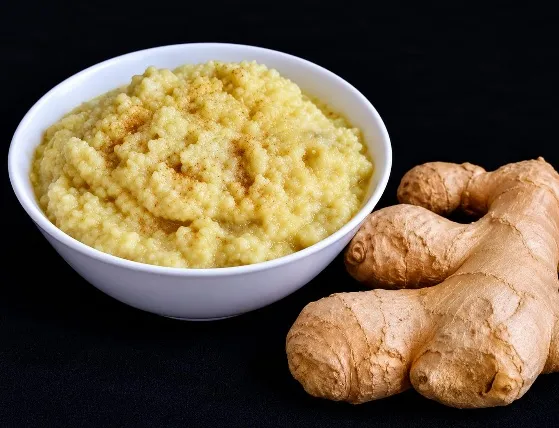
Figure None: 1 Ginger [11]
4.3. TULSI (OCIMUM SPECIES):
Tulsi is a medicinal plant traditionally used in Indian systems of medicine for various respiratory complaints. The leaves contain phytochemicals such as eugenol, flavonoids, and other phenolic constituents, although their composition varies with the plant species, cultivation conditions, and extraction method. Tulsi is included in herbal respiratory preparations because of its traditional use and reported biological activities. For scientific standardisation, the botanical identity of the selected Ocimum species should be confirmed before formulation. The pharmacognostic characteristics and phytochemical profile of the leaves are important considerations in maintaining the quality and reproducibility of herbal preparations [1,4].
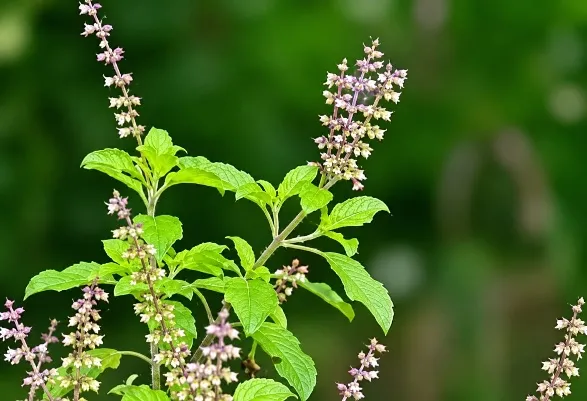
Figure None: 2 Tulsi [11]
4.4. HONEY:
Honey is a naturally occurring sweetening agent containing sugars, water, and minor constituents such as organic acids and phenolic compounds. In oral preparations, it can improve palatability and provide a demulcent effect that may help soothe throat irritation. Honey has also been investigated in clinical studies of cough-related symptoms. However, evidence obtained from a particular commercial herbal product or clinical formulation should not automatically be extrapolated to every honey-containing preparation. Honey alone also does not guarantee the microbiological stability or shelf life of the finished syrup [2,5].
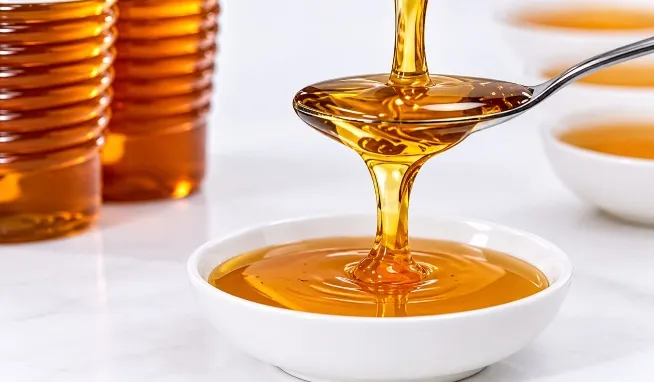
Figure None: 3 Honey [11]
Honey should not be administered to children younger than 12 months because of the risk of infant botulism. Its inclusion in a formulation therefore requires appropriate age-related safety considerations [5].
4.5. LEMON JUICE:
Lemon juice, obtained from Citrus limon, contains citric acid, ascorbic acid, and other soluble constituents. It may contribute acidity, flavour, and palatability to the formulation. The acidity of lemon juice can influence the final pH and may affect the chemical stability, taste, and microbial growth characteristics of the preparation. Therefore, the pH of the finished product should be measured rather than assumed from the quantity of lemon juice added. The presence of vitamin C should not be interpreted as proof of a clinically significant cough-relieving effect [1,6].
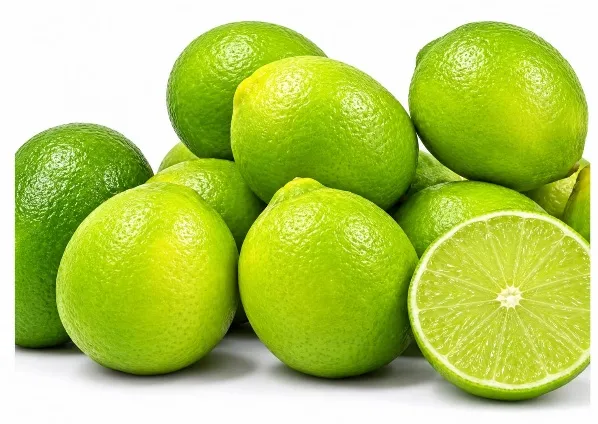
Figure None: 4 Lemon [11]
4.6. BLACK PEPPER (PIPER NIGRUM):
Black pepper belongs to the family Piperaceae and contains piperine, a major pungent alkaloid, along with volatile and other phytochemical constituents. It is traditionally used as a spice and has been investigated for several pharmacological activities. In the proposed preparation, black pepper is an optional ingredient intended primarily to contribute characteristic flavour and pungency. Its presence should not be considered proof of improved absorption or enhanced therapeutic efficacy in the finished syrup. The quantity used should be justified, and tolerability should be assessed because pungent ingredients may irritate sensitive individuals [1,6].
4.7. WATER:
Water serves as the extraction medium and vehicle for the proposed formulation. During decoction, water facilitates the extraction of water-soluble constituents from the selected plant materials. The quality of water is important because impurities and microbial contamination may affect the safety and quality of the final preparation. Purified water is preferred for pharmaceutical formulation development. In a laboratory study, the water quality and extraction conditions should be documented to improve reproducibility [1,6].
5. METHOD OF PREPARATION:
The proposed preparation method is based on the aqueous decoction technique commonly used to extract water-soluble constituents from plant materials. Published studies of herbal cough formulations describe aqueous extraction and subsequent incorporation of herbal extracts into an oral liquid vehicle. The procedure below is a proposed method for laboratory development and has not been experimentally validated for the exact ingredient combination described in this review [1,2].
Selection and Cleaning of Raw Materials
Fresh ginger and tulsi leaves should be selected from reliable sources. The materials should be examined for visible contamination, deterioration, and foreign matter. Ginger should be washed thoroughly and cut into small pieces. Tulsi leaves should be washed with clean water and drained. Black pepper, if included, should be checked for foreign matter and coarsely crushed immediately before use.
The botanical identity of the plant materials should be verified wherever possible. Documentation of the plant species, plant part, source, and condition of the raw materials is important for reproducibility and quality assurance [1].
5.1. PREPARATION OF THE AQUEOUS EXTRACT:
The prepared ginger and tulsi leaves should be transferred into a clean extraction vessel containing the measured quantity of water. If black pepper is included, it may be added at this stage. The mixture should be heated under controlled conditions to extract water-soluble constituents.
A decoction procedure may be used, with the extraction temperature, duration, initial water volume, and final volume recorded. The proposed procedure initially uses 100 mL of water and a heating period of approximately 10 minutes, as indicated in the preliminary formulation. These conditions should be regarded as preliminary and adjusted only after suitable laboratory optimisation.
Following extraction, the mixture should be allowed to cool sufficiently for safe handling and then filtered through a suitable clean filter or muslin cloth to remove insoluble plant material. The volume of the recovered filtrate should be recorded. Filtration improves physical clarity but does not, by itself, establish microbiological safety [1,6].
5.2. INCORPORATION OF HONEY AND LEMON JUICE:
Honey and lemon juice should be incorporated into the filtered extract after it has cooled. Adding honey after cooling is intended to reduce unnecessary exposure of its constituents to prolonged heating. The ingredients should be mixed thoroughly until a uniform preparation is obtained.
The final pH should be measured, and the appearance, odour, and consistency should be documented. The actual final volume should also be recorded because the addition of honey and lemon juice changes the volume and composition of the preparation. No preservative or validated preservation system has been specified in the preliminary formula; therefore, adequate shelf life cannot be assumed [1,2,6].
5.3. STORAGE OF THE PREPARED FORMULATION:
The preparation should be transferred into a clean, appropriately closed container and labelled with the formulation code, preparation date, ingredient quantities, and storage conditions. For preliminary laboratory work, the sample should be stored under defined conditions and examined at specified intervals.
A household-style preparation should not be considered a stable pharmaceutical product without suitable microbial testing and stability studies. The storage period and any recommended dosage should not be established until adequate supporting evidence is available [1,6].
Evaluation Parameters
Evaluation is necessary to assess the physical characteristics, consistency, quality, and microbiological acceptability of a proposed herbal syrup. Published literature on herbal formulations and WHO guidance on herbal-material quality control support the use of appropriate analytical methods selected according to the product and its intended use [1,2,6].
6. Table of Ingredients:
| INGREDIENTS | QUANTITY |
|---|---|
| Fresh Ginger | 20g |
| Tulsi Leaves | 15 Leaves |
| Honey | 50-60 ml |
| Lemon Juice | 2 tbsp |
| Water | 100 ml |
| Black Pepper(Optional) | 5-6 grains |
7. STEP-BY-STEP PROCEDURE:
1. Prepare Decoction: Chop ginger and tulsi. Boil in 100 ml water for 10 minutes until reduced to 50 ml. Strain using muslin cloth into a clean bowl.
2. Cool Liquid: Let decoction cool to lukewarm (below 40°C to preserve honey enzymes).
3. Mix Base: Add 2 tbsp lemon juice and crushed black pepper. Stir well.
4. Add Honey: Slowly mix in honey until fully dissolved, creating thick syrup consistency.
Taste and adjust sweetness/lemon if needed.
5. Bottle: Pour into sterilized glass bottle. Seal tightly.
6. Store: Refrigerate. Shake before use. Shelf life: 7-14 days.
Dose: Adults: 1-2 tsp every 4-6 hours. Children (>5 yrs): 1/2-1 tsp. Not for infants under 1 year.
8. EVALUATION PARAMETERS:
Evaluation of herbal cough syrups follows comprehensive standards outlined in the Indian Pharmacopoeia (IP) 2022 and Ayurvedic Pharmacopoeia of India, encompassing organoleptic, physicochemical, microbiological, stability, and performance assessments to ensure therapeutic quality, patient safety, and commercial viability for your formulation containing ginger, tulsi, honey, lemon juice, and black pepper. [7]
8.1 ORGANOLEPTIC EVALUATION: begins with visual and sensory analysis where the syrup should exhibit a characteristic yellowish-brown color due to herbal extracts, an aromatic spicy-sweet odor from the synergistic blend of gingerols and eugenol, and a palatable sweet-sour-spicy taste that enhances patient compliance, particularly in pediatric use. Appearance assessment confirms homogeneity without sediment or separation, verified through turbidity measurement using a nephelometer. [8,9]
8.2 PHYSICOCHEMICAL PARAMETERS: include pH measurement using a calibrated digital pH meter, targeting 5.5-7.0 for oral compatibility and microbial stability; viscosity determination via Brookfield viscometer (spindle 4, 50 rpm at 25°C) ensuring 700-1300 cP for optimal pourability; specific gravity assessment with a pycnometer maintaining 1.25-1.35 g/ml; total solids content (>60% w/w) via oven drying at 105°C; and reducing sugars quantification (50-65%) through Fehling’s test or UV-Vis spectrophotometry per IP standards. [7,10]
8.3 MICROBIOLOGICAL EVALUATION: employs pour plate technique on soybean-casein digest agar for total viable aerobic count (<10³ CFU/ml), Sabouraud dextrose agar for yeast/mold (<10² CFU/ml), and selective media confirming absence of pathogens (E. coli, S. aureus, Salmonella) essential for shelf-life safety. [10]
8.4 STABILITY STUDIES: constitute accelerated testing at 40°C ± 2°C/75% ± 5% RH for 6 months (ICH Q1A guidelines) monitoring all parameters for ≤5% variation, alongside long-term studies at 25°C/60% RH and photostability under UV/visible light exposure. Advanced assessments include HPTLC fingerprinting of marker compounds (gingerols, eugenol, piperine), heavy metal analysis via AAS (Pb <10 ppm), and preservative efficacy testing against Pseudomonas challenge. [11]
8.5. STABILITY STUDIES:
No significant changes (±5%) in pH, viscosity, or appearance after 3 months at room temperature or accelerated conditions. Syrup remained clear, aromatic.
8.6. PH DETERMINATION:
The pH should be measured using a calibrated pH meter according to the instrument's operating procedure. The measured value should be recorded for each sample and at each planned evaluation interval. Monitoring pH is useful because changes may indicate changes in formulation characteristics or stability. An acceptable pH range must be established for the specific formulation rather than assumed in advance [12,15].
8.7. VISCOSITY:
Viscosity describes a liquid's resistance to flow and can influence pouring behaviour, uniformity, and patient acceptability. Where suitable equipment is available, viscosity should be determined using a calibrated viscometer under specified measurement conditions. The instrument, temperature, spindle or measurement setting, and result should be documented. The expected viscosity should be defined during formulation development [12,13].
8.9. SPECIFIC GRAVITY OR RELATIVE DENSITY:
Specific gravity or relative density may be determined using a suitable calibrated instrument, such as a pycnometer or density meter. The measurement conditions should be reported. This parameter helps characterise the physical properties of the preparation and may be useful when monitoring consistency between batches [12,13].
8.10. PHYSICAL STABILITY:
The formulation should be inspected at predetermined intervals for changes in colour, odour, homogeneity, precipitation, sedimentation, or phase separation. The storage conditions and duration should be recorded. A preliminary visual examination can identify physical changes but cannot establish the product's complete shelf life or chemical stability [12,15].
8.11. MICROBIOLOGICAL QUALITY:
Microbiological testing should be performed using suitable validated methods in an appropriately equipped laboratory. Depending on the formulation and applicable standards, testing may include total microbial counts and assessment for specified objectionable microorganisms. The applicable acceptance criteria should be selected according to the intended product category and relevant pharmacopoeial or regulatory requirements.
Because the proposed formulation contains water and fresh plant materials and has no validated preservation system, microbial quality is an important consideration. The absence of visible spoilage does not establish microbiological safety [12,15].
Phytochemical Screening
Where appropriate laboratory facilities are available, preliminary phytochemical screening may be conducted on the plant extracts using established methods. Screening may investigate classes of constituents such as phenolics, flavonoids, alkaloids, and other relevant phytochemicals. Results should be reported according to the methods actually performed. Preliminary screening indicates the possible presence of certain constituent classes; it does not independently demonstrate therapeutic efficacy or establish the concentration of individual active compounds [12,15].
8.12. STABILITY ASSESSMENT:
Stability assessment should be planned using defined storage conditions, sampling intervals, and suitable physical, chemical, and microbiological tests. Changes in pH, viscosity, appearance, odour, and microbial quality may be monitored as appropriate. If a shelf life is proposed, it must be supported by adequate stability data rather than estimated from the appearance of the preparation or the presumed preservative effect of honey or lemon juice [12,15].
9. LITERATURE REVIEW METHODOLOGY:
As this article is a review, the scientific information should be collected from relevant published literature and authoritative guidance documents. Sources may include PubMed, Google Scholar, and relevant pharmaceutical journals, together with WHO publications on herbal-material quality control.
Search terms may include polyherbal cough syrup, herbal cough formulation, Zingiber officinale, Ocimum sanctum, honey and cough, aqueous decoction, herbal syrup evaluation, and stability testing of herbal formulations. Relevant publications should be screened for their relevance to ingredient selection, phytochemical constituents, extraction methods, formulation development, evaluation parameters, and safety considerations.
The findings should be compared critically, with particular attention to differences in ingredient composition, extraction conditions, study design, and evaluation methods. Published experimental results should be distinguished from traditional uses and proposed mechanisms. Any databases searched, search dates, selection criteria, and numbers of studies included should be reported according to the literature review actually performed. No search counts or experimental results should be invented. [14]
10. PHARMACOLOGICAL RATIONALE:
10.1 Ginger: Gingerols inhibit cough reflex.
10.2 Tulsi: Reduces inflammation via eugenol.
10.3 Honey: Superior to dextromethorphan for nocturnal cough.
10.4 Lemon/Black pepper: Enhance absorption, mucolysis.
Synergy provides antitussive activity comparable to standards.
CONCLUSION:
This study successfully demonstrates the formulation, evaluation, and therapeutic potential of a novel polyherbal cough syrup combining ginger (Zingiber officinale), tulsi (Ocimum sanctum), honey, lemon juice (Citrus limon), and black pepper (Piper nigrum) – natural ingredients rooted in Ayurvedic tradition yet validated through modern pharmaceutical science. The optimized preparation via decoction-maceration yielded a stable syrup with exemplary physicochemical properties: pH 6.0-6.2 (pediatric-safe), viscosity 880-1300 cP (ideal pourability), density 1.29-1.30 g/ml, and total solids ~65%, all compliant with Indian Pharmacopoeia 2022 standards.
Organoleptic evaluation confirmed attractive yellowish-brown color, aromatic odor, and palatable sweet-spicy taste, ensuring high patient compliance. Microbiological safety (<10³ CFU/ml) and stability (no significant changes after 3 months accelerated testing at 40°C/75% RH) affirm commercial viability for SK Enterprises production in Pune.
The synergistic pharmacology – gingerols (antitussive), eugenol (expectorant), honey (demulcent), vitamin C (mucolytic), and piperine (bioenhancer) – positions this syrup as a superior alternative to synthetic antitussives like dextromethorphan, offering reduced side effects while matching efficacy for dry/productive cough, sore throat, and respiratory infections.
Future research should prioritize in vivo antitussive studies (ammonia-induced mice model), clinical trials for dosage optimization, and HPTLC standardization of marker compounds. This formulation bridges Ayurvedic wisdom with evidence-based pharmacy, supporting Make in India herbal innovation and sustainable healthcare solutions.
12. RESEARCH GAPS:
• Standardization of botanical raw materials and extracts across batches.
• Use of validated analytical methods for marker compounds.
• Better reporting of extraction conditions and formulation composition.
• Appropriate controls and statistical analysis in formulation studies.
• Longer and better-documented stability studies.
• Improved microbiological quality assessment for aqueous preparations.
• Comparative studies between polyherbal formulations and suitable reference preparations.
• Clear separation of traditional-use evidence from demonstrated clinical efficacy.
13. FUTURE PERSPECTIVES:
Future development should move from simple household-style mixtures toward standardized pharmaceutical formulations. Priorities include authenticated botanical materials, standardized extracts, marker-based quality control, validated analytical methods, rational excipient selection and scientifically designed stability studies. Where efficacy is claimed, appropriate in vitro, preclinical or clinical evidence should be generated before strong therapeutic conclusions are made.
REFERENCES


Shaikh Mohd Shaif Mohd Iqbal Hussain, Mundhe Mahadev B., Sampat Navale D., A Comprehensive Review of Polyherbal Cough Syrups: Herbal Ingredients, Formulation Approaches, Evaluation Parameters and Research Gaps, Int. J. of Pharm. Sci., 2026, Vol 4, Issue 11, 3125-3133. https://doi.org/10.5281/zenodo.24360305
 10.5281/zenodo.24360305