

We use cookies to ensure our website works properly and to personalise your experience. Cookies policy
Department of Pharmacognosy, Sarada Vilas College of Pharmacy, K M Puram, Mysuru, Karnataka, India.
Helminth infections remain a significant health concern, particularly in developing regions, creating a need for effective, affordable anthelmintic agents. The present study aimed to investigate the phytochemical profile and in vitro anthelmintic activity of aqueous leaf extract of Syzygium jambos (L.) Alston. The leaves were collected, authenticated, shade-dried, powdered, pharmacognostically evaluated, and extracted by maceration using water. The percentage yield of the aqueous extract was 14.12%. Phytochemical screening revealed the presence of alkaloids, flavonoids, tannins and phenolic compounds. Anthelmintic activity was evaluated against Pheretima posthuma at 20, 40 and 60 mg/mL, using albendazole as the standard drug. The extract exhibited concentration-dependent anthelmintic activity, as indicated by reduced time for paralysis and death with increasing concentration. At 60 mg/mL, the mean paralysis time was 18.88 ± 0.11 min, and the mean death time was 31.74 ± 0.28 min. The findings highlight that the aqueous leaf extract of Syzygium jambos (L.) Alston possesses in vitro anthelmintic potential and supports further pharmacological investigations.
The word ‘Helminth’ comes from the Greek word meaning ‘worms’. Helminthiasis occurs when the worms live inside the intestines of humans or animals, also considered hosts, thereby taking away the host’s food and nutrients and causing serious illness. It is a major public health concern, especially in developing countries, contributing to significant morbidity and occasional mortality. Many cases remain undiagnosed, leading to complications and prolonged suffering.[1]
Helminths are broadly classified into two major groups: Nematodes (roundworms), which include intestinal worms and filarial worms responsible for lymphatic filariasis and onchocerciasis, and platyhelminths (flatworms), which comprise trematodes (flukes), such as Schistosoma, and the cestodes (tapeworms), such as Taenia solium, which can cause cysticercosis. For decades, studies have confirmed that hundreds of millions of people worldwide are infected with parasitic worms. Helminth infections are particularly prevalent in developing regions of sub-Saharan Africa, Asia, and the Americas. The most common infections include ascariasis, trichuriasis, hookworm disease, followed by schistosomiasis and lymphatic filariasis.[2]
The control of these infections relies often on limited synthetic chemotherapeutic agents, primarily benzimidazoles (albendazole, ivermectin); these agents act as vermifuges or vermicides by disrupting critical neuromuscular or metabolic pathways.[3]
Syzygium jambos (L.) Alston, also known as ‘rose apple’, has a long history as an essential traditional medicine with a broad spectrum of applications in various cultures. Syzygium jambos (L.) Alston is an evergreen, multipurpose tree with a regular-shaped, dense crown of wide-spreading branches, glabrous leaves and twigs, and a fairly smooth bark.
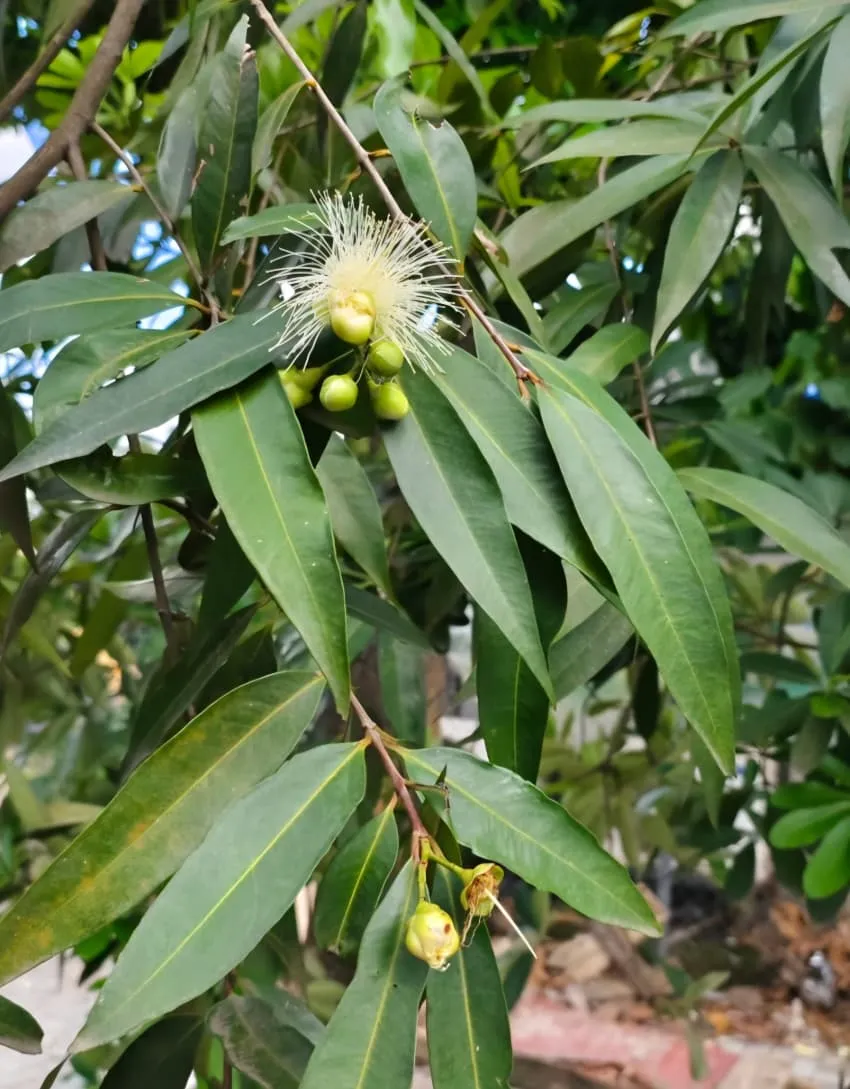
Figure 1: Syzygium jambos (L.) Alston Leaves
The species is natively distributed across Asia, including India, Malaysia, Myanmar, the Philippines, Sri Lanka, Bangladesh, Pakistan, Thailand, and southern Chinese provinces such as Guangdong and Guangxi.
Reflecting the diverse regions where it is cultivated as a garden fruit tree and occurs as an invader, Syzygium jambos carries a wide variety of common and vernacular names:
Syzygium jambos (L.) Alston contains a diverse group of secondary metabolites across its various organs. It is rich in polyphenols, flavonoids, and tannins. Specific active compounds in its extract include ellagic acid, quercetin, myricetin, and sterols. The leaves and bark are noted for their rich accumulation of volatile essential oils, which primarily feature compounds like methyl eugenol and (E)-caryophyllene.
In traditional medicine systems like Ayurveda, several parts of the tree are utilized as a tonic or a diuretic. Powdered leaves are traditionally rubbed on the bodies of smallpox patients to provide a therapeutic cooling effect.[4,5]
Pheretima posthuma, also known as the Indian adult earthworm, is a popular model organism in in vitro anthelmintic research because of its anatomical and physiological similarities to intestinal helminths like Ascaris lumbricoides [6] and is generally considered ethically acceptable as an invertebrate model.[7]
Although several studies have investigated the pharmacological properties of Syzygium species, limited research has focused on the in vitro anthelmintic activity of aqueous leaf extracts of Syzygium jambos (L.) Alston against Pheretima posthuma. Therefore, this study aims to prepare the aqueous leaf extract, identify its phytochemical constituents, and evaluate its in vitro anthelmintic activity to explore its potential as a natural source of anthelmintic agents.
MATERIALS AND METHODS:
Drugs and chemicals
The standard drug Albendazole, solvents like distilled water, normal saline, and other chemicals were used in this study. All the chemicals and reagents utilized in the study were of analytical grade and high purity.
Collection and identification of the plant:
Fresh leaves of Syzygium jambos (L.) Alston were collected in June-July 2026 from the tree growing on the campus of Sarada Vilas College of Pharmacy, Mysuru, Karnataka, India. The plant specimen was authenticated by Dr M. Devika, Principal and Head of the Department of Botany, Sarada Vilas College, Mysuru. The collected fresh leaves were thoroughly washed, shade-dried, ground into a coarse powder using a grinding machine, and stored in an airtight container for further use.
Extraction:
Maceration is an extraction method in which coarsely powdered plant material is completely immersed in a suitable solvent (menstruum) inside a closed container. The mixture is kept for at least three days with occasional stirring or shaking to facilitate complete extraction of phytoconstituents.[8]
Preparation of aqueous extract:
Weigh 25 g of the coarsely powdered, air-dried leaves and transfer it into a clean, dry conical flask or glass-stoppered bottle. Add 250 mL of distilled water (1:10 w/v ratio) to completely immerse the powder. Close the container tightly and allow the mixture to stand at room temperature (25–30°C) for 72 hours (3 days). Shake or stir the mixture occasionally to enhance extraction. After 72 hours, filter the extract through Whatman No. 1 filter paper to obtain a clear filtrate. Concentrate the filtrate by evaporating it on a water bath maintained below 50°C. The concentrated extract will be dried, weighed, and stored in an airtight container until further use.[9,10]
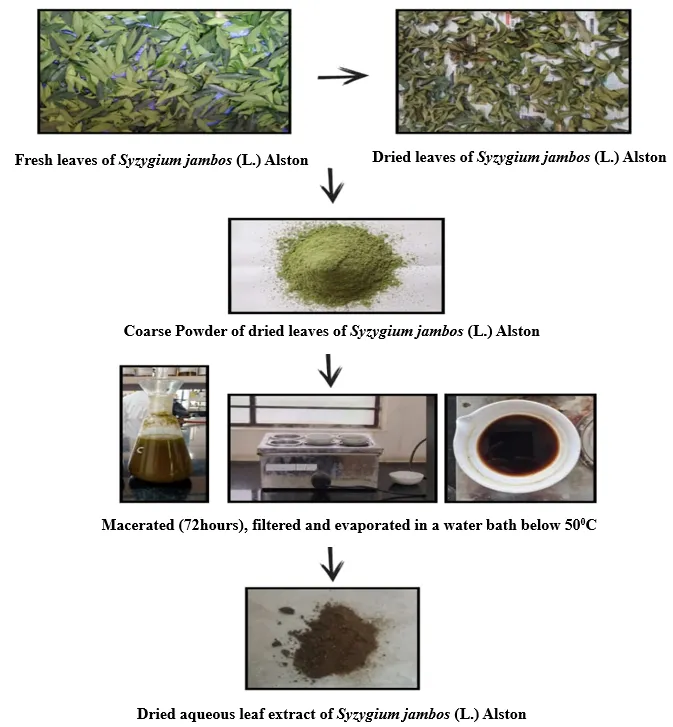
Figure 2: Aqueous Extraction Process of Syzygium jambos (L.) Alston Leaves
Percentage yield is calculated using the following formula [9,10]
Percentage yield (%) = (weight of dried extract obtained after maceration (g))/(weight of the powdered drug used for maceration(g)) x 100
Preliminary Phytochemical Screening:
Preliminary Phytochemical Investigation of the aqueous leaf extract of Syzygium jambos (L.) Alston was carried out using standard qualitative chemical tests to identify the presence of various phytoconstituents. The extract was subjected to tests for Carbohydrates (Molisch’s and Fehling’s tests)[11], Alkaloids (Mayer’s and Dragendorff’s tests)[11], Flavonoids (Shinoda test, Alkaline reagent test and lead acetate test)[11], Phenols (Ferric chloride test)[11], Saponins (foam test) [11], Steroids (Salkowski’s test)[11], Tannins (ferric chloride (Braymer’s test) and matchstick tests)[11,12], Proteins (Biuret test)[11], Amino acids (Ninhydrin test)[11], and Glycosides (general chemical test)[13].
Evaluation of in vitro anthelmintic activity:
Experimental worms
Pheretima posthuma, commonly known as earthworm, collected from HumVerm Private Limited, Mysuru. Before the experimental procedures, the earthworms were thoroughly washed with normal saline solution to remove adhering dirt, soil, and extraneous fecal matter. Only active and healthy worms of nearly equal size were selected for the experiment.
Preparation of Test and Standard solution
The dried aqueous extract of Syzygium jambos (L.) Alston is dissolved in normal saline to prepare different concentrations such as 20, 40, 60 mg/mL, and the final volume will be made to 25 mL
Fresh solutions are prepared immediately before the experiment
Albendazole will be used as the standard drug. Prepare 20 mg/mL Albendazole by accurately weighing 500 mg and dissolving in 25 mL normal saline (or equivalent from a tablet after correcting for excipients); similarly, prepare 40 and 60 mg/mL and adjust the final volume to 25 mL. [14]
Experimental Design
The in vitro anthelmintic activity was evaluated using the method of Mukadam et al. (2016), with a minor modification in the number of worms used. The present study used two adult worms of approximately equal size in each experimental group.
A 25-mL aliquot of each test or standard solution was transferred into a separately labelled Petri dish. The worms were divided into six groups, including a seventh control group (normal saline). Groups I, II, and III received the standard drug Albendazole at different concentrations, such as 20, 40, 60 mg/mL, respectively. Groups IV, V and VI received different concentrations (20, 40, 60 mg/mL) of the aqueous extract of Syzygium jambos (L.) Alston.
Evaluation parameters
Earthworms were released into the Petri dishes with different concentrations of the drug and extracts. Observations were made for the time taken for paralysis and death of worms. Time of paralysis is the time when the worms show no movement except when shaken vigorously. Time of death is defined as the time when worms show no movement even after vigorous shaking or dipping in warm water (50 0C), followed by fading of body colour for evaluation of in vitro anthelmintic activity of Syzygium jambos (L.) Alston.
The time values are expressed in terms of Mean ± SEM. [14]
RESULTS AND DISCUSSION
The pharmacognostic evaluation of Syzygium jambos (L.) Alston involved the morphological and organoleptic characterization of its leaves. The leaves were found to be 15–17 cm in length and 4–6 cm in breadth. Young leaves were reddish, while mature leaves were glossy dark green, with a characteristic mild rose-like aroma. The leaf surface was glabrous, the margin entire and smooth, the base cuneate, and the apex distinctly pointed. These characteristics serve as important identifying features for the pharmacognostic authentication of the plant. The percentage yield of the aqueous extract of Syzygium jambos (L.) Alston was found to be 14.12%.
Table 1 and Figure 3 summarize the phytochemical investigation of aqueous extracts of leaves of Syzygium jambos (L.) Alston. Preliminary screening shows the presence of Alkaloids, Flavonoids, tannins, and Phenolic compounds and the absence of Carbohydrates, Saponins, Proteins, Amino acids, steroids, and Glycosides.
Table 1: Preliminary Phytochemical Screening of Syzygium jambos (L.) Alston
| Sl No. | Name of the Test | Aqueous extract of Syzygium jambos (L.) Alston |
|---|---|---|
| 1. | Test for carbohydrates | |
| a. | Molisch’s Test | - |
| b. | Fehling’s Test | - |
| 2. | Test for Alkaloids | |
| a. | Mayer’s Test | + |
| b. | Dragendorff’s Test | + |
| 3. | Test for Flavonoids | |
| a. | Shinoda Test | + |
| b. | Alkaline Reagent Test | + |
| c. | Lead acetate Test | + |
| 4. | Test for Tannins | |
| a. | Ferric chloride Test | + |
| b. | Matchstick Test | + |
| 5. | Test for Saponins | |
| a. | Foam Test | - |
| 6. | Test for Proteins | |
| a. | Biuret’s Test | - |
| 7. | Test for Amino Acids | |
| a. | Ninhydrin Test | - |
| 8. | Test for Steroids (Phytosterols) | |
| a. | Salkowski Test | - |
| 9. | Test for Phenols | |
| a. | Ferric chloride Test | + |
| 10. | Test for Glycosides | |
| a. | General Test | - |
+ indicates that the sample shows a positive result for the test
- indicates that the sample shows a negative result for the test
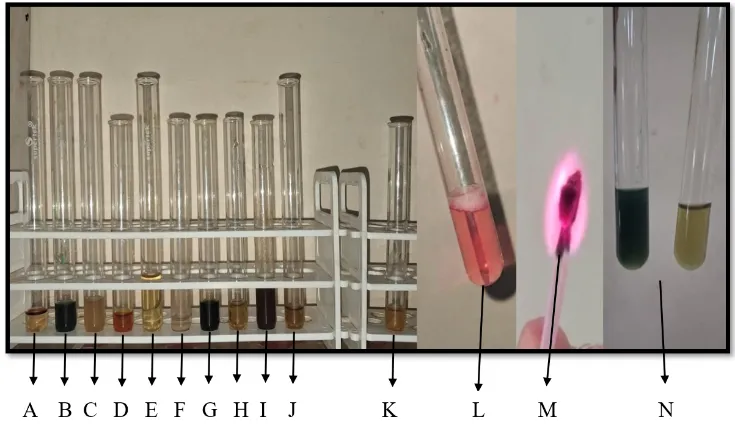
Figure 3: Preliminary Phytochemical Screening of Syzygium jambos (L.) Alston
A) Molisch's Test, B) Fehling's Test, C) Mayer's Test, D) Dragendorff's Test, E) Alkaline Reagent Test, F) Lead acetate Test, G) Ferric chloride Test, H) Foam Test, I) Biuret's Test, J) Ninhydrin Test, K) Salkowski Test, L) Shinoda Test, M) Matchstick Test, N) General test for glycosides [solution b was not darker than solution a]
The in vitro anthelmintic potential of aqueous extracts of Syzygium jambos (L.)Alston was evaluated (Figure 4) by measuring the time required for complete paralysis (Tp) and death (Td) in earthworms at varying concentration levels (20 mg/mL, 40 mg/mL, and 60 mg/mL). Albendazole was employed as the standard drug. Values are expressed as Mean ± SEM, min.
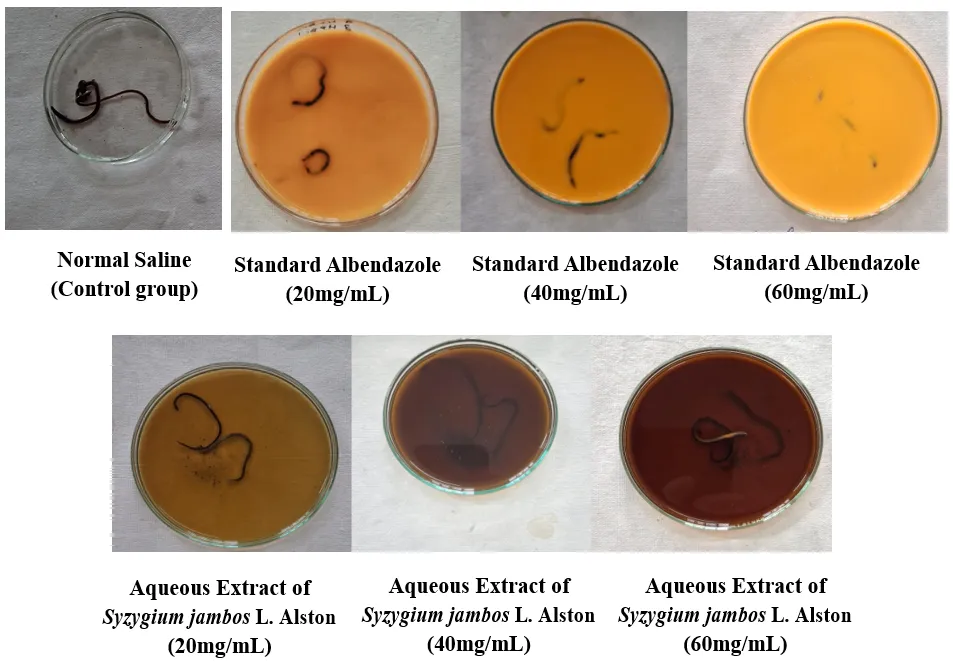
Figure 4: In vitro Anthelmintic Evaluation of Standard Albendazole and Aqueous Leaf Extract of Syzygium jambos (L.) Alston at Varying Concentrations (20, 40, and 60 mg/ml) Using Pheretima posthuma.
Table 2: In Vitro Anthelmintic Activity of Syzygium jambos (L.) Alston Against Pheretima posthuma.
| Treatment | Concentration | Time of Paralysis (minutes) (Mean ± SEM) |
Time of Death (minutes) (Mean ± SEM) |
|---|---|---|---|
| Normal Saline (control) | - | - | - |
| Standard (Albendazole) | 20 mg/mL | 17.76 ± 0.19 | 31.72 ± 0.34 |
| 40 mg/mL | 12.29 ± 0.42 | 16.22 ± 0.98 | |
| 60 mg/mL | 4.52 ± 0.07 | 9.52 ± 0.38 | |
| Aqueous Extract of Syzygium jambos (L.) Alston | 20 mg/mL | 83.85 ± 3.52 | 103.14 ± 2.59 |
| 40 mg/mL | 36.98 ± 0.71 | 52.68 ± 1.51 | |
| 60 mg/mL | 18.88 ± 0.11 | 31.74 ± 0.28 |
Albendazole exhibited the highest anthelmintic activity. At 20 mg/mL, the mean time of paralysis (Tp) and death (Td) were 17.76 ± 0.19 and 31.72 ± 0.34 minutes, respectively. At 40 mg/mL, these times decreased to 12.29 ± 0.42 and 16.22 ± 0.98 minutes. The highest concentration of 60 mg/mL exhibited the greatest activity, with TP and TD values of 4.52 ± 0.07 and 9.52 ± 0.38 minutes, respectively.
The aqueous leaf extract of Syzygium jambos (L.) Alston also demonstrated concentration-dependent anthelmintic activity against Pheretima posthuma. At 20 mg/mL, the mean Time of paralysis and mean time of Death were 83.85 ± 3.52 and 103.14 ± 2.59 minutes, respectively. At 40 mg/mL, these values decreased to 36.98 ± 0.71 and 52.68 ± 1.51 minutes, while at 60 mg/mL, they further declined to 18.88 ± 0.11 and 31.74 ± 0.28 minutes. Although the extract showed slower activity than albendazole, its effectiveness increased with concentration. These findings suggest that Syzygium jambos (L.) Alston leaves possess potential anthelmintic properties.
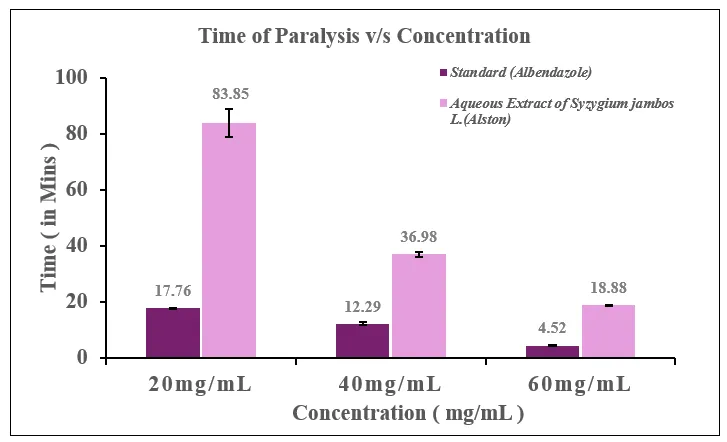
Figure 5: Comparative Evaluation of Time of Paralysis (Tp) of Adult Indian Earthworms (Pheretima posthuma) Treated with Standard Albendazole and Aqueous Extracts of Syzygium jambos (L.) Alston at Varying Concentrations (20, 40, and 60 mg/ml).
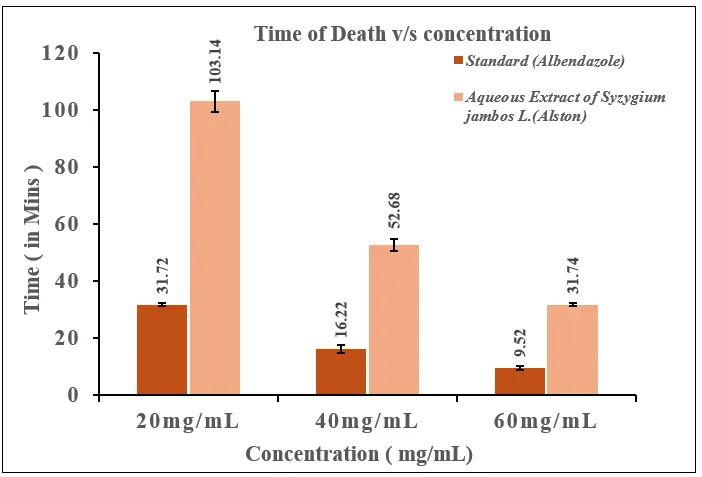
Figure 6: Comparative Evaluation of Time of Death (Td) of Adult Indian Earthworms (Pheretima posthuma) Treated with Standard Albendazole and Aqueous Extracts of Syzygium jambos (L.) Alston at Varying Concentrations (20, 40, and 60 mg/ml).
CONCLUSION
The present study indicates the conclusion that the aqueous leaf extract of Syzygium jambos (L.) Alston possesses anthelmintic activity when compared with the standard drug Albendazole. Phytochemical screening revealed alkaloids, flavonoids, tannins, and phenolic compounds. The extract exhibited concentration-dependent activity, with the highest concentration (60 mg/mL) producing the shortest paralysis and death times. Although less potent than albendazole, these findings support further investigations using an in vivo model to determine and establish the effectiveness and pharmacological rationale for the use of leaves in anthelmintic formulations. So, further study must be carried out so that the public can benefit from this important medicinal plant.
ACKNOWLEDGEMENT
We sincerely thank the Principal, Dr Hanumanthachar Joshi, the teaching and non-teaching staff and the Management of Sarada Vilas College of Pharmacy, Mysuru, Karnataka, India, for providing the necessary facilities and support to carry out this study and Dr M. Devika for authenticating the plant material.
CONFLICT OF INTEREST
The authors declare no conflicts of interest regarding the publication of this research article.
REFERENCES

Varshini R., Uma Maheshwari M. P., Thanushree R., Nischitha D., Keerthy S. P., Neha N., Phytochemical Screening and in Vitro Evaluation of Anthelmintic Potential of Aqueous Leaf Extract of Syzygium Jambos (L.) Alston Against Pheretima Posthuma, Int. J. of Pharm. Sci., 2026, Vol 4, Issue 11, 3143-3150. https://doi.org/10.5281/zenodo.24360673
 10.5281/zenodo.24360673