

We use cookies to ensure our website works properly and to personalise your experience. Cookies policy
The Oxford college of pharmacy, Bengaluru, Karnataka 560068
Poor aqueous solubility and low bioavailability remain major challenges in the effective delivery of therapeutic agents. This study focuses on enhancing solubility and targeted delivery through lipid-based and targeted drug delivery systems. Conventional formulation limitations have been addressed through techniques such as solid dispersion, co-solvents, nanotechnology, and colloidal carriers. Among these, lipid-based drug delivery systems (LBDDS), including liposomes, niosomes, emulsions, and self-emulsifying drug delivery systems (SEDDS), have shown great potential to improve the dissolution rate, absorption, and bioavailability of lipophilic drugs. Targeted drug delivery systems (TDDS) utilize carriers like liposomes, nanoparticles, and polymeric systems to deliver therapeutic agents specifically to diseased tissues, thereby minimizing systemic toxicity and side effects. The mechanisms involved, such as ligand–receptor interactions, cellular uptake, and controlled release, ensure selective accumulation and enhanced therapeutic efficiency. Lipid-based formulations mimic natural lipid absorption pathways, promoting lymphatic transport and bypassing first-pass metabolism, while systems like SMEDDS and SNEDDS provide thermodynamic stability, rapid emulsification, and improved patient compliance. Despite certain formulation and stability challenges, advancements in nanostructured lipid carriers, transferosomes, and phytosomes have expanded the versatility and applicability of lipid systems. Future directions focus on the development of multifunctional, stimuli-responsive, and AI-optimized delivery platforms for precision therapy. Overall, the integration of lipid-based strategies with targeted delivery principles significantly enhances pharmacokinetic performance, improves therapeutic outcomes, and represents a promising frontier in the advancement of novel drug delivery systems.
The "bioavailability" refers to the rate and extent to which a drug's active ingredient is absorbed from a drug product and becomes available at the site of action. It is a significant pharmacological consideration that determines the effectiveness of drug therapy. A greater dose of a highly poorly bioavailable drug is required to establish the minimum effective level [1].
FACTORS AFFECTING BIOAVAILABILITY`
METHODS TO IMPROVE BIOAVAILABILITY
MAINLY FOCUSED ON TARGETED DRUG DELIVERY AND LIPID-BASED DRUG DELIVERY SYSTEM
TARGETED DRUG DELIVERY SYSTEM
The first to propose the concept of targeted agents was Ehrlichp in 1906. The drug carrier that selectively concentrates on the target site by local delivery or whole-body blood circulation is referred to as a targeted agent, also known as a targeted drug delivery system. Targeted agents fall into several types, and each has unique but connected purposes. There are many imaginable combinations due to this multiplicity of categories. Because fields like molecular biology, cell biology, and materials science have advanced much over time, targeted agents develop very fast; thus, research hotspots, in pharmaceutics and pharmacy worldwide, lay here. Western medicine has seriously researched and employed targeted agents within clinical settings [4].
The most commonly known type of targeting is active targeting, which involves imposing targeting features on the medicine. This method includes techniques for creating medications that target specific molecules in the body whose structure or function needs to be changed for therapeutic purposes. As a result, the drug's inherent signature is this targeting. However, most other active targeting strategies pertain to methods in which the drug is extrinsically endowed with the targeting property, for example, by conjugation to another entity that possesses targeting attributes. In this case, a drug can be linked to a part that does not show affinity or binding to a particular target but allows the drug's controlled release in response to particular environmental indicators of the disease site [5].
Preparation of products based on such a delivery system considers the unique characteristics of the target cells, the type of markers or transport carriers or vehicles that deliver the drug to certain receptors and ligands, and physically modified components. Drug delivery methods that are specifically targeted must be biochemically inert (non-toxic), non-immunogenic, physically and chemically stable both in vitro and in vivo, have uniform capillary distribution, and have limited drug distribution to target cells, tissues, or organs. The rate of drug release should be predictable and controlled, and the release of the drug shouldn't interfere with its function. It should release drugs at a therapeutic level with little to no leakage while in transit [6].
As far as the carriers are concerned, targeted drug delivery can be classified as liposomes, microparticles, nanoparticles, emulsions, etc. In this approach, conjugation of the medication with a carrier leads to the formation of a less toxic prodrug for a particular cellular target. There are two roles, which the carrier has. These two goals are enhancing the selectivity of the drug towards target cells and lowering the toxicity of the drug towards healthy cells. After the prodrug reaches the target cell, the drug is released from its relatively inactive or less toxic form to its active form to perform physiological function [4].
LIPOSOMES
Alec D. Bangham identified liposomes in the 1960s at the Babraham Institute of the University of Cambridge. It is a vesicle composed of one or more concentric lipid bilayers that enclose an aqueous compartment. Initially made completely of natural lipids, the formulations can now be composed of surfactants and natural or synthetic lipids. They are capable of entrapment of hydrophilic compounds within the aqueous core and lipophilic compounds within the lipid membrane. These nearly spherical lipid vesicles can vary in size from a few nanometers to several micrometers. However, liposomes employed for drug delivery in medicine are 50–450 nm [7].
NANOPARTICLES
The term "nanotechnology" describes a new branch of research that deals with the creation of different nanomaterials.Objects with dimensions from 1 to 100 nm, and possibly differing from the bulk material in some aspects, are termed as nanoparticles.Among these, metallic nanostructures have been fabricated from copper, zinc, titanium, magnesium, gold, alginate, and silver. Nanoparticles have many applications, including medicinal treatments, industrial production in the sectors of solar and oxide fuel batteries for energy storage, and widespread integration into many cmon products such as clothing and cosmetics[8].
LIPID-BASED DRUG DELIVERY
Solid self-emulsifying drug delivery - " Each of the formulation strategies has its benefits and drawbacks, and the most commonly used technique involves adding the active lipophilic ingredient to inactive lipid excipients, surfactant dispersions, self-emulsifying formulations, emulsions, and liposomes. Isotropic blends of natural or synthetic oils, solid or liquid surfactants, or one or more hydrophilic solvents and co-solvents/surfactants are called self-emulsifying oil formulations, or SEDDS. Due to their capability of solubilizing "lipophilic" drugs with poor water solubility and also solving the problem of bad drug absorption and bioavailability, lipidic excipients have increasingly attracted interest for being used in formulations and self-emulsifying lipid formulations (SELFs)[9].
BIOLOGICAL PROCESS IN TARGETED DRUG DELIVERY SYSTEM
The critical role of biological mechanisms in TDDS is in ensuring that medicines safely and effectively reach their targeted areas. Among the key biological mechanisms involved, the following stand out:
ADVANTAGES OF TARGETED DRUG DELIVERY SYSTEM
DISADVANTAGES OF TARGETED DRUG DELIVERY SYSTEM
APPLICATIONS OF TARGETED DRUG DELIVERY SYSTEM
DIFFERENT TYPES OF DRUG TARGETING
CARRIER TYPES IN TARGETED DRUG DELIVERY
Lipid-Based Carriers (Liposomes & Niosomes)
Polymer-Based Carriers (Polymeric Nanoparticles & Dendrimers)
TABLE 1: CARRIER SIZE AND APPLICATIONS [32,33,34,35,36,37,38,39].
|
CARRIER TYPE |
SIZE RANGE |
APPLICATIONS |
|
1. Liposomes |
50 nm - 1 μm |
Delivery of anticancer drugs [eg,doxcrubicin] to tumor sites. Delivery of vaccines and immunomodulatory agents. |
|
2. Niosomes |
20 nm – 100 nm |
They are used to enhance the topical delivery of various pharmaceuticals. Niosomes can help to protect drugs from degradation and control their release. |
|
2.1. Polymeric Nanoparticles [PLGA] |
100 nm – 500 nm |
Controlled release of therapeutic proteins and peptides. Delivery of small molecule drugs for chronic diseases. |
|
2.2. Mesoporous Silica Nanoparticles [MSNs] |
50 nm -200 nm |
High drug loading and controlled release for cancer Delivery of genes and other macromolecules. |
|
3. Dendrimers |
1 nm -10 nm |
Delivery of nucleic acids [siRNA, DNA] for gene therapy. Delivery of antiviral drugs and other small molecules. |
Lipid-Based Drug Delivery System
Lipid-based drug delivery systems (LBDDS) represent a class of formulation techniques employing synthetic or physiological lipids to enhance the therapeutic performance, solubility, and bioavailability of drugs, especially those characterized by poor water solubility (BCS Class II and IV). These approaches capitalize on lipids' ability to improve drug solubility, promote lymphatic transport and diminish first-pass metabolism. A wide variety of formulations fall under the umbrella of LBDDS, including but not limited to liposomes, solid lipid nanoparticles, emulsions, microemulsions, self-emulsifying drug delivery systems, simple lipid solutions and nanostructured lipid carriers 40.
Among the various methods of drug delivery, lipid-based drug delivery systems have several advantages, especially in the case of poorly water-soluble drugs. Solubilization is improved and there is a possibility of lymphatic transport, besides eliminating first pass metabolism with LBDDS, whereas by conventional systems, these have relatively low dissolving rates, erratic absorption and poor bioavailability. With the help of formulations such as solid lipid nanoparticles, nano emulsions and self-emulsifying drug delivery systems (SEDDS), the added advantage could be improved stability, controlled release and targeted distribution. Lipid-based formulations or LBDDS would be the best alternative for almost all lipophilic, or BCS class II/IV drugs because they mimic the natural digestion and absorption pathways for lipids which result in higher and more constant plasma concentration, fewer doses and improved therapeutic effects 41.
Using formulations based on lipids and surfactants is one tactic that has been utilized to improve the oral absorption of medications that are not highly water-soluble. Nowadays, a lot of work has been done to make use of the potential of lipid-based methods for delivering drugs since they offer a suitable means of delivering bioactive agents and medications with different molecular weights, whether they are small or large, at particular times and locations. Lipids have gained a lot of significance in the past ten years as potential delivery routes for medications that are not highly soluble in water. Pharmaceuticals can be commercially formulated using these techniques for parenteral, pulmonary, oral, or topical administration. Over the past few decades, liposomes have become more and more popular in a variety of applications, such as gene transfer, cancer treatment and infectious diseases. Their capacity to store, shield and transport molecules with a variety of chemical and physical properties makes them one of the most adaptable carriers. Small, adaptable vesicles made of lipids are called liposomes. Because they are made of one or more lipid bilayers, they can be used to encapsulate hydrophilic, lipophilic, or amphiphilic substances. Lipid-based DDS contains polar lipids, such as phospholipids, triglycerides and fatty acids, which are biocompatible and biodegradable, making them perfect for use as drug delivery systems 42.
The future direction of lipid-based delivery systems would be to generate multifunctional carriers capable of targeted, stimuli-responsive and customizable delivery. Innovations in the sector would include surface-modified carriers for site-specific targeting, nanostructured lipids for better drug loading and hybrid lipid--polymer systems for improved stability. Precision would be achieved through this application with ligands, peptides, or antibodies and large-scale manufacturing techniques as well as environmentally friendly manufacturing, would make way for commercialization. Further, developments may involve future lipid systems by parenteral or oral delivery of gene treatments, biologics and small molecules with poor solubility. Advances would be powered by computer modeling and AI-reliant formulation design to ensure lipid-based therapies are more secure, effective and personalized for each patient 43.
Some examples of challenges faced by lipid-based drug delivery systems are physical instability (phase separation and drug precipitation), chemical degradation of lipids and limited drug-excipient compatibility. Variability in bile salt secretion and fat breakdown, as well as high surfactant concentrations that may irritate the gastrointestinal tract, can create unpredictable bioavailability. Particle size and emulsification must be precisely controlled during manufacture and at scale-up to preserve performance. In vivo correlation and special characterization methods increase the regulatory burden. The high cost of pure excipients, storage stability and variability in lipid metabolism from patient to patient still stand as hurdles toward successful industrial translation of the product 44.
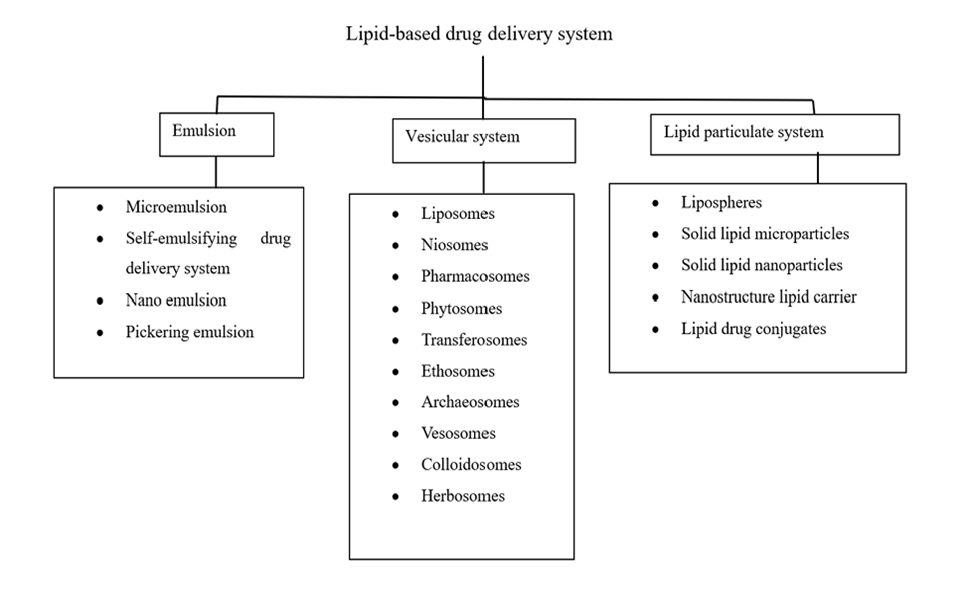
Figure 3: Classification of LBDDS 45.
Emulsions are made when two insoluble fluids, such as oil and water, are mixed and maintained by emulsifying chemicals. Upon ingestion of the emulsion, the drug's absorption is facilitated by its dissolution in the oil phase. There are generally two kinds of emulsion systems, which are water and oil (o/w): oil droplets dispersed in water are a common way to provide drugs in oral and injectable form. granules of water suspended in oil are known as water dispersed in oil and are commonly used topically. they can improve bioavailability and solubilize hydrophobic (water-insoluble) drugs 46.
Isotropic water and oil dispersions known as microemulsions are stabilized by a surfactant interfacial coating and are typically mixed in a cosolvent, like medium-chain alcohol, a polyhydroxy molecule, or other surface-active agent. microemulsions are used extensively due to their various advantages, which include their scalability, ease of production, high solubilization power, thermodynamic stability and aesthetically pleasing look 47.
Nano emulsions are emulsions with droplets that are typically between 20 and 200 nm in size but less than 1μ. Because nano emulsions are easy to manufacture, biodegradable and biocompatible, they are utilized as carriers for lipophilic medications that are susceptible to hydrolysis. They function as a subcutaneous injection-based sustained release delivery system for depot formation. For some drugs, they improve stomach absorption and lessen intra- and inter-subject variability. Their incredibly wide interfacial area results in an amazing drug release profile. Nano emulsions for oral, via ingestion, ophthalmic, pulmonary and cutaneous delivery have been studied and developed 48.
In the 1960s, Alec D. Bangham of the University of Cambridge's Babraham Institute discovered liposomes, which are made up of multiple concentric bilayers of lipids encasing an aqueous region. Phospholipids in an aqueous solution self-assemble to form these microscopic (unilamellar or multilamellar) vesicles, which are two-layered closed structures. Although liposomes are composed of a variety of chemicals, the two main ones are phospholipid and cholesterol. One type of phospholipid and sphingolipid is phosphoglycerides, which can also be hydrolyzed to create combination products. Based on their size and the quantity of bilayers they contain, liposomes can be divided into three fundamental kinds. Aqueous gaps divide the many lipid bilayers that make up multilamellar vesicles (MLVs). The diameter of these items often ranges from several hundred to thousands of nanometers; however, their sizes vary greatly. In contrast, the confined aqueous area of large unilamellar vesicles (LUVs) and small unilamellar vesicles (SUVs) is surrounded by a single bilayer. LUVs have a diameter of more than 100 nm, whereas SUVs are smaller. Liposomes can be administered orally, ophthalmically, pulmonary, or transdermally 49.
Niosomes are compartments that form non-ionic bilayers mostly composed of surfactants. Despite having identical structural and physical properties, niosomes can profit from the use of synthetic surfactants, which are less expensive and more chemically stable than naturally occurring phospholipids. Niosomes can be created by hydrating artificial non-ionic surface active agents, either with or without the inclusion of lipids like cholesterol. Niosomes and liposomes function similarly, boosting the drug's absorption and lowering its excretion. Similar to liposomes, niosomes may be employed to transport medications to particular bodily regions. Like liposomes, niosomes' characteristics are determined by the composition of the bilayer and the manufacturing process. Additionally, niosomes have been employed to carry antigens and small molecules. However, niosomes as a delivery system can have significant disadvantages, including physical instability during storage caused by vesicles clumping together, fusing and leaking, which could result in encapsulated drug hydrolysis and reduce the shelf life of the dispersion 50.
The creation of transferosome technology aimed to provide a way to distribute bioactive substances over the epidermal barrier. The active ingredient may be found in the membrane of lipids or within the center, depending on how lipophilic it is. When applied topically, transferosomes may penetrate deeper, undamaged skin areas than liposomes, making them an efficient drug delivery method for transdermal applications. Because of this, they are able to offer higher concentrations of active substances. An antigen or drug can be put into these vesicles similarly to how liposomes are loaded. To use phospholipid vesicles as transdermal drug delivery vehicles, transferosomes were developed. Depending on how the drug is applied or administered, these self-optimized aggregates ultra-flexible membrane may transport it through or into the skin consistently and effectively. Both large and low molecular weight medications, including insulin, gap junction proteins, sex hormones, analgesics, anesthetics, corticosteroids and anticancer medicines, can be carried by them. Like liposomes, they are biodegradable and biocompatible due to their naturally occurring phospholipid composition. They have a trapping efficiency of up to 90% when it comes to lipophilic medicines. However, because of their propensity for oxidative disintegration, they have the drawback of being chemically fragile. Another obstacle that hinders the use of transfersomes as drug administration vehicles is the high formulation costs and the intrinsic purity of phospholipids 51.
Any herbal remedy's ability to work depends on how well the therapeutically effective ingredient is dispersed. They have very little absorption when used orally or topically. Phytosomes are a new class of herbal compounds that are more easily absorbed than extracts. "Some" indicates something that looks like a cell, while "phyto" indicates a plant. Through the addition of phospholipids to standardized herbal preparations, phytosome technology has enhanced the ingestion and bioavailability of specific plant constituents. Because emulsified formulations are amphiphilic, they readily penetrate and cross lipid-rich biomembranes, increasing the bioavailability of active phytochemical components. Many well-known herbal extracts, including ginseng, green tea, kushenin, marsupsin, curcumin, olive fruits and leaves grape seed, hawthorn and Ginkgo biloba, have been extracted using the phytosome process. Phytosomes have a higher bioavailability than uncomplexed plant extracts, according to research on pharmacokinetics and activity in both humans and animals 52.
Lipid Particulate System
Initially, lipospheres were defined as a solid lipophilic core composed of triglycerides or fatty acid analogs, stabilized by a phospholipid monolayer and a fine dispersion of firm spherical particles with a diameter of 0.2 to 100 µm. Lipospheres have been used in the delivery of anti inflammatory medications, local anesthetics, antibiotics, anticancer drugs, insect repellents, vaccines, proteins and peptides. Unlike microdroplets, vesicles, or liposomes, the lipospheres contain a rigid inner core at room temperature. Because the lipospheres include at least two phospholipid layers, they differ from microspheres of evenly distributed particles in homogeneous polymers. Comparing lipospheres to emulsion-based systems like vesicles and liposomes, the former are more stable and disperse more efficiently than most suspension based systems. Because the vehicle in lipospheres is solid, there is less chance of a contact between the delivered material and the vehicle than in emulsion systems. Furthermore, by altering the solid core or the phospholipid coating, the substance's dispersion rate from lipospheres can be changed. In addition to being easier to make than vesicles like liposomes, they have more intrinsic stability 53.
Solid Lipid Nanocarriers (SLNs) were introduced in the early 1990s by Professors R.H. Müller and M. Gasco. NLCs are colloidal carriers with a mean particle size in the nanometer range and a lipid-based center composed of a combination of liquid and solid lipids. The second generation of lipid nanoparticles, known as nanostructured lipid carriers (NLC), provide a more effective substitute for liposomes and other particulate delivery methods frequently seen in medications. Generally recognized as safe (GRAS) materials are used to generate nanostructured lipid carriers (NLCs). They are especially successful in encapsulating lipophilic and weakly water-soluble pharmaceuticals and provide the benefit of being easily scalable for large-scale manufacture. The high-water content of SLN dispersions, drug ejection during storage and the poor drug-loading capacity for certain compounds are some of the constraints of SLNs that the NLC system solves. Lipid carriers with a nanostructure can be divided into three categories: many, amorphous and imperfect 54
Mechanism of Drug Release in Lipid-Based System
The primary component of the formulation is lipids, which are metabolites of fatty acids; however, in order to increase solubilization and dispersion properties, a few or more surface active agents and maybe a hydrophilic cosolvent may be required 55.
Based on their HLB value, surfactants are categorized; stronger hydrophilicity is indicated by a larger HLB value (≥10), while higher lipophilicity is indicated by a lower HLB value (≤10) 43. The equilibrium within a medicament's dissolvability in the gastrointestinal lumen's watery environment and its capacity to penetrate enterocytes' lipophilic membrane determines both the pace and degree of absorption. Gastric lipase starts breaking down dietary triglycerides (TG) and formulation triglycerides following oral ingestion of lipid compositions. At the same time, the stomach's mechanical processes of propulsion, grinding and retropulsion aid in combining the aqueous gastric fluid with the results of lipid breakdown to create a crude emulsion. Diglycerides, 2 monoglycerides and free fatty acids are produced in the small intestine by the further breakdown of triglycerides by pancreatic lipase and its cofactor, co-lipase. This process primarily occurs at the sn-1 and sn-3 regions of the triglycerides. Pancreatic phospholipase A2 hydrolyzes the sn-2 position in formulation-derived or biliary phospholipids to create lysophosphatidylcholine and fatty acids. When extraneous lipids are found in the small intestine, the gallbladder releases natural hepatic lipids, including cholesterol, phospholipids and bile salts. Bile salts combine with monoglycerides, fatty acids and lysophospholipids when lipids are broken down to form a variety of dispersion configurations, including micelles and single-layer or multi-layer vesicles. The solubilization and absorption of lipid digestion products and medications in the small intestine are significantly improved by these lipid metabolites 56.
Advantages of Lipid-Based Drug Delivery System
Disadvantages Of Lipid-Based Drug Delivery Systems
Self-Microemulsifying Drug Delivery System
SMEDDS are isotropic blends of hydrophobic surfactants, oils and occasionally co-solvents that quickly form fine o/w emulsions when gently stirred or when the digestive tract experiences motility. Self-nanoemulsifying drug delivery systems (SNEDDS) often produce emulsions with a droplet size of less than 100 nm, while SMEDDS typically produce emulsions with a droplet size between 100 and 250 nm 62.
Oil, co-solvents and hydrophilic surfactants that quickly create an o/w microemulsion when gently stirred and then diluted in an aqueous medium that will be encountered in the gastrointestinal tract 51. It is important to note that the low-energy emulsification approach for creating o/w nanoemulsions is the same as this technique for creating a fine o/w emulsion utilizing SMEEDS/SNEDDS. Diffusion from oil globule to dissolving media is the rate-limiting stage for drug material dissolution from SMEDDS and it is impacted by the system's surfactant and co-surfactant concentrations. SMEDDS and SEDDS vary primarily in that SMEDDS create clear microemulsions with droplet sizes smaller than 250 nm, whereas SEDDS usually create opaque emulsions with droplet sizes larger than 300 nm (Pouton 2000). Furthermore, SMEDDS have a lower oil content than 20%, whereas SEDDS have an oil content of 40–80%. HLB512 surfactants are typically used to prepare SEDDS, whereas HLB412 surfactants are used to prepare SMEDDS and SNEDDS. When compared to the same drug supplied as a manufactured microemulsion, the microemulsion globule generated by SMEDDS/SNEDDS tended to be larger 63.
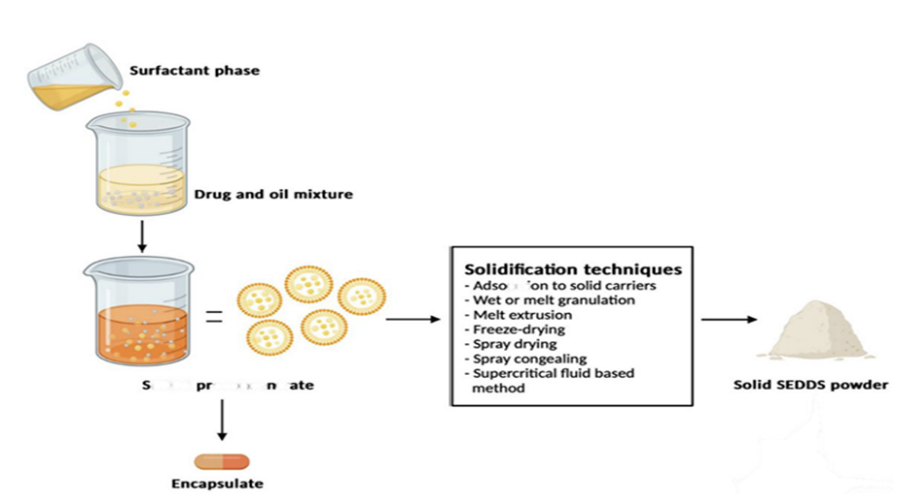
Figure 4: Preparation of a solid self-emulsifying Drug Delivery system
Composition of SMEDDS
Typically, an SMEDDS formulation comprises of drug, oil, surfactant and co-surfactant Drug.
The primary factors to be taken into account prior to developing the SMEDDS formulation are the drug's lipophilicity and dosage. The medicine should ideally have a low dosage, log P 2 and no significant first-pass metabolism. The medication should have significant solubility in lipids, surfactants and co-solvents that are recognized by the pharmaceutical industry 64.
Portal blood carries medium-chain triglycerides (MCT) with six to twelve carbon atoms straight into the systemic circulation. On the other hand, intestinal lymphatics carry long-chain triglycerides (LCT) with more than 12 carbon atoms. MCTs are frequently utilized in lipid based formulations due to their greater solvent capacity and resistance to oxidation 65.
Surfactants help the dispersion process by forming the interfacial film and reducing the interfacial tension to a low value. When choosing a surfactant, the HLB value and surfactant concentration must be taken into account. The emulsifier used to formulate SMEDDS must have a high HLB larger than 12 to achieve good emulsifying performance. This helps the formulation spread quickly in aqueous media and create tiny o/w droplets. Since non-ionic surfactants with HLB412 are less hazardous than ionic surfactants, they are typically recommended for the construction of self-dispersing systems 66.
Co-surfactants guarantee the interfacial layer's flexibility by bringing the interfacial tension down to zero. Co-surfactants create a flexible interfacial layer to acquire the many curvatures needed to create microemulsions throughout a broad composition range. Alcohols of a medium chain length (C3–C8) are frequently used as co-surfactants 67.
Advantages Of SEDDS Over Other Emulsions 68,69
Limitations Of Smedds 70,71
Although SMEDDS formulation has several advantages, there are certain limitations associated with this system
CONCLUSION
The development of lipid-based and targeted drug delivery systems represents a significant advancement in pharmaceutical technology aimed at overcoming the limitations of conventional drug formulations. Poor aqueous solubility and low bioavailability have long hindered the therapeutic effectiveness of many potent drugs. Through innovative approaches such as liposomes, niosomes, solid lipid nanoparticles, nanostructured lipid carriers, and self-emulsifying drug delivery systems (SEDDS and SMEDDS), substantial progress has been made in improving solubility, stability, and site-specific drug delivery. These systems enhance therapeutic outcomes by ensuring controlled release, prolonged circulation time, and reduced systemic toxicity. Targeted drug delivery systems (TDDS) further improve treatment efficiency by directing therapeutic agents to specific tissues or cells using ligand–receptor interactions, thereby minimizing adverse effects on healthy tissues. Lipid-based systems, in particular, mimic physiological lipid absorption pathways, promoting lymphatic transport and bypassing first-pass metabolism to enhance systemic bioavailability. Despite their tremendous potential, challenges such as formulation stability, large-scale production, and regulatory complexities continue to limit their widespread application. Continuous innovations in nanotechnology, bioengineering, and computational modeling are expected to refine these systems for safer, more effective, and patient-centered drug delivery. The integration of lipid-based and targeted delivery approaches holds immense promise for the future of precision medicine, offering the possibility of customized therapies with superior efficacy and minimal side effects. Overall, these novel systems mark a transformative step toward achieving optimal drug performance and improved therapeutic outcomes across various disease conditions.
REFERENCES




Shiva Chavan H R, Divya S Kumar, Dr. Gururaj S Kulkarni, Dr. Annabalaji, A Comprehensive Review on Lipid-Based and Targeted Drug Delivery Approaches for Improved Therapeutic Efficiency, Int. J. of Pharm. Sci., 2025, Vol 3, Issue 10, 3117-3137. https://doi.org/10.5281/zenodo.17474775
 10.5281/zenodo.17474775