

We use cookies to ensure our website works properly and to personalise your experience. Cookies policy
Shivajirao S. Jondhle college of pharmacy, Thane, India.
Acne is a long-lasting inflammatory disease of the pilosebaceous unit and, although it does not seriously affect general health, it is socially distressing, especially among young people. Many plants reported in the literature possess antimicrobial, antioxidant, and anti-inflammatory activities, making them suitable for acne management. The main objective of this work is to formulate a herbal cream to reduce the side effects associated with chemical cosmetics. Creams are widely used topical preparations due to their ease of application, removal, and skin benefits such as cleansing, moisturizing, protection against microbial infections, and wound healing. Acne mainly occurs due to excess oil production, clogged pores, and increased androgen levels. This review focuses on herbal ingredients such as wintergreen leaves (antibacterial and anti-inflammatory), aloe vera gel (reduces redness and microbial growth), cucumber peel extract (anti-aging and pore-tightening).
Acne vulgaris is a common and distressing dermatological condition, particularly affecting adolescents and teenagers. Global statistics indicate that nearly 85% of individuals experience acne between the ages of 12 and 25, while its prevalence decreases to about 8% in adults aged 23–34 and 3% in those aged 35–44. Although acne is often considered a self-limiting disorder, it can significantly impact an individual’s psychosocial well-being, leading to reduced self-esteem, social withdrawal, and emotional stress . Acne vulgaris primarily arises from pathological changes in the pilosebaceous units, which consist of hair follicles and associated sebaceous glands . The condition is multifactorial in nature, involving excessive sebum production, follicular hyperkeratinization, microbial colonization, and inflammation. Increased androgen levels, particularly during puberty, stimulate sebaceous gland activity in both males and females, making adolescents more susceptible to acne . Although the severity of acne generally decreases with age, persistent or untreated cases can result in scarring and long-term skin damage, highlighting the importance of effective and safe therapeutic approaches.
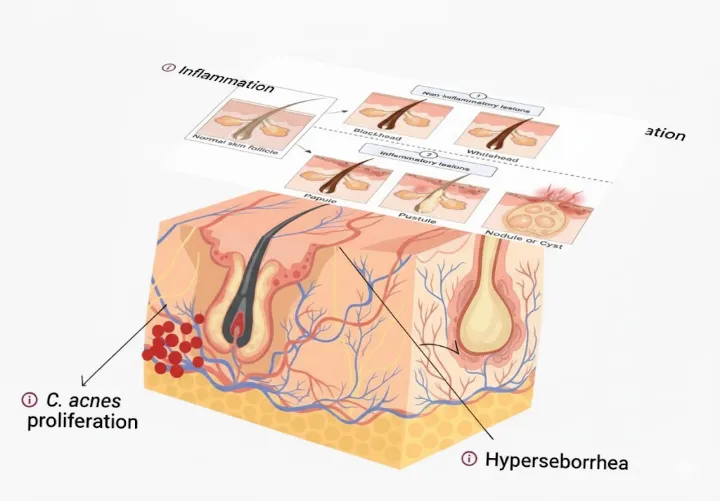
Fig.1. Types Of Acne
Whiteheads: These tiny pimples stay beneath the skin’s surface.
Blackheads: These appear black and rise to the skin's Surface, yet they are not caused by dirt. The reason black heads are black is not because of the dirt. The protein known as keratin is typically oxidized by air.
Papules: These little, delicate pink pimples are easily noticeable on the skin.
Pustules: Also known as zits or pimples, pustules are visible on the skin’s surface and are red at the base with pus at the top.
Nodules: These are easily seen on the skin’s surface. These are big, painful, solid pimples that are visible on the skin’s surface yet are located deep within the skin.
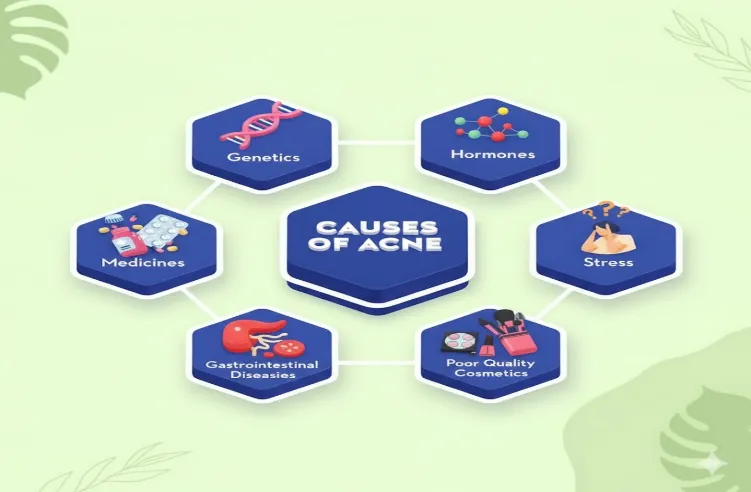
Fig.2. Causes Of Acne
Blockage of follicles, hyperkeratinisation, keratin plug development, and sebum (microcomedo) are the causes of acne. Sebaceous glands swell and sebum production rises in tandem with increased androgen production. The microcomedo may grow into a closed comedo or an open comedo (blackhead). Comedones develop when sebum, naturally occurring oil, and dead skin cells clog the sebaceous ands.[8]
Propionibacterium acnes, a naturally occurring commensal bacterium, can produce inflammation and inflammatory lesions in the dermis surrounding the microcomedo microcomedo or comedone, such as infected pustules, nodules, and papules, which
can lead to redness, scarring, or hyperpigmentation.[9]
Environmental factors :
These include things like high humidity, prolonged perspiration, increased skin hydration, and exposure to specific chemicals, such as petroleum derivatives, or dirt or vaporized frying oil.
Hormones :
Acne can also result from adolescence and menstrual cycles. Follicle gland enlargement and an increase in sebum production are caused by the rise in androgen levels throughtout puberty.
The effects of anabolic steroids are comparable. The androgens testosterone, dihydrotestosterone, dehydroepiandrosterone sulphate, and insulin-like growth factor 1 (IGF-I) are among the hormones associated with acne. Acne vulgaris rarely develops in later life, but rosacea, which has comparable symptoms in older age groups, will become more common. Adult female acne vulgaris may result from underlying conditions such polycystic ovarian syndrome, Cushing’s disease, hirsutism, or pregnancy.[12]
Stress :
Research indicates that a higher degree of stress is linked to more severe acne. According to the National Institutes of Health (USA), stress can trigger an outbreak of a acne. A study conducted on teenagers in Singapore found a favorable relationship between stress levels and the severity of acne.[13]
Improper diet:
Although a high-glycemic diet is linked to worsening acne, the exact association between diet and acne is yet unknown. Consuming milk is positively correlated with an increase in the prevalence of acne. According to reports, eating chocolate and salt is not linked to the onset of acne. Chocolate has a high glycemic load due to its high sugar content. It’s probable that obesity and insulin metabolism are related to acne.[14]
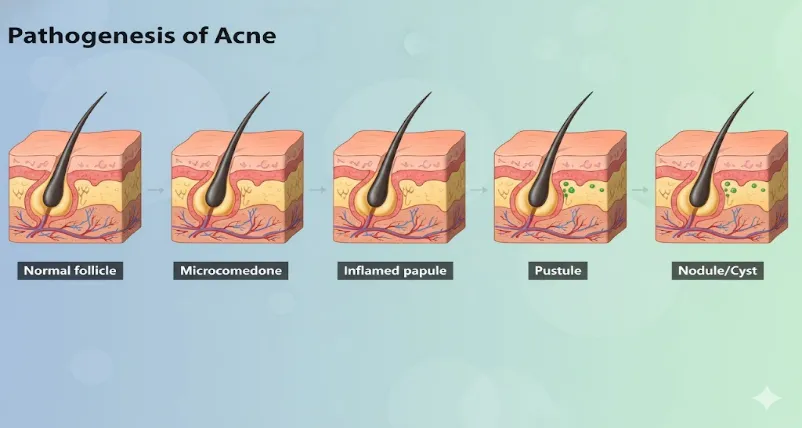
Fig.3. Pathogenesis of acne
Hyperkeratinisation in the sebaceous duct and follicular infundibulum is one of the most important processes in the formation of acne lesions. The sebum The lipid-rich secretory product of the sebaceous gland, sebum is produced by sebocytes, which may function as skin immune cells in conjunction with keratinocytes. Sebum production is directly correlated with acne severity16. The expansion of sebaceous glands brought on by androgen stimulation results in an increase in sebum excretion. Patients with acne have lower amounts of the sebum antioxidant vitamin E and lipoperoxides from the peroxidation of squalene in their sebum.
The main alteration in the pilosebaceous unit of acne patients is abnormal follicular epithelial differentiation. When desquamated cornfield cells in the follicle’s upper canal become excessively adherent, they form a retained, microscopic hyperkeratotic plug (the microcomedo) in the follicular canal rather than passing through the regular process of shedding and discharge through the follicular orifice. Cosmogenesis is the term for this process. Clinically visible comedones are the result of the microcomedo’s progressive enlargement. These can be open comedones, or black heads, which appear flat or slightly elevated and protrude from the follicular orifice; they can also be closed comedones, or white heads, which have a closed overlying surface; or they can be black due to the oxidation of melanin pigment.
Symptoms :
Papules, nodules (big papules), comedones, pustules, scarring, and seborrhea (increased oilsebum discharge) are among its symptoms.[16]
Acne’s appearance changes depending on the color of the skin, and it’s also linked to social and psychological issues.[17]
Inflammation within the dermis is seen in acne scars, which are produced when wounds heal and collagen deposits in one area.[18]
Natural drugs :
Winter green leaves, Cucumber peels, Alo Vera Gel, Butterfly pea flower, Almond seed oil, Neem,
Manjistha, Tea tree oil, Turmeric.
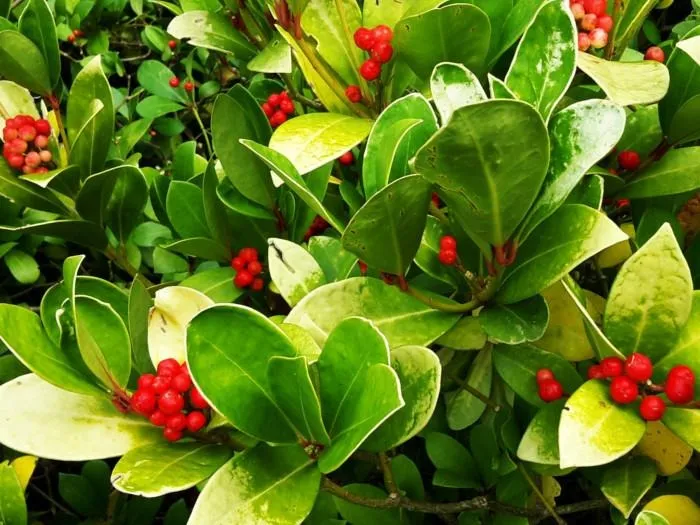
Fig.4. Winter Green Leaves
Plant components (flowers, buds, seeds, leaves, twigs, bark, herbs, timber, fruits, and roots) provide aromatic, oily liquids known as essential oils or volatile oils. They can be obtained using the most widely utilized method for commercial production, steam distillation. Certain oils have been utilized in the treatment of cancer.[22]
The Ericaceae family includes the small, low-growing shrub Gaultheria procumbens L., also known as the eastern teaberry or American wintergreen. It is indigenous to north-eastern North America. For hundreds of years, the plant has been used in traditional medicine to treat conditions related to inflammation or infection, particularly fever, influenza, rheumatoid arthritis, and the common cold.[23]
Genus name – Gultheria
Species name – Gultheria procumbense
Family – Ericaceae
Other Common Names
Winterberry , Checkerberry, Tea Leaf, Deer berry, Box berry, Eastern teaberry
Chemical constituents
Methyl salicylate : 96.90%
Cyclic monoterpene hydrocarbon : limonene 2.17%
Monoterpene hydrocarbon: Beta pinene , alpha pinene, sabinin and myrcene – 0.64% 4) oxygenated Monoterpene : fenchone and menthone salicylate : 96.90%
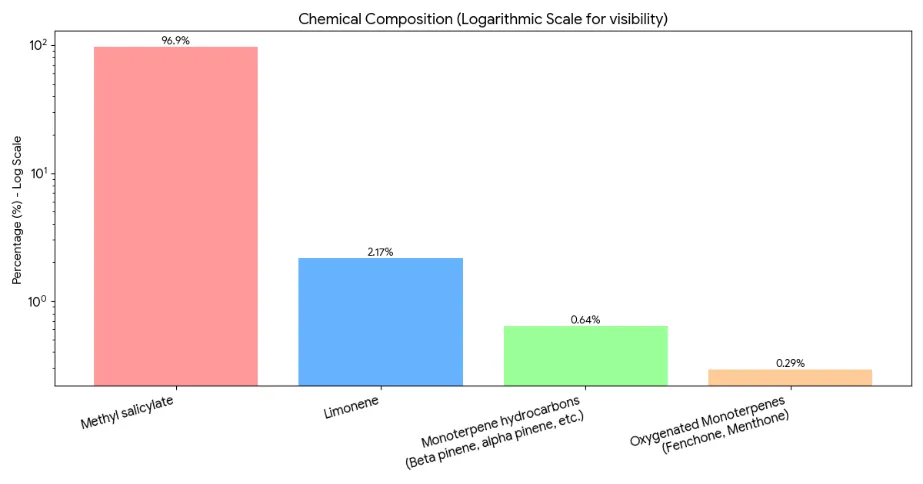
Fig.5. Chemical Composition
Mechanism Of action of methyl Salicylate
Keratolytic Action: Methyl salicylate softens and removes the stratum corneum, the outermost layer of skin, by acting as a keratolytic agent. The main cause of acne, pore blockage, is lessened by this exfoliating action. It maintains pores open and encourages smoother skin surface by eliminating dead skin cells, which lessens the development of comedones (blackheads and whiteheads).
Anti-inflammatory Activity: Because methyl salicylate inhibits the activity of cyclooxygenase (COX) enzymes, it possesses anti-inflammatory qualities. It lessens acne lesions’ redness, swelling, and irritation by lowering the synthesis of pro-inflammatory mediators such prostaglandins.
Antimicrobial Effect: Methyl salicylate has modest antibacterial qualities that aid in preventing the growth of microorganisms that cause acne, including Propionibacterium acnes (formerly known as Cutibacterium acnes). Inflammation and the chance of developing fresh acne are reduced by this decrease in bacterial burden.
Decrease in Sebum Production: Methyl salicylate may also affect the sebaceous glands by somewhat lowering the production of sebum, or oil, which is a major contributing cause to the development of acne. Reduced sebum production lessens the likelihood of clogged pores and helps manage oily skin.
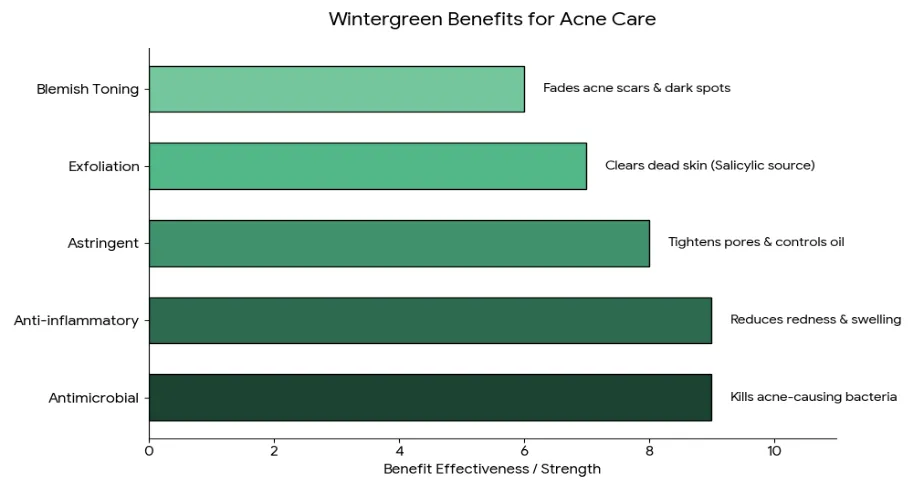
Fig.6. Benefits Of Winter Green Leaves
Action And Uses
Similar to aspirin, wintergreen oil can have an analgesic effect when applied directly to the skin.
When alcohol is combined with wintergreen essence, it also exhibits antipyretic properties.
It is highly effective in treating sporadic fever.
Additionally, this can be used to treat rheumatism and other sexually transmitted diseases like gonorrhea. Wintergreen oil is useful for chronic cystitis, subcutaneous pain, and trigeminal neuralgia. In the aforementioned situations, this oil is applied as liniments and ointments to relieve discomfort.
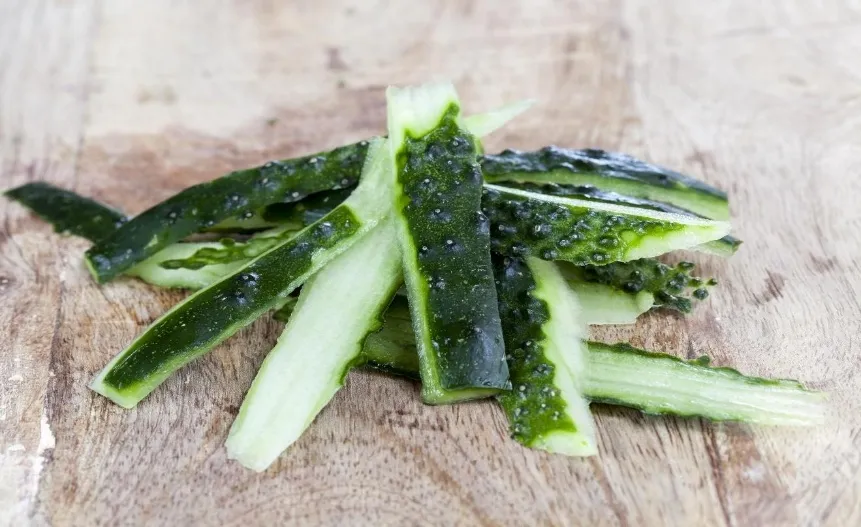
Fig.7. Cucumber Peels
Cucumber peels have various health benefits, so don’t throw them away. Constipation, vitamin A and C deficiencies, eye diseases, and disorders of the bones and muscles are among the advantages.
Minerals including magnesium, potassium, and silica can be found in cucumber peels, which are also high in fiber.
Silica is necessary to maintain the health of your tendons, muscles, and bones. Additionally, it moisturizes our skin and enhances our complexion and vision.
Genus name : cucumis
Species name : cucumis sativum
Family : Cucurbitaceae
Chemical constituents
Phenolic compounds : flavanoid (quercetin), Tannins, Caffeic acid
Vitamins : vitamins c. (Ascorbic acid ) Vitamin k, Beta carotene
Minerals : silica, Potassium, Magnesium
Cucurbitacins Ligans Fiber
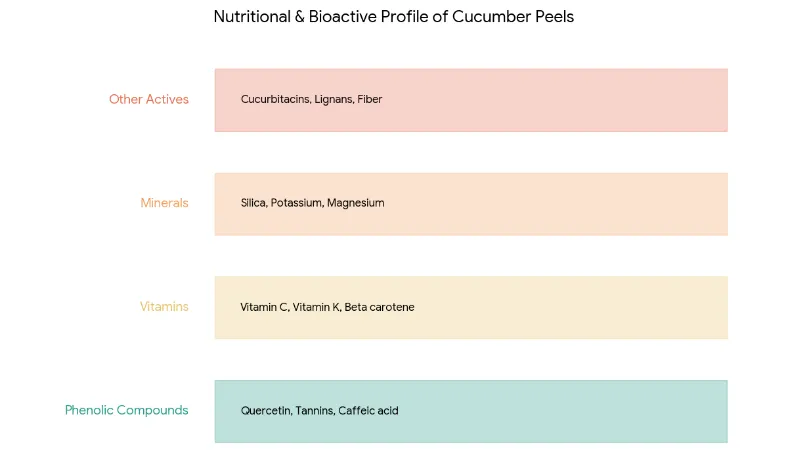
Fig.8. Chemical Constituents
Mechanism of action of cucurbitacin
Anti-inflammatory Action:- Inhibition of Pro-inflammatory Cytokines: TNF-α (tumour necrosis factor-alpha), IL-1β (interleukin-1 beta), and IL-6 (interleukin-6) are among the pro-inflammatory cytokines that cacurbitacin inhibits. Redness, edema, and inflammation related to acne are lessened with cucurbitacin by blocking these inflammatory chemicals. Suppression of the NF-κB Pathway: Cucurbitacin has the ability to block the NF-κB (Nuclear Factor-kappa B) pathway, which is an important inflammatory regulator. The inflammatory reaction that causes acne lesions to form is lessened by this activity.
Antimicrobial Properties
Inhibition of Bacteria Causing Acne: Cucurbitacin has antimicrobial effect against bacteria that are frequently linked to acne, such as Propionibacterium acnes (now Cutibacterium acnes). By lessening bacterial colonization on the skin, this lowers the chance of acne lesions forming.
Antioxidant Activity
Decrease in Oxidative Stress: Cucurbitacin reduces oxidative stress in the skin by scavenging free radicals. Acne can result from oxidative stress, which can harm skin cells and exacerbate inflammation. Cucurbitacin promotes a clearer complexion by shielding skin cells from this harm.
Control of the Production of Sebum:
Prevention of Lipid Synthesis Cucurbitacin may moderate the production of sebum (oil) via influencing lipid metabolism in the skin, albeit this is not its main mechanism of action. One typical cause of acne is clogged pores, which can be avoided with reduced sebum production.[25]
Properties of cucumber peels
Antioxidant properties , Anti-inflammatory effect, Antibacterial activity, Hydration and astringent effect, Cooling and soothing effect, Mild exfoliating effect .
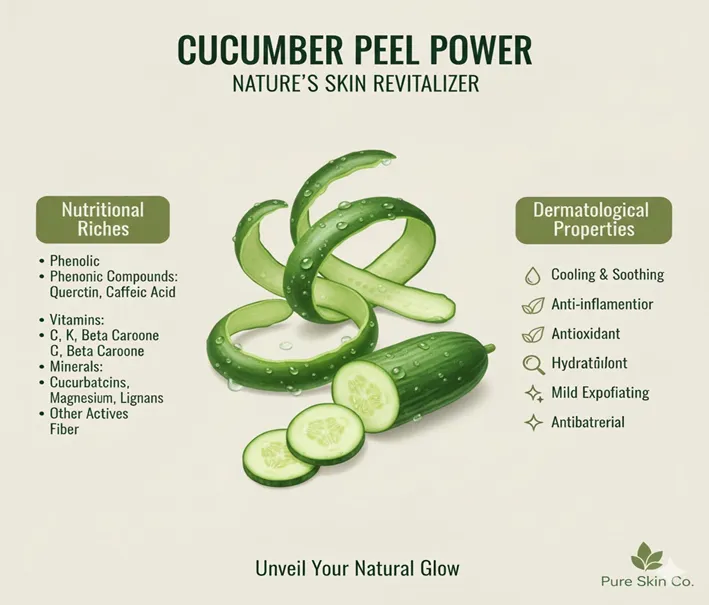
Fig.9. Properties of cucumber peels
Beneficial for the skin
Cucumber peels helps in revitalizing the skin from within. Regular application of cucumber-based face packs or grated cucumber appears to be effective in reducing the signs of skin aging. It is also good for your dark circles, open pores, blemishes, etc.
Reverses Skin Tanning Cucumber has a mild bleaching property that can help you get rid of skin tan. Just grate the cucumber and apply the juice on your face and you’re all set to face harsh UV rays. [26]
CONCLUSION
Natural ingredients that are believed to have positive skincare effects—such as cucumber peels and wintergreen leaves—play an important role in maintaining healthy skin. These ingredients are widely valued for their antioxidant, antimicrobial, antibacterial, and anti-inflammatory properties, which help restore skin hydration, protect against environmental damage, and slow visible signs of aging. By reducing inflammation and supporting the skin’s natural barrier, such plant-based materials can contribute to a clearer, smoother, and more balanced complexion.
Despite the widespread availability of synthetic pharmaceuticals and cosmetic products in today’s market, many consumers continue to prefer natural alternatives. This preference is largely driven by concerns over the potential side effects of chemical-based products, which may cause irritation, dryness, or long-term damage to the skin. Natural ingredients are often perceived as gentler, safer, and more compatible with the body’s natural processes. Additionally, the growing awareness of sustainability and eco-friendly practices has increased interest in using plant-derived substances that are biodegradable and environmentally responsible.
Overall, the use of natural ingredients in skincare represents a promising and holistic approach to skin health. By combining traditional knowledge with modern research, these natural compounds can offer effective, affordable, and safer solutions for skincare needs. As consumer demand for clean and natural products continues to rise, further research and development in this area may help integrate natural remedies more widely into modern skincare formulations.
REFERENCES


Shivani Chavan, Sanket Gabhale, Gauri Bhambre, Ravi Yadav, Shreya Wathore, A Review on Anti-Acne Properties of Winter Green Leaves and Cucumber Peels , Int. J. of Pharm. Sci., 2026, Vol 4, Issue 5, 6993-7001, https://doi.org/10.5281/zenodo.20396955
 10.5281/zenodo.20396955