

We use cookies to ensure our website works properly and to personalise your experience. Cookies policy
Department of Pharmaceutics, D.S.T.S. Madal’s College of Pharmacy, Solapur, Maharashtra, India 413004.
A natural herbal face wash tablet was formulated and evaluated using sandalwood powder (Santalum album) and orange peel powder (Citrus sinensis) as the principal herbal ingredients. The present study aimed to develop a natural, eco-friendly, portable, and effective face wash tablet capable of cleansing the skin while minimizing the adverse effects associated with synthetic cosmetic products. Four formulations (F1–F4) were prepared by the direct compression method using different concentrations of sandalwood powder and orange peel powder, along with sodium lauryl sulphate (SLS), acacia powder, crospovidone, and magnesium stearate. The prepared formulations were evaluated for pre-compression parameters, including bulk density, tapped density, Carr's compressibility index, Hausner's ratio, and angle of repose, as well as post-compression parameters such as physical appearance, weight variation, thickness, hardness, friability, disintegration time, pH, foaming ability, washability, skin irritation, and stability. The results indicated that all formulations exhibited satisfactory flow properties and complied with acceptable pharmaceutical quality standards. Among the prepared formulations, F2 showed the best overall performance, demonstrating excellent foaming ability, effective washability, satisfactory hardness, acceptable friability and weight variation, rapid disintegration, and a skin-compatible pH. The formulation was found to be non-irritant and remained stable throughout the study period. The findings suggest that the optimized F2 formulation is a promising natural herbal face wash tablet that provides effective cleansing, convenience, portability, and reduced packaging waste. Therefore, it may serve as a suitable eco-friendly alternative to conventional liquid and gel-based face wash formulations.
Traditionally a gentle cleansing agent, face washes are supposed to cleanse the skin from dirt, excess sebum/oil, dead cells and microbial load by degreasing or emulsifying impurities away whilst hydrating the skin sufficiently without stripping skin barrier function and in turn causing harsh dehydration of the stratum corneum. Good face washes should cleanse well, promote rejuvenation, minimize blemishes, rinse easily and not irritate.1,2
Demand for herbal and natural formulations has surged due to growing concerns about synthetic cosmetics. While compounds originating from plants are often thot to be gentler, biocompatible, and appropriate for regular skincare, chemical-based solutions are sometimes thot to have negative consequences after extended use. When properly prepared, herbal cosmetics are typically non-toxic, non-allergic, and free of harsh petrochemical ingredients, which has increased interest in polyherbal face washes, gels, packs, and related dosage forms. 3,4
Face washes come in a variety of physical forms, such as liquid, powder, gel, and cream-based formulations. Solid unit dose methods, such face wash tablets, have been investigated more recently as a practical, transportable, and possibly more stable substitute for traditional liquids and gels. According to reports, direct compression is a useful technique for making polyherbal face wash tablets that facilitates production and the assessment of physicochemical and performance characteristics.2,5
Orange peel (Citrus sinensis) and sandalwood (Santalum album) are particularly important natural actives used in facial care. Sandalwood is prized for its cooling, clarifying, calming, antibacterial, and anti-inflammatory qualities in both conventional and contemporary skincare. Because of its flavonoid and vitamin C concentration, orange peel functions as a natural astringent and antioxidant source that is used to detoxify, clarify, and make dull skin look better.6,7
Commercial herbal cleansers that combine orange peel and sandalwood are marketed as sulphate-sparing substitutes that leave skin clear, fresh, and matte while eliminating excess sebum and pollutants. To improve antibacterial, anti-inflammatory, cleaning, and skin-conditioning effects, related herbal systems often include complimentary botanicals including neem, tulsi, aloe vera, rice flour, and moisturizing ingredients.4,6,9
Orange peel, sandalwood, rice flour, and other plant materials have been used in the formulation and evaluation of herbal face packs and washes for morphological, physicochemical, irritancy, washability, homogeneity, viscosity, and stability parameters. The results reported are similar to those of commercial products and do not cause significant skin irritation under study conditions. The scientific justification for creating standardized herbal cleansing solutions with specified composition and assessment procedures is supported by these findings.4,5
There is still need for solid, unit-dose herbal face wash tablets with sandalwood and orange peel as the major ingredients, even tho liquid and gel herbal cleansers and powder face packs are readily available. If disintegration, cleaning effectiveness, pH, safety, and stability are well described, such tablets may provide benefits in terms of easier dosing, less volume, better handling, and possibly better stability compared to fluid solutions.2,5
MATERIALS AND METHODS
Collection of Herbal Materials and Chemicals
Herbal Materials.10,11
The formulation's herbal components, orange peel powder (Citrus sinensis) and sandalwood powder (Santalum album), were purchased from a nearby herbal market in Solapur, Maharashtra. Before being used again, the gathered items were verified, cleaned to get rid of any foreign objects, dried if needed, and kept in airtight containers. Chemicals and Excipients.12
The formulation contained the following pharmaceutical-grade excipients:
The investigation employed only analytical or pharmaceutical-grade substances and excipients.
Method of Preparation of Herbal Face Wash Tablets.12,13
The direct compression method was used to make the herbal face cleanser tablets.
1. To achieve a consistent particle size, sandalwood powder and orange peel powder were precisely weighed in accordance with the formulation and run thru a #60 filter.
2. To create a homogenous powder combination, the necessary amounts of Sodium Lauryl Sulphate (SLS), Crospovidone, and Acacia powder were precisely weighed and carefully mixed with the herbal powders in a clean mortar using mild trituration.
3. To achieve even distribution without compromising the blend's flow characteristics, magnesium stearate was added as a lubricant and gently stirred for two to three minutes.
4. The resulting powder blend was weighed in accordance with the intended tablet weight (400 mg per tablet) after being visually assessed for homogeneity. The weighed powder blend was compressed using a tablet compression machine by the direct compression technique. Compression force was adjusted appropriately to obtain tablets with satisfactory hardness and mechanical strength.
5. After gently removing the crushed tablets from the die cavity, any obvious flaws including capping, chipping, lamination, or adhering were inspected.
6. Until further analysis, the produced herbal face wash tablets were kept at room temperature in sealed containers.
Preformulation Research
Prior to tablet compression, preformulation studies were conducted to assess the powder blend's micromeritic characteristics. In order to produce tablets of consistent weight and quality using the direct compression method, these tests aid in determining the blend's flow properties and compressibility.14.
1. Bulk Density
The mass of a powder divided by its total bulk volume is known as bulk density. It is helpful in evaluating the handling and storage qualities of powder and shows the packing characteristics of the powder under typical circumstances.
Without compacting the powder, a predetermined amount of the powder mixture was precisely weighed and carefully put into a graduated measuring cylinder. The bulk density was computed using the following formula once the bulk volume was recorded.
Weight of powder (g) divided by bulk volume (cm³) yields bulk density (g/cm³).
2. Density Tapped
The density of a powder after it has been mechanically tapped until a consistent volume is reached is known as tapped density. It offers details about the powder blend's compressibility and packing capacity.
A graduated cylinder was filled with a determined amount of the powder mixture, and it was mechanically tapped until the volume did not change any more. The following formula was used to get the tapped density after the final tapped volume was noted.15
Tapped Density (g/cm³) = Weight of powder (g) / Tapped volume (cm³)
3. The Hausner Ratio
An essential metric for assessing the flow characteristics of powder mixes is Hausner's ratio. Better flow qualities are indicated by lower numbers, whereas poor flowability is suggested by values above 1.25.
The following formula was used to determine the Hausner's ratio:
Hausner's Ratio: Tapped Density divided by Bulk Density
4. The Compressibility Index of Carr
Powder blends' compressibility and flowability are assessed using Carr's Compressibility Index. Higher values imply poor flow because of increased interparticle friction, whereas lower values indicate excellent flow qualities.
The following formula was used to determine the compressibility index:
Carr's Compressibility Index (%) = [(Tapped Density − Bulk Density) / Tapped Density] × 100
5. Angle of Repose
A straightforward and popular technique for assessing the flow properties of powders is the angle of repose. It is described as the greatest angle that forms between the horizontal plane and the surface of a powder pile.
To create a conical heap, the powder mixture was let to flow freely through a funnel that was placed at an appropriate height onto a level surface. The following formula was used to determine the angle of repose after the powder cone's height (h) and radius (r) were determined.16.
Tan θ = h/r
where:
θ = Angle of repose
h = The powder cone's height
r = The powder cone's radius
FORMULATION TABLE:
Table 1: Formulation table
|
Ingredients (mg/tablet) |
F1 |
F2 |
F3 |
F4 |
Use |
|
Sandalwood Powder |
10 |
15 |
20 |
25 |
Herbal active |
|
Orange Peel Powder |
10 |
15 |
20 |
25 |
Herbal active |
|
Sodium Lauryl Sulphate (SLS) |
20 |
20 |
20 |
20 |
Surfactant and foaming (cleansing) agent |
|
Acacia Powder |
10 |
10 |
10 |
10 |
Binder |
|
Crospovidone |
10 |
10 |
10 |
10 |
Superdisintegrant |
|
Magnesium Stearate |
5 |
5 |
5 |
5 |
Lubricant |
|
Total Weight (mg) |
100 |
100 |
100 |
100 |
- |
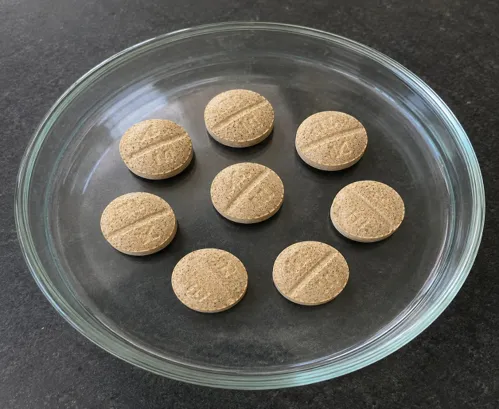
Fig 1. Image of Natural Herbal Face Wash Tablets
Evaluation of Natural Herbal Face Wash Tablets
In order to determine if the prepared herbal face wash tablets were suitable as a natural face washing formulation, their organoleptic, physicochemical, and performance aspects were assessed.
1. Physical Assessment
The physical characteristics of the prepared herbal face wash tablets were assessed visually. Color, odor, shape, surface texture, homogeneity, and the existence of any obvious flaws, such as lamination, chipping, capping, or cracking, were all noted. Additionally, the pills' general acceptability and appearance were assessed.17
2. Test of Weight Variation
The Indian Pharmacopoeia was followed for conducting the weight variation test. A computerized analytical balance that had been calibrated was used to weigh each of the twenty randomly chosen tablets. The percentage weight variation was computed by calculating the average tablet weight and comparing the individual weights with the average weight.
3. Thickness
A digital Vernier caliper was used to measure the thickness of ten tablets from each formulation batch. Millimeters (mm) were used to determine and express the average thickness.
4. Test for Hardness
A Monsanto tablet hardness tester was used to measure tablet hardness. Each formulation's ten tablets were tested separately, and the average crushing strength was measured in kilograms per square centimeter (kg/cm²).
5. Test for Friability
A Roche friabilator was used to assess the tablets' mechanical strength. For four minutes (100 revolutions), a pre-weighed sample of tablets was rotated at 25 rpm. After dedusting and reweighing the tablets, the following formula was used to determine the percentage friability:
% Friability = [(Initial Weight − Final Weight) / Initial Weight] × 100
6. Disintegration Time
A USP disintegration test device with distilled water kept at 37 ± 0.5°C was used to measure the disintegration time of the herbal face wash tablets. Each tablet's total disintegration time was noted.18
7. Determining pH
To guaranty that the herbal face wash tablet would be compatible with the skin's natural pH, its pH was measured. Distilled water was used to create a 1% w/v aqueous solution of the powdered tablet, which was then let to fully disperse. A digital pH meter that had been calibrated was used to measure the pH at room temperature. The mean value was noted after the measurements were carried out in triplicate.19
8. Foaming Ability (Cylinder Shake Method)
The cylinder shaking method was used to assess the herbal face wash tablets' capacity to foam. A 250 mL graduated measuring cylinder was filled with 100 mL of distilled water and one pill. After ten full strokes of vigorous shaking, the cylinder was left to stand for five minutes. Immediately upon shaking and once more during the standing period, the height of the foam generated was measured. Centimeters (cm) were used to measure the foaming ability and foam stability.19,20
9. Washability Test
By dissolving one tablet in a tiny amount of water and applying the resulting solution to the skin, the washability of the herbal face wash tablets was assessed. The mixture was fully washed with clean water after being gently massaged for about a minute. The ease of washing, the amount of residue left on the skin, and how clean the skin felt after rinsing were all noted.
10. Skin Irritation Test
By applying the prepared face wash solution to a small area of healthy skin, the prepared herbal face wash tablets' potential to cause skin irritation was evaluated. For a full day, the application site was monitored for any adverse skin reactions, such as redness, itching, swelling, or burning. If there was no obvious irritation, the formulation was deemed non-irritating.20
11. Stability Study
According to ICH requirements, the improved formulation was packed in sealed containers and kept at room temperature with accelerated stability. Throughout the storage period, the tablets' physical characteristics, pH, hardness, friability, disintegration time, and foaming ability were assessed regularly.17,18
RESULTS AND DISCUSSION
Table 2: Pre-formulation Studies
|
Evaluation |
F1 |
F2 |
F3 |
F4 |
|
Angle of Repose (°) |
31.8 |
30.6 |
29.4 |
28.9 |
|
Hausner's Ratio |
1.18 |
1.16 |
1.15 |
1.14 |
|
Carr's Index (%) |
15.3 |
13.8 |
12.6 |
11.9 |
|
Flow Property |
Good |
Good |
Good |
Good |
Table 3: Comparative Evaluation Results of Herbal Face Wash Tablets
|
Evaluation |
F1 |
F2 |
F3 |
F4 |
|
Colour |
Light Brown |
Light Brown |
Light Brown |
Light Brown |
|
Hardness (kg/cm²) |
3.8 |
4.2 |
4.0 |
3.7 |
|
Thickness (mm) |
3.20 |
3.24 |
3.26 |
3.30 |
|
Friability (%) |
0.82 |
0.68 |
0.73 |
0.86 |
|
Weight Variation (mg) |
99.2 |
100.1 |
99.8 |
100.4 |
|
pH |
6.2 |
6.1 |
6.0 |
5.9 |
|
Foaming Ability |
Good |
Excellent |
Very Good |
Good |
|
Washability |
Good |
Excellent |
Very Good |
Good |

Fig .2 Foam formed in Face wash Formulation
Table 4: Foaming properties of formulations
|
Formulation |
Foaming Properties |
|
F1 |
Moderate amount of foam production |
|
F2 |
Excellent foam production |
|
F3 |
Good foam production |
|
F4 |
Moderate amount of foam production |
CONCLUSION
The present study was undertaken to formulate and evaluate natural herbal face wash tablets containing sandalwood (Santalum album) and orange peel (Citrus sinensis) powder to develop a convenient, eco-friendly, and travel-friendly alternative to conventional liquid face washes. The tablets were successfully prepared by the direct compression method using suitable pharmaceutical excipients, including sodium lauryl sulphate, acacia powder, crospovidone, microcrystalline cellulose, and magnesium stearate. The prepared formulations (F1–F4) were evaluated for pre-compression and post-compression parameters, including flow properties, appearance, weight variation, hardness, thickness, friability, disintegration time, pH, foaming ability, and washability. All formulations showed satisfactory physicochemical properties and complied with acceptable quality limits. Among the prepared batches, formulation F2 exhibited the best overall performance, demonstrating good flow properties, acceptable tablet hardness, low friability, skin-compatible pH, excellent foaming ability, and excellent washability.
The results indicate that sandalwood and orange peel powder can be successfully formulated into stable and effective herbal face wash tablets. The developed formulation offers advantages such as portability, ease of handling, accurate unit dosing, reduced packaging waste, and improved convenience for consumers during travel. Thus, the optimized F2 formulation may be considered a promising natural herbal face wash tablet for effective facial cleansing and skin care.
ACKNOWLEDGEMENT:
Authors are thankful to D.S.T.S. Mandal’s College of Pharmacy, Solapur, Maharashtra for providing necessary facilities.
CONFLICT OF INTEREST:
No conflict of interest
REFERENCES

Pradeep Chabukswar, Deepak Bhosale, Shivani Biskite, Priyanka Bandichhode, Formulation and Evaluation of Natural Herbal Face Wash Tablets Containing Sandalwood and Orange Peel Powder, Int. J. of Pharm. Sci., 2026, Vol 4, Issue 8, 2703-2710. https://doi.org/10.5281/zenodo.21980375
 10.5281/zenodo.21980375