

We use cookies to ensure our website works properly and to personalise your experience. Cookies policy
1,2,3,4,5Research Scholar Department of Pharmacy, Siddhi's Institute of Pharmacy, Nandgaon, Maharashtra, India.
6Assistant Professor, Siddhi's Institute of Pharmacy, Nandgaon, Maharashtra, India.
Particle size is an important physical attribute of an active pharmaceutical ingredient (API), because it can influence dissolution, absorption, powder handling, formulation uniformity, and product stability. For many poorly water-soluble drugs, slow dissolution can limit the amount of drug available for absorption after oral administration. Reducing particle size increases the total surface area exposed to the dissolution medium and may therefore improve the rate of dissolution. Conventional micronization and advanced approaches such as wet media milling, high-pressure homogenization, precipitation, and nanocrystal technologies are used to achieve different particle-size ranges. This review discusses the scientific basis of particle-size reduction and its practical influence on drug performance. It distinguishes dissolution rate from equilibrium solubility and explains why faster dissolution does not always produce higher bioavailability. The review also considers possible disadvantages, including agglomeration, poor powder flow, electrostatic charging, changes in crystallinity, and physical instability. Common characterization tools—including laser diffraction, dynamic light scattering, microscopy, X-ray powder diffraction, differential scanning calorimetry, surface-area analysis, and dissolution testing—are described as complementary ways to evaluate the resulting material . The literature indicates that particle-size reduction can be valuable when dissolution is a meaningful limitation, but its success depends on the API, dosage form, process conditions, and physiological environment. A rational development strategy should therefore select a suitable size range rather than simply pursue the smallest possible particles. Particle size should be assessed alongside solid-state properties, wettability, stability, manufacturability, and relevant biopharmaceutical evidence.
The quality and performance of a medicine depend on more than the chemical identity of its active ingredient. Physical properties such as particle size, shape, surface area, crystal form, and surface chemistry can influence the way an API behaves during processing and after administration. Particle size is particularly important for solid oral dosage forms because the drug usually needs to dissolve in gastrointestinal fluid before it can be absorbed. If dissolution is slow, it may become one of the factors limiting drug exposure .
Poor aqueous solubility is a recurring challenge in drug development. A compound can show strong activity in a laboratory test yet perform less predictably as a medicine if it does not dissolve adequately under physiological conditions. Particle-size reduction is one of the physical approaches used to address this problem. By reducing the diameter of particles, the total surface area of a given mass generally increases, creating more interface between the solid drug and the surrounding liquid.
Micronization reduces particles into the micrometre range, while nanosizing produces submicron drug particles, often stabilized in a liquid suspension or incorporated into a suitable solid dosage form. Nanocrystals are attractive because most of the particle consists of the drug itself, with relatively small amounts of stabilizer required to limit aggregation. [4]
At the same time, size reduction is not a universal answer. A drug with high solubility may gain little from micronization, while a very fine powder can become cohesive and difficult to handle. Mechanical processing may also affect crystallinity or introduce defects. For these reasons, particle size should be optimized in relation to the API’s physicochemical properties, formulation needs, and intended route of administration.
This review summarizes the main particle-size reduction methods and explains their impact on dissolution, apparent solubility, bioavailability, manufacturability, stability, and product quality. The discussion is based on published reviews and research articles, with numbered citations and a reference list to support further reading. [4]
3. Fundamentals of Particle Size and Dissolution
Particle size is commonly expressed as a diameter, but a powder contains a distribution of particle sizes rather than a single uniform value. The mean diameter alone may not fully describe a sample. Two powders with the same average size can behave differently if one contains a narrow distribution and the other contains both very fine and much larger particles. Shape and surface roughness also affect how the material packs and interacts with liquids.[3,9]
3.1 Surface area and dissolution
For particles of similar shape and density, reducing particle diameter increases the total surface area available per unit mass. A simple way to understand this is to imagine dividing one large particle into many smaller particles without changing the total mass: the new pieces expose more surface to the liquid. This greater interfacial area can increase dissolution rate when other conditions remain comparable. [1, 3, 9]
The Noyes–Whitney relationship is often used to describe dissolution from a solid surface:
dC/dt = (D A / V h) (Cₛ − C)
Here, dC/dt is the rate of increase in dissolved concentration; D is the diffusion coefficient; A is the surface area available for dissolution; V is the dissolution-medium volume; h is the effective diffusion-layer thickness; Cₛ is the saturation concentration at the particle surface; and C is the concentration in the bulk liquid. The equation shows why an increase in surface area may increase dissolution rate. In real dosage forms, wetting, hydrodynamics, aggregation, and changes in solid state may also matter. [1, 9, 10]
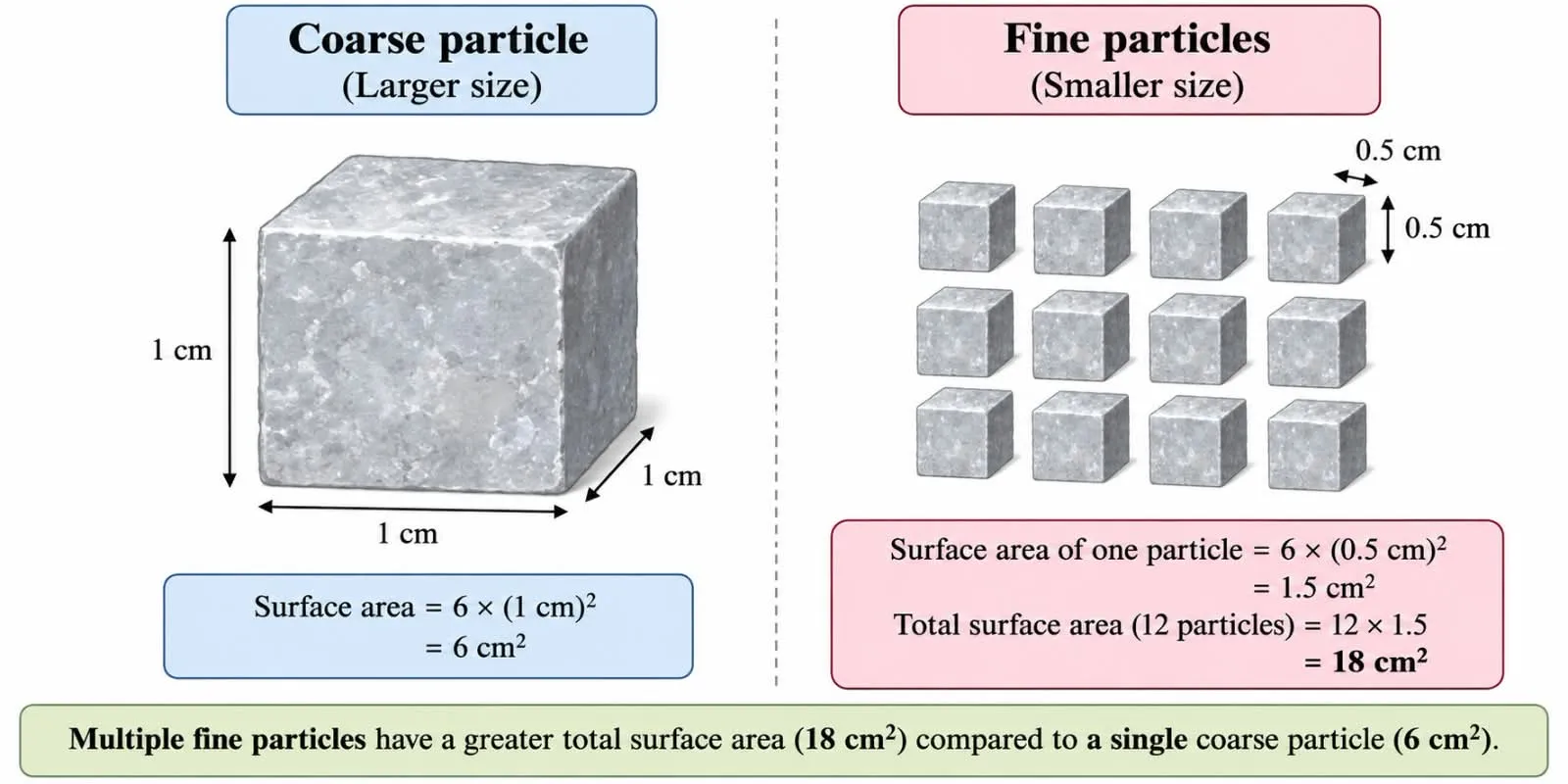
Figure 1: Schematic Comparison of a Coarse Particle and Multiple Fine Particles with Greater Total Surface Area.
3.2 Dissolution rate versus solubility
Dissolution rate describes how quickly drug molecules enter solution. Equilibrium solubility describes the concentration that can remain dissolved under defined conditions after equilibrium is reached. Conventional micronization often improves dissolution rate more clearly than it changes equilibrium solubility. Very small particles can show size-dependent apparent solubility effects, but these effects depend on the size range and material properties and should not be assumed for every nanosized formulation. [5, 6, 11]
4. Conventional Particle Size Reduction Techniques
4.1 Milling and comminution
Milling reduces particle size through impact, compression, attrition, or shear. The equipment and operating conditions determine how energy is transferred to the material. Milling can be suitable for APIs that are mechanically robust, but the process should be evaluated for heat generation, contamination, crystal defects, and changes in particle shape.[1,8,19]
4.2 Jet milling
Jet milling uses high-velocity gas to accelerate particles and cause particle–particle or particle–wall collisions. It is widely associated with pharmaceutical micronization. Because it does not rely on conventional grinding balls, it can reduce some concerns related to grinding-media wear, although product-specific contamination and process risks still require assessment. The final distribution depends on feed properties, gas conditions, classifier settings, and the API’s mechanical behaviour. [1, 12]
4.3 Ball and other mechanical mills
Ball milling uses moving grinding media to create impact and friction. It can be performed dry or wet. The process may offer flexible control, but prolonged or high-energy milling can alter crystallinity or introduce amorphous regions in susceptible materials. Process optimization therefore involves more than reaching a target size: the resulting solid form and chemical integrity should also be checked.[7, 12]
4.4 Practical considerations
Conventional size reduction is most useful when the target size can be achieved reproducibly without unacceptable changes in the API. In development, the starting size distribution, milling time, energy input, temperature, equipment material, and batch-to-batch variability should be recorded. A powder that meets the target mean diameter but has poor flow or unstable solid-state properties may not be suitable for the final formulation.[5,19, 20, 22]
5. Advanced Techniques: Wet Milling and Homogenization
5.1 Wet media milling
Wet media milling disperses the API in a liquid and reduces its size using beads or other milling media. Stabilizers such as selected polymers or surfactants may be added to reduce particle aggregation and help maintain a consistent dispersion. The method is commonly used to prepare nanosuspensions and drug nanocrystals. Its performance depends on the drug’s hardness, starting size, milling media, stabilizer, temperature, and processing duration. [5, 7, 8]
5.2 High-pressure homogenization
High-pressure homogenization forces a suspension through a narrow region under high pressure. Intense shear, turbulence, and related mechanical forces can reduce particle size. The method can be used to produce drug nanocrystals and has attracted interest because it can be adapted to larger production scales. However, the suspension may require several processing cycles, and heat management and stabilizer selection remain important. [5, 8, 13]
5.3 Combined technologies
A combined approach may use precipitation or another initial size-reduction step followed by homogenization or milling. The purpose is to improve control over the final size distribution or reduce the limitations of a single process. Salazar and colleagues describe combinative particle-size reduction technologies and discuss how process selection affects nanocrystal production . [13]
5.4 Stabilization of fine particles
As particles become smaller, they may be more prone to aggregation because of their high surface energy. Stabilizers can create steric or electrostatic barriers that reduce particle–particle association. The stabilizer must be compatible with the drug, route of administration, and final dosage form. Too little stabilization may allow growth or aggregation; an unsuitable stabilizer may affect dissolution, tolerability, or downstream processing [7, 8]
6. Bottom-Up Methods and Supercritical Fluid Processing
6.1 Precipitation
Bottom-up approaches form particles from molecules or small clusters rather than breaking down larger crystals. In antisolvent precipitation, a drug solution is mixed with a liquid in which the drug is less soluble. Rapid changes in local solvent composition can create supersaturation, followed by nucleation and crystal growth. Mixing, solvent selection, temperature, concentration, and stabilizer presence can influence particle size and morphology. [5, 14]
6.2 Challenges of precipitation
Precipitation can be sensitive to mixing conditions and may produce broad size distributions if nucleation and growth are not controlled. Residual solvent removal, polymorphic form, and physical stability should be considered. A small initial particle size is not enough on its own; the product must remain suitable through isolation, drying, formulation, and storage.[12,19,20]
6.3 Supercritical fluid approaches
Supercritical fluid technologies use fluids under conditions where they display properties between those of liquids and gases. Carbon dioxide is often investigated because it can be removed readily after processing under suitable conditions. Depending on the process design, supercritical fluid methods may help control particle size, shape, morphology, or solid form. Sun reviewed supercritical-fluid particle design for poorly water-soluble drugs and discussed its potential in pharmaceutical manufacturing. [14]
6.4 Top-down and bottom-up comparison
Neither approach is universally superior. The appropriate choice depends on the drug’s properties, the intended product, and the ability to maintain quality during scale-up.[1,5,13,19]
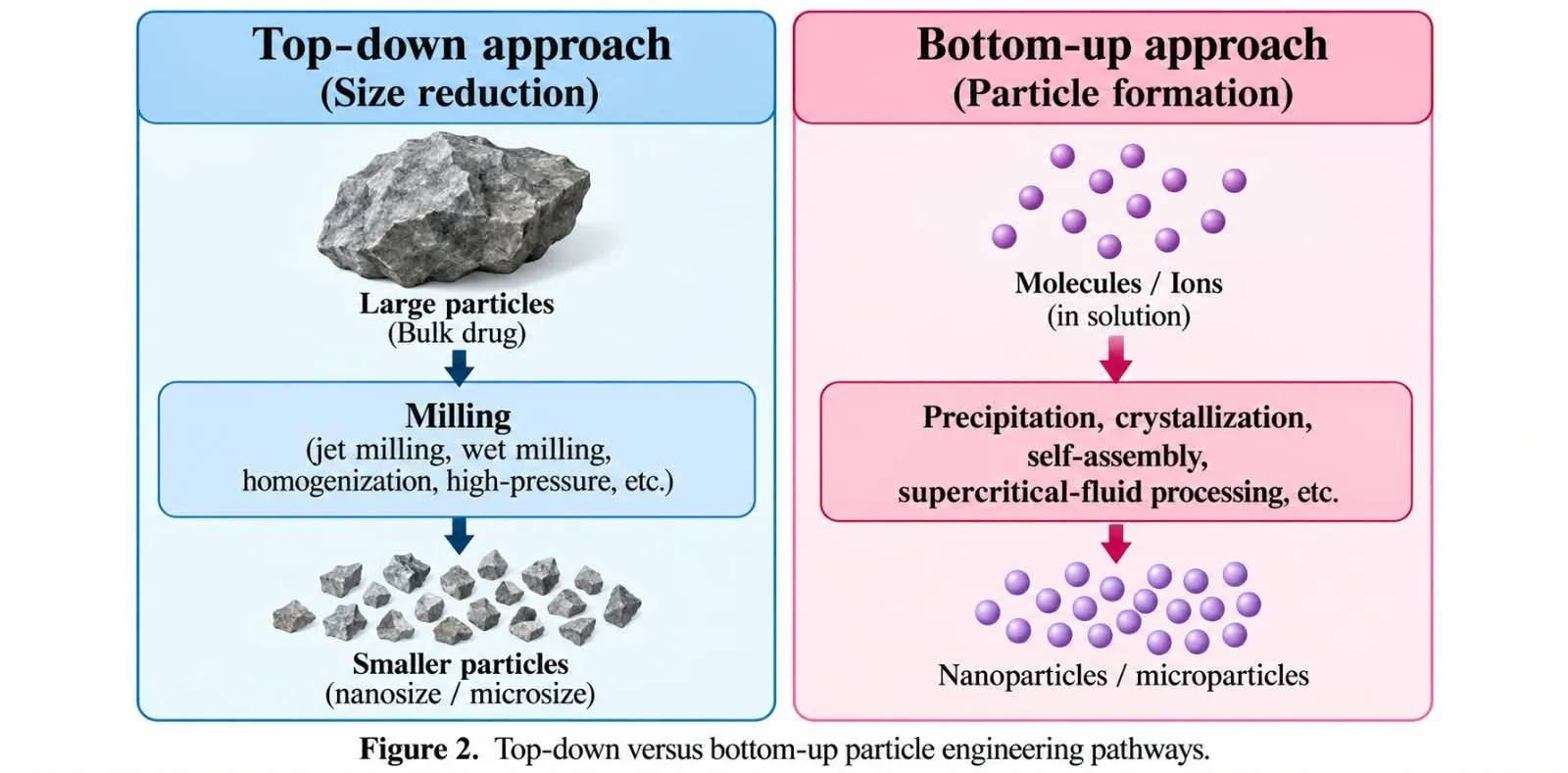
Figure 2: Top-down Versus Bottom-Up Particle Engineering Pathways.
7. Effect on Dissolution Rate and Apparent Solubility
7.1 Why dissolution may improve
The most direct expected benefit of particle-size reduction is an increase in dissolution rate due to greater available surface area. In addition, reducing particle size can alter the effective diffusion-layer conditions around particles. These effects may be particularly important for poorly soluble drugs whose absorption is limited by the amount that dissolves during gastrointestinal transit .[3, 9, 10]
7.2 When solubility changes
It is easy to describe particle-size reduction as a solubility-enhancement method, but that phrase needs qualification. A smaller particle of the same crystalline form does not necessarily have a substantially higher equilibrium solubility. At very small sizes, curvature-related thermodynamic effects can increase apparent saturation solubility. In addition, changes in crystallinity, surface energy, or wetting can influence measured dissolution and apparent solubility. [6, 11, 15]
7.3 Experimental interpretation
Dissolution comparisons should use suitable test conditions and clearly report the medium, temperature, agitation, dose, and sampling schedule. If the reduced-size material aggregates during the test, its effective surface area may be lower than expected. If milling changes the solid form, the observed improvement may reflect both particle size and solid-state change. For that reason, dissolution testing should be interpreted together with particle-size and solid-state measurements.[3,9]
7.4 Example of a development decision
Suppose an API dissolves slowly in a relevant medium and has no major permeability limitation. A smaller particle size may be a reasonable strategy to investigate. If dissolution is already rapid, the same intervention may produce little practical benefit. If the drug is poorly permeable, increasing dissolution alone may not overcome the main absorption barrier. This illustrates why the mechanism limiting performance should be identified before choosing a size-reduction method.[2,5,16,17,24]
8. Effect on Bioavailability and Clinical Performance
Bioavailability describes the rate and extent to which an active drug becomes available in the systemic circulation. For orally administered drugs, dissolution can influence absorption because drug molecules generally need to be present in solution before crossing the intestinal membrane. Particle-size reduction can therefore improve exposure when slow dissolution is a major limiting factor. [2, 5, 16]
8.1 Evidence from nanocrystal research
Drug nanocrystals have been studied as a way to improve the performance of poorly soluble compounds. Reviews by Müller and colleagues, Peltonen and Hirvonen, and Gigliobianco and colleagues discuss the principles, formulation options, and stability considerations of nanocrystal systems. The main rationale is the increased surface area and, in some cases, a higher transient dissolved concentration that can support absorption. [5, 7, 8]
8.2 Why improved dissolution may not improve exposure
The body is more complex than a dissolution vessel. Gastrointestinal pH, bile components, food, transit time, precipitation after dilution, metabolism, membrane permeability, and individual variation may influence absorption. A drug can dissolve faster in vitro yet show little change in exposure if another process is rate-limiting. Conversely, improved dissolution may be meaningful if it prevents incomplete absorption within the available transit time [16, 17].
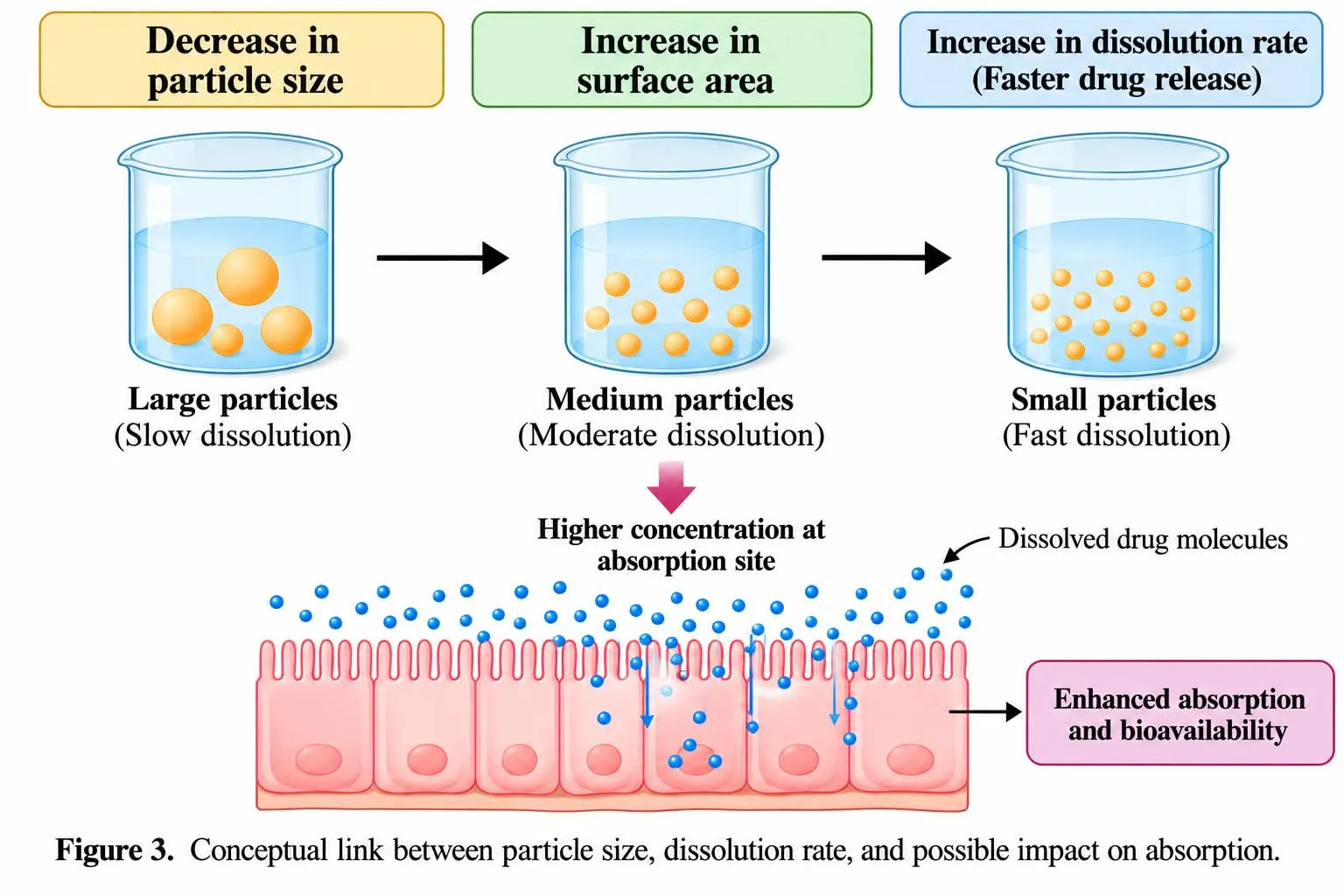
Figure 3: Conceptual Link Between Particle Size, Dissolution Rate, and Possible Impact on Absorption.
8.3 Biopharmaceutical evaluation
A development programme should compare the original and reduced-size materials using relevant dissolution methods and, where justified, pharmacokinetic or bioavailability studies. It should also assess whether changes in exposure are consistent and whether the formulation remains physically stable. A claim of improved bioavailability should be supported by suitable evidence rather than inferred from particle size alone.[2,5,16,17]
8.4 Therapeutic implications
Improved and more reproducible exposure can be useful for certain drugs, but it may also alter the rate or extent of absorption in ways that require careful evaluation. Dose changes should not be assumed from particle-size data alone. The final formulation, dosing instructions, and clinical evidence determine how a medicine should be used.[2,5,16]
9. Impact on Powder Flow, Blending and Dosage-Form Manufacture
Particle size is a manufacturing attribute as well as a biopharmaceutical one. Fine powders often exhibit greater cohesive forces relative to their weight. They may adhere to equipment surfaces, become electrostatically charged, or form agglomerates. These effects can influence hopper discharge, feeding, blending, granulation, capsule filling, and tablet compression.[1,19,21]
9.1 Flowability and cohesion
Coarser particles often flow more freely than very fine particles, although particle shape, surface roughness, moisture, and density also play important roles. A size-reduced API may therefore require adjustments to excipient selection or process design. Flow should be measured rather than judged by appearance alone.[1,19,21]
9.2 Blend uniformity
Particle-size differences between the API and excipients can contribute to segregation during handling. Very fine API particles may also adhere to excipient surfaces or form clusters. The final outcome depends on the mixing process and the relative properties of the ingredients. Blend uniformity and dosage-unit content uniformity should be evaluated using suitable methods.[1,19,21]
9.3 Compression and granulation
Changes in particle size may influence compactibility, tablet porosity, and the distribution of liquid during wet granulation. Fine particles can sometimes fill spaces efficiently, but they may also increase cohesion and affect lubricant distribution. There is no single outcome for all APIs; the impact should be evaluated in the intended formulation.[1,19,21]
9.4 Practical response
1. Evaluate flow, bulk density, tapped density, and moisture sensitivity.
2. Consider granulation or suitable excipients if direct compression is unreliable.
3. Assess blend uniformity and segregation risk after scale-up.
4. Confirm that the manufacturing process preserves the intended particle-size distribution.
5. Monitor dissolution after any processing step that could alter particle size or solid state.
10. Solid-State Properties, Stability and Safety Considerations
10.1 Crystallinity and polymorphism
Mechanical energy can create crystal defects or partially amorphous material in some compounds. The solid state may influence dissolution, physical stability, and chemical reactivity. Because the effect depends on the API and the processing conditions, XRPD and thermal analysis may be useful before and after size reduction.[7, 8, 18]
10.2 Aggregation and particle growth
Small particles can aggregate or undergo growth during storage. In suspensions, Ostwald ripening can occur when smaller particles dissolve and material deposits onto larger particles. This can increase the mean size and alter the size distribution over time. Stabilizers, formulation composition, temperature, and storage conditions influence the risk .[8, 15]
10.3 Chemical stability
Size reduction increases exposed surface area and may alter the API’s interaction with moisture, oxygen, or other formulation components. This does not mean that fine particles are always less stable, but it does mean that chemical stability should be examined where the material is susceptible to degradation.[3,9]
10.4 Handling and occupational controls
Fine powders can be more readily dispersed in air during handling. Appropriate engineering controls, containment, cleaning procedures, and personal protective equipment should be selected according to the material’s hazard assessment and workplace procedures. This is a general pharmaceutical manufacturing consideration, not a reason to avoid particle-size reduction when it is scientifically justified.[1,19,21]
10.5 Stability testing
A useful stability programme may monitor particle-size distribution, visual appearance, redispersibility for suspensions, assay, degradation products, dissolution, and solid-state properties. The exact tests and acceptance criteria should be product-specific and justified by development data.[1,6,19]
11. Characterization and Quality Evaluation
Characterization should establish both the size of the particles and whether the process has changed other properties that affect performance. No single method provides all the information needed. Method selection depends on whether the sample is a dry powder, a suspension, or a finished dosage form.[1,19,21]
11.1 Common analytical tools
Table 1: Common Analytical Tools
| Method | What it helps assess | Important limitation / note |
|---|---|---|
| Laser diffraction | Particle-size distribution | Results depend on dispersion and optical assumptions. |
| Dynamic light scattering | Hydrodynamic size and PDI in suitable dispersions | Sensitive to large aggregates; sample dilution and preparation matter. |
| SEM / microscopy | Shape, surface morphology, aggregation | Images represent selected fields and need careful sampling. |
| XRPD | Crystalline phases and changes in crystallinity | Interpretation depends on method sensitivity and reference patterns. |
| DSC | Thermal transitions and changes in solid state | May not identify every low-level phase change. |
| Specific surface-area analysis | Surface area per unit mass | Does not directly replace a particle-size distribution. |
| Dissolution testing | Rate and extent of drug release into medium | In-vitro findings need appropriate interpretation. |
| Assay and impurity testing | Chemical content and degradation | Required when process stress could affect chemical quality. |
For nanocrystal suspensions, reporting mean size alone is incomplete. PDI, zeta potential where relevant, stabilizer concentration, redispersibility, and storage stability may help explain whether a formulation remains controlled. Analytical methods should be validated or qualified for their intended use, with suitable sampling and reproducibility.[5,8,19]
11.2 Quality-by-design perspective
A quality-by-design approach identifies the attributes that matter for product performance and then evaluates how process variables affect them. For particle-size reduction, critical process parameters may include milling energy, pressure, temperature, time, stabilizer level, and starting material characteristics. Relevant quality attributes may include particle-size distribution, solid form, impurity profile, flow, dissolution, and stability. The appropriate controls should be based on data rather than assumptions.[5,8,20]
12. Factors That Determine Whether Size Reduction Will Work
The effect of size reduction varies because drug performance depends on several linked variables. A successful approach begins with understanding which factor limits the current product.[2,5,16]
12.1 API solubility and permeability
A poorly soluble drug may benefit when dissolution limits absorption. If permeability is low, however, increasing dissolution may not be enough to improve systemic exposure. Biopharmaceutical classification and mechanistic understanding help identify whether particle-size reduction is likely to be useful.[16, 17]
12.2 Starting particle properties
Starting size, crystal habit, hardness, porosity, surface roughness, and polymorphic form can influence how a material responds to milling or precipitation. Two APIs processed in the same equipment may produce very different outcomes.[12,14,20]
12.3 Formulation and medium
Wetting agents, polymers, surfactants, pH, ionic strength, and other excipients may influence dispersion and dissolution. The medium used for testing should be relevant to the intended route and product. A formulation that performs well in one medium may not behave the same way under other conditions.[17,24]
12.4 Process scale and reproducibility
Laboratory success does not guarantee manufacturing success. Mixing, energy transfer, temperature control, and residence time can change with scale. A robust process should reproducibly produce the desired particle-size distribution and preserve chemical and solid-state quality.[1,8,19]
12.5 A decision framework
1. Identify the main performance limitation: dissolution, permeability, stability, or manufacturing.
2. Characterize the API before processing, including particle size and solid form.
3. Select a technique appropriate to the target size and material properties.
4. Measure particle size, solid state, dissolution, and handling properties after processing.
5. Evaluate stability and manufacturability in the intended formulation.
6. Use biopharmaceutical evidence when a claim about bioavailability or clinical performance is needed.
13. Applications and Illustrative Examples
Particle-size reduction has been investigated across a range of poorly soluble compounds. The examples below illustrate the types of reasoning used in development; they should not be interpreted as a recommendation to use one technology for every drug.[5,13,15]
13.1 Coenzyme Q10 nanocrystals
Research evaluating coenzyme Q10 as drug nanocrystals examined the relationship between particle size, solubility, dissolution, and oral bioavailability. The study illustrates why these outcomes are best investigated together rather than assuming that particle size alone predicts the result [15].
13.2 Drug nanocrystal platforms
Reviews of nanocrystal technology describe its use for compounds with poor aqueous solubility and discuss the importance of stabilizers, particle-size control, and formulation design. The approach can offer high drug loading because the particles are primarily composed of the API, but the dispersion still needs to remain physically stable. [5, 7, 8]
13.3 Micronized inhalation powders
For some inhaled medicines, particle size affects where particles deposit in the respiratory tract. In this setting, aerodynamic particle size and powder dispersion are especially important, and geometric particle size alone does not fully predict lung deposition. This is a reminder that the relevant size measure depends on the dosage form and route of administration.[1,19,21]
13.4 What examples teach us
Across applications, the central lesson is that size reduction should be connected to a clear product objective. The target may be faster dissolution, more reproducible absorption, suitable deposition, or a required manufacturing profile. The method and analytical plan should be designed around that objective.[2,5,16,17]
14. Limitations, Challenges and Research Gaps
14.1 Technical limitations
Particle-size reduction can require substantial energy, specialized equipment, and process development. Some compounds are difficult to mill because they soften, degrade, or undergo undesirable solid-state changes. Precipitation methods can be sensitive to mixing and may require careful removal of solvent. Nanosuspensions may require stabilization and controlled storage [5, 8, 13, 14].
14.2 Translation from laboratory to production
Scale-up can change particle collisions, mixing, heat transfer, and residence-time distribution. A process that gives a narrow size distribution in a small batch may need adjustment in larger equipment. Manufacturing studies should therefore examine process robustness, equipment suitability, cleaning, and batch consistency. [1,5,13,19]
14.3 Gaps in the evidence
Comparisons between studies are sometimes difficult because researchers use different particle-size methods, dissolution media, dose levels, and reporting practices. A stronger evidence base would benefit from more consistent characterization, clearer separation of size effects from solid-state effects, and better links between in-vitro dissolution and in-vivo outcomes. [1,6,19]
14.4 Responsible interpretation
The term ‘nano’ should not be treated as a guarantee of superior performance. A nanosized product may be useful, neutral, or unsuitable depending on the API and the formulation. Claims should be proportionate to the evidence and should distinguish laboratory observations from demonstrated clinical benefits. [5,13,24]
15. Future Perspectives
Future work is likely to focus on better control of particle-size distribution, more robust stabilization, continuous processing, process analytical technology, and improved links between particle attributes and product performance. Combined processes may help overcome the limitations of single methods, while improved analytical tools can make it easier to detect changes in particle size and solid form during development.
A particularly useful direction is to develop predictive approaches that connect API properties, processing conditions, particle attributes, dissolution behaviour, and pharmacokinetic outcomes. Such approaches may reduce unnecessary trial-and-error experiments, but they must be verified using reliable experimental data.
CONCLUSION
Particle-size reduction is an established pharmaceutical strategy that can improve the dissolution rate of selected APIs by increasing the surface area available to the dissolution medium. Micronization, jet milling, wet media milling, high-pressure homogenization, precipitation, and supercritical-fluid processing offer different ways to achieve a target size range. For some poorly water-soluble drugs, these techniques may improve apparent solubility or bioavailability, but the effect is not universal.
The final outcome depends on more than particle diameter. Agglomeration, wettability, solid-state properties, powder flow, dosage-form design, gastrointestinal conditions, and permeability can all influence performance. Particle-size reduction should therefore be treated as a controlled development strategy, supported by appropriate characterization, dissolution testing, stability evaluation, and manufacturing assessment. The most suitable product is not necessarily the one with the smallest particles, but the one that consistently meets its intended quality and performance objectives.
REFERENCES


Saurabh Patara, Aditi Bangar, Shreya Tondlikar, Pratiksha Pandit, Snehal Jadhav, Sneha Jankar, A Review on Particle Size Reduction of Active Pharmaceutical Ingredients (APIs) and ITS Impact on Drug Performance, Int. J. of Pharm. Sci., 2026, Vol 4, Issue 11, 1549-1560. https://doi.org/10.5281/zenodo.24034553
 10.5281/zenodo.24034553