

We use cookies to ensure our website works properly and to personalise your experience. Cookies policy
1,2,3,4,5Students of B. Pharm, Anuradha College of Pharmacy, Anuradha Nagar, Sakhegaon Road, Chikhli, Dist. Buldhana, Maharashtra, India.
6Assoc Prof,Anuradha College of Pharmacy, Anuradha Nagar, Sakhegaon Road, Chikhli, Dist. Buldhana, Maharashtra, India.
7Principal , Anuradha College of Pharmacy, Anuradha Nagar, Sakhegaon Road, Chikhli, Dist. Buldhana, Maharashtra, India.
Dandruff is a common scalp condition characterized by flakes and sometimes itching. It is associated with a combination of factors, including scalp sebum, skin-barrier condition, individual sensitivity and microorganisms such as Malassezia species. Hair oils are widely used for lubrication and conditioning, and a polyherbal formulation offers a way to combine selected plant materials in one topical product. This review focuses on a proposed polyherbal antidandruff hair oil containing neem, bhringraj, amla, tulsi and fenugreek in a coconut-oil base, with tea tree oil as an optional volatile ingredient. It summarises the traditional uses and research relevance of the ingredients, raw-material preparation, oil infusion, filtration, blending, filling and storage. The review also explains important evaluation tests, including organoleptic examination, homogeneity, viscosity, specific gravity, acid value, saponification value, peroxide value, refractive index, spreadability, washability, microbial quality, antifungal testing and stability studies. These tests help assess identity, consistency, practical use and changes during storage. Evidence reported for an individual herb or a different dosage form cannot establish the efficacy of a new combined hair oil. Therefore, actual laboratory observations, appropriate controls and further studies are required before making strong anti-dandruff claims. This review provides a practical overview for a B.Pharm formulation project.
Hair is a specialized keratinized structure arising from follicles embedded in the skin. The visible hair shaft is composed mainly of keratin and has a cuticle, cortex and, in thicker fibres, a medulla. Hair appearance depends on fibre integrity, surface lipids, moisture, grooming practices and the condition of the scalp. Hair care therefore involves more than cleaning the shaft. It includes maintenance of the scalp environment, reduction of mechanical damage, appropriate lubrication and selection of products that are compatible with individual hair and scalp characteristics. Reviews of hair cosmetics describe oils, shampoos, conditioners and other cosmetic products as important tools for maintaining hair fibre quality and improving manageability. Madnani and Khan and later reviews by Gavazzoni Dias have emphasized that cosmetic preparations influence friction, surface properties, moisture balance and the appearance of hair [1]. The scalp is a biologically active skin surface containing sebaceous glands, sweat glands, hair follicles and a diverse microbial community. Sebum supplies lipids to the scalp surface and contributes to the environment in which resident microorganisms live. Dandruff is characterized clinically by visible scaling and itching, while seborrheic dermatitis may include more obvious erythema and inflammation. Scientific reviews describe the relationship among sebum, individual susceptibility, epidermal barrier function and microorganisms as important in the development of dandruff. Malassezia yeasts are frequently associated with dandruff, but the current scientific view is multifactorial. Hay described interactions between Malassezia and scalp lipids, while later microbiome research showed that changes in the balance of fungal and bacterial communities may be associated with disease severity. More recent reviews also caution against treating Malassezia as the only explanation for the condition [2]. The scientific rationale for an anti dandruff hair oil is based on combining a suitable oil vehicle with selected botanical ingredients that have documented biological activities. Neem has a substantial literature describing antimicrobial, anti inflammatory and antioxidant properties, although the strength of evidence differs between extracts, microorganisms and experimental models. Tulsi has also demonstrated antifungal activity in laboratory studies, with compounds such as eugenol and linalool receiving attention. Tea tree oil has been studied specifically in dandruff; a randomized single blind trial involving 126 participants reported improvement with a 5 percent tea tree oil shampoo over four weeks. This evidence is relevant to ingredient selection but cannot be directly transferred to a new polyherbal oil because concentration, vehicle, extraction method and application conditions are different. Coconut oil is useful as a carrier because it is widely used in hair care and has been investigated for interaction with the hair fibre. Rele and Mohile reported that coconut oil reduced protein loss from hair compared with some other oils, while Ruetsch and colleagues used secondary ion mass spectrometry to investigate penetration of coconut and mineral oils into human hair fibres. Such studies support the role of a suitable carrier oil in conditioning and protecting the hair shaft. In a polyherbal preparation, the carrier also provides a continuous phase for dispersing or extracting lipid compatible constituents and helps produce a convenient topical dosage form [3,4].
Polyherbal formulation refers to the purposeful combination of more than one botanical ingredient in a single preparation. The objective is not simply to increase the number of herbs, but to select ingredients according to complementary roles, availability, processing behaviour, safety and evidence. Neem may contribute antimicrobial potential, bhringraj and amla are traditionally associated with hair care, tulsi has laboratory antifungal evidence, fenugreek is widely used in traditional hair preparations, and tea tree oil provides a volatile botanical component with specific dandruff related clinical evidence. Scientific formulation requires that each ingredient be identified correctly, processed consistently and incorporated at an appropriate concentration. The final preparation must then be evaluated as a complete product rather than judged only from the known properties of individual plants. The present project is therefore designed around formulation science and evaluation rather than unsupported therapeutic claims. The work considers plant authentication, drying, size reduction, extraction or oil infusion, filtration, blending, addition of volatile ingredients, filling and storage. Evaluation includes physical appearance, homogeneity and flow related properties, selected physicochemical values, stability, microbial quality and laboratory antifungal assessment where facilities permit. The overall purpose is to develop a reproducible polyherbal hair oil and generate a documented quality profile that can support further investigation [5]. Dandruff should be understood in the context of scalp physiology rather than as a simple accumulation of dry skin. The scalp contains numerous sebaceous glands and has a characteristic lipid environment. Sebum influences the surface conditions in which microorganisms live. Studies of the scalp microbiome have shown differences between healthy and dandruff scalps in bacterial and fungal communities, supporting the view that scalp health depends on microbial balance and host factors rather than one organism alone. The barrier condition of the scalp is another important consideration. The stratum corneum limits water loss and protects underlying tissue from external irritants and microorganisms.
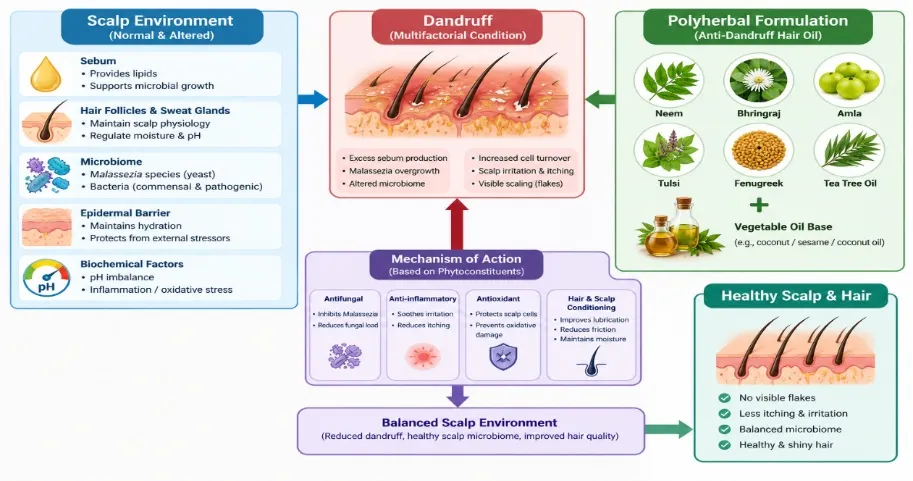
Figure 1: Conceptual Relationship Between Scalp Environment, Dandruff and Polyherbal Formulation
The stratum corneum limits water loss and protects underlying tissue from external irritants and microorganisms. Research on dandruff has associated the condition with altered barrier characteristics, increased susceptibility to irritation and changes in lipid organization. Consequently, a hair oil intended for scalp care should be evaluated for physical properties, tolerability and suitability as a topical vehicle. Botanical selection should follow a defined scientific rationale. Neem is relevant because its literature describes antimicrobial and anti inflammatory activities. Tulsi is relevant because laboratory investigations have reported antifungal activity. Tea tree oil has received particular attention in dandruff research, and reviews describe the potential of essential oils against organisms associated with dandruff. Differences in concentration, extraction method and dosage form mean that evidence for an ingredient cannot automatically be transferred to the complete formulation [6,7].
Bhringraj, amla and fenugreek are included mainly on the basis of their established use in traditional hair care and their suitability for botanical formulation. Traditional use should be presented as a reason for investigation rather than as proof of efficacy. The formulation therefore needs measurable quality parameters and, where possible, laboratory biological testing. Herbal preparations can vary in chemical composition according to plant identity, geographical origin, harvest stage, drying and extraction conditions. The carrier oil has a major role in determining final product characteristics. Coconut oil is particularly relevant because experimental work has shown that it can reduce protein loss from hair when used as a grooming oil. A later study also examined topical coconut oil and scalp microbiome changes over 16 weeks in 140 Indian women. These findings make coconut oil scientifically interesting as a carrier, although they do not establish that a new polyherbal formulation will prevent or cure dandruff [8]. The formulation concept should integrate three objectives: acceptable hair and scalp conditioning, incorporation of botanically relevant constituents, and production of a stable preparation with reproducible quality. A formulation that is biologically active but unstable is unsuitable, while an attractive oil without measurable biological activity cannot be described as an established anti dandruff treatment. This balance between pharmaceutical quality, cosmetic acceptability and biological evaluation is central to the project [9,10].
Types of hair oil
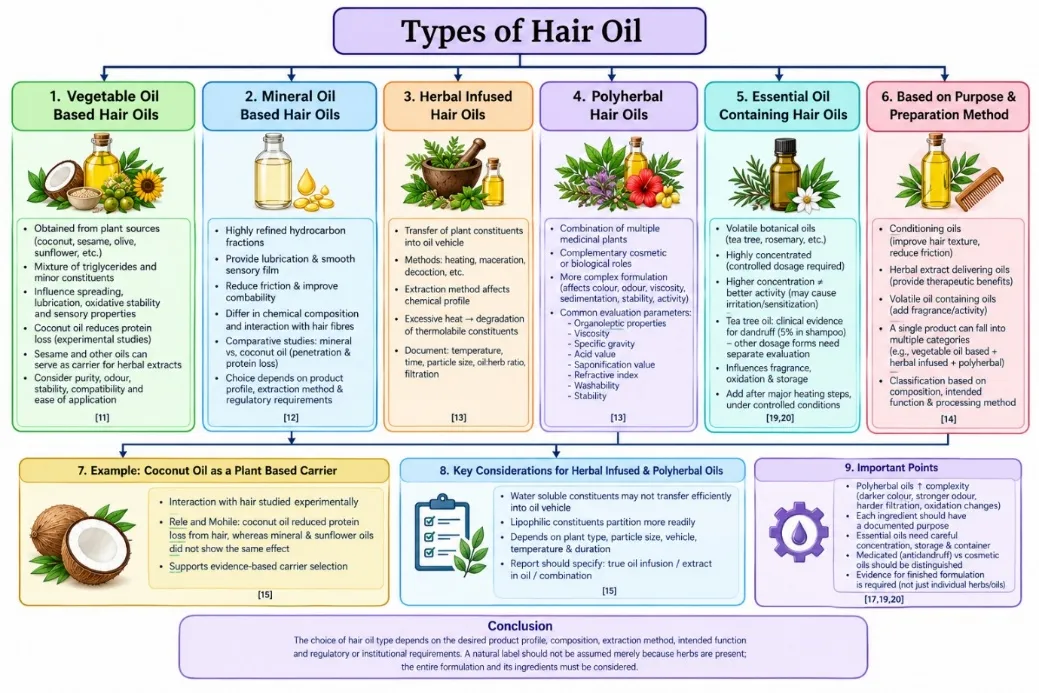
Figure 2: Types of Hair Oil
Vegetable oil based hair oils use oils obtained from plant sources such as coconut, sesame, olive, sunflower or other edible and cosmetic grade seeds and fruits. These oils contain mixtures of triglycerides and minor constituents that influence spreading, lubrication, oxidative stability and sensory properties. Coconut oil is especially common in hair care because of its interaction with the hair fibre and its ability to reduce protein loss reported in experimental studies. Sesame and other vegetable oils can also serve as carrier phases for herbal extracts. The selection of a carrier should consider purity, odour, oxidative stability, compatibility with the intended botanical ingredients and ease of application [11].
Role of hair oil
Hair oil acts primarily as a lubricant and conditioning preparation. Application of oil can reduce friction between hair fibres and between hair and grooming tools. Lower friction may improve combability and reduce mechanical stress during grooming. The visible effect may include increased smoothness and gloss because the oil changes the surface optical and physical properties of the fibre. These cosmetic benefits are different from treatment of a dermatological disease and should be described separately in an academic formulation study [12]. A second important role is protection of the hair fibre. Hair is exposed to washing, drying, sunlight, environmental pollutants, combing, heat styling and chemical treatments. Such exposures can alter surface lipids and protein structure. Studies on hair cosmetics show that repeated grooming and chemical procedures can affect the fibre and its surface properties. Coconut oil has been studied for its ability to reduce protein loss, and its interaction with hair fibres has also been investigated by analytical techniques.
Coconut oil provides an example of how a carrier can have a measurable effect on hair. Experimental work found that coconut oil reduced protein loss from hair during grooming conditions. This supports its consideration as a rational carrier in hair care research while also showing why the selected carrier should be evaluated for its own contribution to the final product. Oil can function as a delivery medium. Lipophilic constituents and volatile components can be distributed through the carrier and applied over the scalp [13,14].
MATERIALS AND METHODS
The study is planned as a formulation and evaluation project for a polyherbal anti dandruff hair oil. The botanical materials selected for the formulation are neem, bhringraj, amla, tulsi and fenugreek, while coconut oil is considered as the principal carrier and tea tree oil as a volatile botanical component. The exact quantity of each ingredient should be recorded in the laboratory batch sheet before preparation.
Table 1: Materials Used in the Formulation
| Material | Purpose in formulation | Quality consideration |
|---|---|---|
| Coconut oil | Primary carrier and hair conditioning vehicle | Cosmetic or pharmaceutical grade, fresh and free from rancid odour [15] |
| Neem | Botanical ingredient selected for antimicrobial potential | Authenticated plant material, properly dried and stored [16] |
| Bhringraj | Traditional hair care botanical | Correct botanical identity and controlled processing [17] |
| Amla | Traditional hair care and antioxidant associated botanical | Clean, authenticated and protected from moisture [18] |
| Tulsi | Botanical ingredient with laboratory antifungal evidence | Correct species and suitable dried material [19] |
| Fenugreek | Traditional scalp and hair care ingredient | Clean seeds and consistent particle size [20] |
| Tea tree oil | Volatile botanical component for dandruff focused research | Controlled concentration, suitable quality and protected from heat [21] |
Raw material quality is a critical determinant of herbal formulation reproducibility. Botanical material should preferably have information about source, collection date, plant part.
6. PREPARATION & FORMULATION
Selection and authentication of herbal materials
- Cleaning and drying
- Size reduction
- Preparation of oil infusion
- Cooling and filtration
- Blending of ingredients
- Observation of the finished formulation
- Filling and packaging
- Storage
- Quality evaluation
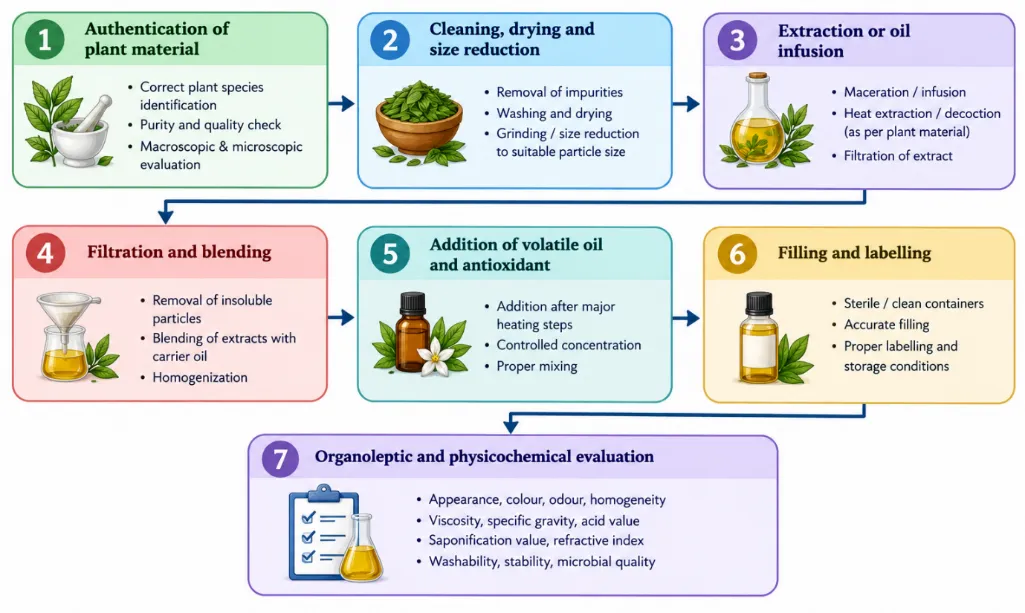
Figure 3: General Formulation Pathway for the Polyherbal Anti Dandruff Hair Oil
A controlled preparation sequence reduces variability. After authentication and processing, plant materials are introduced into the carrier according to the master formula. If infusion is selected, temperature and time should remain within the planned range. Prolonged high temperature can alter the oil and degrade sensitive constituents, whereas inadequate contact can result in poor extraction. Conditions should therefore be maintained consistently across batches. The extraction process should be monitored for visible changes in colour, odour and appearance. Some colour transfer is expected, but sudden darkening or burnt odour may indicate excessive heating. The oil should not be allowed to smoke. Gentle mixing improves contact between plant particles and carrier. Sufficient cooling should occur before filtration and before addition of volatile ingredients [34]. Filtration is not only a cosmetic step because retained particles can influence stability, microbial quality and appearance. A suitable filtration medium should remove unwanted particles without excessive loss of formulation [24].
7. PARAMETERS
Organoleptic parameters include colour, odour, appearance, clarity, texture and homogeneity. These observations are simple but important because they can identify obvious changes in the formulation. A consistent batch should show a characteristic appearance corresponding to its ingredients without unexpected particles, phase separation or rancid odour. Changes during storage may indicate oxidation, contamination or instability. Organoleptic observations should be recorded using consistent descriptive terms rather than subjective statements such as good or bad [36]. Viscosity is an important physical parameter because it affects spreading, pouring, application and sensory feel. A very low viscosity may result in rapid spreading and leakage, whereas excessive viscosity may make application difficult. The test should be performed at a controlled temperature because viscosity changes with temperature. Specific gravity provides information about the relative density of the formulation and can support batch comparison. Refractive index can also contribute to identity and quality assessment of an oil preparation when measured using a suitable instrument and method [25]. Acid value represents the amount of alkali required to neutralize free fatty acids present in the oil. An increase in acid value during storage can indicate hydrolytic deterioration. Saponification value provides information related to the average molecular characteristics of the fatty acids present in the oil and can help characterize the oil phase. Peroxide value is useful for monitoring primary oxidation products. These parameters are particularly relevant to herbal oils because heating, light, oxygen and storage conditions can affect lipid stability [26].
Spreadability, washability and rancidity are practical product parameters. Spreadability indicates how easily the oil can be distributed over the scalp or hair surface. Washability describes how easily the formulation can be removed using the intended cleansing procedure. Rancidity can be assessed through characteristic odour and appropriate chemical testing. A combination of sensory and analytical observations gives stronger evidence than either approach alone. Skin irritation assessment, where permitted and ethically appropriate, should follow institutional procedures and should not be replaced by unsupported claims of complete safety [27]. Evaluation parameters can be grouped into organoleptic, physicochemical, functional, biological and stability categories. Organoleptic tests describe immediate sensory identity, physicochemical tests characterize the oil system, functional tests examine application behaviour, biological tests investigate antimicrobial or antifungal potential, and stability tests determine whether the product changes during storage [28].
Table 2: Represent Major evaluation parameters and their purpose [29,30]
| Parameter | What it indicates | Importance in the formulation |
|---|---|---|
| Colour and odour | Physical and sensory identity | Helps detect batch variation and deterioration |
| Homogeneity | Uniform distribution of formulation components | Supports consistent application |
| Viscosity | Resistance to flow | Influences pouring, spreading and handling |
| Specific gravity | Relative density | Supports batch characterization |
| Acid value | Free fatty acids | Helps monitor hydrolytic deterioration |
| Saponification value | Characteristics of fatty acid components | Supports oil phase characterization |
| Peroxide value | Primary lipid oxidation | Useful for monitoring rancidity risk |
| Refractive index | Optical property of the oil | Supports identity and quality assessment |
| Spreadability | Ease of distribution | Relates to practical application |
| Washability | Ease of removal | Relates to user acceptability |
| Microbial quality | Microbial contamination level | Supports product safety |
| Stability | Change during storage | Confirms retention of quality over time |
8. EVALUATION
valuation of the formulated polyherbal antidandruff hair oil can also include assessment of batch to batch uniformity and formulation reproducibility. When more than one formulation is prepared with different concentrations of herbal ingredients, the batches can be compared for colour, odour, viscosity, specific gravity, acid value, spreadability and stability. Such comparative evaluation helps in selecting an optimized formulation having desirable physical characteristics and better storage stability [31]. Recent formulation studies have used different batches to compare these properties before selecting an optimized preparation. The physical appearance of the formulation should be evaluated not only immediately after preparation but also at predetermined intervals during storage [32]. Changes such as turbidity, precipitation, sediment formation, phase separation, change in colour or development of an unpleasant odour may indicate incompatibility or deterioration of the formulation. Stability studies of polyherbal hair oils have specifically monitored colour, odour, appearance, consistency, viscosity and other physicochemical characteristics during storage [33]. The evaluation of oil quality can also be strengthened by determining specific gravity and refractive index. Specific gravity provides information about the relative density of the formulation, while refractive index can assist in characterizing the oil and monitoring possible changes in its composition. These parameters have been incorporated into published polyherbal hair oil evaluation protocols along with viscosity, acid value and saponification. Skin compatibility is another useful evaluation parameter for a preparation intended for repeated scalp application. A preliminary irritation or patch test may be performed using an appropriate ethical and validated procedure to observe signs such as redness, swelling, itching or other visible reactions. Published polyherbal hair oil studies have included irritation testing and reported the absence or presence of visible skin reactions as part of their safety assessment [34]. Organoleptic evaluation is performed first because it provides immediate information about the finished preparation. Colour is observed against a suitable background, odour is examined carefully without prolonged exposure, and the formulation is checked for clarity, sedimentation, visible particles and phase separation. Texture is assessed during controlled application to a suitable surface. Homogeneity is examined by observing whether the formulation remains uniform after standing. These observations should be recorded at the initial stage and repeated during stability studies so that changes can be identified. Viscosity may be determined using a suitable viscometer under controlled temperature and spindle conditions according to the instrument procedure [34].
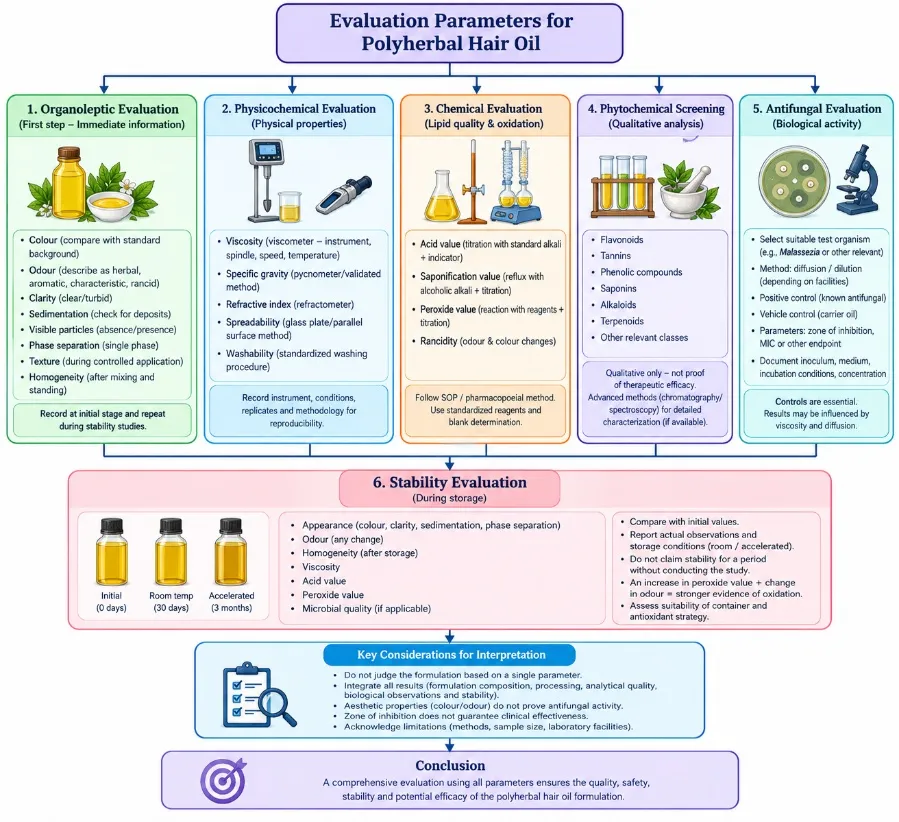
Figure 4: Evaluation Parameters for Polyherbal Hair Oil
The exact instrument, spindle, speed and temperature should be documented because viscosity values cannot be meaningfully compared when test conditions differ. Specific gravity can be determined by a pycnometer or another validated approach. Refractive index may be measured with a refractometer. These tests contribute to a physicochemical profile and can help identify unusual variation between batches. Acid value and saponification value are commonly included in the evaluation of herbal oils [35]. The acid value is determined by titration of the oil sample with standardized alkali using an appropriate alcoholic solvent and indicator system. The saponification value involves reflux with alcoholic alkali followed by titration of the remaining alkali. The exact analytical procedure should follow the laboratory standard operating procedure or an accepted pharmacopoeial or analytical reference. Blank determination and standardized reagents are important for reliable calculations. Peroxide value provides an estimate of primary lipid oxidation [36]. The test involves reaction of the oil sample with appropriate reagents followed by titration under controlled conditions. An increasing peroxide value during storage may indicate oxidation and reduced product stability. Rancidity can also be evaluated by observing characteristic unpleasant odour and changes in colour. Since oxidation is influenced by light, oxygen, temperature and container type, stability studies should use clearly defined storage conditions and observation intervals. Spreadability can be assessed using a suitable glass plate or parallel surface method by observing the movement of a fixed quantity of oil under a defined load or time. Washability can be assessed by applying a standardized quantity to a hair or skin surrogate and examining the ease of removal using a consistent washing procedure [37].
9. ADVANTAGES AND DISADVANTAGES OF POLYHERBAL HAIR OIL
9.1Advantages
1. Multiple Benefits in a Single Formulation
A polyherbal hair oil allows several botanical ingredients to be incorporated into a single topical preparation. Different herbs can be selected for specific purposes such as hair conditioning, scalp care, antimicrobial activity, antifungal potential, fragrance and moisturization. This provides multiple potential benefits through one convenient formulation.
2. Hair Conditioning and Lubrication
The oil vehicle lubricates the hair shaft and reduces friction between individual hair fibres. This may help reduce mechanical damage during combing and grooming. Regular application can improve hair softness, smoothness, shine and manageability.
3. Reduction of Hair Protein Loss
Certain carrier oils, particularly coconut oil, have been investigated for their ability to penetrate the hair fibre and reduce protein loss associated with hair damage. Therefore, an appropriate carrier oil can contribute to protection and conditioning of the hair [38].
4. Potential Antimicrobial and Antifungal Activity
Selected herbal ingredients may provide antimicrobial or antifungal properties. Ingredients such as neem, tulsi and tea tree oil have been investigated for their activity against microorganisms relevant to scalp health. These properties provide a scientific basis for investigating polyherbal formulations for scalp hygiene and dandruff management.
5. Support for Dandruff Management
A polyherbal hair oil may be developed specifically for anti dandruff applications by combining a suitable carrier oil with selected botanical ingredients. Such a formulation may provide conditioning of the hair while also supporting scalp cleanliness and controlling microorganisms associated with dandruff.
6. Scalp Moisturization
Oil application can provide lubrication and help reduce dryness of the scalp and hair. The oily layer may support moisture retention and improve the appearance and feel of dry or rough hair.
7. Protection Against Mechanical Damage
Hair becomes exposed to mechanical stress during combing, brushing and grooming. Application of oil can reduce friction between hair fibres and provide a protective layer over the hair surface, which may help minimize breakage and mechanical damage.
8. Incorporation of Diverse Phytoconstituents
Different medicinal plants contain chemically diverse phytoconstituents. A polyherbal formulation provides an opportunity to combine selected plant materials and investigate their complementary properties within one dosage form.
9. Convenient Topical Application
Hair oil is a familiar and convenient topical dosage form. It can be easily applied to the scalp and hair without requiring complicated administration procedures. This makes it suitable for routine cosmetic and scalp care.
10. Suitable for Laboratory Scale Preparation
Polyherbal hair oil can generally be prepared at laboratory scale using commonly available equipment and plant materials. Therefore, it is practical for formulation development and evaluation in a B. Pharmacy project.
11. Scope for Formulation Optimization
The formulation can be optimized by changing the concentration of individual herbal ingredients, carrier oil, extraction conditions or other formulation variables. Controlled modification of these parameters can provide useful data for developing an optimized preparation.
12. Simple and Reproducible Evaluation
The final formulation can be evaluated using several measurable parameters, including organoleptic properties, physicochemical characteristics, microbial quality, antifungal activity and stability. This provides an opportunity to apply concepts from pharmaceutics, pharmacognosy, pharmaceutical analysis and microbiology [39].
13. Combination of Traditional and Scientific Approaches
Many herbal ingredients have a long history of traditional use in hair and scalp care. Their incorporation into a standardized formulation allows traditional knowledge to be investigated using modern pharmaceutical formulation and evaluation techniques.
14. Potential for Standardization and Reproducibility
A well designed formulation can be standardized by controlling the quality and quantity of botanical ingredients, extraction conditions and carrier oil. Proper documentation of these variables improves reproducibility and allows future researchers to modify or improve the formulation .
15. Cosmetic and Pharmaceutical Research Value
Polyherbal hair oil can be studied as both a cosmetic preparation and an experimental pharmaceutical formulation. Its development provides an opportunity to investigate hair conditioning, scalp care, antimicrobial activity, antifungal activity, stability and overall formulation quality [40].
9.2 Disadvantages
1. Variability in Herbal Raw Materials
The chemical composition of medicinal plants can vary according to species, geographical source, season, maturity, cultivation conditions, drying methods and storage conditions. Therefore, two batches of the same plant may not contain identical amounts of phytoconstituents. Proper authentication and controlled processing can reduce this variability, but complete elimination is difficult. This makes standardization an important challenge in polyherbal formulation development .
2. Stability Problems
Oil based formulations may undergo oxidation and rancidity during storage. Exposure to light, oxygen, heat and moisture can affect the stability of the oil phase and may result in changes in colour, odour and overall product quality. Volatile botanical ingredients may also evaporate or undergo chemical changes during prolonged storage. Appropriate antioxidants, suitable packaging and controlled storage conditions can reduce these problems, but stability testing is still necessary [50].
3. Risk of Skin Irritation and Sensitization
Some herbal extracts and essential oils may cause irritation, itching or sensitization in susceptible individuals. Concentrated essential oils such as tea tree oil should be incorporated at controlled concentrations suitable for the intended formulation. Natural origin does not guarantee complete safety or universal tolerance. Therefore, appropriate safety assessment is required before recommending a formulation for regular scalp application [51].
4. Difficulty in Identifying Individual Ingredient Effects
A polyherbal formulation contains several botanical ingredients, making it difficult to determine which individual component is responsible for a particular biological effect. Interactions between ingredients may also influence extraction, colour, odour, viscosity, stability or antimicrobial activity. Therefore, biological activity should initially be attributed to the tested formulation rather than automatically to a single herb.
5. Difficulty in Formulation Optimization
Optimization of a polyherbal formulation can be challenging because several formulation variables may change simultaneously. Increasing the concentration of one extract may affect colour, viscosity, odour, spreadability or stability, while changing the carrier oil may influence extraction and formulation characteristics. Systematic optimization is therefore necessary to obtain a stable and acceptable formulation [52].
6. Additional Challenges Associated with Essential Oils
Essential oils require careful handling because their concentrated nature may increase the possibility of irritation or sensitization. Their volatile constituents may also change during storage because of oxidation or evaporation. Accurate measurement, appropriate concentration and suitable packaging are therefore important when essential oils are incorporated into polyherbal hair oils.
7. Limited Translation of In Vitro Results to Clinical Effectiveness
Antimicrobial or antifungal activity observed under laboratory conditions cannot automatically be considered equivalent to clinical effectiveness on the scalp. Factors such as dilution, sebum, skin barrier interactions, contact time and individual variability may influence the actual performance of the formulation. Therefore, clinical effectiveness requires appropriately designed human studies.
8. Greasy or Heavy Appearance of Hair
Frequent or excessive application of hair oil may make the hair appear greasy or heavy, particularly in individuals with an oily scalp. Excessive oil may also require repeated washing and may affect the natural appearance and manageability of the hair.
9. Attraction of Dust and Environmental Particles
Heavy application of oil may increase the adherence of dust and environmental particles to the hair and scalp. This can affect the cleanliness and appearance of the hair and may reduce consumer acceptability if the formulation feels excessively oily.
10. Risk of Microbial Contamination
If a hair oil is prepared, handled or stored under inappropriate conditions, contamination may occur and affect product quality. Although oil based formulations may have limited water availability, contamination can still occur through raw materials, equipment, packaging or repeated handling. Proper manufacturing practices, microbial quality assessment and suitable storage conditions are therefore important.
11. Variation in Colour, Odour and Phytochemical Composition
Herbal hair oils may show variations in colour, odour and phytochemical composition because of differences in plant source, harvesting conditions, processing methods and storage conditions. Such variation can affect the physical appearance, consumer acceptability and reproducibility of the final product.
12. Dependence on Ingredient Quality and Concentration
The effectiveness and acceptability of a polyherbal hair oil depend on the quality, concentration and compatibility of its ingredients. An unsuitable combination or inappropriate concentration may reduce the desired cosmetic or biological effects and may increase the possibility of undesirable properties.
13. Need for Proper Standardization
Because several botanical ingredients are used together, maintaining consistent quality between different batches can be difficult. Authentication of plant materials, proper documentation, controlled extraction, standardized concentrations and appropriate quality control procedures are required to improve reproducibility [53] .
CONCLUSION
The formulation and evaluation of a polyherbal anti dandruff hair oil provides a practical approach for integrating traditional botanical ingredients with pharmaceutical formulation principles. Dandruff is a multifactorial scalp condition involving interactions among sebum, epidermal barrier characteristics, individual susceptibility and the scalp microbial community. Malassezia species have an important association with dandruff, but current literature indicates that the condition cannot be explained by the presence of one organism alone. This supports a formulation strategy that combines scalp compatible care with scientifically selected botanical ingredients rather than relying on a single traditional claim. The selected formulation concept uses a suitable vegetable oil base together with botanicals such as neem, bhringraj, amla, tulsi and fenugreek and a controlled amount of tea tree oil where justified. Published research provides supporting evidence for several individual components. Neem has documented antimicrobial potential, tulsi has demonstrated antifungal activity in laboratory studies, coconut oil has been investigated for its interaction with hair fibres, and tea tree oil has been evaluated clinically in a dandruff shampoo. However, the evidence for individual ingredients should not be interpreted as direct proof of efficacy of a new combined oil. The success of the project therefore depends on systematic preparation and evaluation. Authentication, controlled drying, size reduction, extraction, filtration, blending and appropriate filling help improve reproducibility. Organoleptic characteristics, viscosity, specific gravity, acid value, saponification value, peroxide value, refractive index, spreadability, washability, microbial quality and stability together provide a useful quality profile. Laboratory antifungal testing can provide additional evidence when performed with suitable.
REFERENCES






Tanuja Baravkar, Trupti Jadhav, Utkarsha Mathe, Snehal Wankhade, Shruti Deshmukh, Umesh Joshi, K. R. Biyani, A Review on Phytochemical and Pharmacological Perspective of Medical Plans Used in Anti-Dandruff Hair Oil, Int. J. of Pharm. Sci., 2026, Vol 4, Issue 10, 4842-4856. https://doi.org/10.5281/zenodo.23827696
 10.5281/zenodo.23827696