

We use cookies to ensure our website works properly and to personalise your experience. Cookies policy
Immanuel Arasar college of pharmacy, Nattalam, Kanniyakumari Tamilnadu 629165.
Prosopis juliflora (Sw.) DC.is a drought-resistant medicinal plant widely distributed in tropical and subtropical regions. It is rich in bioactive phytochemicals, including alkaloids, flavonoids, tannins, phenolic compounds, saponins, and terpenoids, which contribute to its diverse pharmacological properties. Traditionally, different parts of the plant have been used to treat infections, fever, inflammation, wounds, diabetes, gastrointestinal disorders, and various skin diseases. Several in vitro and in vivo studies have demonstrated that P. juliflora possesses antibacterial, antioxidant, anti-inflammatory, antifungal, anticancer, anti-ulcer, and wound-healing activities. Among the different plant parts, leaf extracts have shown significant antibacterial activity against both Gram-positive and Gram-negative bacteria, suggesting their potential as a natural source of antimicrobial agents. In addition to its medicinal applications, P. juliflora is widely used as fuelwood, animal fodder, charcoal, fencing material, and for soil stabilization and land reclamation. Despite these benefits, the plant is considered an invasive species in many regions because of its rapid spread and adverse effects on native vegetation and biodiversity. This review summarizes the botanical characteristics, phytochemical constituents, traditional uses, pharmacological activities, environmental impact, and future potential of Prosopis juliflora, highlighting its importance in pharmaceutical and medicinal research.
Prosopis juliflora (P. juliflora) is a plant species belonging to the Leguminosae family and Mimosoideae subfamily. It is one of the most common and widely distributed species of the Prosopis genus, which includes about 44 species found in tropical and subtropical regions around the world [1]. It is Commonly known as mesquite, P. juliflora is a fast-growing, thorny, deciduous, and drought-resistant plant characterized by a wide crown and a deep root system. It can grow in a wide range of soil types, including wastelands, and is found at elevations from sea level up to 1,500 m [2]. P. juliflora typically grows to a height of 5–10 m [3].P. juliflora possesses several beneficial characteristics, including soil-binding and soil-stabilizing properties, and the ability to grow in poor soil conditions [4].
According to the World Health Organization (WHO), approximately 80% of the world's population relies on herbal medicines for primary healthcare because they are readily available, affordable, and generally associated with fewer side effects than conventional allopathic medicines [1].Traditionally, P. juliflora has been used as a folk remedy for the treatment of catarrh, colds, diarrhea, dysentery, flu, hoarseness, inflammation, measles, sore throat, and for promoting wound healing [5].
PLANT PROFILE
Prosopis juliflora (Prosopis or Mesquite)
SCIENTIFIC NAME
Prosopis juliflora (Sw.) DC.
SYNONYMS
Mimosa juliflora, Prosopis pallida, Prosopis inermis, Prosopis horrida.
FAMILY
Fabaceae (leguminosae)
GEOGRAPHICAL SOURCE
In India, Prosopis juliflora occurs throughout the area from Punjab to Tamil Nadu and from Gujarat to the dried region of Odisha. The states in India where this species mainly occur are: Andhra Pradesh, Karnataka, Madhya Pradesh, Haryana, Maharashtra, Rajasthan, Tamil Nadu, Uttar Pradesh and Odisha.
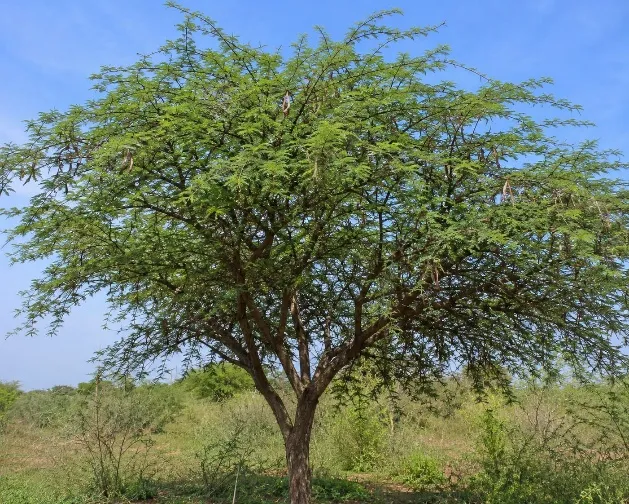
FIG. NO: 1 (P. JULIFLORA TREE)
VERNACULAR NAMES
The various regional names for a specific tree species across multiple Indian languages. In Hindi, it is referred to as Velayati babul, Velayati babool, and Velayati khejra. In Gujarati, it is known as Gando baval, while in Marathi, it is termed Velayati kikar. In Marwari, it is called Angrezi bavaliya. Its Kannada name is Bellari jali, and in Tamil, it is referred to as Velikaruvel or Velimullu. These terms illustrate the linguistic diversity in identifying this species [6].
MORPHOLOGY
TREE FORM AND SIZE
P. juliflora typically reaches maximum height of 12 m, but can grow up to 20 m under optimal conditions.
SEEDS
The seeds exhibit epigeous germination and are either green or pale green.
WOOD
The wood, when dried, presents a pale brown color and contains a composition of fibers (48%), vessels (18%), rays (18%), and axial parenchyma (16%) at a microscopic level.
LEAVES
The leaves are medium to large, measuring 10-20 cm in length, with leaflets ranging from 8-18 mm and exhibiting elliptic-oblong, linear-oblong, or ovate shapes, characterized by a pointed apex. They are rich in essential amino acids, though they contain low levels of sulfur-containing amino acids. Additionally, the leaves hold alkaloids, tannins, flavonoids, and polyphenols. Their chemical composition includes nitrogen-free extract, basic extractives such as protein (26.3%), fiber (24.8%), extract (8.5%), ash (1.4%), and various micronutrients and macronutrients [7].
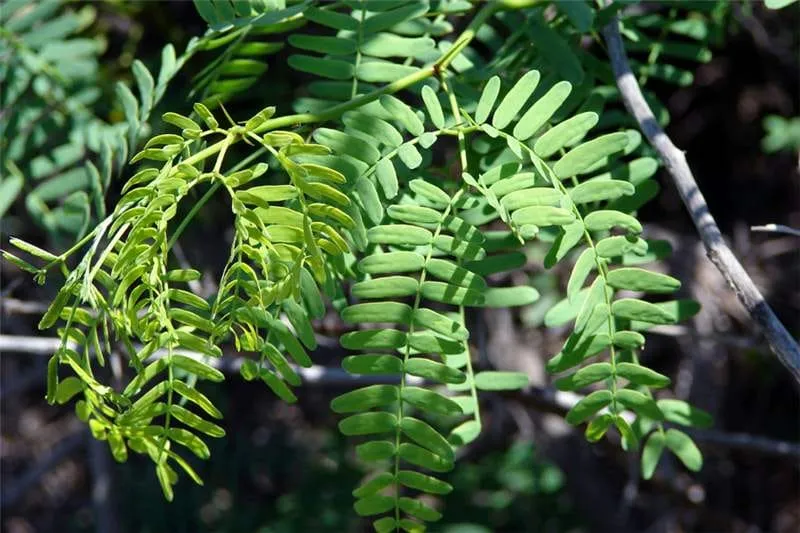
FIG. NO: 2 (P. JULIFLORA LEAVES)
FLOWERS
Flowers are elongated, spike-like inflorescences that are cylindrical and typically yellow to yellow-white in colour, comprising parts such as calyx, corolla, pistils, petals, stamen, and pedicel.
FRUITS
This species from the Leguminosae family produces an indehiscent legume fruit with an incurved apex. The fruit measures 16-28 cm in length, 14-18 mm in width, and 6-10 mm in thickness, and has a green colour.
THORNS
The thorns of the plant are straight, varying from solitary to paired, either on different branches or the same branch [8].
PHYTOCHEMICAL CONSTITUENTS
|
PHYTOCHEMICAL CLASS |
MAJOR TYPES |
PLANT PARTS |
|
Alkaloids |
Juliflorine, Juliprosopine, Prosopine |
Leaves, pods, bark, seeds |
|
Flavonoids |
Quercetin, Kaempferol |
Leaves, flowers |
|
Phenolics |
Gallic acid, Ferulic acid |
Leaves, pods, bark |
|
Tannins |
Condensed tannins, Hydrolysable tannins |
Bark, leaves, pods |
|
Saponins |
Triterpenoid, saponins |
Leaves, roots |
|
Terpenoids |
Monoterpenes, Triterpenes |
Leaves, bark, flowers |
|
Glycosides |
Phenolic glycosides |
Leaves, pods |
|
Steroids |
Β-Sitosterol |
Leaves, roots |
TRADITIONAL USES
prosopis juliflora is used in traditional medicine and daily life. It is used to treat wounds, skin problems, fever, cough, asthma, diarrhea, and dysentery. The pods are used as food for animals, and the wood is used as firewood, charcoal, and fencing material. It is also planted to prevent soil erosion and improve soil fertility [10].
PHARMACOLOGICAL ACTIVITIES:
AntiBacterial activity
Prosopis juliflora was evaluated for antibacterial properties using the disc diffusion method on various Gram-negative and Gram-positive strains, including E. coli and Staphylococcus aureus. The highest antibacterial activity was noted in extracts from the leaf, pod, and flower, with Minimum Inhibitory Concentration (MIC) values ranging from 25μg/ml to 100μg/ml. The leaf extract exhibited the most significant activity, displaying dose-related inhibition between concentrations of 50mg/ml and 300mg/ml, especially against Bacillus subtilis, while showing effects contrary to traditional antibiotics [11].
Antifungal activity
The aqueous leaf extract demonstrates fungicidal activity, both alone and in combination, with optimal effectiveness observed at a concentration of 24%. Significant antifungal effects were also noted with methanol and ethanol extracts. The plant is reported to contain various alkaloids with broad-spectrum antifungal properties against numerous seed-borne fungi. Furthermore, combining chemical fungicides with alkaloid extracts resulted in markedly enhanced antifungal activity compared to using chemical fungicides alone at the same dosage. These findings suggest that using the extract can effectively reduce the necessary dosage of chemical fungicides while improving the inhibition of seed mycoflora [12].
Antimicrobial activity
Prosopis juliflora has shown promising antimicrobial activity against various microorganisms. Studies have explored the use of P. juliflora tincture for controlling microbial infections in agricultural plants and for the treatment of gonorrhea. Its antimicrobial potential was evaluated through in vitro assays, where the extract demonstrated inhibitory effects against tested pathogens. These findings suggest that P. juliflora could serve as a natural source of antimicrobial compounds for pharmaceutical and agricultural applications [13].
Antiulcer activity
The antiulcer activity of ethanolic extract from Prosopis juliflora in Wistar rats, divided into four groups. Group 1 received water for injection, Group 2 received Ranitidine, and Groups 3 and 4 were treated with the extract at doses of 250 and 500 mg/kg, respectively. The results indicated that both doses of the extract significantly reduced the ulcer score compared to the ethanol-induced ulcer control group [14].
Antipyretic activity
The ethanolic extract of Prosopis juliflora demonstrates significant antipyretic activity, evidenced by a notable reduction in rectal temperature at 3 hours post-administration at a dose of 500 mg/kg, in comparison to the standard drug Paracetamol. Additionally, reductions in rectal temperature were observed at 2, 3, and 4 hours compared to vehicle control, indicating its potential as an effective and safer alternative for fever management [15].
Antihelmintic activity
Ethanolic extracts from both the root and leaf of P. juliflora demonstrate significant in vitro activity against adult Haemonchus contortus. The effectiveness of these extracts is comparable to that of Albendazole, a well-known synthetic anthelmintic drug [16].
Antipustule activity
The anti-pustule activity of the acetone extract of the plant Prosopis juliflora, specifically its effectiveness against Staphylococcus species using the well diffusion method. The minimum inhibitory concentration (MIC) for AEP was determined to be 0.75 mg/ml, indicating its potential in pimple eradication, a significant area of research in the cosmetic sector. The growth of Staphylococcus species contributes to pimple formation, and AEP's inhibitory action was further corroborated by growth curve analysis. Furthermore, Rajadurai et al. noted that incorporating AEP into synthetic creams enhances anti-pustule activity while reducing adverse effects such as skin blackening, itching, and tissue damage typically associated with the creams alone. Thus, the findings underscore the beneficial role of P. juliflora in cosmetic applications for acne treatment [17].
Antiprotozoal activity
The methanol extract of P. juliflora exhibited in vitro antiprotozoal activity against various pathogens, including Plasmodium falciparum, Leishmania infantum, and Trypanosoma cruzi. Cytotoxic effects were evaluated using MRC-5 cells, aiming for an IC50 of <10 μg/mL and a selectivity index >4. Antiplasmodial activity was confirmed in amastigotes of T. cruzi and T. brucei [18].
Antigiaradial and amoebicidal activity:
The antigiardial and amoebicidal activities of various extracts. The petroleum ether extract demonstrated the highest efficacy against Giardia lamblia, achieving 78.91% mortality within 72 hours at a concentration of 500 ppm. This was closely followed by the methanolic extract, which resulted in 77.48% mortality within the same timeframe at a concentration of 1000 ppm. Additionally, for Entamoeba histolytica, the methanolic extract showed the highest activity, with a mortality rate of 71.97% within 72 hours at a concentration of 1000 ppm [19].
Autophagy and apoptosis activity
The study investigated the effects of P. juliflora leaf extracts, primarily containing juliprosopine, on autophagy and apoptosis in a neuron/glial cell co-culture. The total alkaloids extract at a concentration of 30 μg/mL and its fractions at 7.5 μg/mL were shown to reduce ATP levels and disrupt mitochondrial membrane potential after 12 hours of exposure. Furthermore, at 16 hours, the extracts triggered caspase-9 activation, nuclear condensation, and subsequent neuronal death. Autophagy activation was observed as early as 4 hours, evidenced by a decrease in P62 protein levels, an increase in LC3II expression, and a reduction in the number of GFP-LC3 cells [20].
Antioxidant activity:
The antioxidant capacity of monospecific honeybee-collected pollen extract from the mesquite tree (Prosopis juliflora) in both in vitro and in vivo systems. The analysis involved inhibiting lipid peroxidation in mouse hepatic microsomal preparations and assessing liver homogenates from bromobenzene-intoxicated mice through the quantification of thiobarbituric acid-reactive substances (TBARS). Results indicate that mesquite pollen is a significant source of flavonoids, acting as natural antioxidants, demonstrating notable antioxidant activity linked to flavonol concentration in both systems, although with reduced effectiveness observed in vivo. Additionally, in non-oxidative in vivo conditions, high flavonol concentrations in mesquite pollen extracts may exhibit pro-oxidant effects. The findings also highlight the crucial role of flavonoids and phenolic acids in defining the antioxidant capacities of pollen from various botanical sources, particularly those with reactive phenolic hydroxyl groups, emphasizing structures with O-dihydroxyl configurations in the 30th and 40th positions of the flavonoid B ring as particularly potent [21].
Antitumor activity
The anti-tumor activity of alkaloids from the leaves of Prosopis juliflora, assessing their effects on T-cell leukemia (Molt-4) cells using an MTT-based assay. The alkaloid extract, obtained through a modified acid/base method, showed significant cytotoxicity towards cancer cells compared to normal cells, with effects dependent on concentration and exposure time. Notably, there was no observed genotoxicity. Various alkaloids, including juliflorine and its derivatives, are implicated in this biological activity, with julifloravizole showing antifungal properties against specific pathogens [22].
CONCLUSION
Prosopis juliflora is a medicinal plant known for its rich bioactive phytochemicals, including alkaloids, flavonoids, and saponins, which contribute to its diverse pharmacological activities such as antibacterial, antifungal, and antioxidant effects. Its traditional uses underscore its therapeutic importance. Additionally, it aids in soil conservation and fodder production. Despite these benefits, P. juliflora's invasive nature presents ecological challenges that necessitate management. The evidence suggests its potential in pharmaceuticals, agriculture, and industry, though further studies on safety and efficacy are required.
REFERENCES

Shiny. M, Kenneth. N, Annavi. K, Aparna. P. A, Balaji. N, Bhadra Sree. A. S, Prathisha. F, A Review on Prosopis Juliflora (SW.) Dc, Int. J. of Pharm. Sci., 2026, Vol 4, Issue 8, 2190-2196, https://doi.org/10.5281/zenodo.21917468
 10.5281/zenodo.21917468