

We use cookies to ensure our website works properly and to personalise your experience. Cookies policy
Dr. Rajendra Gode College of Pharmacy, Amravati
Drug discovery and development is a lengthy, costly, and high-risk process, with most drug candidates failing before approval. Recently, artificial intelligence (AI) has emerged as a transformative tool, offering new ways to accelerate and optimize each stage of this pipeline. AI techniques, such as machine learning and deep learning, enable the rapid analysis of large chemical and biological datasets, facilitating tasks like target identification, virtual screening, toxicity prediction, and biomarker discovery. Applications range from drug repurposing and personalized dosing to clinical trial design and research on rare disease. Case studies demonstrate how AI improves efficiency, reduces costs, and supports personalized medicine. Moreover, AI is increasingly applied in nanotechnology, gene editing, and smart drug delivery systems. Despite these advances, challenges remain, including data quality, interpretability, ethical issues, and the need for multidisciplinary collaboration. Addressing these barriers will be crucial for fully realizing AI’s potential in drug discovery. Overall, the integration of AI into pharmaceutical research represents a paradigm shift, with the capacity to shorten timelines, lower costs, and deliver safer, more effective therapies to patients worldwide.
Drug discovery and development is a long, costly, and complex process that often takes more than a decade and may cost over one to two billion dollars for a single approved drug. Despite years of effort, nearly 90% of potential drug candidates fail, even after reaching early clinical trials. The traditional process involves multiple stages, including compound identification, optimization, toxicity evaluation, and clinical testing, each of which carries a high risk of failure. As a result, the journey from identifying a promising molecule to delivering an approved drug to the market is slow, expensive, and inefficient.[1]
In recent years, the use of artificial intelligence (AI) has begun to transform this landscape. The analysis of vast chemical and biological datasets, which once required years of manual work, can now be performed rapidly with machine learning (ML) and deep learning (DL) techniques. AI has shown promise in various areas of drug discovery, including compound screening, prediction of toxicity, protein structure determination, and drug-target interaction studies. For example, public libraries such as ChEMBL and PubChem, which contain information on millions of molecules, can be mined using AI to identify new drug candidates. Similarly, tools like DeepTox and MoleculeNet predict the toxicity of compounds, while AlphaFold, an AI-based platform, has revolutionized the prediction of three-dimensional protein structures, a crucial step in rational drug design.[2]
Pharmaceutical companies and biotechnology firms have already started integrating AI into their workflows. Verge Genomics employs AI to identify treatments for neurodegenerative diseases, while Novartis applies machine learning to analyze cellular images and test experimental molecules more efficiently. Bayer and Merck have used AI algorithms in clinical decision support for rare diseases, and companies like Cyclica have developed AI-driven platforms such as Ligand Express to design, screen, and personalize drug discovery processes. These case studies demonstrate how AI can speed up the identification of drug candidates, reduce development costs, and improve decision-making at various stages of the pipeline.
AI not only accelerates virtual screening and molecular docking but also enables drug repurposing, the process of finding new uses for existing drugs. Moreover, advanced models can optimize drug dosage, design novel therapeutic peptides, and predict patient-specific responses, paving the way for personalized medicine. While AI provides clear advantages—greater efficiency, reduced false positives, and the ability to process massive datasets—it also faces challenges. The accuracy of AI predictions depends heavily on the quality of available data, and even minor structural changes in molecules can produce unpredictable results. Furthermore, ethical and regulatory issues remain important considerations as AI continues to expand in healthcare and drug development.[3]
Despite these challenges, the integration of AI into drug discovery and development offers unprecedented opportunities. By combining computational power with biological insight, AI has the potential to revolutionize every stage of the drug discovery pipeline—from target identification and lead optimization to clinical trials and post-marketing surveillance. Looking forward, the incorporation of multi-omics data, collaborative AI platforms, and personalized medicine approaches is expected to further enhance efficiency, accuracy, and innovation. This review aims to provide a comprehensive overview of current AI applications in drug discovery, highlight recent advancements, showcase successful case studies, and discuss key challenges and future directions. By addressing the intersection of two rapidly evolving fields—artificial intelligence and drug discovery—this work seeks to contribute valuable insights to academia, industry, and healthcare, ultimately supporting the development of safer, more effective, and more accessible therapeutics worldwide.[4]
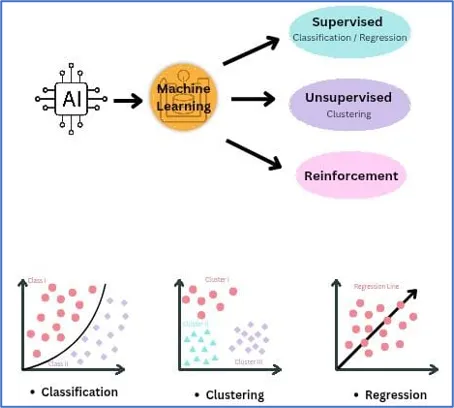
Fig: Artificial Intelligence and its subtypes
AI-Based Disease Identification :
Artificial intelligence (AI) has shown remarkable potential in identifying and diagnosing both infectious and non-communicable diseases. By processing large datasets from sources such as electronic health records, social media, and news reports, AI can detect outbreaks early, track the spread of infections, and identify populations at risk. Its ability to handle massive amounts of information quickly makes it an essential tool for improving disease detection and response.
In infectious disease diagnosis, AI has delivered impressive results. For example, Sepsis Watch uses machine learning and deep learning methods to detect sepsis early by analyzing both static patient data and dynamic hospital records. Similarly, during the COVID-19 pandemic, AI-based models achieved high accuracy in detecting pneumonia from chest X-rays, while conversational bots like Aapka Chikitsak provided accessible telehealth support. AI has also improved the diagnosis of urinary tract infections through advanced ML models and supported HIV prevention by analyzing social networks and providing confidential counseling through virtual agents. [2] [3] [4]
AI is also transforming the diagnosis of non-communicable diseases. In diabetes, deep learning models such as IDx-DR have been approved to detect diabetic retinopathy from retinal images with high accuracy. For Alzheimer’s disease, AI models trained on MRI and PET scans can predict the disease years before clinical symptoms appear. In cancer care, deep learning algorithms are used to interpret medical images and pathology slides, helping classify cancer types, predict outcomes, and guide treatment planning. [5]
Overall, AI enables early detection, personalized treatment, and better disease management. By supporting faster, more accurate diagnoses, it has the potential to reduce healthcare burdens, improve outcomes, and transform the way both infectious and chronic diseases are identified and treated. [6]
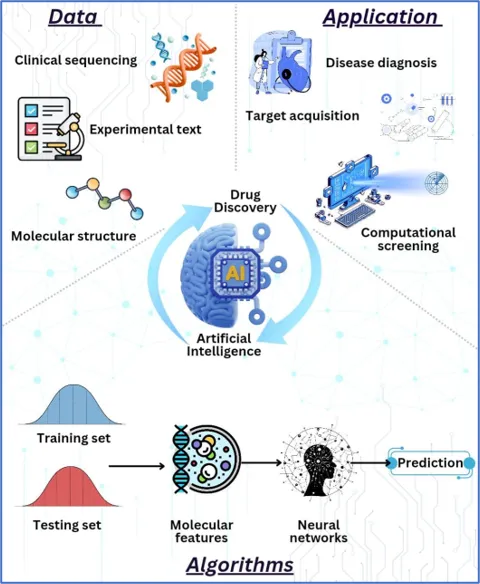
Fig : Schematic representation of the integration of AI in the drug discovery process
Target Identification :
Target identification is the important steps in drug discovery, but it has traditionally on experimental methods like high-throughput screening (HTS) and X-ray crystallography, which are costly, time-consuming, and often unsuccessful. Today, artificial intelligence (AI) has transformed this field by making it possible to identify potential drug targets through computational methods.
AI-based approaches use machine learning (ML) algorithms to analyze large biological datasets, such as gene expression profiles, protein-protein interactions, and signaling pathways. These tools can prioritize the most relevant targets for a disease and even uncover novel ones that traditional methods might miss. This greatly reduces the time and resources required for target discovery. [7]
Advances in protein imaging have also contributed to this progress. Techniques like cryo-electron microscopy (cryo-EM) [8] allow detailed 3D visualization of proteins and complexes. Tools such as CryoDRGN use ML to reconstruct protein structures from cryo-EM data, capturing both continuous and dynamic changes in proteins. [9]
In proteomics, AI tools like DeepDigest predict how protease enzymes (such as trypsin) cut proteins, improving mass spectrometry–based protein identification. Other deep learning models can even predict missed cleavage sites, making the analysis more accurate and efficient. [10]
The biggest breakthroughs, however, come from AI-driven protein structure prediction. It has mapped nearly all human proteins and created the publicly available AlphaFold database. [11] Although AlphaFold cannot model mutations or dynamic structural states, newer methods like ESMFold, Ember3D, and AlphaMissense are addressing these gaps by improving prediction speed, accuracy, and variant analysis. [12]
AI is also helping in the identification of special protein sites, such as allosteric sites (where molecules bind to regulate protein activity) and cryptic pockets (hidden binding sites that open only under certain conditions). Models like Allosite, AlloPred, PASSer, CryptoSite, and PocketMiner use ML and deep learning to predict these sites with high accuracy, offering new opportunities for drug design.
Beyond proteins, AI models like BiteNetN predict small molecule binding on DNA and RNA, while DeepDTnet uses genomic and chemical data to find new drug targets. ML has also been applied to transcriptomic data, helping identify biomarkers and disease-specific drug targets, such as those for muscle disorders.
Finally, after targets are identified, AI can even generate potential drug molecules. Tools like ResGen and Lingo3DMol design novel compounds that fit into protein pockets, considering both structural and binding features. This makes drug discovery not only faster but also more precise. [13]
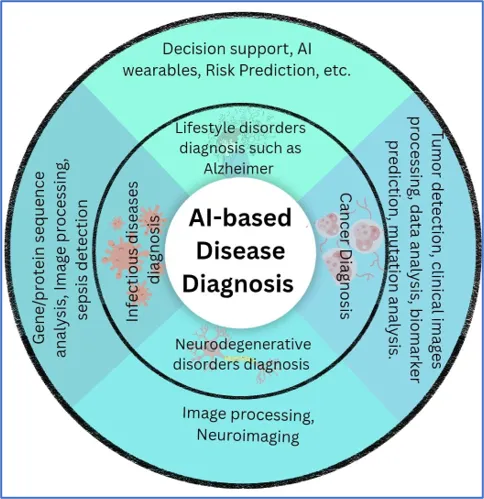
Fig: The overview of AI-based disease identification
AI-Enabled Virtual Screening in Drug Discovery: Opportunities and Challenges :
The first step of drug discovery usually involves screening thousands of compounds to find those that may have useful biological effects. Traditionally, this process is slow, expensive, and can take 12–15 years before a drug reaches approval. It involves identifying “hit” compounds in the lab, refining them into “leads,” and then testing them further before moving to clinical trials. [14]
Virtual Screening (VS) has developed as a faster and more cost-effective alternative. Instead of physically testing thousands of compounds, VS uses computer models to scan millions of molecules and predict which ones are most likely to work. There are two main approaches: structure-based methods, which use 3D information about the target protein, and ligand-based methods, which use information about known active molecules. [15]
Structure-Based Methods
Structure-based VS requires knowledge of the protein’s structure or its binding site. A common technique is molecular docking, where computer programs predict how well a compound might fit into a protein’s binding pocket. Recently, deep learning has been applied to improve scoring functions that estimate binding strength.
One example is Deep Docking, an AI-enabled platform that screens massive libraries of molecules much faster than traditional methods. It uses deep learning to focus only on promising compounds, saving time and resources. However, its performance depends heavily on GPU availability and the quality of docking programs used. [16]
Different machine learning (ML) models, such as Naïve Bayes (NB), Support Vector Machines (SVM), Random Forests (RF), k-Nearest Neighbors (kNN), and Artificial Neural Networks (ANNs), are also used in VS. Each has strengths—for example, NB is good at identifying useful fragments, RF is flexible, and SVM is highly accurate. Often, combining models gives the best results. Studies have shown that NB and SVM models can successfully identify inhibitors for diseases like MRSA, diabetes, and cancer, with high accuracy. [17]
Ligand-Based Virtual Screening (LBVS)
LBVS looks for new compounds by comparing them to known active molecules with similar chemical features. A common approach is pharmacophore modeling, that identifies important molecular features like hydrogen bond donors or aromatic rings, that are necessary for activity. ML techniques, especially QSAR (Quantitative Structure-Activity Relationship) modeling, are widely used to predict how molecular structure relates to biological activity.
AI has been used successfully in LBVS for cancer drug discovery, Alzheimer’s treatment, and other complex diseases. For example, hybrid inhibitors for cancer were identified using ML-based QSAR models with very high accuracy. Similarly, AI models have predicted effective dual inhibitors for Alzheimer’s disease targets. Another well-known system is AtomNet, one of the first deep learning models for drug discovery, which consistently outperforms traditional docking methods. [18]
Opportunities and Challenges
AI and ML have transformed virtual screening by making it faster, affordable, and more accurate. They are especially powerful in drug repurposing, where existing drugs are tested for new uses—this can save time since these drugs already have safety data. Tools like SPiDER use AI to predict new targets for approved drugs with high accuracy.
Despite the progress, challenges remain. These include the need for large, high-quality datasets, better chemical representation methods, more generalizable models, and improved interpretability. Computational requirements are also high, though newer methods like Deep Docking are reducing this burden.
AI-enabled virtual screening is speeding up the drug discovery process and reducing costs, while also helping uncover new therapeutic opportunities. While, technical and data-related challenges must still be addressed to fully realize its potential.
Prediction of Drug Toxicity with AI
A major reason why many drug candidates fail during clinical trials is unexpected side effects. Predicting drug toxicity in the early, pre-clinical stage is therefore very important to reduce failures, save time and costs, and improve patient safety. Traditional methods of predicting toxicity often rely on small datasets and simple models, which limit their accuracy.
AI-based methods offer a better alternative. By using large and diverse datasets—including chemical structures, biological pathways, and clinical information—AI can more accurately predict potential toxic effects of new compounds. Machine learning (ML) and deep learning (DL) algorithms such as neural networks are now widely used to analyze large toxicity datasets. These models can detect toxicities earlier, prioritize compounds for testing, and even suggest new drug targets. Several studies and reviews have highlighted their growing importance in modern drug discovery.
One key focus of toxicity prediction is hERG toxicity, which is related to heart rhythm problems. Many ML models—such as Random Forest (RF), Support Vector Machines (SVM), k-Nearest Neighbors (kNN), and Gradient Boosting—have been developed to predict hERG-related side effects. [19]
For example, Venkatraman created an RF model trained on nearly 8,000 compounds, achieving 80% accuracy. Other researchers have used SVM and deep learning approaches, some reaching accuracy above 90%. Advanced neural network models, including CNNs and graph-based methods, have further improved results. Tools like HergSPred and ADMETLab 2.0 now achieve very high accuracy and reliability in predicting cardiac side effects.
Lethal dose 50 measures the dose of a substance that kills half of the test animals. It has long been used to assess acute toxicity, but animal testing raises ethical concerns and shows variability across species. AI-based models now provide in silico (computer-based) predictions as alternatives.
Researchers have built models using different ML methods like RF, Naïve Bayes, and QSAR approaches. These models can classify chemicals as toxic or non-toxic, and some achieve accuracy levels above 80%. Recent deep learning models, such as consensus frameworks combining CNNs, GCNNs, and Random Forests, have shown even higher predictive power. [20]
Drug-induced liver injury (DILI) is one of the leading causes of drug recalls, responsible for nearly one-third of cases. Predicting DILI is difficult because animal studies and in vitro methods do not always reflect human outcomes. AI models trained on chemical structure data and biological responses are now being used to improve accuracy.
Methods like RF, SVM, deep neural networks, and graph-based models have been applied. For instance, Li et al. developed DeepDILI, which outperformed several ML models. Similarly, Hwang and colleagues built GLIT, a graph-based model, which achieved accuracy over 77%. CNN-based approaches have also shown excellent results, with some reaching over 95% accuracy. These advances may reduce the risk of drug recalls and improve patient safety. [21]
Another important area is predicting whether a compound could cause cancer. Many FDA-approved drugs have been withdrawn due to carcinogenic effects, so early detection is critical. Traditional animal studies are costly and time-consuming, making AI-based models an attractive alternative.
Recent tools such as CapsCarcino and DeepCarc use deep learning to predict carcinogenicity, even when data is sparse. These models have achieved accuracy rates above 74% and continue to improve with larger datasets. Hybrid neural networks and advanced deep learning architectures are helping identify potential carcinogens more effectively than older methods. [22]
AI and Gene Editing Technologies for Developing Gene Therapies :
With the rapid growth of genomic and clinical data, researchers face both challenges and opportunities in extracting useful biological and medical information. Over the past two decades, AI and data science have been widely used in genomics to process and interpret these massive datasets.
A large part of important patient information is hidden in unstructured data, such as clinical notes, discharge summaries, and pathology or radiology reports, which make up nearly 80% of electronic health records (EHRs). Natural Language Processing (NLP) tools, like cTAKES, can analyze this free text and convert it into structured data. Combining NLP with structured data has greatly improved phenotyping (the process of identifying disease traits). For example, studies have shown that NLP increases sensitivity while keeping high accuracy in identifying conditions like multiple sclerosis and inflammatory bowel disease. [23]
Machine learning (ML) has also been used to create phenotyping models. For instance, an SVM model for rheumatoid arthritis, built from ICD codes, medication records, and NLP-derived clinical concepts, outperformed traditional rule-based systems. ML models are more scalable, can handle less standardized data, and are better at identifying complex disease patterns. However, supervised ML models require high-quality labeled datasets, which are expensive and time-consuming to create. To solve this, researchers are using unsupervised learning methods. For example, Ho et al. developed “Limestone,” which automatically generates phenotype clusters without manual input, and its improved versions (“Marble” and “Granite”) achieved even higher accuracy. Deep learning (DL) models have also been used successfully, such as autoencoders and NLP-based approaches applied to discharge summaries and clinical notes.
In genomics, DL has become especially valuable because it can process very large and complex datasets. DL models have been applied to design guide RNAs (gRNAs) for gene editing by analyzing sequence and structural features. Transfer learning—originally developed in computer vision—has also been adapted for genomics, allowing models trained on large datasets to be reused for smaller datasets.
In the clinical domain, advanced NLP models such as ClinicalBERT and Discharge Summary BERT have been developed. These models were trained on millions of clinical notes from the MIMIC-III database and outperformed earlier versions like BERT and BioBERT in tasks such as predicting hospital readmissions and analyzing medical notes. However, one limitation is that they were trained on data from a single hospital system, meaning retraining on larger, more diverse datasets could further improve their performance. [24]
AI, ML, and DL are enhancing both genomics research and clinical applications, supporting better phenotyping, gene editing, and the development of advanced gene therapies.
AI-Based Modeling for Personalized Drug Dosing:
Traditionally, medicine has followed the idea of “one treatment fits all.” However, the same drug can work very differently in different patients. While it may be effective for some, it might cause side effects or show reduced effectiveness in others. These variations are mainly due to differences in each person’s genetic profile. This has led to the rise of personalized medicine (or precision medicine), where treatments and drug doses are tailored to an individual’s genetics. The aim is to maximize benefits while minimizing side effects.
AI has played a important role in advancing personalized treatment. For example, the AI platform CURATE.AI predicts the best drug dosage for each patient by analyzing their medical records. It continuously updates its predictions as the patient’s disease progresses or improves. Importantly, CURATE.AI can optimize doses not just for single drugs but also for combination therapies, which involve multiple drugs or treatment methods. These are especially effective for complex diseases like cancer, where a single drug may not be enough.
AI is also being used to predict how well certain treatments will work. For instance, Kureshi et al. developed an AI-based decision tree model to link patient characteristics with tumor responses in non-small cell lung cancer (NSCLC). Using factors such as tumor type, genetic mutations, targeted therapies, and smoking history, the model predicted patient response to EGFR tyrosine kinase inhibitors with 76.6% accuracy. However, because the study used a small dataset (355 patients), rare genetic patterns like duplications, deletions, and mutations were not included. Larger datasets could further improve accuracy.
Another important tool is IBM Watson for Oncology, which has made a big impact on personalized cancer treatment. This software was trained on thousands of patient records, clinical trials, and medical literature curated by Memorial Sloan Kettering. By comparing a patient’s case with worldwide databases, Watson provides accurate diagnoses and treatment recommendations tailored to individual needs. [25]
The Role of AI in Researching Rare Diseases :
Rare diseases (RDs) affect about 1 in 10 people in the United States, yet diagnosing them is often very difficult. Because the symptoms are complex and the conditions are uncommon, patients can wait up to 7 years before receiving a correct diagnosis. This long delay also postpones treatment and care, making rare diseases a major healthcare challenge.
AI has shown great potential to improve the diagnosis and management of rare diseases. Different AI methods—such as Naïve Bayes (NB), Random Forest (RF), XGBoost, Convolutional Neural Networks (CNN), Autoencoders (AE), Recurrent Neural Networks (RNN), and Generative Adversarial Networks (GANs)—have been applied in this field. For example, Fernández et al. developed a deep learning model using the InceptionV3 CNN to detect tubers in MRI scans for diagnosing tuberous sclerosis complex (TSC), achieving 95% accuracy. Similarly, Founta introduced a gene selection method combined with XGBoost and RF to diagnose amyotrophic lateral sclerosis (ALS) and its subtypes, reaching 88.89% accuracy. AI is also being used with PET scans for early detection of rare diseases, showing promising results. [26]
Despite these advances, applying AI in rare disease research comes with important ethical, legal, and social challenges. AI tools must be developed in close collaboration with patient advocacy groups to ensure they truly meet the needs of rare disease patients. The datasets used to train AI must be diverse and representative, since biased data could harm patients. Also, AI-based medical devices (AIMDs) must be carefully tested for safety and effectiveness before being used in clinical practice. To avoid risks, AIMDs need to be “rare disease–aware” at every stage—from design to real-world use.
This requires a multidisciplinary approach, involving clinicians, computer scientists, and patient advocates working together. If these concerns are addressed properly, AI can revolutionize rare disease research, enabling faster diagnosis, better treatments, and improved quality of life for patients.
Present Status of Drug Discovery :
Traditional methods and limitations
In the past, drug discovery mainly relied on trial-and-error, where researchers tested different compounds to see if they worked as treatments. This process was slow, expensive, and often unsuccessful, with many drugs failing during clinical trials. It also struggled to fully explain complex biological systems and disease mechanisms. [27]
Evolution of technology in pharmaceutical research
With new technologies, the process has improved. High-throughput screening now allows scientists to test thousands of compounds quickly, speeding up the early stages of drug discovery. Advances in genomics, proteomics, and other “omics” fields have given researchers deeper insights into biological systems and disease pathways. Computational methods have also become valuable, enabling the simulation of molecular interactions and prediction of drug properties. [28]
Emergence of AI in drug discovery
The rise of AI, especially machine learning and deep learning, has transformed drug discovery. AI can analyze large datasets, predict molecular properties, and identify potential drug candidates more efficiently than traditional methods. It enables virtual screening of compound libraries, helping researchers find promising molecules faster and at lower cost. AI can also predict how drugs behave in the body (pharmacokinetics and pharmacodynamics), making it easier to prioritize candidates for further study. Moreover, AI can analyze patient data to identify biomarkers, predict treatment responses, and design personalized therapies. Overall, AI has the potential to speed up drug discovery, cut costs, and improve success rates. However, challenges like data quality, regulations, and ethical issues still need to be addressed to unlock its full potential in pharmaceutical research. [29]
Applications of AI in Drug Discovery :
AI-Driven Drug Development :
In recent years, AI technology has transformed pharmaceutical research, bringing big changes to how new medicines are discovered, tested, and delivered to patients. This shift is improving many steps of the drug development process — from speeding up early research to designing better clinical trials and supporting personalized treatments.
Speeding up preclinical research
Preclinical research is the stage where new drug candidates are tested for safety and effectiveness before moving to human trials. This step is often slow, costly, and unsuccessful. AI helps make this process faster and more efficient by analyzing large amounts of data, predicting how drugs will interact in the body, and spotting the most promising compounds. Machine learning tools can even predict if a potential drug might be toxic. With AI-driven platforms, scientists can quickly screen thousands of compounds and select the best options, saving both time and money.
Improving clinical trial design
Traditional clinical trials can be expensive, slow, and sometimes give unclear results. AI can make trials smarter by helping researchers find the right patients, design better treatment plans, and increase the chances of success. By studying patient data, AI can identify useful biomarkers and group patients more effectively. AI-powered simulations also allow researchers to test “virtual trial” scenarios, refine study methods, and reduce risks before starting real-world trials. [31]
Future Directions and Innovations :
Advancements in AI technologies
Deep learning is a powerful type of machine learning that can be used in drug discovery. It uses neural networks to study information from public databases and make scientific predictions. Deep learning can also lower the cost of clinical trials by predicting their results before the trials even begin.
Another important use of AI is drug repurposing—finding new uses for medicines that already exist. This makes drug development faster and cheaper. AI is also being used in nanotechnology, such as creating nanocarriers that deliver drugs more effectively. In addition, AI helps build smart drug release systems that release medicine at the right time when the body needs it most.
Collaborative approaches and industry trends
AI in drug discovery requires teamwork between many different experts, such as researchers, doctors, engineers, and data specialists. Because of this, multidisciplinary education (training across different fields) is becoming essential to prepare people for the future of pharmaceutical research.
Potential impact on drug development pipelines
AI can speed up drug discovery, reduce costs, and free up resources. These saved resources can then be used to search for treatments for other diseases. Overall, this can greatly improve public health by making new medicines available faster and more efficiently.
CONCLUSION :
AI is transforming the way drugs are discovered, designed, and tested. It is now used in almost every stage of drug development — from disease detection and personalized medicine to clinical trials and post-marketing safety checks. AI helps in predicting diseases early, identifying drug targets, designing new compounds, and even forecasting treatment outcomes. It can also predict side effects and drug-like properties, which reduces the need for time-consuming experiments and animal testing. In clinical trials, AI improves patient selection, monitoring, and follow-ups, making the process faster, cheaper, and more reliable. It also supports regulatory approvals and pharmacovigilance. Beyond drug discovery, AI has applications in healthcare management, surgeries, vaccines, preventive treatments, and nutrition science .However, AI is not a replacement for human intelligence. While it may be highly accurate, it can still make errors such as false positives or false negatives. Human oversight is essential to validate AI predictions. Challenges like data quality, bias, lack of transparency, high resource use, and ethical concerns must also be addressed. To fully benefit from AI, collaboration among researchers, industry experts, and policymakers is crucial. Future directions may include resource-efficient AI models, better interpretability, sustainable computing solutions, and even the development of virtual human models that can simulate complex drug interactions. Integrating AI into drug discovery has the potential to revolutionize medicine, reduce costs, speed up timelines, and improve patient outcomes — but its success depends on responsible use, ethical practices, and strong human-AI collaboration.
REFERENCES

Sakshi Bele, Piyusha Agarkar, Shyamali Waghmare, S. D. Wankhade, Dr. H. S. Sawarkar, AI in Drug Discovery and Development - Present Status and Future Scope, Int. J. of Pharm. Sci., 2026, Vol 4, Issue 6, 416-428. https://doi.org/10.5281/zenodo.20501576
 10.5281/zenodo.20501576