

We use cookies to ensure our website works properly and to personalise your experience. Cookies policy
Chhatrapati Shivaji College of Pharmacy, Deori, Gondia, Maharashtra, India.
Herbal medicines are widely emplo?y?ed in the tre?atment of cough becaus?e of their therapeutic? efficacy and comparatively fewer side effect?s than synthetic drugs. This review emphasizes the? medicinal significance of Pudina (Mentha arvensis),? Tulsi (Oc?imum sanctum), Cinnamon (Cinnamomum? verum), and Honey (Apis mellifera) in herbal cough formulations. Th?ese natural ingredients exhibit antimicrobial, antioxidant,? anti-inflammato?ry, and soothing properties, which contribute to th?e alleviation of cough a?nd respiratory discomfort. Their active constituents, including menthol, eugenol, cinnamaldehyde, and phenolic c?ompounds, are responsible for their therapeutic effects. Herbal cough syrups formulated fro?m these ingredients may therefore serve as safe, effective, and patient-friendly alternatives for cough management.
Herbal Treatment for Cough
Now a days, herbal remedies are commonly used for the treatment of cough. also the herbal drugs as well as herbal formulations are playing important role in various types of cough. In present days, therapies like cough suppressants are used for cough. The antitussive agent gives only symptomatic relief. There agents are contraindicated in asthma. They also cause different serious adverse effect which includes respiratory depression, vomiting, nausea, sedation and also patients with diminished respiratory reserve. There is recent years, researchers are focusing on the herbal medicine which are having less side effect.
Herbal plant and formulation are used for many types of disease like cough syrup and other disease. The cough syrup many types of herbal plant are used for Pudina, Tulsi, Cinnamon, honey in that whole plant are used for making herbal medicine the many years. Herbal formulation a most commonly used a development as well as developing countries as health care.
Herbal syrup it is a defined as a prepared and combination and concentration decoction with Honey sugar or either some time use alcohol. The base of such syrup is a strong herbal decoction and mixing a decoction with sugar honey help to thicken preserves the decoction.[1]
The cough syrup medication is a liquid dosage form use of oral liquid pharmaceutical has been confirm on basic ease of administration to those people who have the problem in the swallowing of solid dosage from medication. Syrup is a concentrated solution contains sugar and purified water. In syrup from the other type of syrup solutions. The syrup may be or may not be containing medication or mixed flavouring agent. When the syrup without a medication but the flavouring agent present are known as flavoured or non-medicated syrup.[2]
Flavoured syrup are frequently used as vehicle for the unpleasant test of medications results (found as) is medicated syrups.
As stated to an estimate of the World Health Organization (WHO), there are 80% of the people populations although uses herbs and traditional medicines for needs of their primary health care. On the basis of WHO they define as there are three kinds of herbal medicines;
The products of Herbal medicines that they contain active substance for instance other plant material or combination corresponding to as plant preparations. The solutions are a homogenous mixture of the dissolved drug in a liquid mixture. The molecules (particles) of solid, liquid or gaseous medications are equally allocating among the particles of liquid mixtures. Because medication is mixed already in solution, it absorbed from skin, stomach or other site of administration is faster than dosage form of medication.
Sugar are present in syrups in high amount to predisposes them to the bacterial infections, so they often use as a preservative.[4]
Syrup are very prominent delivery vehicle use for the anti tissue medication because they give a more soothing to swallow the tablet and capsule. This medication is quickly observed. There are same available synthetic cough preparations they cause several adverse effect. So the present study was show to enlarge and in violet herbal cough syrup carry natural element having no any side effect.[5]
In general health professionals having difficulties of accessing effectiveness and safety natural treatment (therapy). Number of instance allopathic medication product has not been studied in large scale and generally they solid without in knowledge of there mechanism of action or side effect. Even so the use of complementary medication is sometime helpful and the confirmation is same time helpful and the confirmation the effectiveness of some this all medication literature is limited, they frequently sold with the drug store.[6]
A successful formulation of liquid , as well as other dosage forms , requires a blend of scientific acuity and pharmaceutical “art”.[7] Oral liquid medicines are being superseded gradually by tablets and capsule because of deleterious changes take place more readily in solution.[8]
Nevertheless there are still a large number of liquid oral preparations are available in the official books. The fact is that the absorption of medicaments in solution from the GI tract into the systemic circulation may be expected to occur more rapidly than other oral dosage forms of the same medicinal agent.[9] Ayurvedic formulations are preferentially administered by oral route[10] and most of the orally administered Ayurvedic formulations belong to liquid form of drug or drug combination.[11]
Type of Herbal Syrup
Advantages of Herbal Syrup[12]
Disadvantages of Herbal Syrup[13,14]
PLANT PROFILE:
PUDINA (MINT):
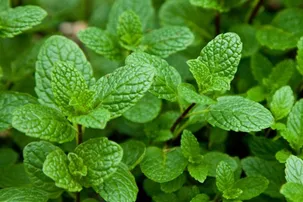
Figure 1: Plant of Pudina
Synonyms : Peppermint, fragrant, Mentha leaves.[15]
Biological source : Pudina consists of dried leaves and obtained from flowering tops of menthe spicatalinn.[15]
Family : Lamiaceae[16]
Scientific classification[17]
|
Taxonomical Rank |
Taxon |
|
Kingdom |
Plantae |
|
Division |
Magnoliophyta |
|
Class |
Magnoliopsida |
|
Order |
Lamiales |
|
Family |
Lamiaceae |
|
Genus |
Mentha |
|
Species |
Mentha arvensis |
Vernacular classification[17]
|
English |
Field mint, Japanese mint, Pennyroyal, Spearmint, Garden mint |
|
Hindi |
Ban Pudina, Paudina, Podina, Pudina, pudinah |
|
Sanskrit |
Pudina, putiha, podinika, phudino, podina |
|
Arabic |
Fodanaje, Fotanaje, Habaqulhind, Naanaaul-hind, Nana, Nana hindi, Nana yabani |
|
Burmese |
Bhudina |
|
Canada |
Chetni-maruga |
|
Japan |
Midorihakka |
|
Nepal |
Nawaghya |
|
Kannada |
Chetamargugu, chetni-marugu, chetnimaragu, chetnimaruga |
|
Malayalam |
Putina, putiina, puttityana |
|
Marathi |
Pudina |
|
Persian |
Pudinah |
|
Tamil |
Iyeccakkirai, iyeccirkirai, kumarakamuli, potina, potina, potina, pudina, pudinah, puthina, putina, putina, putiyana, putiyanmuli, putiyanputina, yechakkirai |
|
Telugu |
Igaenglikoora, igaenglikura, pudina, pudinah |
|
Urdu |
Ab-i-podina, arq nana, nana (pudina), podina, podina khushk, podina khusk, podina taza, pudina, pudinah |
Botanical Description of Mentha arvensis
Mentha arvensis Linn. belongs to the family Lamiaceae. It is an erect, herbaceous, perennial plant that grows to 20-80 cm on square, hairy stems. It is rhizomatous and has opposite leaves attached to the stem by very short stalks. The leaves of Mentha arvensis Linn. are elliptic to oblong-ovate, short-petioled, with toothed margins and rounded or blunt tips. Diacytic stomata are present on the lower surface of the leaf. The flowers are whorled around the upper leaf axils. They are 4-7 mm long, bilabiate, irregular, and change in color from white to pink to violet. The stamens are longer than the petals. The fruits are brown nutlets [18,19].
Geographical Distribution of Mentha arvensis
Mentha arvensis linn. is found in Eurasia. It is widely growing in subtropical regions. Mentha arvensis linn. is found around the north pole, extending as far south as New Mexico. It is native to the regions of Europe, western and central Asia.[20]
Chemical constituent[21,22,23]
|
Sr. No. |
Chemical Constituent |
Class of Compound |
|
1 |
Menthol |
Monoterpene Alcohol |
|
2 |
Menthone |
Monoterpene Ketone |
|
3 |
Menthyl Acetate |
Ester |
|
4 |
1,8-Cineole (Eucalyptol) |
Monoterpene Oxide |
|
5 |
Limonene |
Monoterpene Hydrocarbon |
|
6 |
Pulegone |
Monoterpene Ketone |
|
7 |
Carvone |
Monoterpene Ketone |
|
8 |
Rosmarinic Acid |
Phenolic Compound |
|
9 |
Flavonoids (Luteolin, Hesperidin) |
Polyphenolic Compounds |
|
10 |
Tannins |
Polyphenolic Compounds |
Pharmacologycal Activity
Antibacterial Activities:
The antibacterial activity varied among the bacterial species tested but was nearly equivalent against both antibiotic-resistant and antibiotic-sensitive strains of H. pylori and S. aureus [24].
Antioxidant Activities:
The antioxidant activity of cineole against ethanol-induced gastric mucosal damage in rats has been investigated. The results revealed that the cineole extract of Mentha arvensis possessed antioxidant activity [25]. Another study reported that flavonoids such as quercetin, which are present in mint, also possess antioxidant activity.
Antifertility Activities:
The antifertility activity of the petroleum ether extract of the leaves of Mentha arvensis was investigated in male albino mice. The extract was administered orally at doses of 10 and 20 mg/day per mouse for 60 days. The petroleum ether extract of Mentha arvensis leaves was found to possess reversible antifertility activity in male mice [26].
Cardioprotective Activity:
The cardioprotective activity of the crude extract of Mentha arvensis and its effects on arachidonic acid metabolism have been investigated. The crude extract inhibited the arachidonic acid metabolite thromboxane B2, which is a stable analogue of thromboxane A2. Mentha arvensis was found to possess antiplatelet activity through the inhibition of thromboxane B2 [27].
Anti-allergic and Anti-inflammatory Activity:
The anti-inflammatory and anti-allergic activities of ethanolic and aqueous extracts of the leaves of Mentha arvensis were evaluated against histamine-induced paw edema in mice. The results revealed that the ethanolic extract of the leaves and roots of Mentha arvensis possessed significant anti-allergic and anti-inflammatory activity [28].
TULSI:
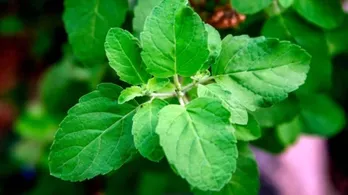
Figure 2: Plant of Tulsi
Synonyms : Holy basil, sacred basil.[29]
Biological source : It consists of dried leaves of ocimum santum linn.[29]
Family : Lamiaceae.[30]
Scientific classification[31]
|
Kingdom |
Plantae |
|
Phylum |
Spermatophyta (or Angiosperms) |
|
Class |
Magnoliopsida (or Dicotyledonae) |
|
Order |
Lamiales |
|
Family |
Lamiaceae |
|
Genus |
Ocimum |
|
Species |
Ocimum tenuiflorum or Ocimum sanctum |
Vernacular classification[31]
|
English |
Holy basil, Indian basil, Sacred basil |
|
Hindi |
Tulsi, Kalatulsi |
|
Sanskrit |
Tulasi |
|
Malayalam |
Tulasi, Trittavu |
|
Tamil |
Tulasi, Thiruneetru pachai |
|
Kannada |
Tulasi, Sri Tulasi |
|
Marathi |
Tulasi |
|
Telugu |
Tulasi, Manchi Tulasi |
|
Gujarati |
Tulasi, Damro |
|
Bengali |
Tulasi, Krishna Tulasi |
Chemical constituent[32,33]
|
Sr. No. |
Chemical Constituent |
Class of Compound |
|
1 |
Eugenol |
Phenolic compound |
|
2 |
Ursolic acid |
Triterpenoid |
|
3 |
Rosmarinic acid |
Polyphenol |
|
4 |
Linalool |
Monoterpene |
|
5 |
Caryophyllene |
Sesquiterpene |
|
6 |
Methyl eugenol |
Phenylpropanoid |
|
7 |
Carvacrol |
Monoterpenoid phenol |
|
8 |
Oleanolic acid |
Triterpenoid |
|
9 |
Apigenin |
Flavonoid |
|
10 |
Ocimene |
Monoterpene |
Pharmacologycal Activity:
Anticancer activity:
The alcoholic extract (AlE) of OS leaves exerts a modulatory effect on carcinogen-metabolizing enzymes, including cytochrome P450, cytochrome b5, aryl hydrocarbon hydroxylase, and glutathione S-transferase (GST), which play an important role in the detoxification of carcinogens and mutagens [34].
Antioxidant activity:
The antioxidant properties of flavonoids and their association with membrane protection have been documented. The in vivo antioxidant activity of the flavonoids orientin and vicenin was demonstrated by a significant reduction in radiation-induced lipid peroxidation in the mouse liver. The OS extract also exhibited a significant capacity for scavenging highly reactive free radicals. Furthermore, the phenolic compounds, namely cirsilineol, cirsimaritin, isothymusin, apigenin, and rosmarinic acid, together with appreciable quantities of eugenol, a major component of the volatile oil present in the OS extract of fresh leaves and stems, demonstrated substantial antioxidant activity [30].
Antihypertensive and cardioprotective activities:
The transient cerebral ischemia and long term cerebral hypoperfusion (causing cellular oedema, gliosis and perivascular inflammatory infiltrate) have been prevented by OS. The OS fixed oil administered intravenously produced hypotensive effect in anaesthetized dog, which seems to be due to its peripheral vasodilatory action. Essential fatty acids like linoleic and linolenic acids, contained in the OS oil produce series 1 and 3 (PGE1 and PGE3) prostglandins and inhibit the formation of series 2 prostglandins (PGE2). The long term feeding of OS offers significant protection against isoproterenol-induced myocardial necrosis in Wistar rats through enhancement of endogenous antioxidant.[30]
Hepatoprotective activity:
Oral administration of the hydroethanolic extract of OS leaves at 200 mg/kg in male Wistar albino rats conferred protection against paracetamol-induced hepatic injury [35]. The cold water extract of OS at 3 g/100 g, administered orally for 6 days, was also found to be effective against carbon tetrachloride-induced liver damage at 0.2 ml/100 g, administered subcutaneously, in albino rats [36].
Antiulcer activity:
Intraperitoneal administration of the fixed oil of OS elicited significant antiulcer activity against aspirin-, indomethacin-, alcohol ( 50% ethanol)-, histamine-, reserpine-, serotonin-, and stress-induced ulcers in rats [37]. The fixed oil exhibited significant antiulcer activity, which may be attributed to its lipoxygenase-inhibitory, histamine-antagonistic, and antisecretory effects [38].
CINNAMON:
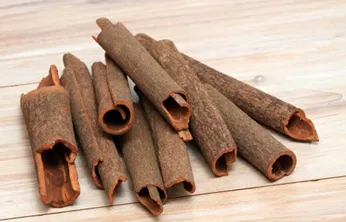
Figure 3: Cinnamon
Synonyms : Cortex Cinnamon oil Ceylon cinnamon, Saigon cinnamon, Chinese cassia, Cinnamon oil aromaticum.[39]
Biological source : Cinnamon bark is the dried inner bark obtained from young shoots of Cinnamomum verum J. Presl. [39]
Family : lauraceae.[40]
Scientific classification[41,42]
|
Kingdom |
Plantae |
|
Division |
Magnoliophyta |
|
Class |
Magnoliopsida |
|
Order |
Laurales |
|
Family |
Lauraceae |
|
Genus |
Cinnamomum |
|
Species |
Cinnamomum verum J. Presl |
Vernacular classification[41,42]
|
English |
Cinnamon |
|
Hindi |
Dalchini |
|
Sanskrit |
Tvak / Darusita |
|
Marathi |
Dalchini |
|
Gujarati |
Taj |
|
Tamil |
Lavangapattai |
|
Telugu |
Dalchinachekka |
|
Malayalam |
Karuvapatta |
|
Kannada |
Dalchini Twak |
|
Bengali |
Daruchini |
Chemical constituent [41,42]
|
Sr. No. |
Chemical Constituent |
Class of Compound |
|
1 |
Cinnamaldehyde |
Phenylpropanoid |
|
2 |
Eugenol |
Phenolic compound |
|
3 |
Cinnamic acid |
Aromatic acid |
|
4 |
Cinnamyl acetate |
Ester |
|
5 |
Linalool |
Monoterpene |
|
6 |
Coumarin |
Benzopyrone |
|
7 |
β-Caryophyllene |
Sesquiterpene |
|
8 |
Mucilage |
Polysaccharide |
|
9 |
Tannins |
Polyphenolic compounds |
|
10 |
Starch |
Carbohydrate |
Pharmacologycal Activity
Antioxidant:
The methanolic extract of Cinnamon contains a number of antioxidant compounds that can effectively scavenge reactive oxygen species, including superoxide anions, hydroxyl radicals, and other free radicals under in vitro conditions [43]. The fruit of Cinnamon, an underutilized and unconventional part of the plant, contains a substantial amount of phenolic antioxidants that counteract the damaging effects of free radicals and may confer protection against mutagenesis [44].
Anti-ulcer:
The utilization of Cinnamon extract to inhibit both the growth and urease activity of H. pylori in vitro has been shown in the present study to be more effective than thyme extract.[45] The efficacy of Cinnamon extracts in liquid medium and their resistance to low pH levels may enhance their effect in an environment such as the human stomach.[40]
Antimicrobial:
Antimicrobial activity of cinnamon bark. The volatile gaseous phase of combinations of cinnamon oil and clove oil demonstrated considerable potential to inhibit the growth of spoilage fungi, yeast, and bacteria commonly found on IMF (Intermediate Moisture Foods) when it was combined with a modified atmosphere comprising a high concentration of CO2 (40%) and a low concentration of O2 [40].
Antidiabetic:
Antidiabetic activity of cinnamon has been demonstrated in db/db transgenic mice [4]. 1Subash et al. reported that the oral administration of cinnamaldehyde produced a significant antihyperglycemic effect, reduced both total cholesterol and triglyceride levels, and simultaneously increased HDL-cholesterol levels in STZ-induced diabetic rats. This investigation indicates the potential of cinnamaldehyde as a natural oral agent with both hypoglycemic and hypolipidemic effects [46].
Anti-inflammatory:
Anti-inflammatory activity and cytotoxicity against HepG2 human hepatocellular carcinoma cell line cells have also been reported. Furthermore, the findings indicated that the constituents of C. osmophloeum twigs exhibited significant anti-inflammatory activity by suppressing nitric oxide production in LPS-stimulated macrophages [47].
HONEY:
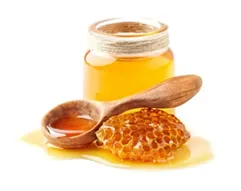
Figure 4: Honey
Synonyms : Madhu, madh.[48]
Biological source : Honey is viscid and sweet secretion stored in the honey comb by various species of bees. [48]
Family : Apidae. [48]
Scientific classification [49,50]
|
Kingdom |
Animalia |
|
Phylum |
Arthropoda |
|
Class |
Insecta |
|
Order |
Hymenoptera |
|
Family |
Apidae |
|
Genus |
Apis |
|
Species |
Apis mellifera (common honey bee) |
Vernacular classification [49,50]
|
English |
Honey |
|
Hindi |
Shahad |
|
Sanskrit |
Madhu |
|
Marathi |
Madh |
|
Gujarati |
Madh |
|
Tamil |
Then |
|
Telugu |
Tene |
|
Malayalam |
Then |
|
Kannada |
Jenu |
|
Bengali |
Modhu |
|
Punjabi |
Shahad |
|
Urdu |
Shehad |
Chemical constituent [51,52]
|
Sr. No. |
Chemical Constituents |
Approximate Composition / Examples |
|
1 |
Carbohydrates |
Fructose (38.2%), Glucose (31.3%), Sucrose, Maltose, Isomaltose |
|
2 |
Water |
15–20% |
|
3 |
Proteins & Amino Acids |
Proline, Lysine, Phenylalanine, Enzymes |
|
4 |
Enzymes |
Invertase, Diastase, Glucose oxidase, Catalase |
|
5 |
Organic Acids |
Gluconic acid, Acetic acid, Citric acid, Formic acid |
|
6 |
Vitamins |
Vitamin B1, B2, B3, B5, B6, Vitamin C |
|
7 |
Minerals |
Calcium, Potassium, Sodium, Magnesium, Iron, Phosphorus, Zinc |
|
8 |
Phenolic Compounds |
Flavonoids, Phenolic acids, Gallic acid, Caffeic acid |
|
9 |
Volatile Compounds |
Aldehydes, Ketones, Alcohols, Esters |
|
10 |
Pigments |
Carotenoids, Xanthophylls |
Pharmacologycal Activity
Antioxidant Activity:
Oxidizing agents such as oxygen are involved in processes related to the prevention of damage and act as antioxidants, which are detected in foods and the human body [53]. Although the function of natural antioxidants in the human body has not been fully understood, investigations have demonstrated their role in the effects of natural honey on several aging-related processes. Highly reactive components derived from oxygen, namely free radicals and reactive oxygen species (ROS), are generated during metabolism. These components interact with lipids and protein constituents in cell membranes, enzymes, and DNA. Such damaging reactions may lead to various diseases. Fortunately, antioxidants intercept free radicals before they can cause damage. Both enzymatic and nonenzymatic substances contribute to antioxidant protection [54].
Antimicrobial Activity:
The principal factors underlying the antimicrobial activity of honey are the enzymatic glucose oxidation reaction and certain physical properties,[55,56] while additional factors contributing to this activity include high osmotic pressure and low water activity, low pH and acidity, low protein content, a high carbon-to-nitrogen ratio, low redox potential due to the high concentration of reducing sugars, viscosity that limits dissolved oxygen, and other chemical agents and phytochemicals. Owing to these properties, including low water activity, acidity, glucose oxidase, and hydrogen peroxide, honey does not support the growth of yeasts and bacteria[57].
Apoptotic Activity:
Cancer cells are characterized by inadequate apoptotic turnover and uncontrolled cellular proliferation[58]. Chemical agents used in cancer treatment function as inducers of apoptosis[59]. Honey induces apoptosis in various types of cancer cells through depolarization of the mitochondrial membrane[60,61] . Honey increases caspase-3 activation and poly(ADP-ribose) polymerase (PARP) cleavage in human colon cancer cell lines, which are associated with its high phenolic content [61].
Anti-inflammatory and immunomodulatory activities:
Chronic inflammation may inhibit healing through tissue damage. According to the current literature, honey reduces the inflammatory response in animal models, cell cultures,[62] and clinical trials[63]. The phenolic content of honey is responsible for its anti-inflammatory effect[64].
CONCLUSION:
The present review concludes that Pudina, Tulsi, Cinnamon, and Honey possess significant medicinal value for the treatment and management of cough and related respiratory disorders. These natural ingredients contain a broad range of bioactive compounds, including menthol, eugenol, cinnamaldehyde, flavonoids, and phenolic compounds, which contribute to their antimicrobial, anti-inflammatory, antioxidant, and soothing properties. Herbal cough syrups formulated with these ingredients offer several advantages, including improved patient compliance, reduced adverse effects, ease of administration, and natural therapeutic activity compared with synthetic cough medications. In addition, honey functions as an effective natural preservative and demulcent, thereby enhancing both the efficacy and the palatability of the formulation. The increasing global interest in herbal medicine and traditional remedies further supports the development and utilization of herbal cough preparations. Therefore, these herbal components may be regarded as promising, safer alternatives for cough management and may contribute to the advancement of herbal pharmaceutical formulations.
REFERENCES


Kunal Badole, Pravinkumar Shahare, An Overview of the Pudina, Tulsi, Cinnamon, and Honey used in the Treatment of Cough, Int. J. of Pharm. Sci., 2026, Vol 4, Issue 5, 7952-7964. https://doi.org/10.5281/zenodo.20447297
 10.5281/zenodo.20447297