

We use cookies to ensure our website works properly and to personalise your experience. Cookies policy
1PhD Research Scholar, Biotechnology School of Life science Department, B.S.A Crescent Institute of Science and Technology Vandalur Chennai, Tamilnadu.
2Masters in Biotechnology Amrita Viswavidhyapeetham , Trivandrum.
3M.Pharm, Quality Assurance, Dr L.H Hiranandani College of Pharmacy , Mumbai.
4B.Pharm, Global College of Pharmacy, Chilkur Moinabad.
Clinical development of novel therapeutic agents is long, costly and prone to attrition, while regulators have expanded expedited pathways and incentives for rare diseases. Evidence on development success and on regulatory output is usually analysed separately. Retrospective descriptive analysis of publicly reported aggregate data. Annual novel drug approvals by the US FDA Center for Drug Evaluation and Research (CDER) were analysed for 2011–2024, and their characteristics (orphan designation, first-in-class status, use of expedited programmes) for 2017–2024. Phase-transition success rates were extracted from three published benchmarks. Trends were assessed by linear regression, Welch's t-test, the Mann–Whitney test and Fisher's exact test. The quantitative findings are interpreted alongside a narrative review of regulatory frameworks in the United States, European Union and India, landmark approvals across therapeutic modalities, evidence standards, post-approval safety, real-world evidence and access. CDER approved 602 novel drugs in 2011–2024 (mean 43.0 per year). Annual approvals rose by 1.58 per year (95% CI 0.27 to 2.89; p = 0.022); the mean was 35.7 in 2011–2017 and 50.3 in 2018–2024 (difference 14.6; p = 0.007). Of 398 approvals in 2017–2024, 204 (51.3%) held orphan designation and 166 (41.7%) were first-in-class; the first-in-class share rose from 36.4% (2017–2020) to 47.4% (2021–2024) (OR 1.57, 95% CI 1.05 to 2.35), whereas the orphan share was stable (50.5% versus 52.1%). Between 60% and 74% of approvals in 2017–2024 used at least one expedited programme.
Novel therapeutic agents, defined here as new molecular entities and new therapeutic biologics whose active ingredients have not previously been approved, are the principal means by which medicine extends its reach into diseases that were previously untreatable or poorly managed. Their development, however, is long, expensive and uncertain. Capitalised estimates of the cost of bringing a new drug to market have ranged from roughly US$2.6 billion in an influential industry-linked analysis [1] to a median of about US$985 million in a more recent analysis of 63 approvals that relied on public data [2]. Although the two estimates differ in method and sample, both indicate that a single approval consumes resources that are large relative to the revenues of most developers. On average, a programme that enters phase I takes about 10.5 years to reach regulatory approval [3].
Attrition is the defining feature of this process. A widely cited benchmark of programmes that entered phase I between 2003 and 2011 estimated that 10.4% eventually received approval [4]. Subsequent updates covering 2006–2015 and 2011–2020 reported likelihoods of approval of 9.6% and 7.9%, respectively [3,5], while a path-based statistical method applied to a different set of trial records produced a higher overall estimate of 13.8% [6]. Reviews of why programmes fail point to a limited set of causes. In one synthesis, lack of clinical efficacy accounted for roughly 40–50% of failures, unmanageable toxicity for about 30%, poor drug-like properties for 10–15%, and weak commercial need or strategic planning for about 10% [7]. Analyses restricted to phase II and phase III attribute most late-stage failures to insufficient efficacy, followed by safety concerns [8–10]. Disease area matters as well: Alzheimer disease, for instance, recorded an extraordinary failure rate of 99.6% across candidate agents tested between 2002 and 2012 [11].
Over the same decades, regulators have built an increasingly differentiated set of tools intended to shorten development and review for products addressing serious or rare conditions. In the United States these include accelerated approval, priority review, fast track designation, breakthrough therapy designation and, for regenerative medicine products, the regenerative medicine advanced therapy designation, alongside the orphan drug incentives created in 1983 [12–15]. The European Union operates a parallel set of instruments, including conditional marketing authorisation, accelerated assessment and the PRIME scheme [16–18]. Empirical work shows that reliance on expedited programmes by the US Food and Drug Administration (FDA) rose substantially after the late 1980s [19], and that the evidentiary basis of approvals has changed with it [20,21]. Whether expedited approvals deliver greater therapeutic value remains debated; one comparison of FDA and European Medicines Agency (EMA) approvals found that drugs approved through expedited programmes were more likely to be judged to have high added therapeutic value [22], while other analyses document that approvals based on surrogate endpoints or single-arm studies often lack mature evidence on survival or quality of life at the time of authorisation [23–25].
Clinical trial methodology has also been evolving. Master protocols (basket, umbrella and platform designs) allow several hypotheses to be examined within a shared infrastructure [26,27]; biomarker-guided enrichment has altered the economics of oncology and rare-disease programmes [3,28,29]; and the COVID-19 pandemic demonstrated both the speed that is achievable and the scale of evidence that regulators can obtain when resources are mobilised [30–32]. International harmonisation efforts have recently produced revised guidance on trial design and conduct, namely ICH E8 (R1) and ICH E6 (R3) [33,34].
Development success rates and regulatory approval outputs are typically analysed in separate literatures: the first by consultancies and economists working from pipeline databases, the second by regulatory scientists and health-policy researchers working from approval records. Few studies place both views side by side for the same period. The present paper does so using publicly reported aggregate data, and then places the quantitative findings in the wider context of regulatory history, the economics of development, the evidence behind landmark approvals in several therapeutic modalities, evidence standards and surrogate endpoints, post-approval safety, real-world evidence and artificial intelligence, and access. Its objectives are (i) to quantify trends in the number and characteristics of novel drugs approved by the FDA Center for Drug Evaluation and Research (CDER) between 2011 and 2024; (ii) to summarise phase-specific success rates reported in three published benchmarks of clinical development; and (iii) to interpret these patterns in light of regulatory pathways and clinical trial design trends in the United States, the European Union and India.
METHODS
Study design
This is a retrospective, descriptive analysis of publicly available aggregate data, supplemented by a narrative synthesis of the regulatory and methodological literature. It is not a systematic review, and it does not involve individual participant data. No human participants or identifiable personal data were used; ethical approval and informed consent were therefore not required.
Definition of novel therapeutic agents
Novel agents were defined according to CDER's own classification: new molecular entities approved under new drug applications and new therapeutic biologics approved under biologics licence applications, whose active ingredients had not previously been approved or marketed in the United States [35]. Biosimilars, new formulations or indications of previously approved products, and products regulated by the Center for Biologics Evaluation and Research (CBER), such as vaccines and cell and gene therapies, are not counted in these figures. Approvals were assigned to the calendar year of the approval action.
Data sources and variables
Annual counts of novel approvals for 2011–2024 were taken from the FDA's annual listings of novel drug approvals [35]. Product characteristics for 2017–2024 were taken from the annual CDER reports on new drug therapy approvals [36]: the number of approvals holding orphan drug designation (a designation for products intended to treat conditions affecting fewer than 200,000 people in the United States [12]); the number classified by CDER as first-in-class, meaning that the mechanism of action differs from that of existing therapies; the proportion using at least one expedited programme (fast track, breakthrough therapy, priority review or accelerated approval); and, where reported, the proportion approved on the first review cycle. Shares were recalculated from the published counts. The 2017–2024 window was chosen because the reporting of these characteristics is consistent across the CDER reports for those years.
Success rates were extracted from three published benchmarks, all derived from the Biomedtracker pipeline database: Hay et al., covering programmes active in 2003–2011 [4]; the BIO report covering 2006–2015 [5]; and the BIO/Informa/QLS report covering 2011–2020 [3]. The likelihood of approval (LOA) is the probability that a programme entering phase I ultimately receives approval, and equals the product of the four phase-transition probabilities (phase I to II, II to III, III to regulatory filing, and filing to approval). The recalculated products of the transition probabilities reproduced each reported LOA to within rounding. The three datasets overlap in time and share a source, and so are not independent observations. The estimate of Wong et al. [6] was derived by a different method and is discussed separately.
Regulatory mechanisms and literature
The principal expedited and incentive mechanisms of the FDA and EMA were compiled from primary legal and guidance documents [13–18] and are summarised in Table 3. The comparison with Indian regulation draws on the New Drugs and Clinical Trials Rules, 2019 [37]. The narrative sections on regulatory history, landmark approvals, evidence standards and post-approval evidence draw on primary trial publications, regulatory documents and published analyses of regulatory output, selected to illustrate the points under discussion; they are not an exhaustive census. No quantitative comparison of EMA approvals is attempted in this paper.
RESULTS
Volume of novel approvals
CDER approved 602 novel drugs between 2011 and 2024, an average of 43.0 per year (standard deviation 10.9; median 45.5). Annual totals ranged from 22 in 2016 to 59 in 2018 (Figure 1). The ten-year mean for 2015–2024 was 46.5, consistent with the figure of about 47 per year that CDER itself reports for that period [36].Annual approvals rose by an estimated 1.58 per year (95% CI 0.27 to 2.89; p = 0.022; R² = 0.37). The mean was 35.7 (SD 9.4) in 2011–2017 and 50.3 (SD 6.9) in 2018–2024, a difference of 14.6 approvals per year (Welch p = 0.007; Mann–Whitney p = 0.011). The increase was not monotonic: 2022 recorded only 37 approvals, below every year from 2018 to 2021, before a rebound to 55 in 2023 and 50 in 2024. The linear model should therefore be read as a summary of the direction of change and not as a forecast.
Characteristics of approvals, 2017–2024
Across 398 approvals in 2017–2024, 204 (51.3%) held orphan designation and 166 (41.7%) were classified as first-in-class (Table 1). The orphan share ranged from 39.1% in 2017 to 58.5% in 2020 and has remained between 51% and 54% in each year from 2021 to 2024 (Figure 2). The first-in-class share was lowest in 2018 (32.2%) and highest in 2021 and 2022 (54.0% and 54.1%), fell to 36.4% in 2023 and recovered to 48.0% in 2024.
Comparing 2017–2020 with 2021–2024, the first-in-class share increased from 36.4% (75 of 206) to 47.4% (91 of 192), an odds ratio of 1.57 (95% CI 1.05 to 2.35; Fisher p = 0.033). The orphan share was essentially unchanged (50.5% [104 of 206] versus 52.1% [100 of 192]; p = 0.76). Over the eight annual observations, the rank correlation of first-in-class share with year was positive but imprecise (Spearman ρ = 0.60, p = 0.12), and that of orphan share was close to zero (ρ = 0.16, p = 0.71).
Between 60% and 74% of novel approvals in 2017–2024 used at least one expedited programme, with the highest values in 2018 (73%) and 2021 (74%), values of 65% in both 2022 and 2023, and 66% (33 of 50) in 2024 (Figure 2). Reliance on accelerated approval specifically varied more: it was reported for 7% of approvals in 2018, 19% in 2019, 23% in 2020, 28% in 2021 and 16% in 2022, and then for 16% (9 of 55) in 2023 and 14% (7 of 50) in 2024 [36]. Breakthrough therapy designation was held by 23.7% of 2018 approvals, 41.5% of 2020 approvals, 35% of 2022 approvals, 16% (9 of 55) of 2023 approvals and 36% (18 of 50) of 2024 approvals. Performance on review timeliness was strong in the most recent years: 76% of 2022 approvals, 84% of 2023 approvals and 74% of 2024 approvals were granted on the first review cycle [36]. In 2023, 64% of novel drugs (35 of 55) were approved in the United States before any other country, as against 68% (25 of 37) in 2022 and 68% (34 of 50) in 2024 [36].
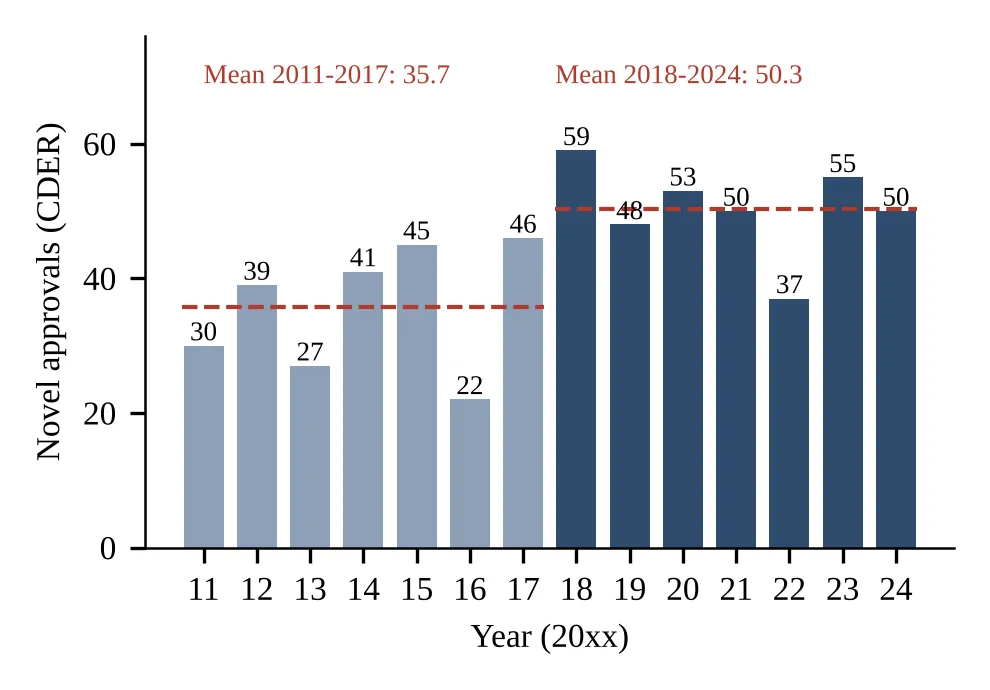
Figure 1: Novel Drug Approvals by FDA CDER, 2011–2024. Light Bars: 2011–2017; Dark Bars: 2018–2024; Dashed Lines: Epoch Means. Sources: FDA Annual Novel Drug Approval Listings [35].
Table 1: Characteristics of FDA CDER Novel Drug Approvals, 2017–2024.
| Year | Novel approvals (n) | Orphan designation, n (%) | First-in-class, n (%) | ≥1 expedited programme (%) |
|---|---|---|---|---|
| 2017 | 46 | 18 (39.1) | 15 (32.6) | 61 |
| 2018 | 59 | 34 (57.6) | 19 (32.2) | 73 |
| 2019 | 48 | 21 (43.8) | 20 (41.7) | 60 |
| 2020 | 53 | 31 (58.5) | 21 (39.6) | 68 |
| 2021 | 50 | 26 (52.0) | 27 (54.0) | 74 |
| 2022 | 37 | 20 (54.1) | 20 (54.1) | 65 |
| 2023 | 55 | 28 (50.9) | 20 (36.4) | 65 |
| 2024 | 50 | 26 (52.0) | 24 (48.0) | 66 |
| 2017–2024 | 398 | 204 (51.3) | 166 (41.7) | — |
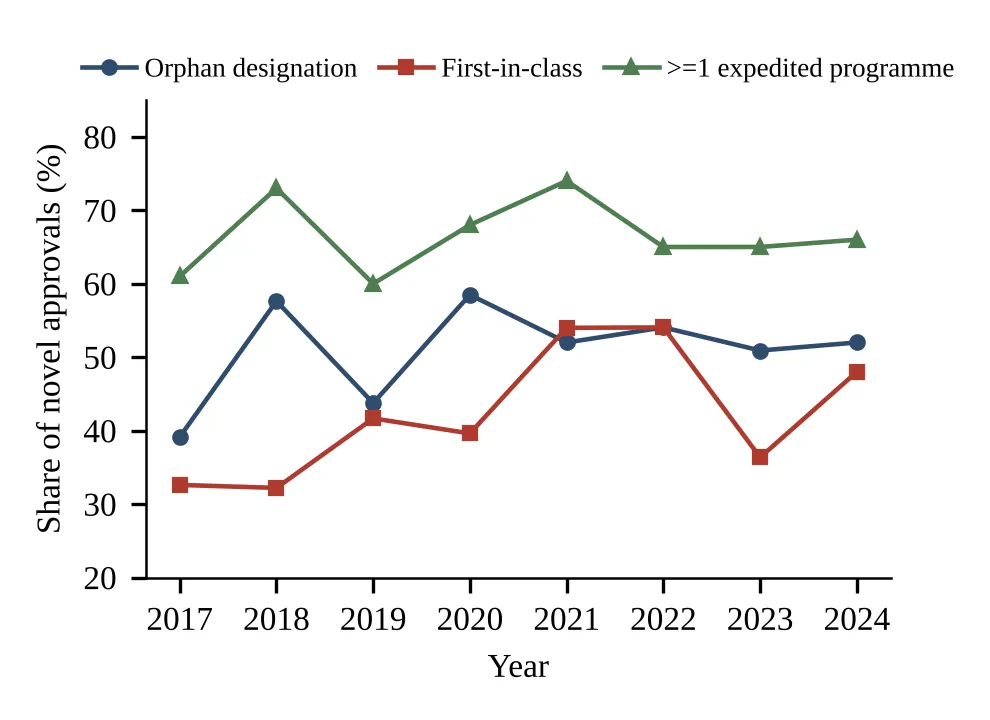
Figure 2: Orphan, First-In-Class and Expedited-Programme Shares Among FDA CDER Novel Approvals, 2017–2024. Sources: CDER Annual Reports [36].
Phase-specific success rates
The three benchmarks show a consistent shape (Table 2; Figure 3). In every dataset, phase II had the lowest transition probability (32.4%, 30.7% and 28.9%, respectively), confirming its role as the principal point of attrition. Phase III transition was stable at about 58–60%, and the probability of approval once a filing is made was high and rising, from 83.2% to 90.6%. The decline in overall LOA, from 10.4% to 9.6% to 7.9%, was therefore driven chiefly by the phase I transition, which fell from 64.2% to 52.0%, a reduction of 12.2 percentage points between the earliest and latest benchmark.
The 2011–2020 report, which covered 9,704 programmes and 12,728 phase transitions, also documented large differences by therapeutic area and strategy [3]. The LOA from phase I was highest in haematology (23.9%) and lowest in urology (3.6%). Oncology averaged 5.3%, whereas immuno-oncology approaches reached 12.4%. Programmes using patient pre-selection biomarkers had an LOA of 15.9%, about double the overall rate, and biologics (9.1%) outperformed new molecular entities (5.7%). The path-based estimate of Wong et al. for 2000–2015 was 13.8% [6], higher than the pipeline-database benchmarks, a discrepancy that most plausibly reflects differences in data sources, time window and the way programmes that run in parallel or are discontinued are handled.
Update: novel approvals in 2025
Because the CDER report for 2025 became available while this paper was being prepared, the principal indicators for that year are reported separately and are not included in Tables 1 and 2 or in the trend statistics, which were fixed for 2011–2024 in advance. CDER approved 46 novel drugs in 2025, fewer than the 50 of 2024 and the 55 of 2023 but close to the ten-year average of about 47 per year [38,39]. About half, 25 of 46, held orphan designation, and 39 of 46 (85%) were approved on the first review cycle, similar to 2017 (85%) and 2023 (84%) and above 2022 and 2024 [38,39]. CDER reported that it met its PDUFA review goals for 96% of approvals, and that seven approvals occurred in December alone, so that the distribution of approvals within the year was skewed towards its end [39]. Half of the novel drugs were approved in the United States before any other country [39].
The 2025 class illustrates the themes discussed in this paper. Suzetrigine, a sodium-channel inhibitor, was approved as a first-in-class non-opioid analgesic for moderate-to-severe acute pain, the first new drug approved for acute pain in more than twenty years [38,39]. Gepotidacin, approved for uncomplicated urinary tract infection in females aged 12 years and older, was described as the first new class of oral antibiotics for this indication in nearly thirty years [39]. Three novel agents for hereditary angioedema (garadacimab, sebetralstat and donidalorsen) were approved within a few months, an example of competition developing within a rare-disease indication, and other approvals included brensocatib for non-cystic fibrosis bronchiectasis, nipocalimab for generalised myasthenia gravis, aficamten for symptomatic obstructive hypertrophic cardiomyopathy and clesrovimab for the prevention of respiratory syncytial virus disease in infants [38]. Taken together, the 2025 approvals continue the pattern of roughly half orphan products, a high proportion of first-cycle approvals and a spread of therapeutic areas that is not confined to oncology.
Table 2: Phase-transition Success Rates and Likelihood of Approval (LOA) in Three Published Benchmarks (%).
| Benchmark | Period | Phase I→II | Phase II→III | Phase III→filing | Filing→ approval | LOA from phase I |
|---|---|---|---|---|---|---|
| Hay et al. [4] | 2003–2011 | 64.2 | 32.4 | 60.1 | 83.2 | 10.4 |
| BIO 2016 [5] | 2006–2015 | 63.2 | 30.7 | 58.1 | 85.3 | 9.6 |
| BIO/Informa/QLS 2021 [3] | 2011–2020 | 52.0 | 28.9 | 57.8 | 90.6 | 7.9 |
LOA equals the product of the four transition probabilities. All three benchmarks are derived from the Biomedtracker database and overlap in time. Wong et al. [6] estimated an overall probability of success of 13.8% using a different method.
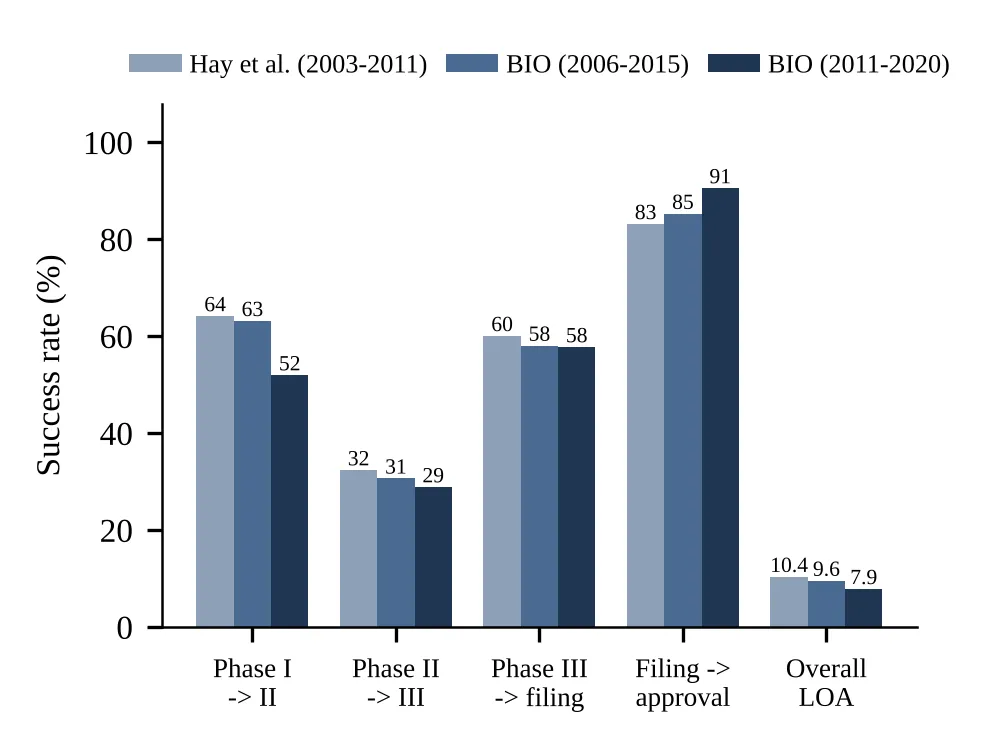
Figure 3: Phase-transition Success Rates and Overall Likelihood of Approval (LOA) in Three Benchmarks. Sources: Hay Et Al. [4]; BIO 2016 [5]; BIO/Informa/QLS 2021 [3].
EVOLUTION OF REGULATORY FRAMEWORKS
The United States
The modern American framework for the approval of therapeutic agents was built in response to a sequence of public-health failures. The Federal Food, Drug, and Cosmetic Act of 1938 obliged manufacturers to demonstrate the safety of a new drug before marketing, following deaths caused by a diethylene glycol-containing elixir. The thalidomide disaster of the early 1960s led to the Kefauver–Harris Amendments of 1962, which for the first time required sponsors to provide substantial evidence of effectiveness derived from adequate and well-controlled investigations [20,40]. That evidentiary standard, together with the structure of phased clinical investigation that grew up around it, remains the foundation of drug regulation in most jurisdictions, and it explains why the phase II to phase III transition is so consequential: it is the stage at which a sponsor must convince itself, and subsequently the regulator, that a controlled trial can demonstrate effectiveness.
A second formative period occurred in the 1990s. The Prescription Drug User Fee Act of 1992 established a system in which sponsors pay fees that fund review staff in exchange for performance goals for the timeliness of review [41]. The goals have been renewed every five years and underlie the review clocks that appear in Table 3, including the six-month priority and ten-month standard clocks that CDER reports against each year [36]. In the same year the FDA promulgated regulations for accelerated approval, motivated by the urgency of the HIV epidemic and the recognition that waiting for definitive clinical endpoints could delay access to drugs for life-threatening diseases [42]. The FDA Modernization Act of 1997 added fast track designation [15] and clarified that a single adequate and well-controlled trial, combined with confirmatory evidence, may under some circumstances establish effectiveness. The 2019 draft guidance on demonstrating substantial evidence of effectiveness elaborates this flexibility and the types of confirmatory evidence that may be acceptable [43].
The twenty-first century added a further set of designations. The FDA Safety and Innovation Act of 2012 created breakthrough therapy designation for drugs whose preliminary clinical evidence indicates substantial improvement over available therapy on a clinically significant endpoint [13,44]. The 21st Century Cures Act of 2016 introduced the regenerative medicine advanced therapy designation and strengthened provisions on patient experience data and the use of real-world evidence [14]. The Food and Drug Omnibus Reform Act of 2022 amended the accelerated approval pathway, as discussed below [45]. Taken together, these statutes represent a gradual shift from a single standard evidentiary route to a menu of pathways calibrated to disease severity, unmet need and the feasibility of generating conventional evidence.
Empirical studies of the evidence that supports approval illustrate the consequences. In an analysis of 188 novel therapeutic agents approved between 2005 and 2012, the characteristics of pivotal trials varied widely, with substantial differences in the number of trials, the use of randomisation, blinding, active comparators and surrogate endpoints between drug classes and review pathways [21]. An extension of that approach to 273 drugs and biologics approved for 339 indications between 1995 and 2017 documented a systematic change over time: the proportion of indications supported by at least two pivotal trials fell from 80.6% in 1995–1997 to 52.8% in 2015–2017, the proportion supported only by single-group trials rose from 4.0% to 17.0%, and among trials, the use of randomisation fell from 93.6% to 82.2% and that of blinding from 79.4% to 67.6%, while the use of surrogate primary endpoints rose from 48.3% to 59.3% [46]. A focused analysis of cancer drugs approved between 2000 and 2016 likewise reported considerable heterogeneity in the number, design and endpoints of the pivotal trials supporting approval [47]. These findings do not imply that approvals lacked adequate evidence; they show that the evidence considered adequate has diversified, and that the term approval covers a heterogeneous set of evidentiary situations.
The European Union
The European system rests on a combination of centralised and national procedures. Regulation (EC) No 726/2004 established the European Medicines Agency and the centralised procedure, under which a single authorisation valid across the Union is granted by the European Commission on the basis of a scientific opinion of the Committee for Medicinal Products for Human Use. The centralised procedure is mandatory for medicines derived from biotechnology and for products intended to treat several categories of serious disease, and it is available for products offering significant innovation [16]. Accelerated assessment shortens the standard 210-day active review clock to 150 days for products of major public-health interest, although the time taken by sponsors to respond to questions is not counted in either clock [16].
Specific instruments address rare diseases and advanced therapies. Regulation (EC) No 141/2000 established a system of orphan designation, with protocol assistance and a period of ten years of market exclusivity for authorised orphan medicines [48]. Regulation (EC) No 1394/2007 created a regulatory category for advanced therapy medicinal products, namely gene therapy, somatic cell therapy and tissue-engineered products, and assigned their assessment to a dedicated expert committee [49]. Conditional marketing authorisation, governed by Commission Regulation (EC) No 507/2006, permits authorisation on less complete clinical data when the product addresses an unmet need and the benefit of immediate availability outweighs the risk of incomplete data, but it is valid for one year, renewable, and carries specific obligations [17]. An analysis of oncology medicines authorised in Europe through this pathway examined how the pathway has been used for oncology products and the specific obligations attached to such authorisations [50].
Two further developments are reshaping the European landscape. Regulation (EU) No 536/2014 harmonised the assessment and supervision of clinical trials across Member States and introduced a single submission portal, with the aim of reducing the fragmentation of multinational trial authorisation that had followed the earlier Clinical Trials Directive [51]. Regulation (EU) 2021/2282 on health technology assessment introduced joint clinical assessments, applied first to oncology medicines and advanced therapy products, so that the clinical evidence considered by national payers is assessed once at Union level [52]. In parallel, the European Commission proposed in 2023 a comprehensive reform of the general pharmaceutical legislation, including changes to regulatory data protection and to the incentives for unmet need [53]. The final shape of these reforms will affect the interplay between regulatory approval and reimbursement for the products analysed in this paper.
India
The regulation of drugs in India is anchored in the Drugs and Cosmetics Act of 1940, under which the Central Drugs Standard Control Organisation (CDSCO), headed by the Drugs Controller General of India, regulates the approval of new drugs and the conduct of clinical trials [54]. For many years the requirements were set out in a schedule of the associated rules. The New Drugs and Clinical Trials Rules, 2019, replaced the earlier provisions with a single instrument covering new drugs, clinical trials, bioavailability and bioequivalence studies, ethics committees and the compensation of trial participants [37]. The Rules fix timelines for the decision on applications for clinical trials and for new drug registration, define orphan drugs by reference to prevalence in India, provide for the waiver of local clinical trials for specified categories of drugs approved in countries named by the licensing authority, and require registration of ethics committees and of clinical trials in the national registry [37,55]. Ethical review is also governed by the national guidelines of the Indian Council of Medical Research, which set expectations for informed consent, vulnerable participants and the work of ethics committees [56].
The Indian context differs from those of the United States and the European Union in ways relevant to the interpretation of global approval trends. India is a large location for the conduct of multinational trials and a major manufacturer of generic medicines, but it has historically been a follower and not a first approver of novel agents; the novel products analysed in this paper are typically first registered elsewhere, and are then introduced in India through local trial, waiver or bridging mechanisms. The globalisation of clinical development has been documented for more than a decade [57], and the 2019 Rules reflect a policy decision to shorten the delay between approval abroad and availability at home for products addressing unmet needs, while maintaining a requirement for safety and efficacy evidence relevant to the Indian population [37]. This balance, between reliance on foreign regulatory decisions and generation of local evidence, is a central theme of regulatory science for all middle-income countries.
Table 3: Principal Expedited and Incentive Mechanisms of the FDA and EMA.
| Mechanism | Agency | Legal basis / introduction | Core eligibility criterion | Principal feature |
|---|---|---|---|---|
| Orphan designation | FDA | Orphan Drug Act, 1983 [12] | Condition affecting fewer than 200,000 people in the US | Seven-year exclusivity; tax credit for qualified clinical testing; fee waiver |
| Fast track | FDA | FDA Modernization Act, 1997 [15] | Serious condition; potential to address an unmet medical need | Frequent interaction; rolling review |
| Breakthrough therapy | FDA | FDASIA, 2012 [13] | Serious condition; preliminary clinical evidence of substantial improvement on a clinically significant endpoint | Intensive guidance; senior-level organisational commitment |
| Accelerated approval | FDA | FDA regulations, 1992; reformed by FDORA, 2022 [45] | Serious condition; effect on a surrogate or intermediate endpoint reasonably likely to predict clinical benefit | Approval before benefit is confirmed; confirmatory trial required |
| Priority review | FDA | PDUFA, 1992 [15] | Significant improvement in safety or effectiveness of a serious condition | Six-month review goal versus ten months for standard review |
| RMAT designation | FDA | 21st Century Cures Act, 2016 [14] | Regenerative medicine therapy for a serious condition with preliminary clinical evidence | Breakthrough-type interaction; eligibility for priority review and accelerated approval |
| PRIME | EMA | Launched 2016 [18] | Potential major therapeutic advantage in an unmet need; early clinical data | Early dialogue; rapporteur appointment; support for accelerated assessment |
| Conditional marketing authorisation | EMA / EC | Regulation (EC) 507/2006 [17] | Positive benefit–risk; unmet need; comprehensive data expected after authorisation | Authorisation on less complete data; annual renewal |
| Accelerated assessment | EMA | Regulation (EC) 726/2004 [16] | Product of major public-health interest and therapeutic innovation | 150-day assessment instead of 210 days |
FDA = US Food and Drug Administration; EMA = European Medicines Agency; EC = European Commission; FDASIA = FDA Safety and Innovation Act; FDORA = Food and Drug Omnibus Reform Act; PDUFA = Prescription Drug User Fee Act; RMAT = regenerative medicine advanced therapy.
International harmonisation and work-sharing
The International Council for Harmonisation of Technical Requirements for Pharmaceuticals for Human Use brings together regulators and industry to develop common technical guidelines. For clinical trials, three documents are of particular importance. The guideline on good clinical practice, ICH E6, sets out standards for the design, conduct, monitoring and reporting of trials, and has been revised to accommodate risk-proportionate approaches and new data sources [34]. ICH E8 (R1) on general considerations for clinical studies introduced quality by design and the identification of critical-to-quality factors [33]. ICH E9 (R1) added the estimand framework, which requires that the treatment effect of interest be defined explicitly in terms of the population, the variable, the handling of intercurrent events such as treatment discontinuation or rescue therapy, and the population-level summary [58]. The estimand framework matters for regulators because it clarifies what question a trial answers when patients switch therapy, which is common in oncology trials with crossover and in trials of chronic diseases.
Work-sharing among regulators complements harmonisation of technical standards. Project Orbis, coordinated by the FDA Oncology Center of Excellence, enables concurrent submission and review of oncology applications by regulators in several countries, with the aim of reducing the time between the first approval and approvals elsewhere [59]. The high share of novel drugs approved first in the United States, 68% in 2024 [36], shows that approvals elsewhere continue to follow US decisions in many cases, and work-sharing aims to narrow the interval. Registration of trials in public registries, which became a widely expected standard after the International Committee of Medical Journal Editors adopted its policy in 2005, has increased the visibility of ongoing and completed trials and enabled meta-research on selective reporting [60].
ECONOMICS AND TIMELINES OF CLINICAL DEVELOPMENT
Cost of development
Estimates of the cost of developing a new drug depend heavily on method. The study of DiMasi and colleagues, based on confidential data from pharmaceutical firms on a sample of compounds, estimated an average capitalised pre-approval cost of about US$2.56 billion, of which out-of-pocket costs were roughly US$1.4 billion, with the remainder representing the opportunity cost of capital tied up during development [1]. Wouters and colleagues, using public information on 63 new drugs approved between 2009 and 2018, estimated a median cost of US$985 million and a mean of about US$1.3 billion, with the difference between the two figures reflecting a skewed distribution in which a minority of costly programmes raise the mean [2]. A study focused on cancer drugs estimated a median research and development spend of about US$648 million per approved product, against post-approval revenues far in excess of that figure, which the authors used to argue that the relationship between development cost and eventual revenue is weak [61].
These divergent estimates do not contradict each other so much as measure different quantities. All include the cost of failures, since a successful product must in effect fund the unsuccessful candidates in the same portfolio. This is the mechanism that links the attrition documented in Table 2 to the economics of development: if the likelihood of approval from phase I falls from 10.4% to 7.9%, the expected number of phase I entrants needed per approval rises from about 9.6 to about 12.7, with a corresponding rise in the expected cost of failures per success, all else being equal. The cost per approved drug is also sensitive to the stage at which failures occur. Late-stage failures are costly because phase III trials are large and long, which is why early identification of futile programmes is highly valued [7,10].
Duration of development and review
The average programme that enters phase I takes more than a decade to reach approval in the 2011–2020 benchmark, with each of the later phases lasting roughly two to three years or more and the regulatory review adding a further year or so [3]. Expedited programmes are intended to reduce this interval, and the evidence suggests that they do so for products that qualify. In a study of novel therapeutics approved between 2012 and 2016, products that used expedited programmes differed in their clinical development times from those that did not, with breakthrough therapy designation associated with the shortest development times, although the groups differ in the nature of the products they include [62]. A comparison of 25 breakthrough-designated and 33 non-breakthrough cancer medicines found that designated medicines reached first approval about two years sooner (median 5.2 versus 7.1 years), with no evidence of larger efficacy gains or of differences in safety or mechanistic novelty [63]. The designation therefore appears to accelerate development without, on average, selecting products with larger measured benefit.
The review phase has become more predictable. CDER reports annually the proportion of novel drugs approved on or before the goal date set under PDUFA, which was 94% in 2024 and, by the agency's own account, 96% in 2025, together with the proportion approved on the first review cycle, 74% in 2024 and 85% in 2025 [36,38]. These figures suggest that, for the products that reach filing, the regulatory phase is the least uncertain stage of development, which is consistent with the post-filing success rate of over 90% in the most recent benchmark. Predictability in review has an economic value because it allows sponsors to plan manufacturing, launch and financing with greater confidence.
Where programmes fail
Because the largest losses arise from late-stage failures, the reasons for failure in phase II and phase III have been studied extensively. An analysis of investigational drugs that failed in late-stage development found that a substantial proportion of failures were attributable to lack of efficacy, and that the results of many of those trials were never published, which limits the capacity of the field to learn from them [9]. Reviews of failed trials identify recurring design problems, including inadequate understanding of dose and exposure–response relationships, poorly validated biological targets, heterogeneous patient populations, and endpoints that are insensitive to the intended effect [7,10]. Oncology illustrates the dose question: the practice of selecting the maximum tolerated dose, developed for cytotoxic chemotherapy, is a poor guide for targeted agents and immunotherapies, and the FDA has issued guidance, under the label Project Optimus, on the selection and randomised comparison of doses early in development [64,65].
Neurodegenerative disease provides a stark example of failures arising from the biology of the disease and the difficulty of measuring change. Across 2002 to 2012, only a single drug was approved for Alzheimer disease among 244 compounds in 413 trials, a failure rate of 99.6% [11]. The later approval of antibodies that remove amyloid from the brain, discussed in Section 6, has not resolved the debate on the clinical significance of the benefit, but it has altered the pipeline by validating a target after decades of unsuccessful attempts [66,67]. The Alzheimer experience has two lessons for the analysis presented here: the benchmark averages conceal large differences between areas of medicine, and a positive result for a mechanism can take decades to emerge.
THERAPEUTIC MODALITIES AND LANDMARK APPROVALS
Aggregate counts conceal the scientific content of what is approved. This section reviews the clinical evidence underlying representative approvals across several classes of novel agent, selected to illustrate how the type of evidence required, and the pathway that was used, vary with the biology and the disease. The examples are illustrative and not an exhaustive census, and the results quoted are those reported in the pivotal publications.
Targeted therapy and immune checkpoint blockade in oncology
The modern era of molecularly targeted therapy is conventionally dated from imatinib, an inhibitor of the BCR-ABL tyrosine kinase that is the product of the Philadelphia chromosome translocation in chronic myeloid leukaemia. In the first phase I study in patients who had failed interferon, complete haematological responses were obtained in 53 of 54 patients with chronic-phase disease treated at doses of 300 mg per day or more [68]. Such an effect size, observed in an early-phase study in a disease with a clear molecular driver, supported a rapid regulatory review, and the product was approved in 2001 within a few months of submission. Imatinib established the template, which later approvals have followed in many diseases, in which identification of a driver lesion, a potent inhibitor and a companion test combine to produce an approval supported by a comparatively small body of evidence.
Immune checkpoint blockade followed a different path, grounded in the finding that inhibition of inhibitory receptors on T cells could release antitumour immunity [69]. In a phase III trial of patients with previously treated metastatic melanoma, ipilimumab, an antibody against CTLA-4, improved median overall survival to 10.0 months compared with 6.4 months in the control group that received a peptide vaccine, in a disease in which no therapy had previously been shown to prolong survival [70]. The approval of ipilimumab in 2011 was followed by antibodies against PD-1 and PD-L1, whose application has since been extended across many tumour types. In 2017, pembrolizumab became the first agent approved on the basis of a tumour biomarker, mismatch-repair deficiency or microsatellite instability, irrespective of the site of origin, after an analysis of patients across several cancers showed durable responses [28]. Larotrectinib, an inhibitor of TRK, was the second such tumour-agnostic approval, based on a pooled analysis of single-arm studies in patients with TRK fusion-positive cancers with an overall response rate of 75% [29].
The experience with osimertinib in non-small-cell lung cancer shows how targeted agents progress along the development pathway. A third-generation inhibitor of EGFR, osimertinib was first approved for patients whose tumours had acquired a resistance mutation, and was subsequently shown in a randomised phase III trial to prolong median progression-free survival to 18.9 months, as against 10.2 months with first-generation inhibitors, in previously untreated patients [71]. The case of sotorasib, directed against the KRAS G12C mutation that long resisted drug development, illustrates the use of accelerated approval and its limits. It received accelerated approval in 2021 on the basis of a single-arm phase II study with objective response as the principal endpoint [72]. The confirmatory randomised trial against docetaxel later showed a modest advantage in progression-free survival, 5.6 months against 4.5 months, without a demonstrated difference in overall survival [73]. The result was positive in a statistical sense but it also exemplifies the persistent difficulty of establishing patient-level benefit for agents approved on response rates.
Antibody–drug conjugates and bispecific antibodies
Antibody–drug conjugates combine the target specificity of a monoclonal antibody with the potency of a cytotoxic payload delivered through a chemical linker, and several have been approved in the last decade [74]. Trastuzumab deruxtecan, directed at HER2, achieved an objective response rate of 60.9% in a single-arm phase II study of heavily pretreated patients with HER2-positive metastatic breast cancer [75]. A subsequent randomised phase III comparison with trastuzumab emtansine in the second-line setting reported a 12-month progression-free survival of 75.8% as against 34.1% [76]. The sequence is typical of the way in which evidence accumulates for products developed under expedited programmes: an early single-arm study that supports initial authorisation is followed by randomised trials that move the product earlier in the treatment sequence and widen the indications. In 2024 the FDA also approved the HER2 bispecific antibody zanidatamab for biliary tract cancer, the HER2/HER3 bispecific antibody zenocutuzumab for non-small-cell lung cancer and pancreatic adenocarcinoma, and the DLL3-directed T-cell engager tarlatamab for small-cell lung cancer, all three through accelerated approval [36].
Bispecific T-cell engagers, which link a tumour antigen to the CD3 receptor on T cells, were pioneered by blinatumomab in B-cell acute lymphoblastic leukaemia. In a randomised phase III trial, blinatumomab prolonged median overall survival to 7.7 months compared with 4.0 months with chemotherapy in adults with relapsed or refractory disease [77]. Because the product acts through immune activation, cytokine release syndrome and neurological events are recognised class toxicities, and risk-management measures are part of the approval. The wider lesson for regulators is that classes of molecule with novel mechanisms of toxicity require both specific trial designs, such as step-up dosing, and specific labelling and monitoring arrangements.
Cell and gene therapies
Cell and gene therapies are regulated in the United States by CBER and in the European Union as advanced therapy medicinal products [49]. Their clinical development is distinguished by small populations, single-arm designs, a durable or potentially curative effect after one administration, and the long-term follow-up required to monitor for delayed adverse events [78]. Tisagenlecleucel, a chimeric antigen receptor T-cell therapy directed at CD19, produced remission within three months in 81% of 75 children and young adults with relapsed or refractory B-cell acute lymphoblastic leukaemia in the pivotal single-arm trial [79], and axicabtagene ciloleucel produced an objective response in 82% and a complete response in 54% of 101 patients with refractory large B-cell lymphoma [80]. Both were approved in 2017 within months of each other, and their approvals show that regulators were willing to approve products on the basis of single-arm studies when the response rate was large compared with the expected outcome with existing therapy.
In inherited disease, onasemnogene abeparvovec, an adeno-associated viral vector delivering a copy of the SMN1 gene, was studied in 15 infants with spinal muscular atrophy type 1, all of whom survived to 20 months without permanent ventilation, a result strikingly different from the natural history of the disease [81]. Voretigene neparvovec, a gene replacement for biallelic RPE65-mediated retinal dystrophy, improved mobility testing under low light in a randomised controlled phase III trial involving 31 participants, and was approved in 2017 as the first gene therapy for an inherited disease in the United States [82]. The first approvals of therapies based on CRISPR-Cas9 gene editing followed clinical results in sickle cell disease and beta-thalassaemia, with early-phase data in a small number of participants showing that editing of an erythroid enhancer of BCL11A could raise fetal haemoglobin sufficiently to prevent transfusion dependence or vaso-occlusive crises [83,84]. These therapies pose novel regulatory questions on the interpretation of surrogate endpoints for durable benefit, off-target editing, manufacturing comparability and the duration of follow-up. They also raise a practical question of access, since the treatments require specialised treatment centres and are priced at levels that challenge health systems.
RNA-based therapeutics and mRNA vaccines
Antisense oligonucleotides and small interfering RNAs act by altering the expression of a target gene transcript and have opened a route to treat genetic diseases that were previously beyond the reach of small molecules or antibodies [85]. Nusinersen, an antisense oligonucleotide that modifies splicing of SMN2, increased the proportion of infants with spinal muscular atrophy who achieved motor milestones to 51% compared with none in a sham-procedure control group in a randomised trial that was stopped early for evidence of benefit [86]. Patisiran, the first small interfering RNA approved, reduced the neuropathy impairment score in patients with hereditary transthyretin amyloidosis, with a mean change of −6.0 points in the treated group against +28.0 points with placebo at 18 months [87]. Another oligonucleotide, olezarsen, was among the first-in-class approvals of 2024 for familial chylomicronaemia syndrome [36].
The mRNA vaccines against SARS-CoV-2 were the product of two decades of work on nucleoside modification and lipid nanoparticle delivery [88]. The pivotal trials reported a vaccine efficacy of 95% for the BNT162b2 vaccine among 43,548 participants [31] and of 94.1% for mRNA-1273 among 30,420 participants [32]. Regulators authorised both vaccines for emergency use in December 2020, within a few weeks of the interim analyses, and conventional licensure followed in 2021 and 2022. The programme compressed the usual sequence by running phases in parallel and by manufacturing at risk, but it did not remove the requirement for a randomised, placebo-controlled efficacy trial with a clinical endpoint. In that sense the experience shows that speed was obtained from organisation and investment and not from a lower evidentiary standard. Because vaccines are regulated as biological products, they are not counted among the CDER figures analysed in Section 3.
Incretin-based therapies for obesity and diabetes
The development of agonists of the glucagon-like peptide-1 receptor and of dual agonists acting also at the receptor for glucose-dependent insulinotropic polypeptide has been one of the most notable stories in recent therapeutics. In a randomised trial of adults with overweight or obesity without diabetes, once-weekly semaglutide 2.4 mg produced a mean body-weight change of −14.9% at 68 weeks, as against −2.4% with placebo [89]. Tirzepatide at the highest dose of 15 mg yielded a mean change of −20.9% at 72 weeks against −3.1% with placebo [90], and in a head-to-head trial in type 2 diabetes tirzepatide produced larger reductions in glycated haemoglobin than semaglutide 1 mg [91]. Importantly for regulators and payers, a cardiovascular outcomes trial in 17,604 adults with established cardiovascular disease and overweight or obesity but without diabetes showed that semaglutide reduced the risk of major adverse cardiovascular events, with a hazard ratio of 0.80 [92]. The FDA expanded the label of semaglutide to reduce cardiovascular risk and that of tirzepatide to treat obstructive sleep apnoea in 2024 [36], demonstrating how a product first approved for one condition accumulates indications as the evidence extends.
This class also illustrates a regulatory phenomenon, the divergence between an agent's original and eventual market. Because supplemental indications are not counted as novel approvals, the CDER counts in Table 1 understate the clinical and commercial impact of drugs such as these. The same is true of immune checkpoint inhibitors, whose first approvals were in melanoma but whose labels now cover many tumours. A complete accounting of therapeutic innovation would therefore have to track not only novel approvals but also the supplemental approvals that follow, which in the 2024 CDER report included new indications for existing cancer drugs, immunology products and obesity agents [36].
Neurodegeneration and the amyloid hypothesis
Alzheimer disease has been the testing ground for the relationship between biomarker evidence and clinical benefit. Aducanumab, an antibody directed against aggregated amyloid-beta, produced dose-dependent reductions in amyloid plaque on imaging in an early-phase study [66]. Two replicate phase III trials were then halted for futility, followed by a re-analysis of a larger dataset that reported benefit in one trial but not in the other. The FDA granted accelerated approval in 2021 on the basis of amyloid reduction as a surrogate endpoint reasonably likely to predict benefit, against the advice of its advisory committee, and the decision became a prominent example of the controversy that surrounds the pathway [93]. Lecanemab, a related antibody, was then tested in 1,795 participants with early Alzheimer disease in a trial using a clinical primary endpoint, the Clinical Dementia Rating–Sum of Boxes, and showed a between-group difference of −0.45 points at 18 months, corresponding to a 27% slowing of decline, with amyloid-related imaging abnormalities with oedema in 12.6% of participants [67]. A further antibody, donanemab, was approved in 2024 [36].
The significance of a difference of 0.45 points on an 18-point scale remains debated among clinicians, and the cost of treatment, the need for repeated imaging and the risks of imaging abnormalities are all relevant to the benefit–risk assessment. For the purposes of this paper, the episode illustrates two points. First, a biomarker that has plausible mechanistic links to disease may be insufficient as a surrogate, and the regulatory consequences of misjudging a surrogate extend beyond a single product to confidence in the pathway. Second, the eventual availability of trials with clinical endpoints, as for lecanemab, allows the evidentiary question to be revisited, which is the intended logic of accelerated approval [67,93].
Precision medicine for rare and infectious diseases
Cystic fibrosis exemplifies a rare disease in which an understanding of the molecular defect led to a succession of oral therapies directed at the CFTR protein. Ivacaftor, which potentiates channel activity in patients with the G551D gating mutation, improved the percentage of predicted forced expiratory volume in one second by 10.6 percentage points relative to placebo [94]. Combination of three modulators later extended benefit to patients with a single F508del allele, with an improvement of 13.8 percentage points in the same measure [95], and a further triple combination containing vanzacaftor was approved in December 2024 [36]. The disease also demonstrates that the conventional distinction between orphan and non-orphan products is not hard: effective therapies change the natural history, enlarge the treated population over time, and create a need for registries and long-term follow-up studies.
In infectious disease, the direct-acting antivirals for hepatitis C transformed an infection that was chronic and difficult to treat into one that is cured in most patients with a short oral course. The combination of ledipasvir and sofosbuvir produced sustained virological response rates of 97% to 99% in previously untreated patients with genotype 1 infection [96]. The approvals relied on a virological endpoint that is accepted as a validated surrogate for clinical outcome, which allowed rapid trials, but the high price of the first agents prompted a major debate on the affordability of curative therapy that is still relevant to the new modalities discussed above [97].
Antibacterial development and market failure
Antibacterial drugs present a distinct problem for regulators and policymakers. The scientific challenge is considerable, since new classes are rare, but the economic problem is at least as important: a novel antibiotic is likely to be held in reserve to limit resistance, is taken for short courses, and therefore generates lower revenue than a drug for a chronic condition, so that the commercial return on development is poor relative to cost. Legislative responses have therefore attempted to alter incentives rather than the standard of evidence. The Generating Antibiotic Incentives Now provisions of the FDA Safety and Innovation Act of 2012 created the designation of qualified infectious disease product, which carries an additional five years of marketing exclusivity, eligibility for fast track and priority review [13]. The 21st Century Cures Act added a limited population pathway for antibacterial and antifungal drugs intended for serious infections for which there is an unmet need, under which approval may be based on studies in a narrow population and carries labelling that signals the limited scope of the evidence [14].
Recent approvals show that the pipeline is not empty. CDER's novel approvals of 2024 included cefepime–enmetazobactam for complicated urinary tract infection, ceftobiprole medocaril for Staphylococcus aureus bacteraemia, acute bacterial skin infections and community-acquired bacterial pneumonia, and sulopenem etzadroxil with probenecid, an oral treatment for uncomplicated urinary tract infection in adult women with limited alternatives [36]. The 2025 approval of gepotidacin added a new oral class to this list [39]. The numbers remain small in relation to the rate at which resistance emerges, and the more important lesson for this paper is that benchmark success rates, which are averaged across therapeutic areas, say little about the relative attractiveness of an area to sponsors; for anti-infectives the barriers are principally economic.
Rare diseases and the design of small trials
The orphan share of about half of annual approvals documented in Section 3 conceals a heterogeneous set of conditions and evidentiary situations. Several of CDER's 2024 approvals were the first treatments for their conditions, including arimoclomol and levacetylleucine for Niemann–Pick disease type C and mavorixafor for WHIM syndrome, a rare genetic immunodeficiency [36]. Other rare-disease approvals of 2024 included givinostat for Duchenne muscular dystrophy, olezarsen for familial chylomicronaemia syndrome and crinecerfont for classic congenital adrenal hyperplasia [36]. The common design problems are well known: small numbers of participants, heterogeneous natural histories, a scarcity of validated endpoints and difficulty recruiting patients who are geographically dispersed.
Regulators and sponsors have responded in several ways. Trials may enrol patients who are matched with historical or registry controls when a placebo comparison is infeasible; endpoints may be chosen on the basis of biochemical measures that are directly linked to the underlying defect, with clinical outcomes assessed in longer-term extension studies; and the evidentiary standard may be satisfied by a single adequate trial supported by confirmatory evidence, as the 2019 draft guidance recognises [43]. A comparison of orphan and non-orphan cancer drug approvals found that orphan drugs were supported by smaller and less often randomised trials than non-orphan drugs, which indicates that the flexibility is used in practice [98]. The risk is that flexibility accumulates uncertainty about benefit, which is why long-term registries and post-approval studies carry particular weight in rare diseases. The success of the incentive structure, with every year since 2018 bringing at least twenty orphan approvals (Table 1), also raises a policy question about whether incentives designed for small markets remain proportionate when the same product is later extended to larger populations [99].
Paediatric development
Children are frequently exposed to drugs that have been studied only in adults. In the United States, two statutes address this gap: the Pediatric Research Equity Act, under which the agency may require paediatric studies of products that are approved for use in adults, and the Best Pharmaceuticals for Children Act, under which sponsors may obtain additional marketing exclusivity for conducting studies requested in a written request [36]. The 2024 CDER report listed expansions of labels to younger populations, for example for dapagliflozin in type 2 diabetes from age ten years, dupilumab in eosinophilic oesophagitis from age one year and blinatumomab in B-cell precursor acute lymphoblastic leukaemia from age one month [36]. Several novel approvals of 2024 were themselves labelled for children or adolescents at the time of first approval, including tovorafenib for paediatric low-grade glioma from age six months, and givinostat for Duchenne muscular dystrophy from age six years [36]. Because paediatric populations are small and disease-specific, extrapolation of adult efficacy, supported by pharmacokinetic and safety data in children, has become an important principle, and it relies on the assumption that the disease and the response to treatment are sufficiently similar in the two populations.
Companion diagnostics and imaging agents
Biomarker-defined indications are only as reliable as the tests used to identify eligible patients. Several 2024 approvals specify that the biomarker be detected by an FDA-approved test: lazertinib in combination with amivantamab for non-small-cell lung cancer with EGFR exon 19 deletions or exon 21 L858R substitutions, and zolbetuximab for gastric or gastro-oesophageal junction adenocarcinoma whose tumours are claudin 18.2 positive [36]. This coupling of drug and test raises regulatory questions about co-development timelines, analytical and clinical validation of the assay, and the consequences of test discordance, since patients whose tumours are misclassified may be denied an effective drug or exposed to an ineffective one. The 2011–2020 benchmark indicates that the investment is justified in terms of the probability of success, since programmes using patient pre-selection biomarkers were roughly twice as likely to be approved [3].
Novel approvals include diagnostic agents as well as therapeutics. CDER's 2024 list contained a positron-emission tomography agent for myocardial perfusion imaging, flurpiridaz F 18, an optical imaging agent for the detection of residual cancer in the lumpectomy cavity, pegulicianine, and the iodinated contrast agent iomeprol [36]. These products are counted as novel approvals because their active ingredients are new, but their clinical evidence and regulatory benefit–risk framework differ from those of therapies, and they contribute to the count without being therapeutic agents. This is one reason that the number of novel approvals should be interpreted as a measure of regulatory output and not directly as a measure of therapeutic innovation.
Cardiometabolic and renal agents
Cardiovascular and metabolic disease has produced a number of novel mechanisms in recent years. Among 2024 approvals, sotatercept, an activin signalling inhibitor, was approved for pulmonary arterial hypertension to increase exercise capacity, improve functional class and reduce the risk of clinical worsening events; acoramidis for cardiomyopathy caused by transthyretin amyloidosis; aprocitentan, an endothelin receptor antagonist, for hypertension not adequately controlled on other drugs; and vadadustat for anaemia due to chronic kidney disease in adults receiving dialysis [36]. Resmetirom was approved for non-cirrhotic metabolic dysfunction-associated steatohepatitis with moderate to advanced fibrosis through the accelerated approval pathway, an example of a surrogate, histological improvement, accepted as reasonably likely to predict clinical benefit in a disease in which outcomes develop over many years [36]. The same logic applies to the approvals of elafibranor and seladelpar for primary biliary cholangitis, which were also approved under accelerated approval on the basis of a biochemical response [36]. These examples indicate that the use of surrogate endpoints in accelerated approval is no longer confined to oncology, and that the confirmatory-trial requirements of the 2022 reforms will be relevant to chronic metabolic and hepatic disease as well [45].
EVIDENCE STANDARDS, SURROGATE ENDPOINTS AND TRIAL DESIGN
Surrogate endpoints
The validity of a surrogate endpoint is its capacity to predict the effect of treatment on a clinical outcome that matters to patients, such as survival or function. Pazdur described the range of endpoints in oncology, noting that overall survival is the standard but requires large, long trials, whereas progression-free survival and response rate are faster but may not translate into survival gains [100]. A systematic review of trial-level meta-analyses found that the strength of association between surrogate endpoints and overall survival was frequently weak or moderate, and that the correlation varied with the class of drug and the type of cancer [101]. Such an association established in one class of therapy cannot be assumed to hold in another, so that the use of an endpoint that was validated for cytotoxic chemotherapy may mislead when applied to immunotherapies, whose benefit often takes the form of a late separation of survival curves.
Empirical studies of the cancer drugs approved on surrogate endpoints have repeatedly raised concerns. An analysis of approvals between 2008 and 2012 reported that, among drugs approved on a surrogate endpoint, improvement in overall survival had been demonstrated for only a minority at later follow-up [23]. Chen and colleagues examined 85 indications for 59 cancer drugs approved on the basis of response rate between 2006 and 2018, of which only a minority subsequently showed an overall survival benefit (6 of 29 indications later converted to regular approval) [102]. A related analysis reported that evidence on quality of life and survival was commonly lacking for drugs approved on surrogate endpoints [103]. Among 93 cancer drugs granted accelerated approval between 1992 and 2017, only about one fifth had demonstrated an overall survival benefit in confirmatory trials [104]. On the other side of the ledger, the FDA's own review of the same period covered 64 drugs and 93 indications, 67 of which had been approved on single-arm trials with response rate as the primary endpoint; clinical benefit had been verified for 51 indications, after a median of 3.4 years, while 37 remained unverified at the time of the analysis [105].
Single-arm trials and the limits of randomisation
Single-arm trials are accepted in circumstances where a randomised comparison is infeasible or unethical, as in very rare diseases or when the natural history is predictable and the effect is dramatic. The CAR-T, gene replacement and tumour-agnostic examples in Section 6 fall into this category. But single-arm designs carry risks of selection bias, of misjudged historical controls and of an inability to estimate time-to-event endpoints reliably. A comparison of European oncology approvals found that a substantial portion of randomised trials supporting approval had features that raise risk of bias, such as lack of blinding or reliance on surrogate outcomes [25]. The task for regulators is to match the evidence to the clinical situation, with the strength of the effect, the plausibility of the mechanism and the seriousness of the disease all entering the judgement. The 2019 draft guidance on substantial evidence of effectiveness recognises the role of confirmatory evidence from mechanistic or pharmacological data in this judgement [43].
Adaptive, platform and biomarker-driven designs
Adaptive designs allow pre-specified modifications of an ongoing trial on the basis of accumulating data, including changes to sample size, treatment arms or randomisation ratios, while protecting the validity of statistical inference [106]. The I-SPY 2 trial, which uses Bayesian response-adaptive randomisation to graduate promising agents in neoadjuvant breast cancer, was designed to identify effective treatment-biomarker combinations earlier and with fewer patients than conventional phase II trials [107]. Master protocols extend this approach by sharing infrastructure and controls among several sub-studies, and the umbrella, basket and platform designs described by Woodcock and LaVange are now an important component of oncology and infectious-disease research [26,27]. A basket trial of vemurafenib in non-melanoma cancers with BRAF V600 mutations, for instance, found a high response rate in some histologies but not in others, a result that demonstrated the limitations of assuming a uniform effect of a mutation across tumour types [108]. The RECOVERY platform trial evaluated several treatments for COVID-19 in parallel against a shared control, and by randomising more than 6,000 patients to dexamethasone or usual care it established a reduction in 28-day mortality among patients who required oxygen or ventilation [30].
These designs complicate regulatory review, since the type I error rate across a family of hypotheses, the handling of shared controls and the interpretation of Bayesian posterior probabilities must be agreed in advance. They also depend on high-quality biomarker assays, which in turn require co-development and co-approval of companion diagnostics. The growth of the biomarker-driven approach is reflected in the 2011–2020 benchmark, where patient pre-selection roughly doubled the likelihood of approval [3], and in the many 2024 approvals that specify a biomarker in the indication, such as the HER2 and claudin 18.2 products and the IDH inhibitor vorasidenib [36].
Patient-focused development
A further shift in evidence standards is the incorporation of the patient perspective. The FDA has issued guidance on collecting patient experience data to inform the choice of endpoints, the definition of meaningful change and the burden of treatment [109]. The value of patient-reported outcomes is particularly evident in chronic and degenerative disease, in which the clinical relevance of small changes on a scale can be judged only with reference to what patients experience, as the discussion of lecanemab shows [67]. In oncology, the question is whether surrogate improvement is accompanied by benefit in survival or quality of life, and studies of European approvals show that at the time of authorisation fewer than half of indications had evidence of either [24]. A systematic assessment of patient-relevant outcomes, together with precise statements on the uncertainty at the time of approval, would help clinicians and payers to use new agents appropriately.
POST-APPROVAL EVIDENCE, SAFETY AND PRODUCT LIFECYCLE
Safety events after approval
Approval is not the end of evidence generation. Pre-approval trials are typically too small and too short to detect rare adverse events, and they enrol participants who are more homogeneous than the population who will eventually use the drug, a gap between efficacy in trials and effectiveness in practice that has been analysed in detail by regulators [110]. An analysis of 222 novel therapeutics approved by the FDA between 2001 and 2010 found that about one third, 71 products, were affected by a postmarket safety event, defined as a withdrawal, a boxed warning or the issue of a safety communication, over a median follow-up of more than ten years. Events were more frequent for biologics, for products approved under accelerated approval and for psychiatric drugs [111]. The pattern is plausible: accelerated approvals rest on smaller databases, and biologics are associated with immune-mediated toxicities that may be rare or delayed.
The proportion is not an indictment of the approval system, since most events were safety communications and not withdrawals, and benefit may continue to outweigh risk when risks are better characterised. It does, however, indicate that the growing share of approvals through expedited pathways and for small populations, implies an increased reliance on postmarketing surveillance. In practice, this means well-resourced pharmacovigilance systems, registries for rare diseases and gene therapies, and active surveillance using electronic health data. In India, the NDCT Rules include requirements for the reporting of serious adverse events and for the compensation of participants injured in clinical trials, and they apply post-approval safety obligations to new drugs [37].
Confirmatory trials and the withdrawal of approvals
The central obligation under accelerated approval is the completion of confirmatory trials. The empirical record, as summarised, shows that verification of benefit took a median of 3.4 years in one FDA review, that many indications remained unverified at the time of analysis, and that only about one fifth of accelerated approvals in oncology had shown a survival benefit [104,105]. The Food and Drug Omnibus Reform Act of 2022 gave the FDA the authority to require that confirmatory trials be underway before accelerated approval is granted, to require periodic progress reports and to withdraw approvals by expedited procedures [45]. European conditional authorisation has a different mechanism, in that renewal is annual and subject to the fulfilment of specific obligations [17], so that a regulator reviews the evidence at defined intervals and not only when it chooses to initiate action. The comparison suggests that clear timetables, contractual obligations and transparent public reporting are more important than the legal label of the pathway.
Lifecycle management
Most of the clinical value of a drug is realised after its first approval. The 2024 CDER report listed more than a dozen supplemental approvals of previously approved drugs for new indications or formulations, including new uses of trastuzumab deruxtecan, durvalumab, amivantamab, omalizumab and semaglutide, as well as subcutaneous formulations of established antibodies and pediatric expansions of labels [36]. The same report counted 18 biosimilar approvals in the year, a record, and 63 biosimilar approvals since the first in 2015, which indicates that the biologics approved in earlier decades are now exposed to competition [36]. These developments are relevant to the economics of innovation, because exclusivity periods, supplemental indications and biosimilar entry together determine the commercial life of a novel agent. They also show why analyses limited to novel approvals, , describe only one stage in the product lifecycle.
Biosimilars and competition
The abbreviated pathway for biosimilars is a counterpart of the novel-drug pathway, in that it addresses the lifecycle of products approved decades earlier. A biosimilar is a biological product that is highly similar to, and has no clinically meaningful differences in safety, purity and potency from, an approved reference product [36]. CDER approved a record 18 biosimilars for eight reference products in 2024, and the cumulative number reached 63 for 17 reference products since the first approval in 2015 [36]. Several were designated interchangeable, meaning that they may be substituted for the reference product at the pharmacy without the intervention of the prescriber, subject to state law [36]. The relevance for the analysis of novel agents is twofold. First, competition from biosimilars constrains the revenue that originator companies obtain from older biologics and may redirect investment towards new mechanisms. Second, the regulatory science of biosimilars, which relies on analytical similarity and a reduced clinical programme, shows that regulators can accept smaller clinical datasets when the question is similarity and not de novo demonstration of efficacy.
REAL-WORLD EVIDENCE, DIGITAL TOOLS AND ARTIFICIAL INTELLIGENCE
Real-world evidence
Real-world data are data relating to patient health status or the delivery of health care that are routinely collected from sources such as electronic health records, claims and registries, and real-world evidence is the clinical evidence derived from analysis of such data [112]. The 21st Century Cures Act directed the FDA to develop a framework for the use of real-world evidence in regulatory decisions about new indications and postmarketing requirements [14], and the FDA published its framework in 2018 [113]. The principal strength of such evidence is that it reflects typical patients and practice, and it may be the only feasible source of evidence for very rare diseases. Its weakness is vulnerability to confounding, missing data and misclassification, which cannot be addressed by statistical adjustment alone.
The conditions under which real-world analyses can substitute for randomised trials have been examined in detail. Franklin and Schneeweiss proposed that, when treatment assignment can be reasonably modelled as independent of prognosis, when outcomes are well measured and when the research question can be explicitly specified, non-randomised analyses may approximate trial results, whereas in settings with strong confounding by indication they should not be used for primary evidence of efficacy [114]. A regulator's perspective emphasises that randomised trials and real-world evidence answer different questions and are complementary and not alternatives; the choice should depend on the question, the feasibility of randomisation and the likelihood of bias [115]. The adaptive pathways proposal suggests staged access with real-world data collection to inform progressive licensing, but the success of such schemes depends on the practical capacity to collect data after approval [116].
Artificial intelligence in discovery and trial design
Machine learning is being applied at several steps of the development pathway. In discovery, the deep-learning system AlphaFold predicted protein structures with accuracy approaching that of experiment, which has expanded the range of targets for structure-based design [117]. A neural-network model trained on molecules with measured growth inhibition of Escherichia coli identified halicin, a compound structurally unlike known antibiotics that was active against a range of bacteria in vitro and in animal models [118], and a generative approach identified potent inhibitors of the DDR1 kinase within 21 days of design, with validation in vitro and in mice [119]. Such examples show that computational methods can shorten the earliest stages of discovery.
Artificial intelligence has also been proposed for the design and conduct of trials, including the selection of patients and sites, the monitoring of adherence, the creation of synthetic or external control groups and the analysis of imaging or other high-dimensional endpoints [120]. The relevance for the success rates analysed in Section 3 is direct, since attrition arises mostly from insufficient efficacy, which could in principle be lowered by better target selection and patient stratification. At present, however, there is limited prospective evidence from benchmarks that such methods have changed the likelihood of approval, and regulators will need to establish standards for validation, transparency and the monitoring of algorithmic performance. A reasonable position is that such tools are promising but their effect on development success remains unproven.
Decentralised and digitally enabled trials
The pandemic accelerated the use of remote visits, local laboratories, home delivery of investigational products and electronic consent. The FDA issued final guidance in 2024 on the conduct of clinical trials with decentralised elements [121], and the revised principles of good clinical practice and of study design explicitly accommodate such approaches within a risk-proportionate framework [33,34]. Their benefits include wider geographic access and reduced burden for participants, which may improve recruitment and retention, a particular concern in rare diseases and in trials that must enrol patients with mobility limitations. The risks include difficulties in ensuring data integrity, the oversight of remote procedures, and the possible exclusion of participants who lack digital access, so that decentralisation could widen and not narrow disparities in participation if designed carelessly.
ACCESS, PRICING AND VALUE
Prices and clinical benefit
The financial impact of novel agents is considerable. The prices of prescription drugs in the United States are higher than in other high-income countries, a difference that has been attributed to the structure of the market, to exclusivity protections and to limits on the ability of public payers to negotiate [97]. A study of cancer drugs in the United States and Europe found that prices were generally higher in the United States and that the relationship between the price of a drug and its clinical benefit, measured with validated scales, was weak [122]. This is relevant to the debate on expedited approval, since payers and patients are required to purchase products at launch prices before the evidence on benefit is complete.
Health technology assessment
In many countries, regulatory approval is only one of several hurdles that a new agent must pass before it reaches patients; payers conduct their own assessments of relative effectiveness and cost-effectiveness. The European Union's Regulation on health technology assessment introduces joint clinical assessments at Union level, beginning with oncology medicines and advanced therapy products, in order to reduce duplication and to give payers earlier and more consistent evidence on relative effectiveness [52]. A possible consequence is that sponsors will design pivotal programmes with comparators and endpoints that serve both regulators and assessment bodies, which could reduce the gap between the evidence regulators accept and the evidence payers require. Whether this will happen depends on the extent to which regulators and assessors agree on design in early advice.
Equity of access and representation
Access has two dimensions: access of populations to approved medicines, and access of populations to the trials that generate the evidence. On the first dimension, there is a lag between first approval and availability in lower-income countries, a result of delayed submission by sponsors, of regulatory capacity and of price. The Indian rules attempt to reduce the lag by allowing the waiver of local trials for categories of drug that address unmet needs and are already approved in specified jurisdictions [37]. On the second dimension, the FDA's summary of participants in trials that supported the 2025 novel approvals reported that 45% of participants were female and 55% male, and that 69% were younger than 65 years [123]; older adults and many ethnic groups remain under-represented relative to the burden of disease in several therapeutic areas. The Food and Drug Omnibus Reform Act contains provisions on diversity action plans for certain trials [45], although the policy environment for these provisions has been in flux, and readers should check the current position before relying on them.
For countries such as India, the combination of a large population, a growing capacity for early-phase and late-phase research and a regulatory framework that explicitly allows reliance on foreign decisions creates both an opportunity and a responsibility. The opportunity is to participate in global development earlier, so that approvals abroad are not followed by long delays at home; the responsibility is to ensure that participants in such trials are protected and that the evidence generated is relevant to the local population [37,56].
First approvals and regulatory reliance
The FDA reported that 68% of novel drugs approved in 2024 (34 of 50) were approved in the United States before any other country, and that approximately half of those approved in 2025 were [36,39]. The figure has implications for regulators elsewhere. A product first approved in the United States reaches other regulators with a body of review documents, a labelling precedent and, often, post-marketing experience, and these can be used in abbreviated or reliance-based reviews. In India, the provisions of the 2019 Rules that allow waiver of local trials for specified categories of drugs approved in named jurisdictions are a formal expression of this reliance [37]. Work-sharing programmes such as Project Orbis extend the idea by allowing concurrent review [59]. The principal limitation of reliance is that it depends on the transferability of evidence: if the trial populations, standards of care or comparators differ from those of the reliant jurisdiction, the evidence may not be generalisable, which is why bridging studies and post-marketing commitments remain important.
Regulatory capacity and predictability
The achievements described in this paper depend on the capacity of regulators to review applications on time. The user-fee system links review performance to funding, and the proportion of novel approvals meeting PDUFA goal dates, 94% in 2024 and 96% in 2025, is evidence of consistent performance [36,39]. CDER's 2025 performance was achieved in a year in which reductions in the federal workforce were reported, and it is an open question whether such performance can be sustained if reductions continue, since the review of novel applications requires specialised scientific staff and cannot readily be expanded at short notice [39]. For sponsors and for patients, predictability is a public good: a review process that is timely, transparent and consistent allows investment decisions to be made on the basis of expected rather than unpredictable timelines. Measures of first-cycle approval and timeliness should therefore be monitored as indicators of the health of the regulatory system and not only as indicators of the quality of applications.
DISCUSSION
Rising output despite falling likelihood of approval
The central empirical pattern of this analysis is an apparent paradox: the number of novel approvals per year has risen significantly, while the probability that an individual phase I programme reaches approval has declined in successive benchmarks. The two findings are not contradictory. Annual approvals are the product of the number of programmes entering the pipeline, their per-programme success probability, and the lag between entry and approval of roughly a decade [3]. An enlarged and more diverse pipeline can therefore yield more approvals even if each entrant is less likely to succeed. The authors of the 2011–2020 benchmark suggested that part of the decline in LOA reflects the larger share of smaller companies in the dataset and their greater willingness to disclose early-stage failures [3]; if so, the apparent deterioration in success partly reflects improved visibility of early attrition and not worsening science. The present data cannot adjudicate between these explanations, and the three benchmarks share a source and overlap in time. The finding that the decline is concentrated at the phase I transition, while later transitions are stable or improving, is however compatible with this interpretation, since early-phase attrition among small sponsors is the segment most likely to have been under-reported in earlier datasets.
The high and rising probability of approval after filing (83.2% to 90.6%) deserves emphasis. Sponsors appear to be selective about which assets they submit, and regulators increasingly engage with sponsors before submission through the programmes described in Section 4. Consistently, CDER reported first-cycle approval for 74–85% of novel drugs in 2022–2025 [36,38]. For portfolio managers the implication is that the principal uncertainty lies upstream, in demonstrating proof of concept in phase II, and not in the regulatory phase [7,10].
Orphan products and the changing nature of innovation
More than half of novel approvals in each year from 2021 to 2024 were for products with orphan designation. This pattern follows four decades of incentives under the Orphan Drug Act, including market exclusivity, tax credits for qualifying clinical testing and fee waivers [12], and corresponds with a long-run rise in the number of rare diseases targeted by designations and approvals [99]. The flat orphan share across 2017–2024 suggests that this segment may have reached a plateau at about half of annual approvals, although the series is short. Rare-disease programmes tend to show higher likelihoods of approval than the average programme [5], a feature that may be explained by better-characterised disease biology, clearer endpoints in monogenic conditions and closer regulatory interaction, though the benchmark data do not allow these mechanisms to be separated.
The rising first-in-class share after 2020 (OR 1.57) is more difficult to interpret. First-in-class status is assigned by CDER according to mechanism of action, so it is a measure of mechanistic novelty and not of therapeutic benefit. The share fell in 2023 to 36.4% and recovered in 2024, which suggests that the 2021–2022 peak may partly reflect year-to-year variation and, in 2022, a small denominator of 37 approvals. Readers should therefore treat the improvement in the first-in-class share as suggestive and not established.
Expedited programmes and the evidentiary standard
The routine use of expedited programmes is one of the most notable features of contemporary approvals. At least 60% of novel approvals in each year of 2017–2024 used one or more of the FDA's expedited programmes (Figure 2), compared with a much lower share at the end of the 1980s [19]. The programmes differ in legal basis, eligibility criteria and benefit (Table 3). Fast track and breakthrough therapy designations alter the process of development by increasing the frequency of interaction and enabling rolling submission, whereas priority review shortens the review clock and accelerated approval alters the evidentiary standard itself, permitting approval on a surrogate or intermediate endpoint that is reasonably likely to predict clinical benefit, subject to confirmatory evidence [13,15].
The evidence on whether these tools improve outcomes is mixed and depends on the programme. A comparison of FDA and EMA approvals found that products approved through expedited programmes were more likely to be rated highly for added therapeutic value by independent health technology assessment bodies [22], which argues that programme eligibility criteria successfully identify important products. At the same time, accelerated approval has proved vulnerable to incomplete confirmation. Studies of cancer drugs approved on surrogate endpoints found that in most cases improvement in overall survival had not been demonstrated at follow-up [23], and a survey of the FDA's own table of surrogate endpoints reported that many surrogates accepted for cancer approvals had weak or uncertain validation against patient outcomes [124]. Naci and colleagues characterised the preapproval and postapproval studies for drugs granted accelerated approval [125], and a programme-level review of accelerated approval from 1992 to 2021 documented the outcomes of confirmatory requirements over three decades [126]. The 2021 accelerated approval of aducanumab for Alzheimer disease on the basis of an amyloid-related biomarker, and the later conversion of lecanemab's accelerated approval into a traditional approval on the strength of a randomised trial with a clinical endpoint, illustrate both the promise and the controversy of the pathway (Section 6.6) [67,93].
Congress responded to such concerns in the Food and Drug Omnibus Reform Act of 2022, which allows FDA to require that confirmatory trials be underway at the time of accelerated approval and creates faster procedures for withdrawing approvals when confirmation fails [45]. Over the next few years it will be possible to examine whether these provisions reduce the delays that characterised earlier accelerated approvals. The variation in the accelerated-approval share between 7% (2018) and 28% (2021) observed here suggests that the use of the pathway is sensitive to the pipeline of oncology and rare-disease products with strong surrogate endpoints, and may fall as the new requirements take effect.
Convergence and divergence of the FDA and EU systems
The EU and the United States pursue similar goals through different institutional designs (Table 3). The overall design of the PRIME scheme and conditional marketing authorisation resembles the combination of breakthrough therapy designation and accelerated approval in the United States, although the legal instruments are separate [17,18]. Differences in regulatory architecture do not remove the common concern about evidence. A review of oncology approvals in Europe from 2009 to 2013 found that only about one third of new indications had demonstrated improvement in overall survival at the time of authorisation [24], and a cross-sectional analysis of randomised trials supporting EMA oncology approvals in 2014–2016 identified frequent methodological limitations, including open-label designs and surrogate primary outcomes [25]. The regulatory debate on adaptive licensing and adaptive pathways, which proposes a staged approach from restricted initial authorisation to broader use as evidence accumulates, reflects an attempt to reconcile earlier access with managed uncertainty [110,116].
Trial design trends and the success-rate benchmarks
Three methodological developments are especially relevant to the trends reported here, and are discussed in Sections 7 and 9. Master protocols have gained prominence [26,27]; biomarker-guided designs have reshaped development in oncology and rare diseases, and in the 2011–2020 benchmark, programmes that pre-selected patients by biomarker had approximately twice the likelihood of approval of programmes that did not [3]; and there is a shift towards quality-by-design and risk-proportionate conduct of trials, expressed in ICH E8 (R1) and ICH E6 (R3) [33,34] and in the FDA's guidance on decentralised elements [121]. Transparency has been strengthened by trial registration and results reporting, which have made it possible to study failure and publication patterns in late-stage development [9,60]. The vaccine efficacy trials for COVID-19, which randomised about 43,500 and 30,400 participants, respectively [31,32], show that very large and rapid trials are feasible within established regulatory frameworks.
New modalities and the scope of CDER counts
The analysis counts only CDER-regulated products. New modalities, including cell and gene therapies regulated by CBER, are therefore excluded, even though they represent a growing share of therapeutic innovation. The first therapy based on CRISPR-Cas9 gene editing was approved in 2023, following a clinical programme in sickle cell disease and beta-thalassaemia [83,84]. Analyses that combine CDER and CBER approvals report larger annual totals, and the trends in modality mix are likely to affect both the orphan share and the first-in-class share in future years. Studies of regulatory output that rely only on CDER lists will progressively understate innovation unless CBER products are included.
Relevance for India
India's New Drugs and Clinical Trials Rules, 2019, consolidated earlier provisions into a single framework, set statutory timelines for the review of clinical trial applications, and introduced provisions under which local clinical trials may be waived in defined circumstances [37]. Given the dominance of global multi-regional programmes in the pipelines examined here, three observations seem particularly pertinent. First, the high share of orphan and first-in-class products in recent approvals implies that Indian regulators will increasingly be asked to assess products supported by small trials, surrogate endpoints or single-arm evidence, which makes post-approval evidence generation important. Second, the phase II bottleneck suggests that capacity for early-phase and proof-of-concept studies is a strategic asset for countries seeking to participate earlier in global development. Third, harmonised guidance such as ICH E8 (R1) and E6 (R3) provides a common vocabulary for trial quality that supports regulatory reliance across jurisdictions [33,34].
Implications
For developers, the main quantitative message is that the greatest uncertainty lies in early and mid-phase development; pre-selection biomarkers, adaptive and master-protocol designs and early regulatory dialogue are the tools most plausibly associated with improved odds [3,26]. For regulators, the sustained use of expedited pathways makes the credibility of confirmatory evidence the key safeguard, and the effect of the 2022 reforms should be monitored [45]. For health-technology assessors and payers, the growth in products approved on limited evidence increases the importance of linking approval to structured post-marketing data collection [24,110]. For researchers, there is a need for open and standardised datasets that link development histories, regulatory designations and post-approval outcomes at the product level.
FUTURE DIRECTIONS
Several lines of work would strengthen the analysis presented here. First, the quantitative scope should be extended to include CBER-regulated products and EMA approvals so that the full range of novel modalities, including cell and gene therapies, can be analysed with consistent definitions. Second, a product-level database linking designations, pivotal-trial characteristics, confirmatory-trial outcomes and postmarketing safety events would permit analysis of how regulatory pathway relates to subsequent clinical value and safety, an analysis that existing studies have performed only for selected cohorts [22,104,111]. Third, the results of the FDORA reforms to accelerated approval should be evaluated prospectively, with attention to the timing of confirmatory trials, the rate of withdrawal and the effect on the choice of surrogate endpoints [45]. Fourth, prospective evaluation of artificial intelligence tools in trial design, using benchmarks that distinguish improvement in likelihood of approval from improvements in speed or cost, is needed [120]. Finally, for India, systematic analysis of the time between first global approval and Indian registration, and of the use of the waiver provisions, would show whether the 2019 Rules have achieved their goal of earlier access [37].
LIMITATIONS
Several limitations should be acknowledged. First, the analysis is ecological and descriptive: it uses aggregated annual data and cannot support causal claims about the effect of regulatory programmes on approval volume or success. Second, the quantitative regulatory analysis is limited to FDA CDER; the EMA and Indian systems are discussed qualitatively, and CBER products are excluded. Third, the success-rate benchmarks share a data source, cover overlapping years and use programme-level definitions that differ from those of other approaches, as the divergent estimate of Wong et al. shows [6]; the apparent trend in LOA therefore requires cautious interpretation. Fourth, the series of 14 annual observations has limited power, the tests were not adjusted for multiplicity, and year-to-year fluctuation is considerable. Fifth, first-in-class and orphan classifications are determined by the regulator and are not direct measures of therapeutic value. Sixth, the narrative sections on landmark approvals and evidence standards are selective and illustrative and not systematic, and the trial results quoted are those reported in the original publications at the time of approval, which may have been updated by longer follow-up. Finally, the characteristics of approvals were collected from regulatory reports and secondary summaries of those reports, and users who need product-level analyses should consult the original FDA documents [35,36].
CONCLUSIONS
Between 2011 and 2024, FDA CDER approved 602 novel drugs, and annual approvals were significantly higher in 2018–2024 than in 2011–2017. About half of approvals since 2017 have been for orphan products, the share of first-in-class products appears to have risen since 2020, and 60–74% of approvals have used at least one expedited programme. At the same time, benchmarks of clinical development show that the likelihood of approval from phase I has declined from 10.4% to 7.9%, with phase II remaining the principal bottleneck and the post-filing success rate rising to over 90%. Together these observations describe a system that produces more approvals through a larger and more differentiated pipeline, in which regulatory pathways increasingly reward unmet need and mechanistic novelty, but in which the early evidence of efficacy remains the most difficult hurdle.
The wider review shows that the type of evidence on which approval rests has diversified: pivotal programmes increasingly use fewer trials, single-arm designs, surrogate endpoints and biomarker-defined populations, and the approval of cell, gene and RNA-based therapies has extended regulatory practice into areas where randomised comparison is often impractical. The sustained dependence on expedited pathways makes rigorous confirmatory evidence, transparent trial reporting, well-designed biomarker-guided studies and effective post-approval safety surveillance the priorities for research and policy.
REFERENCES




K. Hamsika Sri, Amritha Rajagopal, Chouhan Shoeb, Mohammed Mubeen, Analysis of Clinical Trial Trends and Regulatory Approvals of Novel Thera-peutic Agents, Int. J. of Pharm. Sci., 2026, Vol 4, Is-sue 11, 2063-2094. https://doi.org/10.5281/zenodo.24190039
 10.5281/zenodo.24190039