

We use cookies to ensure our website works properly and to personalise your experience. Cookies policy
Fabtech College of Pharmacy, Sangola District - Solapur, Maharashtra 413307.
Diabetes mellitus is a chronic metabolic disorder characterized by persistent hyperglycaemia and is associated with complications affecting multiple organ systems. Interest in medicinal plants and polyherbal formulations has increased because plant-derived phytochemicals may influence glucose metabolism through complementary biological pathways. Polyherbal formulations combine two or more medicinal plants or extracts in defined proportions; however, differences in plant identity, geographical origin, cultivation, harvesting, processing, extraction and storage can alter their composition and quality. This review summarizes approaches used to standardize and control the quality of polyherbal formulations investigated for diabetes management. The review covers authentication of raw herbal materials by botanical, macroscopic, microscopic and molecular methods; physicochemical evaluation; phytochemical screening; marker-based standardization; and testing for contaminants such as heavy metals, pesticide residues, microbes and residual solvents. It also discusses conventional analytical methods and advanced tools, including thin-layer chromatography, high-performance thin-layer chromatography, high-performance liquid chromatography, gas chromatography, chromatographic fingerprinting and metabolomics. Chemometric approaches such as principal component analysis and hierarchical cluster analysis can help compare chemical profiles, identify outliers and assess batch-to-batch consistency. Biological evaluation, including enzyme-inhibition assays, cellular models and appropriate in-vivo studies, may provide complementary evidence of activity and safety. Linking chemical fingerprints with biological findings can strengthen the rationale for selecting quality markers. Overall, no single test test is is s sufficient to charact characterize a complex polyherbal product. A combined, validated quality-control strategy is needed to support identity, purity, consistency and reproducibility.
Diabetes mellitus is a chronic metabolic disorder characterized by persistent hyperglycaemia due to inadequate insulin secretion, impaired insulin action, or both. It is a major global health problem associated with serious complications involving the cardiovascular system, kidneys, eyes and nervous system. The increasing prevalence of diabetes has stimulated interest in complementary and alternative approaches, including herbal medicines.[1] Medicinal plants contain diverse bioactive compounds that may influence glucose metabolism and other pathological processes associated with diabetes. Consequently, herbal medicines have received increasing attention as potential supportive therapies for diabetes management.[2] Polyherbal formulations are preparations containing two or more medicinal plants or their extracts in specific proportions. Their therapeutic concept is based on the possibility of complementary or synergistic actions of multiple phytoconstituents, which may provide broader pharmacological effects than individual herbs.[3] However, the therapeutic reliability of polyherbal formulations depends largely on their quality, consistency and standardization. Standardization involves establishing defined parameters for the identity, purity, strength, quality and consistency of herbal materials and finished products. Variations in plant species, geographical origin, cultivation, harvesting, processing, extraction and storage can significantly affect the chemical composition and biological activity of herbal formulations.
Quality control of polyherbal preparations is challenging because they contain numerous constituents originating from different plant sources. Important quality-control parameters include authentication of raw materials, physicochemical evaluation, phytochemical screening, detection of adulterants and contaminants, microbial testing and estimation of suitable marker compounds. Modern analytical techniques such as HPLC, HPTLC and chromatographic fingerprinting can assist in establishing chemical profiles and ensuring batch-to-batch consistency.[4,5] Therefore, systematic standardization is essential for improving the safety, efficacy, reproducibility and scientific acceptance of polyherbal formulations. The present review focuses on recent advances in the standardization and quality control of polyherbal formulations used for diabetes management, particularly authentication, phytochemical evaluation, marker-based analysis, chromatographic techniques and quality-assurance approaches.
2. Polyherbal Formulations in Diabetes Management
Polyherbal formulations are pharmaceuticals made from two or more plant species, based on the complementarity of their therapeutic properties. They have a background in traditional medical practices such as Ayurveda, Traditional Chinese treatment and Siddha treatment. The primary principles are increasing efficacy, reducing toxicity and thus fewer side effects. The active ingredients of PHFs are bioactive compounds such as alkaloids and flavonoids, saponins, tannins, and essential oils. PHFs are a significant research topic in modern phytotherapy because these substances can act through different physiological pathways and possess a broad spectrum of therapeutic effects.[6] Many phytochemicals are usually present in plants. Different plants or herbs mixed together can create a larger total medical impact because the constituent parts can work in concert with each other.[7]
| Plant Name | Family | Parts Used | Active Principles | Mechanism of Action | Uses |
|---|---|---|---|---|---|
| Achyranthes aspera | Amaranthaceae | Leaves, seeds | Betaine, achyranthine | Affects carbohydrate metabolism | Hypoglycemic effect |
| Adhatoda vasica | Acanthaceae | Leaves | Vasicine, vasicinol | Supports glucose regulation | Antidiabetic |
| Allium cepa | Amaryllidaceae | Bulb | S-methyl cysteine sulfoxide | Stimulates pancreatic β-cells | Hypoglycemic effect |
| Allium sativum | Amaryllidaceae | Bulb | Allicin, alliin | Supports insulin secretion | Antidiabetic, antioxidant |
| Aloe barbadensis | Asphodelaceae | Leaves | Aloin, barbaloin, aloe-emodin | Supports glucose regulation | Hypoglycemic effect |
| Andrographis paniculata | Acanthaceae | Whole plant | Andrographolide | Supports insulin secretion | Antidiabetic, hepatoprotective |
| Areca catechu | Arecaceae | Leaves, flowers, seeds |
Arecoline, arecaidine | Affects carbohydrate metabolism | Hypoglycemic |
| Azadirachta indica | Meliaceae | Leaves | Azadirachtin, nimbin, quercetin | Increase insulin signalling and glucose utilization |
Antidiabetic, antioxidant |
| Bauhinia forficata | Fabaceae | Leaves | Kaempferitrin | Supports glucose metabolism | Hypoglycemic, antioxidant |
| Berberis aristata | Berberidaceae | Stem bark, roots, leaves |
Berberine | Increase glucose transport and inhibits carbohydrate digestion | Hypoglycemic |
| Boerhavia diffusa | Nyctaginaceae | Leaves | Punarnavine, boeravinones | Supports glucose metabolism | Antidiabetic |
| Cassia auriculata | Fabaceae | Roots | Phytochemical compounds | α-Glucosidase inhibition | Antihyperglycemic |
| Citrullus indica | Cucurbitaceae | Aerial parts | Cucurbitacins, carotenoids | Affects insulin secretion and carbohydrate metabolism | Hypoglycemic |
| Commelina communis | Commelinaceae | Leaves, stem | Diterpenoid compounds | Inhibits α-glucosidase | Antihyperglycemic |
| Curcuma longa | Zingiberaceae | Rhizomes | Curcumin, turmerone | Inhibits α-glucosidase; affects GSK-3β | Antidiabetic, antioxidant |
| Cyperus rotundus | Cyperaceae | Whole plant | Cyperone, cyperene, cyperol | Inhibits intestinal glucose absorption | Hypoglycemic |
| Emblica officinalis | Euphorbiaceae | Fruits | Gallic acid, ellagic acid, vitamin C | Antioxidant action and reduced lipid peroxidation | Hypoglycemic, antioxidant |
| Enicostema littorale | Gentianaceae | Whole plant | Swertiamarin, sweroside, related compounds | Promotes glucose-induced insulin release | Hypoglycemic effect |
| Ficus benghalensis | Moraceae | Bark, leaves | Leucocyanidin, pelargonidin | Insulin secretion, glycogen synthesis | Antidiabetic |
| Ficus racemosa | Moraceae | Bark, leaves | β-sitosterol, racemosic acid, bergenin | Glycogenolysis and gluconeogenesis | Hypoglycemic activity |
| Mangifera indica | Anacardiaceae | Leaves | Mangiferin | α-Glucosidase-inhibiting activity |
Hypoglycemic agent |
| Momordica charantia | Cucurbitaceae | Fruits | Momordin, momordicine, charantin | Insulin secretion, glycogen synthesis | Hypoglycemic agent |
| Pterocarpus marsupium | Leguminosae | Stem wood | Marsupsin, pterosupin, pterostilbene | Insulinomimetic activity | Antidiabetic |
| Syzygium aromaticum | Myrtaceae | Flower buds | Eugenol, caryophylline | Insulin secretion; carbohydrate digestion and absorption | Hypoglycemic agent |
| Syzygium cumini | Myrtaceae | Bark, seeds | Jambosine, jambolin, anthocyanins | α-Glucosidase-inhibiting activity | Antihyperglycemic |
| Terminalia arjuna | Combretaceae | Stem bark | Arjunic acid, arjunolic acid, gallic acid | Stimulates insulin release from islets | Hypoglycemic activity |
List of Traditional plants used in management and treatment of Diabetes.[8]
3. Phytochemical Basis of Antidiabetic Activity
Many bioactive phytochemicals present in medicinal plants may exhibit antidiabetic effects through various biological processes. Main types of phytochemicals include flavonoids, phenolic compounds, alkaloids, terpenoids, saponins, tannins and polysaccharides. These substances may help to control blood glucose levels by affecting carbohydrate digestion, glucose absorption, insulin secretion and sensitivity, and glucose uptake. Moreover, many phytochemicals possess anti-inflammatory and anti-oxidant activities which could protect pancreatic β-cells from oxidative damage.[9-12]
• Major Phytochemical Classes
homeostasis in various ways. The possible effects of some alkaloids on insulin production, on glucose utilization and on carbohydrate metabolizing enzymes have been studied. However, these effects are not universal for all alkaloids, and require specific evidence for each molecule.
antioxidant properties and can contribute to antidiabetic activity. Some terpenoids have been studied for their potential in improving insulin sensitivity and the regulation of glucose metabolism.
• Mechanisms of Antidiabetic Action
simpler sugars. Some plant polyphenols may inhibit this enzyme and thus reduce the digestion of carbs and the increase in blood glucose after meals.
4. Phytochemical Standardization
Phytochemical standardisation is the process that helps to ensure quality and consistency of herbal and polyherbal preparations by detection and quantification of some chemical constituents Chromatographic fingerprinting and marker analysis allow the evaluation of batch consistency and the estimation of variances originating from sourcing, processing and storage. [13,14]
• Phytomarkers
Phytomarkers are the specific chemical components or groups of components that are used to identify, describe or evaluate the quality of herbal products and preparations. The choice is based on chemical properties, analytical viability, availability of a reference standard, and applicability to the intended quality control purpose.
effect according to their known or studied association. Analytical measurements, backed up by suitable biological research, may improve quality assessment. However, it is necessary to establish rather than assume a marker’s pharmacological significance based solely on its chemical presence.[15,16]
• Q-Markers
Quality markers or Q-markers are chemical components in herbal materials or formed during processing that are intended to represent the biological efficacy, safety, authenticity or quality of herbal therapeutic products. The idea is to make a link between the chemical composition and the product quality and, if there is data, the biological activity. This method may be particularly useful for the evaluation of complex formulations comprising multiple medicinal plants.[16]
5. Standardization of Raw Herbal Materials
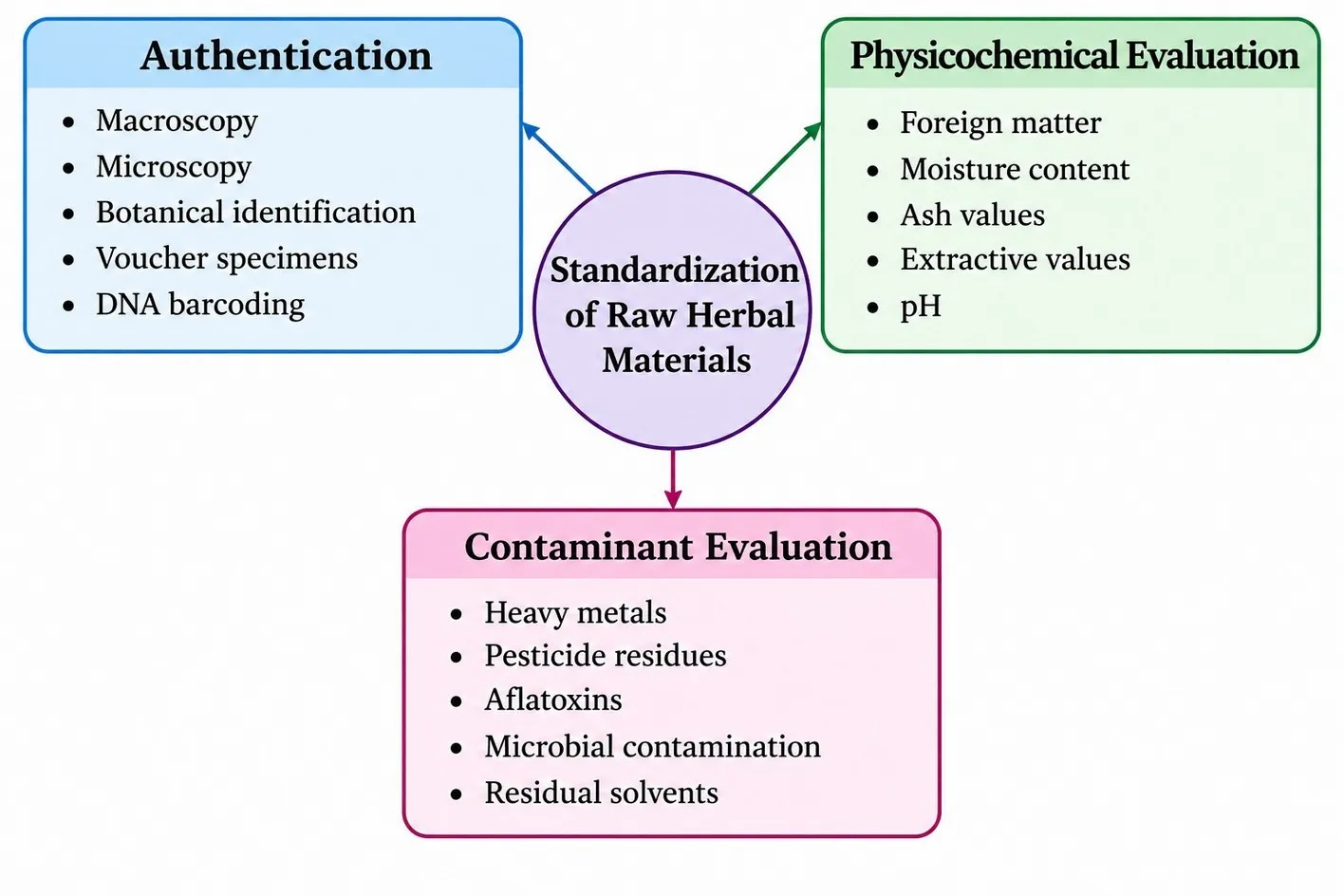
Standardization is a process that ensures that each dose contains an established amount, quality, and therapeutic efficacy of ingredients. A herbal drug cannot be considered scientifically validated if the drug tested has not been authenticated and characterized to ensure consistency during the production process. Moreover, there are reports of various adverse effects and side effects of herbal drugs, including direct toxicity, hypersensitivity, contamination effects, and interaction with other drugs. The effectiveness of any herbal formulation is dependent on the phytochemical components it contains.[18]
• Authentication of Raw Herbal Materials
Authentication plays an important role in quality control of any raw herbal material. It ensures that a proper plant species has been used and prevents the use of a plant species substituted with another or contaminated with other materials. Macroscopic and microscopical examination is the first steps in the process of identification of an herbal material.
scientific name with its distinctive features and taxonomy to ensure the proper use of a medicinal herb. This aids in preventing herbal substitution and makes it possible to acquire the right herbal material for the production of herbal medicine.[19]
• Contaminant Evaluation
Contaminant evaluation is an important step in the standardization of raw herbal materials. It ensures their safety, purity, and quality by detecting harmful substances.
lead, cadmium, mercury, and arsenic by soil and water. Their levels are tested to avoid toxicity.
• Physicochemical Evaluation
6. Analytical Standardization
• Conventional techniques
• UV-Visible spectroscopy Principal
Spectroscopy has unique spectra that are based on the principle of ultraviolet-visible radiation. Such spectra result from the chemical absorption of ultraviolet or visible light. Spectroscopy is based on the interaction between light and matter. After being absorbed, the material passes through several stages of excitation and re-excitation to form a spectrum. When an electromagnetic wave interacts with matter, it can undergo several processes: transmission, absorption, reflection, and dispersion. When radiation electronically modifies the structure of a molecule or ion, the object will show absorption in the visible or ultraviolet range. When the sample absorbs light in the ultraviolet or visible range, the sample’s molecules are subjected to electronic alteration.[22]
• Applications
1. Drug analysis: determination of the contents of medicinal substances.
2. Drug evaluation: studying the action of new drugs.
3. Nucleic acid identification: determining DNA and RNA.[23]
• Thin Layer Chromatography Principal
Thin Layer Chromatography (TLC) works with the principle of differential adhesion. The components of a mixture differ in their affinity towards the stationary and mobile phases. Silica gel is a common stationary phase whereas an organic solvent or the mixture of solvents is the mobile phase. The components separate due to their different affinities towards the surface of the silica gel and their solubility in the mobile phase. Components with higher affinity towards the mobile phase travel faster and the ones with higher affinity towards the stationary phase move slower and hence get separated.[24]
• Chromatographic techniques
• HPLC
Principal
HPLC is used in pharmaceutical analysis for drug discovery, drug impurity analysis, and quality control. For food and beverage, it is used to detect contaminants and analyze nutritional components. It is used in environmental protection for the analysis of pollutants in water, air, and soil. In clinical chemistry, it is used for biomarker analysis, toxicology screening, and therapeutic drug monitoring. In forensic analysis, it is used to identify and quantify drugs and analyze trace evidence.
• Application
1. In toxicology drugs and toxicants are identified.
2. In pharmacology drugs are analyzed and controlled.[25]
• Gas chromatography Principal
Gas chromatography rests upon the principle that different components of a mixture will have different volatilities. The components are separated based on the volatility and the amount of time they spend interacting with the stationary phase. The most volatile component is the one which spends minimal time in the stationary phase and emerges out first while the least volatile component takes the longest time to emerge out from the column. All components have a characteristic retention time which is used to identify them as they emerge out of the Application
3. Food analysis.
4. Environmental monitoring.[26]
7. Chromatographic Fingerprinting
• HPTLC Fingerprinting
High-performance thin-layer chromatography (HPTLC) is widely used for the identification, authentication, and quality control of herbal materials. This method involves the separation of plant constituents on a coated plate and the analysis of resulting chromatographic patterns using UV light or specific detection reagents. Fingerprint profiles derived from HPTLC help compare the chemical similarity and diversity of herbal extracts. Itankar et al. (2015) conducted the work on the HPTLC fingerprinting of five antidiabetic herbs, including Gymnema sylvestre, Pterocarpus marsupium, Enicostema littorale, Syzygium cumini, and Emblica officinalis . The authors used phytochemical markers and retention factor (Rf) values to analyze the phytoconstituents of laboratory-prepared samples and commercial products. The results indicated that commercial and laboratory-made extracts had different chemical compositions, which demonstrated the importance of HPTLC fingerprinting in standardizing herbal preparations.[27]
• HPLC fingerprinting
High-performance liquid chromatography (HPLC) fingerprinting is a technique used to determine the identity, consistency, and quality of herbal medicines and polyherbal compounds. This method provides chromatographic profiles that allow the comparison of samples based on retention times and peak characteristics. Zhu et al. (2019) have developed an HPLC–DAD method for the determination of different samples of Chaenomelis Fructus. In the study, five characteristic peaks were identified and related to quinic acid, malic acid, protocatechuic acid, shikimic acid, and chlorogenic acid. The researchers have used similarity evaluation, principal component analysis (PCA), and hierarchical cluster analysis (HCA) to explore chemical differences between the samples and detect batches that may have been counterfeit. The method has demonstrated good precision, repeatability, and stability, which makes it a valuable tool for the authentication and assessment of herbal medicines. In addition, HPLC fingerprinting can be utilized in the analysis of polyherbal preparations to compare the differences in their chemical profiles.[28]
• Authentication
Authentication plays an important role in establishing the identity, purity and quality of medicinal plants used in herbal medicines. It helps in differentiating actual plant samples from adulterants, substitutes and misidentified species of plants. It is carried out by applying morphological, anatomical, chemical and molecular methods. Macroscopic and microscopic examination are helpful in identifying plants based on their external and internal feature. On the other hand, chemical analysis helps identify the plants through their chemical constituents. In addition, DNA techniques such as DNA barcoding can be employed to identify plant species by analysing their DNA sequences. This will help in minimising adulteration, ensuring the authenticity of herbal raw materials and maintaining the quality of polyherbal formulations. [29]
• Detection of Adulteration
The detection of adulteration is an essential part of chromatographic fingerprinting, which aims to ensure the quality, safety, and authenticity of herbal medicines. Adulteration occurs when a mixture replaces a pure herbal drug, or when a herbal drug is mixed with undesirable substances or lower quality products. Chromatographic fingerprint analysis, including high-performance liquid chromatography (HPLC), thin-layer chromatography (TLC) and gas chromatography (GC) helps detect different adulterants in herbal medicines. The HPLC method provides the retention time, peaks, and percentage of each component in the mixture. It helps compare the peaks of the pure drug sample and adulterated sample. Spectroscopy involves near-infrared spectroscopy and uses a non-destructive approach to analyze herbal medicines. It is also possible to use molecular techniques such as DNA barcoding, for determining mixed species and ensuring the quality of herbal medicines. Chemometric tools can also be applied in the separation and classification of mixed samples, and identification of pure samples from adulterated samples. All these methods can be used together to determine adulteration and improve the quality of herbal medicines.[30]
8. Metabolomics-Based Standardization
• Targeted metabolomics
Herbal medicine research makes use of metabolomics to investigate the chemical composition of medicinal plants and herbal formulations. Metabolomics contributes to the identification of bioactive compounds and facilitates comprehension of interindividual differences in the chemical profiles of herbal preparations. Liquid chromatography–mass spectrometry (LC-MS) presents high sensitivity and wide metabolite coverage, enabling the detection of low-abundance compounds. This technique is relevant to the analysis of complex herbal extracts and to the identification of phytochemicals such as flavonoids, alkaloids and glycosides. Capillary electrophoresis–mass spectrometry (CE-MS) is an emerging approach to targeted profiling of alkaloids and phenolic compounds. Metabolomic profiling combined with chemometric approaches can contribute to the authentication of herbal formulations, and can assist in the evaluation of batch-to-batch consistency in addition to distinguishing between genuine formulations and adulterated or substandard products.[31]
• Untargeted metabolomics
Untargeted metabolomics opens the possibility for an in-depth exploration of all metabolites present in medicinal plants and herbal preparations. Liquid chromatography – mass spectrometry allows the detection of a large range of different molecules like amino acids, sugars, organic acids, lipids, flavonoids, and phenolics. Unlike targeted metabolomics, this study evaluates a wide array of all kinds of metabolites detectable by mass spectrometry, and not limited to a specific set of compounds. Using statistical analysis, such as principal component analysis, it becomes possible to evaluate the relationships between the detected variables. Therefore, it can be concluded that untargeted metabolomics can help assess chemical variability and identify markers of quality in herbal and polyherbal drugs.[32]
• Metabolic fingerprinting
Metabolic fingerprinting is an analytical strategy used to determine the overall chemical composition of herbal materials and polyherbal formulations. It facilitates the identification and comparison of phytochemical constituents and contributes to the evaluation of the quality and consistency of herbal products. Dinakaran et al. examined marketed antidiabetic polyherbal formulations by means of spectroscopic techniques, including UV and IR, in addition to chromatographic techniques, including TLC and HPTLC. The investigation revealed the presence of multiple phenolic constituents and demonstrated that HPTLC fingerprinting could be applied to the quality control of polyherbal formulations.[33] Moreover, metabolic fingerprinting based on MS and NMR presents a more comprehensive approach to the quality control of herbal materials and phytopharmaceuticals. Such techniques assist in characterizing complex chemical profiles and contribute to the evaluation and standardization of herbal products.[34]
9. Chemometrics in Polyherbal Standardization
• PCA and HCA:
Principal component analysis (PCA) identifies the major patterns of variation in chromatographic or spectral fingerprints, and hierarchical cluster analysis (HCA) groups herbal samples in clusters according to their chemical similarity. These approaches can be useful in herbal authentication and in the control of the consistency of batches of a given herb. [35]
• PLS-DA
Partial least squares–discriminant analysis (PLS-DA) uses predefined groups of samples to build up a model that allows the discrimination of samples. When properly validated, this model can classify authentic and adulterated samples.[36]
• Applications:
The combination of HPLC, HPTLC, GC–MS or FTIR data with appropriate multivariate models enable the authentication, screening for possible adulterants, and classification of herbal medicines.[35,36]
10. Biological Standardization
Biological standardization is carried out through in-vitro assays, cellular models, and in-vivo experimental models to determine the biological activity, efficacy, and safety of polyherbal formulations. In diabetes research, the glucose-lowering activity, inhibition of enzymes involved in carbohydrate digestion and glucose uptake, anti-inflammatory effects, and the possible protective effects of herbal formulations on pancreatic β-cells can be evaluated using these models. The choice of these models depends on the targeted mechanism of action and the composition of the formulation.
• In-Vitro Assays
In-vitro assays are laboratory tests that are performed outside a living organism in order to study the biological activities of herbal extracts and polyherbal formulations. Such assays are useful for preliminary screening, for comparing formulations and for identifying potential mechanisms of antidiabetic activity.
digestion, transforming oligosaccharides and disaccharides into absorbable monosaccharides. In-vitro inhibition assays are employed to determine whether herbal extracts can reduce this enzyme activity and potentially delay glucose absorption. These assays can help compare the inhibitory potential of various formulations and contribute to the investigation of their possible effects on postprandial hyperglycaemia. [37,38]
from the surrounding medium. Common experimental systems include skeletal muscle cells, adipocytes and other appropriate cell models. Increased glucose uptake may indicate improved cellular glucose utilization and may be associated with insulin-related signalling or the regulation of glucose transporters, including GLUT4 translocation in relevant cell types. Determining the mechanism involved in such findings may need further investigation.
resistance and the development of type 2 diabetes. Anti-inflammatory activity can be examined by using appropriate cell-based assays that measure inflammatory mediators such as tumour necrosis factor-α (TNF-α), interleukin-6 (IL-6), and other markers. These assays assist in determining whether a polyherbal formulation can modulate inflammatory responses in the selected experimental conditions.
• Cellular Models
Cellular models provide a means of examining how polyherbal formulations affect particular cell types participating in the regulation of glucose and in insulin secretion. Before further assessment in animals, they provide information about cellular responses, possible mechanisms of action and potential toxicity.
• In-vivo Models
In-vivo models involve the evaluation of polyherbal formulations in living experimental animals. They provide information about the regulation of blood glucose, insulin-related responses, metabolic changes and possible toxic effects. Since different models replicate different features of diabetes, the model should be chosen based on the goal of the study.
harms insulin-producing pancreatic β-cells. It is widely used to induce experimental diabetes in rodents. This model is useful for assessing alterations in blood glucose, insulin levels and pancreatic histology, as well as the effects of antidiabetic treatments. Based on the dose and experimental protocol, STZ may cause significant β-cell damage or be combined with dietary interventions to examine features similar to type 2 diabetes.
experimental diabetes through pancreatic β-cell toxicity that involves oxidative damage. This model is used by researchers to assess the effects of herbal formulations on blood glucose, insulin secretion and changes in pancreatic tissue. However, its effectiveness may vary depending on animal species, dose and experimental conditions, and acute hypoglycaemia as well as other toxic effects are significant limitations.[41,42]
11. Chemical–Biological Correlation
• Phytochemical profile:
The chemical profile of herbal extracts can be determined by using HPTLC, HPLC and LC-MS for generating fingerprints of polyherbal preparations.[44]
• Marker identification:
The choice of chemical markers should be dictated by their analytical properties and potential relevance to the mechanism of action, which requires experimental validation. [13,44]
• Biological activity:
The biological activity of a preparation can be accessed though assays for α-amylase inhibition, α-glucosidase inhibition and glucose-uptake. [45]
• Correlation analysis:
By using statistical and chemometric approaches, the biological activity data can be related to the chemical profile information for identifying bioactive constituents. The putative bioactive compounds need to undergo further investigation to establish structure-activity relationships. [13,44]
12. Adulteration and Authentication
• Plant Substitution
Plant substitution, in which the intended therapeutic plant or plant portion is substituted with another species or an unsuitable plant material, is a significant quality-control issue in herbal medicines. Local names, morphological similarities, or challenges distinguishing between powdered and dried materials can all lead to unintentional substitution. It may also be done on purpose to make money by substituting less expensive therapeutic herbs for more costly ones. Such replacements may change the phytochemical makeup of herbal preparations and lessen their anticipated medicinal efficacy. For instance, there have been reports of using related species in herbal medicines and substituting the aerial parts of Withania somnifera for its roots. In order to detect plant replacement and guaranty the quality of herbal goods, botanical identification, comparison with verified reference materials, DNA-based techniques, and chemical fingerprinting are crucial. [45, 46]
• Incorrect Botanical Identification
Similarities between closely related plant species' microscopic and morphological traits might lead to incorrect botanical identification. When medicinal plants are dried, powdered, or made into extracts, their distinctive characteristics may be lost, making identification especially challenging. The therapeutic activity, safety, and consistency of a product can all be impacted by the usage of raw components that are not appropriately identified. Voucher specimens, taxonomic verification, macroscopic and microscopic analysis, and DNA barcoding can all be used to identify medicinal plants. However, because DNA can be broken down or present in insufficient amounts in highly processed extracts, DNA-based techniques might be less successful. Thus, the accuracy of plant identification can be increased by combining botanical examination with chemical analysis and DNA-based verification. [45,47]
• Synthetic Drug Adulteration
The unreported addition of pharmaceutical or synthetic ingredients to herbal goods is known as synthetic medication adulteration. Such adulteration may be done to deceive customers, boost business earnings, or create quick or exaggerated medicinal benefits. When customers believe a product is made entirely of natural materials, undeclared pharmaceutical substances can lead to major safety concerns, drug interactions, and unanticipated negative effects. Suspected synthetic adulterants can be identified and quantified with the use of analytical methods such gas chromatography–mass spectrometry (GC-MS), liquid chromatography–mass spectrometry (LC-MS), and high-performance liquid chromatography (HPLC). The chemical characteristics of the suspected substance and the makeup of the herbal product determine which approach is best. Reliable detection requires validated analytical methods and suitable reference standards. [46,48]
• Contamination
Herbal medicines may become contaminated while being grown, harvested, dried, processed, transported, and stored. Heavy metals, pesticide residues, bacteria, mycotoxins, and leftover solvents are significant pollutants. Polluted soil or water, poor hygiene, improper storage conditions, or subpar production techniques can all lead to contamination. Metals, microbiological contaminants, and mycotoxins were found to be the most commonly reported contamination categories in a comprehensive assessment of herbal therapeutic items from low- and middle-income countries. These impurities could jeopardize product safety and expose customers to hazardous microbes or poisonous compounds. Therefore, in accordance with the product and relevant standards, quality-control programs should incorporate suitable testing for heavy metals, microbiological limits, pesticide residues, mycotoxins, and residual solvents [49,50].
• HPLC Authentication
The chemical components of herbal remedies are frequently analyzed both qualitatively and quantitatively using high-performance liquid chromatography (HPLC). It creates a chromatographic profile that can be compared with a verified reference sample by separating substances based on how they interact with the stationary and mobile phases. When appropriate analytical conditions and reference standards are available, HPLC can be used to quantify specific chemical markers, analyze batch differences, and identify some known adulterants. Chemical constituent identification and characterisation can be enhanced by combining HPLC with mass spectrometry or a diode-array detector. However, the full botanical identity of a complex herbal mixture might not be established by the identification of just one or a few marker chemicals. Stronger proof of product quality and authenticity can be obtained by combining chromatographic fingerprinting with complementary authentication methods and multi-marker analysis. [46,48]
• AI-Assisted Authentication
Emerging methods for authenticating and evaluating the quality of medicinal plants include artificial intelligence (AI) and machine learning. These methods can discover patterns linked to various plant species or sample-quality categories by analyzing digital photos, chromatographic fingerprints, spectroscopic data, and metabolomic profiles. Complex chemical datasets can be classified and compared using chemometric techniques such as principal component analysis (PCA), hierarchical cluster analysis (HCA), and partial least-squares discriminant analysis (PLS-DA). Machine-learning models can be used in conjunction with validated analytical measures to evaluate batch-to-batch variance, identify odd samples, and detect potential adulteration. However, the quality of the reference samples, suitable model validation, and representative training datasets all affect how reliable they are. Therefore, traditional botanical identification and laboratory-based authentication techniques should be complemented rather than replaced by AI-assisted methodologies. [46, 47]
13. Regulatory Perspectives
• World Health Organization (WHO):
WHO provides guidelines on quality control of herbal materials, including botanical identification, purity, foreign matters, pollutants, and analytical testing.[51]
• Ayurveda, Siddha, Unani and Homoeopathy (AYUSH):
By way of applicable legislation, quality requirements, and pharmacopoeial standards, the Ministry of AYUSH, Government of India, supports the regulation and standardization of traditional medicines.[52]
• Indian Pharmacopoeia (IP):
Published by the Indian Pharmacopoeia Commission, the IP sets out official quality standards for drugs listed in its monographs, which include requirements for identity, purity, strength, and testing.[53]12 Nov 2026
• Ayurvedic Pharmacopoeia of India (API):
The API sets down standards for Ayurvedic medicinal plant materials and ingredients, thereby supporting botanical authentication, purity assessment, and quality control.[54]
• United States Pharmacopeia (USP):
USP develops quality standards and analytical methods for botanical ingredients and dietary supplements, supporting identity verification, contaminant testing, and product consistency.[55]
• European Pharmacopoeia (Ph. Eur.):
The European Pharmacopoeia provides monographs and analytical requirements for herbal drugs and preparations, covering identification, purity, and assay testing.[56]
• Food and Drug Administration (FDA):
In its Botanical Drug Development Guidance for Industry, the FDA draws attention to the quality-related difficulties associated with botanical products, as these products are comprised of complex mixtures rather than one active ingredient that is chemically defined. It gives emphasis to characterization of raw materials, manufacturing controls, chemical testing, and evidence that supports safety and efficacy.[57]
KEY FINDINGS OF THIS REVIEW
This review identifies an integrated, multi-parameter approach as the most informative strategy for assessing the quality of polyherbal formulations studied for diabetes management. The article's central findings are that botanical authentication establishes the identity of raw materials; physicochemical and contaminant testing assess purity and selected safety risks; marker-based analysis and chromatographic fingerprints help compare chemical composition across batches; and metabolomics with chemometric tools can provide broader profiles and reveal sample variation. Biological assays can explore possible antidiabetic activity, but laboratory or animal findings do not independently prove clinical effectiveness. The review therefore supports combining validated analytical methods with consistent manufacturing, suitable safety assessment and well-designed clinical studies.
COMPARATIVE VIEW OF QUALITY-CONTROL APPROACHES
| Approach | Main contribution | Important limitation |
|---|---|---|
| Single-marker analysis | Relatively simple routine monitoring of a selected constituent. | One marker may not represent the full complexity of a polyherbal mixture. |
| Multi-marker / fingerprint analysis | Broader chemical characterization and batch comparison. | Needs validated methods, reference materials and interpretation. |
| Metabolomics + chemometrics | Can reveal wider patterns and sample differences in complex mixtures. | Requires suitable instrumentation, expertise and robust validation. |
| Biological assays | Investigates possible mechanisms and biological activity. | Preclinical activity alone does not establish clinical efficacy. |
Note on percentages:
The supplied review does not present a single comparable dataset from which valid percentages or a numerical comparison chart can be calculated. No percentages have therefore been invented. The schematic and comparison table represent qualitative findings from the article.
PICTORIAL / GRAPHICAL REPRESENTATION
2. Test purity & safety
Physicochemical tests; contaminant screening
3. Profile chemistry
Phytochemical markers; TLC/HPTLC/HPLC/GC
1. Authenticate raw plants
Botanical, macro/microscopy, DNA methods
←
5. Evaluate activity
In-vitro/cellular/in-vivo and clinical evidence
4. Compare profiles
Fingerprinting, metabolomics and chemometrics
6. Assure quality
Validate methods; control manufacturing and batches
Integrated quality-control workflow for polyherbal formulations studied in diabetes management.
CONCLUSION
Standardization and quality control are essential for improving the reliability of polyherbal formulations investigated for diabetes management. Botanical authentication, physicochemical testing, contaminant screening, phytochemical and marker analysis, and chromatographic fingerprinting provide complementary information about identity, purity and consistency. Emerging approaches such as metabolomics and chemometric etric analysis can broaden chemical characterization and help detect batch variation or adulteration. Biological assays can add evidence about possible activity, but they should be interpreted alongside chemical data and should not be treated as proof of clinical benefit. Future progress depends on validated analytical methods, reproducible manufacturing practices, appropriate safety evaluation and well-designed clinical studies. Polyherbal products should not replace prescribed diabetes treatment without advice from a qualified healthcare professional.
REFERENCES



Yuvraj Arjun, Sanjay Bais, Datta More, Recent Advances in Standardization and Quality Control of Polyherbal Formulations for Management of Diabetes, Int. J. of Pharm. Sci., 2026, Vol 4, Issue 11, 1955-1971. https://doi.org/10.5281/zenodo.24155660
 10.5281/zenodo.24155660