
View Article

  • Beyond the Breakouts: Exploring the Pathophysiology and Integrating the Clinical Insights, Phytotherapeutics, Therapeutic Advances and Future Directions for Acne Management

  • Minerva College of Pharmacy, Indora. Kangra (H.P).

Abstract

Acne vulgaris is a common chronic inflammatory skin disease, characterized by increased sebum production, follicular hyperkeratinization, dysbiosis of Cutibacterium acnes and inflammation. Common therapies such as topical retinoids, benzoyl peroxide, antibiotics and hormonal therapies are widely used, but adverse effects, antibiotic resistance and recurrence remain major challenges. This review highlights the therapeutic potential of medicinal plants as adjunctive modalities in acne management such as Glycyrrhiza glabra (licorice), Camellia sinensis (green tea) etc. These ingredients contain bioactive phytoconstituents that have potential anti-inflammatory and antioxidant activity. Green tea may also help to regulate sebum, and licorice may help to reduce skin pigmentation associated with inflammation. Other medicinal plants such as Azadirachta indica, Aloe vera, Curcuma longa and Melaleuca alternifolia have also been discussed for their possible antimicrobial, soothing and anti-inflammatory effects. In addition, the review describes new methods for drug delivery such as liposomes, nano emulsions, solid lipid nanoparticles and nanostructured lipid carriers that can revolutionize drug stability, follicular delivery, skin retention and controlled release. Available clinical evidence suggests potential benefits of some herbal and conventional therapies, although strong clinical evidence of licorice and green tea use in the acne treatment is still missing. Future research should be directed toward standardization of extracts, optimization of formulations, safety evaluation, and controlled clinical trials to determine therapeutic efficacy and long-term benefits. To summarize, evidence-based herbal research along with modern drug delivery technologies may provide promising complementary approaches for improved management of acne.

Keywords

Acne vulgaris, Cutibacterium Acne, Glycyrrhiza glabra, Camellia sinensis, Herbal therapy, Phytoconstituents, Nanotechnology, Skin Inflammation, Nanocarriers

Introduction

× Popup Image

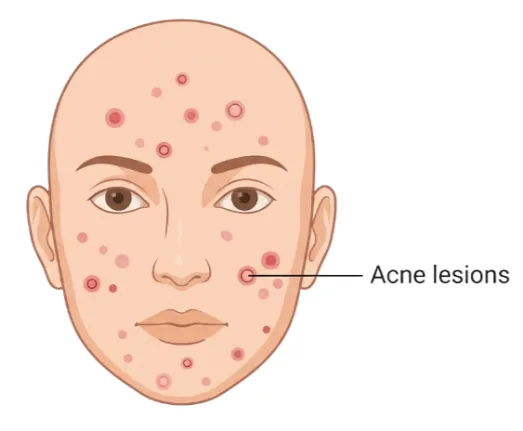
Acne also called acne vulgaris is a long-term skin disease that happens when hair follicles get clogged with dead skin cells and oil from the skin. Acne triggers persistent inflammation in the sebaceous glands and results in various forms, such as open and closed comedone (blackheads and whiteheads), papules, pustules, nodules, and cysts (Fig. 1). There are various kinds of acne such as acne conglobate, acne excoriate, acne rosacea, pomade acne, acne fulminans, acne keloid Alises nuchae, acne chloracne, acne mechanic and acne medicamentosa. Unfortunately, these skin lesions may result in scarring and hyperpigmentation. Stress, smoking, genetic susceptibility, diet, and drugs all play a role in influencing the disease’s activity. (1,2) Acne is a common skin disease that mainly affects adolescents and young adults, especially males. There are strong associations of specific factors such as bacterial colonization and inflammation to the etiologic of this disease. The main clinical signs of Acne are non-inflammatory and inflammatory lesions mainly located on the face, neck, trunk and back (3) Acne vulgaris, a widespread chronic inflammatory skin condition, impacts roughly 85% of teenagers and a significant portion of adults globally. Data on prevalence of adult acne is scanty Especially in Indian population. This study was conducted to evaluate the prevalence, clinical characteristics, etiologic and aggravating factors, and differences from adolescent acne (4)Over the past few years, natural remedies have been widely researched as safer and environmentally friendly alternatives to conventional acne treatments. The use of herbal remedies, such as those developed by Traditional Persian Medicine, to cure acne has become more popular in recent years. (5) For the purpose of developing future antiacne treatments, the current review focused on herbs that are currently in use and those that have a high potency. Four mechanisms—anti-bacterial, anti-inflammatory, antioxidant, and anti-androgen activities—are involved in these medicinal herbs' anti-acne properties.(6) Patients with mild to moderate-severity inflammatory acne, including papules and pustules, are treated with topical antibiotics along with retinoids. The primary line of treatment for people with moderate to severe inflammatory acne is oral antibiotics.(7) A recent systematic review of botanical and phytochemical treatments for acne vulgaris reviewed 23 clinical trials, of which three studied Kampo/Chinese herbal medicine (CHM) preparations. The CHM preparations showed improvement in mild to moderate acne. Limitations of these clinical trials included lack of acne grading methods, and lack of a control or placebo group.(8)
figure

Figure 1: Acne

2. TYPES

The pilosebaceous unit is affected by common acne, also known as acne vulgaris, which manifests as inflammatory papules, pustules, nodules, and cysts on the face, back, and chest in addition to non-inflammatory open and closed comedones. The typical manifestation occurs throughout adolescence because of an increase in sebum production caused by a surge in androgens, particularly dehydroepiandrosterone (DHEAS). There are various kinds of acne such as acne conglobate, acne excoriate, acne rosacea and many more which are discussed in detailed in the Table 1 (9)

Table 1: Different Types of Acne

Type of Acne Definition Triggers Clinical features Common sites Complications Reference
Acne Conglobata This severe type of cystic acne features an insidious onset of extensive inflammatory papules, pustules, nodules, interconnecting abscesses, and sinus tracts. Hormonal changes, genetic factors and excessive sebum production Deep nodules, cysts, pustules, abscesses, sinus tracts and grouped comedones. Face, chest, back, shoulders and buttocks Severe permanent scarring, pigmentation and psychological distress (10)
Acne Excoriee It is also called excoriated or picker’s acne and is considered a psychodermatological disorder where often an adolescent female picks real or imaginary acne lesions over the face out of compulsion or stress. Habitual picking, stress and anxiety. Haemorrhage, crusts, erosions, excoriations, and pigmentation following inflammation. Mostly on faces. secondary infection, pigmentation, and permanent scarring. (10)
Acne Rosacea Apersistent inflammatory face condition that resembles acne but typically doesn't have comedones. Sunlight, heat, spicy foods, alcohol, stress, temperature changes. Facial flushing, persistent redness, papules, pustules and visible small blood vessels. central face, cheeks, nose, chin, forehead. Persistent redness, telangiectasia, rhinophyma, eye involvement (11)
Pomade Acne Greasy hair products clog the hair follicles, causing pomade acne.
It often appears as acneiform and comedonal lesions scattered along the hairline and forehead.
pomades, greasy conditioners, hair oils, and styling supplies. Small comedones and papules, often concentrated along the hairline. Forhead, temples and hairline. Persistent acne inflammation and pigmentation (12)
Acne Fulminans An uncommon and very severe kind of inflammatory acne is called acne fulminans.
Systemic symptoms and painful, ulcerated nodules appear out of nowhere.
Often linked to hormonal fluctuations, it can happen throughout adolescence and can cause acne to flare quickly. Abrupt, excruciating nodules, pustules, ulcers, crusting, and systemic symptoms such joint pain or fever. Mainly chest, back and face. severe ulceration scars, joint/bone pain, and systemic issues (13)
Acne Keloidalis Nuchae A long-term inflammatory follicular disease that mostly affects the back of the neck and leaves behind keloid-like scars. Ingrown hairs, friction, close shaving, and mechanical discomfort. Firm papules, pustules, itching and eventually keloid-like plaques/scar. Back of neck and occipital scalp. Secondary infection, hair loss, and permanent scarring (14)
Acne Mechanica It often appears when the skin is rubbed by tight clothes, helmets, masks, or equipment. Sporting equipment, straps, masks, helmets, tight clothes, and extended friction. papules, pustules, and occasionally nodules in regions to pressure or friction. Shoulders, back, chest, forehead, and regions beneath clothes or equipment. Inflammation, pigmentation and scarring. (15)

3. RISK FACTORS OF ACNE

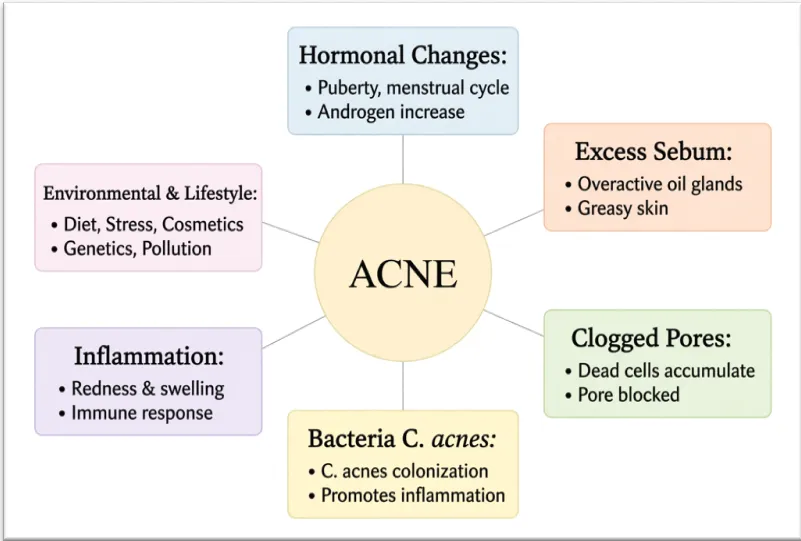
A positive familial history of acne was significantly associated with increased risk for acne presentation, even after adjustment for age, gender, family monthly household income, BMI, smoking status, alcohol drinking habit and physical activity (16) Individuals with a history of acne in their mother, father or sibling had more acne than those without, with higher odds for paternal than maternal or sibling history (17). The association between BMI and acne remains unclear, with conflicting findings in adolescents and adults. However, obesity in PCOS may promote insulin resistance and hyperandrogenism, increasing free testosterone levels and contributing to acne development (18). (52-47%) of the patients were able to connect the deterioration of their lesions to the meals they ate. (41-37%) felt irritated after eating oily food, (11-10%) after eating a high-glycemic diet, and (23-20%) after eating meat (19). There are various types of risk factors (Fig.2) in acne such as family history and genetics, Age puberty, Increase sebum production, Dietary factor, Cutibacterium acnes, Follicular hyperkeratinization.

3.1 Family History and Genetics

Family history and genetics Having first-degree relatives with acne increases a person's likelihood of developing acne (20). Through influences on sebaceous gland activity, androgen-related pathways, follicular features, and inflammatory responses, genetic variables may affect an individual's vulnerability to acne. According to studies, those who have a positive family history of acne may also acquire the condition earlier and with more severity or persistence.(21)

3.2 Age and Puberty

Age and Puberty Because increased androgen activity promotes sebaceous gland development and sebum production, acne frequently starts during puberty. Comedone development and inflammatory acne lesions are encouraged by excess sebum, follicular hyperkeratinization, and alterations in the follicular microbiota.(22)

3.3 Increase Sebum Production

Increase Sebum Production One of the main causes of acne is sebum production is increased by androgenic stimulation of sebaceous glands, resulting in a lipid-rich follicular environment that encourages inflammation, follicular blockage, and C. acnes growth.(23)

3.4 Follicular hyperkeratinization:

Follicular hyperkeratinization is crucial to the development of acne. Blackheads, whiteheads, and inflammatory acne lesions may develop because of microcomedone creation caused by excessive keratin synthesis and buildup within the hair follicle, which can obstruct the follicular opening.(24)

3.5 Cutibacterium acnes:

Cutibacterium acnes is a normal member of the skin microbiota, but its dysbiosis and increased abundance in the sebum-rich pilosebaceous follicle can contribute to acne development.(25) It can degrade components of the sebum and to activate innate immune responses leading to the release of pro-inflammatory mediators. This leads to inflammation of the hair follicles and contributes to the formation and progression of inflammatory acne lesions.(26)

3.6 Environmental & Lifestyle:

The production of sebum, oxidative stress, and skin inflammation can all be exacerbated by environmental and lifestyle variables. High temperatures, humidity, and air pollution can disrupt the skin barrier and encourage follicular obstruction.(27) Inflammatory and hormonal pathways may be impacted by psychological stress and sleep deprivation, exacerbating the severity of acne. Acne may also develop because of friction and occlusion from helmets, masks, tight clothes, and improper skincare products.(28) See at fig number 2.
figure

Figure 2: Risk Factors of Acne Vulgaris

4. PATHOPHYSIOLOGY OF ACNE

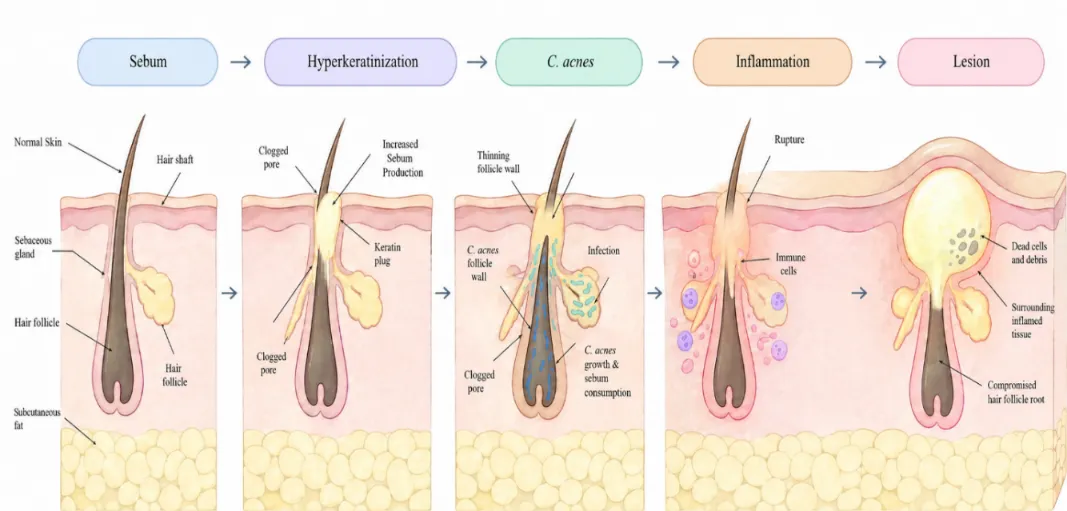
Acne vulgaris is a common chronic inflammatory disease of the pilosebaceous unit that is mainly characterized by comedones, papules, pustules, nodules, and sometimes cysts.(29) The pathophysiology is multifactorial, mainly involving increased sebum production, follicular hyperkeratinization, Cutibacterium acnes dysbiosis, and inflammation (30). Androgenic hormones stimulate the sebaceous glands, resulting in excess sebum production, while abnormal keratinocyte proliferation causes follicular plugging and comedone formation. The lipid-rich follicular environment facilitates C. acnes dysbiosis, which elicits immune responses and inflammatory mediators.(31). The inflammation causes the development of acne lesions and, in severe or prolonged cases, post-inflammatory pigmentation and scarring. Androgen stimulation increases sebum production and promotes follicular blockage.(32) The abnormal shedding of keratinocytes results in the development of microcomedone and comedone the lipid-rich follicle promotes dysbiosis of C. acnes and activates TLR2-mediated immune responses.

4.1 Increased Sebum Production

Sebaceous glands are stimulated and sebum production is increased by androgenic hormones, specifically testosterone and dihydrotestosterone (DHT). In the pilosebaceous unit, excess sebum builds up and causes follicular occlusion, which aids in the development of microcomedone.(33) Additionally, sebum offers a lipid-rich environment that fosters Cutibacterium acnes proliferation and modified activity. Sebum lipid oxidation can also produce oxidative stress and pro-inflammatory molecules, which intensify inflammatory reactions. Thus, follicular obstruction, microbial dysbiosis, oxidative stress, and inflammation are the ways that excessive sebum production causes acne. (34)

4.2 C. acnes Dysbiosis

Cutibacterium acnes is a normal part of the skin microbiota but changes in its abundance and strain composition within the pilosebaceous unit are associated with acne development. Increased microbial activity can lead to the release of lipases and other bacterial factors that change the lipids in sebum, resulting in the formation of inflammatory mediators.(35) These bacterial components can activate innate immune pathways such as Toll-like receptor 2 (TLR2) and induce the release of cytokines like IL-1β, IL-6 and TNF-α. This inflammatory response contributes to follicular inflammation and the progression from comedonal lesions to inflammatory acne lesions (36)

4.3 Inflammation

Microbial components of Cutibacterium acnes and altered sebum in acne activate TLR2/TLR4 on keratinocytes, sebocytes and immune cells, leading to activation of NF-κB and MAPK signaling. This leads to the release of pro-inflammatory mediators such as IL-1β, IL-6, IL-8 and TNF-α, attracting immune cells to the pilosebaceous unit.(37) C. acnes can also activate the NLRP3 inflammasome which also leads to increased production of IL-1β. Destruction of the follicular wall and formation of papules, pustules, nodules and severe inflammatory acne lesions are caused by chronic inflammation.(38)

4.4 Acne Lesion Formation

Acne lesions begin with an excessive sebum production and an abnormal keratinization of the follicles, resulting in the obstruction of the follicle and the formation of microcomedones and comedones. The build-up of sebum and changes in the follicular microbiota, particularly Cutibacterium acnes, promote local immune activation and inflammation. (39) The inflammatory response leads to papules and pustules, and deeper, longer-lasting inflammation can lead to nodules and cystic lesions. Hence, the development of acne lesions is a progression of the combined effects of excess sebum, follicular obstruction, microbial dysbiosis, and inflammation.(40) See at fig number 3.
figure

Figure 3: Pathophysiology of Acne

5. Diagnosis

Diagnosis of acne is mainly clinical and based on the skin examination and detailed history. The diagnosis is usually clinical based on the characteristic morphology, number and distribution of acne lesions. (41) Common lesions include open and closed comedones, papules, pustules, nodules, and cysts. Comedones represent noninflammatory lesions, whereas papules, pustules, nodules, and cysts are associated with different levels of inflammation. Acne affects areas of the skin that have a high concentration of pilosebaceous units, especially the face, chest, shoulders and upper back.(42) During clinical evaluation, the physician assesses the type and extent of lesions, disease duration, progression, prior treatment, family history, and aggravating factors. The configuration of the lesions is of great importance in diagnosis.(43) Open comedones or blackheads occur when the follicle is blocked and the contents of the follicle are exposed to air. Closed comedones are small whitish or skin-coloured elevations. Inflammation in the obstructed pilosebaceous unit gives rise to inflammatory lesions.(44) Papules and pustules are usually superficial inflammatory lesions while nodules and cystic lesions represent deeper and more severe inflammation. The clinical examination should also include the presence of post inflammatory erythema, post inflammatory hyperpigmentation and acne scarring, as these findings provide information about disease severity and chronicity (45) . Assessment of acne severity is an important part of diagnosis because it helps in selection of treatment and evaluation of therapeutic response. Various clinical grading systems have been proposed including Pillsbury classification, Cook’s grading system, Leeds acne grading system, Global Acne Grading System (GAGS) and Investigator’s Global Assessment (IGA). (46) Such systems consider lesion count, lesion type, inflammation, anatomical distribution, and the presence of nodules or scarring. Several grading methods are available, but no single system has been universally accepted for all clinical and research settings. (47) The differential diagnosis of acne is discussed below:

5.1 Clinical Assessment

A clinical examination of the skin is the primary method used to diagnose acne. The doctor examines the afflicted regions and assesses the distribution, quantity, and shape of lesions. Examining the back, shoulders, chest, and face is typical.(48)

5.2 Identification of Lesions

Open and closed comedones, papules, pustules, nodules, and cysts are among the several forms of acne lesions that are seen during diagnosis. Additionally, the existence of both inflammatory and non-inflammatory lesions is evaluated. This aids in identifying the acne's clinical kind.(49)

5.3 Evaluation of Severity

The quantity, kind, and size of lesions are used to determine the severity of acne. Acne can be categorized as mild, moderate, or severe. Extensive inflammation, nodules, cysts, and a higher chance of scarring can all be signs of severe acne.(50)

5.4 Drug and Medical History

To determine potential contributing variables, a thorough medical and drug history is acquired. Certain medications, cosmetics, and skin care items have the potential to cause or exacerbate acneiform outbreaks. Additionally considered are prior acne treatments and their results.(51)

5.5 Hormonal Assessment

When acne is accompanied by symptoms of a hormonal imbalance, a hormonal examination may be taken into consideration.(52) The need for further testing may be indicated by symptoms like irregular menstruation, abundant facial hair, or other indications of androgen excess. When clinically necessary, conditions like polycystic ovary syndrome (PCOS) may also be evaluated.(53)

6. Conventional Treatments

The aim of acne therapy is to reduce sebum production, follicular hyperkeratinization, C. acnes proliferation and inflammation.(54) Treatment depends on the severity and type of acne and may include topical retinoids, benzoyl peroxide, antibiotics and keratolytic agents.(55) For moderate to severe acne, oral antibiotics, hormonal therapy or isotretinoin may be needed under medical supervision. Intralesional corticosteroids can give prompt relief in large painful inflammatory nodules.(56) The detail treatment therapy for acne management has been discussed in the Table 2

Table 2: Conventional Treatments for Acne Vulgaris

S.no Category Examples Mechanism of Actions Side effects Reference
1. Topical Retinoids Tretinoin, Tazarotene. Topical retinoids bind to nuclear retinoic acid receptors (RARs) to regulate gene transcription and normalize follicular keratinization. They inhibit the formation of microcomedones
increase the clearance of comedones, and decrease follicular plugging. Which helping to reduce inflammatory acne lesions and preventing new comedones from forming.
Dryness, erythema, burning/stinging, peeling, itching, irritation, skin discomfort. (57,58)
2. Benzoyl peroxide 2.5-10% benzoyl peroxide. Benzoyl peroxide (BPO) produces reactive oxygen species (ROS) that oxidize bacterial proteins and has bactericidal activity against Cutibacterium acnes. It has anti-inflammatory effects on acne and prevents follicular obstruction due to its mild keratolytic and comedolytic activity. Increased skin sensitivity and temporary worsening of irritation, especially during initial treatment. (59)
3. Topical
Antibiotics
Clindamycin, Erythromycin. Topical antibiotics such as clindamycin and erythromycin bind to the 50S ribosomal subunit of Cutibacterium acnes and inhibit bacterial protein synthesis. They inhibit the growth of bacteria and reduce the production of inflammatory mediators which in turn decreases the inflammatory acne lesions. Antibiotic resistance, particularly with clindamycin or erythromycin. (60)
4. Keratolytic/Comedolytic Agents Salicylic acid and Azelaic acid. These agents, eg, salicylic acid and azelaic acid, stimulate exfoliation and normalize follicular keratinization. They remove accumulated dead cells and reduce comedone formation, which helps unclog pores. Azelaic acid also has antimicrobial and anti-inflammatory properties for reducing acne lesions. Dryness, peeling, redness, burning, skin irritation and increased sensitivity. (61)
5. Oral antibiotics Doxycycline, Minocycline, Sarecycline. Doxycycline and minocycline are oral antibiotics that inhibit bacterial protein synthesis through binding to the 30S ribosomal subunit of Cutibacterium acnes. They inhibit bacterial growth and reduce inflammatory mediators. This helps decrease inflammatory acne lesions, including papules and pustules. Nausea, diarrhea, abdominal discomfort, and headache. Tetracyclines may cause photosensitivity, dizziness, and esophageal irritation. (62)
6. Hormonal Therapy Combined oral contraceptives, Spironolactone. Hormonal therapy works by decreasing androgen activity, by blocking the androgen receptor or by decreasing the production of androgen. This reduces the stimulation of sebaceous glands and the secretion of excessive sebum. Thus, it is effective in the reduction of follicular obstruction and formation of acne lesions. Nausea, headache, breast tenderness, menstrual irregularities, and mood changes. (63)
7. Intralesional Corticosteroids Triamcinolone acetonide. Intralesional corticosteroids such as triamcinolone acetonide exert their effects locally via activation of glucocorticoid receptors and suppression of xinflammatory signalling.
They decrease the production of pro-inflammatory cytokines and inflammatory cells which results in a rapid decrease in swelling and erythema.
Skin atrophy, hypopigmentation, and pain at the injection site. (64)

7. Herbal Treatments

The treatment of acne with herbs (Table 3) is based on the use of medicinal plants and their active components that act on the main causes of acne. Topical formulations like gels, creams, lotions and face washes utilize herbal extracts.(65) Herbal therapies may represent a possible alternative complementary approach for acne treatment by targeting excess sebum, inflammatory processes and microbial activity, but their efficacy depends on the formulation and further clinical studies are necessary to confirm their safety and efficacy.(66) These herbs work in different ways: tea tree oil and neem may help to control microbial activity associated with acne, green tea helps to regulate excess sebum production, and licorice and turmeric may help to reduce inflammation and oxidative stress. Aloe vera helps to soothe irritated skin and help keep moisture.(67)

Table 3: Herbal Therapeutics for Acne Management

S.no Common Name Biological Name Bioactive Phytoconstituents Mechanism Side effects References
1. Tea tree oil Melaleuca alternifolia. Terpinen-4-ol, α-Terpineol Bacterial cell-membrane integrity is disrupted by tea tree oil, especially by its main component terpinen-4-ol, which reduces membrane function and microbiological survival. Additionally, it has anti-inflammatory properties by lowering inflammatory reactions, which helps to lessen inflammatory acne lesions, swelling, and redness. Allergic contact dermatitis, Eye irritation, Dryness (68)
2. Green tea Camellia sinensis Epigallocatechin-3-gallate (EGCG), epigallocatechin (EGC), epicatechin gallate (ECG), epicatechin (EC), and other polyphenols and flavonoids. By inhibiting inflammatory mediators and lowering oxidative stress, green tea, in particular its primary catechin epigallocatechin-3-gallate (EGCG), demonstrates anti-inflammatory and antioxidant properties. Additionally, it might help control the production of sebum, which would lessen the excess oiliness and inflammation linked to acne. Allergic contact dermatitis, erythema, pruritus, xerosis, and localized burning sensations (69)
3. Aloe-vera Aloe barbadensis Acemannan, glucomannan, aloin, aloe-emodin, and various phenolic compounds. By lowering inflammatory mediator activity and promoting skin hydration, aloe vera has calming and anti-inflammatory properties. Its polysaccharides, especially acemannan, support the healing of wounds and preserve the skin barrier, which may lessen irritation and aid in the healing of skin damaged by acne. Abdominal cramps, diarrhea, electrolyte imbalance, and hypokalaemia. (70)
4. Licorice Glycyrrhiza glabra. Glycyrrhizin, glycyrrhetinic acid, glabridin, liquiritin, isoliquiritin, and licochalcone A. By inhibiting inflammatory mediators and lowering oxidative stress, licorice, in particular its bioactive components glycyrrhizin and glabridin, demonstrates anti-inflammatory and antioxidant properties. Glabridin may also lessen post-inflammatory hyperpigmentation linked to acne by inhibiting tyrosinase activity. localized erythema, pruritus, skin irritation, and allergic contact dermatitis in susceptible individuals (71)
5. Grape seed Vitis vinifera Proanthocyanidins, catechin, epicatechin, and gallic acid By scavenging reactive oxygen species and regulating inflammatory reactions, grape seed proanthocyanidins demonstrate antioxidant and anti-inflammatory properties. These actions could lessen inflammation and oxidative stress in skin affected by acne. Generally well tolerated topically, but irritation or allergic reactions may occur (72)
6. Neem Azadirachta indica Nimbidin, nimbolide, azadirachtin, gedunin, and nimbin. Demonstrates anti-inflammatory and antibacterial properties through bioactive components including nimbolide and nimbidin. These components may lessen inflammation and skin irritation linked to acne by preventing microbial growth and the production of inflammatory mediators. Allergic reactions may occur in sensitive individuals. Oral neem oil ingestion can cause serious systemic toxicity, particularly in children. (73)
7. Turmeric Curcuma longa Curcumin, desmethoxycurcumin, bisdemethoxycurcumin, ar-turmerone, α-turmerone, and β-turmerone. Curcumin inhibits inflammatory signaling pathways including NF-κB and decreases the production of pro-inflammatory cytokines. Its antioxidant activity may help to neutralize reactive oxygen species, potentially reducing the inflammation associated with acne lesions. Irritant or allergic contact dermatitis, erythema, pruritus, and localized burning sensations (74)
8. Indian Sarsaparilla Hemidesmus indicus Hemidesmin, 2-hydroxy-4-methoxybenzaldehyde, saponins. Hemidesmus indicus has anti-inflammatory, antioxidant, and antimicrobial activities.
It can decrease inflammation related to acne by inhibiting pro-inflammatory cytokines like IL-8 and TNF-α.
It has antioxidant activity that helps to neutralize reactive oxygen species (ROS) and reduce oxidative stress.
Therefore, it can be a complementary herbal agent for inflammatory acne.
Possible gastrointestinal discomfort or allergic reactions. (75)
9. Holi Basil
(Tulsi)
Ocimum tenuiflorum Eugenol, rosmarinic acid, ursolic acid, flavonoids. Ocimum tenuiflorum (Holy Basil) has antimicrobial, anti-inflammatory and antioxidant activities.
It may reduce acne-causing bacterial growth and skin inflammation.
Its constituents like eugenol and ursolic acid might help in inhibiting inflammatory mediators and oxidative stress.
Skin irritation, contact allergy, or redness with topical use. (76)
10. Pomegranate Punica granatum Punicalagins, ellagic acid, anthocyanins Punica granatum, have antibacterial, anti-inflammatory, and antioxidant properties. Its promise as a supplemental herbal remedy for acne management is supported by its bioactive components, especially punicalagin, which may inhibit germs linked to acne and lower inflammation. Occasional skin irritation or allergic reactions. (77)
 

8. Novel Drug Delivery system and Formulations Approaches

By improving the administration of anti-acne medications to the pilosebaceous unit, which includes hair follicles and sebaceous glands, Novel Drug administration Systems (NDDS) are cutting-edge pharmaceutical techniques. (78) These systems allow for regulated or prolonged medication release while enhancing drug solubility, stability, skin penetration, and local retention. They may lessen systemic medication exposure, minimize skin irritation and other side effects, and enhance patient compliance and therapeutic results in the treatment of acne.(79) Nano emulsions, liposomes, noisome, solid lipid nanoparticles (SLNs), nanostructured lipid carriers (NLCs), transferosomes, hydrogels, and micro sponges are common formulation techniques.(80) Depending on the formulation and active component, these systems may enhance medication solubility, stability, penetration, and controlled release.(81)

Major Novel and Drug Delivery System and Formulation Approaches in Acne

8.1 Liposomes: Liposomes are spherical vesicles made up of phospholipid bilayers that can encapsulate both hydrophilic and lipophilic drugs. They improve drug stability, skin penetration and local retention. They aid in the delivery of drugs to pilosebaceous units that contain hair follicles and sebaceous glands for acne treatment. They can offer controlled drug release, less skin irritation and less systemic exposure. Thus, liposomes are expected to be promising carriers for targeted topical acne therapy. (82)

8.2 Noisomes: Noisome are vesicular delivery systems for drugs composed of non-ionic surfactant and cholesterol. They encapsulate hydrophilic and lipophilic drugs and improve drug stability and skin penetration.(83) They improve targeted delivery of the drug to hair follicles and sebaceous glands in the treatment of acne. They may provide sustained drug release, improve the therapeutic efficacy and reduce the skin irritation. Thus, niosomes are promising topical carriers for targeted therapy of acne with possibly less systemic exposure.(84)

8.3 Nanoemulsions: The significance of nano emulsions in acne therapeutics is because of their ability to improve topical delivery of poorly water-soluble anti-acne drugs and herbal phytoconstituents. The small droplet size could improve drug penetration into hair follicles and localized delivery to pilosebaceous units. (85) They can help in delivering agents with antimicrobial, anti-inflammatory and sebum-regulating properties, enabling the targeting of key factors in acne development. Nano emulsions might also enhance drug solubilization and formulation performance and might have the potential to reduce systemic exposure. However, their clinical efficacy and safety in acne still need to be further evaluated.(86)

8.4 Solid Lipid Nanoparticles (SLNs): SLNs are nanosized drug carriers made of solid lipids stabilized by surfactants. They prevent physical and chemical degradation of anti-acne drugs and herbal phytoconstituents thus enhance their stability. Their lipid matrix favors drug deposition in the skin and hair follicles, improving localized delivery to the pilosebaceous units.(87) SLNs can offer controlled and sustained drug release that could reduce skin irritation and systemic drug absorption. They are thus promising carriers for the enhancement of efficacy and tolerability of topical acne treatments. (88)

8.5 Nanostructured Lipid Carriers (NLCs): Nanostructured lipid carriers (NLCs) are nanoscale delivery systems for drugs made up of a combination of solid and liquid lipids, which are stabilized by surfactants. Their imperfect lipid matrix results in higher drug-loading capacity and less drug leakage during storage.(89) They can enhance drug stability, skin retention and controlled release and may also reduce irritation related to traditional formulations. Therefore, NLCs are promising carriers for targeted topical acne therapy.(90)

8.6 Microsponge Systems: Microsponges are porous polymeric microspheres which are designed to entrap the active pharmaceutical ingredients in their internal pores. They can slowly release anti-acne agents like benzoyl peroxide and tretinoin onto the skin providing prolonged local drug availability in treatment of acne. (91) Their porous structure may help in controlling drug release, improving formulation stability, and reducing excessive drug deposition on the skin. This may decrease irritation with controlled release to maintain therapeutic efficacy. (92)

8.7 Hydrogels and Nanogels: Hydrogels are three-dimensional, water-rich polymer networks suitable for topical drug delivery while nanogels are nanosized gel-based carriers. In acne treatment, they may improve the delivery and retention of anti-acne drugs and herbal phytoconstituents in the skin.(93) Their polymeric structure can allow for controlled release of drugs, hydration of skin, and localized delivery to pilosebaceous unit. These systems can also improve drug stability and reduce irritation compared to some conventional formulations.(94)

8.8 Transferosomes: Transferosomes are ultra deformable lipid vesicles consisting of phospholipids and edge activators (e.g. surfactants) which increase the flexibility of the membrane. The highly flexible structure of ethosomes may improve the penetration into the skin and localized delivery of anti-acne drugs and herbal phytoconstituents. They can induce the accumulation of drugs in hair follicles and pilosebaceous units, sites involved in the pathogenesis of acne. (95)

8.9 Polymeric Nanoparticles: Polymeric nanoparticles are nano-sized drug carriers that are made from natural or synthetic polymers, such as chitosan and poly (lactic-co-glycolic acid) (PLGA). They are used to protect the active pharmaceutical ingredients and the herbal phytoconstituents from degradation and to achieve controlled drug release.(96) In acne treatment they may cause increased drug retention in hair follicles and sebaceous glands, targeting pilosebaceous units involved in the development of acne. These carriers can improve local drug delivery, increase the residence time of the drug in the skin and potentially reduce skin irritation associated with conventional formulations.(97)

8.10 Microemulsions: Microemulsions are transparent, thermodynamically stable systems of oil, water, surfactants and often co-surfactants. They enhance the solubilization of poorly water-soluble anti-acne drugs and herbal phytoconstituents.(98) Due to their small droplet size and the ingredients in the formulation, they may penetrate the skin better and deliver the drug to the acne affected areas They can improve localized drug delivery and potentially enhance therapeutic efficacy while diminishing systemic exposureTherefore, microemulsions are promising carriers for topical acne treatment.(99)

9. Clinical Evidence

Clinical evidence is scientific evidence that comes from studies done on human patients to determine the effectiveness and safety of acne treatments (Table 3).(100) These studies look at whether a treatment can reduce the number of acne lesions, control inflammation, prevent new pimples and improve skin condition. Clinical evidence may be derived from clinical trials, observational studies and systematic reviews. (101) This helps health care professionals and researchers identify which acne treatments are safe and effective for patients.(102)

Table 3: Clinical Trial Data for Acne Vulgaris

s.no Drug Name Objectives Methodology Outcomes References
1. Adapalene 0.1% + Benzoyl peroxide 2.5% To evaluate efficacy and safety of combination therapy in acne vulgaris. Single-blind, randomized controlled trial of 1,670 participants over 12 weeks. The combination was more effective than either drug alone or vehicle in decreasing acne lesions. (103)
2. Adapalene 0.1% Gel To compare adapalene with benzoyl peroxide in mild acne Randomized, double-blind study of 60 patients. Treatment daily for 2 months with follow-up evaluation. Both treatments reduced acne lesions with a greater reduction in total and non-inflammatory lesions seen for adapalene at later assessments. (104)
3. Green tea extract To assess the effectiveness of green tea in accne Systematic Review and Meta-Analysis of Randomized Clinical Trials of Green Tea Therapy on Acne Outcomes The analysis showed some evidence of reduced inflammatory lesions with green tea topical, but this is pooled evidence and not from any one individual clinical trial. (105)
4. Spironolactone To assess its efficacy in treating acne in adult women. A multicentre, double-blind, placebo-controlled, randomized phase 3 trial of spironolactone vs. placebo. Spironolactone improved acne outcomes with the treatment benefit being more evident at 24 weeks. (106)
5. Licorice To evaluate the potential of licorice extract as an adjunctive treatment for acne-related inflammation. Licorice is known to contain bioactive compounds like glabridin and glycyrrhizin. The studies on its anti-inflammatory and antioxidant activities have been mostly conducted in laboratory and experimental settings. Experimental results indicate possible anti-inflammatory and antioxidant effects. However, acne-specific clinical evidence in human patients is not yet available. (107)
6. Oral minocycline To evaluate its effectiveness in acne and compare it with another tetracycline antibiotic. A double bind comparative clinical trials accessed minocycline and doxycycline in patient with acne. Both antibiotics were assessed for clinical improvement; the study is an older source, and findings should be interpreted according to current antibiotic stewardship recommendations. (108)
7. Clascoterone 1% cream To assess the efficacy and safety of topical androgen-receptor inhibition for facial acne. Two randomized double-blind vehicle-controlled Phase III trials in 1,440 patients treated twice daily for 12 weeks. Both trials demonstrated significantly higher treatment success with clascoterone than vehicle.Adverse events were generally mild. (109)

10. Current Limitations

Acne vulgaris is a common chronic inflammatory disease of the pilosebaceous unit involving increased sebum production, follicular hyperkeratinization, microbial imbalance and inflammation.(110) Despite the availability of several treatment options, the management of acne remains a challenge because of side effects, resistance to antibiotics, relapse and differences in patient response. Some treatments may not fully prevent post-inflammatory hyperpigmentation and scarring. Herbal medicines have shown possible anti-inflammatory, antioxidant and antimicrobial properties. (111) Nevertheless, there is not enough evidence for their efficacy in clinical practice. Further, differences in phytochemical composition, extraction methods and formulation stability restrict their therapeutic reliability. Hence, well-designed clinical trials are needed to determine the efficacy, safety and long-term benefits of the herbal formulation for the management of acne.(112) The emerging limitations of acne are explained below:

10.1 Antibiotic Resistance

Long-term use of topical and systemic antibiotics can result in antimicrobial resistance, especially in Cutibacterium acnes. Resistant bacterial strains can decrease the efficacy of treatment and cause chronic inflammatory lesions. Antibiotic monotherapy is therefore usually avoided, and antibiotics are often combined with other treatments, such as benzoyl peroxide, to help reduce the development of resistance.(113)

10.2 Side effects of traditional treatments

Unwanted effects of conventional acne medications may compromise tolerability of treatment. Topical retinoids and benzoyl peroxide can cause dryness, redness, peeling, burning, and irritation.(114) Oral isotretinoin can cause dry skin and lips and requires close monitoring because of the drug’s significant risks of pregnancy and other potential adverse effects. Some patients stop therapy because these reactions are uncomfortable in daily life and interfere with skin care.(115)

10.3 Limited clinical evidence for herbal therapies

Herbal medicines such as licorice (Glycyrrhiza glabra), green tea (Camellia sinensis), neem, aloe vera, and tea tree oil have been emphasized for their potential anti-inflammatory, antioxidant, antimicrobial, and soothing properties.(116) But the evidence available varies considerably between herbs and formulations. Much of the evidence is based on laboratory work, animal studies or small clinical trials, rather than large, well-controlled studies in humans. Thus, the optimal concentrations, long term safety and efficacy and ability to prevent acne recurrence are not well defined.(117)

10.4 Standardization and variation in herbal formulations

Different plant species, plant parts, extraction techniques, geographical origins, storage conditions, and concentrations of active phytoconstituents can all affect the medicinal effectiveness of herbal medicines.(118) For instance, two licorice extracts could not have the same effects because they contain different amounts of glabridin and glycyrrhizin. It is challenging to compare data across studies and prove repeatable clinical effects in the absence of standardized formulations, uniform dosing, and validated quality-control measures.(119)

10.5 Insufficient data to support dietary and lifestyle changes

For some people, acne may be influenced by specific lifestyle variables, stress, sleep, and dietary habits. However, the evidence for each of these elements varies in strength and consistency, thus diet by itself cannot be regarded as a dependable treatment for all patients.(120) The results of studies on high-glycaemic diets and certain dairy-related correlations are inconsistent. To ascertain which lifestyle changes, offer clinically significant benefits and for whom, more carefully planned research is required.(121)

10.6 Acne recurrence

After effective therapy, acne may return, especially if the underlying causes of inflammation, follicular obstruction, and excessive sebum production are still present. After quitting treatment, some patients develop new lesions, necessitating maintenance therapy. Consequently, long-term illness control is not necessarily ensured by short-term improvement.(122)

11. Future Perspective

Future work in acne management will be geared toward the development of safe, effective and specific therapies that circumvent the problems associated with conventional treatments such as skin irritation, antibiotic resistance, recurrence and variable therapeutic responses.(123) Novel approaches including nanotechnology-based delivery systems for drugs, modulation of microbiome and personalized therapy may improve drug penetration, enhance therapeutic efficacy and minimize adverse effects.(124) Herbal medicines especially Glycyrrhiza glabra and Camellia sinensis are also promising for research opportunities due to their potential antioxidant, anti-inflammatory, antimicrobial and sebum regulating properties.(125) Future research should focus on standardization of herbal extracts, optimization of formulations, and evaluation of safety and efficacy by well-designed clinical trials. To summarize, novel pharmaceutical delivery systems, evidence-based herbal therapies and individualized treatment approaches may lead to better management of acne and help in prevention of recurrence, scarring and post-inflammatory hyperpigmentation.(126)

There are some main Feature Prospects are as follow

Future research on acne management should explore the creation of safer, more effective and targeted treatments that can overcome the shortcomings of the current therapies.(127) More advanced drug-delivery systems offer a promising avenue for improving anti-acne therapy since they allow targeting the pilosebaceous units and enhancing topical agents’ follicular penetration, dermal delivery and retention while decreasing irritation.(128) Further research should consider optimizing the design and formulation of such delivery systems, including solid lipid nanoparticles, nanostructured lipid carriers, liposomes and nano emulsions, and assessing their long-term safety and therapeutic efficacy.(129) Herbal and phytochemical-based treatments are also a viable option, considering the reported anti-inflammatory, antimicrobial, antioxidant and sebum-regulating activity of many plant extracts and compounds.(130) Camellia sinensis and Glycyrrhiza glabra are particularly worth considering due to their anti-inflammatory and antioxidant properties, which may be beneficial for reducing the pro-inflammatory effects of acne and regulating keratinocyte proliferation.(131) The antimicrobial activity of phytochemicals may also be beneficial for controlling Cutibacterium acnes proliferation and the associated inflammatory response. A more comprehensive analysis of the active constituents and their mechanism of action is required to fully assess the potential of herbal and phytochemical-based treatments.(132) Microbiome-based and non-antibiotic therapies can also help manage antibiotic resistance by reducing the reliance on traditional antibiotics and promoting the resilience of the skin ecosystem. Further research is needed into the therapeutic potential of probiotics, postbiotics, bacteriophages and antimicrobial peptides, including an analysis of their safety, mechanism of action and long-term efficacy.(133) Personalized approaches can also help optimize the management of acne by selecting the most appropriate treatment methods based on individual factors, such as skin sensitivities, sebum production levels, hormonal status, lesion types and disease severity.(134) (135) The role of personal factors in the development and manifestation of acne should be further explored to improve the personalization of care and achieve better outcomes. Early intervention and proper maintenance are critical for preventing complications, such as post-inflammatory hyperpigmentation and scarring, and ensuring lasting remission.(136) Thus, further clinical studies are needed into the role of comedogenic skin care products, topical retinoids and antibiotics in the development of acne and the optimal therapeutic regimens for its maintenance-stage management.(137) Finally, randomized controlled trials with adequate sample sizes should be conducted to verify the effectiveness and safety of the novel treatment methods and further elucidate their mechanism of action.(138) Individual response variability, optimal dosage, potential adverse effects, extract standardization, manufacturing methods and cost-benefit considerations should also be considered.(139)

CONCLUSION

Acne vulgaris is a prevalent persistent inflammatory skin disease characterized by enhanced amount of sebum, hyperkeratosis follicularis, Cutibacterium acnes dysbiosis and an inflammatory response, resulting in frequent post-inflammatory hyperpigmentation, scarring and psychological damage. Clinically relevant examination and analysis of lesion presentation, and, if needed, hormonal assessment, are crucial diagnostic procedures for selecting a particular treatment approach for each individual patient. Despite the availability of numerous traditional topical and systemic treatments for moderate acne vulgaris, such as retinoids, benzoyl peroxide, antibiotics, keratolytic agents and hormonal therapy, they are frequently connected with skin irritation, emergence of antibacterial resistance and treatment relapses. Due to their recognized anti-inflammatory, antioxidant and antibacterial effects, as well as regulating properties on sebum production and follicular keratinization, herbal medicines appear to be a promising tool for acne vulgaris treatment. Specifically, the extract of Glycyrrhiza glabra (licorice root) and Camellia sinensis (green tea) have drawn considerable scientific attention due to their powerful anti-inflammatory and antibacterial properties, as well as the presence of various polyphenols and flavonoids that participate in cellular metabolism regulation and antioxidant activity. Numerous other medicinal plants, including neem, aloe vera, turmeric and tea tree oil, might demonstrate therapeutic and anti-inflammatory effects, however, their clinical benefits require further verification. A variety of innovative drug delivery systems, such as liposomes, noisome, nano emulsions, solid lipid nanoparticles and nanostructured lipid carriers, micro sponges and various other nano systems, can be used to maximize topical therapy efficacy, enhance follicular targeting, optimize drug release rate and extend drug residence time on the skin surface while minimizing irritation potential. However, their application in clinical practice requires further investigation to determine optimal fabrication technologies and establish reliable extract preparation and quality control techniques to guarantee skin compatibility and clinical efficacy. Investigation of personalized and microbiome-oriented treatment approaches, as well as prevention of lesion recurrence and post-acne complication development, should also be the focus of future studies. From this perspective, the combination of conventional therapeutic modalities and individualized herbal medicine-based care and advanced drug delivery systems can provide the effective and safe treatment for acne vulgaris patients.

13. List Of Abbreviation

1. AV- Acne Vulgaris

2. BMI- Body Mass Index

3. BPO- Benzoyl Peroxide

4. CHM- Chinese Herbal Medicine

5. C. acnes- Cutibacterium acnes

6. DHEAS- Dehydroepiandrosterone Sulfate

7. DHT- Dihydrotestosterone

8. EC- Epicatechin

9. ECG- Epicatechin Gallate

10. EGC- Epigallocatechin

11. EGCG- Epigallocatechin-3-gallate

12. GAGS- Global Acne Grading System

13. IGA- Investigator’s Global Assessment

14. IL-1β- Interleukin-1 Beta

15. MAPK- Mitogen-Activated Protein Kinase

16. IL-6- Interleukin-6

17. IL-8- Interleukin-8

18. NLC- Nanostructured Lipid Carriers

19. NDDS- Novel Drug Delivery Systems

20. NF-κB- Nuclear Factor Kappa B

21. NLRP3- NOD-like Receptor Family Pyrin Domain Containing 3

22. PCOS- Polycystic Ovary Syndrome

23. TNF-α- Tumour Necrosis Factor Alpha

24. SLNs- Solid Lipid Nanoparticles

25. TLR2- Toll-like Receptor 2

26. TLR4- Toll-like Receptor 4

27. ROS- Reactive Oxygen Species.

REFERENCES

  1. Cristani M, Micale N. Bioactive Compounds from Medicinal Plants as Potential Adjuvants in the Treatment of Mild Acne Vulgaris. Molecules. 2024 May 19;29 (10):2394. doi:10.3390/molecules29102394
  2. Ramli R, Malik AS, Hani AFM, Jamil A. Acne analysis, grading and computational assessment methods: an overview. Skin Research and Technology. 2012 Feb 24;18 (1):1–14. doi:10.1111/j.1600-0846.2011.00542.x
  3. Kumari S, Tiwari S, Singh S. From tradition to technology: Herbal remedies in modern acne therapy. World Journal of Biology Pharmacy and Health Sciences. 2025 Dec 31;24 (3):146–59. doi:10.30574/wjbphs.2025.24.3.1059
  4. Khunger N, Kumar C. A clinico-epidemiological study of adult acne: Is it different from adolescent acne? Indian J Dermatol Venereol Leprol. 2012;78 (3):335. doi:10.4103/0378-6323.95450
  5. Parvizi MM, Saki N, Rostami Ghotbabadi Z, Kamali M, Salmanpour N, Namazi M, et al. Medicinal Plants for Acne Vulgaris: An Evidence‐Based Review of Treatments Promoted by Social Media. J Cosmet Dermatol. 2026 Jan 24;25 (1). doi:10.1111/jocd.70628
  6. Azimi H, Fallah-Tafti M, Khakshur AA, Abdollahi M. A review of phytotherapy of acne vulgaris: Perspective of new pharmacological treatments. Fitoterapia. 2012 Dec;83 (8):1306–17. doi:10.1016/j.fitote.2012.03.026
  7. REDDY D, JAIN V. AN OVERVIEW ON MEDICINAL PLANTS FOR THE TREATMENT OF ACNE. Journal of Critical Reviews. 2019;7–14. doi:10.22159/jcr.2019v6i6.35696
  8. Mansu SSY, Coyle M, Wang K, May B, Zhang AL, Xue CCL. Herbal medicine Eriobotrya japonica formula for acne vulgaris: A systematic review. J Herb Med. 2018 Mar;11:12–23. doi:10.1016/j.hermed.2017.09.001
  9. Najeeb A, Gaurav V. “Acne” terminology in dermatology. Cosmoderma. 2024 Jan 18;4:4. doi:10.25259/CSDM_244_2023
  10. Bhadra P, Deb A. A Literature Review on Acne Due to Hormonal Changes and Lifestyle. Indian Journal of Natural Sciences. 2020;10 (59):18507–21.
  11. Kameswararao K, Sujani Ch, Koteswararao NVN, Rajarao A, Satyanarayanamma PNS. A Brief Review on Acne Vulgaris. Research Journal of Pharmacology and Pharmacodynamics. 2019;11 (3):109. doi:10.5958/2321-5836.2019.00020.X
  12. Parać E, Špiljak B, Lugović-Mihić L, Bukvić Mokos Z. Acne-like Eruptions: Disease Features and Differential Diagnosis. Cosmetics. 2023 Jun 8;10 (3):89. doi:10.3390/cosmetics10030089
  13. Ravisankar P, Koushik OS, Himaja V, Ramesh J, Pragna P. Acne-Causes and Amazing Remedial Measures for Acne. Indo American Journal of Pharmaceutical Research. 2015;5 (7):2512–22.
  14. Sánchez-Dueñas LE, Ungson-García MG, Ramirez Sanchez JA, Antonio Michell AB, Miguel MM, Ocampo-Garza SS, et al. Acne Keloidalis Nuchae: A Multicenter Retrospective Study of 142 Hispanic Patients. Dermatol Pract Concept. 2024 Jul 31;14 (3):e2024198. doi:10.5826/dpc.1403a198
  15. Cretu S, Iorga D, Dascalu M, Salavastru CM. A multimodal approach to acne mechanica associated to medical face masks using clinical examination, fluorescent photography, and in vivo reflectance confocal microscopy. Arch Dermatol Res. 2025 Mar 17;317 (1):578. doi:10.1007/s00403-025-04104-2
  16. Heng AHS, Say YH, Sio YY, Ng YT, Chew FT. Epidemiological Risk Factors Associated with Acne Vulgaris Presentation, Severity, and Scarring in a Singapore Chinese Population: A Cross-Sectional Study. Dermatology. 2022;238 (2):226–35. doi:10.1159/000516232
  17. Say YH, Heng AHS, Reginald K, Wong YR, Teh KF, Rawanan Shah SM, et al. Modifiable and non-modifiable epidemiological risk factors for acne, acne severity and acne scarring among Malaysian Chinese: a cross-sectional study. BMC Public Health. 2021 Dec 27;21 (1):601. doi:10.1186/s12889-021-10681-4
  18. Kutlu Ö, Karadağ AS, Wollina U. Adult acne versus adolescent acne: a narrative review with a focus on epidemiology to treatment. An Bras Dermatol. 2023 Jan;98 (1):75–83. doi:10.1016/j.abd.2022.01.006
  19. George RM, Sridharan R. Factors Aggravating or Precipitating Acne in Indian Adults: A Hospital-Based Study of 110 Cases. Indian J Dermatol. 2018 Jul;63 (4):328–31. doi:10.4103/ijd.IJD_565_17
  20. Di Landro A, Cazzaniga S, Parazzini F, Ingordo V, Cusano F, Atzori L, et al. Family history, body mass index, selected dietary factors, menstrual history, and risk of moderate to severe acne in adolescents and young adults. J Am Acad Dermatol. 2012 Dec;67 (6):1129–35. doi:10.1016/j.jaad.2012.02.018
  21. Cruz S, Vecerek N, Elbuluk N. Targeting Inflammation in Acne: Current Treatments and Future Prospects. Am J Clin Dermatol. 2023 Sep 16;24 (5):681–94. doi:10.1007/s40257-023-00789-1
  22. W. Lucky A. A Review of Infantile and PediatricAcne. Dermatology. 1998;196 (1):95–7. doi:10.1159/000017838
  23. Del Rosso JQ, Kircik L. The primary role of sebum in the pathophysiology of acne vulgaris and its therapeutic relevance in acne management. Journal of Dermatological Treatment. 2024 Dec 31;35 (1). doi:10.1080/09546634.2023.2296855
  24. Nakamizo S, Honda T, Sato T, Al Mamun Md, Chow Z, Duan K, et al. High-fat diet induces a predisposition to follicular hyperkeratosis and neutrophilic folliculitis in mice. Journal of Allergy and Clinical Immunology. 2021 Aug;148 (2):473-485.e10. doi:10.1016/j.jaci.2021.02.032
  25. Dréno B, Pécastaings S, Corvec S, Veraldi S, Khammari A, Roques C. Cutibacterium acnes (Propionibacterium acnes) and acne vulgaris: a brief look at the latest updates. Journal of the European Academy of Dermatology and Venereology. 2018 Jun 12;32 (S2):5–14. doi:10.1111/jdv.15043
  26. Rozas M, Hart de Ruijter A, Fabrega MJ, Zorgani A, Guell M, Paetzold B, et al. From Dysbiosis to Healthy Skin: Major Contributions of Cutibacterium acnes to Skin Homeostasis. Microorganisms. 2021 Mar 18;9 (3):628. doi:10.3390/microorganisms9030628
  27. Okeah IR, Afzal UM, Ali FR. Impact of environmental pollution on acne: a systematic review. Skin Health and Disease. 2026 Feb 4;6 (1):12–9. doi:10.1093/skinhd/vzaf090
  28. Czempik E, Wilk H, Turkowska I, Domaszewski P, Chilicka-Hebel K. The Sleep–Stress–Skin Axis in Acne Vulgaris. Dermatol Ther. 2026 Jan 10;2026 (1). doi:10.1155/dth/1168173
  29. Januário AP, Félix R, Félix C, Reboleira J, Valentão P, Lemos MFL. Red Seaweed-Derived Compounds as a Potential New Approach for Acne Vulgaris Care. Pharmaceutics. 2021 Nov 15;13 (11):1930. doi:10.3390/pharmaceutics13111930
  30. Kurokawa I, Layton AM, Ogawa R. Updated Treatment for Acne: Targeted Therapy Based on Pathogenesis. Dermatol Ther (Heidelb). 2021 Aug 11;11 (4):1129–39. doi:10.1007/s13555-021-00552-6
  31. Lynn D, Umari T, Dellavalle R, Dunnick C. The epidemiology of acne vulgaris in late adolescence. Adolesc Health Med Ther. 2016 Jan;13. doi:10.2147/AHMT.S55832
  32. Auffret N, Leccia MT, Ballanger F, Claudel JP, Dahan S, Dréno B. Acne-induced Post-inflammatory Hyperpigmentation: From Grading to Treatment. Acta Derm Venereol. 2025 Apr 22;105:adv42925. doi:10.2340/actadv.v105.42925
  33. Zouboulis CC. Endocrinology and immunology of acne: Two sides of the same coin. Exp Dermatol. 2020 Sep 28;29 (9):840–59. doi:10.1111/exd.14172
  34. Makrantonaki E, Ganceviciene R, Zouboulis CC. An update on the role of the sebaceous gland in the pathogenesis of acne. Dermatoendocrinol. 2011 Jan 27;3 (1):41–9. doi:10.4161/derm.3.1.13900
  35. Podwojniak A, Tan IJ, Sauer J, Neubauer Z, Rothenberg H, Ghani H, et al. Acne and the cutaneous microbiome: A systematic review of mechanisms and implications for treatments. Journal of the European Academy of Dermatology and Venereology. 2025 Apr 13;39 (4):793–805. doi:10.1111/jdv.20332
  36. Ramasamy S, Barnard E, Dawson TL, Li H. The role of the skin microbiota in acne pathophysiology. British Journal of Dermatology. 2019 Oct 24;181 (4):691–9. doi:10.1111/bjd.18230
  37. McInturff JE, Kim J. The Role of Toll-Like Receptors in the Pathophysiology of Acne. Semin Cutan Med Surg. 2005 Jun;24 (2):73–8. doi:10.1016/j.sder.2005.03.002
  38. Mias C, Mengeaud V, Bessou‐Touya S, Duplan H. Recent advances in understanding inflammatory acne: Deciphering the relationship between Cutibacterium acnes and Th17 inflammatory pathway. Journal of the European Academy of Dermatology and Venereology. 2023 Mar 2;37 (S2):3–11. doi:10.1111/jdv.18794
  39. Degitz K, Ochsendorf F. Acne. JDDG: Journal der Deutschen Dermatologischen Gesellschaft. 2017 Jul 4;15 (7):709–22. doi:10.1111/ddg.13278
  40. Jin Z, Song Y, He L. A review of skin immune processes in acne. Front Immunol. 2023 Dec 15;14. doi:10.3389/fimmu.2023.1324930
  41. Eichenfield LF, Fowler JF, Friedlander SF, Levy ML, Webster GF. Diagnosis and Evaluation of Acne. Semin Cutan Med Surg. 2010 Jun;29 (2):5–8. doi:10.1016/j.sder.2010.04.003
  42. Bae IH, Kwak JH, Na CH, Kim MS, Shin BS, Choi H. A Comprehensive Review of the Acne Grading Scale in 2023. Ann Dermatol. 2024;36 (2):65. doi:10.5021/ad.23.094
  43. Thappa D, Adityan B, Kumari R. Scoring systems in acne vulgaris. Indian J Dermatol Venereol Leprol. 2009;75 (3):323. doi:10.4103/0378-6323.51258
  44. Tan J, Wolfe B, Weiss J, Stein-Gold L, Bikowski J, Del Rosso J, et al. Acne severity grading: Determining essential clinical components and features using a Delphi consensus. J Am Acad Dermatol. 2012 Aug;67 (2):187–93. doi:10.1016/j.jaad.2011.09.005
  45. Zaenglein AL, Pathy AL, Schlosser BJ, Alikhan A, Baldwin HE, Berson DS, et al. Guidelines of care for the management of acne vulgaris. J Am Acad Dermatol. 2016 May;74 (5):945-973.e33. doi:10.1016/j.jaad.2015.12.037
  46. Traini DO, Palmisano G, Guerriero C, Peris K. Artificial Intelligence in the Assessment and Grading of Acne Vulgaris: A Systematic Review. J Pers Med. 2025 Jun 6;15 (6):238. doi:10.3390/jpm15060238
  47. Katsambas A, Dessinioti C. The changing faces of acne, rosacea, and hidradenitis suppurativa. Clin Dermatol. 2017 Mar;35 (2):115–7. doi:10.1016/j.clindermatol.2016.10.002
  48. Ren X, Yang J, Sun Y, Quan Q, Zhang P, Wang Y, et al. Biomedical optical imaging of acne pathology: from single-modality methods to multimodal integration. Front Med (Lausanne). 2026 Apr 28;13. doi:10.3389/fmed.2026.1710354
  49. Alma A, Sticchi A, Chello C, Guida S, Farnetani F, Chester J, et al. Dermoscopy, Reflectance Confocal Microscopy and Optical Coherence Tomography Features of Acne: A Systematic Review. J Clin Med. 2022 Mar 24;11 (7):1783. doi:10.3390/jcm11071783
  50. Witkowski JA, Parish LC. The assessment of acne: An evaluation of grading and lesion counting in the measurement of acne. Clin Dermatol. 2004 Sep;22 (5):394–7. doi:10.1016/j.clindermatol.2004.03.008
  51. Archer CB, Cohen SN, Baron SE. Guidance on the diagnosis and clinical management of acne. Clin Exp Dermatol. 2012 May;37:1–6. doi:10.1111/j.1365-2230.2012.04335.x
  52. Carmina E, Dreno B, Lucky WA, Agak WG, Dokras A, Kim JJ, et al. Female Adult Acne and Androgen Excess: A Report From the Multidisciplinary Androgen Excess and PCOS Committee. J Endocr Soc. 2022 Mar 1;6 (3). doi:10.1210/jendso/bvac003
  53. Schmidt TH, Shinkai K. Evidence-based approach to cutaneous hyperandrogenism in women. J Am Acad Dermatol. 2015 Oct;73 (4):672–90. doi:10.1016/j.jaad.2015.05.026
  54. Kolli SS, Pecone D, Pona A, Cline A, Feldman SR. Topical Retinoids in Acne Vulgaris: A Systematic Review. Am J Clin Dermatol. 2019 Jun 23;20 (3):345–65. doi:10.1007/s40257-019-00423-z
  55. Bienenfeld A, Nagler AR, Orlow SJ. Oral Antibacterial Therapy for Acne Vulgaris: An Evidence-Based Review. Am J Clin Dermatol. 2017 Aug 2;18 (4):469–90. doi:10.1007/s40257-017-0267-z
  56. Nascimento T, Gomes D, Simões R, da Graça Miguel M. Tea Tree Oil: Properties and the Therapeutic Approach to Acne—A Review. Antioxidants. 2023 Jun 12;12 (6):1264. doi:10.3390/antiox12061264
  57. Tirado‐Sánchez A, Espíndola YS, Ponce‐Olivera RM, Bonifaz A. Efficacy and safety of adapalene gel 0.1% and 0.3% and tretinoin gel 0.05% for acne vulgaris: results of a single‐center, randomized, double‐blinded, placebo‐controlled clinical trial on <scp>M</scp> exican patients (skin type <scp>III</scp> – <scp>IV</scp>). J Cosmet Dermatol. 2013 Jun 3;12 (2):103–7. doi:10.1111/jocd.12031
  58. Kawashima M, Sato S, Furukawa F, Matsunaga K, Akamatsu H, Igarashi A, et al. Twelve‐week, multicenter, placebo‐controlled, randomized, double‐blind, parallel‐group, comparative phase <scp>II</scp> / <scp>III</scp> study of benzoyl peroxide gel in patients with acne vulgaris: A secondary publication. J Dermatol. 2017 Jul 11;44 (7):774–82. doi:10.1111/1346-8138.13798
  59. Cunliffe WJ, Holland KT, Bojar R, Levy SF. A randomized, double-blind comparison of a clindamycin phosphate/benzoyl peroxide gel formulation and a matching clindamycin gel with respect to microbiologic activity and clinical efficacy in the topical treatment of acne vulgaris. Clin Ther. 2002 Jul;24 (7):1117–33. doi:10.1016/S0149-2918 (02)80023-6
  60. Sadati MS, Yazdanpanah N, Shahriarirad R, Javaheri R, Parvizi MM. Efficacy of metformin vs. doxycycline in treating acne vulgaris: An assessor‐blinded, add‐on, randomized, controlled clinical trial. J Cosmet Dermatol. 2023 Oct 2;22 (10):2816–23. doi:10.1111/jocd.15785
  61. Santer M, Lawrence M, Renz S, Eminton Z, Stuart B, Sach TH, et al. Effectiveness of spironolactone for women with acne vulgaris (SAFA) in England and Wales: pragmatic, multicentre, phase 3, double blind, randomised controlled trial. BMJ. 2023 May 16;381:e074349. doi:10.1136/bmj-2022-074349
  62. Smith CA, Gosnell E, Karatas TB, Deitelzweig C, Collins EMB, Yeung H. Hormonal Therapies for Acne: A Comprehensive Update for Dermatologists. Dermatol Ther (Heidelb). 2025 Jan 3;15 (1):45–59. doi:10.1007/s13555-024-01324-8
  63. Reynolds R V., Yeung H, Cheng CE, Cook-Bolden F, Desai SR, Druby KM, et al. Guidelines of care for the management of acne vulgaris. J Am Acad Dermatol. 2024 May;90 (5):1006.e1-1006.e30. doi:10.1016/j.jaad.2023.12.017
  64. Olson LB, Roberts CM, Dhawan SS, Reed AM, Weiss E, Zaiac M, et al. Intralesional triamcinolone for inflammatory acne: a comparative study of dose efficacy and investigation of a novel injection assistance device to enable self-administration of intralesional therapy. Journal of Dermatological Treatment. 2025 Dec 31;36 (1). doi:10.1080/09546634.2025.2504656
  65. Fisk WA, Lev-Tov HA, Sivamani RK. Botanical and Phytochemical Therapy of Acne: A Systematic Review. Phytotherapy Research. 2014 Aug;28 (8):1137–52. doi:10.1002/ptr.5125
  66. Nascimento T, Gomes D, Simões R, da Graça Miguel M. Tea Tree Oil: Properties and the Therapeutic Approach to Acne—A Review. Antioxidants. 2023 Jun 12;12 (6):1264. doi:10.3390/antiox12061264
  67. Mazzarello V, Donadu M, Ferrari M, Piga G, Usai D, Zanetti S, et al. Treatment of acne with a combination of propolis, tea tree oil, and <em>Aloe vera</em> compared to erythromycin cream: two double-blind investigations. Clin Pharmacol. 2018 Dec;Volume 10:175–81. doi:10.2147/CPAA.S180474
  68. Jooya A, Siadat A, Iraji F, Enshaieh S. The efficacy of 5% topical tea tree oil gel in mild to moderate acne vulgaris: A randomized, double-blind placebo-controlled study. Indian J Dermatol Venereol Leprol. 2007;73 (1):22. doi:10.4103/0378-6323.30646
  69. Kim S, Park TH, Kim WI, Park S, Kim JH, Cho MK. The effects of green tea on acne vulgaris: A systematic review and meta‐analysis of randomized clinical trials. Phytotherapy Research. 2021 Jan 19;35 (1):374–83. doi:10.1002/ptr.6809
  70. Hajheydari Z, Saeedi M, Morteza-Semnani K, Soltani A. Effect of Aloe vera topical gel combined with tretinoin in treatment of mild and moderate acne vulgaris: a randomized, double-blind, prospective trial. Journal of Dermatological Treatment. 2014 Apr 1;25 (2):123–9. doi:10.3109/09546634.2013.768328
  71. Chandrasekaran CV, Deepak HB, Thiyagarajan P, Kathiresan S, Sangli GK, Deepak M, et al. Dual inhibitory effect of Glycyrrhiza glabra (GutGardTM) on COX and LOX products. Phytomedicine. 2011 Feb;18 (4):278–84. doi:10.1016/j.phymed.2010.08.001
  72. Yilmaz Y, Toledo RT. Major Flavonoids in Grape Seeds and Skins: Antioxidant Capacity of Catechin, Epicatechin, and Gallic Acid. J Agric Food Chem. 2004 Jan 1;52 (2):255–60. doi:10.1021/jf030117h
  73. Rajaiah Yogesh H, Gajjar T, Patel N, Kumawat R. Clinical study to assess efficacy and safety of Purifying Neem Face Wash in prevention and reduction of acne in healthy adults. J Cosmet Dermatol. 2022 Jul 30;21 (7):2849–58. doi:10.1111/jocd.14486
  74. Vaughn AR, Branum A, Sivamani RK. Effects of Turmeric (<scp> Curcuma longa </scp>) on Skin Health: A Systematic Review of the Clinical Evidence. Phytotherapy Research. 2016 Aug 23;30 (8):1243–64. doi:10.1002/ptr.5640
  75. Jain A, Basal E. Inhibition of Propionibacterium acnes-induced mediators of inflammation by Indian herbs. Phytomedicine. 2003 Jan;10 (1):34–8. doi:10.1078/094471103321648638
  76. LERTSATITTHANAKORN P, TAWEECHAISUPAPONG S, AROMDEE C, KHUNKITTI W. In vitro bioactivities of essential oils used for acne control. International Journal of Aromatherapy. 2006;16 (1):43–9. doi:10.1016/j.ijat.2006.01.006
  77. Saini S, Mishra P, Balhara M, Dutta D, Ghosh S, Chaudhuri S. Antimicrobial potency of Punica granatum peel extract: Against multidrug resistant clinical isolates. Gene Rep. 2023 Mar;30:101744. doi:10.1016/j.genrep.2023.101744
  78. Vyas A, Kumar Sonker A, Gidwani B. Carrier-Based Drug Delivery System for Treatment of Acne. The Scientific World Journal. 2014;2014:1–14. doi:10.1155/2014/276260
  79. Ghasemiyeh P, Mohammadi-Samani S, Noorizadeh K, Zadmehr O, Rasekh S, Mohammadi-Samani S, et al. Novel topical drug delivery systems in acne management: Molecular mechanisms and role of targeted delivery systems for better therapeutic outcomes. J Drug Deliv Sci Technol. 2022 Aug;74:103595. doi:10.1016/j.jddst.2022.103595
  80. Castro GA, Ferreira LA. Novel vesicular and particulate drug delivery systems for topical treatment of acne. Expert Opin Drug Deliv. 2008 Jun 5;5 (6):665–79. doi:10.1517/17425247.5.6.665
  81. Dragicevic N, Maibach HI. Liposomes and Other Nanocarriers for the Treatment of Acne Vulgaris: Improved Therapeutic Efficacy and Skin Tolerability. Pharmaceutics. 2024 Feb 22;16 (3):309. doi:10.3390/pharmaceutics16030309
  82. Garg T. Current nanotechnological approaches for an effective delivery of bio-active drug molecules in the treatment of acne. Artif Cells Nanomed Biotechnol. 2016 Jan 2;44 (1):98–105. doi:10.3109/21691401.2014.916715
  83. Dragicevic N, Maibach HI. Liposomes and Other Nanocarriers for the Treatment of Acne Vulgaris: Improved Therapeutic Efficacy and Skin Tolerability. Pharmaceutics. 2024 Feb 22;16 (3):309. doi:10.3390/pharmaceutics16030309
  84. Singh V, Redhu R, Verma R, Mittal V, Kaushik D. Anti-acne Treatment using Nanotechnology based on Novel Drug Delivery System and Patents on Acne Formulations: A Review. Recent Pat Nanotechnol. 2021 Oct 29;15 (4):331–50. doi:10.2174/1872210514999201209214011
  85. Bharti R, Bisht T. Nanoemulsion-Based Polyherbal Formulations for Acne Vulgaris: Formulation Approaches, Characterisation and Therapeutic Potential. Journal of Drug Delivery and Therapeutics. 2026 Feb 15;16 (2):50–7. doi:10.22270/jddt.v16i2.7563
  86. Kelidari H, Carvalho APA de, Conte-Junior CA. The role of topical nano-based drug delivery systems for acne treatment: a systematic review and translational insights. RSC Pharmaceutics. 2026;3 (4):833–61. doi:10.1039/D5PM00298B
  87. Liu M, Wen J, Sharma M. Solid Lipid Nanoparticles for Topical Drug Delivery: Mechanisms, Dosage Form Perspectives, and Translational Status. Curr Pharm Des. 2020 Aug 25;26 (27):3203–17. doi:10.2174/1381612826666200526145706
  88. Vijayan V, Aafreen S, Sakthivel S, Reddy KR. Formulation and characterization of solid lipid nanoparticles loaded Neem oil for topical treatment of acne. Journal of Acute Disease. 2013;2 (4):282–6. doi:10.1016/S2221-6189 (13)60144-4
  89. Jain A, Garg NK, Jain A, Kesharwani P, Jain AK, Nirbhavane P, et al. A synergistic approach of adapalene-loaded nanostructured lipid carriers, and vitamin C co-administration for treating acne. Drug Dev Ind Pharm. 2016 Jun 2;42 (6):897–905. doi:10.3109/03639045.2015.1104343
  90. Ahmad Nasrollahi S, Koohestani F, Naeimifar A, Samadi A, Vatanara A, Firooz A. Preparation and evaluation of adapalene nanostructured lipid carriers for targeted drug delivery in acne. Dermatol Ther. 2021 Mar 24;34 (2). doi:10.1111/dth.14777
  91. Biharee A, Bhartiya S, Yadav A, Thareja S, Jain AK. Microsponges as Drug Delivery System: Past, Present, and Future Perspectives. Curr Pharm Des. 2023 Apr;29 (13):1026–45. doi:10.2174/1381612829666230404082743
  92. Mahant S, Kumar S, Nanda S, Rao R. Microsponges for dermatological applications: Perspectives and challenges. Asian J Pharm Sci. 2020 May;15 (3):273–91. doi:10.1016/j.ajps.2019.05.004
  93. Abunasser S, Younes S, Mina NR, Nasrallah G. Hydrogels for acne treatment: a systematic review and meta-analysis of clinical trials. Nanomedicine. 2026 Feb 16;21 (4):509–19. doi:10.1080/17435889.2026.2615095
  94. Abunasser S, Younes S, Mina NR, Nasrallah G. Hydrogels for acne treatment: a systematic review and meta-analysis of clinical trials. Nanomedicine. 2026 Feb 16;21 (4):509–19. doi:10.1080/17435889.2026.2615095
  95. Anjani QK, Demartis S, Volpe-Zanutto F, Li H, Sabri AH Bin, Gavini E, et al. Fluorescence-Coupled Techniques for Determining Rose Bengal in Dermatological Formulations and Their Application to Ex Vivo Skin Deposition Studies. Pharmaceutics. 2023 Jan 25;15 (2):408. doi:10.3390/pharmaceutics15020408
  96. Zhang Z, Tsai P, Ramezanli T, Michniak‐Kohn BB. Polymeric nanoparticles‐based topical delivery systems for the treatment of dermatological diseases. WIREs Nanomedicine and Nanobiotechnology. 2013 May 5;5 (3):205–18. doi:10.1002/wnan.1211
  97. Ahmad Nasrollahi S, Koohestani F, Naeimifar A, Samadi A, Vatanara A, Firooz A. Preparation and evaluation of adapalene nanostructured lipid carriers for targeted drug delivery in acne. Dermatol Ther. 2021 Mar 24;34 (2). doi:10.1111/dth.14777
  98. Ait-Touchente Z, Zine N, Jaffrezic-Renault N, Errachid A, Lebaz N, Fessi H, et al. Exploring the Versatility of Microemulsions in Cutaneous Drug Delivery: Opportunities and Challenges. Nanomaterials. 2023 May 21;13 (10):1688. doi:10.3390/nano13101688
  99. Shukla T, Upmanyu N, Agrawal M, Saraf S, Saraf S, Alexander A. Biomedical applications of microemulsion through dermal and transdermal route. Biomedicine & Pharmacotherapy. 2018 Dec;108:1477–94. doi:10.1016/j.biopha.2018.10.021
  100. Ingram JR, Grindlay DJC, Williams HC. Management of acne vulgaris: an evidence-based update. Clin Exp Dermatol. 2010 Jun 1;35 (4):351–4. doi:10.1111/j.1365-2230.2009.03683.x
  101. Zaenglein AL, Pathy AL, Schlosser BJ, Alikhan A, Baldwin HE, Berson DS, et al. Guidelines of care for the management of acne vulgaris. J Am Acad Dermatol. 2016 May;74 (5):945-973.e33. doi:10.1016/j.jaad.2015.12.037
  102. Huang CY, Chang IJ, Bolick N, Hsu WT, Su CH, Hsieh TS, et al. Comparative Efficacy of Pharmacological Treatments for Acne Vulgaris: A Network Meta-Analysis of 221 Randomized Controlled Trials. The Annals of Family Medicine. 2023 Jul 24;21 (4):358–69. doi:10.1370/afm.2995
  103. Gollnick HPM, Draelos Z, Glenn MJ, Rosoph LA, Kaszuba A, Cornelison R, et al. Adapalene-benzoyl peroxide, a unique fixed-dose combination topical gel for the treatment of acne vulgaris: a transatlantic, randomized, double-blind, controlled study in 1670 patients. British Journal of Dermatology. 2009 Nov;161 (5):1180–9. doi:10.1111/j.1365-2133.2009.09209.x
  104. Stein Gold L, Weiss J, Rueda MJ, Liu H, Tanghetti E. Moderate and Severe Inflammatory Acne Vulgaris Effectively Treated with Single-Agent Therapy by a New Fixed-Dose Combination Adapalene 0.3 %/Benzoyl Peroxide 2.5 % Gel: A Randomized, Double-Blind, Parallel-Group, Controlled Study. Am J Clin Dermatol. 2016 Jun 5;17 (3):293–303. doi:10.1007/s40257-016-0178-4
  105. Kim S, Park TH, Kim WI, Park S, Kim JH, Cho MK. The effects of green tea on acne vulgaris: A systematic review and meta‐analysis of randomized clinical trials. Phytotherapy Research. 2021 Jan 19;35 (1):374–83. doi:10.1002/ptr.6809
  106. Santer M, Lawrence M, Renz S, Eminton Z, Stuart B, Sach TH, et al. Effectiveness of spironolactone for women with acne vulgaris (SAFA) in England and Wales: pragmatic, multicentre, phase 3, double blind, randomised controlled trial. BMJ. 2023 May 16;381:e074349. doi:10.1136/bmj-2022-074349
  107. Raoufinejad K, Rajabi M. Licorice in the Treatment of Acne Vulgaris and Postinflammatory Hyperpigmentation: A Review. Journal of Pharmaceutical Care. 2021 Jan 23. doi:10.18502/jpc.v8i4.5242
  108. Smit F. Minocycline versus Doxycycline in the Treatment of Acne vulgaris. Dermatologica. 2009 Oct 14;186–90. doi:10.1159/000250830
  109. Hebert A, Thiboutot D, Stein Gold L, Cartwright M, Gerloni M, Fragasso E, et al. Efficacy and Safety of Topical Clascoterone Cream, 1%, for Treatment in Patients With Facial Acne. JAMA Dermatol. 2020 Jun 1;156 (6):621. doi:10.1001/jamadermatol.2020.0465
  110. Zhu C, Wei B, Li Y, Wang C. Antibiotic resistance rates in Cutibacterium acnes isolated from patients with acne vulgaris: a systematic review and meta-analysis. Front Microbiol. 2025 Jun 4;16. doi:10.3389/fmicb.2025.1565111
  111. Beig M, Shirazi O, Ebrahimi E, Banadkouki AZ, Golab N, Sholeh M. Prevalence of antibiotic-resistant Cutibacterium acnes (formerly Propionibacterium acnes) isolates, a systematic review and meta-analysis. J Glob Antimicrob Resist. 2024 Dec;39:82–91. doi:10.1016/j.jgar.2024.07.005
  112. Auffret N, Leccia MT, Ballanger F, Claudel JP, Dahan S, Dréno B. Acne-induced Post-inflammatory Hyperpigmentation: From Grading to Treatment. Acta Derm Venereol. 2025 Apr 22;105:adv42925. doi:10.2340/actadv.v105.42925
  113. Walsh TR, Efthimiou J, Dréno B. Systematic review of antibiotic resistance in acne: an increasing topical and oral threat. Lancet Infect Dis. 2016 Mar;16 (3):e23–33. doi:10.1016/S1473-3099 (15)00527-7
  114. Nast A, Dréno B, Bettoli V, Bukvic Mokos Z, Degitz K, Dressler C, et al. European evidence‐based (S3) guideline for the treatment of acne – update 2016 – short version. Journal of the European Academy of Dermatology and Venereology. 2016 Aug 12;30 (8):1261–8. doi:10.1111/jdv.13776
  115. Landis MN. Optimizing Isotretinoin Treatment of Acne: Update on Current Recommendations for Monitoring, Dosing, Safety, Adverse Effects, Compliance, and Outcomes. Am J Clin Dermatol. 2020 Jun 27;21 (3):411–9. doi:10.1007/s40257-020-00508-0
  116. Kolli SS, Pecone D, Pona A, Cline A, Feldman SR. Topical Retinoids in Acne Vulgaris: A Systematic Review. Am J Clin Dermatol. 2019 Jun 23;20 (3):345–65. doi:10.1007/s40257-019-00423-z
  117. Lee YH, Scharnitz TP, Muscat J, Chen A, Gupta-Elera G, Kirby JS. Laboratory Monitoring During Isotretinoin Therapy for Acne. JAMA Dermatol. 2016 Jan 1;152 (1):35. doi:10.1001/jamadermatol.2015.3091
  118. Muyumba NW, Mutombo SC, Sheridan H, Nachtergael A, Duez P. Quality control of herbal drugs and preparations: The methods of analysis, their relevance and applications. Talanta Open. 2021 Dec;4:100070. doi:10.1016/j.talo.2021.100070
  119. Kunle. Standardization of herbal medicines - A review. Int J Biodivers Conserv. 2012 Mar;4 (3). doi:10.5897/IJBC11.163
  120. Dall’Oglio F, Nasca MR, Fiorentini F, Micali G. Diet and acne: review of the evidence from 2009 to 2020. Int J Dermatol. 2021 Jun 18;60 (6):672–85. doi:10.1111/ijd.15390
  121. Meixiong J, Ricco C, Vasavda C, Ho BK. Diet and acne: A systematic review. JAAD Int. 2022 Jun;7:95–112. doi:10.1016/j.jdin.2022.02.012
  122. Dressler C, Rosumeck S, Nast A. How Much Do We Know about Maintaining Treatment Response after Successful Acne Therapy? Systematic Review on the Efficacy and Safety of Acne Maintenance Therapy. Dermatology. 2016;232 (3):371–80. doi:10.1159/000446069
  123. Proença AC, Luís Â, Duarte AP. The Role of Herbal Medicine in the Treatment of Acne Vulgaris: A Systematic Review of Clinical Trials. Evidence-Based Complementary and Alternative Medicine. 2022 Jun 15;2022:1–22. doi:10.1155/2022/2011945
  124. Ranjan R, Kumar V, Nagaraja S, Singh S, Pal R. Acne Vulgaris: Integrating Pathophysiology with Conventional, Herbal, and Nanocarrier-Based Therapeutic Strategies. Curr Pharm Des. 2026 Jul 6;32. doi:10.2174/0113816128461870260627145248
  125. Sung SH, Choi GH, Lee NW, Shin BC. External Application of Herbal Medicines for Acne Vulgaris: A Systematic Review and Meta Analysis. J Pharmacopuncture. 2020 Mar 31;23 (1):8–17. doi:10.3831/KPI.2020.23.002
  126. Dessinioti C, Katsambas A. The Microbiome and Acne: Perspectives for Treatment. Dermatol Ther (Heidelb). 2024 Jan 6;14 (1):31–44. doi:10.1007/s13555-023-01079-8
  127. Chutoprapat R, Kopongpanich P, Chan LW. A Mini-Review on Solid Lipid Nanoparticles and Nanostructured Lipid Carriers: Topical Delivery of Phytochemicals for the Treatment of Acne Vulgaris. Molecules. 2022 May 27;27 (11):3460. doi:10.3390/molecules27113460
  128. Mustaffa MF, Mohd Ghazali NSM, Khalid SH, Abdul Hamid K. Nanoformulations in Acne Therapy: Translational Opportunities and Barriers for Next-Generation Topical Treatments. AAPS PharmSciTech. 2026 Mar 16;27 (3):143. doi:10.1208/s12249-026-03345-2
  129. Layton AM, Alexis A, Baldwin H, Bettoli V, Del Rosso J, Dirschka T, et al. The Personalized Acne Treatment Tool — Recommendations to facilitate a patient-centered approach to acne management from the Personalizing Acne: Consensus of Experts. JAAD Int. 2023 Sep;12:60–9. doi:10.1016/j.jdin.2023.03.013
  130. Fisk WA, Lev-Tov HA, Sivamani RK. Botanical and Phytochemical Therapy of Acne: A Systematic Review. Phytotherapy Research. 2014 Aug;28 (8):1137–52. doi:10.1002/ptr.5125
  131. Dhiwar P, Satapathy T, Sahu AK, Patel N. Exploring the potential of herbal bioactives to treat acne: A perspective review. Pharmacological Research - Natural Products. 2025 Jun;7:100260. doi:10.1016/j.prenap.2025.100260
  132. Dessinioti C, Katsambas A. The Microbiome and Acne: Perspectives for Treatment. Dermatol Ther (Heidelb). 2024 Jan 6;14 (1):31–44. doi:10.1007/s13555-023-01079-8
  133. Page MJ, McKenzie JE, Bossuyt PM, Boutron I, Hoffmann TC, Mulrow CD, et al. The PRISMA 2020 statement: an updated guideline for reporting systematic reviews. BMJ. 2021 Mar 29;n71. doi:10.1136/bmj.n71
  134. Hoffmann TC, Glasziou PP, Boutron I, Milne R, Perera R, Moher D, et al. Better reporting of interventions: template for intervention description and replication (TIDieR) checklist and guide. BMJ. 2014 Mar 7;348 (mar07 3):g1687–g1687. doi:10.1136/bmj.g1687
  135. Podwojniak A, Tan IJ, Sauer J, Neubauer Z, Rothenberg H, Ghani H, et al. Acne and the cutaneous microbiome: A systematic review of mechanisms and implications for treatments. Journal of the European Academy of Dermatology and Venereology. 2025 Apr 13;39 (4):793–805. doi:10.1111/jdv.20332
  136. Taylor S, Elbuluk N, Grimes P, Chien A, Hamzavi I, Alexis A, et al. Treatment recommendations for acne-associated hyperpigmentation: Results of the Delphi consensus process and a literature review. J Am Acad Dermatol. 2023 Aug;89 (2):316–23. doi:10.1016/j.jaad.2023.02.053
  137. Nast A, Dréno B, Bettoli V, Bukvic Mokos Z, Degitz K, Dressler C, et al. European evidence‐based (S3) guideline for the treatment of acne – update 2016 – short version. Journal of the European Academy of Dermatology and Venereology. 2016 Aug 12;30 (8):1261–8. doi:10.1111/jdv.13776
  138. Yang S, Lu Z, Lin T, Zhou GY, Yao M, Liu Y, et al. Consensus on Treatment of Acne Scars in China (2021) #. Int J Dermatol Venereol. 2022 Sep 1;5 (3):121–31. doi:10.1097/JD9.0000000000000229
  139. Cohen PR, Kurzrock R. Dermatologic Disease-Directed Targeted Therapy (D3T2): The Application of Biomarker-Based Precision Medicine for the Personalized Treatment of Skin Conditions—Precision Dermatology. Dermatol Ther (Heidelb). 2022 Sep 19. doi:10.1007/s13555-022-00801-2

Reference

  1. Cristani M, Micale N. Bioactive Compounds from Medicinal Plants as Potential Adjuvants in the Treatment of Mild Acne Vulgaris. Molecules. 2024 May 19;29 (10):2394. doi:10.3390/molecules29102394
  2. Ramli R, Malik AS, Hani AFM, Jamil A. Acne analysis, grading and computational assessment methods: an overview. Skin Research and Technology. 2012 Feb 24;18 (1):1–14. doi:10.1111/j.1600-0846.2011.00542.x
  3. Kumari S, Tiwari S, Singh S. From tradition to technology: Herbal remedies in modern acne therapy. World Journal of Biology Pharmacy and Health Sciences. 2025 Dec 31;24 (3):146–59. doi:10.30574/wjbphs.2025.24.3.1059
  4. Khunger N, Kumar C. A clinico-epidemiological study of adult acne: Is it different from adolescent acne? Indian J Dermatol Venereol Leprol. 2012;78 (3):335. doi:10.4103/0378-6323.95450
  5. Parvizi MM, Saki N, Rostami Ghotbabadi Z, Kamali M, Salmanpour N, Namazi M, et al. Medicinal Plants for Acne Vulgaris: An Evidence?Based Review of Treatments Promoted by Social Media. J Cosmet Dermatol. 2026 Jan 24;25 (1). doi:10.1111/jocd.70628
  6. Azimi H, Fallah-Tafti M, Khakshur AA, Abdollahi M. A review of phytotherapy of acne vulgaris: Perspective of new pharmacological treatments. Fitoterapia. 2012 Dec;83 (8):1306–17. doi:10.1016/j.fitote.2012.03.026
  7. REDDY D, JAIN V. AN OVERVIEW ON MEDICINAL PLANTS FOR THE TREATMENT OF ACNE. Journal of Critical Reviews. 2019;7–14. doi:10.22159/jcr.2019v6i6.35696
  8. Mansu SSY, Coyle M, Wang K, May B, Zhang AL, Xue CCL. Herbal medicine Eriobotrya japonica formula for acne vulgaris: A systematic review. J Herb Med. 2018 Mar;11:12–23. doi:10.1016/j.hermed.2017.09.001
  9. Najeeb A, Gaurav V. “Acne” terminology in dermatology. Cosmoderma. 2024 Jan 18;4:4. doi:10.25259/CSDM_244_2023
  10. Bhadra P, Deb A. A Literature Review on Acne Due to Hormonal Changes and Lifestyle. Indian Journal of Natural Sciences. 2020;10 (59):18507–21.
  11. Kameswararao K, Sujani Ch, Koteswararao NVN, Rajarao A, Satyanarayanamma PNS. A Brief Review on Acne Vulgaris. Research Journal of Pharmacology and Pharmacodynamics. 2019;11 (3):109. doi:10.5958/2321-5836.2019.00020.X
  12. Para? E, Špiljak B, Lugovi?-Mihi? L, Bukvi? Mokos Z. Acne-like Eruptions: Disease Features and Differential Diagnosis. Cosmetics. 2023 Jun 8;10 (3):89. doi:10.3390/cosmetics10030089
  13. Ravisankar P, Koushik OS, Himaja V, Ramesh J, Pragna P. Acne-Causes and Amazing Remedial Measures for Acne. Indo American Journal of Pharmaceutical Research. 2015;5 (7):2512–22.
  14. Sánchez-Dueñas LE, Ungson-García MG, Ramirez Sanchez JA, Antonio Michell AB, Miguel MM, Ocampo-Garza SS, et al. Acne Keloidalis Nuchae: A Multicenter Retrospective Study of 142 Hispanic Patients. Dermatol Pract Concept. 2024 Jul 31;14 (3):e2024198. doi:10.5826/dpc.1403a198
  15. Cretu S, Iorga D, Dascalu M, Salavastru CM. A multimodal approach to acne mechanica associated to medical face masks using clinical examination, fluorescent photography, and in vivo reflectance confocal microscopy. Arch Dermatol Res. 2025 Mar 17;317 (1):578. doi:10.1007/s00403-025-04104-2
  16. Heng AHS, Say YH, Sio YY, Ng YT, Chew FT. Epidemiological Risk Factors Associated with Acne Vulgaris Presentation, Severity, and Scarring in a Singapore Chinese Population: A Cross-Sectional Study. Dermatology. 2022;238 (2):226–35. doi:10.1159/000516232
  17. Say YH, Heng AHS, Reginald K, Wong YR, Teh KF, Rawanan Shah SM, et al. Modifiable and non-modifiable epidemiological risk factors for acne, acne severity and acne scarring among Malaysian Chinese: a cross-sectional study. BMC Public Health. 2021 Dec 27;21 (1):601. doi:10.1186/s12889-021-10681-4
  18. Kutlu Ö, Karada? AS, Wollina U. Adult acne versus adolescent acne: a narrative review with a focus on epidemiology to treatment. An Bras Dermatol. 2023 Jan;98 (1):75–83. doi:10.1016/j.abd.2022.01.006
  19. George RM, Sridharan R. Factors Aggravating or Precipitating Acne in Indian Adults: A Hospital-Based Study of 110 Cases. Indian J Dermatol. 2018 Jul;63 (4):328–31. doi:10.4103/ijd.IJD_565_17
  20. Di Landro A, Cazzaniga S, Parazzini F, Ingordo V, Cusano F, Atzori L, et al. Family history, body mass index, selected dietary factors, menstrual history, and risk of moderate to severe acne in adolescents and young adults. J Am Acad Dermatol. 2012 Dec;67 (6):1129–35. doi:10.1016/j.jaad.2012.02.018
  21. Cruz S, Vecerek N, Elbuluk N. Targeting Inflammation in Acne: Current Treatments and Future Prospects. Am J Clin Dermatol. 2023 Sep 16;24 (5):681–94. doi:10.1007/s40257-023-00789-1
  22. W. Lucky A. A Review of Infantile and PediatricAcne. Dermatology. 1998;196 (1):95–7. doi:10.1159/000017838
  23. Del Rosso JQ, Kircik L. The primary role of sebum in the pathophysiology of acne vulgaris and its therapeutic relevance in acne management. Journal of Dermatological Treatment. 2024 Dec 31;35 (1). doi:10.1080/09546634.2023.2296855
  24. Nakamizo S, Honda T, Sato T, Al Mamun Md, Chow Z, Duan K, et al. High-fat diet induces a predisposition to follicular hyperkeratosis and neutrophilic folliculitis in mice. Journal of Allergy and Clinical Immunology. 2021 Aug;148 (2):473-485.e10. doi:10.1016/j.jaci.2021.02.032
  25. Dréno B, Pécastaings S, Corvec S, Veraldi S, Khammari A, Roques C. Cutibacterium acnes (Propionibacterium acnes) and acne vulgaris: a brief look at the latest updates. Journal of the European Academy of Dermatology and Venereology. 2018 Jun 12;32 (S2):5–14. doi:10.1111/jdv.15043
  26. Rozas M, Hart de Ruijter A, Fabrega MJ, Zorgani A, Guell M, Paetzold B, et al. From Dysbiosis to Healthy Skin: Major Contributions of Cutibacterium acnes to Skin Homeostasis. Microorganisms. 2021 Mar 18;9 (3):628. doi:10.3390/microorganisms9030628
  27. Okeah IR, Afzal UM, Ali FR. Impact of environmental pollution on acne: a systematic review. Skin Health and Disease. 2026 Feb 4;6 (1):12–9. doi:10.1093/skinhd/vzaf090
  28. Czempik E, Wilk H, Turkowska I, Domaszewski P, Chilicka-Hebel K. The Sleep–Stress–Skin Axis in Acne Vulgaris. Dermatol Ther. 2026 Jan 10;2026 (1). doi:10.1155/dth/1168173
  29. Januário AP, Félix R, Félix C, Reboleira J, Valentão P, Lemos MFL. Red Seaweed-Derived Compounds as a Potential New Approach for Acne Vulgaris Care. Pharmaceutics. 2021 Nov 15;13 (11):1930. doi:10.3390/pharmaceutics13111930
  30. Kurokawa I, Layton AM, Ogawa R. Updated Treatment for Acne: Targeted Therapy Based on Pathogenesis. Dermatol Ther (Heidelb). 2021 Aug 11;11 (4):1129–39. doi:10.1007/s13555-021-00552-6
  31. Lynn D, Umari T, Dellavalle R, Dunnick C. The epidemiology of acne vulgaris in late adolescence. Adolesc Health Med Ther. 2016 Jan;13. doi:10.2147/AHMT.S55832
  32. Auffret N, Leccia MT, Ballanger F, Claudel JP, Dahan S, Dréno B. Acne-induced Post-inflammatory Hyperpigmentation: From Grading to Treatment. Acta Derm Venereol. 2025 Apr 22;105:adv42925. doi:10.2340/actadv.v105.42925
  33. Zouboulis CC. Endocrinology and immunology of acne: Two sides of the same coin. Exp Dermatol. 2020 Sep 28;29 (9):840–59. doi:10.1111/exd.14172
  34. Makrantonaki E, Ganceviciene R, Zouboulis CC. An update on the role of the sebaceous gland in the pathogenesis of acne. Dermatoendocrinol. 2011 Jan 27;3 (1):41–9. doi:10.4161/derm.3.1.13900
  35. Podwojniak A, Tan IJ, Sauer J, Neubauer Z, Rothenberg H, Ghani H, et al. Acne and the cutaneous microbiome: A systematic review of mechanisms and implications for treatments. Journal of the European Academy of Dermatology and Venereology. 2025 Apr 13;39 (4):793–805. doi:10.1111/jdv.20332
  36. Ramasamy S, Barnard E, Dawson TL, Li H. The role of the skin microbiota in acne pathophysiology. British Journal of Dermatology. 2019 Oct 24;181 (4):691–9. doi:10.1111/bjd.18230
  37. McInturff JE, Kim J. The Role of Toll-Like Receptors in the Pathophysiology of Acne. Semin Cutan Med Surg. 2005 Jun;24 (2):73–8. doi:10.1016/j.sder.2005.03.002
  38. Mias C, Mengeaud V, Bessou?Touya S, Duplan H. Recent advances in understanding inflammatory acne: Deciphering the relationship between Cutibacterium acnes and Th17 inflammatory pathway. Journal of the European Academy of Dermatology and Venereology. 2023 Mar 2;37 (S2):3–11. doi:10.1111/jdv.18794
  39. Degitz K, Ochsendorf F. Acne. JDDG: Journal der Deutschen Dermatologischen Gesellschaft. 2017 Jul 4;15 (7):709–22. doi:10.1111/ddg.13278
  40. Jin Z, Song Y, He L. A review of skin immune processes in acne. Front Immunol. 2023 Dec 15;14. doi:10.3389/fimmu.2023.1324930
  41. Eichenfield LF, Fowler JF, Friedlander SF, Levy ML, Webster GF. Diagnosis and Evaluation of Acne. Semin Cutan Med Surg. 2010 Jun;29 (2):5–8. doi:10.1016/j.sder.2010.04.003
  42. Bae IH, Kwak JH, Na CH, Kim MS, Shin BS, Choi H. A Comprehensive Review of the Acne Grading Scale in 2023. Ann Dermatol. 2024;36 (2):65. doi:10.5021/ad.23.094
  43. Thappa D, Adityan B, Kumari R. Scoring systems in acne vulgaris. Indian J Dermatol Venereol Leprol. 2009;75 (3):323. doi:10.4103/0378-6323.51258
  44. Tan J, Wolfe B, Weiss J, Stein-Gold L, Bikowski J, Del Rosso J, et al. Acne severity grading: Determining essential clinical components and features using a Delphi consensus. J Am Acad Dermatol. 2012 Aug;67 (2):187–93. doi:10.1016/j.jaad.2011.09.005
  45. Zaenglein AL, Pathy AL, Schlosser BJ, Alikhan A, Baldwin HE, Berson DS, et al. Guidelines of care for the management of acne vulgaris. J Am Acad Dermatol. 2016 May;74 (5):945-973.e33. doi:10.1016/j.jaad.2015.12.037
  46. Traini DO, Palmisano G, Guerriero C, Peris K. Artificial Intelligence in the Assessment and Grading of Acne Vulgaris: A Systematic Review. J Pers Med. 2025 Jun 6;15 (6):238. doi:10.3390/jpm15060238
  47. Katsambas A, Dessinioti C. The changing faces of acne, rosacea, and hidradenitis suppurativa. Clin Dermatol. 2017 Mar;35 (2):115–7. doi:10.1016/j.clindermatol.2016.10.002
  48. Ren X, Yang J, Sun Y, Quan Q, Zhang P, Wang Y, et al. Biomedical optical imaging of acne pathology: from single-modality methods to multimodal integration. Front Med (Lausanne). 2026 Apr 28;13. doi:10.3389/fmed.2026.1710354
  49. Alma A, Sticchi A, Chello C, Guida S, Farnetani F, Chester J, et al. Dermoscopy, Reflectance Confocal Microscopy and Optical Coherence Tomography Features of Acne: A Systematic Review. J Clin Med. 2022 Mar 24;11 (7):1783. doi:10.3390/jcm11071783
  50. Witkowski JA, Parish LC. The assessment of acne: An evaluation of grading and lesion counting in the measurement of acne. Clin Dermatol. 2004 Sep;22 (5):394–7. doi:10.1016/j.clindermatol.2004.03.008
  51. Archer CB, Cohen SN, Baron SE. Guidance on the diagnosis and clinical management of acne. Clin Exp Dermatol. 2012 May;37:1–6. doi:10.1111/j.1365-2230.2012.04335.x
  52. Carmina E, Dreno B, Lucky WA, Agak WG, Dokras A, Kim JJ, et al. Female Adult Acne and Androgen Excess: A Report From the Multidisciplinary Androgen Excess and PCOS Committee. J Endocr Soc. 2022 Mar 1;6 (3). doi:10.1210/jendso/bvac003
  53. Schmidt TH, Shinkai K. Evidence-based approach to cutaneous hyperandrogenism in women. J Am Acad Dermatol. 2015 Oct;73 (4):672–90. doi:10.1016/j.jaad.2015.05.026
  54. Kolli SS, Pecone D, Pona A, Cline A, Feldman SR. Topical Retinoids in Acne Vulgaris: A Systematic Review. Am J Clin Dermatol. 2019 Jun 23;20 (3):345–65. doi:10.1007/s40257-019-00423-z
  55. Bienenfeld A, Nagler AR, Orlow SJ. Oral Antibacterial Therapy for Acne Vulgaris: An Evidence-Based Review. Am J Clin Dermatol. 2017 Aug 2;18 (4):469–90. doi:10.1007/s40257-017-0267-z
  56. Nascimento T, Gomes D, Simões R, da Graça Miguel M. Tea Tree Oil: Properties and the Therapeutic Approach to Acne—A Review. Antioxidants. 2023 Jun 12;12 (6):1264. doi:10.3390/antiox12061264
  57. Tirado?Sánchez A, Espíndola YS, Ponce?Olivera RM, Bonifaz A. Efficacy and safety of adapalene gel 0.1% and 0.3% and tretinoin gel 0.05% for acne vulgaris: results of a single?center, randomized, double?blinded, placebo?controlled clinical trial on <scp>M</scp> exican patients (skin type <scp>III</scp> – <scp>IV</scp>). J Cosmet Dermatol. 2013 Jun 3;12 (2):103–7. doi:10.1111/jocd.12031
  58. Kawashima M, Sato S, Furukawa F, Matsunaga K, Akamatsu H, Igarashi A, et al. Twelve?week, multicenter, placebo?controlled, randomized, double?blind, parallel?group, comparative phase <scp>II</scp> / <scp>III</scp> study of benzoyl peroxide gel in patients with acne vulgaris: A secondary publication. J Dermatol. 2017 Jul 11;44 (7):774–82. doi:10.1111/1346-8138.13798
  59. Cunliffe WJ, Holland KT, Bojar R, Levy SF. A randomized, double-blind comparison of a clindamycin phosphate/benzoyl peroxide gel formulation and a matching clindamycin gel with respect to microbiologic activity and clinical efficacy in the topical treatment of acne vulgaris. Clin Ther. 2002 Jul;24 (7):1117–33. doi:10.1016/S0149-2918 (02)80023-6
  60. Sadati MS, Yazdanpanah N, Shahriarirad R, Javaheri R, Parvizi MM. Efficacy of metformin vs. doxycycline in treating acne vulgaris: An assessor?blinded, add?on, randomized, controlled clinical trial. J Cosmet Dermatol. 2023 Oct 2;22 (10):2816–23. doi:10.1111/jocd.15785
  61. Santer M, Lawrence M, Renz S, Eminton Z, Stuart B, Sach TH, et al. Effectiveness of spironolactone for women with acne vulgaris (SAFA) in England and Wales: pragmatic, multicentre, phase 3, double blind, randomised controlled trial. BMJ. 2023 May 16;381:e074349. doi:10.1136/bmj-2022-074349
  62. Smith CA, Gosnell E, Karatas TB, Deitelzweig C, Collins EMB, Yeung H. Hormonal Therapies for Acne: A Comprehensive Update for Dermatologists. Dermatol Ther (Heidelb). 2025 Jan 3;15 (1):45–59. doi:10.1007/s13555-024-01324-8
  63. Reynolds R V., Yeung H, Cheng CE, Cook-Bolden F, Desai SR, Druby KM, et al. Guidelines of care for the management of acne vulgaris. J Am Acad Dermatol. 2024 May;90 (5):1006.e1-1006.e30. doi:10.1016/j.jaad.2023.12.017
  64. Olson LB, Roberts CM, Dhawan SS, Reed AM, Weiss E, Zaiac M, et al. Intralesional triamcinolone for inflammatory acne: a comparative study of dose efficacy and investigation of a novel injection assistance device to enable self-administration of intralesional therapy. Journal of Dermatological Treatment. 2025 Dec 31;36 (1). doi:10.1080/09546634.2025.2504656
  65. Fisk WA, Lev-Tov HA, Sivamani RK. Botanical and Phytochemical Therapy of Acne: A Systematic Review. Phytotherapy Research. 2014 Aug;28 (8):1137–52. doi:10.1002/ptr.5125
  66. Nascimento T, Gomes D, Simões R, da Graça Miguel M. Tea Tree Oil: Properties and the Therapeutic Approach to Acne—A Review. Antioxidants. 2023 Jun 12;12 (6):1264. doi:10.3390/antiox12061264
  67. Mazzarello V, Donadu M, Ferrari M, Piga G, Usai D, Zanetti S, et al. Treatment of acne with a combination of propolis, tea tree oil, and <em>Aloe vera</em> compared to erythromycin cream: two double-blind investigations. Clin Pharmacol. 2018 Dec;Volume 10:175–81. doi:10.2147/CPAA.S180474
  68. Jooya A, Siadat A, Iraji F, Enshaieh S. The efficacy of 5% topical tea tree oil gel in mild to moderate acne vulgaris: A randomized, double-blind placebo-controlled study. Indian J Dermatol Venereol Leprol. 2007;73 (1):22. doi:10.4103/0378-6323.30646
  69. Kim S, Park TH, Kim WI, Park S, Kim JH, Cho MK. The effects of green tea on acne vulgaris: A systematic review and meta?analysis of randomized clinical trials. Phytotherapy Research. 2021 Jan 19;35 (1):374–83. doi:10.1002/ptr.6809
  70. Hajheydari Z, Saeedi M, Morteza-Semnani K, Soltani A. Effect of Aloe vera topical gel combined with tretinoin in treatment of mild and moderate acne vulgaris: a randomized, double-blind, prospective trial. Journal of Dermatological Treatment. 2014 Apr 1;25 (2):123–9. doi:10.3109/09546634.2013.768328
  71. Chandrasekaran CV, Deepak HB, Thiyagarajan P, Kathiresan S, Sangli GK, Deepak M, et al. Dual inhibitory effect of Glycyrrhiza glabra (GutGardTM) on COX and LOX products. Phytomedicine. 2011 Feb;18 (4):278–84. doi:10.1016/j.phymed.2010.08.001
  72. Yilmaz Y, Toledo RT. Major Flavonoids in Grape Seeds and Skins: Antioxidant Capacity of Catechin, Epicatechin, and Gallic Acid. J Agric Food Chem. 2004 Jan 1;52 (2):255–60. doi:10.1021/jf030117h
  73. Rajaiah Yogesh H, Gajjar T, Patel N, Kumawat R. Clinical study to assess efficacy and safety of Purifying Neem Face Wash in prevention and reduction of acne in healthy adults. J Cosmet Dermatol. 2022 Jul 30;21 (7):2849–58. doi:10.1111/jocd.14486
  74. Vaughn AR, Branum A, Sivamani RK. Effects of Turmeric (<scp> Curcuma longa </scp>) on Skin Health: A Systematic Review of the Clinical Evidence. Phytotherapy Research. 2016 Aug 23;30 (8):1243–64. doi:10.1002/ptr.5640
  75. Jain A, Basal E. Inhibition of Propionibacterium acnes-induced mediators of inflammation by Indian herbs. Phytomedicine. 2003 Jan;10 (1):34–8. doi:10.1078/094471103321648638
  76. LERTSATITTHANAKORN P, TAWEECHAISUPAPONG S, AROMDEE C, KHUNKITTI W. In vitro bioactivities of essential oils used for acne control. International Journal of Aromatherapy. 2006;16 (1):43–9. doi:10.1016/j.ijat.2006.01.006
  77. Saini S, Mishra P, Balhara M, Dutta D, Ghosh S, Chaudhuri S. Antimicrobial potency of Punica granatum peel extract: Against multidrug resistant clinical isolates. Gene Rep. 2023 Mar;30:101744. doi:10.1016/j.genrep.2023.101744
  78. Vyas A, Kumar Sonker A, Gidwani B. Carrier-Based Drug Delivery System for Treatment of Acne. The Scientific World Journal. 2014;2014:1–14. doi:10.1155/2014/276260
  79. Ghasemiyeh P, Mohammadi-Samani S, Noorizadeh K, Zadmehr O, Rasekh S, Mohammadi-Samani S, et al. Novel topical drug delivery systems in acne management: Molecular mechanisms and role of targeted delivery systems for better therapeutic outcomes. J Drug Deliv Sci Technol. 2022 Aug;74:103595. doi:10.1016/j.jddst.2022.103595
  80. Castro GA, Ferreira LA. Novel vesicular and particulate drug delivery systems for topical treatment of acne. Expert Opin Drug Deliv. 2008 Jun 5;5 (6):665–79. doi:10.1517/17425247.5.6.665
  81. Dragicevic N, Maibach HI. Liposomes and Other Nanocarriers for the Treatment of Acne Vulgaris: Improved Therapeutic Efficacy and Skin Tolerability. Pharmaceutics. 2024 Feb 22;16 (3):309. doi:10.3390/pharmaceutics16030309
  82. Garg T. Current nanotechnological approaches for an effective delivery of bio-active drug molecules in the treatment of acne. Artif Cells Nanomed Biotechnol. 2016 Jan 2;44 (1):98–105. doi:10.3109/21691401.2014.916715
  83. Dragicevic N, Maibach HI. Liposomes and Other Nanocarriers for the Treatment of Acne Vulgaris: Improved Therapeutic Efficacy and Skin Tolerability. Pharmaceutics. 2024 Feb 22;16 (3):309. doi:10.3390/pharmaceutics16030309
  84. Singh V, Redhu R, Verma R, Mittal V, Kaushik D. Anti-acne Treatment using Nanotechnology based on Novel Drug Delivery System and Patents on Acne Formulations: A Review. Recent Pat Nanotechnol. 2021 Oct 29;15 (4):331–50. doi:10.2174/1872210514999201209214011
  85. Bharti R, Bisht T. Nanoemulsion-Based Polyherbal Formulations for Acne Vulgaris: Formulation Approaches, Characterisation and Therapeutic Potential. Journal of Drug Delivery and Therapeutics. 2026 Feb 15;16 (2):50–7. doi:10.22270/jddt.v16i2.7563
  86. Kelidari H, Carvalho APA de, Conte-Junior CA. The role of topical nano-based drug delivery systems for acne treatment: a systematic review and translational insights. RSC Pharmaceutics. 2026;3 (4):833–61. doi:10.1039/D5PM00298B
  87. Liu M, Wen J, Sharma M. Solid Lipid Nanoparticles for Topical Drug Delivery: Mechanisms, Dosage Form Perspectives, and Translational Status. Curr Pharm Des. 2020 Aug 25;26 (27):3203–17. doi:10.2174/1381612826666200526145706
  88. Vijayan V, Aafreen S, Sakthivel S, Reddy KR. Formulation and characterization of solid lipid nanoparticles loaded Neem oil for topical treatment of acne. Journal of Acute Disease. 2013;2 (4):282–6. doi:10.1016/S2221-6189 (13)60144-4
  89. Jain A, Garg NK, Jain A, Kesharwani P, Jain AK, Nirbhavane P, et al. A synergistic approach of adapalene-loaded nanostructured lipid carriers, and vitamin C co-administration for treating acne. Drug Dev Ind Pharm. 2016 Jun 2;42 (6):897–905. doi:10.3109/03639045.2015.1104343
  90. Ahmad Nasrollahi S, Koohestani F, Naeimifar A, Samadi A, Vatanara A, Firooz A. Preparation and evaluation of adapalene nanostructured lipid carriers for targeted drug delivery in acne. Dermatol Ther. 2021 Mar 24;34 (2). doi:10.1111/dth.14777
  91. Biharee A, Bhartiya S, Yadav A, Thareja S, Jain AK. Microsponges as Drug Delivery System: Past, Present, and Future Perspectives. Curr Pharm Des. 2023 Apr;29 (13):1026–45. doi:10.2174/1381612829666230404082743
  92. Mahant S, Kumar S, Nanda S, Rao R. Microsponges for dermatological applications: Perspectives and challenges. Asian J Pharm Sci. 2020 May;15 (3):273–91. doi:10.1016/j.ajps.2019.05.004
  93. Abunasser S, Younes S, Mina NR, Nasrallah G. Hydrogels for acne treatment: a systematic review and meta-analysis of clinical trials. Nanomedicine. 2026 Feb 16;21 (4):509–19. doi:10.1080/17435889.2026.2615095
  94. Abunasser S, Younes S, Mina NR, Nasrallah G. Hydrogels for acne treatment: a systematic review and meta-analysis of clinical trials. Nanomedicine. 2026 Feb 16;21 (4):509–19. doi:10.1080/17435889.2026.2615095
  95. Anjani QK, Demartis S, Volpe-Zanutto F, Li H, Sabri AH Bin, Gavini E, et al. Fluorescence-Coupled Techniques for Determining Rose Bengal in Dermatological Formulations and Their Application to Ex Vivo Skin Deposition Studies. Pharmaceutics. 2023 Jan 25;15 (2):408. doi:10.3390/pharmaceutics15020408
  96. Zhang Z, Tsai P, Ramezanli T, Michniak?Kohn BB. Polymeric nanoparticles?based topical delivery systems for the treatment of dermatological diseases. WIREs Nanomedicine and Nanobiotechnology. 2013 May 5;5 (3):205–18. doi:10.1002/wnan.1211
  97. Ahmad Nasrollahi S, Koohestani F, Naeimifar A, Samadi A, Vatanara A, Firooz A. Preparation and evaluation of adapalene nanostructured lipid carriers for targeted drug delivery in acne. Dermatol Ther. 2021 Mar 24;34 (2). doi:10.1111/dth.14777
  98. Ait-Touchente Z, Zine N, Jaffrezic-Renault N, Errachid A, Lebaz N, Fessi H, et al. Exploring the Versatility of Microemulsions in Cutaneous Drug Delivery: Opportunities and Challenges. Nanomaterials. 2023 May 21;13 (10):1688. doi:10.3390/nano13101688
  99. Shukla T, Upmanyu N, Agrawal M, Saraf S, Saraf S, Alexander A. Biomedical applications of microemulsion through dermal and transdermal route. Biomedicine & Pharmacotherapy. 2018 Dec;108:1477–94. doi:10.1016/j.biopha.2018.10.021
  100. Ingram JR, Grindlay DJC, Williams HC. Management of acne vulgaris: an evidence-based update. Clin Exp Dermatol. 2010 Jun 1;35 (4):351–4. doi:10.1111/j.1365-2230.2009.03683.x
  101. Zaenglein AL, Pathy AL, Schlosser BJ, Alikhan A, Baldwin HE, Berson DS, et al. Guidelines of care for the management of acne vulgaris. J Am Acad Dermatol. 2016 May;74 (5):945-973.e33. doi:10.1016/j.jaad.2015.12.037
  102. Huang CY, Chang IJ, Bolick N, Hsu WT, Su CH, Hsieh TS, et al. Comparative Efficacy of Pharmacological Treatments for Acne Vulgaris: A Network Meta-Analysis of 221 Randomized Controlled Trials. The Annals of Family Medicine. 2023 Jul 24;21 (4):358–69. doi:10.1370/afm.2995
  103. Gollnick HPM, Draelos Z, Glenn MJ, Rosoph LA, Kaszuba A, Cornelison R, et al. Adapalene-benzoyl peroxide, a unique fixed-dose combination topical gel for the treatment of acne vulgaris: a transatlantic, randomized, double-blind, controlled study in 1670 patients. British Journal of Dermatology. 2009 Nov;161 (5):1180–9. doi:10.1111/j.1365-2133.2009.09209.x
  104. Stein Gold L, Weiss J, Rueda MJ, Liu H, Tanghetti E. Moderate and Severe Inflammatory Acne Vulgaris Effectively Treated with Single-Agent Therapy by a New Fixed-Dose Combination Adapalene 0.3 %/Benzoyl Peroxide 2.5 % Gel: A Randomized, Double-Blind, Parallel-Group, Controlled Study. Am J Clin Dermatol. 2016 Jun 5;17 (3):293–303. doi:10.1007/s40257-016-0178-4
  105. Kim S, Park TH, Kim WI, Park S, Kim JH, Cho MK. The effects of green tea on acne vulgaris: A systematic review and meta?analysis of randomized clinical trials. Phytotherapy Research. 2021 Jan 19;35 (1):374–83. doi:10.1002/ptr.6809
  106. Santer M, Lawrence M, Renz S, Eminton Z, Stuart B, Sach TH, et al. Effectiveness of spironolactone for women with acne vulgaris (SAFA) in England and Wales: pragmatic, multicentre, phase 3, double blind, randomised controlled trial. BMJ. 2023 May 16;381:e074349. doi:10.1136/bmj-2022-074349
  107. Raoufinejad K, Rajabi M. Licorice in the Treatment of Acne Vulgaris and Postinflammatory Hyperpigmentation: A Review. Journal of Pharmaceutical Care. 2021 Jan 23. doi:10.18502/jpc.v8i4.5242
  108. Smit F. Minocycline versus Doxycycline in the Treatment of Acne vulgaris. Dermatologica. 2009 Oct 14;186–90. doi:10.1159/000250830
  109. Hebert A, Thiboutot D, Stein Gold L, Cartwright M, Gerloni M, Fragasso E, et al. Efficacy and Safety of Topical Clascoterone Cream, 1%, for Treatment in Patients With Facial Acne. JAMA Dermatol. 2020 Jun 1;156 (6):621. doi:10.1001/jamadermatol.2020.0465
  110. Zhu C, Wei B, Li Y, Wang C. Antibiotic resistance rates in Cutibacterium acnes isolated from patients with acne vulgaris: a systematic review and meta-analysis. Front Microbiol. 2025 Jun 4;16. doi:10.3389/fmicb.2025.1565111
  111. Beig M, Shirazi O, Ebrahimi E, Banadkouki AZ, Golab N, Sholeh M. Prevalence of antibiotic-resistant Cutibacterium acnes (formerly Propionibacterium acnes) isolates, a systematic review and meta-analysis. J Glob Antimicrob Resist. 2024 Dec;39:82–91. doi:10.1016/j.jgar.2024.07.005
  112. Auffret N, Leccia MT, Ballanger F, Claudel JP, Dahan S, Dréno B. Acne-induced Post-inflammatory Hyperpigmentation: From Grading to Treatment. Acta Derm Venereol. 2025 Apr 22;105:adv42925. doi:10.2340/actadv.v105.42925
  113. Walsh TR, Efthimiou J, Dréno B. Systematic review of antibiotic resistance in acne: an increasing topical and oral threat. Lancet Infect Dis. 2016 Mar;16 (3):e23–33. doi:10.1016/S1473-3099 (15)00527-7
  114. Nast A, Dréno B, Bettoli V, Bukvic Mokos Z, Degitz K, Dressler C, et al. European evidence?based (S3) guideline for the treatment of acne – update 2016 – short version. Journal of the European Academy of Dermatology and Venereology. 2016 Aug 12;30 (8):1261–8. doi:10.1111/jdv.13776
  115. Landis MN. Optimizing Isotretinoin Treatment of Acne: Update on Current Recommendations for Monitoring, Dosing, Safety, Adverse Effects, Compliance, and Outcomes. Am J Clin Dermatol. 2020 Jun 27;21 (3):411–9. doi:10.1007/s40257-020-00508-0
  116. Kolli SS, Pecone D, Pona A, Cline A, Feldman SR. Topical Retinoids in Acne Vulgaris: A Systematic Review. Am J Clin Dermatol. 2019 Jun 23;20 (3):345–65. doi:10.1007/s40257-019-00423-z
  117. Lee YH, Scharnitz TP, Muscat J, Chen A, Gupta-Elera G, Kirby JS. Laboratory Monitoring During Isotretinoin Therapy for Acne. JAMA Dermatol. 2016 Jan 1;152 (1):35. doi:10.1001/jamadermatol.2015.3091
  118. Muyumba NW, Mutombo SC, Sheridan H, Nachtergael A, Duez P. Quality control of herbal drugs and preparations: The methods of analysis, their relevance and applications. Talanta Open. 2021 Dec;4:100070. doi:10.1016/j.talo.2021.100070
  119. Kunle. Standardization of herbal medicines - A review. Int J Biodivers Conserv. 2012 Mar;4 (3). doi:10.5897/IJBC11.163
  120. Dall’Oglio F, Nasca MR, Fiorentini F, Micali G. Diet and acne: review of the evidence from 2009 to 2020. Int J Dermatol. 2021 Jun 18;60 (6):672–85. doi:10.1111/ijd.15390
  121. Meixiong J, Ricco C, Vasavda C, Ho BK. Diet and acne: A systematic review. JAAD Int. 2022 Jun;7:95–112. doi:10.1016/j.jdin.2022.02.012
  122. Dressler C, Rosumeck S, Nast A. How Much Do We Know about Maintaining Treatment Response after Successful Acne Therapy? Systematic Review on the Efficacy and Safety of Acne Maintenance Therapy. Dermatology. 2016;232 (3):371–80. doi:10.1159/000446069
  123. Proença AC, Luís Â, Duarte AP. The Role of Herbal Medicine in the Treatment of Acne Vulgaris: A Systematic Review of Clinical Trials. Evidence-Based Complementary and Alternative Medicine. 2022 Jun 15;2022:1–22. doi:10.1155/2022/2011945
  124. Ranjan R, Kumar V, Nagaraja S, Singh S, Pal R. Acne Vulgaris: Integrating Pathophysiology with Conventional, Herbal, and Nanocarrier-Based Therapeutic Strategies. Curr Pharm Des. 2026 Jul 6;32. doi:10.2174/0113816128461870260627145248
  125. Sung SH, Choi GH, Lee NW, Shin BC. External Application of Herbal Medicines for Acne Vulgaris: A Systematic Review and Meta Analysis. J Pharmacopuncture. 2020 Mar 31;23 (1):8–17. doi:10.3831/KPI.2020.23.002
  126. Dessinioti C, Katsambas A. The Microbiome and Acne: Perspectives for Treatment. Dermatol Ther (Heidelb). 2024 Jan 6;14 (1):31–44. doi:10.1007/s13555-023-01079-8
  127. Chutoprapat R, Kopongpanich P, Chan LW. A Mini-Review on Solid Lipid Nanoparticles and Nanostructured Lipid Carriers: Topical Delivery of Phytochemicals for the Treatment of Acne Vulgaris. Molecules. 2022 May 27;27 (11):3460. doi:10.3390/molecules27113460
  128. Mustaffa MF, Mohd Ghazali NSM, Khalid SH, Abdul Hamid K. Nanoformulations in Acne Therapy: Translational Opportunities and Barriers for Next-Generation Topical Treatments. AAPS PharmSciTech. 2026 Mar 16;27 (3):143. doi:10.1208/s12249-026-03345-2
  129. Layton AM, Alexis A, Baldwin H, Bettoli V, Del Rosso J, Dirschka T, et al. The Personalized Acne Treatment Tool — Recommendations to facilitate a patient-centered approach to acne management from the Personalizing Acne: Consensus of Experts. JAAD Int. 2023 Sep;12:60–9. doi:10.1016/j.jdin.2023.03.013
  130. Fisk WA, Lev-Tov HA, Sivamani RK. Botanical and Phytochemical Therapy of Acne: A Systematic Review. Phytotherapy Research. 2014 Aug;28 (8):1137–52. doi:10.1002/ptr.5125
  131. Dhiwar P, Satapathy T, Sahu AK, Patel N. Exploring the potential of herbal bioactives to treat acne: A perspective review. Pharmacological Research - Natural Products. 2025 Jun;7:100260. doi:10.1016/j.prenap.2025.100260
  132. Dessinioti C, Katsambas A. The Microbiome and Acne: Perspectives for Treatment. Dermatol Ther (Heidelb). 2024 Jan 6;14 (1):31–44. doi:10.1007/s13555-023-01079-8
  133. Page MJ, McKenzie JE, Bossuyt PM, Boutron I, Hoffmann TC, Mulrow CD, et al. The PRISMA 2020 statement: an updated guideline for reporting systematic reviews. BMJ. 2021 Mar 29;n71. doi:10.1136/bmj.n71
  134. Hoffmann TC, Glasziou PP, Boutron I, Milne R, Perera R, Moher D, et al. Better reporting of interventions: template for intervention description and replication (TIDieR) checklist and guide. BMJ. 2014 Mar 7;348 (mar07 3):g1687–g1687. doi:10.1136/bmj.g1687
  135. Podwojniak A, Tan IJ, Sauer J, Neubauer Z, Rothenberg H, Ghani H, et al. Acne and the cutaneous microbiome: A systematic review of mechanisms and implications for treatments. Journal of the European Academy of Dermatology and Venereology. 2025 Apr 13;39 (4):793–805. doi:10.1111/jdv.20332
  136. Taylor S, Elbuluk N, Grimes P, Chien A, Hamzavi I, Alexis A, et al. Treatment recommendations for acne-associated hyperpigmentation: Results of the Delphi consensus process and a literature review. J Am Acad Dermatol. 2023 Aug;89 (2):316–23. doi:10.1016/j.jaad.2023.02.053
  137. Nast A, Dréno B, Bettoli V, Bukvic Mokos Z, Degitz K, Dressler C, et al. European evidence?based (S3) guideline for the treatment of acne – update 2016 – short version. Journal of the European Academy of Dermatology and Venereology. 2016 Aug 12;30 (8):1261–8. doi:10.1111/jdv.13776
  138. Yang S, Lu Z, Lin T, Zhou GY, Yao M, Liu Y, et al. Consensus on Treatment of Acne Scars in China (2021) #. Int J Dermatol Venereol. 2022 Sep 1;5 (3):121–31. doi:10.1097/JD9.0000000000000229
  139. Cohen PR, Kurzrock R. Dermatologic Disease-Directed Targeted Therapy (D3T2): The Application of Biomarker-Based Precision Medicine for the Personalized Treatment of Skin Conditions—Precision Dermatology. Dermatol Ther (Heidelb). 2022 Sep 19. doi:10.1007/s13555-022-00801-2

Photo
Aditya
Corresponding author

UG Scholar, Department of Pharmacy, Minerva College of Pharmacy, Indora. Kangra (H.P)

Photo
Nikita
Co-author

Department of Pharmaceutical Analysis, Minerva College of Pharmacy, Indora. Kangra (H.P)

Photo
Pranav Priyadarshani
Co-author

UG Scholar, Department of Pharmacy, Minerva College of Pharmacy, Indora. Kangra (H.P)

Photo
Praveen Kumar
Co-author

Department of Pharmaceutical Analysis, Minerva College of Pharmacy, Indora. Kangra (H.P)

Aditya, Nikita, Pranav Priyadarshani, Dr. Praveen Kumar, Beyond the Breakouts: Exploring the Pathophysiology and Integrating the Clinical Insights, Phytotherapeutics, Therapeutic Advances and Future Directions for Acne Management, Int. J. of Pharm. Sci., 2026, Vol 4, Issue 11, 1921-1948. https://doi.org/10.5281/zenodo.24155537

More related articles
Recent Advances in Standardization and Quality Con...
Datta More, Sanjay Bais, Yuvraj Arjun...
Evaluation of Analytical Quality Standards in the ...
Yogini A. Kawale, Upadesh Lade, Kunal Zode, Revati Donode, Priyan...
Formulation and Evaluation of Hibiscus Rosa-Sinens...
Zeenat Shaikh, Sayali Sonawane, Pratik More, Bharat Pawar...
More related articles
Evaluation of Analytical Quality Standards in the Indian Pharmacopoeia: A Compar...
Yogini A. Kawale, Upadesh Lade, Kunal Zode, Revati Donode, Priyanka Lilhare...
Formulation and Evaluation of Hibiscus Rosa-Sinensis Leaf and Flower Extract Hyd...
Zeenat Shaikh, Sayali Sonawane, Pratik More, Bharat Pawar...
Evaluation of Analytical Quality Standards in the Indian Pharmacopoeia: A Compar...
Yogini A. Kawale, Upadesh Lade, Kunal Zode, Revati Donode, Priyanka Lilhare...
Formulation and Evaluation of Hibiscus Rosa-Sinensis Leaf and Flower Extract Hyd...
Zeenat Shaikh, Sayali Sonawane, Pratik More, Bharat Pawar...